Tag: America

  • A New Nation:  America from 1789 to 1860

    A New Nation: America from 1789 to 1860


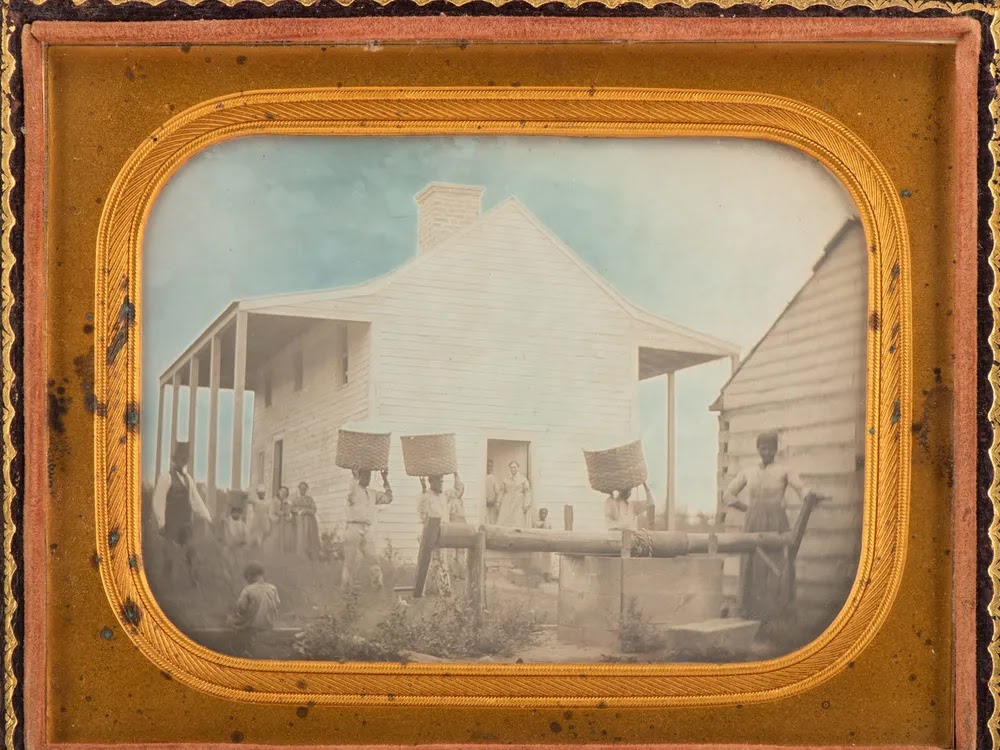
    Earliest known photograph of slaves and cotton, around 1850
    Brigit Katz, Smithsonian Magazine, December 6, 2019

    A New Nation, America from 1789 to 1860

    If you study American history from 1789 to 1860 (just before the start of the Civil War), the political history is very complicated. But remember what caused most of these political conflicts and uneasy compromises – the dynamic changes in the underlying economy. Two in particular – the spectacular increase in slave-produced cotton and the beginning of the Industrial Revolution. They were related.


    What is the Industrial Revolution? At its heart it is power-driven metal machinery producing huge quantities of goods. At first, the power was supplied by steam engines and water wheels. Later, in the 20th century, electricity. All of this used huge amounts of fossil fuels – first coal, later oil and natural gas were added. America had huge quantities of all three.


    A trend that continued from colonial times was the rapid population growth of America. This is part of demographics, the study of populations. America has had spectacular population growth throughout its history, from 4 million people in 1790 to 30 million in 1860 to over 330 million today. Two reasons for this growth were high birth rates, and open immigration until 1924. Also, Americans tended to be healthier than the people in other countries, mostly because of plentiful food. This is an important part of the American story, as discussed in the essay on colonial history. 


    There are lots of numbers when you talk about demographics, economic growth, and the Industrial Revolution. I’ll try to keep them to a minimum, hopefully just the more important ones. I also round up numbers to make them easier to read.


    The New Government, 1789-1798 

    After the Constitution was ratified and the structure of the new government was established, Americans voted in their first elected representatives in 1789. George Washington was elected president. He appointed Thomas Jefferson as Secretary of State (in charge of foreign affairs) and Alexander Hamilton as Secretary of the Treasury (financial affairs). James Madison, who wrote the first draft of the Constitution, became Speaker of the House of Representatives and established the structure and procedures in the House that are still used today.


    The government faced many of the problems left over from the Revolution. Because of the fight with the British army, Americans did not want a large standing (permanent) army.  They saw a permanent army as a threat to their liberties. America could do this because there was no serious threat on the American continent. Also, they didn’t want to get involved in European wars and political conflicts. “No entangling alliances” as Washington said. This foreign policy was possible because America was separated from Europe by the 3,000 miles of the Atlantic Ocean. 


    This was not to be. What happened in Europe during this period would have a profound impact on American history.


    The same year the U.S. government began, the French Revolution broke out. The French revolutionaries used similar ideas as the Americans. They wanted to destroy the power of the French king and the aristocracy. In 1793, they beheaded the king and queen of France and thousands of others. The other countries of Europe – all with kings or queens – were appalled. They declared war on France. One of the countries was England. England would fight France, off and on, until 1815.


    France was taken over by Napoleon. He would fight until he eventually lost in 1815. Wars are expensive and Napoleon needed money. France had laid claim to part of America. But Napoleon, fighting large wars in Europe, knew he could not defend the land from west-moving Americans. In 1803, he offered the land to America. President Jefferson bought it for $11 million. It was called the Louisiana Purchase. It was the land between the Mississippi River and the Rockies. It doubled the size of the United States. 


    After Jefferson bought the Louisiana Purchase, he established the Corps of Discovery to find out the geography of what he bought. The Corps first leaders were Meriwether Lewis (Jefferson’s secretary) and William Clark. Their famous expedition of 1804-06 traveled through the northern part of the new territory, including exploring the Missouri River. This was important for the future. America had more miles of navigable rivers than any other country. With the invention of the steamship, America had a vast internal transportation system that would help join the regional economies of the country together. Unfortunately, one of the region’s economy was based on slavery.


    Hamilton and Financing the Government 

    All governments must raise money to pay for government activities. But the U.S. government was limited in how it could raise money. The Constitution said the government could not tax American exports. No income taxes. The attempt to put a tax on goods, especially whiskey, led to riots and demonstrations that threatened the new government. What was left? Some revenue came in from land sales but not enough. Hamilton was given the task to solve this problem.


    He was ready. He started life as a teenager working for a merchant in the Caribbean. After the Revolution, he spent years studying the history and workings of government finance. His options were limited but he came up with a brilliant (and controversial) plan. He would tax imports.


    There was a larger problem. The currency issued during the Revolution (called Continentals) was worthless. The new government had to establish creditability which included faith in any new currency. Hamilton’s idea was to buy back the Continentals at face value. In exchange, the government would issue government bonds that paid interest and could be redeemed (sold back to the government) in the future. The bonds could also be traded like money. How to pay for them? From the revenue that came from taxing imports. Hamilton figured that tariffs on imports would cover government expenses and the cost of redeeming the bonds. He was right.


    I believe this was part of a larger plan he had. Hamilton saw the beginnings of the Industrial Revolution. He believed that manufacturing would be part of an economically strong country, as was beginning to happen in England.


    In 1791, Hamilton helped found the Society for Establishing Useful Manufactures (S.U.M.), to harness the waterfall energy of the the Great Falls of the Passaic RiverThe society founded Paterson, New Jersey, which became an early site of the industrial revolution in America. The Great Falls would provide tremendous energy to drive many large water wheels that powered machinery. Paterson was America’s first industrial city and would be a major manufacturing center for over 150 years.


    Hamilton’s grand plan:

    ·      Tax imports to raise revenue for the American government.

    ·      Develop domestic manufacturing to produce substitutes for English manufactured goods exported to America.

    ·      Use manufacturing to drive American economic development and growth in addition to agriculture.

    ·      Develop a class of manufacturers, bankers, and merchants.


    Hamilton’s vision was bitterly opposed by Jefferson and most Americans who thought about America’s future. Jefferson, when he was ambassador to France, saw the negative side of the beginnings of the Industrial Revolution in France and England. Dirty, crowded cities. Pollution. A degraded industrial labor force. Banking and finance. He saw all of this as a threat to a democracy based on independent, land-owning farmers.


    These two different visions of the future would be the basis of later bitter political conflicts.


    Slavery and Cotton

    The issue of slavery was mostly ignored at the national level in the early years. It was left to the individual states.


    Some people like Jefferson hoped that slavery would be unprofitable and wither away. This was not entirely wishful thinking.


    Importing slaves became illegal at the end of 1807. The Virginia and Maryland tobacco industry, the largest user of slaves, was in permanent decline after the American Revolution. Planters turned to diversified agriculture, including grain crops like wheat and fruit orchards. It was not obvious that the same number of slaves were needed or that owning and supporting slaves was profitable in the new environment. All this changed with the English demand for cotton. The deep south had a huge area of some of the best cotton land in the world. Many Virginia and Maryland tobacco planters, who owned half the slaves in America in 1790, moved to the deep south, bringing their slaves with them. Other slave owners sold some of their slaves, who were transported down the Mississippi River and sold to the cotton growers. This is where the phrase “sold down the river” came from. 


    It is one of the great ironies of history that the beginning of the Industrial Revolution in England was responsible for the survival and expansion of slavery in America. The first large industry in England was the power-driven mechanical production of cotton cloth. This created a huge and growing demand for cotton. Production of cotton cloth exploded after the war with French ended in 1815. It turned out that the largest and best growing area for the type of cotton that was best for machine production was in the American South.


    Cotton Production, 1790-1860

    Small amounts of cotton had been planted and cultivated in the United States since before the American Revolution, mostly in the islands off the coast of South Carolina and Georgia. But there was a bottleneck to the rapid expansion of cotton growing. After the cotton was picked, the fibers had to be separated from the seeds. This was done by hand. Only about one pound of clean cotton could be produced per day. But, in 1793, a Connecticut mechanic name Eli Whitney was invited by a Yale classmate to visit his mother, Nathanael Greene’s widow in Georgia. He listened to the complaints of the local cotton growers. After tinkering for a few weeks, he invented an improved cotton gin. This was a fairly simple, hand-operated machine that could produce about seven pounds of cotton per day. Further improvements increased output to about 50 pounds per day. By 1860, there were large power-driven cotton ginning factories.


    Cotton planting expanded to the west very dramatically after 1815—all the way to Texas. Planters, growers, and slaves moved from the Eastern Seaboard throughout the South and then to the Mississippi River region. Planters who owned slaves took them with them, thus avoiding the largest cost of starting a large cotton plantation. 


    The growth in cotton production was spectacular. Only about 1.5 million pounds were produced in 1790. Then, after the invention of Whitney’s cotton gin, output increased to 85 million pounds in 1810. By 1840, output rose to 830 million pounds, 10 times that of 1810. In 1860, the South produced the largest crop ever – over 2 billion pounds. 


    It was by far the nation’s main export, accounting for about 60% of the value of total American exports. Cotton exports helped pay for the imports of machinery and iron rails. 


    The South was producing about 2/3 of the world’s supply of cotton. 


    What led to an expansion of slavery was the unexpected huge increase in demand for cotton, first in England and then in the cotton mills of New England. Cotton was grown elsewhere but nowhere could a growing region produce the large and rapidly increasing amount of the type of cotton that manufactures demanded. This was made possible by the large increase in the slave population through natural increase, even after importing slaves was banned. By 1860, a very high percent of the slave population was growing, processing, and distributing cotton.


    Railroads, 1830-1860

    Starting in the 1830s, America built a large railroad network.


    America began building railroads in the 1830s, right after England built the first general-purpose railroad in 1830. By 1850, there was 8,600 miles of track. Then came a railroad-building boom. By 1860, there was 30,800 miles of track. America had by far more miles of track than any other country. New York had the most miles of track, followed by Ohio, Illinois, Pennsylvania, and Indiana. The southern states had about 1/3 of the total trackage.


    Railroad locomotives and tracks were a huge spur to iron production and manufacturing. Railroads were able to move large quantities of output (and people) from one region to another. 


    The Key to America’s Early Industrial Success

    America had abundant natural resources and aggressive “go-ahead” entrepreneurs. America also had poor immigrants who would form part of the new industrial work force. But what really drove industrialization was a new way to manufacture output.

    Thomas Jefferson was ambassador to France where he learned about an experiment to manufacture interchangeable parts to produce guns. He brought this idea to America and it was developed in America’s two armories at Springfield, Mass and Harper’s Ferry, Virginia.  It took thirty years to perfect the system.

    Interchangeable parts means that all produced units of a part are almost exactly alike. If a part of the firing mechanism of a gun had to be replaced, any substitute part would fit in without the former necessity of filing it down, fitting it, and repeating the process until it fit. This also meant that a factory could produce large numbers of all the parts and assemble the final product from any one of the parts. This system was be used to revolutionize the production of sewing machines, clocks, other metal products, and later bicycles and autos.


    The Economic Integration of the Three Regions

    The three regions of the American economy were becoming economically integrated but politically divided over the issue of slavery. America’s first large industry was also cotton cloth production in New England, with its own demand for Southern cotton. About 75% of Southern cotton was exported and 25% went to New England mills. Much of the cotton cloth output was used to make cheap clothing for slaves. The shoe factories of New England made most of the shoes worn by slaves. Southern families bought home furnishings from Northern factories. In addition, much of the cotton trade was financed by Northern bankers. Most exports went through New York. Southern planters borrowed large amounts of money from Northern bankers to expand production by buying more land and more slaves.


    Politicians and commentators debated the future of America. What no one foresaw was that these three parts of the economy of America were going to be connected.


    What would tie the three regions together was the transportation revolution, based on high pressure steam engines that drove railroad locomotives and steamboats. Steamboats exploited the largest system of navigable rivers in the world.


    Southern railroads and steamships brought cotton to Southern ports. By 1860, there were about 800 steamboats on the Mississippi River. Ships, first sailing ships, later supplemented by steam ships, carried the cotton to New York. Transatlantic ships carried the cotton to England, mostly to Liverpool.


    Northern farm families streamed into Ohio, Indiana, and Illinois in search of new farmland. These states had the biggest increase in population between 1850 and 1860. These farmers produced food for the increased population of Eastern cities and for exports. Produce went to market first through canals and then mostly by rail. Beside moving cotton to market, the greatly increase speed and capacity of railroad brought Western grain east and manufactured goods west. The new Western farms also supplied corn and pork to the Southern plantations, much of it sent south on Mississippi steamboats.


    By 1860, America had three sources of economic growth:


    Expansion of agriculture based on population growth, unlimited land for independent farmers, and westward expansion. 


    Expansion of slave-based cotton production. By 1860, Mississippi produced the most cotton, followed by Alabama and Louisiana.


    By 1860, the Industrial Revolution in Americas was well on its way. More money was invested in cotton mills than in any other industry. The second largest manufacturing industry was the iron industry.


    To the Civil War 

    The issue of slavery was the main cause of most of the political battles during this period, including the annexation of Texas and the war with Mexico to make Texas a slave state. There was a rise of anti-slavery sentiment in the North and West. Arguments were increasingly made for the abolition of slavery. There was effective propaganda, like Harriet Beecher Stowe’s book Uncle Tom’s Cabin. In response, the Southern defense of slavery became fierce – no compromises. Slave ownership and cotton production became the basis of the economy, political power, society, and culture of the South. 


    There was a danger to the expansion of cotton production and slavery as more new states in the future would be “free soil” (no slavery) states than new slave states. The South would lose political power in the national government and might be threatened with the abolition of slavery. Arguments on both sides became very emotional. When Abraham Lincoln was elected president in 1860, the South saw him as a threat to the survival of slavery. Although he hated slavery, he did not advocate its elimination. He wanted to stop it spreading to new states. Southern planters believed they needed new land as old cotton lands wore out and produced less cotton per acre. The Civil War – the South’s attempt to leave the union – started even before Lincoln was inaugurated. 


    The 1860 Census – the United States on the Eve of the Civil War 

    Total population – 31.4 million

    White population – just under 27 million (86%)

    Slave population – just under 4 million (13%)

    Free blacks – just under 500,000 (1.6%)

           Does not exactly equal 100% because of rounding


    Number of whites in the South – 5,800,000. This is the number of whites in the South in states that left the United States in the Civil War.


    Number of whites in the North – 21,200,000. This includes slave states that did not leave the Union in the Civil War.


    By 1860, despite continuing immigration, most Americans were native-born. Of the 27 million whites, about 4 million were foreign-born. Just under 75% of the immigrants during this period came from Ireland (because of the famine) and the German States (Germany did not become a unified country until 1871). Of the black Americans, almost all were native-born since the Constitution prohibited importing slaves after 1807. 


    Remember there were about 700,000 slaves in 1790. Most of the increase came from the high birth rates in the number of slaves.


    There were more slaves than whites in Mississippi and South Carolina. Slaves made up at least 40% of the total population in Alabama, Georgia, and Louisiana (almost 50%).


    Almost 400,000 white families owned slaves. But most of them were owned by a small percent of the slave-owners. About 280,000 whites owned fewer than 10 slaves. At the other end, about 11,000 whites owned 50 slaves or more; 14 of them owned 500 slaves or more.


    At the beginning of this period, slavery was legal in all 13 colonies. But the ideals of the American Revolution motivated some Americans to think about abolishing slavery. By the end of this period, all northern and western states had outlawed slavery. The arguments for and against slavery became more shrill. Some attempts at compromise, as advocated by Abraham Lincoln, were rejected by the south. The essay cited below argues that the Civil War, unlike the American Revolution, was inevitable. 

    =========================================================

    For two essays on earlier periods of American history, see


    American Colonial History, 1607-1775


    Revolution and the New Country:  American History, 1775-1790

    For an analysis of:  Was the Civil War inevitable?, see 

    The American Civil War

    For an example of the transition from using hand tools to power-driven machinery for production, see

    Adam Smith’s Pin Factory

    For an essay focused on the industrialization of America in the same period, see

    The Beginning of the Industrial Revolution in America

    For an analysis of:  Was the Civil War inevitable?, see The American Civil War


    For a list of all essays on this blog, with links, see 


    List of Posts by Topic


    There are more posts on American History and American Economic History. Also essays on Rome and the period surrounding World War I.

    Essays on information, innovation, and how markets work. 

    Essays on business, finance and economics. 

    A series of essays on demographics, population projections, and speculations on how decreasing and aging populations will interact with the economics of individual countries and the global economy.
     

  • The Roman Republic and America

    The Roman Republic and America


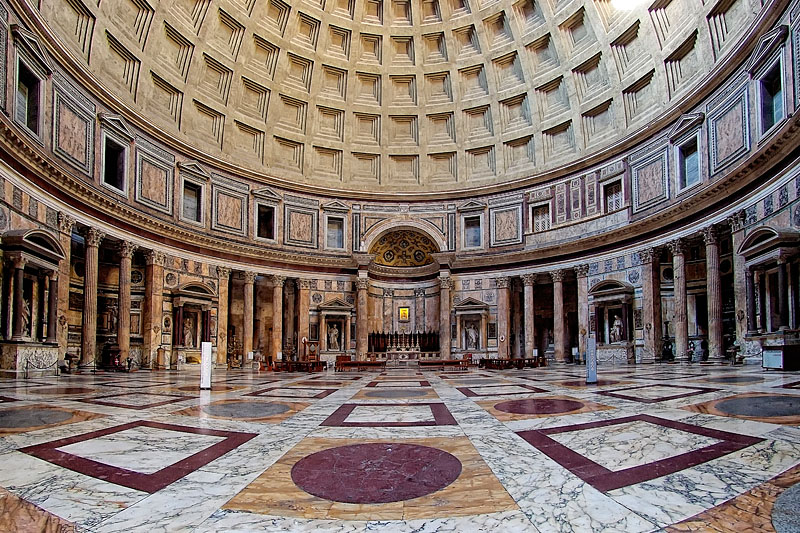
    The Pantheon


    Remember, Roman, that it is yours to lead other people. It is your special gift.

        Virgil, The Aeneid


    We are the indispensable nation.  We stand tall.  We see further into the future.

        Former Secretary of State Madeleine Albright

    A Roman General Comes to Washington              


    Imagine an educated patrician Roman officer from around 20 BC. He has spent most of his military career in the last decades of the Roman Republic and now is a legion commander in the first years of the Roman Empire of Caesar Augustus. Rome is at the height of its power and influence, acquired through conquest during the Roman Republic. Now imagine he is transported through time to today’s Washington. After marveling at the new technology (horseless chariots?), like any curious tourist he would start to look for similarities to his hometown, Rome.


    The similarities would not be hard to find.  Both cities have a Capitol Hill. Both have a Senate building for senators to meet and debate. But, as he would predict, foreign policy was in the hands of the executive, who was similar to the elected consuls during the Republic and Caesar Augustus in the first days of the Empire.


    The Washington Mall would remind him of the Roman forum; even the architecture of the surrounding buildings would look familiar.  He could read the Latin above their entrances. As he toured Washington, he would notice that the monument to a founding father, the Jefferson Memorial, was styled after the Pantheon.  He would see a statue of George Washington dressed (improperly) in a toga, handing in his resignation as general of the army. Our legate would immediately recognize the model from Roman history – Cincinnatus. He would not be surprised to learn an organization of Washington’s officers was called the Order of Cincinnatus.


    He would be curious about Christian churches. But he would understand the service if it were in Latin or Greek (educated upper-class Romans were taught Greek). The layout of large churches would be familiar since they were based on the Roman basilica. But he might wonder what happened to the many religions tolerated by Rome. 


    The Roman concept of citizen was still alive. Even compared to the Republic, American citizens had more say about who ran the Republic. Yet he knew that the institutions of the republic and the rights and obligations of Roman citizens under the Empire had been “hollowed out” by the Caesar Augustus.


    The role of law was just as important to Americans as to Romans. Americans were just as quick as Roman citizens to sue each other, hire lawyers and go to court. Cicero, who made his reputation as a lawyer and orator, would have loved it. Even the legal code contained elements from the Roman law compiled by Justinian. 


    He probably understood the American Constitution. It was somewhat similar to Rome’s 12 Tablets. After overthrowing a foreign king, the Romans wrote down their basic laws and outlined their form of republican government. The republic’s government was later described approvingly by a Greek historian named Polybius. He emphasized separation of powers, checks and balances to limit despotic power, and the role of the people. His writings greatly influenced the founding fathers. Many of them, including Jefferson, Hamilton, Adams and Madison, read Polybius. At the Constitution Convention, many of the delegates cited or read passages from Polybius. None more so than James Madison, who wrote the first draft of the Constitution. 


    But the federal government’s sharing of power with the states might have puzzled our Roman. Rome shared some power and privileges with Italian cities they had conquered. But provinces were ruled by Roman governors appointed by the emperor. In the republic, all power was centralized in the government in Rome. In the Roman Empire, all power and decision-making were centralized in the Roman emperor. 


    He would probably be amazed by the size of the Pentagon and the CIA headquarters. But he would understand what they meant – that America was a world power and needed a large bureaucracy to manage its far-flung armed forces. Maintaining, improving and using military might was obviously an important function of the American government, as it was in Rome. 


    As he read recent American military and foreign power history, he would see another parallel to Roman leadership. For hundreds of years, Roman historians described “barbarians” in the same stock phrases. Roman leaders had such faith in the superiority of Roman legions that they felt they did not need to know anything about potential enemies. Of course military commanders like our general would have local knowledge along a small part of a frontier but it never translated into a general strategy. One consequence was that the Roman army, at the height of its power, suffered two of its most disastrous defeats when it crossed a frontier and fought a little-known enemy in hostile geography (dense German forest and arid Middle East desert). In both cases, local commanders pleaded with the commanding consul not to advance. To no avail, Roman armies were annihilated.


    The same has been true of American political and military leaders. Their combination of reliance on superior firepower with ignorance and arrogance led to disasters in Vietnam, Iraq and Afghanistan. They did not read Roman military history and ignored the main lesson of the American Revolution. (For a discussion of how the American rebels won the American Revolution, see my post Revolution and the New Country:  America History, 1755-1790.)


    He would also understand much of the national symbolism.  No one would have to explain to him what the eagle on Air Force One signified; it meant the same thing as the eagle standards Roman legions carried into foreign lands. He could even understand the important Latin quote on American money, since it came from a famous Roman writer describing a source of Roman greatness. The American pledge of allegiance was similar to the military salute in the Roman army.


    As he studied maps and learned more about the United States, he would realize two other similarities. The United States, like Rome, was a world power (Rome’s world was the lands surrounding the Mediterranean and western Europe) with military might orders of magnitude greater than any other state. Washington, like Rome, was the capital of this imperium. But there was something odd about both cities. They were upriver on a minor river, not even a major port. They were not economic centers, cultural centers or even militarily important. They were political centers that depended on drawing in immense resources from the territory they controlled. And both had a psychological border that separated them from the surrounding territory – the sacred pomerium for Rome and “the Beltway” for Washington. The world was different, the thinking different, inside this border compared to outside.


    He would probably be amazed at America’s political institutions and how democratic they are. Although all free adult males in the Empire would eventually be given citizenship, no one was under any illusion that all power and decision-making didn’t rest with the Emperor. But he read Roman historians and was likely descended from one of the ancient political families that helped to rule the Roman Republic for centuries. It is possible he was pleased that the peaceful transfer of power still existed in the American republic. 


    Like Romans, Americans believed they were spreading a superior form of “civilization” throughout the known world. Both Romans and Americans believed they were “exceptional,” and had an obligation to spread their particular ideas and institutions abroad.


    Like America’s founders, he could draw imperfect parallels to the history of the Roman Republic. Those who ran the country tended to be the educated elite. The Senate was made up of individuals far wealthier and better educated than the average citizen. There were professional politicians, of course, and even political clans. But like imperial Rome, smart, ambitious (and in Rome’s case, often ruthless and brutal) men from the provinces could aspire to become Emperor.


    Finally, he would ask the question that many Romans asked themselves in the first century BC.  Could Rome be both a republic – could it keep its republican institutions and civic virtues – and also be an imperial power?  Could America?  In Rome’s case, the answer was no. Its republican institutions were too weak, weakened by incessant civil war, violent internal conflict and taking power away from citizens, plebeians, and their tribunes. So far, in America’s case, the answer is yes, but with significant changes to its government and stresses to its society. But then, the Roman Republic lasted for about 500 years and was an expanding military power over much of this period. The resulting western Roman Empire lasted for another 450 years and the eastern part (Constantinople) another 1,000 years after that.  The American imperium only began in 1945, a mere 80 years ago. It’s too early to answer the question.


    But we can ask how well America has managed its role as a world power and what are the risks to that power.  The history of Rome may provide some clues. Maybe we can learn to avoid some of Rome’s mistakes. Maybe we can learn from some of Rome’s more successful policies. Even if comparisons are highly tentative and imperfect, maybe this exercise will give us some different perspectives on American power.


    From the last decades of the Roman Republic leading to the Empire:


    The patrician Senators had grown very rich. They became corrupt, decadent, and greedy. They fought among themselves to obtain offices and appointments as provincial governors that would yield great wealth. They abused the law to dispossess citizen farmers in Italy, seize the land, and put together large plantations worked by slaves and landless farm laborers. 


    The poor and unemployed of Rome grew rapidly. Their grievances were taken up by demagogues who challenged the power of the Senate. The Senate was temporarily forced to share power with the plebeians’ tribunes. Demagogues were assassinated. Senators or their supporters attempted to co-op or corrupt the tribunes.


    Mob violence by both sides and assassination were common political methods. Politicians hired gangs to intimidate opponents.


    As Rome fought to become an empire, the Roman army transformed from a part-time citizen militia to a large full-time army with well-trained, long-serving volunteer soldiers. Many of the legions were raised and paid for by politicians or generals. Legionaries became more loyal to their generals than to Rome. Generals like Marius, Sulla, Pompey, and Julius Caesar fought to defeat Rome’s enemies and conquer new territory. They also wanted political power and control of Rome. Two of them, Sulla and Caesar, led their legions into Rome itself and assumed political control. Marius and Sulla fought to control Rome, as did Pompey and Caesar. All except Pompey declared their political enemies as outlaws and instituted a “reign of terror,” killing thousands of Romans including many senators. In the end, Caesar declared himself Dictator for life and controlled Rome until he was assassinated. His grand nephew and heir completed the transformation of the Republic into the Empire.


    Corrupt and venal Senators, corrupted or demagogic tribunes, mob violence, political assassinations, generals using their legions to fight each other and conquer Rome. Decades of violence and chaos in Rome. This is what the last decades of the Republic were like.


    America and Rome


    Later Roman historians and commentators lamented the passing of the Republic and its grounding in ideals of civic virtue (sacrificing individual ambitions for the good of the country), citizenship based on independent farmers, law, checks and balances of political power, and popular elections. Both Rome and America thought they could erect political and legal institutions to contain selfish behavior dangerous to the republic. James Madison, a keen student of the history of the Roman Republic, was acutely aware of this problem when he wrote and submitted the first draft of the Constitution. Madison, like the other “founding fathers,” believed that survival of the new republic depended on the “civic virtue” of its citizens, exemplified by Washington. But Madison also knew, from reading Roman history and his experience in American politics, that he could not count on future American leaders to be as virtuous and selfless. So he constructed the Constitution, with its separation of powers, to protect the republic from tyrants, oligarchs, and demagogues with unbridled ambition. He also supported (at first reluctantly) and helped pass the Bill of Rights to protect individuals from the arbitrary power of the state. Or a man who wanted to be a tyrant. 


    In Rome’s case, military and political expansion, the increased wealth of the powerful political elite from the conquered provinces, and the personal ambition of powerful military/political leaders overwhelmed the republican institutions of Rome.


    I doubt if anyone considers the U.S. military a threat to democracy. But there are other effects. One is that American foreign policy makers, like those of Rome, rely heavily on the use of military power to solve problems. They ignore the lessons about the limits to military superiority found in the American Revolution and Vietnam. Military victory can unleash local resistance and “endless wars,” the kind Rome fought along its many frontiers. And there are domestic consequences. As the advantages to America seem to be lessening, there are again calls for isolationism.


    And the cost. Because the U.S. attempts to project global power, the U.S. military is expensive, the largest single item in the federal budget. (Maintaining Rome’s legions was the largest item in Rome’s budget.) This year’s military budget is around $950 billion; total national security costs over $1 trillion a year. American politicians and taxpayers refuse to pay the price of global power. Instead, this year, and in many prior years, the cost of the military was paid for with borrowed funds. The size of the national debt grows. The United States is financing its military and foreign power with a credit card. Many of the lenders are foreign institutions, including foreign governments.


    The global political structure America put into place after World War II seems to be under increasing domestic attack. Nationalist economic policies like increased tariffs and other restrictions on global trade are increasing.


    America may not be able to managed its accumulated debt in the future. The national debt is growing larger and faster than the economy, because of the government’s continuing inability to tax Americans to pay for both domestic welfare and global military dominance. This may be Paul Kennedy’s “imperial overstretch.”


    The second concern is the new definition of national security. National security now includes “homeland security.” Domestic security policies challenge individual privacy and liberties, the rule of law, and civil liberties. Again, these are fundamental to the functioning of American democracy.


    ======================================================================

    Cicero was the last great defender of the Roman Republic. Here he is denouncing the generals, patricians and demagogues who were subverting the Republic. In his view, they were committing treason against the republic. Cicero was proscribed (declared an outlaw with a bounty on his head), hunted down and murdered by a Caesar Augustus assassination squad.


    “A nation can survive its fools, and even the ambitious. But it cannot survive treason from within. An enemy at the gates is less formidable, for he is known and carries his banner openly. But the traitor moves amongst those within the gate freely, his sly whispers rustling through all the alleys, heard in the very halls of government itself. For the traitor appears not a traitor; he speaks in accents familiar to his victims, and he wears their face and their arguments, he appeals to the baseness that lies deep in the hearts of all men. He rots the soul of a nation, he works secretly and unknown in the night to undermine the pillars of the city, he infects the body politic so that it can no longer resist. A murderer is less to fear. The traitor is the plague.”


    Marcus Tullius Cicero


    ============================================================


    For background, see The Roman Republic Commits Suicide


  • The Roman Republic Commits Suicide:  A Cautionary Tale for America

    The Roman Republic Commits Suicide: A Cautionary Tale for America


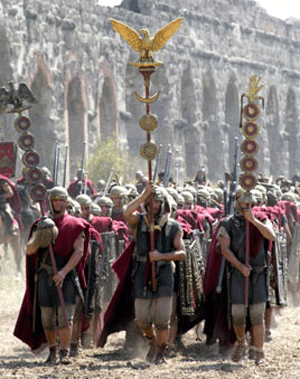
    Roman Legion


    Why Study Rome?


    Americans have focused on comparisons between Rome and America twice in American history.  The first time was during the period from before the Revolution to after the ratification of the Constitution and Bill of Rights, when the founding fathers and others looked to the Roman Republic for ideas and inspiration on how to structure the new government. After the American Revolution, the founding fathers, having read the Roman authors detailing the collapse of the Roman republic, worried about internal threats to the survival of their new republic.  


    The second time was when the United States became a superpower, especially after WWII, and then again after the collapse of the Soviet Union in 1991. Commentators compared America to the Roman Empire at the height of its power. There was some discussion about how America became a permanent warfare state and how it affected domestic democracy and civil society.


    And now a third time. Have Americans and their leaders concluded that the costs of maintain global leadership and power are too high? That the creation of the global economy under American rules and protection is responsible for domestic economic problems including stagnant and declining incomes of many Americans while a small elite controlling and managing global corporations are becoming very rich? Will the resulting domestic political conflicts lead to fewer resources and lessened commitment to the global order America created? In short, can America, like Rome, be both a republic and a global power?


    It is difficult to appreciate today how extraordinary was the Roman Republic. The city was governed for 500 years without a king or conqueror. Power was not concentrated in one person; leaders were elected. Nowhere else in the world, except in parts of Greece and overseas Greek cities, was there the idea of citizenship. Nowhere else could power be shared and transferred peaceably through elections. Nowhere else were conflicts resolved through compromise and according to rules of law. Nowhere, not even Athens, was more democratic, in terms of the percent of the male adult population who voted and enjoyed the rights of citizenship.


    Many of the American founding fathers read Roman historians. Roman historians generally praised Rome’s republic, its political structure, and its underlying civic and individual virtues. They condemned Rome’s subsequent emperors as tyrants and their society as corrupt. This learning had a profound effect on American political thinking and governmental institutions.


    Historians like to write about the “decline and fall of the Roman Empire.” But of more historical relevance for the United States now is the last 100 years of the Roman Republic (146-49 BC). It was during this period that Roman legions, after the final destruction of Carthage, conquered western Europe and the Mediterranean world. The Republic created the Empire. But the consequences of these military victories undermined and then destroyed the Republic. 


    How did this happen?  Could it have been avoided?  What does this say about the relationship between becoming an imperial power, military power, internal security and liberty? How does being a global superpower impact domestic society and politics? Can a republic become a global superpower and survive as a republic? Are there any possible lessons to be learned from Rome’s experience?


    The Suicide of the Roman Republic:  The Building of Empire and the Projection of Military and Political Power

    The Roman Republic did not “fall” or “collapse.” It did not fail because of one dramatic event such as Julius Caesar and his legions crossing the Rubicon River in 49 B.C., invading Rome and later declaring himself Dictator. The Roman Republic weakened and then committed suicide, or was killed, over a long period of time.


    Rome, like America, began its modern history by overthrowing a foreign king and declaring a republic. But even before, America had a long history of local self-government; the American Revolution was partly caused by England’s attempt to impose more control on its American colonies. The subsequent republican government was partly modeled on Rome’ republic. This is not surprising. Both countries were suspicious of concentrating power in one man and wanted to diffuse power. But not too far; both believed that political power and government offices should rest in the hands of a political elite with “civic virtue.” The center power was the Senate, whose members were part of “patrician” clans. This political elite, for a long time, believed in “civic virtue,” which included ideas about contributing to the common good, focusing on national interests, and gaining personal status (gravitas) by contributing to the welfare of the state. In America, the man who embodied this ideal was George Washington. There is a statue of him wearing a Roman toga.


    The Roman Republic lasted approximately 500 years, If America’s experience with self-government begins in the early 1600s, America has had some form of representative government for about 400 years.


    One way Rome grew, as did America, was taking in immigrants, no questions asked. In the long run, immigrants were a source population and economic growth, new citizens, and soldiers. In America, immigrants played a similar role.


    Both republics were founded – their basic constitution and laws were written, representative institutions established – when both countries were agrarian societies based on independent landowning farmers. All were citizens. Citizens had rights under Roman law similar to the rights of American citizens. While candidates for political offices usually came from the patrician clans, they were elected by the citizens. 


    Citizens also had obligations. The most important was that all citizens were required to serve as soldiers. For centuries, the Roman army was a part-time militia. Citizens were called up after planting, fought against other Italian towns or tribes during the summer or if a military emergency, and were then sent home for harvesting. There was no standing (permanent) army but all male citizens were a permanent military reserve, an obligation that could last a lifetime. Armies were led by one or two elected consuls (the highest political office, somewhat similar to the American president) who served for one year.


    The American version was local militas. In colonial times, all white males beween the ages of 16 and 60 were required to be members of local militas. Required time of active service was usually 30-60 days and militas only fought locally. They chose their officers. They could be activated if there was a local threat such as fighting Indians on the frontier or the British in the Revolutionary War. After the Revolution, Americans opposed the idea of a permanent standing army. Until December 7, 1941. 


    For hundreds of years, republican Rome expanded by fighting local enemies on the Italian peninsula. The American equivalent was expanding across the American continent and avoiding overseas conflicts. Any fighting that occurred before the Civil War, usually against native Americans, was done by locally-raised militias. Jefferson, who approved the Louisiana Purchase, said that America was creating “an empire of liberty.”


    As Rome conquered surrounding towns and territories, some of them were given the choice of becoming subordinated allies. In exchange for some privileges, including local rule and citizenship rights for local elites, allies were expected to provide “auxillary” military forces to the Roman army. Rome drew on this expanding manpower pool. Often, in both the Republic and Empire, the number of auxillary troops were more or about the same as the number of soldiers who were Roman citizens in legions.


    Similarly, America did not treat purchased or conquered territory as colonies. Most of the existing population and new America settlers enjoyed the same rights as Americans in the original states. New states were formed with the same government structure and political rights as the older states.


    After WWII, the United States, like Rome, was able to turn former enemies into allies. American and allied military forces were combined into military structures like NATO, dominated by the United States.


    Rome and Carthage:  The Beginning of a Superpower


    As Rome became the dominant power in Italy, Carthage became the dominant economic and trading power in the western Mediterranean. Rome had an army but no navy; Carthage had a strong navy to protect its merchant ships and Mediterranean trade. Rome and Carthage had a long history of treaties and alliances with each other. They had different sphere of influence with no important geopolitical areas of conflict.


    Rome and Carthage finally came into contact in Sicily after Rome conquered southern Italy. Sicily was close to both Rome and Carthage, sat astride important shipping lanes in the Mediterranean, and was a source of grain for Rome. Both Rome and Carthage had city-state allies in Sicily, although most of Sicily was dominated by Carthage and the independent city-state of Syracuse. As allied troops demonstrated in World War II, Sicily was a convenient staging area for invading southern Italy. Carthage in Sicily and Rome in southern Italy were now only a few miles apart.


    The Punic Wars between Rome and Carthage lasted off and on from 264 BC until 146 BC. The First Punic War was during 264-241 BC, the Second between 218-202 BC, and the Third between 149 and 146 BC. The greatest danger to Rome was the Second Punic War, when Hannibal invaded Italy, defeated one Roman army after another, and threatened Rome and its Italian allies.


    Carthage could only defeat Rome if they built an army, invaded Italy and threatened Rome. Rome could only defeat Carthage if they could build a navy and defeat the Carthaginian navy, thus clearing the way for Roman legions to invade North Africa and conquer Carthage.  


    Rome fought a life or death struggle against Carthage for the dominance of the western Mediterranean. Rome eventually triumphed over Hannibal and Carthage because of its ability to mobilize all of its citizen manpower supplemented by troops from Italian allies, appoint long-term commanders and officers, create a navy, and send its full-time legions overseas. By the end of the Third Punic War, Rome was a strong military force in the Mediterranean world and could project its military over long distances. 


    In the period before the Punic Wars, Rome typically conscripted yearly enough men to fill two legions, about 10,000 men. The size of this force was sometimes doubled by military quotas Rome imposed on its Italian allies. During the Second Punic War, large Roman armies were annihilated again and again by Hannibal and had to be rebuilt. At the battle of Cannae, it is estimated that the Roman army had 80,000 men (and over 60,000 of them were killed by Hannibal’s forces). By the end of the Second Punic War, the Roman army had an estimated 100,000 men. From then on, Roman legions would fight and be stationed throughout the Roman Empire. Throughout the period of the Roman Empire, Rome tried to maintain a permanent standing army of over 200,000 men. This put economic and administrative strains on Rome that Rome’s tax system and republican institutions found it difficult to manage.


    A rough analogy might be America just before its entrance into World War I in 1917 (very small and unprepared standing army), World War II, and the Cold War with the Soviet Union until the collapse of the Soviet Union in 1991. Carthage was Rome’s equivalent of the combination Germany and Japan in World War II and then the Soviet Union during the Cold War. Because of the threat of the Soviet Union, America could not demobilize its armed forces and return to isolationism. Also, for the first time, America had to station large forces overseas, especially in Europe. 


    Rome as a Superpower


    Again, almost all of the Roman Empire was conquered while Rome was still a republic. The “Roman Empire” as a form of government substituted monarchical rule for a combination of oligarchy and representative democracy. 


    In the last 100 years of the Roman Republic, from the end of the long war with Carthage to Julius Caesar establishing a dictatorship in 49 BC, Roman legions and auxillaries conquered Spain, France, the Lowlands, North Africa, the Balkans, Greece and Macedonia, Turkey and Asia Minor to the Black Sea, and most of the eastern Mediterranean as far as Syria. In the middle of these conquests, Rome stopped a major invasion of Italy by Germanic tribes, fought a major civil war with its Italian allies and defeated Mithridates, a formidable opponent in Asia Minor. These conquests brought great wealth to Rome, with serious domestic political consequences. 


    Roman legions often fought more than one war at the same time. Conquests and pacification often took many years, sometimes decades. Rome needed a much larger army able to campaign for long periods of time and permanently occupy distant territories. Short-term conscripted citizens were replaced by long-term professionals, who signed up for as long as 25 years. The Roman army transitioned from a conscripted militia of short-term citizen soldiers to a well-trained, well-equipped permanent force of professional soldiers and officers. As did the American army after Vietnam.


    Rome’s antiquated tax system had difficulty paying for the greatly expanded costs of the army. New legions were sometimes financed by private individuals, usually from generals of the patrician class (Sulla, Pompey, Caesar), to further their ambitions and power. 


    Legionaries were often loyal to their general, not Rome, and expected to be rewarded with booty, bonuses, and land. Conquered territories were often considered power bases for the general and his legions that conquered them.


    In the last decades of the republic, Roman generals and their legions fought other Roman generals and their legions for control of the republic. Marius vs. Sulla. Pompeii vs. Caesar. 


    Later in the Empire, Roman legions were increasingly used to patrol and defend frontiers. The most important frontiers were far from Rome – the Rhine River, the Danube River, and roughly the Tigris-Euphrates Rivers in Syria and Iraq. Two thousand years later, American troops fought and stood guard along some of the same frontiers.


    Domestic Consequences of the Empire


    The new wealth and the military needs of the Empire weakened the foundations of the republic. The patrician class of senators and their clients seized much of the increased wealth, first as military commanders receiving much of the immense booty. After a province was established, the Senate appointed provincial governors and staff from their own ranks. This was another opportunity to get rich quickly. Some of this private wealth was spent back in Rome to buy power and influence. Some of it was used to buy large tracts of land in Italy to create large plantations usually worked by slaves. Senators and ambitious politician/generals used bribery, gangs, assassination and patronage to control and manipulate the Roman population and their popular assembles and elections.


    As earlier in the Republic, private influence was also gained by sponsoring public buildings, lavish games, spectacles, and entertainment for the increasing population of Rome; this was a common way to gain influence with the volatile mobs and plebs in the streets. But now the elites also enjoyed “conspicuous consumption,” a higher level of luxury.


    During this transition period, there was an explosion of population of Rome, going from about 200,000 to one million in about 50 years. Many of the new residents were citizen-farmers and their families who had lost their land to creditors, unemployed ex-legionaries, refugees, and slaves, the poor and dispossessed, first from Italy and then from all parts of the Empire. But the Roman government did not create new institutions to govern or manage the larger city and its unemployed. Instead, generals and politicians attempted to curry favor with the mobs with free bread and spectacular entertainments. 


    At the beginning of the final century of the republic, wealthy elites were seen as venal, corrupt and refusing to share power with the people. Demagogues arose to articulate plebeian anger and frustration. The Senate was challenged by more aggressive tribunes, who were elected by the people and represented their interests. The Senators tried to reduce the power of the tribunes through coopting them, corrupting them, or paying to have tribunes sympathetic to the Senate elected in the first place. Political tactics included mob violence and assassination; the most famous of the tribunes were killed by a mob of senators.


    Rome was able to provide security along trade routes and sea lanes. More long-distance trade was made possible by the increased security of the Mediterranean world. Rome increased its imports of grain and other products to feed its growing urban population. Rome’s wealthy upper-classes imported luxury goods. 


    Local citizen farmers found it increasingly difficult to compete with the cheaper imported grain and other agricultural products. Many went into debt and lost their farms. Wealthy patricians were able to seize much of this land. Dispossessed farmers drifted into Rome and other cities, became part of the unemployed poor, joined the army as professional soldiers, or became tenant-farmers or laborers on the landed estates of the wealthy. Patricians increasingly used slaves to work their large plantations. It is likely that this new wealth and income was concentrated in the hands of a small group, mostly patrician clans. The Republic base of citizen-farmers was fatally weakened.


    The Empire and the new Roman “global economy” created new opportunities for a class called publicani. The Roman government “outsourced” much of the economic and financial management of the Empire to the publicani. This group of imperial merchants and moneylenders grew rich handling long-distance trade, collecting taxes in the provinces, supplying the army, and managing the Empire’s finances. Government contracts were given to influential senators, who subcontracted to their publicani clients. Primitive limited liability corporations were created to spread risk.


    As this concentration of power and wealth played out, the hard-won political privileges and power the plebeian classes gained earlier were eroded. Successful generals dominated the Senate and had themselves elected consuls for long periods of time or dictators (rulers with extra-legal authority).


    The link between Rome’s citizens and citizen army was broken. Generals pursued personal glory and power through military conquest. Ambitious patricians and newly-wealthy generals financed the creation of new legions. Professional soldiers were recruited from the lower classes and the provinces. Politician/generals such as Marius, Sulla, Pompey, and Julius Caesar used wealth and booty captured in military campaigns to reward their legions and buy political power and influence when they returned to Rome. Legions, far from Rome, shifted their allegiance from Rome to their commanders. Roman legions loyal to one general fought wars against Roman legions loyal to another general. Successful generals became consuls or dictators with emergency powers. This dynamic reached its climax when ambitious generals like Sulla and Julius Caesar committed the ultimate treason to the Republic by marching their legions into Rome and seizing power. After decades of fighting among legion armies, Julius Caesar became undisputed leader (Dictator) of Rome. He appointed new senators, men to fill all political, religious and legal posts in Rome, and provincial governors and their staff. His assassination by republican Senators cut his dictatorship short. But Caesar’s adopted successor, Octavian (Julius Caesar’s great-nephew, later named Caesar Augustus) became the first emperor in all but name. In an act of historical symbolism, part of his campaign to kill anyone with republican sympathies, Augustus ordered his thugs to kill Cicero, the great republican orator. The Republic was dead.


    The Last Act. Octavian and Marc Antony


    Octavian was a poor military commander but fortunately for him, a childhood friend named Agrippa turned out to be an excellent general. Agrippa won the wars.


    Octavian was a genius at political propaganda. He convinced many Romans he was saving the republic while he was “hollowing out” its republican institutions.  His final conflict was with Marc Antony, Julius Caesar’s top commander.  What was the usual Roman conflict for control, Octavian cleverly created support against Antony.


    Antony lived in Egypt with Cleopatra (queen of Egypt) and controlled the eastern half of the Roman Empire. It was the wealthier half. Octavian started a propaganda campaign portraying Antony as under the influence of a foreign queen and no longer a true Roman. Octavian spread rumors that Antony wanted to move the capital of the Roman Empire to Alexandria in Egypt. In the end, Octavian’s forces under Agrippa defeated Antony. Antony and Cleopatra committed suicide. Octavian was the undisputed ruler of the new Roman Empire.


    The End of the Roman Republic


    Octavian (Caesar Augustus) did not destroy the institutions of the Roman Republic.  He finished “hollowing” them out, completing the process began by his uncle Julius Caesar and Caesar’s predecessors (Marius and Sulla, Caesar’s former commander). 


    Augustus was able to do this with a minimum use of violence but only after 13 years of warfare and the elimination of political rivals and defenders of the Republic. Augustus ruthlessly hunted down his uncle’s assassins and anyone else suspected of republican sympathies. Many senators were killed and Augustus appointed replacements. The Senate and elected magistrates continued to exist but were totally subservient to Augustus. He wrote the laws. Like his uncle, he appointed the Senators and the administers of Rome. Caesar Augustus, not the Senate, appointed the generals and provincial governors who ruled the empire. He named his successor. The Senate lost all domestic political power. 


    Augustus curtailed citizen rights, especially the right to free speech and dissent. He punished anyone who had the courage to criticize him. He was above the law and any legal constraint.


    In summary, during the last decades of the Roman Republic there was a breakdown of a sense of community, political compromise and sharing power and responsibilities, and “civic virtue.” Rome’s republican institutions were not strong enough to stand up to the new opportunities for personal power and wealth presented by military success and the creation of conquered territories.


    The Roman people were tired of decades of internal violence and political chaos. Augustus promised a return to the “domestic tranquility” destroyed by the creation of the Roman Empire. He attempted to legislate traditional morality and republican virtues to a society dominated by a wealthy elite, a society that was no longer republican. He failed.


    ======================================================

    For a related post, see The Roman Republic and America

    List of Posts by Topic


    There are essays on American History and American Economic History. Other essays on:

    Information, innovation, and how markets work. 

    Business, finance and economics. 

    Also a series of essays on demographics, population projections, and speculations on how decreasing and aging populations will interact with the economies of individual countries and the global economy.