Tag: American Foreign Policy

  • Religion and American Politics:  A Historic Perspective

    Religion and American Politics: A Historic Perspective

    Carrie Nation – Prohibitionist


    RELIGION IN AMERICA

    There is an interesting dynamic in
    the history of Protestantism in
    America.  As different
    Protestant churches became the “established” or mainstream churches, many Americans turn away to form and join more evangelical or Pentecostal churches and
    sects. This began in colonial America. Following the spectacular success of itinerant evangelical preacher George Whitefield in 1740 (the first Great Awakening), the evangelical New Light movement and independent itinerant preachers swept America. They challenged the established (tax supported) churches with emotional appeals for salvation. Although the fervor died down in the 1750s, it never disappeared.

    The large and sudden popularity
    of Baptists and Methodists in the first half of the 19th century was a revival of the reaction to the less fervent Puritan (Congregational) and Episcopal
    churches.  As Methodist and some Baptists
    groups became less evangelical and more “mainstream,” there were numerous
    breakaways to found evangelical, enthusiastic and Pentecostal churches.  

    America has a long history of itinerant preachers and camp meetings. Enthusiastic preaching, as opposed to fixed
    liturgies and long, rational sermons, can now reach national and international audiences
    through mass media.

    Competition in the religious
    marketplace, the lack of one dominant religious group or “established” church after the Revolution, is one reason for the enduring important role that religion
    plays in American life. 
    America is the exception to the general tendency that as Christian
    countries experience rising income, religious participation and influence declines. It is only recently, as many 
    evangelical groups ally themselves with far-right political positions and politicians, that religious participation may be declining.

    RELIGION AND
    POLITICS

    Religion, and religious-based
    morality, has played an important role in American politics.  Bernard Bailyn, in his classic Ideological
    Origins of the American Revolution
    , documents the increasingly radical
    anti-British sermons of Puritan ministers. 
    Revivals, “Great Awakenings,” and evangelical Protestantism have been
    part of the American landscape as far back as the wildly popular colonial
    preaching of the itinerant George Whitefield. 
    The “Great Awakening” revivalist crusades of Charles Grandison Finney in
    the 1820s and 1830s along the
    Erie
    Canal
    , whose book on how to
    organize a religious crusade influenced Billy Graham, led to the belief that
    the second part of being “reborn” was to fight to reform society. He supported many of the reform movements of the 19th century. Many believed a reformed Christian society would hasten the Second
    Coming. 

    Finney’s followers and Protestant
    ministers became key figures in many of the reform movements of the 19th
    Century, including suffrage (women’s right to vote), abolitionism (abolishing
    slavery), temperance (volunteer not drinking of alcohol), and a whole host of
    religious-based groups to fight immorality and reform society.  More recently, one thinks of the Civil Rights
    Movement led by black ministers. 

    But religion can also be used to
    justify racism, prejudice, and reactionary political movements. Colonial established churches believed that women should be silent on religious matters.

    Defenders of slavery, including Southern
    ministers, often quoted the Bible to justify slavery. Prohibitionists in the 19th Century were
    not above blaming much of the “immorality” of the times on Catholic immigrants,
    especially the Irish.  The same
    religious-influenced populist movement has been used against the teaching of
    evolution in public schools.

    By historic standards, the United States has been a radical society.  All areas of life are always changing,
    including movement, social mobility and immigration.  In an earlier post, I summarized this
    dynamism as “permanent revolution.” It is not surprising then that at any given time, many people feel threatened or
    morally repulsed by 
    some aspects of social and cultural change. The long-held belief that power and status in America belonged to white, native-born Protestants continues into a more diversified society.

    Times of heightened social or cultural change, such as the forces
    unleashed in the 1920s or 1960s, and recently, seem to lead to a political backlash to slow
    down or criminalize new types of behavior. There is often a moral or religious basis to this backlash.

    Sometimes it is difficult to tell if religion’s influence is progressive
    or reactionary.

    Social change has political
    consequences.  Civil rights for blacks
    led to the political issue of affirmative action.  The changing role of women in American
    society led to political issues like birth control and abortion.  Legal tolerance of homosexuality led to the issue of gay marriage. 

    Religious-based moral reform
    groups are single issue groups that are outside the political structure but attempt
    to influence public policy and law.  They
    are willing to use the coercive powers of the state to impose their moral and
    religious beliefs. They become political
    pressure groups. 

    Like today, reform movements first
    had success at the local and state levels before their reforms were adopted at
    the national level.

    In the 19th Century,
    there was a widespread belief that Christian-based social reform would hasten
    the Second Coming.  Some conservatives today
    believe that American society has become so evil that it will lead to the
    Second Coming.   Michele Bachmann all but
    called President Obama the Anti-Christ and predicted his policies were leading
    to the “end of days.”  This
    type of rhetoric is not new.  Puritan
    ministers like Cotton Mather were constantly berating New Englanders for the
    “declension” (decline) of Puritan orthodoxy and looking for signs of the Second
    Coming.  He supported the Salem Witch
    Trials as a tool to stop the spread of the devil’s influence, and only changed
    his mind after dozens of witches (and one Puritan minister) were burned at the
    stake. (In a typical
    New England coincidence, the interrogator at the Salem Witch Trials was the
    grandfather of Nathaniel Hawthorne.) 
    Many people in
    America see moral decline as the most important issue in American
    politics.

    With the increased influence of
    fundamentalism in American religion and culture, maybe the idea of Armageddon
    has become a mental reality for more Americans.  There seems to be a
    lot of Armageddon movies in the last few years.  Just as Martin Luther
    called
    Rome “the whore of Babylon,” many Americans seem to think the same way about Washington.  They see presidents and other elected politicians who support laws and programs they believe are evil.  Not wrong, but evil.  There can be no
    compromise with evil.  Arguments about reasonableness, tolerance, fairness, rule of
    law, democratic process, fall on closed ears and minds.  Opponents are demonized.

    Americans have had a strong tendency to see social problems as moral
    issues.  Social issues usually have a
    strong component of religion-based morality.  Drugs is a current
    example.  Punishment for illegal
    behavior, not reduction of usage or social costs, is the preferred policy.  Until recently, only libertarians and most
    economists, two notoriously materialistic and overlapping groups, disagreed. While some marijuana use is now legal, America has been racked by waves of illegal drugs use over the last six decades. Not even the wave of opioid and 
    fentanyl drug deaths among young, male, white Americans has changed national opinion.

    Over the last 60 years, we have
    become a much more tolerant society. This has angered a lot of people,
    especially older white, native-born Americans, the predominant constituency of
    the social conservative and the tea party movements. It has also contributed to 
    politicizing organized religion.


    Great preachers in the past – Whitefield, Finney, Moody, Sunday, Billy Graham – were institution outsiders. They were not members of a particular Protestant denomination. If they founded a physical church, it was independent. They understood how to use the mass media of the day. Aimee Semple McPherson, who founded the widely popular “Foursquare” megachurch in 1923 after a long career as an itinerant preacher in America and Asia, had her own radio license and had applied for a TV license just before she died.


    They did not identify or support any organized political group or party. They did not endorse political candidates.  But for the last 40 years, the Republican Party has made conservative Christians and their organizations an important part of their political base. Republican elected officials and candidates appear at religious conferences. Religious leaders and denominations take political positions aligned with the right wing of the Republican party.


    What will happen after Trump? The cooperation between some organized religious groups and religious leaders and the Republican party will probably continue. The legal barrier between the separation of church and state will continue to be challenged. Far-right politicians will continue to be speakers at national religious conventions.

    INTERNATIONAL IMPLICATIONS

    There are international implications to the political role of evangelical Protestantism. There are more Protestants in sub-Sahara Africa than in the United States. A large and rising minority of people in countries like BrazilGuatemala and South Korea have become Protestants.  Pentecostal groups have been particularly successful in Brazil and Guatemala, and among Latino immigrants to America. Protestants, predominately Pentacostals, make up over 25% of the population of Brazil. Jair Bolsonaro, the right-wing former president of Brazil, made Protestant evangelical groups an important part of his political base.  

    The number of Protestants is also rising among the ethnic Chinese throughout East Asia, including China. Evangelical religion is also an important influence in Korean politics. In the future, there may be a religious overlay to the interaction of internal politics and American foreign policy in Asia and in Africa

    CONCLUSION

    Political observers who assume
    that American politics is about rationality, economic interests, and compromise have
    underestimated the role of religious-based moral beliefs in politics. 
    Economic analysts, with their libertarian bias and cost/benefit rationality, are tone deaf to the moral aspects of political conflicts. Voters will ignore their economic interests
    if they strongly believe that government is supporting or protecting immoral
    behavior.

    In American history,
    religious-based moral movements have strong staying power.  They are sustained by deeply-held religious
    beliefs that determine political reactions to continuous economic and social
    change.  The current ones are not going
    away.


  • The Roman Republic Commits Suicide:  A Cautionary Tale for America

    The Roman Republic Commits Suicide: A Cautionary Tale for America


    Roman Legion


    Why Study Rome?


    Americans have focused on comparisons between Rome and America twice in American history.  The first time was during the period from before the Revolution to after the ratification of the Constitution and Bill of Rights, when the founding fathers and others looked to the Roman Republic for ideas and inspiration on how to structure the new government. After the American Revolution, the founding fathers, having read the Roman authors detailing the collapse of the Roman republic, worried about internal threats to the survival of their new republic.  


    The second time was when the United States became a superpower, especially after WWII, and then again after the collapse of the Soviet Union in 1991. Commentators compared America to the Roman Empire at the height of its power. There was some discussion about how America became a permanent warfare state and how it affected domestic democracy and civil society.


    And now a third time. Have Americans and their leaders concluded that the costs of maintain global leadership and power are too high? That the creation of the global economy under American rules and protection is responsible for domestic economic problems including stagnant and declining incomes of many Americans while a small elite controlling and managing global corporations are becoming very rich? Will the resulting domestic political conflicts lead to fewer resources and lessened commitment to the global order America created? In short, can America, like Rome, be both a republic and a global power?


    It is difficult to appreciate today how extraordinary was the Roman Republic. The city was governed for 500 years without a king or conqueror. Power was not concentrated in one person; leaders were elected. Nowhere else in the world, except in parts of Greece and overseas Greek cities, was there the idea of citizenship. Nowhere else could power be shared and transferred peaceably through elections. Nowhere else were conflicts resolved through compromise and according to rules of law. Nowhere, not even Athens, was more democratic, in terms of the percent of the male adult population who voted and enjoyed the rights of citizenship.


    Many of the American founding fathers read Roman historians. Roman historians generally praised Rome’s republic, its political structure, and its underlying civic and individual virtues. They condemned Rome’s subsequent emperors as tyrants and their society as corrupt. This learning had a profound effect on American political thinking and governmental institutions.


    Historians like to write about the “decline and fall of the Roman Empire.” But of more historical relevance for the United States now is the last 100 years of the Roman Republic (146-49 BC). It was during this period that Roman legions, after the final destruction of Carthage, conquered western Europe and the Mediterranean world. The Republic created the Empire. But the consequences of these military victories undermined and then destroyed the Republic. 


    How did this happen?  Could it have been avoided?  What does this say about the relationship between becoming an imperial power, military power, internal security and liberty? How does being a global superpower impact domestic society and politics? Can a republic become a global superpower and survive as a republic? Are there any possible lessons to be learned from Rome’s experience?


    The Suicide of the Roman Republic:  The Building of Empire and the Projection of Military and Political Power

    The Roman Republic did not “fall” or “collapse.” It did not fail because of one dramatic event such as Julius Caesar and his legions crossing the Rubicon River in 49 B.C., invading Rome and later declaring himself Dictator. The Roman Republic weakened and then committed suicide, or was killed, over a long period of time.


    Rome, like America, began its modern history by overthrowing a foreign king and declaring a republic. But even before, America had a long history of local self-government; the American Revolution was partly caused by England’s attempt to impose more control on its American colonies. The subsequent republican government was partly modeled on Rome’ republic. This is not surprising. Both countries were suspicious of concentrating power in one man and wanted to diffuse power. But not too far; both believed that political power and government offices should rest in the hands of a political elite with “civic virtue.” The center power was the Senate, whose members were part of “patrician” clans. This political elite, for a long time, believed in “civic virtue,” which included ideas about contributing to the common good, focusing on national interests, and gaining personal status (gravitas) by contributing to the welfare of the state. In America, the man who embodied this ideal was George Washington. There is a statue of him wearing a Roman toga.


    The Roman Republic lasted approximately 500 years, If America’s experience with self-government begins in the early 1600s, America has had some form of representative government for about 400 years.


    One way Rome grew, as did America, was taking in immigrants, no questions asked. In the long run, immigrants were a source population and economic growth, new citizens, and soldiers. In America, immigrants played a similar role.


    Both republics were founded – their basic constitution and laws were written, representative institutions established – when both countries were agrarian societies based on independent landowning farmers. All were citizens. Citizens had rights under Roman law similar to the rights of American citizens. While candidates for political offices usually came from the patrician clans, they were elected by the citizens. 


    Citizens also had obligations. The most important was that all citizens were required to serve as soldiers. For centuries, the Roman army was a part-time militia. Citizens were called up after planting, fought against other Italian towns or tribes during the summer or if a military emergency, and were then sent home for harvesting. There was no standing (permanent) army but all male citizens were a permanent military reserve, an obligation that could last a lifetime. Armies were led by one or two elected consuls (the highest political office, somewhat similar to the American president) who served for one year.


    The American version was local militas. In colonial times, all white males beween the ages of 16 and 60 were required to be members of local militas. Required time of active service was usually 30-60 days and militas only fought locally. They chose their officers. They could be activated if there was a local threat such as fighting Indians on the frontier or the British in the Revolutionary War. After the Revolution, Americans opposed the idea of a permanent standing army. Until December 7, 1941. 


    For hundreds of years, republican Rome expanded by fighting local enemies on the Italian peninsula. The American equivalent was expanding across the American continent and avoiding overseas conflicts. Any fighting that occurred before the Civil War, usually against native Americans, was done by locally-raised militias. Jefferson, who approved the Louisiana Purchase, said that America was creating “an empire of liberty.”


    As Rome conquered surrounding towns and territories, some of them were given the choice of becoming subordinated allies. In exchange for some privileges, including local rule and citizenship rights for local elites, allies were expected to provide “auxillary” military forces to the Roman army. Rome drew on this expanding manpower pool. Often, in both the Republic and Empire, the number of auxillary troops were more or about the same as the number of soldiers who were Roman citizens in legions.


    Similarly, America did not treat purchased or conquered territory as colonies. Most of the existing population and new America settlers enjoyed the same rights as Americans in the original states. New states were formed with the same government structure and political rights as the older states.


    After WWII, the United States, like Rome, was able to turn former enemies into allies. American and allied military forces were combined into military structures like NATO, dominated by the United States.


    Rome and Carthage:  The Beginning of a Superpower


    As Rome became the dominant power in Italy, Carthage became the dominant economic and trading power in the western Mediterranean. Rome had an army but no navy; Carthage had a strong navy to protect its merchant ships and Mediterranean trade. Rome and Carthage had a long history of treaties and alliances with each other. They had different sphere of influence with no important geopolitical areas of conflict.


    Rome and Carthage finally came into contact in Sicily after Rome conquered southern Italy. Sicily was close to both Rome and Carthage, sat astride important shipping lanes in the Mediterranean, and was a source of grain for Rome. Both Rome and Carthage had city-state allies in Sicily, although most of Sicily was dominated by Carthage and the independent city-state of Syracuse. As allied troops demonstrated in World War II, Sicily was a convenient staging area for invading southern Italy. Carthage in Sicily and Rome in southern Italy were now only a few miles apart.


    The Punic Wars between Rome and Carthage lasted off and on from 264 BC until 146 BC. The First Punic War was during 264-241 BC, the Second between 218-202 BC, and the Third between 149 and 146 BC. The greatest danger to Rome was the Second Punic War, when Hannibal invaded Italy, defeated one Roman army after another, and threatened Rome and its Italian allies.


    Carthage could only defeat Rome if they built an army, invaded Italy and threatened Rome. Rome could only defeat Carthage if they could build a navy and defeat the Carthaginian navy, thus clearing the way for Roman legions to invade North Africa and conquer Carthage.  


    Rome fought a life or death struggle against Carthage for the dominance of the western Mediterranean. Rome eventually triumphed over Hannibal and Carthage because of its ability to mobilize all of its citizen manpower supplemented by troops from Italian allies, appoint long-term commanders and officers, create a navy, and send its full-time legions overseas. By the end of the Third Punic War, Rome was a strong military force in the Mediterranean world and could project its military over long distances. 


    In the period before the Punic Wars, Rome typically conscripted yearly enough men to fill two legions, about 10,000 men. The size of this force was sometimes doubled by military quotas Rome imposed on its Italian allies. During the Second Punic War, large Roman armies were annihilated again and again by Hannibal and had to be rebuilt. At the battle of Cannae, it is estimated that the Roman army had 80,000 men (and over 60,000 of them were killed by Hannibal’s forces). By the end of the Second Punic War, the Roman army had an estimated 100,000 men. From then on, Roman legions would fight and be stationed throughout the Roman Empire. Throughout the period of the Roman Empire, Rome tried to maintain a permanent standing army of over 200,000 men. This put economic and administrative strains on Rome that Rome’s tax system and republican institutions found it difficult to manage.


    A rough analogy might be America just before its entrance into World War I in 1917 (very small and unprepared standing army), World War II, and the Cold War with the Soviet Union until the collapse of the Soviet Union in 1991. Carthage was Rome’s equivalent of the combination Germany and Japan in World War II and then the Soviet Union during the Cold War. Because of the threat of the Soviet Union, America could not demobilize its armed forces and return to isolationism. Also, for the first time, America had to station large forces overseas, especially in Europe. 


    Rome as a Superpower


    Again, almost all of the Roman Empire was conquered while Rome was still a republic. The “Roman Empire” as a form of government substituted monarchical rule for a combination of oligarchy and representative democracy. 


    In the last 100 years of the Roman Republic, from the end of the long war with Carthage to Julius Caesar establishing a dictatorship in 49 BC, Roman legions and auxillaries conquered Spain, France, the Lowlands, North Africa, the Balkans, Greece and Macedonia, Turkey and Asia Minor to the Black Sea, and most of the eastern Mediterranean as far as Syria. In the middle of these conquests, Rome stopped a major invasion of Italy by Germanic tribes, fought a major civil war with its Italian allies and defeated Mithridates, a formidable opponent in Asia Minor. These conquests brought great wealth to Rome, with serious domestic political consequences. 


    Roman legions often fought more than one war at the same time. Conquests and pacification often took many years, sometimes decades. Rome needed a much larger army able to campaign for long periods of time and permanently occupy distant territories. Short-term conscripted citizens were replaced by long-term professionals, who signed up for as long as 25 years. The Roman army transitioned from a conscripted militia of short-term citizen soldiers to a well-trained, well-equipped permanent force of professional soldiers and officers. As did the American army after Vietnam.


    Rome’s antiquated tax system had difficulty paying for the greatly expanded costs of the army. New legions were sometimes financed by private individuals, usually from generals of the patrician class (Sulla, Pompey, Caesar), to further their ambitions and power. 


    Legionaries were often loyal to their general, not Rome, and expected to be rewarded with booty, bonuses, and land. Conquered territories were often considered power bases for the general and his legions that conquered them.


    In the last decades of the republic, Roman generals and their legions fought other Roman generals and their legions for control of the republic. Marius vs. Sulla. Pompeii vs. Caesar. 


    Later in the Empire, Roman legions were increasingly used to patrol and defend frontiers. The most important frontiers were far from Rome – the Rhine River, the Danube River, and roughly the Tigris-Euphrates Rivers in Syria and Iraq. Two thousand years later, American troops fought and stood guard along some of the same frontiers.


    Domestic Consequences of the Empire


    The new wealth and the military needs of the Empire weakened the foundations of the republic. The patrician class of senators and their clients seized much of the increased wealth, first as military commanders receiving much of the immense booty. After a province was established, the Senate appointed provincial governors and staff from their own ranks. This was another opportunity to get rich quickly. Some of this private wealth was spent back in Rome to buy power and influence. Some of it was used to buy large tracts of land in Italy to create large plantations usually worked by slaves. Senators and ambitious politician/generals used bribery, gangs, assassination and patronage to control and manipulate the Roman population and their popular assembles and elections.


    As earlier in the Republic, private influence was also gained by sponsoring public buildings, lavish games, spectacles, and entertainment for the increasing population of Rome; this was a common way to gain influence with the volatile mobs and plebs in the streets. But now the elites also enjoyed “conspicuous consumption,” a higher level of luxury.


    During this transition period, there was an explosion of population of Rome, going from about 200,000 to one million in about 50 years. Many of the new residents were citizen-farmers and their families who had lost their land to creditors, unemployed ex-legionaries, refugees, and slaves, the poor and dispossessed, first from Italy and then from all parts of the Empire. But the Roman government did not create new institutions to govern or manage the larger city and its unemployed. Instead, generals and politicians attempted to curry favor with the mobs with free bread and spectacular entertainments. 


    At the beginning of the final century of the republic, wealthy elites were seen as venal, corrupt and refusing to share power with the people. Demagogues arose to articulate plebeian anger and frustration. The Senate was challenged by more aggressive tribunes, who were elected by the people and represented their interests. The Senators tried to reduce the power of the tribunes through coopting them, corrupting them, or paying to have tribunes sympathetic to the Senate elected in the first place. Political tactics included mob violence and assassination; the most famous of the tribunes were killed by a mob of senators.


    Rome was able to provide security along trade routes and sea lanes. More long-distance trade was made possible by the increased security of the Mediterranean world. Rome increased its imports of grain and other products to feed its growing urban population. Rome’s wealthy upper-classes imported luxury goods. 


    Local citizen farmers found it increasingly difficult to compete with the cheaper imported grain and other agricultural products. Many went into debt and lost their farms. Wealthy patricians were able to seize much of this land. Dispossessed farmers drifted into Rome and other cities, became part of the unemployed poor, joined the army as professional soldiers, or became tenant-farmers or laborers on the landed estates of the wealthy. Patricians increasingly used slaves to work their large plantations. It is likely that this new wealth and income was concentrated in the hands of a small group, mostly patrician clans. The Republic base of citizen-farmers was fatally weakened.


    The Empire and the new Roman “global economy” created new opportunities for a class called publicani. The Roman government “outsourced” much of the economic and financial management of the Empire to the publicani. This group of imperial merchants and moneylenders grew rich handling long-distance trade, collecting taxes in the provinces, supplying the army, and managing the Empire’s finances. Government contracts were given to influential senators, who subcontracted to their publicani clients. Primitive limited liability corporations were created to spread risk.


    As this concentration of power and wealth played out, the hard-won political privileges and power the plebeian classes gained earlier were eroded. Successful generals dominated the Senate and had themselves elected consuls for long periods of time or dictators (rulers with extra-legal authority).


    The link between Rome’s citizens and citizen army was broken. Generals pursued personal glory and power through military conquest. Ambitious patricians and newly-wealthy generals financed the creation of new legions. Professional soldiers were recruited from the lower classes and the provinces. Politician/generals such as Marius, Sulla, Pompey, and Julius Caesar used wealth and booty captured in military campaigns to reward their legions and buy political power and influence when they returned to Rome. Legions, far from Rome, shifted their allegiance from Rome to their commanders. Roman legions loyal to one general fought wars against Roman legions loyal to another general. Successful generals became consuls or dictators with emergency powers. This dynamic reached its climax when ambitious generals like Sulla and Julius Caesar committed the ultimate treason to the Republic by marching their legions into Rome and seizing power. After decades of fighting among legion armies, Julius Caesar became undisputed leader (Dictator) of Rome. He appointed new senators, men to fill all political, religious and legal posts in Rome, and provincial governors and their staff. His assassination by republican Senators cut his dictatorship short. But Caesar’s adopted successor, Octavian (Julius Caesar’s great-nephew, later named Caesar Augustus) became the first emperor in all but name. In an act of historical symbolism, part of his campaign to kill anyone with republican sympathies, Augustus ordered his thugs to kill Cicero, the great republican orator. The Republic was dead.


    The Last Act. Octavian and Marc Antony


    Octavian was a poor military commander but fortunately for him, a childhood friend named Agrippa turned out to be an excellent general. Agrippa won the wars.


    Octavian was a genius at political propaganda. He convinced many Romans he was saving the republic while he was “hollowing out” its republican institutions.  His final conflict was with Marc Antony, Julius Caesar’s top commander.  What was the usual Roman conflict for control, Octavian cleverly created support against Antony.


    Antony lived in Egypt with Cleopatra (queen of Egypt) and controlled the eastern half of the Roman Empire. It was the wealthier half. Octavian started a propaganda campaign portraying Antony as under the influence of a foreign queen and no longer a true Roman. Octavian spread rumors that Antony wanted to move the capital of the Roman Empire to Alexandria in Egypt. In the end, Octavian’s forces under Agrippa defeated Antony. Antony and Cleopatra committed suicide. Octavian was the undisputed ruler of the new Roman Empire.


    The End of the Roman Republic


    Octavian (Caesar Augustus) did not destroy the institutions of the Roman Republic.  He finished “hollowing” them out, completing the process began by his uncle Julius Caesar and Caesar’s predecessors (Marius and Sulla, Caesar’s former commander). 


    Augustus was able to do this with a minimum use of violence but only after 13 years of warfare and the elimination of political rivals and defenders of the Republic. Augustus ruthlessly hunted down his uncle’s assassins and anyone else suspected of republican sympathies. Many senators were killed and Augustus appointed replacements. The Senate and elected magistrates continued to exist but were totally subservient to Augustus. He wrote the laws. Like his uncle, he appointed the Senators and the administers of Rome. Caesar Augustus, not the Senate, appointed the generals and provincial governors who ruled the empire. He named his successor. The Senate lost all domestic political power. 


    Augustus curtailed citizen rights, especially the right to free speech and dissent. He punished anyone who had the courage to criticize him. He was above the law and any legal constraint.


    In summary, during the last decades of the Roman Republic there was a breakdown of a sense of community, political compromise and sharing power and responsibilities, and “civic virtue.” Rome’s republican institutions were not strong enough to stand up to the new opportunities for personal power and wealth presented by military success and the creation of conquered territories.


    The Roman people were tired of decades of internal violence and political chaos. Augustus promised a return to the “domestic tranquility” destroyed by the creation of the Roman Empire. He attempted to legislate traditional morality and republican virtues to a society dominated by a wealthy elite, a society that was no longer republican. He failed.


    ======================================================

    For a related post, see The Roman Republic and America

    List of Posts by Topic


    There are essays on American History and American Economic History. Other essays on:

    Information, innovation, and how markets work. 

    Business, finance and economics. 

    Also a series of essays on demographics, population projections, and speculations on how decreasing and aging populations will interact with the economies of individual countries and the global economy. 


  • “Pax Americana”:  The World That America Made

    “Pax Americana”: The World That America Made


    There are two kinds of empires: the kind that rules through ruthless exploitation, and the kind that seeks to induce allies into defending themselves through economic incentives. (George Friedman)


    INTRODUCTION


    America’s power and influence in the world rests on three broad, interrelated bases:


    1) Overwhelming military power that can be projected anywhere in the world,
     supplemented by security arrangements with allies and supporters.


    2) A large, innovative, dynamic domestic economy as the basis for global economic and technological leadership. The economy provides the resources and technology to support the military and a global foreign policy.


    3) Claims to moral and ideological leadership and influence, particularly the promotion of liberal democratic societies and supporting political institutions.

    This post will discuss the economic aspects and related security objectives of American foreign policy. It will focus on the structure of the global economy that America created after World War II, America’s trade treaties and policies, and the interaction of America’s foreign economic and political policies. It will analyze the current state of America’s projection of global power and influence through military power, security arrangements, and ideological and moral leadership and influence.


    The United States has been the primary force creating post-WWII economic institutions, global trade rules, and strategic alliances.

    Trade and strategic interests are intertwined.


    The coming decline of American leadership and influence in the world is due to the “critical state” of domestic and foreign trends. They have been building for a long time, at least since the collapse of the Soviet Union in 1991. They are converging to reduce American global power, credibility and influence. The post-World War II international structures that the United States created need reform. If unsuccessful,  internal pressures plus opposition from new groups of geopolitical and ideological rivals may bring the structures to an end.


    American voters decided in the presidential election of 2016 to elect a president who is disdainful of the global and regional institutions and treaties created by the United States after World War II. Mr. Trump signaled his beliefs by supporting the Brexit (or Leave) campaign in the United Kingdom and nationalist parties in Europe that want their countries to leave the European Union. These parties and leaders enjoy the support and encouragement of both President Trump and President Putin.


    President Trump has threatened and insulted the governments and policies of almost every American ally.  He has unilaterally threatened or invoked tariffs on allies’ exports to the U.S. President Trump questions whether America should be committed to NATO. He has questioned or denounced virtually every existing or pending trade treaty. He has mused about possibly leaving the World Trade Organization (WTO), the organization that oversees the rules of global trade. He has undermined America’s moral leadership by supporting authoritarian and anti-democratic political leaders, refusing to invoke American ideals as part of America’s foreign policy, and denouncing climate change and international attempts to combat it. 


    American foreign policy is retreating to protectionism and isolationism, a reduction in foreign commitments. This reflects a change in the psychology of a majority of the American people, who no longer believe that America benefits from being, or has an obligation to be, the world’s global power. 

    Many of President Trump’s threats are not credible or sustainable; they may not be carried out or reversed later. They are based on a simplistic world view that has long disappeared. But President Trump has the power – the economic and military might of the U.S. – to do damage. As a consequence, other countries are reviewing their national interests and adjusting to an international order where American power and credibility are diminished or uncertain.


    AMERICAN FOREIGN POLICY AFTER WORLD WAR II


    Since the end of the Second World War, the United States has led the global promotion of democracy, capitalism, and international economic cooperation. The projection of American force and influence was based on a desire not to repeat the perceived isolationist mistakes made after the First World War. 

    New military and economic alliances were formed within these frameworks to oppose Russian and Chinese Communism. Stated American ideals were often compromised in combating the spread of Communist influence. With the collapse of the Soviet Union and the economic opening of China to foriegn investment, many foreign policy-makers in the American government believed that America could return to the original post-WWII ideals.


    Right after WWII, the United States built a set of supranational institutions, starting with the United Nations. The economic institutions included the World Bank, the International Monetary Fund (IMF), global (GATT, later the World Trade Organization) and bilateral free trade agreements. Later, the United States would support the creation of the European Union and the North America version, NAFTA. The result of these policies were spectacular – extremely low tariff rates, fewer non-barriers to trade, global trade expanding twice as fast as global GDP, global mobility of capital, technology and labor. American allies adopted export-driven growth strategies, made possible by global markets and access to the large U.S. market.


    American military commitments were formalized in NATO, regional and bilateral military alliances (many on China’s periphery), military aid and foreign bases. Vast sums were spent on long-range projection of nuclear and conventional forces. Vital sea lanes were patrolled and controlled by the United States Navy. No foreign power could challenge the growth of international trade or the flow of raw materials to the industrialized and modernizing economies. Most foreign wars were fought on the periphery of the Eurasian continent in regions accessible by sea-based logistics and air power.


    The economic integration of the non-Communist world increased, the complement of the global military and foreign policy commitments of the United States and allies. Economic aid, trade treaties, access to the American market, and mutual security treaties were often intertwined.


    1989-1991 AND THE LACK OF REEVALUATION


    The overriding political objective was the containment and eventual collapse of Soviet Communism. To almost everyone’s surprise, it happened. After the breakup of the Soviet Union in 1991, global trade and economic treaties, the World Trade Organization (WTO), and regional trade groups like the European Union extended their economic objectives into new areas as many countries, including China, India, and former Communist countries in Central Europe, opened up their countries to foreign investment, joined the global economy, and promised to play by the free trade rules of the WTO and the European Union.  

    The global economy was created. It was increasingly dominated by huge global multinational corporations. made possible by the free trade economic framework created by the United States and Europe, and the encouragement of foreign corporate investment in China and other emerging countries. A massive amount of mergers and acquisition occurred, about $3 trillion a year, with little legal (anti-trust and anti-competitive rules) or political interference.

    These changes suggested that the regional and global economic institutions had a new economic roles to play in addition to reducing tariffs and non-tariff barriers to trade – establishing global standards for workers’ rights, pollution reduction, and protecting intellectual property; setting new and expanded rules for global competition among multinational corporations (MNCs); and mediating disputes between nation-states and multinational corporations. MNCs created new or sharper cross-border problems that needed new rules and regulations. Regional and global economic institutions were slow in recognizing the problems or attempting to deal with them, as was the United States. 


    Huge global multinational corporations were created, made possible by the free trade economic framework created by the United States and Europe, and the encouragement of foreign corporate investment in China and other emerging countries. As a result, multinational corporations (MNCs) now control most of the world’s economic resources, including advanced technology, and account for almost all of economic and technological innovation.


    POST-COLD WAR EUROPE AND NEW PROBLEMS 


    In Europe after 1991, American and European strategists saw the extension of post-war institutions to former Soviet satellites in Central Europe as the primary objective. Central European countries had to become democratic and capitalist to join the European Union and receive large infusions of aid and foreign investment. Besides economic growth, most of the new EU countries also joined NATO for protection against potential Russian expansionist policies and actions. As Putin consolidated power, he began to assert traditional Russian national interests in Central Europe. NATO, the European Union, and the United States found themselves once again opposing Russia but in a more complicated and fluid situation than during the Cold War/Iron Curtain period. 


    The long-range political strategy was the further economic and political integration of Western Europe, with the possible ultimate objective of a “United States of Europe.” A single currency and a European central bank were created. Some EU countries agreed to make labor mobility easier. But EU planners lost sight of the fundamental objective of promoting economic growth, now an end in itself and not a strategy of Cold War conflict or political integration.


    Economic growth in Europe was easier when Europe was recovering from the devastation of war and reconstruction was underwritten by American aid. Now, 60 years later since the beginning of European economic integration, recovery was complete in Western Europe and the economic challenges were more complicated. Europe, like Japan, now had to go beyond reconstruction and technological “catch-up.” To compete, Europe and its corporations had to compete on the technological frontiers to generate economic growth and employment.

    The large European “Common Market,” rather than fostering more cross-border competition, led to massive mergers and acquisitions to create European and global corporations. What was lacking were European startups and big company competitive innovation in the new industries that were driving economic growth. What was needed were radical reforms of traditional national and regional rules and behavior to promote economic growth and innovation. It did not happen. 


    Since 1991, Europe has experienced low economic growth, high structural unemployment, rising social welfare costs of an aging population, public debt rising faster than nominal GDP, and a relative lack of innovation. European output has substantially declined as a percent of global output. The dual nature of sovereign states and regional institutions is combining the worse of both – dysfunctional national governments along with a large EU bureaucracy that does not seem interested in promoting economic change. EU rules, the use of the euro and the power of the European Central Bank (ECB) led to rigid national monetary and fiscal policies that made internal adjustments more difficult. The promise of high rates of economic growth as a result of the free movement of products, services, capital, and labor was not fulfilled. 


    CONTINUING IDEOLOGICAL CONFLICT


    The collapse of Communism as an alternative did not mean the disappearance of opposition to liberal democracy, individual rights and private capitalism. Critical authoritarian regimes replaced Communist regimes in Russia and China. Traditional appeals to national interests and objectives replaced the universal ideology of Commmunism. Similar attacks of liberal democracy are occurring in Europe and in the United States. Democratic governments are widely perceived as incapable of dealing with the problems and challenges of a rapidly changing and uncertain world. Out of anger and frustration, voters are rejecting established parties and candidates. They are increasingly turning to candidates and parties that are critical of existing policies and the underlying political liberal democratic institutions and ideals that support them.


    Defending private capitalism in the greatly expanded global economy dominated by huge multinational corporations means defending the global economic order. But it also calls for continuing to reform the global economic rules as technology changes, as new transportation and communications technologies emerge, and as new “negative externalities” threatened the system. Regional and global trade treaties have to address not only barriers to trade such as tariffs and quotas, but also topics such as pollution, access to information, human rights, intellectual property, technology transfer, climate change, immigration and working conditions. If not, nationalist politicians will blame their domestic economic problems on the institutions and rules of the global economy. Continued economic integration and even global economic growth could be at risk.


    Support for democracy and human rights has been part of America’s influence around the world. But the American use of torture, widespread surveillance and wiretapping of American citizens, combined with President Trump’s threats to jail political opponents, support of torture, intimidation of the judiciary and the press, and demonizing ethnic groups, opponents and critics have all undermined American moral leadership. Even more damaging, President Trump has expressed admiration for authoritarian leaders who have challenged democracy at home and American ideals abroad.


    Political support for private capitalism has always been difficult. Private capitalism claim to legitimacy rests on its continuing success in raising people’s standard of living, not on a set of moral arguments. The private capitalist form of industrialization has been incredibly successful over the last 200 years but, at any given time, is open to criticism and attack. Those who do not benefit often seek political solutions, or scapegoats.


    THE UNITED STATES, EUROPE AND RUSSIA


    This is a review of the rapidly changing politics of Europe, and American responses.


    Europe in 2017 is very different than the Europe of 60 years ago, at the beginning of what became the European Union. The Europe of 1957 was still recovering from the devastation of World War II. The Europe of 2017 has a total GDP equal to that of the United States. The Europe of 1957 had living standards far below that of the United States. The Europe of 2017 contains many countries with living standards equal or above those of the United States.


    An increasing number of Europeans see the European Union (EU) and related institutions as the source of their problems. Besides low economic growth and high structural unemployment, Europeans blame the EU for allowing unwanted immigration (and terror); being a huge, unresponsive, undemocratic bureaucracy; the cause of a loss of national sovereignty and national identity; and contributing to, not solving, the social costs of economic change. They see the economic benefits of the European Union accruing mostly to large multinational corporations, their owners, managers, and well-educated employees. The Brexit vote – England leaving the EU – was partly a revolt against England’s political and economic elite.


    Right-wing governments friendly to Russia have been elected in Hungary and other Central European countries. Democracy is under attack in Poland and Turkey. Political parties that are openly hostile to the EU have formed the new government in Italy.


    Far-right parties, some with neo-Nazi roots, have been increasing their share of votes in almost every European country. Even if far-right parties do not win this round of elections, they will have increased support, a larger voice in national legislatures, and will put continuing pressure on center-right parties and national coalitions. New events such as terrorist attacks or a deep recession could increase anti-EU rhetoric, and the appeal of their messages.

    It is difficult to understand how EU leaders thought that bringing recently independent, former Communist countries with dependence on Russia for natural gas and oil would strengthen the European Union.


    Great Britain (1)


    While opposition to the EU has been building in Europe, it has been given a boost by the vote in Great Britain to leave the EU.


    Great Britain’s vote in 2016 to leave the EU encourages and accelerates the breakup of the European Union and possibly related organizations.  Mr. Trump supported the “Leave” position; President Obama supported the “Remain” position.


    The consequences could be serious, including the breakup of the United Kingdom. Scotland voted 62% to 38% to stay in the EU. The Prime Minister of Scotland has called for a referendum on Scottish independence from the United Kingdom. If Scotland leaves the UK, it takes the North Sea oil with it. Northern Ireland also voted to stay in the EU; this might give Catholics a non-ideological argument to reunite with Ireland.


    England’s remaining power and influence will be diminished. The English economy will suffer, with the greatest threat to the global financial sector in London. There will be no countervailing “special relationship” with a protectionist and isolationist U.S. president. 


    With England outside the EU and without an economic agreement with the EU, England’s preeminent position as the financial capital of Europe is at risk. 


    Germany


    During the presidential campaign, Mr. Trump called Hillary Clinton “America’s Angela Merkel” and Germany’s humane refugee policy “insane.” He singled out German automobile companies as a future target for increased tariffs. At the first meeting of President Trump and Chancellor Merkel, President Trump pointedly refused to shake her hand. President Trump has unnecessarily antagonized America’s most important ally on the European continent.


    Germany could be returning to Bismarck’s nightmare – being a large, isolated power in the center of Europe surrounded by enemies and with weak allies. The EU and NATO were established partly to guarantee that this would not happen.

    Germany is the largest and strongest economy in Europe. It exports about half of its GDP, primarily to EU countries and the United States. Germany has economic incentives to keep the EU together.  


    Given current political trends in Central European countries and subject to the results of the German election, it is unlikely that Germany will form a separate security alliance with Poland and the Baltic states in the near future. Germany and Poland have strong economic ties but fundamental and increasing bitter political differences that are weakening the European Union. Without the support and encouragement from the United States and Germany, Central European governments might be forced to be more accommodating to Russian demands.


    Russia and Mr. Trump’s Vocal Support for Vladimir Putin


    Combined with questioning America’s commitment to NATO and the EU, Mr. Trump’s praise of Mr. Putin encourages Mr. Putin to increase pressure on Central European and other countries on Russia’s periphery. Ukraine is a potential flashpoint. As Mr. Trump’s naïve admiration of Mr. Putin seems to encourage and support President Putin, Mr. Putin appeals to Russian nationalism and the illusion that Russia is a great power. As part of this these, Mr. Putin emphasizes foreign conspiracies, nationalism and xenophobia as political themes to bolster domestic political support. The historic Russian-German rivalry over the “borderlands” of Central Europe is again a possibility, with the United States currently playing an uncertain and often confusing role.


    As President Trump talks about American isolationism and “Fortress America,” Russian President Putin uses the old rhetoric of “spheres of influence.”


    NATO


    There has been no strategic reappraisal in the mission of NATO since the collapse of the Soviet Union in 1991. Believing Russia did not pose a military or political threat, European countries reduced military spending. Military preparedness, especially in Germany, deteriorated.  


    NATO never became an integrated regional or global military force. There was little European support for American wars in Afghanistan and Iraq. European forces (and their governments) were unwilling or incapable of even intervening in the conflicts that erupted from the breakup of Yugoslavia.


    A basic problem with NATO, as with all European institutions, is that sovereign nation-states have veto power over collective decisions. But unlike the other pan-European institutions, the United States dominated NATO, providing some cohesion to NATO’s strategy.


    The rise of nationalism, greater social welfare costs, and the weak fiscal condition of some European governments could make financing collective security less likely.


    European countries are much wealthier in 2017 than right after World War II but continue to rely on American nuclear and logistical support rather than building a European core in NATO. European defense spending as a percent of total GDP has been falling since 1991. This may be changing. Poland, the Baltic States and Germany have increased defense spending in response to increased Russian pressure.  


    Candidate Trump criticized the cost and questioned the usefulness of NATO.  President Trump may become more supportive of NATO if he is briefed on the new military reality. Russia is modernizing its conventional and nuclear forces. A particular threat to Europe is a new generation of intermediate-range cruise missiles with nuclear warheads. It remains to be seen how Europe and the United States respond to renewed Russian political pressure and military threats. Specifically, what role NATO will play in the future.


    Anticipating American force reduction or withdrawal from NATO, Germany and France have set up a small joint-planning operation outside of NATO, with plans to expand it in the future. Central European militaries have held joint discussions and military games outside of NATO. The new president of France has called for a European military force, apparently without American leadership or participation.


    Total European military spending is quite substantial, over $200 billion a year. Europe could be moving towards an alternative – no American oversight of NATO, a nationalist government in Germany controlling the strongest military force west of Russia, facing an expansionist Russia. This is not a scenario any sane American or European would like to see occur. Again.


    Strategic questions remain:


    ·      Will the U.S. continue to provide a nuclear umbrella over Europe if NATO collapses? 

    ·      What will happen to Ukraine and Central European countries?

    ·      What types of new defense alliances will be created in Europe, without the United States? 

    ·      What type of bilateral military arrangements will the United States have with the 28 countries in NATO? What bilateral commitments is the United States willing to make to Central European governments, especially Ukraine?

    ·      How will the United States respond to a rapidly modernizing Russian conventional and nuclear military force? “Fortress America” or greater involvement in NATO? Or both?


    EUROPEAN POLITICS


    The anti-EU and anti-immigrant movements represent the latest phase in the decline and collapse of the traditional post-war parties in Europe. Recent elections and polls in France show a rightward drift of the traditional center-right and conservative parties. More dramatic is the reduced support, almost collapse, of the center-left and socialist parties.


    Recent votes may represent a continuing, fundamental change in the structure of the underlying economies and their workforce. Political parties and movements seem to reflect less and less the traditional class interests of industrialized societies. The industrial working class, the basis of socialist parties, is a declining percent of the workforce. As the middle class loses income and security because of automation, artificial intelligence software and machines, and “deskilling”, new political parties and leaders may use new political rhetoric to blame multinational corporations and the technological elite. Hints of the new rhetoric can be seen in President Trump’s denouncing of both foreign and domestic multinationals for America’s economic problems.  

    Single-issue parties such as “green parties”; regional parties in Scotland, Wales, Catalonia and northern Italy; anti-EU parties; and anti-immigration parties are on the rise and threatening the established parties. It is hard to put these parties on a political spectrum. But collectively they seem to reflect increasing frustration and anger with the staus quo, partly caused by the inability to adjust to globalization. The immediate target is the European Union, its policies, and related pan-European institutions.


    The tension between national politics and economic growth can be seen in Poland. The Polish government is attempting to weaken internal checks and balances to its power, has challenged many of the policies of the EU, and has deteriorating and increasingly bitter relations with Germany. But German corporations are the largest foreign investors in Poland.


    EUROPE


    The extension of the euro beyond the economic core of EU has weakened the EU. The adoption of the euro and the European Central Bank eliminated many of the macroeconomic adjustment tools of national governments – exchange rate, fiscal policy, monetary policy, relative interest rates. Whether European economies could have grown any faster without these new institutions is unlikely. But pan-European institutions are conveniently blamed for low economic growth and periodic crises.


    Even if the post-war institutions survive, there is a question of how valuable European countries will be as American allies. Many of the countries are facing a stagnant workforce, stable or declining populations, rising social costs of aging populations, and probably unsustainable fiscal policies. Budget deficits creating rapidly rising public debt have papered over the necessity of making hard economic and political choices. No government would voluntarily go through what Greece has been forced to do over the last eight years.

    With low economic growth, competition for funds for social welfare costs and national defense approaches a zero-sum game. It is difficult to imagine electorates voting to support tax increases to pay for large increases in defense spending. Domestic problems plus increasing anti-EU sentiment implies less support for European institutions and cross-border defense commitments.


    ASIA:  The United States, China and Japan


    The United States and Japan


    Japan is a politically stagnant, rigid, rentier society with a declining population and the oldest population of any country. Since the collapse of asset values in the early 1990s, Japan has had very low economic growth, a stagnant and now declining workforce, no reform to a rigid political and social structure, and massive government deficits to support the status quo in place of economic and political reform. Japan has the highest public debt/GDP ratio of any industrialized country. The Japanese people vote for a conservative program of preserving their high standard of living and stable social structure for as long as possible. 


    Japanese multinationals have exported large amounts of capital and technology, especially to China. China has replaced the United States as Japan’s largest trading partner. Japanese multinationals have a huge investment in China.


    Japan has the resources, but apparently not the collective will, to project economic and military power in East Asia. This may change if Japan feels threatened by China or North Korea and does not believe it can rely on American military protection. Early indications of possible changes has been the government quietly ignoring the constitutional limit of 1% of GDP for military spending (imposed by the American occupation after WWII) and joint military and naval exercises with other Asian countries.


    The United States and China


    We are seeing the end of forty years of détente, partly aimed at Russia. Mr. Trump’s call to the president of Taiwan, and subsequent comments, early undermined the basis for American-Chinese détente. For forty years, American presidents have supported a “One China” policy. Chinese and American leaders have tacitly agreed not to discuss Taiwan. Mr. Trump’s phone call to the president of Taiwan, the leader of the Taiwanese independence party, reversed this agreement.


    This is the third rail issue in China. The phone call angered China. It came after the pro-Russian sentiments of President Trump and Trump’s threat of a trade war with China. Candidate and then President Trump has gone out of his way to antagonize China.


    Both countries believed in the past that Russia was the primary geopolitical threat, the basis for detente. The current American government believes China is the more serious threat. Combined with Mr. Trump blaming American job loss on Chinese exports and economic retaliation like high tariffs, and his praise of Russia’s president, China will accelerate its efforts to eliminate American influence in Asia and elsewhere. China may also conclude it is in their long-run interests to form stronger ties with Russia, although history and conflicting national strategic interests may work against it happening.


    Under Presidents Bush and Obama, the Trans-Pacific Partnership (TPP) was America’s main effort to counter rising Chinese influence in Asia. President Trump has walked away from the completed treaty. The other signatories to the treaty are proceeding without the United States. Countries in Asia and on the Eurasian continent, including American allies such as Japan and Australia, are signing up with the alternative, a multinational, Chinese-dominated investment bank. The Chinese government is also financing its massive “Belt and Road” initiatives, which have potentially serious geopolitical and military consequences for the United States.


    Unlike the provisions in TPP, trading with China and borrowing from China does not entail commitments to allow free trade unions, employee protection, environmental protection, observing intellectual property rights, or free access to information and the Internet. The United States will not be setting the future trade rules in Asia.


    If the Trump administration imposes greater trade restrictions and higher tariffs on Chinese exports, how could China retaliate?


    ·      Increased tariffs and trade restrictions on American exports to China

    ·      Devalue currency to offset higher cost of exports (already being done)

    ·      Pressure companies like Boeing to manufacture in China

    ·      Restrictions on American multinational corporations in China

    ·      Stop buying or start selling U.S. government debt, which will increase U.S. government interest expense and budget deficits

    ·      Step up political campaigns to oust American influence in East Asia and throughout the world


    China no longer needs increased exports to the United States to drive economic growth. Total Chinese exports (and imports) are a declining percent of the Chinese economy as the economy continues to grow through domestic consumption foreign investment, and government investment. 


    Most of the growth in Chinese exports over the last decade has come from exports to Asian countries. For most Asian countries, including Japan, China is now their largest trading partner and overseas market. Asian countries are more inclined to accommodate Chinese political interests.


    “Silk Road” projects and investments in Central Asia and other parts of Eurasia could lead to Chinese economic dominance over much of Eurasia. If China follows through with its ambitious plans to build high-speed railroads, roads, pipelines, and port networks across Eurasia, either through or around Russia, this will weaken the American potential threat to cut off imports to China through international shipping lanes and chokepoints like the Persian Gulf and the Strait of Malacca.


    The United States seems to be ignoring a strategic response to rising Chinese influence in Asia – closer ties with India. This would be part of a global strategy that recognizes the geopolitical reality of the increased importance of potential regional hegemons. The United States should reexamine its relationship with such countries as India, Turkey, Poland, and Iran. This would be part of adapting to the “post-American world.” (The title of a book by Fareed Zakaria)


    GEOPOLITICS AND THE GLOBAL ECONOMY


    The return of geopolitics – the primacy of national interests – is not surprising after colonial independence plus the breakup of the Soviet empire and Yugoslavia created over 100 new or newly independent nation-states. Historical greivances and ethnic antagonisms resurfaced. What is different is the huge growth in the global economy, increasingly dominated by multinational corporations.

    Surprisingly, most of the economic growth in the last 30 years has occurred outside of the established industrialized countries. Europe and Japan have exhibited low rates of economic growth. As workforce growth rates slow down (Europe) or stop (Japan), economic growth fueled by high levels of capital investment and a better-educated workforce should lead to high rates of labor productivity growth, about equal increases in real wages, and lower unemployment. But real wage growth is kept down by substituting labor-saving capital for labor (automation) and moving labor-intensive jobs to lower-wage countries. Instead, low rates of productivity growth combined with low rates of growth in the labor force have led to low rates of national economic growth. Two partial solutions to this problem – labor mobility in Europe and increased H1-B visa immigration in the United States – are under severe political attack. As a sign of the divergence of corporate and national political objective, large multinational corporations support both programs.

    The United States experiences better productivity growh and higher rates of economic growth. Some proposed reasons are a growing workforce, more efficient use of capital, more technological innovation, and more support and less opposition (until recently) to disruptive technological development. But real wages have been stagnant for much of the labor force. A major reason is that large American corporations have become multinationals, transferring much of their increased capital and technology to other countries as part of a corporate strategy to reduce costs and to obtain most of their growth in sales and profits overseas.

    So low rates of domestic (home country) economic growth do not limit the growth of multinational corporations, as they continue to expand geographically and grow faster than the economies and markets in developed and developing countries. Investors and managers of these corporations, along with supporting technological, financial and organizational experts, are experiencing rising real incomes. The remaining home market workforce is experiencing stagnant real incomes. The widening income inequality and insecurity fuel domestic political anger and reduces support and tax resources for domestic and multilateral economic adjustment programs. This also makes it more difficult to pay the social costs of an aging population and technological change without large budget deficits. Domestic support in the United States for traditional foreign policies and institutions is declining.


    Returning economic oversight power to nation-states and weakening supranational institutions will make it more difficult to deal with global problems such as global warming, pollution, drug trafficking, cyberwarfare, and terrorism. There were be less cross-border control over the behavior of multinational corporations. The bargaining power of multinational corporations will be strengthened when negotiating with individual nation-states. The conflicts between concentrated economic power in multinational corporations and democratic governments could become worse.


    CONCLUSION


    With nationalist feelings running high in Europe and America rejecting or criticizing the global economic institutions and security structures it created, America is on the verge of a loss of power and influence in the world.


    America’s allies in Europe and Japan have stagnant or declining populations, low rates of economic growth and development (innovation), high structural unemployment and deteriorating fiscal conditions. These economic problems, fueling political conflicts and social stress, are lessening the value of these countries as allies. It is unlikely they will substantially increase defense expenditures for collective security unless they feel threatened and can no longer count on American protection and support.


    With the American president criticizing allies and questioning support for supranational institutions created by the United States after World War II, allies are looking to their national interests without relying on the United States. There will be political realignments in Asia and Europe. South Korea is pursuing a policy towards North Korea at odds with America’s policies. Asian countries are increasing military and economic contacts among themselves.  China will become more aggressive in pursuing national interests in Asia and Eurasia. Russia may step up pressure on Central European countries.


    According to polls, a majority of Americans no longer supports free trade and the cost of America’s global commitments. It is uncertain, or even desirable, that countries like Germany or Japan want to or are able to fill the widening void.


    Threatening to increase tariffs on imports from China, Japan, Mexico, Canada, and Germany reverses 70 years of American foreign economic policy. Opposing trade treaties with Pacific Rim countries (TPP) means that China will now set regional trade policy in East Asia. Opposing a trade agreement with the European Union (TTIP) – not creating the world’s largest free trade zone – will weaken the strongest argument for the continued existence of the European Union.


    Even if the European Union ceases to have influence as a political institution, maybe the original “customs union” aspects of the EU would survive (no tariffs, quotas or other barriers to trade). This seems to be the basis of the Brexit negotiations. Other countries may consider a similar relationship with the European Union.


    Countries in Central Europe might not be able to look to the United States and NATO for security. For some time in the future, these countries will be dependent on Russia for natural gas. Unless Germany fills the political void (unlikely), security for these countries will be negotiated with Moscow.


    Some countries saw the “New World Order” as a vision of American global dominance, the triumph of one nationalism and its ideals. Movement towards a “United States of Europe” was stymied by national political and institutional rigidity and the nationalism of newly freed states. As time went by, the social costs of globalization and rapid economic change became political issues. Multinational corporations and supranational organizations like the EU and NAFTA were blamed for domestic problems. Rising nationalist political parties and their leaders call for increased national power and control.


    The democratic revolution and battle for individual rights begun over 200 years ago will continue but with less America’s moral, verbal and financial support. America’s “soft power,” which includes support for liberal democracy and human rights, will diminish every time President Trump praises Vladimir Putin or some other authoritarian politician.


    Less support for supranational organizations and rules and a return to nationalism will make it harder to deal with regional, continental and global problems until a new set of institutions are created.


    Multinational corporations have reached the inflection point where they will be truly global. They will be able to create dynamic comparative advantage anywhere because of the fluid international division of labor, based on the free movement of capital, information, and technology.  Corporate policies to increase sales and profits will come into increasing conflict with nation-states, their national economic policies, and their political agendas. How these conflicts play out will determine the next “New World Order.”


    America’s allies – Western European democracies and Japan – are increasing opposition to immigration. They resist political and social change that threatens a desire to preserve their existing societies and high standards of living.


    So far, the supranational institutions and treaties that were the foundations of the post-war world, the Pax Americana, could not deal with a new set of challenges or the resulting the anti-global nationalism of nation-states. The collapse of Soviet Communism in 1991 took away the main argument for support. American management of the global order has not been flexible enough or imaginative enough to create a compelling substitute. The consequence, a return to nationalism and nation-state rivalry, is occurring. Nations and political leaders will talk more about the country’s national interests and appeal to the ethnic and historical basis of the country’s special version of nationalism. This will probably continue until a series of crises, such as global warming or the loss of any control over their national economy, forces national political leaders to create new supranational organizations or new forms of cooperation.

    The United States has confronted a number of foreign threats to American security since the end of the Cold War – al-Qaeda, ISIS, Iran, Putin’s Russia, Xi’s China, and supposedly Hussein’s Iraq. Yet the most serious threat to America’s national security are current American policies, supported by a substantial percent of the American people. Alienating allies and supporters and attacking rather than reforming global economic institutions undermine the global order America created after World War II. Most Americans do not recognize that a global economy based on free trade and the free movement of economic resources is the new basis of America’s economic prosperity. Attacking the institutional structure of liberal democracy at home and refusing to promote American ideals abroad weakens America’s claims to moral and ideological leadership. In the end, only the foreign policies of the American government and the changing political beliefs of the American people can bring the Pax Americana to an end. 


    ==========================================================


    (1) For my immediate reaction to Great Britain leaving the EU, see“Breaking Away:  Britain and the European Union,”June 27, 2016. 


    =====================================================================


    See the related post:  “The Beginning of the End of “Pax Americana”:  America


    If you like history and speculative historical analogies, you might like the following two essays:

    The Roman Republic and America

    The Roman Republic Commits Suicide:  A Cautionary Tale for America

    For a list of all posts and economic tutorials in Pages, see Guide to Posts and Pages. The economic tutorials are equivalent to a course in economics.
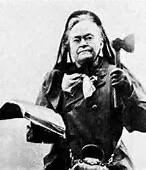

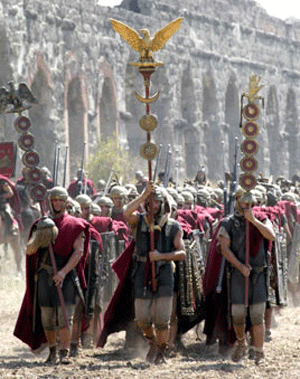



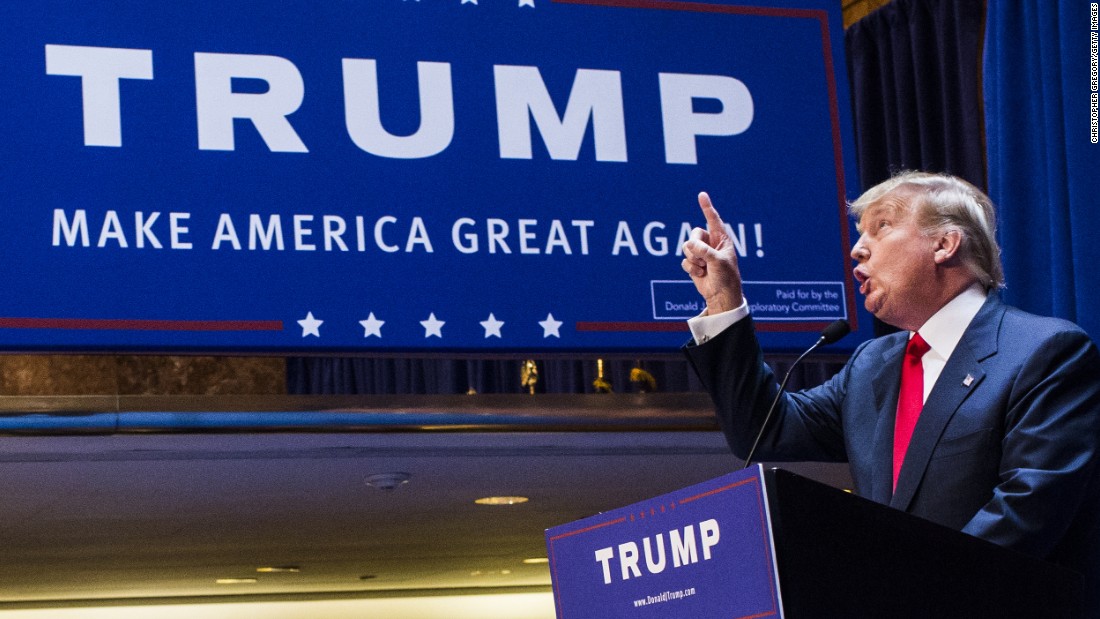
  • “Pax Americana”:  America as a Global Power

    “Pax Americana”: America as a Global Power

    President Trump

    Might
    Washington, like Rome, fall victim to imperial overstretch?

    Could
    military force abroad eventually have to be withdrawn because of bankruptcy at
    home?

    Might
    the whole idea of America eventually be challenged and destroyed by some
    charismatic new faith: some fundamentalist variant on Christianity?

    Or
    will nature disrupt America’s new world order?


    Robert Harris, “Does Rome’s fate await the
    US?,” The Mail on Sunday, October 12, 2003 (1)


    INTRODUCTION:  FOREIGN POLICY AND DOMESTIC POLITICS

    This post will discuss American foreign policy, with an emphasis on economic aspects. It will focus on the structure of America’s trade treaties and policies, and the interaction of America’s foreign economic policies and domestic politics. The companion post, “Pax Americana”: The World That America Made, the will discuss America’s projection of global power and influence through military power, security arrangements, global economic institutions, and ideological influence.


    During the Cold War (1940s – 1991) and until recently, Americans tended to separate foreign policy and domestic policy. This is no longer true.


    For Americans, there was prosperity at home and security abroad. There was a foreign policy consensus around anti-Communism, that America should take the lead in containing the Soviet Union and China. This consensus made possible large military and national security expenditures. Fortunately, this was a prosperous time for America. There was economic growth, fueled by new technology and pent-up demand following World War II. America was by far the world’s largest economy and American companies did not have to worry about imports from other countries. There were some concerns – Vietnam in the 1960s, supply and price of imported oil in the 1970s, and Japanese competition in the 1980s – but they were peripheral to the core objective of defending western Europe and matching Soviet military forces. 


    Americans no long see foreign policy and domestic policy as separate. Al-Qaeda’s attack on the World Trade Center came as a terrible shock. America’s subsequent attempt to contain Islamic fundamentalism has been inconclusive at best. China is now the main concern. Unlike Russia or Japan earlier, China is seen as a foreign rival and a threat to the domestic economy. America’s networks of military and economic alliances seem to be unraveling. The value of the most important military alliance, NATO, is being questioned. Multilateral agreements are attacked as constraints on national actions and concerns. 


    America is no longer isolated from the global economy. Imports and exports as a percent of GDP are rising, although still lower than most industrialized economies. Industrial supply chains are global. The largest American corporations have become multinational, making investment decisions increasingly independent of America’s national economic interests and policies. 


    President Trump believes in negotiating bilateral (country to country) economic agreements and ignores multilateral organizations. Multinational companies generally prefer global rules. They are opposed to President Trump’s nationalistic economic policies of increased tariffs and other barriers to trade.


    TRADE TREATIES AND AMERICAN FOREIGN POLICY


    What we might be seeing in
    the United States and globally is the end of the post-WWII era, the “American
    Century.” Why have a majority of Americans stopped supporting the global
    institutions that the United States created after World War II? Will America
    react creatively to guide the world to a new set of rules and regulations? Or
    will the United States revert to isolationism and protectionism, as it did
    after World War I, the last time America tried to impose a “New World Order”? 


    America, through many
    rounds of multilateral and bilateral trade negotiations since World War II, has
    set the rules and regulations for the current global economy. These trade
    treaties had three aspects:


    ·     
    Reduce barriers
    to trade such as tariffs and quotas.

    ·     
    Economic and
    political integration of the non-Communist world.

    ·     
    Access to the huge American market in exchange for military alliances and bilateral security
    agreements, including American bases abroad.


    With the collapse of the
    Soviet Union in 1991, it appeared that the economic and the national security aspects
    were separated. The global economy continued to expand. The combination
    of relatively free trade and new communications and transportation technology made it possible for
    large national corporations to evolve from exporters into multinational
    corporations. Technology, capital, management, finance and labor became mobile,
    creating complex financial structures and supply networks.


    AMERICA AND THE GLOBAL ECONOMY


    But there was growing opposition in America to the global economy. Presidential candidate
    Donald Trump tapped into and focused widespread discontent with free trade and
    the global economy.


    89% of Americans
    think that the loss of US jobs to China is a somewhat or very serious issue,
    according to Pew Research statistics…Only 46% of Americans think NAFTA was good
    for the economy.

    Business Insider, November 13, 2016.


    As in Europe, nationalist,
    anti-immigration politicians have turned long-standing economic problems and
    rising discontent into a political agenda. Rather than dealing with them
    domestically, these politicians blame outside groups and institutions –
    international organizations, immigrants, “unfair” foreign competition.
    Strangely, they don’t blame the organizations that actually moved jobs and
    investment overseas – multinational corporations. Top managers and owners of
    multinationals with large overseas investments are well represented in the
    current administration – Rex Tillerson, Wilbur Ross and Donald Trump.


    What is the source of this
    discontent? One source is the change in the global economy. From the 1940s to
    roughly the 1980s, American corporations owned the American economy and didn’t
    worry about foreign competition. The rest of the world was devastated by World
    War II. There was new technology to develop, pent-up demand, and wartime
    savings. The result was rising real wages and employment security.


    By the 1980s, that began
    to change. The success of Japanese exports of autos and consumer electronics to
    the U.S. created a U.S. trade deficit with Japan, which became a political
    issue. American corporations found themselves competing with foreign companies
    at home and abroad. Capital (automation) continued to replace production and
    assembly labor even as industries such as autos and steel recovered. Real wages
    and real incomes stagnated for workers in the older industries. Job security
    and pensions disappeared.


    REALITY CHECK: 
    THE GLOBAL ECONOMY


    President Trump has a
    simple-minded view of global trade and the structure of the global economy that
    is at least two generations out of date. As a consequence, there is a disconnect
    between economic reality and political rhetoric.


    In outline:


    ·     
    Countries don’t
    trade, corporations do. About 60% of “Chinese” exports are produced by foreign multinational corporations. 

    ·     
    The mental
    picture of a country’s companies producing at home and then exporting is
    obsolete.

    • o  
      There are complicated
      global supply networks and an every-changing dynamic international division of labor.
    • ·     
      Where goods are
      produced is less important than where value is added.
    • o  
      Nike does not
      produce any shoes in the U.S. but most of the value-added occurs here. Same for
      Apple and many consumer electronics companies.
    • ·     
      There are
      complicated relationships between American and foreign companies.
    • ·     
      Over 25% of
      American manufacturing is owned by foreign corporations.
    • o    Foreign car
      companies account for most of American production.
    • ·     
      About 20% of
      America’s merchandise trade is intra-company.
    • ·      About half the
      sales and profits of America’s 500 largest corporations are outside the United
      States. Overseas operations account for most of their growth in investment, sales, and profits.
    • ·     
      A large part of
      American imports is of products and services created and marketed in the United States and
      produced by American companies abroad.
    • ·     
      The fastest
      growing part of American exports is high value-added services. This creates high-paying jobs. The U.S. runs a large trade surplus in services.


    ·     
    As discussed
    later, consumers in the United States, not “Mexico” or “China,” pay increased
    tariffs (taxes) on imports.


    The economic reality is that
    multinational corporations, made possible by the global economic order that
    America created, are crucial to American economic growth. A return to
    nationalism will increase conflict between domestic politics and the economic
    growth needed to address domestic problems.


    As discussed below,
    attempting to reduce America’s trade deficits through increased tariffs and
    other trade restrictions will not work.


    TARIFFS AND TRADE


    What would happen if U.S.
    unilaterally renounced trade agreements and imposed tariffs? A tariff is a tax.
    The income from tariffs goes to the U.S. government. It is a tax mostly
    paid by American consumers. It would raise prices on imports, including imports
    of inputs like parts and subassemblies. It would also raise prices on some
    American-produced products that compete with imports. 


    Other countries would
    retaliate. (2) The net result for America would be higher costs and prices
    (inflation), and lower standards of living. There would be few if any net new
    jobs in assembly or manufacturing. 
    Multinational corporations would direct new investment to countries that
    were not threatened, that didn’t retaliate or to countries that depreciated
    their currencies against the dollar since they would have relatively lower costs. Chinese and American
    companies in China are already moving labor-intensive production and assembly to countries like Vietnam,
    Bangladesh and Malaysia. Even hi-tech companies like Chinese solar panel
    producers have started doing this. (3)


    American exports would
    suffer as other countries retaliate. Companies in the U.S. would accelerate
    research and investment in robotics and AI in the United States, substituting
    fully automated assembly lines for manufacturing workers.


    America’s economic growth
    depends on innovating new products and services, keeping the high value-added
    part in the U.S., outsourcing the low value-added part to the global supply
    chain, and selling in the global market. Much of U.S. imports are raw materials
    such as crude oil and other inputs into processed or final assembled products
    with high labor, low wage content. Much of America’s exports are processed or
    manufactured goods with high capital and human capital content such as refined
    petroleum products and aircraft. We also run a trade surplus in services such
    as financial, consulting, and software. Any retaliation will damage American
    research and development, the source of economic growth. So will the proposed
    cutbacks in federal support for basic research, especially in the area of
    biotechnology.


    The stated goal of
    reducing the U.S. trade deficit might not happen. A reduced trade deficit could
    lead to an appreciation of the dollar against other currencies. This would
    increase the cost of American exports and reduce the cost of all imports,
    offsetting the economic effects of increased tariffs.


    Jobs leave the U.S. for
    other reasons besides lower wages. In the Carrier example, the president of the
    parent company, United Technologies, said the Mexican workforce is not only
    cheaper but also more productive, easier to train, and has lower rates of absenteeism
    than the American workforce.


    REDUCING DOMESTIC AND GLOBAL ECONOMIC GROWTH


    President Trump can reduce
    global growth through his trade and tariff policies. A president can raise
    tariffs or label a country a “currency manipulator” through executive
    privilege, without Congress’ approval.


    Candidate Trump promised to
    put a 45% tariff on Chinese exports, brand China a currency manipulator, tax
    Mexican imports, increase tariffs on German and Japanese cars, “rip up”
    existing trade agreements and kill the Trans-Pacific Partnership (TPP), which
    he called “a rape of our country.” If he did all this, he would ignite a global
    trade war, which the chief economist of Citi said “could easily trigger a
    global recession.” Other bank economists have said that even modest increases
    in tariffs on Chinese and Mexican imports could reduce real GDP growth by 0.5 –
    1.0%. (Business Insider, November 13,
    2016)


    Summarizing his analysis,
    Citi’s chief economist, Willem Buiter, concluded:


    The
    U.S. has been the champion of free trade and open borders for decades. A
    retreat from globalization by the US would likely lead to reciprocal actions
    from other countries, and reinforce the latest shift towards deglobalization
    and could be another nail in the coffin of the liberal global economic world
    that has supported prosperity since 1948. (Business
    Insider
    , November 13, 2016) 


    DOMESTIC AMERICAN POLITICS AND FOREIGN POLICY


    Imperial overstretch, also
    known as imperial overreach,
    is a hypothesis which suggests that an empire or world power can extend itself
    beyond its ability to maintain or expand its military and economic commitments.
    The idea was popularized by Yale University historian Paul Kennedy in his 1987
    book The Rise and Fall of the Great Powers.


    America has financed its
    global military and economic commitments through borrowing, much of it in
    recent years from foreign governments and institutions. The Federal budget
    deficits over the last 16 years have been roughly equal to Defense Department
    spending. (Total spending on national security is higher.) The Chinese
    government is the largest foreign holder of U.S. government debt.


    A great power like the
    United States can also retreat into isolationism and protectionism if its
    people lose the will or ability to pay the costs or believe they are not
    benefiting from foreign commitments. A sense of frustration sets in. Foreign
    economic ties may be seen as a source of domestic economic and social problems.
    The American president and foreign policy strategists stop talking about the
    primacy of democratic governments and American ideals in foreign affairs.

    During the Cold War with the Soviet Union, Americans were willing to accept the idea of prolonged conflict without certain victory. Since the collapse of the Soviet Union, domestic support for prolonged wars and political conflicts to contain enemies rather than defeat them has been seriously eroded.

    There is irony when the
    country that built the greatest wall in history is now talking about open trade
    while the country that has led the post-war campaign to expand trade is talking
    about extending a wall. As Chinese emperors knew, walls are as much
    psychological as physical.


    Domestic problems may take
    precedence and divert resources. The combination of the rapidly rising cost of
    health care and social security for an aging population, large military and
    national defense expenditures, a rising backlog of public investment, proposed tax
    cuts, larger fiscal deficits, and large trade deficits is not sustainable. The
    proposed programs of the Trump administration will make the problem worse and
    probably accelerate the crisis.


    Decades of fiscal deficits
    and trade deficits, financed increasingly by foreign borrowing, have led to
    high and rising levels of the national debt-to-GDP ratio. Borrowing at low
    interest rates has made this possible. If the Federal government had to borrow
    at the post-war average, it would add over $250 billion to annual deficits.


    The next round of tax cuts
    for upper-income households and corporations will lead to larger structural
    deficits even in years of economic growth. The United States will find it
    increasing expensive (higher interest rates) to finance national defense and
    global commitments. This will reinforce President Trump’s call for reduced
    American involvement abroad. (4)


    Donald Trump blamed job loss
    and stagnant incomes on imports, particularly from China. While economic
    studies show that over 80% of job loss is due to technological change, and some
    of the rest to domestic trends like leveraged buyouts and corporate cost
    cutting, blaming “unfair” trade rules and other countries had more political appeal. As president,
    Donald Trump has said he will oppose the trade agreement with Pacific Rim
    countries (TPP), intends to unilaterally change some of the tariffs and trade
    rules of NAFTA, and has no intention to continuing trade negotiations with the
    European Union (this may change). Candidate Trump also singled out Japanese and
    German auto companies as targets for increased tariffs, despite the fact their
    investment in the United States revitalized the American auto industry.


    The related campaign theme
    was the emotional issue of immigration, both legal and illegal. Donald Trump
    demonized Mexicans and Muslims, blaming them for job loss of Americans, crime
    and domestic terrorism. Travel bans on Muslim countries, revoking of visas, and
    mass deportations were begun as soon as he became president. Combined with
    rhetoric that was racist and xenophobic, this will not endear the United States
    to its Latin American and Muslim allies, and fuels anti-American feeling. 

    President Trump has
    encouraged similar rhetoric in European and South American countries. He has
    antagonized and isolated America’s strongest ally on the European continent,
    Germany.


    Immigrants are vital to
    American economic growth and development. Graduates of elite foreign
    universities often came to the United States; “over 75 percent of the graduates
    of the Indian Institutes of Technology in the 1980s emigrated to America.” (5) Over
    half of the science and math graduate students in American universities are
    foreign. Keeping them in the U.S. with H1-B visas is vital. Immigrants and
    their children are entrepreneurial, accounting for a disproportionate share of
    new businesses. Managers from all over the world are necessary if American
    multinationals are to remain competitive.


    Mr. Trump’s call for
    economic nationalism and isolationism reverses 70 years of American foreign
    economic policy. Global economic integration will continue but without the
    United States setting the rules. The United States has pulled out of global organizations attempting to reduce global warming and intends to loosen domestic environmental regulations. China, on the other hand, is taking up leadership to
    combat climate change.


    Exports, including tourism,
    will suffer, thus reducing a major driver of American economic growth and job
    creation. Tariff and trade wars will hurt U.S. economic growth and development.
    They will increase the insecurity and frustration of more Americans. 


    Blaming the social costs of
    technological and economic change on foreign scapegoats will make it more
    difficult to deal with these ongoing problems. This will continue to fuel
    domestic anger and support for isolationist and protectionist policies.


    President Trump does not
    believe that government is responsible for dealing with the “negative
    externalities” or social costs of industrialization and rapid economic and
    social change. The Trump administration is not concerned with pollution and
    climate change. This reduces American influence in dealing with these important
    global problems. This makes the transition to non-fossil fuel energy more
    difficult. It also means that new energy technologies such as solar panels and
    wind turbines cannot expect any government support, ceding these high-tech,
    growth industries to corporations in other countries.


    The issue of global warming
    illustrates the loss of American leadership in international attempts to solve global
    problems. The American denial of global warming will have consequences to
    American influence. Candidate Trump denounced global warming as a “hoax.” As
    president, he has quickly supported of fossil fuel companies by relaxing environmental
    rules on the production of oil, natural gas and coal, particularly on the
    release of methane and carbon into the atmosphere. His first proposed budget
    slashes support for climate research, solar and wind turbine power, and
    electric cars. President Trump has also announced that he does not support the
    latest global agreement setting targets to reduce carbon emissions. Appointing
    the CEO of Exxon/Mobil as Secretary of State, in charge of America’s foreign
    policy, is a clear message.


    POSSIBLE SHIFTS IN FOREIGN POLICY


    President Trump is pessimistic
    about the global order and America as a global power. If he believes America
    can influence global events from behind “Fortress America,” he is deluding
    himself and the American people. If he thinks he can be isolationist, protectionist,
    and xenophobic without damaging American power and influence, he is deluding
    himself.  If he thinks he can praise Putin
    and support right-wing, anti-EU parties in Europe without damaging American
    influence, he is deluding himself. If he thinks he can insult the governments
    of Germany, England and other allies without consequences, he is deluding himself. If he
    thinks he can denounce, repeal or unilaterally change trade treaties without
    consequences to the U.S. economy, the global economy and American leadership,
    he is deluding himself. If he thinks he can reduce America’s commitment to NATO
    without reducing American power and influence in Europe, he is deluding himself. And us.


    The damage has already been
    done.  Even if President Trump backtracks
    on some of his threats, no one can trust that what he says
    at any moment will not change. For domestic political reasons, he will probably
    return to the nationalist, anti-global themes that got him elected, and could
    get him reelected. America has become an unreliable ally. Allies will reevaluate their national interests and foreign policies in light of uncertain American support.


    CONCLUSION


    The last presidential
    election shows that many Americans, probably most, are no longer willing to pay
    the cost of maintaining American power and influence in the world. Domestic
    problems are blamed on “unfair” global competition, global institutions,
    immigrants and foreign governments.


    It matters little if
    President Trump does not follow through with his threats. The damage has been
    done. Increased tariffs and trade restrictions will hurt the American economy
    and make it more difficult to deal with domestic political issues. Scapegoating
    foreign governments, minority groups and corporations will fuel anger and discontent,
    making it less likely America will react creatively to its economic challenges. The coming massive disruptions of robotics and artificial intelligence will increase domestic tensions.


    More Americans are against
    global institutions and against the United States bearing the cost of being the
    world’s global power. Pew Research polls showed that this trend started well
    before Donald Trump ran for president. Mr. Trump has tapped into these feelings,
    making them the driving force of a successful presidential campaign. His continued focus on these themes will probably continue to erode American support for the post-war economic institutions and rules America established.


    America’s commitment to
    promoting democracy and free trade around the world is waning. America’s
    current president seems comfortable with authoritarian rulers and
    anti-democratic far-right political leaders in Europe. Many of these leaders
    want to dismantle the European Union and return to national currencies and national economic policies. Some,
    like Marine Le Pen of France, want out of NATO.


    China has replaced Japan as
    the cause of America’s economic problems. America’s relationship with China is
    moving from détente to confrontation.
    America’s allies in Europe and Asia are recalibrating their relations with
    Russia and China as the American president talks of isolationism. America is
    becoming an unreliable ally.


    America’s resolve to bear
    the costs of being a global power is waning. America’s domestic social and
    economic change has generated a politically powerful backlash. Most white
    Americans do not want their government to support or promote social change, do
    not support the open global economic order America created, do not want to bear
    the cost of being a global superpower. These are related. Continued
    presidential rhetoric, despite his policies, will encourage and broaden these
    beliefs. Trump’s dark, pessimistic picture of America’s isolationist,
    protectionist future may be a self-fulfilling prophecy.


    America’s “New World Order”
    is coming apart. The last election and opinion polls indicate that most
    Americans do not believe in it. America’s allies in Europe are under attack
    from nationalist groups that want to dismantle it and appease the Russian
    autocrat. These groups are given vocal support and encouragement by the
    American president.


    President Trump, by
    renouncing TPP, has signaled America’s abdication of influence in East Asia;
    allies now have to look to a combination of nationalism and accommodating
    China. New national security and economic arrangements among Asian countries will be considered. For example, South Korea has taken the first steps to signal easing tensions with North Korea, over the objections of the United States. The TPP countries intend to continue with the treaty without the United States.  China has started an ambitious economic and strategic program called “One Belt, One Road” to circumvent American military and strategic containment. Economic growth for East Asian countries will be increasingly tied to economic
    alliances and trade agreements with China.


    All of the political and
    economic institutions that the United States created or supported after World
    War II, mostly in response to the Communist challenges of the Soviet Union and
    China, are now under domestic attack. One group believes the post-war
    framework has outlived its usefulness, that it no longer deals with changed
    geopolitical and economic circumstances and is need of drastic reform. Probably
    a larger group no longer supports the foundations of the American world order.


    ——————————————————————————————————

    1. For
    suggestive analogies between America and the Rome, see “The Roman Republic Commits Suicide:  A Cautionary Tale for America,” June 19, 2011.
    https://politicaleconomicsprof.com/2011/06/pax-americana-i-washington-imperial.html


    2. Reuters, “China prepares
    to counter any U.S. trade penalties:  sources,”
    March 20, 2017

    http://finance.yahoo.com/news/china-prepares-counter-u-trade-093343375.html


    3. The New York Times, “When
    Solar Panels Became Job Killers,” April 9, 2017, page 1 of the Sunday Business
    section.


    4. “The Economy After the
    2016 Elections,” November 26, 2016

    https://politicaleconomicsprof.com/2016/11/the-economy-after-2016-election.html


    5. Fareed Zakaria, The Post-American World, 129.


    ============================================================


    See the companion post:  “Pax Americana”:  The World That America Made.”  https://politicaleconomicsprof.com/2017/03/the-beginning-of-end-of-pax-americana.html

    If you like history and speculative historical analogies, you might like the following two essays:

    The Roman Republic and America

    The Roman Republic Commits Suicide:  A Cautionary Tale for America

    For a list of all posts and economic tutorials in Pages, see Guide to Posts.


  • American Foreign Policy Since 1991

    American Foreign Policy Since 1991


    Introduction


    The United States
    has been the world’s only superpower since the collapse of the Soviet
    Union in 1991.  In some ways
    it is more difficult to manage foreign policy without concentrating on one big
    rival.


    The United States
    is vastly stronger in military strength than any possible coalition of enemy
    forces.  But since 9/11 we are feeling
    less secure despite huge military and domestic security expenditures.  Our military and national security
    expenditures of around $1.1 trillion are greater than the military expenditures
    of next ten countries combined (and most are allies).  This is a consequence of a professional
    military, a result of eliminating conscription after the Vietnam War, and the
    highly technical (capital intensive) nature of American military forces and strategy. 


    There is almost no national debate on U.S.
    military interventions in other countries. 
    One reason is that most Americans have no direct involvement; they see
    the professional military differently than if we still had the draft and a conscript army.


    There has been little public debate on national security
    strategy since 1991.  Congress has all
    but abdicated its role in foreign policy to the president. We should be asking:


    Is it the wrong strategy for a rapidly changing world?


    Do we rely on military force at the expense of using other
    means? 


    Did America
    change its political and military strategy enough after disintegration of Soviet
    Union? 


    We focused on terrorism after 9/11.  But are we fighting global terrorism with the
    same strategy we used during the Cold War? 


    There have been a number of successes from the U.S.
    point of view.  But they are not directly
    due to America’s
    military might or even an active American foreign policy.


    Eastern European countries join
    NATO and the European Union after the collapse of the Soviet empire.  This is a historical moment – a chance to
    peacefully unite Western and Central Europe.


    The spread of democracy to
    countries without a democratic tradition or experience, especially in Latin
    America and East Asia.  In some cases, democratic groups were able to
    overthrow authoritarian or military regimes that enjoyed American support.


    The shift in control of most economic
    resources from public to private control. 
    Except for some raw materials, almost all of global economic resources are
    now in private hands, especially those of large multinational corporations.  Private companies develop new technology.  A globally integrated economy, I would argue,
    is in America’s
    national interests.


    I would like to discuss four aspects of American foreign
    policy:


    Reliance on massive firepower and technological solutions.


    Lack of knowledgeable leadership in the United
    States.


    Lack of support for democratic, liberal groups in
    authoritarian states.


    Lack of awareness that domestic and foreign policies are
    intertwined.


    Reliance on massive
    firepower and technological solutions.


    It is difficult for American leaders not to think first of a
    military solution to a foreign political problem when we have such a
    magnificent tool as the U.S.
    military. But military interventions have not been politically successful in Vietnam, Lebanon, Somalia, Afghanistan or Iraq.  American presidents have
    learned that it is easy to invade and conquer but hard to occupy.  Also, as in Iraq
    and Afghanistan,
    lengthy occupations tend to create and strengthen the very political groups we
    seek to destroy. The Taliban is the strongest political group in Afghanistan; the inept occupation of Iraq led to Iran now dominating Iraqi politics and officers of the disbanded Iraqi army joining ISIS.   


    The use of military force without thinking through the
    long-run consequences and how it fits into 


    America’s
    strategic objectives can be futile and expensive.


    Lack of awareness that
    domestic and foreign policies are intertwined.


    For a superpower there is no distinction between domestic
    and foreign policy. Since 9/11, the United States has become a domestic security state; new surveillance powers and technology threaten civil liberties and individual rights to privacy. 

    Domestic economic and social policies have
    consequences for foreign policy and American power.  A few examples:


    Fiscal Policy. 
    After eliminating the self-funding parts of Social Security and
    Medicare, about 40% of the federal budget is currently financed through
    borrowing.  The current deficit is about
    $1 trillion a year.  This is
    approximately equal to total national security costs.  So the high costs of being a superpower is
    being financed through debt. Higher tax revenue because of economic growth will reduce but not eliminate the yearly
    deficit and increase the national debt. The recent combination of a tax cut and increased military spending makes the fiscal situation worse. At some point, American leaders may have to look at the cost of
    national defense and seriously consider major cutbacks.  This will impact America’s
    ability to project force and influence anywhere in the world.


    If large fiscal deficits continue they will eventually
    jeopardize the dollar as the international currency.  Much of international trade is denominated in
    dollars.  This is a source of America’s
    global influence.


    Energy policy. 
    Importing crude oil and natural gas finances, directly and indirectly, America’s
    actual and potential enemies.  In the
    past, oil exports supported corrupt, authoritarian regimes in Libya
    and Iraq.  Oil exports benefit Russia,
    Iran and Venezuela.  Oil revenues help finance Muslim terrorist
    groups. Because of the dramatic increase in domestic production of oil, the U.S. now imports virtual no oil from the Middle East. It is ironic that the United States became militarily engaged in the Middle East just as we no longer needed oil from that region.


    Trade Deficit. 
    The U.S.
    continues to run a large trade and current account deficit.  The reasons are complicated although net
    energy imports are a part of it. 
    We can run this trade deficit as long as foreign holders of dollars are
    willing to invest in and lend to the United
    States. In the long run, this could have
    serious economic consequences.  Changes
    in domestic energy and economic policies could reduce the trade deficit and
    finance more of it from domestic savings. 


    Drug policy.  Current
    domestic drug policy creates huge profits for drug gangs around the world.  Profits from the drug trade help to finance
    terrorist groups and the states that support them.  Drug gangs destabilize Latin American and
    Asian governments and divert resources needed for economic development.


    An important part of American influence in the world is foreign
    perception of America
    as an example to be emulated.  America
    represents both a set of political and social ideals, and a related model to
    achieve economic growth and opportunity.  American influence is jeopardized if the rest
    of the world sees a society with increasing concentration of wealth and income,
    less social mobility, low economic growth, and a political system that appears
    to be intolerant, lacks compassion for the poor, and seems incapable of solving
    domestic problems.


    Lack of support for
    democratic, liberal groups in authoritarian states.


    The United States
    continued to support authoritarian regimes even after the fall of the Soviet
    Union.  There was no
    long-run policy to support democratic groups in authoritarian states after 1991
    or even after 2001.  Potential democratic
    opposition in these states continued to be outlawed, weakened or
    destroyed.  In many countries, the only
    organized opposition was religious fundamentalist groups. Egypt
    is the latest example.


    The United States
    should concentrate on supporting organizations and individuals who organize and
    expand the civil society of countries. 
    The point is that a democratic state can only survive and prosper if it
    has a social, economic and ideological foundation.


    The U.S.
    should support democratic groups in the same way we supported Solidarity in Poland.
    The American people have a role to play by contributing to NGOs that can affect
    change through supporting and advising civic organizations in other countries.


    One area of opportunity where the U.S.
    and Americans should support democratic groups and civil organizations is sub-Saharan
    Africa. This is important since after 2050 all of the world’s population growth will occur in sub-Saharan Africa.


    Part of any strategy is to play for the long run.  It was naïve to expect that Russia
    would overnight transform from a Communist to an American-style democratic
    society, or that long term Russian strategic interests would somehow disappear.  It is possible that Islamic
    fundamentalist political parties will dominate politics in many Islamic states
    in the foreseeable future.  But, as in Iran,
    they will create an internal opposition. 
    They can not keep out information, ideas and images from other
    societies.  For the U.S.,
    giving the opposition moral and material support should be a vital part of a
    long-run strategy.


    Lack of knowledgeable
    leadership in the
    United States.


    The quality of leadership counts.  For a superpower, the ignorance and lack of
    foreign policy experience of every president and presidential candidate after George
    Bush is appalling.  It is ironic that
    almost all of the domestic and foreign policies of George Bush were reversed or
    ignored by his son when he became president.  


    The American people should think about electing national
    leaders who know something about the rest of the world.  The recent presidential debates were
    embarrassing.  Congressional leaders are
    even worse. 


    Questions


    What are America’s
    strategic objectives?


    How are they being met by using overwhelming military force?


    What are
    the limits to our military superiority in a world of “asymmetric warfare,” non-state terrorist groups, and Internet-based propaganda?

                What are
    the tactical alternatives?


    Can we continue to spend $1 trillion a year on national
    security while running large budget and trade deficits?


    Cautionary Tales


    Historical
    analogies must be used with extreme care but they can be suggestive cautionary examples.  I wish that America’s
    political leaders had read Thucydides, especially his detailed analysis of Athens’
    large expedition to subdue Syracuse,
    before committing substantial American military forces to Vietnam. Or how come the most powerful military country of its day could not defeat American rebels. 


    The examples of the imperial democracy of Athens
    and the Roman republic might be relevant to the U.S.
    after the collapse of the Soviet empire. After defeating serious threats from rival powers (Persia
    and Carthage, respectively), both
    city-states rapidly expanded power and influence.  Both became the dominant powers in their main theaters of operation (Greece for Athens and the Mediterranean for Rome). Athenian and Roman political institutions could not adjust to remaining democratic and managing an empire.  Thucydides gives Pericles,
    the architect of imperial Athens, a
    speech justifying Athens’ foreign
    policies that sounds eerily like the “American exceptionalism” speeches of the
    last 20 years. In both cases, foreign power and imperial policies put severe strains on
    domestic politics and society. Athenian democracy was destroyed by a war of attrition with Sparta and then both were conquered first by the Macedonians and then the Romans. The Roman republic expanded rapidly in the last 100 years of the republic but collapsed from internal pressure to become the Roman empire.


    Conclusion


    All of this suggests that there are less expensive
    alternatives than relying primarily on military superiority – U.S.
    image, different domestic policies, changing security and economic alliances, support for foreign civil society
    organizations, becoming more economically
    competitive in the global economy, strategic vision and better leadership.  Since it is possible that military and national
    security spending will decrease sometime in the future because of fiscal constraints, it is time to
    concentrate on alternatives.


  • Why Study History? Lessons for Americans

    Why Study History? Lessons for Americans

    Thucydides


    A friend of mine recently said that the most “useless” course he took in college was history.

    Let’s start with Thucydides, The History of the Peloponnesian War. This was a war that took place over 2,400 years ago. What possible relevance could it have to Americans?

    In this war, Athens and Sparta, the two “superpowers” of Greece, were locked into a long war for the dominance of Greece. The climax to the story in Thucydides was that Athens decided to send its formidable fleet and much of its army to attack Syracuse, an ally of Sparta, far away across the Mediterranean Sea in Sicily (still there). The campaign was a disaster, leading to political instability at home and weakening Athens’ military position in Greece. Sound familiar? Remind you of our involvement in Vietnam?

    This is not a direct analogy but suggestive of some of the consequences of the Vietnam War. These potential consequences were not factored into the decision to make a major commitment in Vietnam.

    Fortunately, Soviet leaders also didn’t read history and a few years later became bogged down in a similar war in Afghanistan. The consequences were more severe; Russia suffered the same fate as Athens. Arrogant people in power seldom seem to learn from the mistakes of others.

    There was another historical analogy to the war in Vietnam, one we should have known about. The American Revolution.

    The British were a global superpower, having just defeated France for global imperial rule. But France was still a formidable enemy in the main theater of war, Europe. Then the far-away Americans revolted. On paper, the British should have won easily. And they did. After the embarrassment of Boston, England sent a large part of its navy and regular army to deal with the rebels. In the key battle for New York, the British almost annihilated the American Continental Army. Washington barely escaped to Valley Forge with a remnant of his army. Eventually, however, Washington realized a strategic truth. This was not a traditional war. He didn’t have to win battles to win American independence, the goal of the revolt. What he had to do was keep the Continental Army together as a symbol that the revolt was still alive.


    This was essential because for the Americans, as for the Viet Minh, they were not fighting to get a negotiated settlement. This was an “existential” war; either the Americans were going to be free on their own territory or they would suffer under harsh English colonial rule.

    Time was on Washington’s side. There was opposition to the war in England from merchants, manufacturers like Wedgwood, intellectuals (Adam Smith), powerful Whig politicians and even from some top military leaders, including General Lord Cornwallis. Generals and officers who headed the British army in America wrote in their private diaries that the war could not be won.  


    The war was expensive, as most of the navy had to protect long-distance logistic and supply lanes across the Atlantic in addition to blockading the American coast and ferrying the British army around. The longer the American army was in the field, tying down large British military assets, the better the chance that France would deliver the promised aid to the Americans, increasing the chances the American army could survive and become stronger. France supported the American rebels and then entered the war in a big way, contributing to the final victory at Yorktown.

    In the end, the British realized that they would never have enough resources to defeat the Americans or even occupy American territory outside of a few major cities. And there was the strategic danger that major military resources would not available in case of renewed hostilities with France in Europe.

    By 1781, the war had dragged on for six years. An ill-conceived attempt to reestablish British presence in the southern colonies was met with a brilliant campaign of skirmishes and battles where a part of the Continental Army and local militias (and disease) ground down the British force. A classic campaign of guerrilla warfare and attrition. The British goal failed; even if the defeated and diseased remnant of Cornwallis’ army had been successfully sea-lifted out of Yorktown, the war was probably over for the Brits. There was no reason to continue since it was obvious to almost everyone that England didn’t have the will or the resources to put down the revolt. The only move left was to negotiate a peace treaty giving the Americans their independence and refocus on the French.

    If American political leaders in 1964/65 had read Thucydides and understood the historical lessons of the American Revolution better, would they still have made a major commitment in Vietnam? I don’t know. But they might have had a more realistic internal debate on the dynamics and possible outcome of the war.

    Maybe as citizens of the United States we should spend some time tomorrow, the Fourth of July, thinking about or reading some history.


    ___________________________________________________________________________

    Related Posts:

    Some of the topics introduced in this post are discussed in more depth in other posts.


    For more detail on how the American rebels won the American Revolution, see


    Revolution and the New Country:  American History, 1775-1790


    For how the consequences of WWI might have contributed to the American stock market crash of 1929 and the subsequent Great Depression, see

    The Stock Market Crash of 1929 and the Great Depression

    Also see the posts comparing the U.S. and Rome, starting with

    Pax America I:  Washington as an Imperial City


    For an analysis of why the Roman Republic collapsed after becoming a “global” power, see


    The Roman Republic Commits Suicide:  A Cautionary Tale for America

    For a discussion of the short-run and long-run consequences of World War I, see

    The Immediate and Long-Run Historical Consequences of World War I