 |
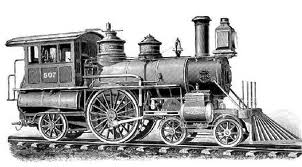
Baldwin Locomotive |
Baldwin, the largest producer of steam locomotives in the nineteenth century, faced problems typical of a dominant company in a bilateral
oligopolistic industry. Almost everything that happened at Baldwin
was conditioned by a highly cyclical, almost unpredictable competitive
environment. A high level of business risk followed from sudden, large fluctuations in demand. This meant that Baldwin
often had excess capacity with substantial fixed investment, leading to a
strategy based on economies of scope and not economies of scale. Baldwin also depended
on a skilled labor force with firm-specific knowledge and experience that was exposed to sudden and massive layoffs followed by the company’s attempts to
rehire the same workers. It is hard to
imagine a more challenging competitive environment.
Baldwin was a large and dominant
firm, accounting for approximately one-third of all steam locomotive
production. The buy side of the market
was dominated by a small and increasingly concentrated number of railroad
companies, which were some of the largest corporations in America
in the nineteenth century. The sources
of market power of the locomotive builders were their specialization and flexibility
in production, although some of the larger railroads – Baldwin’s
largest customers – also built locomotives in their own machine shops. The sources of market power of the railroads
were their large purchasing power, technical knowledge of their “master
mechanics” who ordered equipment, and knowledge of the optimal mix of equipment
for their particular company. In such an
environment, Baldwin had market power because of its
size and assembly expertise, but never enjoyed the market control of a mass producer
of standardized products. Market power
based on marketing to final consumers was not feasible; railroad customers did
not demand that railroads use Baldwin engines.
Every large railroad developed its own specifications and
demanded customized equipment from Baldwin. In addition, there was continuous
technological improvement of the basic steam locomotive, often innovated by
railroad technical staff. As a
consequence, Baldwin could never control the pace of
design change. The company could not totally
incorporate mass production techniques because of constantly-changing
customized design and finish. On the
other hand, by working closely with its customers over a long period of time, Baldwin
probably had lower transaction costs than if its sales were arms-length market
transactions.
This mutual dependence, along with railroads’ credible
threat of internal production, usually gave the railroads a bargaining
advantage when negotiating design customization and price with Baldwin. But working closely with its largest
customers, particularly the Pennsylvania Railroad, also increased the
probability of Baldwin’s long-run survival.
This symbiotic relationship between steam locomotive
builders and the railroads worked as long there was no fundamental innovation
in engine design and both sides benefited from continuous improvement in the
steam locomotive. The bilateral
relationship would be much different in the later market for diesel engines in
which General Motors controlled the technology and forced railroads to buy
standardized products.
Baldwin’s management objectives were
to minimize risk and maximize operating flexibility by sharing risk with
suppliers through subcontracting out much of its parts production. Since production was to order, Baldwin
managed a “just-in-time” parts inventory system that minimized working capital
requirements. When times were bad, Baldwin could delay
payment to its suppliers and thus use them as a major source of working
capital. This was one way the company
dealt with severe cash flow problems in economic downturns.
The company countered the potential loss of skilled workers
after massive layoffs with high wages, skill development through apprenticeship
training for employees and sons of employees, and the hope of higher income for
long-term employees through a system of internal promotion and inside
contracting. Inside contracting, usually
managed by long-term employees, put pressure on contractors to keep labor costs
down. This led to much more cooperative,
less confrontational labor relations policies than those of other large-scale
employers like Carnegie Steel.

Horace L.Arnold – “Modern Machine-Shop Economics.” in Engineering Magazine, 11. 1896
Because of the complex nature of its production, Baldwin
needed sophisticated internal systems to keep track of parts, subassemblies,
and final production schedules. The
company substituted detailed cost and internal job flow information for
management control bureaucracies. While Baldwin
did little internal product development, it was very quick in applying advances
in product design and production technology.
But the company never “bet the ranch” on internal development of a
radically new design of steam locomotives.
The long-term success of
Baldwin, under highly uncertain market conditions,
raises the issue of the limitations of the multidivisional form of
organization. Multidivisional
corporations often do not stay focused on production of key product lines and
the development of core competencies.
Rather, they are prone to the danger of more diversification than they
can efficiently manage, with the related danger of diseconomies of scale.
When diesel locomotives
became less expensive to operate and maintain than steam locomotives, Baldwin tried to adjust but its technology and skill
base was too specialized to adopt the new technology. Baldwin did
innovate, designing and producing more powerful and efficient steam engines. But to no avail. Baldwin was
doomed, another victim of “creative destruction.”
COMPANIES SIMILAR TO BALDWIN
A suggestive line of inquiry might be the similarities between
Baldwin’s strategies and those of Japanese companies to
minimize risk and maximize innovation in a highly uncertain and changing
environment. Large Japanese companies
followed similar strategies in the early phases of their industry growth. A big difference was that zaibatsu risk was reduced by the actions
of the Japanese government and related financial institutions.
Probably the current companies most similar to Baldwin
are capital goods companies that sell large, complicated systems. Another suggestive analogy might be the
similar strategies adopted by organizations such as financial software
companies that build large, complex systems, such as SAP
or Oracle. Any company that relies on
employees with firm-specific skills and experience, including knowledge of the
requirements of large customers, face many of the challenges that Baldwin
did.