Tag: Bilateral Oligopoly

  • Bilateral Oligopoly

    Bilateral Oligopoly

    The best movie about the Gunfight at the O.K. Corral is titled My Darling Clementine.
    A great western – great cast, great photography. 

    DEFINITION OF A BILATERAL OLIGOPOLY


    Models of market structure assume that the demand side is
    represented by a large number of buyers. 
    The structure of the market, and the assumed market outcomes, depends on
    the number of suppliers and how they compete. 
    Suppliers either post one price or exploit their knowledge of buyer
    categories by using price discrimination. 
    Despite the comments about the key role of consumers in determining
    economic performance, consumers are fairly passive when the discussion focuses
    on imperfectly-competitive industries. 
    But many markets are not structured this way; the buyers are not passive
    consumers but large corporations that do not passively accept suppliers’
    prices.  Net prices are actively
    negotiated.  These markets are often
    bilateral oligopolies.


    In a bilateral oligopoly the buyers are not an
    undifferentiated mass of consumers but rather a small number of purchasing
    agents or professional buyers representing large purchasers.


    There are now a small number of large
    corporations on both sides of the market. 
    The same company could be on different sides of two bilateral
    oligopolistic markets.  For example,
    Boeing Aircraft is a major purchaser of jet engines from the three big engine
    producers and one of two major suppliers (with Airbus) of large commercial
    aircraft to a limited number of large airlines.
     

    THE MARKET FOR CAPITAL EQUIPMENT


    Economics textbooks talk about putting inputs together in
    the most cost-effective way possible to produce some level of output.  But if capital goods markets are not
    perfectly competitive, there is no mechanism on how this is done.


    Markets for capital goods and many other inputs are
    structured differently than the consumer products markets that are the usual
    examples in economics.  Capital goods,
    processed metals like steel and aluminum, chemicals and petrochemicals,
    packaging material, transportation equipment, IT hardware and software, and
    other inputs are often produced by large corporations in oligopolistic
    industries.  There are usually large
    economies of scale and scope compared to the size of the market.  Economies of scale producing differentiated
    products define the size of the market and the net price of the product for
    each customer.  Yet, contrary to the
    impression in economics textbooks that concentration leads to collusion,
    companies in these types of industries are very competitive, including fierce
    price competition.  Even duopolies, such
    as Coke and Pepsi or Boeing and Airbus, can be very price competitive markets.  Long-run economic profits (profits above the
    cost of capital) are surprisingly rare. 
    Outcomes in many of these industries approach the ideal outcomes as if
    these industries were perfectly competitive.


    One of the reasons for price competition and lack of market
    power by large sellers is the lack of asymmetric information.  Large corporations on the buy side of the
    market spend a great deal of resources to be well-informed about
    suppliers.  Size plus market information
    gives them countervailing market power.  The
    result is a bilateral oligopoly market structure.      

    DESCRIPTION OF A BILATERAL OLIGOPOLY

    Many producers sell intermediate goods and
    capital goods to final producers and assemblers.  Final producers often sell to large
    wholesalers, distributors and retailers. 
    Even small retailers often purchase through franchisors, buying offices
    or big coop distributors like True Value. 
    In all these situations, it is professional buyers who make the buying
    decision.  Purchasing agents and new
    product committees are well-informed about their suppliers.  They demand a great deal of information about
    products and services from potential suppliers but do not share actual price
    and product information with competing suppliers.


    Because they represent large customers, they have
    substantial market power, playing off one supplier against another.  They buy in large volume, often for their own
    private label, and are compensated for negotiating low prices.  In the extreme, retailers like Wal-Mart force
    suppliers to offer prices close to the suppliers’ marginal cost, the same
    prices that would prevail in a perfectly-competitive market. 


    In many bilateral oligopolistic markets, price is
    a primary consideration in the purchasing decision.  Professional buyers along the supply chain
    are not swayed by marketing or advertising. 
    Brand names are often unimportant or irrelevant in markets for raw
    materials, commodities, industrial products, intermediate goods, commodity
    chemicals, information technology, products made to buyer’s specifications,
    generic products, and private label products. 
    Price at or near marginal cost occurs when competing products are close
    or perfect substitutes in the eyes of the professional buyers.  When buyers view alternative sources of
    inputs as close substitutes, sellers can not charge a premium price based on
    perceived superior value.


    Corporate buyers have leverage if their company
    is a relatively big part of the market or if producers have large economies of
    scale.  One implication of large
    economies of scale is that producers are forced to run plants at a high percent
    of capacity to make a profit.  Industries
    with large economies of scale also often have industry overcapacity so that not
    all companies can run their plants at full capacity.  As long as price is above marginal cost, some
    companies would be willing to expand output to increase profit or reduce
    loss.  For example, auto company
    purchasing agents negotiate with large suppliers from the steel, aluminum,
    plastics, and tire industries, all of which currently have excess
    capacity. 


    There
    are a small number of producers in many markets for raw material,
    semi-processed goods or industrial products because of large economies of
    scale.  Scale economies create the
    “through-put problem” for suppliers. 
    Economies of scale are made possible by large up-front investment in
    fixed assets representing new technology. 
    Units of output have low variable cost. 
    But there is low average (unit) cost only if plants are run at high
    rates of capacity.  If producers have
    high fixed cost relative to variable costs and must operate plants at a high
    percent of capacity to make an adequate rate of return, or plant closing costs
    are high, then large buyers might be able to force the contract or negotiated
    price down close to marginal cost.


    Many
    large manufacturers face large assemblers or retailers as major customers.  If products are viewed as homogeneous by
    buyers, suppliers are chosen primarily on price.  Buyers use a number of bidding and contract
    negotiation procedures to maximize the amount of price competition among
    potential suppliers.  Anyone who has ever
    been a sales rep or purchasing agent knows how complicated this process can be.


    Much
    of the discussion of the Internet is a variation of this description.  Internet companies may have high development
    costs but the marginal cost of one more buyer on the site may be close to
    zero.  A common strategy is then to try
    to grab as much market share as quickly as possible. 


    For some products, like computer hardware and
    systems, the part of the market where computer companies sell computer systems
    to large institutions contains aspects of bilateral oligopoly.  About 40% of total demand for information
    technology comes from large companies, about 45% from midsize to small
    businesses, and only about 15% from individual consumers.  Large banks and other financial companies
    spend over $1 billion a year on information systems.  They have tremendous market power –
    negotiating power – when they decide which suppliers to choose.


    Buyers for assemblers and retailers typically
    face final consumers and competitors in their product markets.  So demand in intermediate markets is derived
    from the buyers’ forecasts of final consumer demand.  Professional buyers are actually negotiating
    part of the cost of the final product for the ultimate consumer.  They have a big incentive to try for the
    lowest cost of inputs, which will give their company a competitive advantage in
    the output market and determine profit margins. 
    Price competition in the final goods or retail market keeps profit
    margins down.


    Unlike other imperfectly-competitive markets,
    here we assume symmetric information.  We
    do not assume that sellers know more than buyers.  There are informed purchasing agents on the
    buy side who spend considerable resources to gather data on suppliers.  They develop technical expertise, force
    suppliers to share proprietary information, visit plants, and demand data from
    competing manufacturers. Sellers often lack valuable information that buyers
    have – the offering net prices and sales conditions of other sellers.


    Large corporations can be fiercely competitive
    for market share and increased profit. 
    Competitors also want to protect proprietary information, negotiating
    positions and marketing strategies from each other.


    Although products and services may be
    differentiated in the eyes of producers, in some intermediate markets the
    competing products may be almost undifferentiated (almost perfect substitutes)
    in the eyes of purchasing agents.  Tires
    and computers are examples.  Demand from
    professional buyers for each product is more elastic than assumed by the
    producers.  Producers misjudge the price
    elasticity of demand.  They offer to sell
    at a higher price than buyers are willing to pay.  Buyers then institute price competition by
    playing off one supplier against another, negating the market power of the
    large suppliers.  By such means as
    competitive or sealed bids, buyers decide mostly on the basis of price.  Final market price is indeterminate, partly
    dependent on negotiating skills. 


    Professional buyers and purchasing agents,
    following the self-interest of their company, are negotiating prices on behalf
    of the final consumer.  This is a major
    source of price competition in retail markets. 
    If buyers have elastic demand and can negate the supplier’s
    market power, the market price will probably be closer to the price reached in
    a perfectly-competitive market.


    MARKET SHARE AND MARKET POWER

    It is usually assumed that a large market share
    translates into market power, the ability of a company to charge prices
    substantially above marginal cost (and unit cost) and thus make above-average
    rates of return.  In a bilateral
    oligopoly market, however, large market shares of suppliers can be negated by
    large market shares of buyers.  In fact,
    if the main reason for a small number of big producers is economies of scale
    relative to the total size of the market, then market power typically swings
    over to the buyers’ side.  This is
    especially true if there is excess capacity in the industry, a common situation
    in manufacturing industries with large economies of scale.


    Large
    producers may also not have much market power if every sale is important.  This is the usually situation in
    transportation equipment – Boeing vs. Airbus selling jet aircraft in
    multi-billion dollar deals, large containerships and oil tankers, and diesel
    locomotives sold to the handful of railroads left in the
    United States or national railroads in other countries.  Other examples in large capital goods markets
    are electric power-generating equipment, oil rigs or large earth-moving equipment
    (Caterpillar vs. Komatsu). 
    Another possibility is large construction companies and their suppliers
    bidding on large construction projects.


    This implies that the heart of the strategy of a company in
    a bilateral oligopoly is to use its purchasing power and knowledge of the
    market to hold down the costs of inputs purchased from outside suppliers.  This strategy is crucial if the company is to
    be price-competitive in its output market. 
    In an output market of few suppliers, the company must be price
    competitive if it pursues a market share strategy.  Many companies believe that increasing market
    share in the short run is a tactic to increase profitability in the long run.


    When there are a small number of well-informed
    buyers, they can constantly and effectively monitor the market.  They will be especially sensitive to any
    attempts by suppliers to attempt collusion since the buyers’ companies are the
    immediate victims of supplier collusion. 
    Buyers may find it hard to pass on high input costs to their
    oligopolistic customers.  Buyers and
    purchasing agents can initiate “cheating”, that is, price competition
    among suppliers.  This is one reason for
    the small amount of overt or even tacit collusion in
    U.S. industry. 


    Even in a duopolistic retail market like that of
    cola, Coke and Pepsi compete for market share. 
    Supermarkets can often negotiate lower prices with one company in
    exchange for more shelf space and greater volume purchases.  This puts pressure on the other company to
    match the lower price.

    DUAL MARKETS:  SELLING INTO RETAIL AND BILATERAL OLIGOPOLISTIC INSTITUTIONAL MARKETS


    Corporate buyers are in a strong position if the
    same product, such as tires or personal computers, is sold in both retail and
    industrial markets.  Institutional buyers
    initiate a form of price discrimination, demanding lower prices than the
    wholesale prices to the retail market. 
    Price discrimination here works in favor of buyers if sellers are forced
    by competition or excess capacity to offer lower prices to large, well-informed
    corporate customers in the original equipment market.


    Only
    part of the total market, the industrial part, has to be price-sensitive –
    sheets sold to industrial users, tires to car manufacturers, cola bought by
    fast food chains, personal computers bought by corporate buyers. 


    BILATERAL OLIGOPOLY AND VERTICAL
    INTEGRATION


    Being a buyer in a bilateral oligopoly is a good
    reason why an assembler or retailer should not integrate backwards
    (backwards vertical integration).  In the
    short run, the market is characterized by fierce price competition.  In the long run, a company does not want to
    get locked into one development path based on one type of technology.  The examples of what happened to
    IBM (fell behind Intel in microprocessors), U.S.
    Steel (did not adopt minimill technology) and General Motors (lack of
    innovation, inefficient internal coordination), all depending almost entirely
    on in-house research and development, caution against vertical integration.  Of course, large corporate buyers in
    intermediate markets can threaten to produce some of the inputs
    themselves.  Given the dynamics of
    bilateral oligopolies, this may not be a credible threat.


    INDUSTRY STRUCTURE AND INTERNAL CORPORATE ORGANIZATION


    This brings up the issue of the relationship between
    industry structure and internal organization. 
    Companies that recognize they are in a bilateral oligopoly may be less
    likely to have a fully-developed divisional structure.  The reasons could be a small marketing
    function (supply side), since advertising and promotion have limited effect on
    professional buyers, or a small product development function (buy side).  The result could be a simpler management
    structure.  Supplier firms will tend to
    be production-oriented, not market-oriented. 
    Many of the functions of a self-contained division are not necessary or
    are performed elsewhere (by customers, by suppliers, or by specialized capital
    goods companies) or jointly with customers. 


    An important determinant of the internal structure of a firm
    will be the transaction costs to the firm as a buyer of inputs.  If transaction costs are low, possibly
    because of accumulated knowledge of the market, the firm will have low
    purchasing costs.  Internal coordination
    costs between purchasing and production, and related inventory costs, may be
    low if the purchaser can impose “just-in-time” delivery schedules on
    suppliers.  Also, net transaction
    costs may be low if the cost of accumulating knowledge about suppliers
    translates into lower prices for a large volume of inputs.


    CONCLUSION

    It is hard to find a market or industry, no
    matter how narrowly or broadly defined, that is not an oligopoly or tending to
    oligopoly.  These industries are usually
    part of a supply chain, most of which are structured as bilateral oligopolies.  This limits the market power of large
    corporations and constrains profit margins.

    As discussed in the post on Baldwin Locomotives, producers of complicated products like transportation systems, supplying large transportation companies,  tend to be in bilateral oligopoly markets.  Many health care markets are becoming bilateral oligopolies, mostly through mergers and acquisitions. As one side of the market becomes more concentrated, companies on the other side combine as a defensive strategy.  

    ___________________________________________________________________________________

    For Baldwin Locomotive and other examples of bilateral oligopoly, see Examples of Bilateral Oligopoly 

    For more examples of bilateral oligopoly, see The New York Times Discovers Bilateral Oligopoly.


    For a modern example, see Markets and Large Companies:  A Case Study of Parker Hannifin

    For a list of all posts, see Guide to Posts.
  • Examples of Bilateral Oligopolies

    Examples of Bilateral Oligopolies

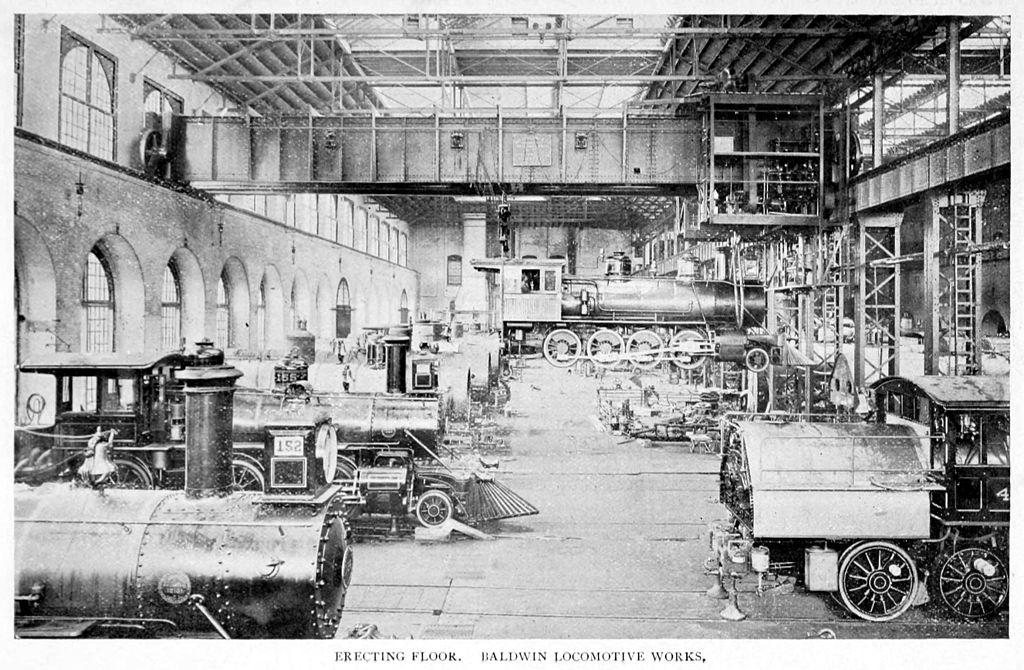
    Baldwin Locomotive Works:  Erecting Floor

    BALDWIN LOCOMOTIVE WORKS:  A HISTORICAL EXAMPLE OF BILATERAL OLIGOPOLY

    Baldwin, the largest producer of steam locomotives in the nineteenth and early twentieth centuries, faced problems typical of a dominant company in a bilateral oligopolistic industry. A highly cyclical, almost unpredictable competitive environment conditioned almost everything that happened at Baldwin. A high level of business risk followed from sudden, large fluctuations in demand from railroad companies. This meant that Baldwin often had excess capacity with substantial fixed investment. There were few opportunities for economies of scale. 

    Baldwin also depended on a skilled labor force with firm-specific knowledge and experience that was exposed to sudden and massive layoffs followed by the company’s attempts to rehire the same workers.  It is hard to imagine a more challenging competitive environment.  

    Baldwin was a large and dominant firm, accounting for approximately one-third of all steam locomotive production.  The buy side of the market was dominated by a small and increasingly concentrated number of railroad companies, five by the early 20th century, which were some of the largest corporations in America in the nineteenth century.  The sources of market power of the locomotive builders were their specialization and flexibility in production, although some of the larger railroads – Baldwin’s largest customers – also built locomotives in their own machine shops.  The sources of market power of the railroads were their large purchasing power, technical knowledge of their “master mechanics” who ordered equipment, and knowledge of the optimal mix of equipment for their particular company.  In such an environment, Baldwin had market power because of its size and assembly expertise, but never enjoyed the market control of a mass producer of standardized products.  Market power based on marketing to final consumers was not feasible; railroad customers did not demand that railroads use Baldwin engines.

    Every large railroad developed its own specifications and demanded customized equipment from Baldwin.  In addition, there was continuous technological improvement of the basic steam locomotive, often innovated by railroad technical staffs.  As a consequence, Baldwin could never control the pace of design change.  The company could not totally incorporate mass production techniques because of constantly changing customized design and finish.  On the other hand, by working closely with its customers over a long period of time, Baldwin probably had lower transaction costs than if its sales were arms-length market transactions.

    This mutual dependence, along with railroads’ credible threat of internal production and the importance to Baldwin of every sale, usually gave the railroads a bargaining advantage when negotiating design customization and price with Baldwin.  But working closely with its largest customers, particularly the Pennsylvania Railroad, also increased the probability of Baldwin’s long-run survival. 

    This symbiotic relationship between steam locomotive builders and the railroads worked as long there was no fundamental innovation in engine design and both sides benefited from continuous improvement in the steam locomotive. But the market radically changed with the introduction of the diesel-electric locomotive. Baldwin and other steam locomotive companies could not compete with the new technology and went bankrupt.  

    The bilateral relationship would be much different in the later market for diesel engines in which General Motors controlled the technology and forced railroads to buy standardized products.

    Baldwin’s management objectives were to minimize risk and maximize operating flexibility by sharing risk with suppliers through subcontracting out much of its parts production.  Since production was to order, Baldwin managed a “just-in-time” parts inventory system that minimized working capital requirements. When times were bad, Baldwin could delay payment to its suppliers and thus use them as a major source of working capital.  This was one way the company dealt with severe cash flow problems in economic downturns.

    The company countered the potential loss of skilled workers after massive layoffs with high wages, skill development through apprenticeship training for employees and sons of employees, and the hope of higher income for long-term employees through a system of internal promotion and inside contracting.  Inside contracting, usually managed by long-term employees, put pressure on contractors to keep labor costs down.  This led to cooperative, less confrontational labor relations policies than those of other large-scale employers like Carnegie Steel.

    Because of the complex nature of its production, Baldwin needed sophisticated internal systems to keep track of parts, subassemblies, and final production schedules.  The company substituted detailed cost and internal job flow information for management control bureaucracies. While Baldwin did little internal product development, it was very quick in applying advances in product design and production technology. 

    When diesel locomotives became less expensive to operate and maintain than steam locomotives, Baldwin tried to adjust but its technology and skill base was too specialized to adopt the new technology.  Baldwin did innovate, designing and producing more powerful and efficient steam engines.  But to no avail.  Baldwin was doomed, another victim of “creative destruction.”

    COMPANIES SIMILAR TO BALDWIN

    Many transportation companies – companies that produce airplanes, ships, or railroad equipment – are similar to Baldwin. The American companies most similar to Baldwin are capital goods and information technology companies that sell large, complicated systems to other large corporations. Corporations that offer oil field equipment and services to large oil drilling companies fit this category.

    Boeing and Airbus are in a similar position as Baldwin. As are the three remaining corporations that produce jet engines.

    Strategies adopted by organizations such as financial software companies that build large, complex systems for large corporate customers, such as SAP or Oracle, are similar to Baldwin’s. These companies start with offering complicated systems and then work with their corporate customers to customize them to meet a company’s particular requirements.

    A special case is the market for the most advanced chips. ASML dominates the market for the machinery that produces the chips. Taiwan Semiconductor (TSMC) dominates the market for the actual production of the chips. Nvidia dominates the market for advanced GPU chips. Competition is often a matter of new technology leading from one dominant company to another – from IBM to Intel to Nvidia. On the other side of the market are the data center companies – Microsoft, Amazon and Google.

    A suggestive line of inquiry might be the similarities between Baldwin’s strategies and those of Japanese companies in keiretsu supply chains to minimize risk, coordinate strategy with subcontractors, and maximize innovation in highly uncertain and changing environments.  Large Japanese companies followed similar strategies in the early phases of their industry growth. A big difference was that zaibatsu risk before WWII was underwritten and reduced by the actions of the Japanese government and related financial institutions.


    The New York Times Discovers Bilateral Oligopoly


    On Sunday, November 1, 2015, The New York Times ran an editorial titled “How Mergers Damage the Economy.”


    The article begins by citing an article in the Wall Street Journal summarizing a study done by two finance profs that estimate “nearly a third of American industries were highly concentrated in 2013, up from a quarter of all industries in 1996.” Much of the editorial mentions a few of the recent proposed large mergers and goes on to list the possible evils from large companies merging.


    But why do large companies merge?  One reason the article gives, without naming the concept, is bilateral oligopoly. To quote:


         Mergers tend to lead to more mergers. In the health care industry, big insurers like Anthem and Aetna say they need to get bigger to have more leverage in negotiations with hospitals and doctor’s practices that have become bigger through acquisitions in recent years.


    Anthem attempted to acquire Cigna ($48 billion) and Aetna attempted to acquire Humana ($38 billion).  There would have been only three large health insurance companies (UnitedHealth is the third). Both mergers were blocked by the Justice Department and the courts. Instead, insurance companies are buying or signing exclusive contracts with pharmacy benefits managers, hospital chains, clinics, and other health care providers. 
    Even without mergers, the five largest health insurers cover over 130 million people, about half of Americans with health insurance. Since then, Aetna was acquired by CVS Pharmacies.
    Pharmacies make the same argument.  Walgreen’s, the country’s largest pharmacy, wanted to buy Rite Aid, the country’s third largest pharmacy.  This is an industry that has seen massive consolidation over the last few decades.  Walgreen’s argument to the government is the same as the health insurers.  They have to get bigger to be in a stronger position when negotiating drug prices with the huge drug companies and pharmacy benefits managers. CVS, the second largest pharmacy chain, took it a step further. They acquired Aetna. CVS combines a dominant pharmacy chain, a health insurer, clinics, and a pharmacy benefits manager.


    Every sector of the health care industry makes the same argument. Hospitals are merging into regional health systems which dominate local and regional markets. Physicians are also joining local and regional groups.  As any one part of the health care supply chain consolidates, partly through mergers and acquisitions, their suppliers and corporate customers feel pressures to also consolidate. In game theory, this is called an “arms race.”
    Health care providers are consolidating because over half of all health care costs are paid by various government programs. Prices are set by negotiations with the government, not by supply and demand. With third-party payment, ultimate consumers can demand high levels of health care with no or low out-of-pocket costs.    


    Corporate managers may not believe in the economists’ quaint ideas about competition but they understand the advantages of market power, the power to influence prices.  They believe they have to gain market share not necessarily to be more competitive in their own industry but when dealing with their suppliers and customers in increasingly concentrated industries.  If not, they believe they will be forced during negotiations to accept lower prices and profits.


    By the 2020s, all markets have become more concentrated. About 2,500 hospitals have closed or merged into regional chains. Walgreen’s and CVS dominate retail pharmacies. Pharmacy benefits management, a key link in the drug supply chain, is dominated by three companies, as is the wholesale drug industry. Independent doctors are joining doctor’s groups, some of which are being bought by Optum, a subsidiary of United Health. Health insurance is dominated by three companies, including United Health. While rural clinics (and hospitals) are closing, private clinics, often owned by hospitals or large healthcare companies, are opening in urban areas.


    This mergers and acquisition activity is a new form of vertical integration, where companies are buying companies on the other side of bilateral oligopoly markets.


    The drug industry is more complicated. Very large companies have been formed through mergers and acquisitions. But most of the new drugs have been developed by hundreds of new drug companies. Some of these companies have been acquired by the large corporations. Others have drug development or marketing arrangements with large companies. (In effect, the large companies have become venture capitalists in their own industry.)


    Mergers and acquisitions continue to be a major corporate strategy.


    Mergers and acquisitions in the United States have averaged over $1 trillion a year in the last five years. Globally, mergers and acquisitions are over $3 trillion a year, creating larger and larger multinational corporations.


    The government bailed out the entire financial sector (and General Motors) during the last recession.  Rather than breaking up the big financial firms, the government allowed (or forced) them to buy other large firms. The number of banking companies is rapidly declining; mergers and acquisitions are creating large regional banking corporations. The banking industry is now more concentrated than before the financial crisis.  


    The article really doesn’t make a strong case for “how mergers damage the economy.”  Maybe the “damage” isn’t so great because of the “countervailing power” (a phrase from John Kenneth Galbraith, used in a different context) of a small number of large companies on both sides of a bilateral oligopolistic market. But health care mergers across industry lines, creating dominant companies in local or regional markets, reduces the “countervailing power” effect.

    ===========================================================

    For the concept of bilateral oligopoly and why this is often the dominant form of market structure, see Bilateral Oligopoly.


  • A Stylized Model of Innovation:  The Dynamics of Capitalism

    A Stylized Model of Innovation: The Dynamics of Capitalism


    Nicola Tesla


    There has been a debate in economics on whether innovation
    is exogenous (outside the economy) or endogenous (inside the economy).  This is another one of those dichotomies that
    obscures explanations of economic processes.


    This is a stylized narrative of the path of market and economic
    innovation, the dynamics of the modern, industrial economic system. The resulting economic structure is mostly oligopoly, the domination of markets by large corporations.


    Innovation begins with public knowledge, often scientific or
    mathematical discoveries that sometimes do not seem to have any practical value. Some examples are imaginary numbers, general equations of
    electromagnetism, the Second Law of Thermodynamics, Brownian motion, E=mc**2,
    the structure of DNA, the conductivity of
    solids, quantum superposition.  Some

    scientists and
    inventors begin to see possible applications of this scientific knowledge.  
    In the 20th century, they are
    often funded by governments that see possible military applications. Much of the hardware and software we
    use today as part of information technology was originally developed with
    government funds. Most of the basic
    research in biotechnology is still directly or indirectly funded by the government. Then entrepreneurs begin to see possible
    commercial (profitable) development of the technology. Because of the uncertainty of how the
    technology will meet potential wants and whether it will be profitable,
    usually many companies try to develop different versions of the
    technology. Only a few will succeed and become large, dominant companies. This is the stage where
    partial analogies to Darwinian selection, and their modern models, are
    suggestive. 


    Much of the work is in engineering, production, design,
    distribution and marketing (creating demand). Further economic development occurs as companies create new products and services from combinations of new and existing technology. Often much
    of the innovation includes exploiting existing “network” technologies, such as
    railroads, electrical grids, mass media, telecommunications, or the Internet.  

    Most of the early companies go bankrupt; about 500 auto companies were started in the early 20th century in the U.S.  A few companies successfully develop
    different niches of the potential market based on variations of the new technology. In the past, higher transportation and information costs might limit the
    geographical reach of any one company, allowing local and regional companies to
    succeed.  As distribution and information
    costs come down and new production technology leads to economies of development, a
    few of the innovative companies take over a larger percent of wider, growing market.


    The surviving companies often exhibit two other traits. They are able to attract outside capital at
    critical inflection points in their growth. Growth is accelerated beyond that possible if they relied solely on
    internal cash flow. Also, they are
    able to acquire large competitors or small companies with technology or
    products that make them potential competitors. 


    Typically, no one version of the technology gives the best
    benefit/cost ratio to all customers or consumers. Differentiated products or services aimed at developing different segments of the market lead to an oligopolistic structure of the
    market or industry. Total demand increases. Each company attempts to develop and protect proprietary information, be
    it better engineering, more efficient production, brand names, patents,
    packaging, etc., as the basis for growth in market share and economic
    profit.

    Lower unit costs over time partly in a function of better machinery and information systems provided by capital goods companies. Companies in the capital goods industries, including information, compete on the basis of innovation. Better manufacturing and information systems are available as inputs to final goods and services companies.   


    But with time, patents expire, engineers and managers leave existing companies to start their own company, and “industrial espionage” diffuses knowledge. Proprietary information leaks out to other
    companies and, with standardized products and slowing innovation, economic (above average) profit
    begins to disappear.  Products become commodities, meaning customers or consumers choose mostly on the basis of price. Market structure
    tends to stabilize.  New companies might
    enter to better serve a specialized niche of the market.  Some are acquired by large companies with
    declining internal investment opportunities; some replace existing companies as one of the dominant companies. 
    The overall market structure remained oligopolistic, often with the
    distribution of company size represented by a relatively stable exponential power law.


    Another source of diffusion of knowledge and structural stability is that companies providing
    inputs, often large capital goods or information technology companies, offer standardized
    machinery, production systems or information technology and software packages to all existing corporate
    customers. Capital goods companies are
    crucial to continuing innovation since this is how they compete. Inputs embodying innovation are
    available to all. Company customers, however, often customize the input technology to make it more “firm-specific,” to make it part of their proprietary knowledge.


    This is part of a more general process where technology and
    information become widely known. 
    Much of the change in an industry is in cost reduction, relatively minor
    product changes and marketing.  Rates of
    return on new investments approach the company’s cost of capital.


    Often, a new round of basic innovation begins.  Typically, it is driven by new companies,
    often outside the industry that innovated in the past.  Large companies have large
    investments in existing technology and much of the firm-specific knowledge supports this technology, existing distribution channels, a large customer base
    and existing marketing strategies. One
    should also not underestimate internal resistance to major change in any large
    organization, especially if the company has a history of profitability and
    market dominance.


    So the cycle begins again. 
    No company, no matter how big and how profitable, is immune from
    attack.  Think of General Motors,
    AT&T, IBM, Intel, Sears,
    U. S. Steel, Eastman
    Kodak, Xerox, Polaroid, Nokia, and many others. New companies based on new technology
    appear.  Old industries are transformed
    and new industries created. But the
    dominant industry structure remains oligopolistic because of the internal dynamic of innovation (economic development).


    There is an important lesson here. The basis of competition in most, if not all, industries and markets, is innovation, not price.

    =====================================================================

    For an excellent example of an innovative entrepreneur at the beginning of the Industrial Revolution in England, see


    Josiah Wedgwood, the Wedgwood Pottery Company, and the Beginning of the Industrial Revolution.

    Go back to the List of Posts by Topic.


  • A Historical Example of Bilateral Oligopoly:  Baldwin Locomotive Works

    A Historical Example of Bilateral Oligopoly: Baldwin Locomotive Works

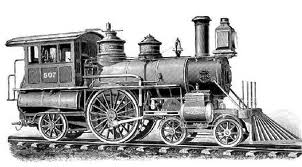
    Baldwin Locomotive

    Baldwin, the largest producer of steam locomotives in the                 nineteenth century, faced problems typical of a dominant company in a bilateral
    oligopolistic industry.  Almost everything that               happened at Baldwin
    was conditioned by a highly cyclical, almost   unpredictable competitive
    environment.  A high level of business       risk followed from sudden, large fluctuations in demand. This         meant that Baldwin
    often had excess capacity with substantial         fixed investment, leading to a
    strategy based on economies of scope and not economies of scale.  Baldwin also depended
    on a skilled       labor force with firm-specific knowledge and experience that was    exposed to sudden and massive layoffs followed by the company’s   attempts to
    rehire the same workers.  It is hard to
    imagine a more    challenging competitive environment.                                                    


    Baldwin was a large and dominant
    firm, accounting for approximately one-third of all steam locomotive
    production.  The buy side of the market
    was dominated by a small and increasingly concentrated number of railroad
    companies, which were some of the largest corporations in America
    in the nineteenth century.  The sources
    of market power of the locomotive builders were their specialization and flexibility
    in production, although some of the larger railroads – Baldwin’s
    largest customers – also built locomotives in their own machine shops.  The sources of market power of the railroads
    were their large purchasing power, technical knowledge of their “master
    mechanics” who ordered equipment, and knowledge of the optimal mix of equipment
    for their particular company.  In such an
    environment, Baldwin had market power because of its
    size and assembly expertise, but never enjoyed the market control of a mass producer
    of standardized products.  Market power
    based on marketing to final consumers was not feasible; railroad customers did
    not demand that railroads use Baldwin engines.


    Every large railroad developed its own specifications and
    demanded customized equipment from Baldwin.  In addition, there was continuous
    technological improvement of the basic steam locomotive, often innovated by
    railroad technical staff.  As a
    consequence, Baldwin could never control the pace of
    design change.  The company could not totally
    incorporate mass production techniques because of constantly-changing
    customized design and finish.  On the
    other hand, by working closely with its customers over a long period of time, Baldwin
    probably had lower transaction costs than if its sales were arms-length market
    transactions.


    This mutual dependence, along with railroads’ credible
    threat of internal production, usually gave the railroads a bargaining
    advantage when negotiating design customization and price with Baldwin.  But working closely with its largest
    customers, particularly the Pennsylvania Railroad, also increased the
    probability of Baldwin’s long-run survival. 


    This symbiotic relationship between steam locomotive
    builders and the railroads worked as long there was no fundamental innovation
    in engine design and both sides benefited from continuous improvement in the
    steam locomotive.   The bilateral
    relationship would be much different in the later market for diesel engines in
    which General Motors controlled the technology and forced railroads to buy
    standardized products.


    Baldwin’s management objectives were
    to minimize risk and maximize operating flexibility by sharing risk with
    suppliers through subcontracting out much of its parts production.  Since production was to order, Baldwin
    managed a “just-in-time” parts inventory system that minimized working capital
    requirements. When times were bad, Baldwin could delay
    payment to its suppliers and thus use them as a major source of working
    capital.  This was one way the company
    dealt with severe cash flow problems in economic downturns.


    The company countered the potential loss of skilled workers
    after massive layoffs with high wages, skill development through apprenticeship
    training for employees and sons of employees, and the hope of higher income for
    long-term employees through a system of internal promotion and inside
    contracting.  Inside contracting, usually
    managed by long-term employees, put pressure on contractors to keep labor costs
    down.  This led to much more cooperative,
    less confrontational labor relations policies than those of other large-scale
    employers like Carnegie Steel.


    Horace L.Arnold – “Modern Machine-Shop Economics.” in Engineering Magazine, 11. 1896


    Because of the complex nature of its production, Baldwin
    needed sophisticated internal systems to keep track of parts, subassemblies,
    and final production schedules.  The
    company substituted detailed cost and internal job flow information for
    management control bureaucracies.  While Baldwin
    did little internal product development, it was very quick in applying advances
    in product design and production technology. 
    But the company never “bet the ranch” on internal development of a
    radically new design of steam locomotives.


    The long-term success of
    Baldwin, under highly uncertain market conditions,
    raises the issue of the limitations of the multidivisional form of
    organization.  Multidivisional
    corporations often do not stay focused on production of key product lines and
    the development of core competencies. 
    Rather, they are prone to the danger of more diversification than they
    can efficiently manage, with the related danger of diseconomies of scale.


    When diesel locomotives
    became less expensive to operate and maintain than steam locomotives,
    Baldwin tried to adjust but its technology and skill
    base was too specialized to adopt the new technology. 
    Baldwin did
    innovate, designing and producing more powerful and efficient steam engines.  But to no avail. 
    Baldwin was
    doomed, another victim of “creative destruction.”


    COMPANIES SIMILAR TO BALDWIN

    A suggestive line of inquiry might be the similarities between
    Baldwin’s strategies and those of Japanese companies to
    minimize risk and maximize innovation in a highly uncertain and changing
    environment. Large Japanese companies
    followed similar strategies in the early phases of their industry growth. A big difference was that zaibatsu risk was reduced by the actions
    of the Japanese government and related financial institutions.


    Probably the current companies most similar to Baldwin
    are capital goods companies that sell large, complicated systems.  Another suggestive analogy might be the
    similar strategies adopted by organizations such as financial software
    companies that build large, complex systems, such as SAP
    or Oracle. 
    Any company that relies on
    employees with firm-specific skills and experience, including knowledge of the
    requirements of large customers, face many of the challenges that Baldwin
    did.