 |
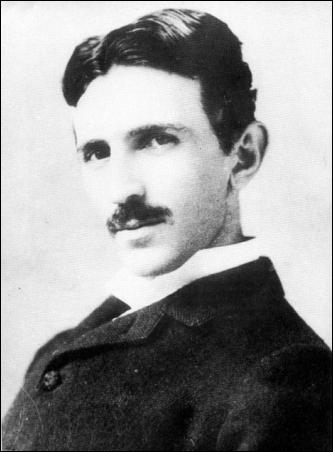
Nicola Tesla |
There has been a debate in economics on whether innovation
is exogenous (outside the economy) or endogenous (inside the economy). This is another one of those dichotomies that
obscures explanations of economic processes.
This is a stylized narrative of the path of market and economic
innovation, the dynamics of the modern, industrial economic system. The resulting economic structure is mostly oligopoly, the domination of markets by large corporations.
Innovation begins with public knowledge, often scientific or
mathematical discoveries that sometimes do not seem to have any practical value. Some examples are imaginary numbers, general equations of
electromagnetism, the Second Law of Thermodynamics, Brownian motion, E=mc**2,
the structure of DNA, the conductivity of
solids, quantum superposition. Some
scientists and
inventors begin to see possible applications of this scientific knowledge. In the 20th century, they are
often funded by governments that see possible military applications. Much of the hardware and software we
use today as part of information technology was originally developed with
government funds. Most of the basic
research in biotechnology is still directly or indirectly funded by the government. Then entrepreneurs begin to see possible
commercial (profitable) development of the technology. Because of the uncertainty of how the
technology will meet potential wants and whether it will be profitable,
usually many companies try to develop different versions of the
technology. Only a few will succeed and become large, dominant companies. This is the stage where
partial analogies to Darwinian selection, and their modern models, are
suggestive.
Much of the work is in engineering, production, design,
distribution and marketing (creating demand). Further economic development occurs as companies create new products and services from combinations of new and existing technology. Often much
of the innovation includes exploiting existing “network” technologies, such as
railroads, electrical grids, mass media, telecommunications, or the Internet.
Most of the early companies go bankrupt; about 500 auto companies were started in the early 20th century in the U.S. A few companies successfully develop
different niches of the potential market based on variations of the new technology. In the past, higher transportation and information costs might limit the
geographical reach of any one company, allowing local and regional companies to
succeed. As distribution and information
costs come down and new production technology leads to economies of development, a
few of the innovative companies take over a larger percent of wider, growing market.
The surviving companies often exhibit two other traits. They are able to attract outside capital at
critical inflection points in their growth. Growth is accelerated beyond that possible if they relied solely on
internal cash flow. Also, they are
able to acquire large competitors or small companies with technology or
products that make them potential competitors.
Typically, no one version of the technology gives the best
benefit/cost ratio to all customers or consumers. Differentiated products or services aimed at developing different segments of the market lead to an oligopolistic structure of the
market or industry. Total demand increases. Each company attempts to develop and protect proprietary information, be
it better engineering, more efficient production, brand names, patents,
packaging, etc., as the basis for growth in market share and economic
profit.
Lower unit costs over time partly in a function of better machinery and information systems provided by capital goods companies. Companies in the capital goods industries, including information, compete on the basis of innovation. Better manufacturing and information systems are available as inputs to final goods and services companies.
But with time, patents expire, engineers and managers leave existing companies to start their own company, and “industrial espionage” diffuses knowledge. Proprietary information leaks out to other
companies and, with standardized products and slowing innovation, economic (above average) profit
begins to disappear. Products become commodities, meaning customers or consumers choose mostly on the basis of price. Market structure
tends to stabilize. New companies might
enter to better serve a specialized niche of the market. Some are acquired by large companies with
declining internal investment opportunities; some replace existing companies as one of the dominant companies.
The overall market structure remained oligopolistic, often with the
distribution of company size represented by a relatively stable exponential power law.
Another source of diffusion of knowledge and structural stability is that companies providing
inputs, often large capital goods or information technology companies, offer standardized
machinery, production systems or information technology and software packages to all existing corporate
customers. Capital goods companies are
crucial to continuing innovation since this is how they compete. Inputs embodying innovation are
available to all. Company customers, however, often customize the input technology to make it more “firm-specific,” to make it part of their proprietary knowledge.
This is part of a more general process where technology and
information become widely known.
Much of the change in an industry is in cost reduction, relatively minor
product changes and marketing. Rates of
return on new investments approach the company’s cost of capital.
Often, a new round of basic innovation begins. Typically, it is driven by new companies,
often outside the industry that innovated in the past. Large companies have large
investments in existing technology and much of the firm-specific knowledge supports this technology, existing distribution channels, a large customer base
and existing marketing strategies. One
should also not underestimate internal resistance to major change in any large
organization, especially if the company has a history of profitability and
market dominance.
So the cycle begins again.
No company, no matter how big and how profitable, is immune from
attack. Think of General Motors,
AT&T, IBM, Intel, Sears,
U. S. Steel, Eastman
Kodak, Xerox, Polaroid, Nokia, and many others. New companies based on new technology
appear. Old industries are transformed
and new industries created. But the
dominant industry structure remains oligopolistic because of the internal dynamic of innovation (economic development).
There is an important lesson here. The basis of competition in most, if not all, industries and markets, is innovation, not price.
=====================================================================
For an excellent example of an innovative entrepreneur at the beginning of the Industrial Revolution in England, see
Josiah Wedgwood, the Wedgwood Pottery Company, and the Beginning of the Industrial Revolution.
Go back to the List of Posts by Topic.