
INTRODUCTION
For background, see prior post
on The Limits of Negotiation.
ECONOMIC NEGOTIATIONS
Basic game theory works best
in economic negotiations. The players
have the same assumptions (act rationally, make money), enter into the negotiations
voluntarily and negotiate which positive payoff matrix they will agree on. Economists usually assume that people are
playing a positive sum (win – win) game.
That is, how to divide up the monetary or utility gains.
Game theory indicates there
is a better chance at cooperation or reaching good faith agreements if the
players know they will be playing the game repeatedly or if both players see an
advantage to a long-term agreement.
Economic rationality implies
that an agent will not agree to an outcome if the individual will be worse off
than not negotiating. The alternatives
are not to negotiate or find another party with whom to reach a positive or
better agreement. A competitive economy,
however imperfect, provides alternatives.
ECONOMIC GAMES AND
INFORMATION
In simple games, the players
know what the payoff matrix looks like when the two players try to decide which
strategy to use and what their opponents’ strategy is. Economists know that even a simple, deterministic
outcome is unlikely. One reason is
asymmetric information.
Economic theory usually
assumes that all parties (agents in econspeak) have total information. This is especially true in finance
theory. But in the real world, this is
often not true. The agent with superior
information has a negotiating advantage.
It is likely that the outcome will be different than the full
information outcome. The more informed
agent will probably end up with a larger share of the profits. The increased profits may be a function of
the difference in the relative information known by the players. But it is still a positive sum game.
POLITICAL NEGOTIATIONS
Political negotiations are
different. Other factors are important –
ideology, moral beliefs, coercion, threat of violence, and a sense of fairness, in
addition to not negotiating. Zero and
negative sum games are more likely, especially if an alternative strategy is
violence. History is full of such examples, where politics is seen as a
kill or be killed zero-sum game. Since the end of World War Two, there have been over 150 civil wars.
The payoff matrix of
political games is often measured in power, not money. The value of the payoffs is more difficult
to quantify and more uncertain. Often,
negotiations are delaying tactics and agreements are broken.
In American politics, there
are political incentives not to agree.
An example occurs when there are term limits, especially in the second
term of the president. The opposition
has no incentive to agree to a reasonable policy if they believe the
president’s party will benefit politically.
They have every incentive to attack the president’s policies, even if
they agree with the objective. Even
members of the president’s own party may not support him as they maneuver to
become future presidential candidates.
CREDIBLE THREATS
An important aspect of political conflict is the concept of “credible threats.” If a country or group wants another country or group to change its behavior or negotiate, one means is to threaten it with some action. A threat is like a bluff. If an opponent calls a country’s bluff, the country must be willing to carrying out the threat. If if doesn’t, it loses credibility and is more likely to be ignored when it makes future threats. It is more likely that other countries or groups will continue or increase their behavior. Power and influence declines.
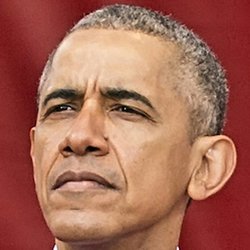
PRESIDENT OBAMA LEARNS GAME
THEORY
President Obama became
president with a belief that he could negotiate rationally, that he could use
logic and persuasion to convince
political opponents and special interests to compromise for the general good. He played an economic game. His opponents here and abroad played political
games. President Obama has finally
realized that.
He has had to deal with an
increasingly conservative Republican party, many of whose most active members
personally detest him. 10% of Americans, presumably Republicans and
conservatives, believe Obama is the Anti-Christ. Internationally, he has had to deal with
Islamic fundamentalist groups, Iran, Syria, Iraq, Afghanistan, North Korea, armed militias
of ethnic groups, the chaos of the aftermath of the overthrow of Quadaffi in
Libya, Hugo Chavez in Venezuela and Vladimir Putin in Russia. None of these groups and their leaders fit
the rationalist profile of a game theory player.
President Obama inherited a number of immediate and
long-term problems. He believed that
there were rational solutions to the problems, which could be reached through
logical arguments based on facts and reason, leading to negotiations and
mutually beneficial compromises. His
political opponents didn’t share this assumption. Again and again, President Obama appeared
exasperated by the irrationality of his political opponents, both at home and abroad. He shouldn’t be surprised any more.
========================================================
Please see related post, American Foreign Policy Since 1991.
Also, The Limits of Negotiations: A Little Applied Game Theory