 |
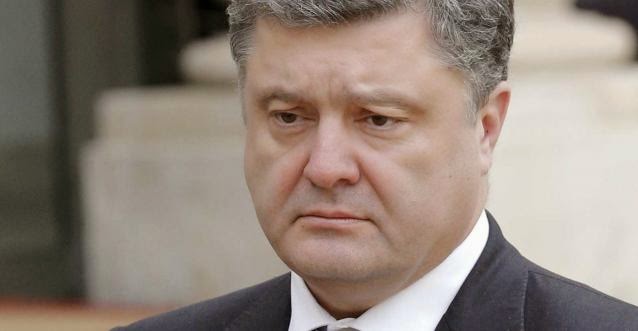
| Ukraine President |
Russia’s
illegal invasion and annexation of the Crimea will set off a chain of events
that could strengthen U.S. power and influence, especially in Eastern Europe. Putin is gambling that President Obama and
conservative Republican leaders lack the will to energetically react to Russian
expansion. First U.S. reactions have
been weak. Unless there is a change,
Putin might be encouraged to annex other Russian-dominated areas outside
current Russian borders.
Ukraine
has tried to balance Western and Russian pressure. The popular revolt against the pro-Russian
Ukrainian Prime Minister upset the balance and precipitated the crisis.
Putin may have decided to upset the unstable status quo in Eastern Europe, starting with Ukraine and Moldova. Russia’s next step could be to annex the eastern third of Ukraine. This area includes the Donetz Basin, which
contains a Russian majority and industrial resources. If successful, Russia could then move along the
north shore of the Black Sea to Odessa and maybe to the Rumanian border. Russia
already controls the eastern third of Moldova, presenting Ukraine, especially
the Kiev region, with the possibility of being threatened or attacked from both
the east and the southwest.
The
Russians are very concerned about their long-term demographic trends. Russia’s population is declining.
Russia’s population is now about 1/2 that of the U.S. and the gap is
widening. And, in the foreseeable future, European Russians will be
outnumbered by Asians (east of the Urals) and Muslims within Russia. Adding millions of European Russians may have
played a part in the decision to annex the Crimea.
All of
this has domestic advantages for Putin. His moves are popular in Russia.
Future leaders will probably also have to be nationalistic and probably
expansionist, putting pressure on Russia’s periphery. It was naive of the U.S. to
An
expansionist Russian foreign policy entails huge risks.
About 40%
of the population in the Crimea is Ukrainian and Tartar. Both groups in the region have centuries-old
historical grudges against the Russians. By making a de facto control de jure, the Russians are making sure that 40% of the Crimean population will now feel
like a conquered minority and will look to Ukraine for support.
The takeover might also finally unite the pro-West political leaders in the Ukraine. Ukraine
has already signed the economic cooperation treaty with the EU that started the
crisis. Ukraine needs immediate
financial support. With loss of
territory and increased Russian pressure, Ukraine will probably ask to join
NATO if it can be guaranteed U.S. military support in weapons systems and
training. If this happens, Russia will
be faced with another enemy, along its crucial southern European border. Putin is gambling this won’t happen.
It is also likely that Putin’s land grabs will reinvigorate NATO and focus U.S. attention on European security issues.
All this will affect Poland. Poland
does not have a border with Russia, except for a short strip to
the north with the Russian enclave of Kaliningrad. Poland has long borders with Ukraine and
Belarus. Belarus – the old Russian province of Byelorussia or White
Russia – is between Poland and Russia. But Belarus is for all intents and
purposes still a province of Russia. Poland, and NATO, still has to plan
that Russia could put troops on the Polish border and attack across the
northern Polish plain. Poland will probably have to step up military spending and ask for more NATO support.
The U.S.
is putting an advanced air defense system in Eastern Europe, mostly in Poland.
One consequence will probably be to extend the system to southern Balkan
countries and step up other types of military aid to Eastern European countries
that are members of NATO or the EU.
The
Crimean takeover should drive Eastern European countries even closer to NATO
and the EU. But the U.S. has to provide substantial military support in
training and weapons. Given the sequester’s effects on the military
budget, there is some doubt this will happen.
Beside
military support to NATO, especially Eastern Europe, the U.S. has a number
of good responses, including a rapid increase in oil and especially natural gas
exports to Europe. I’m not sure Obama has the political will to overcome
opposition within the Democratic Party to the pipelines and LNG
plants to quickly approve them, although Putin has handed him a
potent new argument. Combined with developing huge untapped reserves of
natural gas in shale around the world, the Europeans would be assured that they
would not be dependent on Russian gas in a few years.
Russian
sales of oil and natural gas account for about 70% of their export
income. Combined with economic
sanctions, a fall in foreign investment, capital flight and a loss of tourism,
the Russian economy could be severely damaged.
Maybe
Western European countries will wake up and realize that Russia is still a
political and military threat. If the
U.S. does not act energetically and decisively, European countries, especially
Eastern European countries, may decide they have to accommodate Russian
aggression. The danger is greatest for
the next few years when Europe will still be dependent on Russian natural gas.
Turkey, a
long-time member of NATO, should finally be admitted into the European Union.
Another
possible consequence of Russian expansion could be America’s relationship with
China. If China sees Russia as more aggressive, this could improve
relations between China and the U.S. An extreme but interesting gambit
would be for the U.S. to support Chinese claims to resource-rich eastern
Siberia.
===================================================================
See related post, President Obama Learns Some Game Theory.