Tag: Economic Development

  • Adam Smith’s Pin Factory

    Adam Smith’s Pin Factory

    Adam Smith – Our Founding Father


    ADAM SMITH VISITS A PIN FACTORY


    Adam Smith’s description of a pin factory is on the first page of The Wealth of Nations.  (Chapter 1 – “Of the Division of Labour”)  Drawings of pin factories of this period show workers using hand tools. Smith says the process can be broken down into 18 distinct steps, including packaging the pins. Smith mentions that pin factory workers were poorly paid, despite their high productivity. 


    Adam Smith says he visited a pin factory employing 10 men who produced 48,000 pins per day.  If each of the ten workers had done all the steps themselves, Smith says each worker could produce only 10 or 20 pins per day.  So the pin factory replaces 2,400 to 4,800 pin makers. The increase in labor productivity (output per person per day) is as high as 50 times that of individual pin makers.  


    This reduction in unit cost or average cost (AC) and the huge increase in quantity produced do not just replace older methods of organization and production.  They increase the potential “extent of the market.” Existing users not only buy more pins at the lower price but also think up new ways to use cheaper pins. The geographical limits of the pin market expand; contemporary and future reductions in transportation costs further expand domestic markets and increase exports.


    Adam Smith is considered the Father (or maybe Godfather) of economics.  But this is not economics. At the heart of economics is the concepts of cost and price. No unit price of production or market price are given.


    As Adam Smith says, there are limits to specialization and division of labor, and thus limits to reducing unit costs.  But the major source of these limits is not “the extent of the market.” It is the limit of relying solely on the division of labor using pre-industrial production technology. As a source of the continuous increase in the “wealth of nations,” Adam Smith’s pin factory was a dead end, a one-time increase in productivity due to an organizational change. All that was about to change.


    Adam Smith’s pin factory is his only clear example of how an economy can grow through one type of innovation. But what is missing is any discussion of the Industrial Revolution or power-driven machinery, which had begun during Adam Smith’s lifetime.  Adam Smith knew James Watt, a brilliant mechanic who greatly increased the efficiency of steam engines. Both worked at the University of Glasgow at the same time. Smith was instrumental in hiring Watt. Watt patented his steam engine just as Smith began writing The Wealth of Nations.  A friend of Adam Smith invested in James Watt’s company to produce his new steam engines.  (The same friend, William Smart, was also Thomas Jefferson’s college tutor.) Adam Smith knew Mathew Boulton, the industrialist who convinced Watt to set up a company and factory to produce his steam engine. It was the beginning of the Industrial Revolution.


    Smith mentions “fire-engines” (steam engines) once in the entire book, on page 1, but only to illustrate how workers might improve the working of machines. His example is now considered a myth. He makes a vague statement about “proper machinery,” followed by the sentence, “It is unnecessary to give any examples.”


    It is hard to believe that someone could survive producing 10 pins a day. Someone this isolated and inefficient is a straw man. In reality, almost all economic activity requires specialization, division of labor, and coordination. In the Industrial Age, this means power-driven machinery, specialization by company and coordination of long supply chains.

    A capital goods sector would specialize in producing larger, faster, more efficient power-driven machinery with metal parts. Production became capital intensive; companies became much larger to realize economies of scale.  Economic theorists would continue to ignore the reality of the Industrial and Information Revolutions because the central dynamic – continuous, disruptive innovation leading to new production technology, lower average cost, and new corporate structures – would destroy their key models of perfect competition and general equilibrium. 

    PIN-MAKING GETS MECHANIZED IN AMERICA

    Pin production met the Industrial Revolution in the 1830s.


    Some pins were made in America, most in prisons and almshouses. At a New York almshouse, Dr. John Howe, the resident physician, observed pin making and began to invent a machine to mechanize the process. He made his first machine in 1832. In 1835, the Howe Manufacturing Company was established with capital from New York merchants.


    One of Howe’s pin machines could produce about 24,000 pins in an eleven-hour day.


    Much of the decrease in costs occurred in the packaging of the pins.  About half of the workforce packaged the pins. At first, the pins were “put out” to nearby families. Then the invention of a hand-powered packaging machine brought the operation into the factory. In 1856, a machinist at Howe invented a powered pin-packing machine.  Before his invention, women were paid $1.25 a day to pack about 150 packages; with his invention, women could pack 200 packages a day and were paid only $.75 a day.  (The story of Howe Manufacturing is from Steven Lubar, Engines of Change:  An Exhibition on the American Industrial Revolution, 1986, p. 56.)


    By the late 1970s, two hundred years after The Wealth of Nations, manufacturing plants using computer-driven automated machinery could produce 800,000 pins per worker per day. This is 160 times as many as in Adam Smith’s pin factory.


    EXTENSIONS


    In the United States, before the early 1800s when nails were mass-produced by machines, they were very expensive. If a family built a house using nails and decided to move west, they would often burn down the house to recover the nails for the next house. It is one reason there are so few “vernacular” houses in existence in America before the early 1800s.


    Mechanizing nail production had an even greater effect than mechanizing pin production. Cheaper nails revolutionized construction. They made possible the balloon-frame method of home building, where pieces of lumber were nailed together to make the house’s frame. In the long-run, the result was the American suburb.


    The story of the continuous improvement in the quality and variety of pins, and the decrease in the average (unit) cost, was repeated for related products. Besides nails:


    Spikes – critical input in the building of railroads.

    Rivets – made the mass production of airplanes possible.


    CONCLUSION
     

    Specialization with hand tools can go only so far. But what if power-driven machines continued to become faster, more reliable, more accurate, and more specialized?  Production per plant would go up tremendously and average unit cost would continue to decline. There would be no equilibrium. The Industrial Revolution would be a “permanent revolution.” 


    Specialization and division of labor does not lead to the Industrial Revolution. Production needs power-driven machinery and continuous improvement in machine tools, machinery, and organization. Machine tools make metal machine parts. New and more powerful sources of energy and heat are created. All of this, and more, has to be organize in new organization forms like factories, new types of management, and new types of internal controls.


    ————————————————————————————————————————–

    For an excellent example of an innovative entrepreneur at the beginning of the Industrial Revolution in England, see


    Josiah Wedgwood, the Wedgwood Pottery Company, and the Beginning of the Industrial Revolution.

    For the story of the how the Industrial Revolution began in England in the late 1700s, see 


    The Beginning of the Industrial Revolution in England

    For the argument that the United States was well- positioned to benefit from the Industrial Revolution, see


    The Beginning of the Industrial Revolution in America

    For some of the historical developments that made the Industrial Revolution likely in England, see


    England in the 1600s: The Beginning of England’s Rise to Global Power and Wealth

    The above essay explores the roles of the English East India Company (EIC) in Asia and the Navigation Acts in America and the West Indies in making England a global economic power. It gives context to the next two essays.


    For a more detailed look at the English East India Company, and why it was the first modern multinational corporation, see

    The English East India Company:  Trade with Asia

    For the story of America’s new revolutionary form of government and an outline of the first decades of American economic growth and development,

    A New Nation:  America From 1789 to 1860


    Further commentary on the dynamics of America’s economic development:


    How America Industrialized and Became Wealthy

    A Stylized Model of Innovation:  The Dynamics of Capitalism


    Alice in Wonderland and the Origins of Silicon Valley

    For the story of how England lost its economic leadership, see 

    Innovate or Fall Behind:  A Cautionary Tale:  England and the Industrial Revolution.


    There are a number of essays on American History and American Economic History including


    The Stock Market Crash of 1929 and the Beginning of the Great Depression


    For a list of all posts with links, see 


    List of Posts by Topic.


    There are more essays on American History and American Economic History. Essays on information, innovation, and how markets work. Essays on business, finance and economics. A series of essays on demographics, population projections, and speculations on how decreasing and aging populations will interact with the economics of individual countries and the global economy.

    List of Posts by Topic

    There are more essays on American History and American Economic History. Other essays on:

    Information, innovation, and how markets work. 

    Business, finance and economics. 

    Also a series of essays on demographics, population projections, and speculations on how decreasing and aging populations will interact with the economies of individual countries and the global economy. 

    Essays on a variety of historical topics, including the Industrial Revolution, Rome, and Europe in the World War I period.


    Further comment about Adam Smith. Most of Smith’s book was an argument against mercantilism and restrictions on international trade. At the heart of England’s trade policies was the Navigation Acts. They restricted the development of the economy of England’s North American colonies. American resentment and anger were a contributing factor to the American Revolution. Smith opposed England’s policy of not negotiating with the Americans and then England’s attempt to suppress the Revolution.


  • The Beginning of the Industrial Revolution in England

    The Beginning of the Industrial Revolution in England


    “The age is running mad after innovation.” Samuel Johnson


    In the Beginning


    Why study economic theory and analysis, read economic history, and make economic forecasts? The short answer is because of the Industrial Revolution and the attempt to understand its dynamics and structure. Economics is an attempt to understand the material world we live in, the environment created by the Industrial Revolution.


    THE BEGINNING OF THE INDUSTRIAL REVOLUTION


    The Industrial Revolution began in England in the late 1700s. It then spread to America and western European countries. This post will summarize its origins in England and describe the early decades of the Industrial Revolution in America.


    The Industrial Revolution was a radical break in history. But in England, many of the preconditions were already in place, as can be seen by the history of the Wedgwood company.


    The revolutionary generation that first adopted steam engines saw the following trends and changes:


    Manufacturing was being modernized by a small group of entrepreneurs. Much of the new raw material processing and manufacturing was concentrated in a small area in the middle of England, away from London. These modernizing entrepreneurs formed a new economic, intellectual and social network.


    Modernizing entrepreneurs like Wedgwood, Darby, Wilkinson, and others tended to be members of Dissenting sects or Nonconforming churches (not members of the Church of England), Whig (liberals) in politics, and believers in “progress.” They were optimistic about the future, influenced by the ideas of Hume, Rousseau, Locke and Adam Smith. They believed their society could be reformed and they were active agents for improvement.


    They believed in studying and understanding the material world through reason, data, experience, and experimentation. They had personal ties with scientists and intellectuals. 


    Like Wedgwood, many came from poor backgrounds. Because of their backgrounds and religious beliefs, they could not attend Oxford or Cambridge. They were cut off from the traditional avenues of social advancement – government official, army or navy officers, and the Church of England. They were not large landowners. The Industrial Revolution gave them opportunities for economic success denied them under a pre-industrial society. Entrepreneurs could develop these opportunities because of a long political struggle in England to establish the rule of law, individual rights, property rights and limits on governmental power.


    The Industrial Revolution began when steam power was applied to drive newly invented metal machinery. A greatly improved steam engine was developed and patented by James Watt. Watt was convinced by a Midlands metal manufacturer named Matthew Boulton to start of company producing his new steam engine. The cylinders of the steam engines were produced for Boulton and Watt by John Wilkinson, who had perfected a method of boring more exact cylinders, first applied to making cannon for the English navy. 

    Steam engines replaced less powerful waterwheels. They also could be used where there were no rivers or streams to drive the waterwheels. The first use in London was to greatly expand a bakery.

    This became the starting point for the development and mass production of everyday products and services. The motivation was private profit. 


    The buildings housing power-driven machinery were the beginning of another innovation – the modern factory with a disciplined industrial labor force. Advancements in production planning, management and control exploiting the new production technology led to increased output and lower unit cost.  


    The most important discovery of the Industrial Revolution in England – what made it a revolution – was the invention of…invention. But inventions then had to be turned into innovations, the design of power-driven machinery, metal tools and machines, and large-scale production of useful products and services that people besides the rich could afford. Final products had to be continuously improved from prototypes to commercial products that customers found to be valuable (however defined), easier to use, and cheaper. Capital inputs and production methods changed together to mass-produce the products at lower real cost.  New markets were created. Companies competed on coming out with new and better products. 


    A detailed look at the early years of the Industrial Revolution in Great Britain reveals a hurricane of inventive activity. Hundreds of mechanics, engineers and tinkerers attempted to improve on the new and existing technology, develop variations, solve specific technical problems, propose new applications, and apply for patents to protect their ideas. Better machine tools and larger, faster machines were invented. New production systems and methods produced large quantities of new and improved goods at lower and lower real cost. The main reason for this explosion was the opportunity to profit from the sale and application of technical knowledge.


    The first industry to be transformed was the cloth industry. Cotton cloth, an expensive luxury product before the Industrial Revolution, was mass-produced by power-driven iron textile machinery. Huge increases in productivity led to a large fall in price and increased demand. Cotton cloth became England’s largest export throughout the 19th century. Power-driven metal machinery would transform the production of many traditional industries.


    We can measure the long-run results of ceaseless innovation in the weaving of cloth. A weaver today using modern looms can produce 100

    times the amount of cloth per hour produced by a hand-loom weaver 200 years ago.


    Many of the advances came together to create the railroad in the 1830s. Railroad locomotives were make possible by the development of high-pressure steam engines, an improvement James Watt decided to ignore and denounce. It took 25 years of experimentation and development to work out the technical details of an efficient locomotive and a practical railroad. Even failures often showed at least one technical improvement, solving one technical problem.


    The first general-purpose railroad was built in 1830 between the port of Liverpool and the new manufacturing center of Manchester. The railroad’s main function was to transport imported cotton to Manchester and cotton cloth back to Liverpool for export.


    =========================================================

    For two excellent books describing the invention and development of the Industrial Revolution in England, see


    William Rosen, The Most Powerful Idea in the World:  A Story of Steam, Industry and Invention. 2010.


    Gavin Weightman, The Industrial Revolutionaries:  The Making of the Modern World, 1776-1914.  2007.


    Related Blog Posts:

    Adam Smith’s Pin Factory At the beginning of the Industrial Revolution. Why Adam Smith’s Wealth of Nations does not explain the origins of the Industrial Revolution. How pin and nail production evolved later.

    For an excellent example of an innovative entrepreneur at the beginning of the Industrial Revolution in England, see


    Josiah Wedgwood, the Wedgwood Pottery Company, and the Beginning of the Industrial Revolution.

    How England lost its economic and technological leads. Moral – keep innovating or fall behind.


    A Cautionary Tale – England and the Industrial Revolution.

    Why America was in an excellent position to take advantage of the Industrial Revolution that began in England.

    The Beginning of the Industrial Revolution in America.


    For a list of related posts, see the Guide to Posts. There are essays on American Economic History, American History, China’s Economy, and the English East India Company. And much more.


  • Introduction to Economic Theory


    Introduction to Economic Theory


    It’s not the strongest of the species that survive, nor the most intelligent, but the one most responsive to change.

    Charles Darwin                                              

    Introduction and Summary

    Economic theory, generalizations about economies, and economic history began as attempts to understand the Industrial Revolution.

    The economic theory posts on this blog describe and analyze economic development and economic growth since the start of the Industrial Revolution in the late 1700s. 

    Some writers describe the current economic trends as the Fourth Industrial Revolution. Other observers and commentators believe that information and communication technology and applications have become so central to the economy that we are in the Information Revolution. And others believe that we are at the beginning of the Biotechnology Revolution. These posts will concentrate on the ongoing, underlying dynamics of economic change and, for simplicity, will use Industrial Revolution as the historic label. But it will stress the vital role that information plays in economic development and economic growth. 

    The Information revolution was an integral part of the Industrial revolution. Information, through electronic communication starting with the telegraph in the 1840s, and new internal management and control information systems in the second half of the 19th century, made large and complex economic organizations possible. 

    Any economic discussion should describe or explain the dynamics and the resulting organizational structure of the Industrial Revolution. Market structures are commonly oligopolies, concentrated industries dominated by a few large corporations. One reason is the economies of scale of production that are the result of power-driven machinery. Within these structures, large, established corporations and innovative newcomers compete in a process of “creative disruption.”

    Different types of information are a part of this process and affect different types of economic decisions. One process is central: new information and knowledge are applied to create new technology (“useful knowledge”), new products and services, and new types of economic organizations. Innovation is the central driver of competition and economic change.

    In a capitalist economic system, corporations attempt to turn the commercialization of knowledge, information, and invention into profitable innovation and, collectively over time, economic development. What economics should describe is the continuous  commercialization and application of information and knowledge, summarized as technology.


    Technological innovation and organizational innovation developed together; it was the combination of the two that made economic development and growth possible.

    This innovation process is the driver of economic development. Economic development is the dynamic driver of economic growth. Economic growth is the basis for higher standards of living, increases in real income per capita, lower prices, and a greater variety of goods and services. The innovation process is also mostly responsible for longer life expectancies, reduced infant mortality, and the explosion of drugs and medical technology to fight diseases and epidemics. 

    In summary, this book:


    o   Emphasizes the dynamic forces in an industrial capitalist economy and how they lead to economic growth and higher standards of living.


    o   Describes and analyzes the resulting industry and corporate structures and how they affect competition, market behavior, and prices. Emphasizes the central role played by innovation. Argues that innovation, not price, is central to competition. Feasible strategies of different types of corporations are discussed.


    o   Highlights the role of various types of information in the economy and how different types of information influence competition and market outcomes.


    Descriptions of market mechanisms are presented. After that, the book discusses a competitive, industrial/informational economy. It attempts to describe and explain the dynamics and structure of an economy dominated by large corporations and subject to ceaseless technological and organizational change.


    Economic theory and economic history are taught separately. Economic theory is “ahistorical,” supposedly valid over the 250 years of the Industrial Revolution. This is hard to believe given the incredible technological and organizational changes that have occurred and continue to occur. Theories that lead to equilibrium seem inadequate to explain the “permanent revolution” of ceaseless change and disruption. 


    Any discussion of economic dynamics – change over time – involves history. Here, economic dynamics and resulting structure are illustrated by case studies and examples from economic and business history.


    Most of this discussion assumes a relatively unregulated, private enterprise, capitalist economy.


    The Industrial/Informational economy is facing several crises. The core crisis is the exponentially rising social costs (negative externalities) of industrial production and consumption such as pollution and the effects of climate change. These costs are threatening the long-run survival of the underlying economic system. To survive, much of public and private investment in the future – investment in new technology and organizational structures – will be aimed at reducing the causes and effects of the social costs of the economic system. The also present new opportunities for companies and economies to innovate to reduce social costs.


    Economic growth and development are influenced by underlying long-run trends. Many long-term trends are in the process of slowing or reversing, particularly demographic trends. A stable or declining number of people in the labor force is one cause of the increased investment in capital-intensive and information-intensive production. On the other hand, greater research and investment in biotechnology is partly the result of an aging population.


    Macroeconomics focuses on theories and analysis as support for government economic programs such as monetary and fiscal policies. In addition, I would like to focus on the tensions and stresses between an expanding global economy and a political world of 200 nation-states: in particular, the conflicts between multinational corporations and national governments.  

    My experience as a corporate economist and strategic planning manager, small business manager and director, business consultant, and nonprofit board member has been in the American economy. As a college professor I have taught a wide variety of courses in economics, finance, management, international economics and politics, and economic history.

    Innovation and Entrepreneurs

    Economic theory emphasizes that companies compete on the basis of price. Yet surveys of industries, especially capital goods and input industries, indicate that companies compete primarily on the basis of innovation.

    Existing companies applying core knowledge to develop new products and processes. They also buy innovative capital goods, information systems, and inputs to reduce unit costs, increase efficiency, and improve management control.  

    New companies develop and improve new technology. These new companies are founded by combinations of entrepreneurs and investors.  Their motivation is to turn knowledge and information into commercial technology for profit. 

    There is a long tradition of successful companies being started by a combination of individuals with specialized knowledge and skills teaming up with other individuals with capital and management experience. One current model is research scientists, often molecular biologists, commercializing their research by starting companies with financing from venture capitalists. Venture capitalists often provide initial advice and guidance. As the company develops, new management is brought in, often from large biotechnology companies. Crucial inputs for growth and efficiency are purchased from other innovative companies with new technology.

    The result of this basic dynamic is “creative disruption,” not equilibrium.   

    The Structure of the Economy

    We can think of the modern real sector of the economy as consisting of three parts – digital, physical, and biotechnological. Much of current innovation results from the interaction of these three parts.

    An economy is divided between consumer goods and capital goods. Consumer goods are products and services sold to individual consumers. Most consumer goods are produced by large corporations and sold under either brand names or the name of the company. Producers usually do not sell directly to consumers, although ecommerce websites and digital platforms come close. Most consumer goods markets are mediated by market-makers, particularly retailers, that bring producers and consumers together. The internet version of market-makers such as Amazon, Etsy, Airbnb and Expedia have also reduced transaction costs for consumers; more product information is available to consumers at a reduction in the search costs of time and money. On the other hand, massive amounts of information on individual consumers have made more refined price discrimination possible. The idea that markets are undefined abstractions where producers and consumers come together and create a “market-clearing” equilibrium price does not explain how markets actually work.

    Market-makers may write software eliminating agents, other market-makers. Travel agents and stock brokers are two areas. Tesla sells cars directly to buyers, eliminating car dealerships.

    Much of the economy consists of markets for capital goods and inputs. Markets for capital goods are summarized as investment; markets for inputs are usually summarized as supply or value-added chains. In these markets, both buyers and sellers are usually corporations. Corporations are buyers in some input markets and sellers in others along the supply chain. Efficiency and profit may depend on how well companies can negotiate prices and transaction conditions, and coordinate buying and selling.

    Large corporations account for over half the economy. Most markets are oligopolies, with large corporations producing a large percent of total industry output. When industries dominated by large corporations buy and sell in markets with large corporations on the other side, the market structure is bilateral oligopoly. 

    Small and medium sized companies play vital roles. New, innovative companies start as small companies; they challenge the market dominance of the large, mature companies. Other small companies, somewhere between 20 and 30 million in the United States, add choice and “local knowledge” to the mass production and distribution of products and services from large corporations. They are also a major market for the products and services of large corporations.

    An economy can be divided into mature companies and innovative companies. The increase in sales of mature companies depends mostly on the growth of total nominal disposable income. Many also grow through mergers and acquisitions. 

    Innovative companies are often characterized by sales growth rates substantially higher than the growth rate of total income. Innovative companies provide much of the economic development, and thus economic growth, of an industrialized economy. Mature companies provide stability and structure. Many small companies provide variety and flexibility.

    Information has been an important input since the beginning of the Industrial Revolution. Different types of information pervade all aspects of the economy. Mature companies spend large amounts on marketing and advertising. Capital goods and input companies provide information to their corporate customers. Information, a combination of hardware and software, is now an important output to final consumers and customers.

    Corporations turn public information into private information. Private or proprietary information is a source of corporate profit. Some of the impact of economic information is due to asymmetric information, where a company in an economic transaction has private knowledge or information not known to the other. This affects market outcomes. Some of the transaction costs are the costs of obtaining information to reduce asymmetric information. This creates opportunities for market-makers, organizations and individuals who reduce transaction costs partly by providing specialized information.

    The Economic Role of Government

    Government is a vital part of a modern economy. In the United States, all levels of government provide over 20% of all goods and services, a higher percent in Europe. The fund and manage public goods and services. They usually fund many programs that directly or indirectly contribute to economic development and economic growth. These programs, however, have to compete with funding national defense and social welfare and income distribution programs.

    Governments can provide stability and reduce transaction costs through laws and regulations. They can, directly or indirectly, reduce the social costs of production and consumption. 

    Advances in communication and transportation technology have expanded markets geographically and made them global. Large national corporations are becoming multinational corporations (MNCs) that sell globally and coordinate global supply chains. Through the internet, even small companies can potentially appeal to a global market. National and local companies now depend on global supply chains and information networks. All this is made possible by a dense global fiber optic network. 

    The expansion of the global economy has created new tensions and conflicts between national governments. It had also created tension between national governments and multinational corporations.


     The Themes of These Posts

    The Industrial Revolution is a break in human history.

    The Industrial Revolution, in its capitalist, private corporation version, is “permanent revolution.” It is based on unpredictable change caused by invention, innovation and disruption. Invention can occur anywhere but innovation occurs mostly inside corporations.

    Innovation is both technological and organizational. This determines industry structure, and through supply chains, market structure.

    Price competition is unstable and complicated. Market prices are not a single price determining equilibrium. Market prices and sales conditions are often determined by negotiation between large corporations. Prices (and competition) are influenced by asymmetric information. Proprietary information inside organizations is a source of competitive advantage.

    Information is both an input and an output.

    Companies in most industries compete on the basis of continuing innovation. This is true of the supply side of the economy – capital goods and inputs to other corporations.

    Economic growth is mostly a function of innovation. Innovative products and services turn potential demand into effective demand.

    An economy contains both innovative, disruptive forces, and stabilizing forces. Not all market and industry stabilizing forces are positive.

    An economy is a form of chaos. Part of the economy evolves from disruptive, unpredictable forces into more orderly, predictable structures. They, in turn, are disrupted by new rounds of innovation. Again, “permanent revolution.”


  • Introduction and Summary of Economic Theory Posts

    Introduction and Summary of Economic Theory Posts


    Adam Smith – Our Founding Father  

    It’s not the strongest of the species that survive, nor the most intelligent, but the one most responsive to change.

    Charles Darwin

    Introduction and Summary

    This blog describes and analyzes economic development and economic growth since the start of the Industrial Revolution in the late 1700s. 

    Some writers describe the current economic trends as the Fourth Industrial Revolution. Other observers and commentators believe that information and communication technology and applications have become so central to the economy that we are in the Information Revolution. And others believe that we are at the beginning of the Biotechnology Revolution. This book will concentrate on the ongoing, underlying dynamics of economic change and, for simplicity, will use Industrial Revolution as the historic label. But it will stress the vital role that innovation and information play in economic development and economic growth. 

    The information revolution was an integral part of the industrial revolution. Information, through electronic communication starting with the telegraph in the 1840s, and new internal management and control information systems in the second half of the 19th century, made large and complex economic organizations possible. The expansion of electricity in the early 1900s made the information revolution possible.

    Any economic discussion should describe or explain the dynamics and the resulting organizational structure of the Industrial Revolution. Market structures are commonly oligopolies (concentrated industries dominated by a few large corporations). Within these structures, large, established corporations and innovative newcomers compete in a process of “creative disruption.”

    Different types of information are a part of this process and affect different types of economic decisions. One process is central; new information and knowledge are applied to create new technologies (“useful knowledge”), new products and services, and new types of economic organizations. 

    In a capitalist economic system, corporations attempt to turn the profitable commercialization of knowledge, information and invention into innovation and, collectively over time, economic development. What economics should describe is the continuous application of information and knowledge, summarized as technology.


    Technological innovation and organizational innovation developed together; it was the combination of the two that made economic development and growth possible.

    This innovation process is the driver of economic development. Economic development is the dynamic driver of economic growth. Economic growth is the basis for higher standards of living, increases in real income per capita, lower prices, and a greater variety of goods and services.

    In summary, these posts: 

    o  Emphasize the dynamic forces in an industrial capitalist economy and how they lead to economic growth and higher standards of living.


    o   Describe and analyze the resulting industry and corporate structures and how they affect competition, market behavior, and prices. They emphasize the central role played by innovation. Feasible strategies of different types of corporations are discussed.


    o   Highlight the role of various types of information in the economy and how different types of information influence competition and market outcomes.


    Descriptions of market mechanisms are presented. After that, posts discuss a competitive, industrial/informational economy. They attempt to describe and explain the dynamics and structure of an economy dominated by large corporations and subject to ceaseless technological and organizational change.


    In colleges, economic theory and economic history are taught separately. Economic theory is “ahistorical,” supposedly valid over the 250 years of the Industrial Revolution. This is hard to believe given the incredible technological and organizational change that has occurred, and continues to occur. Theories that lead to equilibrium seem inadequate to explain the “permanent revolution” of ceaseless change and disruption. 


    Any discussion of economic dynamics – change over time – involves history. Here, economic dynamics and resulting structure are illustrated by case studies from economic and business history.


    Most of this discussion assumes a relatively unregulated, private enterprise, mature capitalist economy.


    The Industrial/Informational economy is facing several crises. The core crisis is the exponentially rising social costs of industrial production and consumption such as pollution and climate change. These costs are threatening the long-run survival of the underlying economic system.


    Economic growth and development are influenced by underlying long-run trends. Many long-term trends are in the process of slowing or reversing, particularly demographic trends. A stable or declining number of people in the labor force is one cause of the increased investment in capital-intensive and information-intensive production. On the other hand, greater research and investment in biotechnology is partly the result of an aging population.


    Macroeconomics focuses on theories and analysis as support for government economic programs such as monetary and fiscal policies. Here, however, I would like to focus on the tensions and stresses between an expanding global economy and a political world of 200 nation-states: in particular, the conflicts between multinational corporations and national governments.  

    My experience as a corporate economist and strategic planning manager, small business manager and director, business consultant, and nonprofit board member has been in the American economy. As a college professor I have taught a wide variety of courses in economics, finance, management, international economics and politics, and economic history.

    ============================================================


    Go to Production Function, Cost Curve and Supply, and Equilibrium

  • Economic Development and Economic Growth

    Economic Development and Economic Growth


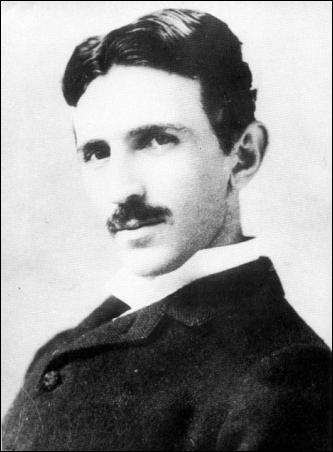
                Nicola Tesla

    INTRODUCTION


    The main topic of economics should be economic growth and development, “the nature and causes of the wealth of nations.” (Adam Smith)


    The main questions are:


    How do capitalist economies grow?

    What is the relationship between economic growth and economic development?

    What is innovation and its relationship to economic development?


    ECONOMIC GROWTH


    Economic growth is the growth rate of total output, usually measured by real Gross Domestic Product (GDP). Total output is not measured directly. Sales (nominal GDP) are added up and the growth rate calculated. The inflation rate is calculated separately and subtracted from the growth rate of nominal GDP. What remains is the growth rate of real GDP.


    Between 1950 and 2000, the U.S. economy (real GDP) grew at about 3.5% per year. Since 2000, with two recessions, the growth rate has been around 2.0% per year. Even the recovery from the 2008-2009 recession has been only somewhat above 2.0%. 


    Small changes in compound growth over time leads to large changes in total output and real income per person. Between 1950 and 2000, real GDP increased over four times. Real GDP per person increased about three times. Real GDP per person rose from $16,000 in 1952 to over $50,000 in 2000. If the growth rate since the 1950s had been 2%, real GDP would not have increased four times until 2020, a generation later. 


    At 3.5%, it takes about 20 years for real GDP to double; at 2%, it takes about 35 years. If the US economy had grown at 2% rather than 3.5% since 1950, income per person by 2000 would have been $23,000, not $50,000. Real standards of living would have been substantially lower during this whole period.


    But that is only part of the story. What if there had been no technological innovation since the 1950? The average American today would have had the income to buy three 12-inch black and white TV sets with six channels, three encyclopedias, and three rotary dial telephones. No air-conditioning. Virtually none of today’s health care and pollution control technology. Ten year shorter life-spans. No home computers or the Internet or cell phones. And the real cost of most goods available in the 1950s, in terms of hours worked needed to buy them, would have been  higher than today. 


    ECONOMIC DEVELOPMENT


    It is innovation, summarized as economic development, which is the driving force behind economy growth and higher standards of living.


    Every day millions of people go to work with one thought on their minds. How to disrupt the status quo. Why? To increase sales and profits. And their income.  How?


    • Do it new. Start a new company. Develop a new product in an existing company.
    • Do it better. Manage or organize the company better. Reduce unit costs.
    • Do it different. Develop or buy new technology. 


    Much of competition is creative disruption. It is this collective behavior that is responsible for most of economic development today, and its consequence, economic growth tomorrow.


    MATURE COMPANIES 


    Most companies, products and services grow near the average growth rate of the economy. This is especially true of consumer product companies. They are mature companies with established or dominant products and services. Mature companies include most large corporations. Market or industry structure tends to be oligopolies, markets dominated by a small number of companies.

    Growth in demand for the products and services of mature companies depends mostly on growth in total real income, which is equal to the growth in real GDP. Real income and real GDP can grow when the prices of existing products and services fall. Consumers have more income to buy products and services. 


    Typical corporate strategies of mature companies are advertising and marketing of brand names, increasing productivity and reducing costs, extending product lines and developing market niches, and acquisitions. Much of their behavior can be described by conventional economic theory and business management ideas.


    This part of the economy can be describe by diminishing returns to investment and production, shifting demand curves, flexible prices, and movement towards market equilibrium. But diminishing returns is a short-run concept. In the longer run, a mature large company with dimishing returns is often overwhelmed by innovation from other, often newer companies. Successful new companies experience increasing returns (fall in unit costs as production increases) in the production and sale of new products. New large companies are created, often becoming the dominant companies of a transformed industry. Older companies may continue to exist but often smaller in size, less market share, or merged with or acquired by another company.  


    Mature companies rely mostly on growth in aggregate demand and cost savings partly from productivity gains, which depends on innovation in inputs from the capital goods and services sector.


    INNOVATIVE COMPANIES


    Successful innovative companies drive economic development. They are started to create new products and services, new production systems, develop new markets. Some innovative companies improve on existing technology (“useful knowledge” applied to develop material goods and services), put existing technologies together in new ways, or develop new applications. They develop potential demand. Many experience hypergrowth (high exponential growth), many times greater than the average growth of mature companies. 


    Corporate strategies include continuous innovation with high levels of research and development. Industry structure is fluid. They create new supply networks, which in turn leads to more innovation.


    Innovative companies create demand, which is part of the innovative process. Innovative companies must convince potential customers or consumers of the value to them of the new product or service. They show potential customers and consumers how to use the new product or service. At first, they often offer primitive products or services at high relative prices. But continuous improvement and follow-on innovation, economies of scale, new skills and knowledge of employees, and learning curves among both customers and producers change products and services offered and drive economic growth. 


    The success of an innovative company partly depends on its ability to exploit existing “enabling” networks, capital equipment, and supply networks. These, in turn, exist because of past innovation, past economic development. 


    There are whole sectors of a modern economy in which companies compete primarily on the basis of continuous innovation. The capital goods sector including most of information technology provides much of the new production and control technology to the rest of the economy. The pharmaceutical sector including biotechnology contains over thousands of companies developing new drugs and medical equipment. The entertainment industry must constantly produce new content. The telecommunications industry, a vital “enabling” network, continues to rapidly upgrade and replace systems with new technology from semiconductor and related industries.      


    Prior success in economic development prepares an economy for current development. The opposite is true. England, which began the Industrial Revolution, did not keep up with the latest innovations in new industrial products and mass production in the late 1800s and early 1900s. In 1930s and early 1940s, English scientists and engineers developed jet engines, computers, radar (microwave), and penicillin. After WWII, the structure of DNA was discovered in England. But England did not have the industrial capacity and know-how to develop and mass-produce new products from these technologies. England’s attempts to develop a civilian computer industry and a civilian jetliner industry failed.

    England was forced to share the new technology with the United States in WWII so they could be mass-produced here. Developing the new technologies created Boeing and the aviation industry, IBM and the computer industry, Pfizer and the pharmaceutical industry, the modern telecommunications industry, and the American biotech industry. It was Americans who first benefited from all this invention, who experienced rising standards of living because of innovation and economic development.


    INNOVATIVE COMPANIES AND ENTREPRENEURS


    This is a stylized narrative of the path of economic innovation, the dynamics of the economic system. The resulting economic structure is oligopoly. The supply network is characterized by bilateral oligopoly (oligopolies on both sides of a market).


    Innovation begins with public knowledge, often scientific or mathematical discoveries that do not seem to have any practical application.  Imaginary numbers, general equations of electromagnetism, the Second Law of Thermodynamics, E=mc**2, the structure of DNA, the conductivity of solids, and many other recent advances in knowledge.  Eventually, scientists, engineers, inventors, and entrepreneurs begin to see possible commercial, profitable applications of this scientific knowledge.  Then entrepreneurs begin to see possible commercial (profitable) development of the resulting technology.  Because of the uncertainty of how the technology would meet potential wants and whether it will be profitable, usually many companies try to develop different versions and applications of the technology.  


    Much of the work is in engineering, production planning, design, distribution and educating potential customers. Often much of the innovation includes exploiting existing “network” technologies, such as transportation networks, electrical grids, mass media, telecommunications, or the Internet. 


    Most of the early companies go bankrupt.  A few companies successfully develop different niches of the potential market, successful variations of the basic technology.  In the past, higher transportation and information costs might limit the geographical reach of any one company, allowing local and regional companies to succeed.  As distribution and information costs come down and new production technology leads to economies of scale, a few of the innovative companies take over a large percent of a wider, growing market. Many large companies are now global and are called multinational corporations (MNCs).


    Typically, no one version of the technology gives the best benefit/cost ratio to all customers or consumers.  Companies do not compete directly. There is no industry demand curve. Differentiated products or services aimed at developing different segments of the market lead to an oligopolistic structure of the market or industry. Unit costs fall; quality improves. Total demand increases.  Each company attempts to develop and protect proprietary information, be it better engineering, more efficient production, brand names, patents, as the basis for growth in market share and economic profit. 


    But with time, patents expire, engineers and managers leave existing companies to start their own companies (an important source of continuing innovation), products are “reverse engineered” or imitated, and “industrial espionage” diffuses knowledge. Proprietary information leaks out to other companies such as when large companies transfer operation and technology to other countries. With standardized products and slowing innovation, economic (above average) profit begins to disappear.  Products become commodities, meaning customers or consumers choose mostly on the basis of price. Market structure and market shares tend to stabilize.  New companies might enter to better serve a specialized niche of the market.  Some are acquired by large companies with declining internal investment opportunities; some replace existing companies as one of the dominant companies.  The overall structure remained oligopolistic, often with the distribution of company size represented by a relatively stable power law.


    Another source of diffusion of knowledge and structural stability is that companies providing inputs, often large capital goods or IT companies, offer standardized machinery, production systems or information technology to all existing corporate customers.  Innovative solutions to a problem of one customer are now available to all. Capital goods companies are crucial to continuing innovation since this is how they compete. But now inputs embodying innovation are available to all.


    This is part of a more general process where technology and information become widely known.  Much of the change in an industry is in cost reduction, relatively minor product changes, and marketing.  Rates of return on new investments approach the company’s cost of capital. Diminishing returns on new investment has set in.


    Often, a new round of basic innovation begins. New companies, often outside the industry that innovated in the past, typically drive replacement technology.  Existing large companies have large investments in existing technology and much of the firm-specific knowledge is based on this technology, existing distribution channels, a large customer base, and existing marketing strategies.  One should also not underestimate internal resistance to major change in any large organization, especially if the company has a long history of profitability and market dominance.


    So the innovative process continues.  No company, no matter how big and how profitable, is immune from attack.  Think of General Motors (Toyota), Toyota (Hyundai, Kia), all auto companies (Tesla), the old AT&T (MCI, Nokia), IBM (Intel and Microsoft, Dell), Sears (Walmart), Walmart (Amazon), U. S. Steel (Nucor), RCA (Sony), Sony (Samsung), Eastman Kodak (Fuji, digital cameras), Xerox (Canon), Polaroid (digital cameras), Nokia (Apple), and many others. New, large companies based on new or improved technology appear. Old industries are transformed and new industries created. But the dominant industry structure remains oligopolistic.


    SUMMARY


    Economic growth and higher standards of living are functions of economic development. Economic growth is driven by:


                Current technological and organizational innovation.

                Past technological and organizational innovation.


    Organizational innovation is partly driven by innovation in information-handling technology and systems.


    Development can be seen as a consequence of generating new technology that entrepreneurs use to start new companies. 


    Innovation creates disruption. A major macroeconomic and political problem is how to reduce the personal and social costs of this disruption. Artificial intelligence and robotics may create more economic and social disruption in a shorter period of time than any innovative technology in the past.


    Most companies, most divisions of companies, most product lines grow about at the same rate as the national economy. They can be described using traditional economic theory and business practices. But it is the innovative companies that provide future growth, new products and services, and new processes. They cannot be described using traditional economic theory.


    Most companies grow because of a growth in demand. Demand, in turn, is mostly a function of a growth in real income. Growth in total real income is equal to the growth rate of the national economy.


    Organizational innovation depends partly on technological innovation in electronic communications and information technology. Historically, the processing of data and information was a major bottleneck to the expansion of large corporations.


    Reduction in unit cost, increasing returns to scale, depends on increases in productivity (greater output per unit of input). Economic growth, and economic growth per capita, continues as long as innovation (economic development) overcomes diminishing returns to investment and production in existing technologies. A key role in the process is continuous innovation in the capital goods sector. Capital goods companies, including information technology companies, compete on the basis of reducing costs, increasing productivity, increasing capacity, and customizing applications for their corporate customers. 


    ======================================================

    CASE STUDY:


    A CAUTIONARY TALE:  ENGLAND AND THE INDUSTRIAL REVOLUTION


    England, more than any country, started the Industrial Revolution in the late 1700s.  And for over 150 years, England continued to discover new products and technologies.  Yet England eventually fell behind the United States and Germany in technology and economic growth.  What happened?


    The seeds of England’s relative economic decline were there right at the beginning.  Millwrights, mechanics with specialized knowledge of how to build wool and cotton mills and their machinery, felt frustrated because they seldom became part owners and couldn’t find financing to start their own mills.  Some illegally emigrated to the United States and France. Much of the early American textile mill technology was due to English immigrants. The first cotton spinning mills were designed by an English millwright (Samuel Slater) financed by a Providence, Rhode Island merchant (Amos Brown).  By the middle of the 19th century, American cotton mills were more efficient than English mills; much of the venture capital for the industry was provided by Boston merchants.


    England (actually, a Scot) developed the modern steam engine.  Later, the improved high pressure steam engine was developed at almost the same time in England and the United States (by Oliver Evans). This engine was critical to the development of railroad, steamboats, and later steamships. The first general purpose railroad was completed in England in 1830.  The first railroad locomotives in America were imported from England.  But within two years, American engineers and mechanics were modifying the English locomotive, making it more flexible and powerful. American railroad companies developed cheaper and faster ways to lay track.  By 1860 over half the world’s track was in the United States and America was exporting railroad expertise and equipment.


    Already in the 1850s, English engineers were alarmed by superior American production techniques. England began to fall behind the United States and Germany in the 1870s, at the start of the “Second Industrial Revolution.” Part of the problem was the inability of England to stay ahead in its dominant industries.


    The rapid mechanization of the textile industry displaced British exports as British firms failed to switch from the jenny or mule to the new, faster and cheaper technique of ring-spinning. By the end of the 19thcentury, the average American cotton spinning mill’s labor productivity was 30% higher than the average English mill. England would eventually lose one of its largest export industries.


    British machinery firms such as Platts exported the new automatic looms to Japan and other countries but failed to find buyers in the home market. By the 1930s, Toyoda (later Toyota) of Japan had improved Platt’s technology to the point where Toyoda was exporting power looms back to England.


    Coal mining was a major industry in England but productivity began to fall until output per head in British coalmining was only half of that found in the American coal industry by 1914.


    Richard J. Evans, The Pursuit of Power:  Europe 1815-1914, 300.


    England invented the two ways to produce large amounts of cheap steel. The inventors licensed the processes to both English and foreign companies.  One purchaser was Andrew Carnegie, a Scottish immigrant in America.  Within thirty years, America was the world’s low-cost producer and produced over half the world’s steel.


    This had profound economic consequences.  Large amounts of cheap steel were crucial to the development of better machine tools, better railroads, skyscrapers, and automobiles.


    An English chemist discovered the first synthetic dye for cloth, the basis for the modern chemical industry.  But the development of the synthetic dye industry occurred in Germany.  It was the basis for the world dominant German chemical industry. German companies went on to discover and develop new chemical products, including high explosives that gave Germany a decided edge in artillery in World War I.

    Germany and the United States developed the new technologies of electrical equipment.  America dominated the global production of automobiles. Ford was the largest auto assembler in England. By 1900, the United States had replaced England as the largest economy in the world.

    The radio was invented and first exploited by an Italian immigrant in England.  But the radio industry was developed in the United States by a Russian immigrant (David Sarnoff) using the financial resources and patents of four of America’s largest corporations.  It was a short technological step to develop television and computers, which originally used radio vacuum tubes manufactured by RCA. 


    The structure of DNA was decoded in England.  Yet there were no English equivalents of Amgen, Genentech and the hundreds of other American biotechnology companies.


    In World War I, England first developed and deployed the tank.  But its further development, and a strategy for modern warfare built around the tank, was done in Germany. In 1927, the English army spent more money on hay for horses than fuel for tanks. In 1940, England paid the price as German tanks destroyed the English army.


    Before and during World War II, England discovered or developed a host of important new technologies – penicillin, radar, computers, jet engines. But England did not have the resources or technology to improve and mass produce these products.  Knowledge of all four was shared with American companies during World War II and became the basis for large new American industries.


    Losing technological and economic leadership can have serious consequences for a country’s political and military power.


    I think the point is clear. Inventing a new product or process does not lead to economic leadership or economic growth if the country does not have the intellectual, productive, organizational, and financial resources to develop them. England did not start engineering, scientific and technical schools as did the U.S. and Germany; there was no English equivalent of MIT or the German scientific research universities. English companies could not match the R&D labs of AT&T (Bell Labs), GE, du Pont, IBM, and RCA. In England, engineers (lumped together with mechanics) and entrepreneurs (often from dissenting religious groups or minority groups) were considered social inferiors. “Venture capital” (except for the railroad investment craze in the 1840s) went into trade financing and overseas investment rather than risky new industrial enterprises.


    =========================================================


    EXTRA CREDIT


    ECONOMIC GROWTH, DEVELOPMENT AND ECONOMISTS


    Almost all the great economists – Smith, Ricardo, Malthus, Mill, Schumpeter, Keynes – believed that a capitalist economy was unstable, cyclical, or would reach a point where per capita income would stop growing. For Schumpeter and Marx, economic resources would become increasingly concentrated into fewer corporations. Either the economic system would collapse (Marx) or probably become socialist (Schumpeter). 


    What kept this from happening, why capitalist economies continue to grow and increase people’s standard of living over long periods of time, is innovation. Marx and Keynes had glimpses of the long run growth and development possibilities of industrial capitalist economies. Marx commented that the English economy he studied for over 30 years had changed (developed) and that at least part of the working class was becoming better off. Keynes saw a potential future where compounded economic growth would lead to higher standards of living and more leisure. But these insights had little influence on economic theory, political economy, or economic policy.

  • How America Industrialized and Became Wealthy

    How America Industrialized and Became Wealthy


    INTRODUCTION


    This post and the next is on
    the topic of economic development and its contribution to economic growth.  Since the beginning of the Industrial
    Revolution more than 200 years ago, this is the central economic dynamic.  


    The following are factors that led to American economic
    development, many in place before the beginning of the Industrial
    Revolution.  The United
    States, more than any other country, was
    positioned to take advantage of the new technology and ideas that were the
    basis of the Industrial Revolution.  The
    following is an outline of those factors. 
    For the full story of the early decades of America’s Industrial Revolution, see Engines of
    Change
    and some of the excellent histories written about America
    after the Revolution.


    FACTORS IN AMERICAN ECONOMIC DEVELOPMENT AND
    GROWTH


    The usual narrative centers on the inventors and entrepreneurs
    who developed and commercialized new production and transportation technology and technological
    improvements.  They also invented new
    organizational structures to exploit the new technology, both on the supply and
    demand side.


    This post looks at contributing factors that made the
    American experience exceptional.  The United States
    began innovation after England, the country that started the Industrial Revolution, but quickly caught up. By the mid-1800s, America has surpassed England in key technologies.  Innovation has continued up to the
    present.  Why?


    RADICAL POLITICAL, CULTURAL AND
    SOCIAL CONDITIONS CONDUCIVE TO SUPPORTING THE INDUSTRIAL REVOLUTION


    The United States
    had developed social, political and cultural institutions that were supportive
    of the market capitalism version of the Industrial Revolution before it began.  Because of the American Revolution, there was
    an aversion to a strong central government, which at the time was dominated and supported favored
    pre-industrial classes or groups.


    • No
      rent-seeking (parasitic) royalty or nobility.
    • No
      state-supported church.
    • Limits
      on government-supported monopolies. (By rulings of the Marshall Supreme Court)
    • No
      guilds to retard innovation, factories and new forms of labor relations.
    • A
      Constitution giving the Federal government wide powers to support a
      national economy and limiting states’ ability to “restrain” trade among states.
    • A
      culture emphasizing individual responsibility and individual opportunity.
    • A
      radical political system, a democracy based on universal white male suffrage.
    • Wide dissemination of information among a literate public.
    • A
      mobile social system and open society that encouraged risk-taking.

    ENGLISH LEGAL INSTITUTIONS, ESPECIALLY PROTECTION OF
    PRIVATE PORPERTY, PATENTS, 
    AND
    ENFORCEMENT OF CONTRACTS


    Strong English tradition of protecting private property
    and enforcing contracts.


    Underlying law and custom protecting the rights of
    individuals.

    Patent law to protect innovations.


    ACCESS TO ENGLISH INDUSTRIAL TECHNOLOGY AND
    APPLIED SCIENCE


    England
    was the first country to industrialize.  Some
    important aspects:


    • Innovative
      methods to smelt iron, increasing quantity and lowering unit cost. 
    • The application
      of more efficient steam engines and water power to drive machinery.  Beginning of factories.  Large increases in quantity and reduction in unit cost. 
    • Steam engine power-driven
      textile mills and then railroads. 
    • More
      accurate machine tools to produce machinery and metal products.
    • Tradition of entrepreneurs and innovative mechanics, machine tool makers and engineers
    • Continuous invention and improvement; cumulative large increases in productivity.  


    Most of this technology, and the ideas behind them, were transferred
    quickly to America,
    changed to fit American conditions, and improved.  Some transmission channels:


    English immigrants.

    An English immigrant named Samuel
    Slater built the first            water-powered cotton spinning mills.


    Welsh ironmasters who knew how to
    use anthracite coal to smelt iron.


    Contacts with England,
    both personal and scientific.      


    Imitating or
    stealing English technology.


    Francis Cabot Lowell and the
    integrated, power-driven textile mill.


    Steam engines and locomotives.  Americans went to England
    to study the English development of locomotives and railroad technology even
    before the English built the first general-purpose railroad.


    Within two years of the first
    English railroad, Americans were importing English locomotives, adapting them
    to American conditions, and manufacturing them.

    Robert Fulton first learned about steamboats in England.


    Access to English scientific and
    technical publications.


    Establishment of American
    scientific societies to discuss new ideas and technologies, and disseminate the
    knowledge.


    HUGE NATURAL RESOURCES


    In early decades, vast quantities of wood, iron ore, anthracite
    coal, fast-flowing streams and rivers for water power.


    The United States
    would continue to be the world’s leading producer of almost all key minerals
    and fossil fuels (coal, oil, natural gas) until after WWII.


    Huge potential agriculture. 


    Development of commercial
    agriculture, starting in colonial     period.

                            Commercial production for market.

                            Surplus
    food for industrial workforce.

                            Main
    source of exports until 20th Century.


    CONTINUING IMMIGRATION


    In the colonial period and until 1860, slaves and indentured
    servants produced most of America’s
    exports that helped pay for the importation of European capital goods and
    technology.


    Over the last 200 years, there have been as many as 75
    million immigrants.  Immigrants have been
    an important factor in American economic development from the very beginning.


    Free human capital.


    Mostly young adults. Much of the
    cost of raising them to adults, their education and acquisition of knowledge
    and skills paid before they came to America.  Crucial “free lunch.”


    Like Sam Slater,
    many brought specialized skills and knowledge.


                Disproportionate number of innovators and entrepreneurs.

                            Created
    vast and growing internal market.


    Early on, America’s
    democratic ethos and the existence of an open society created opportunity for
    advancement for lower-class mechanics and millwrights unavailable in England.  They could become part-owners of new business
    establishments based on their technical knowledge.  This was the beginning of what I call the
    “hustler and the nerd” model of economic innovation.  From Samuel Slater and Amos Brown (cotton spinning) to William
    Clark and Isaac Singer (Singer Sewing Machine) to Silicon Valley
    (scientific and computer nerds and venture capitalists).


    For the first 100 years of the Second Industrial Revolution (1870 – 1970), all industrializing societies, including America, ignored the “negative externalities.” As had all societies before then. This meant the producers, distributors, and consumers did not have to pay the full cost of their activity. Some examples of negative externalities are destroying the natural environment (clear-cutting forests, water pollution, air pollution, dangerous and deadly work places, noise pollution, accidents and death (auto fatalities and injuries), terrible unhealthy slum living conditions). It was only with the exponentially cumulative effect of all negative externalities that governments began to deal with them.


    CONCLUSIONS


    In economics, Milton Friedman popularized the phrase “There
    ain’t no such thing as a free lunch.”  This
    may be true in a closed economy but not in an open society like the United
    States that allowed immigration, imported (stole) ideas and technology, and provided
    the resources and opportunity to develop new technologies and economic
    institutions.


    A more formal phrase for a free lunch is “positive
    externalities.”   A positive externality
    occurs when someone benefits from someone else’s actions without paying for
    it.  For the American private sector as a
    whole over the last 200 years, there has been lots of free lunches.

                Tens of
    millions of young adult immigrants.

                            Brought
    labor, skills, education and knowledge.

                Access to
    knowledge of foreign technology.


    This combination reduced the cost and increased the speed of industrial innovation.


    Immigrants, shut out of traditional and high-status careers,
    look for or created new opportunities. They had to
    be innovative but had opportunities for advancement not available elsewhere.  A recent study concluded that immigrants are twice as likely to start new businesses than native-born Americans.

    The point is that continual economic development depends on a country’s political, cultural, and social institutions, not just on its economic institutions.

    ==================================================

    A related post:


    The Beginning of the Industrial Revolution in America


    These posts on early American history give some detail on the factors discussed in this post:


    American Colonial History, 1607-1775


    Revolution and the New Country;  American History, 1775-1790


    A New Nation, America from 1789 to 1860


    For an excellent example of an entrepreneur at the beginning of the Industrial Revolution in England, see


    Josiah Wedgwood, the Wedgwood Pottery Company, and the Beginning of the Industrial Revolution.

    See related posts:

    After reading this post, you might want to see the related post on the first case study of a source of economic development, Adam Smith’s Pin Factory. 

    For the story of how England lost its economic leadership, see A Cautionary Tale:  England and the Industrial Revolution

    For the economic dynamics within this wider environment, see A Stylized Model of Innovation:  The Dynamics of Capitalism.