Tag: Economic Growth

  • Adam Smith’s Pin Factory

    Adam Smith’s Pin Factory

    Adam Smith – Our Founding Father


    ADAM SMITH VISITS A PIN FACTORY


    Adam Smith’s description of a pin factory is on the first page of The Wealth of Nations.  (Chapter 1 – “Of the Division of Labour”)  Drawings of pin factories of this period show workers using hand tools. Smith says the process can be broken down into 18 distinct steps, including packaging the pins. Smith mentions that pin factory workers were poorly paid, despite their high productivity. 


    Adam Smith says he visited a pin factory employing 10 men who produced 48,000 pins per day.  If each of the ten workers had done all the steps themselves, Smith says each worker could produce only 10 or 20 pins per day.  So the pin factory replaces 2,400 to 4,800 pin makers. The increase in labor productivity (output per person per day) is as high as 50 times that of individual pin makers.  


    This reduction in unit cost or average cost (AC) and the huge increase in quantity produced do not just replace older methods of organization and production.  They increase the potential “extent of the market.” Existing users not only buy more pins at the lower price but also think up new ways to use cheaper pins. The geographical limits of the pin market expand; contemporary and future reductions in transportation costs further expand domestic markets and increase exports.


    Adam Smith is considered the Father (or maybe Godfather) of economics.  But this is not economics. At the heart of economics is the concepts of cost and price. No unit price of production or market price are given.


    As Adam Smith says, there are limits to specialization and division of labor, and thus limits to reducing unit costs.  But the major source of these limits is not “the extent of the market.” It is the limit of relying solely on the division of labor using pre-industrial production technology. As a source of the continuous increase in the “wealth of nations,” Adam Smith’s pin factory was a dead end, a one-time increase in productivity due to an organizational change. All that was about to change.


    Adam Smith’s pin factory is his only clear example of how an economy can grow through one type of innovation. But what is missing is any discussion of the Industrial Revolution or power-driven machinery, which had begun during Adam Smith’s lifetime.  Adam Smith knew James Watt, a brilliant mechanic who greatly increased the efficiency of steam engines. Both worked at the University of Glasgow at the same time. Smith was instrumental in hiring Watt. Watt patented his steam engine just as Smith began writing The Wealth of Nations.  A friend of Adam Smith invested in James Watt’s company to produce his new steam engines.  (The same friend, William Smart, was also Thomas Jefferson’s college tutor.) Adam Smith knew Mathew Boulton, the industrialist who convinced Watt to set up a company and factory to produce his steam engine. It was the beginning of the Industrial Revolution.


    Smith mentions “fire-engines” (steam engines) once in the entire book, on page 1, but only to illustrate how workers might improve the working of machines. His example is now considered a myth. He makes a vague statement about “proper machinery,” followed by the sentence, “It is unnecessary to give any examples.”


    It is hard to believe that someone could survive producing 10 pins a day. Someone this isolated and inefficient is a straw man. In reality, almost all economic activity requires specialization, division of labor, and coordination. In the Industrial Age, this means power-driven machinery, specialization by company and coordination of long supply chains.

    A capital goods sector would specialize in producing larger, faster, more efficient power-driven machinery with metal parts. Production became capital intensive; companies became much larger to realize economies of scale.  Economic theorists would continue to ignore the reality of the Industrial and Information Revolutions because the central dynamic – continuous, disruptive innovation leading to new production technology, lower average cost, and new corporate structures – would destroy their key models of perfect competition and general equilibrium. 

    PIN-MAKING GETS MECHANIZED IN AMERICA

    Pin production met the Industrial Revolution in the 1830s.


    Some pins were made in America, most in prisons and almshouses. At a New York almshouse, Dr. John Howe, the resident physician, observed pin making and began to invent a machine to mechanize the process. He made his first machine in 1832. In 1835, the Howe Manufacturing Company was established with capital from New York merchants.


    One of Howe’s pin machines could produce about 24,000 pins in an eleven-hour day.


    Much of the decrease in costs occurred in the packaging of the pins.  About half of the workforce packaged the pins. At first, the pins were “put out” to nearby families. Then the invention of a hand-powered packaging machine brought the operation into the factory. In 1856, a machinist at Howe invented a powered pin-packing machine.  Before his invention, women were paid $1.25 a day to pack about 150 packages; with his invention, women could pack 200 packages a day and were paid only $.75 a day.  (The story of Howe Manufacturing is from Steven Lubar, Engines of Change:  An Exhibition on the American Industrial Revolution, 1986, p. 56.)


    By the late 1970s, two hundred years after The Wealth of Nations, manufacturing plants using computer-driven automated machinery could produce 800,000 pins per worker per day. This is 160 times as many as in Adam Smith’s pin factory.


    EXTENSIONS


    In the United States, before the early 1800s when nails were mass-produced by machines, they were very expensive. If a family built a house using nails and decided to move west, they would often burn down the house to recover the nails for the next house. It is one reason there are so few “vernacular” houses in existence in America before the early 1800s.


    Mechanizing nail production had an even greater effect than mechanizing pin production. Cheaper nails revolutionized construction. They made possible the balloon-frame method of home building, where pieces of lumber were nailed together to make the house’s frame. In the long-run, the result was the American suburb.


    The story of the continuous improvement in the quality and variety of pins, and the decrease in the average (unit) cost, was repeated for related products. Besides nails:


    Spikes – critical input in the building of railroads.

    Rivets – made the mass production of airplanes possible.


    CONCLUSION
     

    Specialization with hand tools can go only so far. But what if power-driven machines continued to become faster, more reliable, more accurate, and more specialized?  Production per plant would go up tremendously and average unit cost would continue to decline. There would be no equilibrium. The Industrial Revolution would be a “permanent revolution.” 


    Specialization and division of labor does not lead to the Industrial Revolution. Production needs power-driven machinery and continuous improvement in machine tools, machinery, and organization. Machine tools make metal machine parts. New and more powerful sources of energy and heat are created. All of this, and more, has to be organize in new organization forms like factories, new types of management, and new types of internal controls.


    ————————————————————————————————————————–

    For an excellent example of an innovative entrepreneur at the beginning of the Industrial Revolution in England, see


    Josiah Wedgwood, the Wedgwood Pottery Company, and the Beginning of the Industrial Revolution.

    For the story of the how the Industrial Revolution began in England in the late 1700s, see 


    The Beginning of the Industrial Revolution in England

    For the argument that the United States was well- positioned to benefit from the Industrial Revolution, see


    The Beginning of the Industrial Revolution in America

    For some of the historical developments that made the Industrial Revolution likely in England, see


    England in the 1600s: The Beginning of England’s Rise to Global Power and Wealth

    The above essay explores the roles of the English East India Company (EIC) in Asia and the Navigation Acts in America and the West Indies in making England a global economic power. It gives context to the next two essays.


    For a more detailed look at the English East India Company, and why it was the first modern multinational corporation, see

    The English East India Company:  Trade with Asia

    For the story of America’s new revolutionary form of government and an outline of the first decades of American economic growth and development,

    A New Nation:  America From 1789 to 1860


    Further commentary on the dynamics of America’s economic development:


    How America Industrialized and Became Wealthy

    A Stylized Model of Innovation:  The Dynamics of Capitalism


    Alice in Wonderland and the Origins of Silicon Valley

    For the story of how England lost its economic leadership, see 

    Innovate or Fall Behind:  A Cautionary Tale:  England and the Industrial Revolution.


    There are a number of essays on American History and American Economic History including


    The Stock Market Crash of 1929 and the Beginning of the Great Depression


    For a list of all posts with links, see 


    List of Posts by Topic.


    There are more essays on American History and American Economic History. Essays on information, innovation, and how markets work. Essays on business, finance and economics. A series of essays on demographics, population projections, and speculations on how decreasing and aging populations will interact with the economics of individual countries and the global economy.

    List of Posts by Topic

    There are more essays on American History and American Economic History. Other essays on:

    Information, innovation, and how markets work. 

    Business, finance and economics. 

    Also a series of essays on demographics, population projections, and speculations on how decreasing and aging populations will interact with the economies of individual countries and the global economy. 

    Essays on a variety of historical topics, including the Industrial Revolution, Rome, and Europe in the World War I period.


    Further comment about Adam Smith. Most of Smith’s book was an argument against mercantilism and restrictions on international trade. At the heart of England’s trade policies was the Navigation Acts. They restricted the development of the economy of England’s North American colonies. American resentment and anger were a contributing factor to the American Revolution. Smith opposed England’s policy of not negotiating with the Americans and then England’s attempt to suppress the Revolution.


  • Demographics and Economic Growth

    Demographics and Economic Growth

    The Future Manufacturing Labor Force


    SUMMARY

    This post is a summary of some of the themes of previous posts on demographic and population projections, with an emphasis on how demographics impact economic growth. See bibliography at the end of this post. For a list of all blog posts on a wide variety of topics, see List of Posts by Topic on my blog.


    Almost all countries outside of Africa are already facing or will soon face below replacement birth rates. Without immigration, this could lead first to smaller labor forces with greater numbers of retired citizens. Eventually, however, both the number of workers and retired citizens will decrease. During both stages of the transition, there will be issues of how to increase total output, maintain standards of living, and allocate income between the two major age groups. For background, see Global Demographics and Population Projections.


    Population and economies can growth even if birth rates are below replacement. But eventually both economic output and real income per capita fall unless countered by migrations, new technology that increase productivity, or organizational, political and societal change. Societies will have to manage these transitions to avoid economic and political crises.


    The first country that has started on the demographic declining path for wealthy nations is Japan. The depopulation curve starts with a slow descent, then accelerating. Japan has until 2030 to prepare for the rapid decrease in total population and the labor force age group. For details, see Demographics and Population Projections of Japan.

    Other countries – China, countries in Southeast Asia, and countries in Central Europe – will soon face the same demographic trends as Japan.


    The countries outside of Africa will have a collective labor shortage; the countries inside Africa will have a collective labor surplus. Wealthy industrialized or industrializing countries with declining populations will have different problems and strategic alternatives than poorer countries that have above replacement birth rates and increasing populations. For details about global population projections and the demographics of these two types of countries, see Global Demographics and Population Projections.


    Immigrants into the wealthier countries will be one way to counter a dwindling labor force. Some of the immigrant will come from countries with declining labor forces. Immigrants will be especially in demand in the “service” sector with rising numbers of older citizens needing medical care and other services. In the United States, immigrants, both legal and undocumented, are also crucial for new construction, farm labor, restaurants, and various service and maintenance industries. But until the labor shortage becomes critical, there will be continuing political opposition to immigration.


    An aging population plus increased immigration of different ethnic and religious groups may be necessary for economic growth but also a recipe for political conflict. Aging populations tend to become more conservative, less likely to support change, but more in need of immigrant service employees.


    Changing demographics will influence the national and global allocation of labor. Decisions about allocation of labor – outsourcing, immigration – will sharpen the conflict between national policies and the global economy. Corporations have different strategies and objectives then national governments.


    Changing demographics will influence the mix of supply and demand. In wealthier countries, more of the economic and political decisions will be driven by the increasing population of the elderly, including public support for health care services and biotechnology research. In poor countries, the economic objective will be how to grow rapidly to employ a quickly growing labor force.


    There are three substitutes for a country’s shrinking labor force – immigration, investment in innovation and new technology, and organizational innovation and more productive employees. Better educated and trained employees and researchers are crucial for innovation and economic development. The new technologies of robotics and AI may reduce the long-run demand for the human labor force, especially in areas of white collar data processing and analysis jobs, although both will create new jobs demanding a high skill level.


    How will governments and societies cope with the triple problems of declining populations, supporting an aging population and the cost of mitigating global warming?


    THE ACCOUNTING IDENTITY OF ECONOMIC GROWTH


    The accounting identity here is a framework to explore implications of a shrinking labor force for economic growth and development.


    An accounting identity says nothing about causality, assumptions or feedback. But it introduces some general issues.


    The following accounting identity shows the sources of economic growth:


    The economic growth rate (growth rate of total output) roughly equals the growth rate of the labor force plus the increase in labor productivity (output per member of the labor force).


    If the labor force numbers are stable, all of the increase in output depends on the increase in productivity. The pressure on productivity is even greater if the labor force numbers are decreasing.  So, for example, if a labor force is increasing at about 1% per year and productivity is increasing at about 1% per year, output will increase about 2% per year. If the workforce stops growing, productivity will have to double to 2% to yield the same economic growth. If the workforce were to decrease at 1% a year, as it is in some countries already, productivity would have to increase 3% a year to achieve 2% economic growth. This is a high productivity growth rate for a developed economy.

    Declining population, declining labor force and some increase in productivity could lead to higher standards of living (real income and consumption per person). But the demographic trends, without other changes, might lead to less innovation and lower or negative rates of productivity growth.


    Low rates of productivity growth with accelerating rates of labor force and population decline could also lead to less output (negative growth rates) and declining standards of living.


    LABOR SUBSTITUTES


    A member of the industrial/information labor force today is better educated, with new skills, working with better capital equipment and IT inputs, compared to a member of the labor force a generation or two ago. The difference should show up as an increase in labor productivity. Increase in total factor productivity is due to innovation in capital equipment – including information technology – combined with employees with new skills and knowledge. Other factors included economies of scale, network effects, public investment and organizational innovation.


    Capital investment, technological innovation, and organizational change are substitutes for labor. The composition of the declining labor force will change.


    2-3% sustained productivity growth is unlikely without a dramatic impact from AI-augmented robots, AI-augmented business software, advances in new energy and production processes, and, possibly, quantum computing. Unit costs and prices are falling for a wide range of new outputs – EVs, solar panels and systems, energy from other renewables, hydrogen, large batteries and carbon capture.


    Changing demographics will help direct the actual products and services of the new technology.


    Some white-collar, middle-class jobs will be eliminated and replaced by software like AI, which will become more sophisticated in the future. AI programs are already able to analyze large quantities of specialized data and quickly reach conclusions and devise strategies. While AI and other new technologies will create technology jobs there is a fear that for the first time in the history of the Industrial Revolution, more jobs may be eliminated than created by new technology. Labor-intensive manufacturing and white collar data processing may be hit the hardest. One possibility is that high-wage, advanced technology systems may replace labor-intensive economic processes in low-wage countries. The economic disruption may be less if matched by a decreasing number of workers.


    The new information technologies may primarily affect white-collar jobs, unlike past industrial technologies that mostly affected blue-collar jobs.


    There will possibly be a greater importance of a globally connected and managed economy. Multinational companies will develop and control technology and globally allocate labor and other inputs. This might increase conflicts between the objectives of multinational companies and national governments.


    DEMOGRAPHICS AND DEMAND


    Demographics also influence the demand side of economies. Americans spend more money on pet products and services than on childcare. In South Korea, which has the lowest birth rate in the world, consumers spend more money on “baby carriages” for pets than for human babies.


    Companies use demographic information when planning marketing and advertising strategies. Changing demographics are analyzed when developing new products, changing product mix, and segmenting markets. The explosion of detailed demographic information about smaller and smaller segments, down to individuals, combined with online marketing technology and almost real-time data analysis algorithms, is revolutionizing marketing and advertising.


    Companies are using this data and analysis to fine tune pricing strategies such as price discrimination and dynamic pricing.


    Autonomous driving vehicles and robotaxis should find a huge demand from older Americans, the number of whom are expected to double in the next 20 years.


     IMPLICATIONS FOR ECONOMIC POLICY


    In the past, there was a correlation between industrialization and secular increases in population. There were also national and international allocation of labor. A large number of people left Europe between 1815 and 1914, especially at the start of the second stage of the Industrial Revolution around 1870. An estimated 60 million people emigrated from Europe. They opened up new agricultural lands in other countries and provided some of the labor force for the new factories, mines, and railroads. The United States also experienced a large immigration of Latin American and Asian groups, starting in the 1960s. There was also large internal migration within countries. At the same time, the Industrial Revolution created new economic groups including industrial entrepreneurs, industrial work force, investment bankers, and a new technical and managerial middle class. This led to political conflict between traditional elites and the new groups, fights for political power and status. This also led to a call for economic and political reforms – the Populist and Progressive movements around 1900.


    The standard economic models demonstrate that the demographic changes we saw over the last 200 years are a function of economic growth and development. Industrializing, urbanizing populations have declining birth rates. The experience of the poorer regions of the world tends to indicate that these demographic changes can occur even without economic growth and development because of imported modern health and the spread of primary education. The challenge for low and middle-income countries now is the danger of “getting gray before getting rich.”

    Although wealthier countries concentrate on the costs of their rapidly growing retired population, for most of the world the critical question over the next two generations will be how to accelerate economic growth to provide jobs and opportunity for the growing working age population.  The related challenge is how to improve education, training and economic opportunity to raise standards of living now to provide the resources for the aging population in the future. 


    For the entire world, these objectives are complicated by how to pay for the social costs of past industrialization and environmental degradation, and the future costs of climate change.


    Over the next 40 years, the global population is expected to increase by 1.7 to 2.0 billion people, despite below replacement birth rates in most of the world. Although wealthier countries will concentrate on the costs of their rapidly growing retired population, for much of the world the critical question over the next two generations will be how to accelerate economic growth to provide jobs and opportunity for the growing working age population. Part of the challenge is how to improve education, training, and economic opportunity to raise standards of living now to provide the resources for the aging population in the future. 


    For the entire world, these objectives are complicated by how to pay for the social costs of past industrialization and environmental degradation, and the future costs of climate change. This will be a major part of future investment and a possible source of income and employment, especially for the technically educated.


    In the long run, the positive side of declining global population may probably be less demand for resources. It depends on fewer people versus higher standards of living and changing preferences. Combined with substitute technology, global warming might slow down or stop. Climate change might not have quite the devastating effects trend projections indicate.


    The advanced and industrialized countries with stable or declining populations and labor forces will have to consider the following:


    Economic growth will have to come from large increases in productivity (output per member of the workforce). To achieve this, and also meet social welfare costs, most countries and regions such as the European Union will have to make changes in economic policies. Particularly disruptive and contentious will be the adoption of automated factories and offices. On the positive side they will increase labor and total productivity; on the negative side they will probably eliminate a large number of existing and future jobs. Retirement ages and requirements might change, depending on political resistance. Tax laws will have to change.


    Even in the United States, a large increase in retirement age populations is leading to potential underfunding of public and private pension funds. Taxes to fund public pension funds are rising, both in amount and as percent of federal, state and local budgets. Despite this, unfunded liabilities – promised future benefits not covered by projected future revenue – are also rising. The $300 billion/year deficit in social security funding after the trust fund runs out in 2034 will probably be paid for by an increase in general government expenditures. 

    The United States is already experiencing large yearly fiscal deficits and a very large and rapidly-rising national debt. For the present and future impact of these trends on federal government budgets, see

    Government Finance 101:  Fiscal Policy. Can’t Anyone Add?


    Multinational corporations will develop and adopt the new technology. Countries that do not have quality education, invest in public infrastructure, fund scientific research, encourage innovation and change economic incentives will not be able to attract foreign and domestic investment and compete in the global economy. And their best educated and most motivated people may emigrate.


    On the other hand, poor countries with decent transportation, energy and communication infrastructure will probably attract foreign investment. Real wages of at least part of the labor force will rise.


    Attitudes towards immigration might change from the current restrictive policies of some countries. Attracting “human capital” will be just as important as attracting investment capital. Trans-border movement of people will increase. New national, regional and international agreements will have to be negotiated.  Remittances back to the home country will be a more important part of the economy of many countries and global capital flows. 


    Attitudes about work, labor laws, retirement and retirement ages will change. The benchmark age of 65 was arbitrarily set by Bismarck almost 150 years ago when a very small percent of the German population lived that long. When the United States adopted Social Security, life expectancy was 56 years. The life expectancy of America’s younger workers is already around 80 years.


    The Japanese government and elites seem to have accepted declining population, slow (if any) economic growth, social stability and rising per capita income. They are increasing immigrant labor but there is a limit. They will export capital, earning income from overseas investments. They will outsource production of Japanese companies and export manufacturing technology, including robots. Whether all industrialized, wealthy countries can adopt the same policies at the same time seems unlikely.


    What is uncertain is whether or not the Japanese government can continue to fund domestic expenditures by running large deficits. Global interest rates were low until 2022. This assumes that Japanese are willing to lend their savings to the government. Maybe part of an implicit social contract that the money will be spend on services for the elderly.


    Other countries facing a “Japanese future” do not have the resources (per capita income and tax base) that Japan has. Many other countries do not have the political and cultural stability that Japan has. Hardly any country realizes this is soon going to be their number one domestic problem.


    Countries are already facing the domestic problem of needing more immigrants to augment the declining labor force in the face of rising opposition against immigration. Without immigration, some countries will be facing declining output and lower standards of living. This will probably increase domestic anger and stresses. Rather than Japanese stability, there will be further instability fueled by increasingly shrill populist, nativist politicians.


    More people will see they are living in a “zero-sum” country where more domestic resources will have to be allocated to a rapidly increasing older population It could be that political battles will be fought over age-based “income inequality.” 


    If taxes on the working population go up, this might further discourage economic development (innovation and risk-taking) and growth. The exception may be for products and services aimed at senior citizens. 


    Demographics are heavily influencing the areas of investment in wealthy countries; these sectors will drive future economic growth. Three current active areas of research and net investment are robots and AI (reaction to declining workforce), autonomous driving and robotaxis (aging population) and biotechnology (aging population).


    How will governments and societies cope with the triple problems of declining populations, the cost of mitigating global warming, and supporting an aging population? With dysfunctional societies and governments, large and growing budget deficits and national debts, opposition to immigration, on top of existing political, ideological and economic problems?


    The solutions may have to be global. This suggests increasing conflict between national governments (and their power elites) protecting privileges, national identity and sovereingty. This appears to be happening in the European Union. Maybe national governments can by replaced by international organizations whose members are not national governments. Some possible alternatives might be multinational corporations and privately-funded NGOs.


    Fighting global warming, especially reducing the burning of fossil fuels, may pose an economic threat to poor countries dependent on “extractive” industries. Developing and poor countries whose economies depend on exporting raw materials – fossil fuels, minerals, agricultural goods – may have a particularly difficult time. 


    Increasing population and rising real income in emerging economies, especially in Asia, are increasing the demand for energy. A dramatic increase in the number of cars in Asia is the main reason for the continuing increase in global demand for oil.  Increased demand for electricity is being partly met with new power plants burning fossil fuels. For at least another generation, these trends will make it difficult to meet global goals to drastically slow down or stop global warming.


    DEMOGRAPHICS AND DEMAND


    Demographics also influence the demand side of economies. Americans spend more money on pet products and services than on childcare. In South Korea, which has the lowest birth rate in the world, consumers spend more money on “baby carriages” for pets than for human babies.


    The large increase in the Hispanic population in the United States has created a demand for new types of food and restaurants, new source of popular music, Spanish language TV and radio, bi-lingual teachers, imported beer, shifts in airline travel, and higher income remittance services. Chili is the go-to food at many Super Bowl parties.


    Companies use demographic information when planning marketing and advertising strategies. Changing demographics are analyzed when developing new products, changing product mix, and segmenting markets. The explosion of detailed demographic information about smaller and smaller segments, down to individuals, combined with online marketing technology and almost real-time data analysis algorithms, is revolutionizing marketing and advertising.


    Companies are using this data and analysis to fine tune pricing strategies such as price discrimination and dynamic pricing.


    An aging population has increased demand for health care, retirement communities, RVs, leisure activities such as cruises, robot companions (in Japan), and reverse mortgages. Autonomous driving vehicles and robotaxis should find a huge demand from older Americans, the number of whom are expected to double in the next 20 years.


    South Korea has the lowest birth rate in the world. Sales of “baby carriages” for pets is greater than sales for human babies.


    DEMOGRAPHICS AND SUPPLY


    If there are labor shortages, the result may be larger salary increases. Corporations may then step-up investment in labor-saving technologies, especially if immigration in the wealthier regions is limited by the political backlash.


    The shortage of workers may accelerate the development of robotics and AI to substitute for workers. Economic growth will depend more than in the past 250 years on economic development, innovation, new technology and productivity increases than on population and labor force growth. The quality of workers – their education, skills and knowledge – will be more important than their numbers.


    Demographics will change attitudes about retirement, immigration, employment and unemployment, automation, work and leisure, and economic growth. Retirement programs may be especially strained as the ratio of retired people to working people goes up.


    DEMOGRAPHICS AND FOOD PRODUCTION


    Demographics is interacting with climate change in another important area – food production. Many scientists believe the most serious effect of climate change will be its impact on food production. 


    Global warming and more extreme weather events will make it more difficult to expand food production using current technology. As in other areas, trend projections can be changed by the development of new technology such as drought-resistant strains of grains.


    The global population will include about 1.7 to 2.0 billion more people between now and the 2060s. The challenge here is how to feed them, on top of rising food consumption per capita in emerging economies and possible negative effects of rising temperatures on food production, especially in tropical areas.


    Technology is a substitute for using more land. Yields per acre have gone up dramatically in the last 75 years. In the U.S in the last 100 years, tractors eventually replaced about 23 million horses and mules. About 60 million acres of cropland planted to feed the horses and mules were freed up. Farms became larger and reduced the number of workers needed to produce food. (The Economist, “A Short History of Tractors in English,” December 23, 2023, 20-21.)


    Expanding agriculture, and highly productive modern agriculture, are now a threat to the environment and a cause of climate change and environmental degradation. Examples are the burning of tropical forests, depletion of aquifers, and heavy use of fossil fuels to run machinery and produce nitrogen fertilizer and farm chemicals.


    Food producers in industrialized areas may find that declining populations mean lower sales. But exports to poorer regions with increasing populations may rise.


    SPECULATIONS AND SUMMARY


    Static or declining labor forces outside of Africa mean economic growth will mostly depend on increases in productivity. To counter demographic trends, technological innovation leading to high rates of productivity growth will be necessary to increase standards of living (real income per person).


    Rising population in poor countries make high rates of economic growth both pressing and difficult. Emigration pressure from poor regions of the world will probably increase unless there are high rates of economic growth in poor countries.


    Most of the world’s population increase will take place in cities and surrounding metropolitan areas, creating even larger massive urban areas. Large urban areas are increasing rapidly in poorer countries.


    It is nearly impossible to predict technological and organizational change over the next 25 or 50 years. This will help determine if increases in productivity will counter the decrease in the size of the working population.


    Demographics interact with global economic and environmental trends. More people mean more food and more consumption products and services, which means more energy and technological inputs. At the same time, new technology must reduce carbon-emitting energy and production processes. 


    BIBLIOGRAPHY


    DEMOGRAPHICS AND ECONOMICS


    I believe that projections and related analysis of demographics should be the starting point of any long-range planning. There is time to implement strategies that mitigate the probable negative impact of these trends. For the data, see


    Global Demographics and Population Projections


    The United States may be one country that avoids experiencing declining population and labor force. For details on how this may be possible, see


    Demographics, Immigration and Future Economic Growth of the United States


    Japan is already on the declining labor force and population curve. It also has the world’s oldest population. For details, see


    Demographics and Population Projections of Japan


    For a case study of the difficulties of an African country trying to develop, see


    Nigeria

    For a discussion on why England and America had the prerequisites to start the Industrial Revolution and continued to economically develop, see 

    THE INDUSTRIAL REVOLUTION IN ENGLAND


    The Beginning of the Industrial Revolution in England

    Adam Smith’s Pin Factory


    Josiah Wedgwood, the Wedgwood Pottery Company, and the Beginning of the Industrial Revolution


    A Cautionary Tale – England and the Industrial Revolution

    AMERICAN ECONOMIC HISTORY


    The Beginning of the Industrial Revolution in America


    How America Industrialized and Became Wealthy


    Alice in Wonderland and the Origins of Silicon Valley


    AMERICAN HISTORY


    The classic book on colonial immigration is David Hackett Fischer, Albion’s Seed. For a much shorter study of colonial American immigration, and an introduction to some long-term consequences, see


    American Colonial History, 1607-1775


    For a case study of a country (multi-national empire) undergoing industrialization, internal migration, the rise of new classes, and heightened social and political tensions, see

    The Austro-Hungarian Empire Before World War I


  • Introduction to Economic Theory


    Introduction to Economic Theory


    It’s not the strongest of the species that survive, nor the most intelligent, but the one most responsive to change.

    Charles Darwin                                              

    Introduction and Summary

    Economic theory, generalizations about economies, and economic history began as attempts to understand the Industrial Revolution.

    The economic theory posts on this blog describe and analyze economic development and economic growth since the start of the Industrial Revolution in the late 1700s. 

    Some writers describe the current economic trends as the Fourth Industrial Revolution. Other observers and commentators believe that information and communication technology and applications have become so central to the economy that we are in the Information Revolution. And others believe that we are at the beginning of the Biotechnology Revolution. These posts will concentrate on the ongoing, underlying dynamics of economic change and, for simplicity, will use Industrial Revolution as the historic label. But it will stress the vital role that information plays in economic development and economic growth. 

    The Information revolution was an integral part of the Industrial revolution. Information, through electronic communication starting with the telegraph in the 1840s, and new internal management and control information systems in the second half of the 19th century, made large and complex economic organizations possible. 

    Any economic discussion should describe or explain the dynamics and the resulting organizational structure of the Industrial Revolution. Market structures are commonly oligopolies, concentrated industries dominated by a few large corporations. One reason is the economies of scale of production that are the result of power-driven machinery. Within these structures, large, established corporations and innovative newcomers compete in a process of “creative disruption.”

    Different types of information are a part of this process and affect different types of economic decisions. One process is central: new information and knowledge are applied to create new technology (“useful knowledge”), new products and services, and new types of economic organizations. Innovation is the central driver of competition and economic change.

    In a capitalist economic system, corporations attempt to turn the commercialization of knowledge, information, and invention into profitable innovation and, collectively over time, economic development. What economics should describe is the continuous  commercialization and application of information and knowledge, summarized as technology.


    Technological innovation and organizational innovation developed together; it was the combination of the two that made economic development and growth possible.

    This innovation process is the driver of economic development. Economic development is the dynamic driver of economic growth. Economic growth is the basis for higher standards of living, increases in real income per capita, lower prices, and a greater variety of goods and services. The innovation process is also mostly responsible for longer life expectancies, reduced infant mortality, and the explosion of drugs and medical technology to fight diseases and epidemics. 

    In summary, this book:


    o   Emphasizes the dynamic forces in an industrial capitalist economy and how they lead to economic growth and higher standards of living.


    o   Describes and analyzes the resulting industry and corporate structures and how they affect competition, market behavior, and prices. Emphasizes the central role played by innovation. Argues that innovation, not price, is central to competition. Feasible strategies of different types of corporations are discussed.


    o   Highlights the role of various types of information in the economy and how different types of information influence competition and market outcomes.


    Descriptions of market mechanisms are presented. After that, the book discusses a competitive, industrial/informational economy. It attempts to describe and explain the dynamics and structure of an economy dominated by large corporations and subject to ceaseless technological and organizational change.


    Economic theory and economic history are taught separately. Economic theory is “ahistorical,” supposedly valid over the 250 years of the Industrial Revolution. This is hard to believe given the incredible technological and organizational changes that have occurred and continue to occur. Theories that lead to equilibrium seem inadequate to explain the “permanent revolution” of ceaseless change and disruption. 


    Any discussion of economic dynamics – change over time – involves history. Here, economic dynamics and resulting structure are illustrated by case studies and examples from economic and business history.


    Most of this discussion assumes a relatively unregulated, private enterprise, capitalist economy.


    The Industrial/Informational economy is facing several crises. The core crisis is the exponentially rising social costs (negative externalities) of industrial production and consumption such as pollution and the effects of climate change. These costs are threatening the long-run survival of the underlying economic system. To survive, much of public and private investment in the future – investment in new technology and organizational structures – will be aimed at reducing the causes and effects of the social costs of the economic system. The also present new opportunities for companies and economies to innovate to reduce social costs.


    Economic growth and development are influenced by underlying long-run trends. Many long-term trends are in the process of slowing or reversing, particularly demographic trends. A stable or declining number of people in the labor force is one cause of the increased investment in capital-intensive and information-intensive production. On the other hand, greater research and investment in biotechnology is partly the result of an aging population.


    Macroeconomics focuses on theories and analysis as support for government economic programs such as monetary and fiscal policies. In addition, I would like to focus on the tensions and stresses between an expanding global economy and a political world of 200 nation-states: in particular, the conflicts between multinational corporations and national governments.  

    My experience as a corporate economist and strategic planning manager, small business manager and director, business consultant, and nonprofit board member has been in the American economy. As a college professor I have taught a wide variety of courses in economics, finance, management, international economics and politics, and economic history.

    Innovation and Entrepreneurs

    Economic theory emphasizes that companies compete on the basis of price. Yet surveys of industries, especially capital goods and input industries, indicate that companies compete primarily on the basis of innovation.

    Existing companies applying core knowledge to develop new products and processes. They also buy innovative capital goods, information systems, and inputs to reduce unit costs, increase efficiency, and improve management control.  

    New companies develop and improve new technology. These new companies are founded by combinations of entrepreneurs and investors.  Their motivation is to turn knowledge and information into commercial technology for profit. 

    There is a long tradition of successful companies being started by a combination of individuals with specialized knowledge and skills teaming up with other individuals with capital and management experience. One current model is research scientists, often molecular biologists, commercializing their research by starting companies with financing from venture capitalists. Venture capitalists often provide initial advice and guidance. As the company develops, new management is brought in, often from large biotechnology companies. Crucial inputs for growth and efficiency are purchased from other innovative companies with new technology.

    The result of this basic dynamic is “creative disruption,” not equilibrium.   

    The Structure of the Economy

    We can think of the modern real sector of the economy as consisting of three parts – digital, physical, and biotechnological. Much of current innovation results from the interaction of these three parts.

    An economy is divided between consumer goods and capital goods. Consumer goods are products and services sold to individual consumers. Most consumer goods are produced by large corporations and sold under either brand names or the name of the company. Producers usually do not sell directly to consumers, although ecommerce websites and digital platforms come close. Most consumer goods markets are mediated by market-makers, particularly retailers, that bring producers and consumers together. The internet version of market-makers such as Amazon, Etsy, Airbnb and Expedia have also reduced transaction costs for consumers; more product information is available to consumers at a reduction in the search costs of time and money. On the other hand, massive amounts of information on individual consumers have made more refined price discrimination possible. The idea that markets are undefined abstractions where producers and consumers come together and create a “market-clearing” equilibrium price does not explain how markets actually work.

    Market-makers may write software eliminating agents, other market-makers. Travel agents and stock brokers are two areas. Tesla sells cars directly to buyers, eliminating car dealerships.

    Much of the economy consists of markets for capital goods and inputs. Markets for capital goods are summarized as investment; markets for inputs are usually summarized as supply or value-added chains. In these markets, both buyers and sellers are usually corporations. Corporations are buyers in some input markets and sellers in others along the supply chain. Efficiency and profit may depend on how well companies can negotiate prices and transaction conditions, and coordinate buying and selling.

    Large corporations account for over half the economy. Most markets are oligopolies, with large corporations producing a large percent of total industry output. When industries dominated by large corporations buy and sell in markets with large corporations on the other side, the market structure is bilateral oligopoly. 

    Small and medium sized companies play vital roles. New, innovative companies start as small companies; they challenge the market dominance of the large, mature companies. Other small companies, somewhere between 20 and 30 million in the United States, add choice and “local knowledge” to the mass production and distribution of products and services from large corporations. They are also a major market for the products and services of large corporations.

    An economy can be divided into mature companies and innovative companies. The increase in sales of mature companies depends mostly on the growth of total nominal disposable income. Many also grow through mergers and acquisitions. 

    Innovative companies are often characterized by sales growth rates substantially higher than the growth rate of total income. Innovative companies provide much of the economic development, and thus economic growth, of an industrialized economy. Mature companies provide stability and structure. Many small companies provide variety and flexibility.

    Information has been an important input since the beginning of the Industrial Revolution. Different types of information pervade all aspects of the economy. Mature companies spend large amounts on marketing and advertising. Capital goods and input companies provide information to their corporate customers. Information, a combination of hardware and software, is now an important output to final consumers and customers.

    Corporations turn public information into private information. Private or proprietary information is a source of corporate profit. Some of the impact of economic information is due to asymmetric information, where a company in an economic transaction has private knowledge or information not known to the other. This affects market outcomes. Some of the transaction costs are the costs of obtaining information to reduce asymmetric information. This creates opportunities for market-makers, organizations and individuals who reduce transaction costs partly by providing specialized information.

    The Economic Role of Government

    Government is a vital part of a modern economy. In the United States, all levels of government provide over 20% of all goods and services, a higher percent in Europe. The fund and manage public goods and services. They usually fund many programs that directly or indirectly contribute to economic development and economic growth. These programs, however, have to compete with funding national defense and social welfare and income distribution programs.

    Governments can provide stability and reduce transaction costs through laws and regulations. They can, directly or indirectly, reduce the social costs of production and consumption. 

    Advances in communication and transportation technology have expanded markets geographically and made them global. Large national corporations are becoming multinational corporations (MNCs) that sell globally and coordinate global supply chains. Through the internet, even small companies can potentially appeal to a global market. National and local companies now depend on global supply chains and information networks. All this is made possible by a dense global fiber optic network. 

    The expansion of the global economy has created new tensions and conflicts between national governments. It had also created tension between national governments and multinational corporations.


     The Themes of These Posts

    The Industrial Revolution is a break in human history.

    The Industrial Revolution, in its capitalist, private corporation version, is “permanent revolution.” It is based on unpredictable change caused by invention, innovation and disruption. Invention can occur anywhere but innovation occurs mostly inside corporations.

    Innovation is both technological and organizational. This determines industry structure, and through supply chains, market structure.

    Price competition is unstable and complicated. Market prices are not a single price determining equilibrium. Market prices and sales conditions are often determined by negotiation between large corporations. Prices (and competition) are influenced by asymmetric information. Proprietary information inside organizations is a source of competitive advantage.

    Information is both an input and an output.

    Companies in most industries compete on the basis of continuing innovation. This is true of the supply side of the economy – capital goods and inputs to other corporations.

    Economic growth is mostly a function of innovation. Innovative products and services turn potential demand into effective demand.

    An economy contains both innovative, disruptive forces, and stabilizing forces. Not all market and industry stabilizing forces are positive.

    An economy is a form of chaos. Part of the economy evolves from disruptive, unpredictable forces into more orderly, predictable structures. They, in turn, are disrupted by new rounds of innovation. Again, “permanent revolution.”


  • Introduction and Summary of Economic Theory Posts

    Introduction and Summary of Economic Theory Posts


    Adam Smith – Our Founding Father  

    It’s not the strongest of the species that survive, nor the most intelligent, but the one most responsive to change.

    Charles Darwin

    Introduction and Summary

    This blog describes and analyzes economic development and economic growth since the start of the Industrial Revolution in the late 1700s. 

    Some writers describe the current economic trends as the Fourth Industrial Revolution. Other observers and commentators believe that information and communication technology and applications have become so central to the economy that we are in the Information Revolution. And others believe that we are at the beginning of the Biotechnology Revolution. This book will concentrate on the ongoing, underlying dynamics of economic change and, for simplicity, will use Industrial Revolution as the historic label. But it will stress the vital role that innovation and information play in economic development and economic growth. 

    The information revolution was an integral part of the industrial revolution. Information, through electronic communication starting with the telegraph in the 1840s, and new internal management and control information systems in the second half of the 19th century, made large and complex economic organizations possible. The expansion of electricity in the early 1900s made the information revolution possible.

    Any economic discussion should describe or explain the dynamics and the resulting organizational structure of the Industrial Revolution. Market structures are commonly oligopolies (concentrated industries dominated by a few large corporations). Within these structures, large, established corporations and innovative newcomers compete in a process of “creative disruption.”

    Different types of information are a part of this process and affect different types of economic decisions. One process is central; new information and knowledge are applied to create new technologies (“useful knowledge”), new products and services, and new types of economic organizations. 

    In a capitalist economic system, corporations attempt to turn the profitable commercialization of knowledge, information and invention into innovation and, collectively over time, economic development. What economics should describe is the continuous application of information and knowledge, summarized as technology.


    Technological innovation and organizational innovation developed together; it was the combination of the two that made economic development and growth possible.

    This innovation process is the driver of economic development. Economic development is the dynamic driver of economic growth. Economic growth is the basis for higher standards of living, increases in real income per capita, lower prices, and a greater variety of goods and services.

    In summary, these posts: 

    o  Emphasize the dynamic forces in an industrial capitalist economy and how they lead to economic growth and higher standards of living.


    o   Describe and analyze the resulting industry and corporate structures and how they affect competition, market behavior, and prices. They emphasize the central role played by innovation. Feasible strategies of different types of corporations are discussed.


    o   Highlight the role of various types of information in the economy and how different types of information influence competition and market outcomes.


    Descriptions of market mechanisms are presented. After that, posts discuss a competitive, industrial/informational economy. They attempt to describe and explain the dynamics and structure of an economy dominated by large corporations and subject to ceaseless technological and organizational change.


    In colleges, economic theory and economic history are taught separately. Economic theory is “ahistorical,” supposedly valid over the 250 years of the Industrial Revolution. This is hard to believe given the incredible technological and organizational change that has occurred, and continues to occur. Theories that lead to equilibrium seem inadequate to explain the “permanent revolution” of ceaseless change and disruption. 


    Any discussion of economic dynamics – change over time – involves history. Here, economic dynamics and resulting structure are illustrated by case studies from economic and business history.


    Most of this discussion assumes a relatively unregulated, private enterprise, mature capitalist economy.


    The Industrial/Informational economy is facing several crises. The core crisis is the exponentially rising social costs of industrial production and consumption such as pollution and climate change. These costs are threatening the long-run survival of the underlying economic system.


    Economic growth and development are influenced by underlying long-run trends. Many long-term trends are in the process of slowing or reversing, particularly demographic trends. A stable or declining number of people in the labor force is one cause of the increased investment in capital-intensive and information-intensive production. On the other hand, greater research and investment in biotechnology is partly the result of an aging population.


    Macroeconomics focuses on theories and analysis as support for government economic programs such as monetary and fiscal policies. Here, however, I would like to focus on the tensions and stresses between an expanding global economy and a political world of 200 nation-states: in particular, the conflicts between multinational corporations and national governments.  

    My experience as a corporate economist and strategic planning manager, small business manager and director, business consultant, and nonprofit board member has been in the American economy. As a college professor I have taught a wide variety of courses in economics, finance, management, international economics and politics, and economic history.

    ============================================================


    Go to Production Function, Cost Curve and Supply, and Equilibrium

  • Economic Development and Economic Growth

    Economic Development and Economic Growth


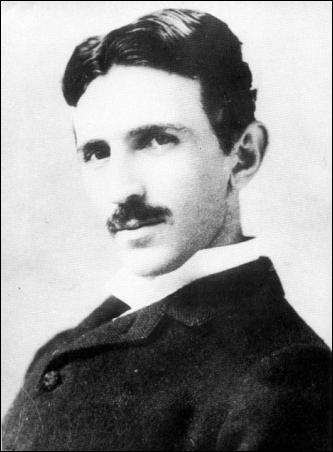
                Nicola Tesla

    INTRODUCTION


    The main topic of economics should be economic growth and development, “the nature and causes of the wealth of nations.” (Adam Smith)


    The main questions are:


    How do capitalist economies grow?

    What is the relationship between economic growth and economic development?

    What is innovation and its relationship to economic development?


    ECONOMIC GROWTH


    Economic growth is the growth rate of total output, usually measured by real Gross Domestic Product (GDP). Total output is not measured directly. Sales (nominal GDP) are added up and the growth rate calculated. The inflation rate is calculated separately and subtracted from the growth rate of nominal GDP. What remains is the growth rate of real GDP.


    Between 1950 and 2000, the U.S. economy (real GDP) grew at about 3.5% per year. Since 2000, with two recessions, the growth rate has been around 2.0% per year. Even the recovery from the 2008-2009 recession has been only somewhat above 2.0%. 


    Small changes in compound growth over time leads to large changes in total output and real income per person. Between 1950 and 2000, real GDP increased over four times. Real GDP per person increased about three times. Real GDP per person rose from $16,000 in 1952 to over $50,000 in 2000. If the growth rate since the 1950s had been 2%, real GDP would not have increased four times until 2020, a generation later. 


    At 3.5%, it takes about 20 years for real GDP to double; at 2%, it takes about 35 years. If the US economy had grown at 2% rather than 3.5% since 1950, income per person by 2000 would have been $23,000, not $50,000. Real standards of living would have been substantially lower during this whole period.


    But that is only part of the story. What if there had been no technological innovation since the 1950? The average American today would have had the income to buy three 12-inch black and white TV sets with six channels, three encyclopedias, and three rotary dial telephones. No air-conditioning. Virtually none of today’s health care and pollution control technology. Ten year shorter life-spans. No home computers or the Internet or cell phones. And the real cost of most goods available in the 1950s, in terms of hours worked needed to buy them, would have been  higher than today. 


    ECONOMIC DEVELOPMENT


    It is innovation, summarized as economic development, which is the driving force behind economy growth and higher standards of living.


    Every day millions of people go to work with one thought on their minds. How to disrupt the status quo. Why? To increase sales and profits. And their income.  How?


    • Do it new. Start a new company. Develop a new product in an existing company.
    • Do it better. Manage or organize the company better. Reduce unit costs.
    • Do it different. Develop or buy new technology. 


    Much of competition is creative disruption. It is this collective behavior that is responsible for most of economic development today, and its consequence, economic growth tomorrow.


    MATURE COMPANIES 


    Most companies, products and services grow near the average growth rate of the economy. This is especially true of consumer product companies. They are mature companies with established or dominant products and services. Mature companies include most large corporations. Market or industry structure tends to be oligopolies, markets dominated by a small number of companies.

    Growth in demand for the products and services of mature companies depends mostly on growth in total real income, which is equal to the growth in real GDP. Real income and real GDP can grow when the prices of existing products and services fall. Consumers have more income to buy products and services. 


    Typical corporate strategies of mature companies are advertising and marketing of brand names, increasing productivity and reducing costs, extending product lines and developing market niches, and acquisitions. Much of their behavior can be described by conventional economic theory and business management ideas.


    This part of the economy can be describe by diminishing returns to investment and production, shifting demand curves, flexible prices, and movement towards market equilibrium. But diminishing returns is a short-run concept. In the longer run, a mature large company with dimishing returns is often overwhelmed by innovation from other, often newer companies. Successful new companies experience increasing returns (fall in unit costs as production increases) in the production and sale of new products. New large companies are created, often becoming the dominant companies of a transformed industry. Older companies may continue to exist but often smaller in size, less market share, or merged with or acquired by another company.  


    Mature companies rely mostly on growth in aggregate demand and cost savings partly from productivity gains, which depends on innovation in inputs from the capital goods and services sector.


    INNOVATIVE COMPANIES


    Successful innovative companies drive economic development. They are started to create new products and services, new production systems, develop new markets. Some innovative companies improve on existing technology (“useful knowledge” applied to develop material goods and services), put existing technologies together in new ways, or develop new applications. They develop potential demand. Many experience hypergrowth (high exponential growth), many times greater than the average growth of mature companies. 


    Corporate strategies include continuous innovation with high levels of research and development. Industry structure is fluid. They create new supply networks, which in turn leads to more innovation.


    Innovative companies create demand, which is part of the innovative process. Innovative companies must convince potential customers or consumers of the value to them of the new product or service. They show potential customers and consumers how to use the new product or service. At first, they often offer primitive products or services at high relative prices. But continuous improvement and follow-on innovation, economies of scale, new skills and knowledge of employees, and learning curves among both customers and producers change products and services offered and drive economic growth. 


    The success of an innovative company partly depends on its ability to exploit existing “enabling” networks, capital equipment, and supply networks. These, in turn, exist because of past innovation, past economic development. 


    There are whole sectors of a modern economy in which companies compete primarily on the basis of continuous innovation. The capital goods sector including most of information technology provides much of the new production and control technology to the rest of the economy. The pharmaceutical sector including biotechnology contains over thousands of companies developing new drugs and medical equipment. The entertainment industry must constantly produce new content. The telecommunications industry, a vital “enabling” network, continues to rapidly upgrade and replace systems with new technology from semiconductor and related industries.      


    Prior success in economic development prepares an economy for current development. The opposite is true. England, which began the Industrial Revolution, did not keep up with the latest innovations in new industrial products and mass production in the late 1800s and early 1900s. In 1930s and early 1940s, English scientists and engineers developed jet engines, computers, radar (microwave), and penicillin. After WWII, the structure of DNA was discovered in England. But England did not have the industrial capacity and know-how to develop and mass-produce new products from these technologies. England’s attempts to develop a civilian computer industry and a civilian jetliner industry failed.

    England was forced to share the new technology with the United States in WWII so they could be mass-produced here. Developing the new technologies created Boeing and the aviation industry, IBM and the computer industry, Pfizer and the pharmaceutical industry, the modern telecommunications industry, and the American biotech industry. It was Americans who first benefited from all this invention, who experienced rising standards of living because of innovation and economic development.


    INNOVATIVE COMPANIES AND ENTREPRENEURS


    This is a stylized narrative of the path of economic innovation, the dynamics of the economic system. The resulting economic structure is oligopoly. The supply network is characterized by bilateral oligopoly (oligopolies on both sides of a market).


    Innovation begins with public knowledge, often scientific or mathematical discoveries that do not seem to have any practical application.  Imaginary numbers, general equations of electromagnetism, the Second Law of Thermodynamics, E=mc**2, the structure of DNA, the conductivity of solids, and many other recent advances in knowledge.  Eventually, scientists, engineers, inventors, and entrepreneurs begin to see possible commercial, profitable applications of this scientific knowledge.  Then entrepreneurs begin to see possible commercial (profitable) development of the resulting technology.  Because of the uncertainty of how the technology would meet potential wants and whether it will be profitable, usually many companies try to develop different versions and applications of the technology.  


    Much of the work is in engineering, production planning, design, distribution and educating potential customers. Often much of the innovation includes exploiting existing “network” technologies, such as transportation networks, electrical grids, mass media, telecommunications, or the Internet. 


    Most of the early companies go bankrupt.  A few companies successfully develop different niches of the potential market, successful variations of the basic technology.  In the past, higher transportation and information costs might limit the geographical reach of any one company, allowing local and regional companies to succeed.  As distribution and information costs come down and new production technology leads to economies of scale, a few of the innovative companies take over a large percent of a wider, growing market. Many large companies are now global and are called multinational corporations (MNCs).


    Typically, no one version of the technology gives the best benefit/cost ratio to all customers or consumers.  Companies do not compete directly. There is no industry demand curve. Differentiated products or services aimed at developing different segments of the market lead to an oligopolistic structure of the market or industry. Unit costs fall; quality improves. Total demand increases.  Each company attempts to develop and protect proprietary information, be it better engineering, more efficient production, brand names, patents, as the basis for growth in market share and economic profit. 


    But with time, patents expire, engineers and managers leave existing companies to start their own companies (an important source of continuing innovation), products are “reverse engineered” or imitated, and “industrial espionage” diffuses knowledge. Proprietary information leaks out to other companies such as when large companies transfer operation and technology to other countries. With standardized products and slowing innovation, economic (above average) profit begins to disappear.  Products become commodities, meaning customers or consumers choose mostly on the basis of price. Market structure and market shares tend to stabilize.  New companies might enter to better serve a specialized niche of the market.  Some are acquired by large companies with declining internal investment opportunities; some replace existing companies as one of the dominant companies.  The overall structure remained oligopolistic, often with the distribution of company size represented by a relatively stable power law.


    Another source of diffusion of knowledge and structural stability is that companies providing inputs, often large capital goods or IT companies, offer standardized machinery, production systems or information technology to all existing corporate customers.  Innovative solutions to a problem of one customer are now available to all. Capital goods companies are crucial to continuing innovation since this is how they compete. But now inputs embodying innovation are available to all.


    This is part of a more general process where technology and information become widely known.  Much of the change in an industry is in cost reduction, relatively minor product changes, and marketing.  Rates of return on new investments approach the company’s cost of capital. Diminishing returns on new investment has set in.


    Often, a new round of basic innovation begins. New companies, often outside the industry that innovated in the past, typically drive replacement technology.  Existing large companies have large investments in existing technology and much of the firm-specific knowledge is based on this technology, existing distribution channels, a large customer base, and existing marketing strategies.  One should also not underestimate internal resistance to major change in any large organization, especially if the company has a long history of profitability and market dominance.


    So the innovative process continues.  No company, no matter how big and how profitable, is immune from attack.  Think of General Motors (Toyota), Toyota (Hyundai, Kia), all auto companies (Tesla), the old AT&T (MCI, Nokia), IBM (Intel and Microsoft, Dell), Sears (Walmart), Walmart (Amazon), U. S. Steel (Nucor), RCA (Sony), Sony (Samsung), Eastman Kodak (Fuji, digital cameras), Xerox (Canon), Polaroid (digital cameras), Nokia (Apple), and many others. New, large companies based on new or improved technology appear. Old industries are transformed and new industries created. But the dominant industry structure remains oligopolistic.


    SUMMARY


    Economic growth and higher standards of living are functions of economic development. Economic growth is driven by:


                Current technological and organizational innovation.

                Past technological and organizational innovation.


    Organizational innovation is partly driven by innovation in information-handling technology and systems.


    Development can be seen as a consequence of generating new technology that entrepreneurs use to start new companies. 


    Innovation creates disruption. A major macroeconomic and political problem is how to reduce the personal and social costs of this disruption. Artificial intelligence and robotics may create more economic and social disruption in a shorter period of time than any innovative technology in the past.


    Most companies, most divisions of companies, most product lines grow about at the same rate as the national economy. They can be described using traditional economic theory and business practices. But it is the innovative companies that provide future growth, new products and services, and new processes. They cannot be described using traditional economic theory.


    Most companies grow because of a growth in demand. Demand, in turn, is mostly a function of a growth in real income. Growth in total real income is equal to the growth rate of the national economy.


    Organizational innovation depends partly on technological innovation in electronic communications and information technology. Historically, the processing of data and information was a major bottleneck to the expansion of large corporations.


    Reduction in unit cost, increasing returns to scale, depends on increases in productivity (greater output per unit of input). Economic growth, and economic growth per capita, continues as long as innovation (economic development) overcomes diminishing returns to investment and production in existing technologies. A key role in the process is continuous innovation in the capital goods sector. Capital goods companies, including information technology companies, compete on the basis of reducing costs, increasing productivity, increasing capacity, and customizing applications for their corporate customers. 


    ======================================================

    CASE STUDY:


    A CAUTIONARY TALE:  ENGLAND AND THE INDUSTRIAL REVOLUTION


    England, more than any country, started the Industrial Revolution in the late 1700s.  And for over 150 years, England continued to discover new products and technologies.  Yet England eventually fell behind the United States and Germany in technology and economic growth.  What happened?


    The seeds of England’s relative economic decline were there right at the beginning.  Millwrights, mechanics with specialized knowledge of how to build wool and cotton mills and their machinery, felt frustrated because they seldom became part owners and couldn’t find financing to start their own mills.  Some illegally emigrated to the United States and France. Much of the early American textile mill technology was due to English immigrants. The first cotton spinning mills were designed by an English millwright (Samuel Slater) financed by a Providence, Rhode Island merchant (Amos Brown).  By the middle of the 19th century, American cotton mills were more efficient than English mills; much of the venture capital for the industry was provided by Boston merchants.


    England (actually, a Scot) developed the modern steam engine.  Later, the improved high pressure steam engine was developed at almost the same time in England and the United States (by Oliver Evans). This engine was critical to the development of railroad, steamboats, and later steamships. The first general purpose railroad was completed in England in 1830.  The first railroad locomotives in America were imported from England.  But within two years, American engineers and mechanics were modifying the English locomotive, making it more flexible and powerful. American railroad companies developed cheaper and faster ways to lay track.  By 1860 over half the world’s track was in the United States and America was exporting railroad expertise and equipment.


    Already in the 1850s, English engineers were alarmed by superior American production techniques. England began to fall behind the United States and Germany in the 1870s, at the start of the “Second Industrial Revolution.” Part of the problem was the inability of England to stay ahead in its dominant industries.


    The rapid mechanization of the textile industry displaced British exports as British firms failed to switch from the jenny or mule to the new, faster and cheaper technique of ring-spinning. By the end of the 19thcentury, the average American cotton spinning mill’s labor productivity was 30% higher than the average English mill. England would eventually lose one of its largest export industries.


    British machinery firms such as Platts exported the new automatic looms to Japan and other countries but failed to find buyers in the home market. By the 1930s, Toyoda (later Toyota) of Japan had improved Platt’s technology to the point where Toyoda was exporting power looms back to England.


    Coal mining was a major industry in England but productivity began to fall until output per head in British coalmining was only half of that found in the American coal industry by 1914.


    Richard J. Evans, The Pursuit of Power:  Europe 1815-1914, 300.


    England invented the two ways to produce large amounts of cheap steel. The inventors licensed the processes to both English and foreign companies.  One purchaser was Andrew Carnegie, a Scottish immigrant in America.  Within thirty years, America was the world’s low-cost producer and produced over half the world’s steel.


    This had profound economic consequences.  Large amounts of cheap steel were crucial to the development of better machine tools, better railroads, skyscrapers, and automobiles.


    An English chemist discovered the first synthetic dye for cloth, the basis for the modern chemical industry.  But the development of the synthetic dye industry occurred in Germany.  It was the basis for the world dominant German chemical industry. German companies went on to discover and develop new chemical products, including high explosives that gave Germany a decided edge in artillery in World War I.

    Germany and the United States developed the new technologies of electrical equipment.  America dominated the global production of automobiles. Ford was the largest auto assembler in England. By 1900, the United States had replaced England as the largest economy in the world.

    The radio was invented and first exploited by an Italian immigrant in England.  But the radio industry was developed in the United States by a Russian immigrant (David Sarnoff) using the financial resources and patents of four of America’s largest corporations.  It was a short technological step to develop television and computers, which originally used radio vacuum tubes manufactured by RCA. 


    The structure of DNA was decoded in England.  Yet there were no English equivalents of Amgen, Genentech and the hundreds of other American biotechnology companies.


    In World War I, England first developed and deployed the tank.  But its further development, and a strategy for modern warfare built around the tank, was done in Germany. In 1927, the English army spent more money on hay for horses than fuel for tanks. In 1940, England paid the price as German tanks destroyed the English army.


    Before and during World War II, England discovered or developed a host of important new technologies – penicillin, radar, computers, jet engines. But England did not have the resources or technology to improve and mass produce these products.  Knowledge of all four was shared with American companies during World War II and became the basis for large new American industries.


    Losing technological and economic leadership can have serious consequences for a country’s political and military power.


    I think the point is clear. Inventing a new product or process does not lead to economic leadership or economic growth if the country does not have the intellectual, productive, organizational, and financial resources to develop them. England did not start engineering, scientific and technical schools as did the U.S. and Germany; there was no English equivalent of MIT or the German scientific research universities. English companies could not match the R&D labs of AT&T (Bell Labs), GE, du Pont, IBM, and RCA. In England, engineers (lumped together with mechanics) and entrepreneurs (often from dissenting religious groups or minority groups) were considered social inferiors. “Venture capital” (except for the railroad investment craze in the 1840s) went into trade financing and overseas investment rather than risky new industrial enterprises.


    =========================================================


    EXTRA CREDIT


    ECONOMIC GROWTH, DEVELOPMENT AND ECONOMISTS


    Almost all the great economists – Smith, Ricardo, Malthus, Mill, Schumpeter, Keynes – believed that a capitalist economy was unstable, cyclical, or would reach a point where per capita income would stop growing. For Schumpeter and Marx, economic resources would become increasingly concentrated into fewer corporations. Either the economic system would collapse (Marx) or probably become socialist (Schumpeter). 


    What kept this from happening, why capitalist economies continue to grow and increase people’s standard of living over long periods of time, is innovation. Marx and Keynes had glimpses of the long run growth and development possibilities of industrial capitalist economies. Marx commented that the English economy he studied for over 30 years had changed (developed) and that at least part of the working class was becoming better off. Keynes saw a potential future where compounded economic growth would lead to higher standards of living and more leisure. But these insights had little influence on economic theory, political economy, or economic policy.

  • Global Demographics and Economic Growth

    Global Demographics and Economic Growth

    1. Jakarta – 30 million people and sinking

    GLOBAL DEMOGRAPHICS

    Demographics, the study of the size and composition of population, will shape national and global economic growth and economic policy.  

    The period from 1950 to 2000 was highly unusual. The American “baby boom” started, temporarily reversing the long-term decline in birth rates.  Not just the United States but the global population experienced high birthrates and high population growth rates. In the middle of this period, partly due to more effective and more available birth control, birth rates began a rapid decline. The growth rate in world population began to fall. At the same time, much of the world’s population experienced rising standards of living. One consequence was longer life expectancies and rising average ages in industialized countries.  

    Countries with over a third of the world’s population and most of the world’s output now have birth rates below replacement. They are mostly the wealthy, industrialized countries, including the United States, Canada, Brazil, Western and Eastern Europe, Turkey, parts of Southeast Asia, Japan, Russia and China. Collectively, the size of their labor forces have stopped growing. All countries face the same challenges: Will they be able to invest in economic growth and development (innovation and structural change), deal with environmental costs and climate change effects, and support aging populations?  

    There are falling birthrates for most of the rest of the world’s population, coming down from very high levels. Mexico is at replacement and India is close to the replacement birthrate. But total population continues to grow, partly because of lower infant and child mortality rates, public health programs, better medicine, and subsequently longer lives in most of the world.  

    We are now in a period of a slowdown in total population growth rates. Global population is growing at about one percent per year and the rate continues to fall. But the increase in the number of people is large. In the most recent United Nations projection, the increase in global population from 2020 to 2050 is about 2 billion people, from 7.8 billion to 9.7 billion. The projected population increase over the following 50 years is lower, abour 1.2 billion. 

    Changes in total population may be points on an exponential decay curve. The UN projects that zero population growth will be achieved sometime shortly before 2100. The rate of decline could change with changes in the availability and cost of birth control, education of women, anti-aging medical technologies and more available health care for an aging population. (Estimates of future population are from June 17, 2019 UN projections. UN projections are revised about every two years.)

    The biggest unknown is future medical technology that will prolong life expectancies. Regardless of projection, the fastest growing age cohort is 65 years and over; within that cohort, the fastest growing age group is 80 years and older.

    Countries with birthrates well below replacement and aging populations may experience accelerating decreases in population. Family planning, combined with urbanization and more education of females, could lead to birth rates declining faster than projected in high birth-rate countries. In Africa, Ethiopia, Malawi and Rwanda promoted family planning and have seen large decreases in their birth rates. Kenya, after investing in family planning clinics and information, has seen its fertility rate fall from 6.5 in the late 1980s to 2.4, marginally above replacement and half the rate of most African countries.

    POOR COUNTRIES AND RICH COUNTRIES

    Wealthy countries have below replacement birth rates, no growth or declining populations and labor forces, low real economic growth, and aging populations and labor forces. Population will continue to concentrate in cities; the population of a small number of cities will be responsible for technological innovation and economic development. Rural areas will continue to lose population.

    Poor countries today have high but declining birth rates, young and increasing populations, and populations that want to emigrate (see case study below).

    Most of the largest and fastest growing urban areas in the world are in poor countries, China and India. Over half of the world’s population live in cities and the percent is rising. Almost all of the increased population in poor countries will live in or move to cities, which are already ecological disasters – traffic gridlock, poor air quality, lack of infrasturcture, sinking, raw sewage, and power outages. Many are coastal cities that are already experiencing periodic flooding and storm surges; rising sea levels and the increased number and severity of hurricanes will intensify urban problems. 

    Starting sometime in the 2050s, the world’s population outside of sub-Saharan Africa will stop growing and then slowly decline. All of the world’s net population growth will then be in Africa. How soon the world reaches zero population growth will depend critically on how fast birthrates decline in Africa.

    By 2100, Africa could have about as many people as Asia, about 4-5 billion. Together, Africa and Asia in 2100 could have about 80% of the world’s population.

    Throughout large parts of the Middle East, Africa and Latin America, governments have not been able to provide effective management of economic development for their young, growing population, which have high rates of unemployment and underemployment. Many of the governments are corrupt and/or repressive without free elections or civil liberties. Political activism, partly caused by stagnant or declining standards of living and lack of economic opportunity for young workers, commonly takes the form of mass protests and street demonstrations, aided by Internet social media. Governments typically react with riot police and the military, arrests, torture and prisons, rather than economic and political reform.

    THE DEMOGRAPHICS OF SPECIFIC REGIONS AND COUNTRIES

    A recent survey concludes that 46 countries have declining population or will have declining population in the near future. Declining population is already true in Japan (see below) and Russia and is about to be true in central and eastern Europe. South Korea, also with an extremely low birth rate, is looking at a demographic future similar to Japan’s (see below). South Korea’s current population of 51 million is expected to decline to about 30 million in 2100.

    Russia’s population is declining. Male life expectancies in Russia have been going down for decades but might have recently stabilized. While birthrates are below replacement, the decline of the national population has been offset in recent years by immigration. But lower rates of immigration in 2018 and 2019 have led to large decreases in population. The UN projection is that Russia’s current population of around 146 million will fall to about 85 million by the end of the century. 

    Because of very low birthrates and out-migration, central and eastern Europe is looking at population declines in this generation.  Some UN projections show that most countries in central and eastern Europe might have even larger total percent declines than Japan by the end of the century (over 50%).

    Western Europe is further along the population aging curve but because of immigration of younger people, the decline will not be as precipitous. And western Europe, like Japan, currently starts with more resources to support an aging population.  But high structural unemployment rates, low economic growth, restrictive labor laws and generous early retirement benefits will strain western Europe’s ability to grow and maintain current social welfare levels. A few European countries realize that current levels of social welfare are not sustainable and have begun reviews of retirement and health care programs. This problem is exacerbated by the currently high unemployment and underemployment rates among younger employees.

    China, which has enforced a “one-child” program since the 1970s until 2016, has a very low birthrate of about 1.6. Although this program has been relaxed in recent years, the national birthrate remains far below replacement. China currently has a young average-age population but the average age is rising very rapidly. 

    China’s working-age population began shrinking in 2012.  By around 2050, the decrease will be about the size of the current U.S. total labor force. Next year, the median (half above, half below) age in China will pass that of the United States. By around 2045, the percent of China’s population over the age of 65 will be about equal that of the United States. 

    A mature, experienced workforce should help maintain high but falling economic growth rates for another generation. After about 2050, demographics will begin working against Chinese economic growth. 

    China will grow old before it becomes rich (high per capita income). Even after decades of spectacular growth, per capita income is still about one-third to one-fourth that of South Korea and Japan. Even worse off are the economies of Southeast Asia, with per capita incomes below China, similar birthrates and rapidly aging populations.  

    Given current political strains and a large Chinese population outside of China, it is possible that China will have larger net outmigration in the future.

    DEMOGRAPHICS AND ECONOMIC GROWTH

    The following accounting identity shows the sources of economic growth. An accounting identity says nothing about causality, assumptions or feedbacks. But it introduces some general issues.

    The economic growth rate of a country roughly equals the growth rate of the labor force plus the increase in productivity (output per member of the labor force).

    If the labor force numbers are stable, all of the increase in output depends on the increase in productivity. The pressure on productivity is even greater if the labor force numbers are decreasing. So, for example, if a labor force is increasing at about 1% per year and productivity is increasing at about 1% per year, output will increase about 2% per year. If the workforce stops growing, productivity would have to double to 2% to yield the same economic growth. If the workforce were to decrease at 1% year, as it is in a number of countries already, productivity would have to increase 3% a year to achieve 2% economic growth. This is a high productivity growth rate for a developed economy.

    There is a small amount of research that suggests that an aging labor force is one cause of slowing productivity growth.

    Low rates of productivity growth with accelerating rates of labor force and population decline could lead to less output (negative growth rates) and declining standards of living.

    A member of the industrial/information workforce today is better educated, with new skills, compared to a member of the labor force a generation or two ago. The difference should show up in an increase in labor productivity. Increase in total factor productivity will be due to innovation in capital equipment – including information technology, robotics and artificial intelligence algorithms – and demand for employees with new skills and knowledge. Other factors are public investment and organizational innovation. But these changes have not shown up in productivity measurements. Productivity growth rates are low, although I suspect that the methodology used to compute these figures underestimates the gains.

    Demographics are heavily influencing the areas of investment in wealthy countries; these sectors will drive future economic growth. The three most active areas of research and net investment are robots and AI (reaction to declining workforce), driverless vehicles (same), and biotechnology (health care for an aging population).

    Demographics also influence the demand side of economies. The changing age structure of the economy influences the “market basket” of consumer spending. Certainly the large increase in the number of senior citizens (and their income) is having a major impact on health care spending. To say nothing about the increase in demand for tourism, gambling and south Florida real estate. (I once predicted that marijuana would be legalized when a large number of baby boomers became 65 and older.)

    An aging population is not necessarily bad for economic growth. A healthy population beyond retirement age is leading in the United States to an increasing percent of senior citizens remaining in the work force. With a rising percent of the population over 65 and living longer, health care is a growing percent of output. The health care sector is very innovative, which is a source of economic development and thus economic growth. 

    Companies use demographic information when planning marketing and advertising strategies. Changing demographics are analyzed when developing new products, changing product mix, and segmenting markets. The explosion of detailed demographic information about smaller and smaller segments, including individuals, combined with online marketing technology, is revolutionizing marketing and advertising.

    Areas of the world like Africa face the opposite problem. Working-age population will increase rapidly for a generation or two. But unemployment rates may be high and marginal productivity may be close to zero, or negative in rural areas. With high growth rates of population, economic growth rates will have to be high – over 6% per year – for a sustained period to raise real per capita income (standard of living) and reduce unemployment.  

    IMPLICATIONS FOR ECONOMIC POLICY

    The standard economic models demonstrate that the demographic changes we are seeing are a function of economic growth and development. Industrializing, better educated, urbanizing populations have declining birth rates. But the experience of the poorer regions of the world tends to indicate that these demographic changes are occurring even without economic growth and development.

    Although wealthier countries concentrate on the costs of their rapidly growing retired population, for most of the world the critical question over the next two generations will be how to accelerate economic growth to provide jobs and opportunity for the growing working age population.  The related challenge is how to improve education, training, and economic opportunity to raise standards of living now to provide the resources for the aging population in the future. 

    For the entire world, these objectives are complicated by how to pay for the social costs of past industrialization and environmental degradation, and the future costs of climate change.

    Increasing population and rising real income in emerging economies, especially in Asia, are increasing the demand for energy. China, which had no privately owned cars in 1979, is now the world’s largest automobile market. A dramatic increase in the number of cars is the main reason for the continuing increase in the global demand for oil.  Increased demand for electricity is being met largely with new power plants burning fossil fuels. For at least another generation, these trends will make it difficult to meet global goals to drastically slow down or stop global warming.

    Demographics is interacting with climate change in another important area – food production. Many scientists believe the most serious effect of climate change will be its impact on food production. Global warming and more extreme weather events will make it more difficult to expand food production using current technology. As in other areas, trend projections can be changed by the development of new techology.

    In the long run, the positive side of declining global population will probably be less demand for resources. Combined with substitute technology, global warming might slow down or stop. Climate change might not have quite the devastating effects trend projections indicate.

    The advanced and industrialized countries with stable or declining populations and workforces will have to consider the following:

    Economic growth will have to come from large increases in productivity (output per member of the workforce). To achieve this, and also meet social welfare costs, most countries and regions such as the European Union will have to make radical changes in economic policies. Particularly disruptive and contentious will be the adoption of automated factories and offices. On the positive side they will increase labor and total productivity; on the negative side they will probably eliminate or “deskill” a large number of existing and future jobs.

    Large increases in retirement age populations is leading to serious underfunding of public and private pension funds. Taxes to fund public pension funds are rising rapidly, both in amount and as percent of government budgets. Despite this, unfunded liabilities – promised future benefits not covered by projected future revenue from taxes – are also rising rapidly.

    Multinational corporations will develop and adopt the new technology. Countries that do not have quality education, encourage innovation and change economic incentives will not be able to attract investment and compete in the global economy. And their best educated and most motivated people may go somewhere else, as is happening in eastern Europe and many developing countries.

    On the other hand, poor countries with decent transportation, energy and communication infrastructure will probably attract foreign investment. Real wages of at least part of the labor force will rise.

    Attitudes towards immigration might change from the current restrictive policies of some countries. Attracting “human capital” will be just as important as attracting investment capital. Trans-border movement of people will increase. New national, regional and international agreements will have to be negotiated.  Remittances back to the home country will be a more important part of the economy of many countries and global capital flows. 

    Attitudes about work, labor laws, retirement and retirement ages will change. The benchmark age of 65 was arbitrarily set by Bismarck almost 150 years ago when less than one percent of the German population lived that long. When the United States adopted Social Security, life expectancy was 56 years. The life expectancy of America’s younger workers is already over 80 years.

    DEMOGRAPHICS AND PUBLIC ECONOMIC POLICIES

    If the labor force is not growing or actually shrinking, as it is in most industrialized economies, and the non-working population is growing, one consequence is likely to be growing government budget deficits. Growing government deficits as a percent of GDP may be a function of no economic growth or slow economic growth, not the other way around as suggested by economic research.

    It is how a government spends its income, more than the size of the deficit, that matters. Public investment substitutes for stagnant private consumption spending. Investment, both public and private, substitutes demand for innovation for demand for existing goods. This could increase productivity and result in new products and services. Economic growth then will depend on high levels of new technology and increased productivity (output per employee).

    JAPAN AS A POSSIBLE MODEL (OR WARNING) FOR INDUSTRIAL COUNTRIES

    Figures are from The Economist, “Japan’s economic troubles offer a glimpse of a sobering future,” December 5, 2019.

    Japan is a possible model for the future of other wealthy countries. Japan has a shrinking population and workforce. This will continue. It is not surprising Japan leads the world in developing and installing robots. Robots and AI are also alternatives to immigrants. Japanese companies export capital and technology. Facing falling population, Japan is slowly increasing the number of foreigners allowed into Japan on temporary work permits. But the number remains small, below 1%.

    Japan’s real GDP has been basically stagnant (about one percent per year) over the last 30 years. Without immigration and structural changes to Japan’s political and economic system, Japan’s real GDP in the future will grow slowly at best and eventually decline along with its population. In the long run, Japan will continue on its path to demographic and economic self-destruction.

    CONCLUSIONS

    Demographic trends have important consequences for economic growth and public policies. They cannot be seen in isolation. Neither can any of the other major trends. They are interrelated. 

    ·      Rising global population but at lower rates, mostly in poor countries, for the remainder of the century. After the 2050s, all of the world’s net population increase will occur in Africa. Global population may stop growing by the end of the century. 

    ·      Rising population in poor countries makes high rates of economic growth both pressing and difficult. Emigration pressure from poor regions of the world will probably increase unless there are high rates of economic growth.

    ·      Most of the world’s population increase will take place in cities and surrounding metropolitan areas, creating even larger massive urban areas. Large urban areas are increasing rapidly in poorer countries. 

    ·      Static, falling and aging populations in the wealthier, industrialized countries. Static or declining labor forces mean all economic growth will depend on increases in productivity. To counter demographic trends, technological innovation (robotics and software) leading to high rates of productivity growth will be necessary to increase standards of living (real income per person).

    ·      Problems with unemployment and underemployment, stagnant and declining real incomes and income inequality will probably get worse as artificial intelligence and robotics accelerates the substitution of capital for labor.

    Economic development and growth since the beginning of the Industrial Revolution has been aided by large increases in populations and especially the working age population. But in the future, economic development and growth in most of the world will have to occur with stagnant or declining labor forces and aging populations.

    =====================================================