
THE BASIC PROBLEM
The most important fact about international relations is that the United States is the only global power. Unlike China, Iran or Russia, the United States has to deal with foreign affairs everywhere in the world. At the same time. Although possessing huge resources, these resources are not unlimited.
The American president has to make two sets of related “economic” decisions – how to allocate foreign policy resources among many possible combinations of objectives, and the mix of resources in pursuing each objective. The temptation is to rely solely on America’s powerful military. But even this simple strategy has limitations, as experienced by failure in Vietnam, Lebanon, Somalia, and Afghanistan. The military success in invading Iraq was followed by the bungling of the “morning after” occupation that resulted in Iran dominating Iraqi politics and many officers of the disbanded Iraqi army joining ISIS.
The level and mix of resources – military, diplomatic, economic, political, ideological – brought to bear on one political problem affects the resources available for other problems. Committing most of America’s front-line military resources to fight in Iraq reduced America’s ability to react to threats elsewhere, especially in Europe and Afghanistan. It probably delayed focusing on the looming threat of China. Deploying a carrier group in the Persian Gulf meant it was not available to defend the Strait of Malacca or challenge China in the South China Sea.
Each game, each competition, cannot be played in isolation. They are all connected, as the past and current geopolitical thinking in terms of all of Eurasia makes explicit. There are feedback effects from actions in one area of the world on other areas. There are constraints on strategy with future (uncertain) payoffs.
There are overall resource and cost constraints. Paul Kennedy wrote an influential book on the dire consequences when the cost of foreign commitments of powerful countries outruns their resources. The United States cannot run large budget and trade deficits forever and expect the rest of the world, especially China, to loan us the money to pay for our expensive military and intelligence operations.
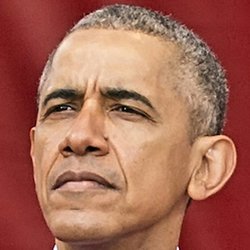
PRESIDENT OBAMA LEARNS TO THINK LIKE AN ECONOMIST
President Obama inherited foreign relations in shambles. The war in Iraq had degraded
America’s military capacity to respond elsewhere and promoted radicalism in the
Middle East. A review of our relations
with Pakistan, Saudi Arabia and Iran was long overdue. Europe and NATO were neglected, with no clear strategic objectives. Potential regional hegemons such as Turkey
and India were ignored. We did not see
how China’s economic resurgence would finance a return of traditional Chinese
foreign policies in Asia. President
Bush’s response to the challenge of Vladimir Putin was naïve at best.
President Obama learned that he could not deal with every
foreign policy challenge with the optimal set of resources. There were tradeoffs. Resources committed have to be proportional
to the importance of the objective.
THE LONG RUN GAME
There is another consideration. It is important for the American president to
realize that the game never ends.
America, more than any other country, has to play a complicated, long
run strategy. A skillful set of foreign
policies must consider how decisions made today affect the future. Sports analogies are misleading. There is always a “morning after” to any
“Mission Accomplished.” The game doesn’t
end. The collapse of the Soviet Union
did not mean that traditional Russian geopolitical objectives disappeared. The U.S. will never defeat the Taliban as long as there are sanctuaries in Pakistan.
When President Obama assumed office, he was fond of using
sports metaphors to describe foreign policy.
In an article in The Economist, he used the metaphor of
a relay race to describe foreign policy.
The United States, unlike other countries such as Russia and
China, must find the right combination of Realpolitik
and ideological objectives. This was
easier to do during the Cold War. Now
the United States should continue to promote democratic ideals without seeming
to use its military and political power to impose its will on other
countries. The overseas perception of
how well America’s democracy is functioning, how well it deals with economic
and social change, is an important part of foreign policy. Again, the United States is playing a long
game.
Supporting democratic ideals and democratic groups around the world has become complicated in the post-Cold War world. Supporting groups like Solidarity was easy; supporting democratic opponents to repressive or autocratic regimes that are nominal political allies of the United States is more complicated. If democratic ideals, institutions and groups are destroyed by repressive, autocratic and right-wing populist regimes, can America survive as an influential global power?
The United States has to recognize that there are limits to
its influence. Other groups and
countries just see the Realpolitik or
even a new form of imperialism. Arrogant
statements followed by military action or threats often lead to long run
problems and lack of credibility. Bombing with drones is easy. Using patient
diplomacy, economic sanctions and other foreign policy tools that don’t have an
immediate payoff is difficult to implement and often difficult to explain.
DOMESTIC POLITICAL INFLUENCES AND CONSTRAINTS
It is tough to conduct a patient, long run foreign policy in
a democracy, especially when an increasing number of adults suffer from
political A.D.D., also known as cable newsitis.
Sometimes the immediate policy alternatives are bad, worse, and
disastrous. Sometimes the best
alternative is to do nothing. Sometimes,
wait to see how things develop and decide how to act later. Political opponents will criticize the
president for being weak or soft.
In a democracy, there are domestic political constraints
that can’t be ignored or silenced. Many
Americans have emotional ties with other countries and will protest and lobby for
that country if they object to American policy.
Cuba and Israel come to mind; Americans of Polish descent may become a
domestic pressure group if Russia threatens Poland. It remains to be seen how a large Latin American population will affect U.S. attitudes and policies towards Latin America.
More Americans are blaming their personal economic difficulties on the global economy. New actors such as American multinational corporations and issue-oriented NGOs (non-governmental organizations) are also trying to influence American foreign policy.
Domestic political and economic policies have international consequences. For example, energy mix and carbon emissions. If America reduces carbon emissions, then foreign policies and influence in this area will be credible. If not, America loses leadership in this critical global area. The same is true in related national policies to deal with other aspects of climate change.
In the modern world, economic and political factors are
intermixed. Trade agreements have been
as much about political objectives as foreign trade. The Trans-Pacific Partnership is as much
about containing Chinese influence in Southeast Asia and strengthening
political ties in Latin America as it is in promoting world trade. The proposed trade agreement with the
European Union, and a similar agreement with Britain, is a key move to holding
the European alliance together.
THE FOREIGN POLICY DEBATE
The question debated in the last presidential election was whether or not Americans are still willing “bear the burden,” pay the cost,
of being democracy’s premier power.
There was isolationist rhetoric not heard since the 1930s. Many Americans, maybe a majority, seem to
believe the global engagement costs to the United States are greater than the
benefits, however difficult to define and defend in the post-Cold War world.
If the United States becomes more isolationist and
protectionist (economic nationalism, threatening virutally every major trading partner with tariffs and trade restriction), there will be political and economic consequences. Trade, and American multinational
corporations, are vulnerable to retaliation.
Ambitious leaders of other countries would love to fill the political
and military vacuums America leaves behind.
Increasingly dysfunctional domestic political and economic
institutions affect the resources and long range focus necessary for foreign
policy. There are other countries
throughout history that have turned from looking outward to looking inward, to
disengage from the rest of the world. Huge Chinese fleets dominated Asian waters as far as the east coast of Africa in the early 1400s. Then China became isolationist. By the early 1500s, these waters were increasingly dominated by Europeans. Eventually the Europeans reached China, leading to and contributing to the colonial carving up of China, civil wars, widespread use of opium and the disastrous Communist regime. Over 100 years of violence and suffering. It is a logical contradiction for a regional or global power to be isolationist.
President Obama Learns Some Game Theory
For a list of posts and economic tutorials in Pages, see Guide to Posts and Pages.