Tag: England

  • England in the 1600s: The Beginning of England’s Rise to Global Power and Wealth


    INTRODUCTION


    In 1600, England had been an insular and agricultural nation, trading primarily with nearby northern Europe. By 1700, England’s commerce was complex and global, as London competed successfully with Amsterdam for American produce and Asian luxuries.


    Alan Taylor,  American Colonies:  The Settling of North America, 258.


    A theme that runs through this essay is the global maritime rivalry with Holland. England and Holland became global trade rivals in the 1600s. They fought three wars that weakened Holland and eliminated it as a naval rival. 


    England’s main instrument in its rivalry with the Dutch in Asia was the English East India Company (EIC). In America and the West Indies, it was the Navigation Acts.


    By the end of the century, England was on its way to becoming a global maritime trading and naval power. The Dutch had lost out in North America but had established a vast trading network throughout Asia, centered in the Dutch East Indies (Indonesia). It was generally not competitive with the main Asian trade of the EIC or competitive with England as a European political power.


    This essay on the spectacular economic progress of England in the 1600s also provides background and context for three other essays on this blog. 


    American Colonial History, 1607-1775


    This background essay helps explain the changing relationship between England and her North American colonies in the context of England’s expanding global trade. It emphasizes the importance of England’s Navigation Acts to the American colonies. The objective was to reduce the role of the Dutch in the American colonies and the West Indies and monopolize all trade with the American colonies and the British West Indies.

    The Dutch were instrumental in financing early sugar production in Barbados. They also dominated early financing and shipping of the tobacco industry in the Chesapeake (Virginia and Maryland). Dutch shipping rates were lower than those of the English. 


    The English sugar islands in the West Indies, mostly Barbados, was the largest source of English imports in the 1600s and an important source of import taxes. In the North American English colonies, England was able to take over the Dutch settlement at New Amsterdam, renamed New York, and using the Navigation Acts, to eliminate Dutch shipping that dominated the trans-Atlantic tobacco trade from the Chesapeake.


    NAVIGATION ACTS


    As part of its maritime rivalry with Holland, England passed the Navigation Acts.


    First enacted in 1651 and strengthened in 1660 and 1663, the Navigation Acts were aimed at the Dutch. All exports and imports of the American colonies and West Indies had to go through England, on English or American ships. Even foreign goods bound for the Americas had to pay custom duties in England. The only exceptions were American exports other than the main exports of tobacco, rice, and indigo. As sugar production in the West Indies, exploded after starting in the 1600s, most other American exports went to the British West Indies.


    England imposed high taxes (custom and excise duties) on American tobacco exported to England. During 1660s, new Navigation Acts regulations forced American tobacco growers to ship all their tobacco to England on English ships. Before that, Dutch ships controlled much of the tobacco trade because their rates were lower than English ships. This hurt the tobacco growers because this caused a tobacco glut in England, fewer ships competed for the tobacco trade, and now all tobacco had to go to England and pay high import taxes.


    The Navigation Acts were an important part of the mercantilist policies of England. According to mercantilism, the government had the right and the power to shape trade in the political interests of the country. This meant economic war, especially with the Dutch. 


    The Dutch and English waged three wars, in 1652-54, 1664-67, and 1672-74. The second war was triggered when an English fleet in 1664 conquered Holland’s American colony New Amsterdam, renaming it New York.


    ENLAND AND HOLLAND IN THE AMERICAS

    England’s main instrument in its rivalry with the Dutch in Asia was the English East India Company (EIC). In America and the West Indies, it was the Navigation Acts.

    This rivalry was part of the wider political and economic environment of the American colonies in the 1600s.

    In the 1600s, the West Indies became the most valuable part of the English colonial empire. Sugar from the West Indies was far more valuable than tobacco from the Chesapeake.

    In 1686, London imported West Indian produce worth £674,518, compared with £207,131 obtained from all the North American mainland colonies.  Sugar constituted £586,528 of the West Indian total, while tobacco accounted for £141,600 of the mainland produce.

    Taylor, 205

    In 1650, the main sugar island of Barbados had a greater white population than the Chesapeake and New England combined. 

    After failing to raise tobacco and cotton, Barbados struck it rich with sugar, starting in the 1640s. By 1660, Barbados accounted for more trade than all other American colonies combined.

    The sugar planters developed a strong lobby in England, partly because many wealthy sugar planters retired to England. They protected sugar imports from high import taxes. The tobacco growers along the Chesapeake were not so lucky. 


    In 1668-69 the West Indian sugar crop sold for about £180,000 after it paid about £18,000 in customs duty – compared with the £50,000 reaped (netted) by Chesapeake planters over and above their customs duty of £75,000.

    Taylor, 216

    This suggests a number of things about the Virginia tobacco growers. It was probably one reason the Barbados planters were wealthier than the Virginia planters, and why Virginia planters went into debt to buy luxuries and expand production (buy land and slaves). It is also intriguing to speculate that this was one reason American tobacco growers complained about being “slaves” to the English crown and merchants who lent them credit. Some of Virginia’s largest planters supported and led the American Revolution.


    By 1775, the American colonies were England’s largest trading (imports and exports) partner. 


    The new set of Navigation Acts in the 1660s made the economic situation worse for Chesapeake tobacco growers. One aim was to eliminate Dutch ships from buying and transporting Virginia tobacco. This drove down prices and worsened the tobacco glut in England.


    England and Holland became global trade rivals in the 1650s and 1660s. In the Americas and West Indies, the Dutch captured most of the carrying trade because they charged less than the English. England passed the Navigation Acts to prohibit American exports to use Dutch ships. In addition to being forced to use English and American ships, almost all produce had to go to England and, in the case of tobacco, pay high excise taxes.


    The English East India Company:  Trade with Asia


    THE START OF EUROPEAN TRADE WITH ASIA. PORTUGAL IN THE 1500s


    Spices and luxury goods from Asia were limited and prices went up after the Ottoman Turks conquered Constantinople in 1453. The last leg of trade with Asia was dominated by Venice.


    Before the seventeenth century, trade across Eurasia was mostly conducted in short segments along the Silk Road and maritime routes through the Indian Ocean. Business was organized by family firms, merchant networks, and state-owned enterprises. Trade was dominated by Chinese, Indian, and Arab traders. 


    In 1492, Catholic Spain, after a 400-year crusade, finally conquered the last Muslim area. Spain then bankrolled Columbus’ voyages, expecting he would bring back gold and silver from Asia. The national government expected to use this wealth to finance a continuation of its crusade by conquering Muslim North Africa. 


    After more than 80 years of trying, in 1497-8 a Portuguese fleet went around the bottom of Africa (Cape of Good Hope) and reached India. And returned laden with spices. It was a very profitable trip. Following voyages established Portuguese trading positions in India and links with Asia east of India. Portugal discovered and conquered the Spice Islands, which were the major source of Asian spices exported to Europe.


    Portugal had shown in the 1500s that long-distance voyages from Europe around Africa to India and beyond were both possible and profitable.


    But Portugal was a small and poor country. It had a small merchant class. Portugal, relying on a combination of state support (with political objectives) and charted private shipping (much of it foreign), was not able to fully exploit the profit potential of the trade. The number of trips were small, partly because financing was sporadic and inadequate. 


    Portugal’s Asian trade and Spain’s conquest of Latin America meant that rivalry among Europe’s nation-states was no longer confined to Europe and the Mediterranean. It was now global. Trade and conquest outside of Europe brought new wealth to European countries; the wealth could finance increased national power.


    The spice trade from Asia to Europe was both highly profitable and risky. By 1600, both England and Holland were ready to try.


    THE ENGLISH EAST INDIA COMPANY:  TRADING WITH ASIA

    England had defeated a Spanish attempt at invasion in 1588 and was thinking about how to become a colonial power. The country began thinking about colonies in North America and the West Indies. 


    The merchants of both countries realized that the traditional way to finance trading voyages – merchants and ship owners raising capital for each voyage separately and distributing profits and capital after the voyage – would be inadequate for the huge capital requirements of a sustained, large scale, risky trading venture in Asia. Merchants, investors, and shipowners would have to solicit outside investors to raise enough capital.


    They succeeded. For 200 years, the EIC and the VOC were the two largest private companies in Europe, based on book value (total capitalization).


    The instrument of England initiating trade with Asia in 1600 was the English East India Company (EIC), a government sanctioned trading monopoly. The goal throughout the century was to reduce or eliminate the competition from the Dutch East India Company (VOC). 


    Eventually, the EIC evolved into a quasi-state that ruled most of India. The EIC brought great wealth to England’s merchant class and helped develop new financial institutions.


    THE ENGLISH EAST INDIA COMPANY (EIC) AND DEVELOPMENT WITH TRADE WITH ASIA


    Why England and Holland both decided to make very large investments in the long-distance Asian trade at this time.


    • Both countries had a poor chance of becoming continental powers in Europe. 
    • Both countries had small populations compared to France, Spain, and Austria.
    • Both countries were Protestant, often at war with the larger Catholic countries of Europe.
    • Neither could compete with the Catholic countries in European continental wars.


    In contrast, both countries were maritime countries with a strong merchant class growing rich on maritime trade and finance.


    • ·      Holland was a republic dominated by its merchant class. 
    • ·      England was a constitutional monarchy where Parliament had to approve taxes.
    • ·      Both had a shipbuilding industry and experienced sailors, the basis of strong navies.
    • ·      Both were capable of building large merchant ships that were often armed.
    • ·      Financing trade made Amsterdam the financial capital of Europe.


    ADVANTAGES OF A PRIVATELY-FINANCED, LONG-DISTANCE TRADING MONOPOLY


    The merchants of both countries realized that the traditional way to finance trading voyages – merchants and ship owners raising capital for each voyage separately and distributing profits and capital after the voyage – would be inadequate for the huge capital requirements of a sustained, large scale, risky trading venture in Asia. Merchants, investors, and shipowners would have to solicit outside investors to raise enough capital.


    They succeeded. For 200 years, the EIC and the VOC were the two largest private companies in Europe, based on book value (total capitalization).


    THE EIC AND VOC IN ASIA


    The English East India Company (EIC) was founded in 1600 and the Dutch equivalent (VOC) in 1602. Both had charters that gave them a monopoly on trade between their home country and Asia. They almost immediately became rivals. 


    In Asia, the EIC suffered defeats at the hands of the competing Dutch East India Company (VOC). The Dutch, led by a very aggressive director, defeated and replaced the Portuguese in the Spice Islands. Then the VOC was able to repulse attempts by the EIC to capture the islands. The Dutch eliminated English attempts to establish entrepots in the Dutch East Indies (Indonesia). The VOC also was the only foreign country allowed to trade with the isolationist Tokugawa shogunate in Japan. The VOC sold the Japanese desired products from all over Asia in exchange for the silver needed to finance the inter-Asian trade and products exported to Holland.


    The EIC early centered their operations on the entrepot trade in western India. The EIC’s first ships arrived in India in 1608, received permission to establish a factory (trading center) in 1613, and was granted permission by the Mughal emperor in 1615 to establish factories throughout the Mughal Empire.


    A historical look at the early evolution of global trade and how this led to the creation and dominance of the European business corporations English East India Company (EIC) and Dutch East India Company (VOC).


    Both countries saw an opportunity to become rich using their merchants, merchant capital, and shipping.


    The Beginning of the Industrial Revolution in England

    This essay describes the most immediate causes of the Industrial Revolution starting in the late 1700s, including some of the reasons it happened in England. But England had undergone changes in the prior two centuries that increased the chances the Industrial Revolution would start there. Economic growth had depended on England developing a global trading system partly based on its imperial empire. Trade (importing raw materials and exported finished goods), shipping, increased wealth, and a rising merchant class prospering from trade were key to this change. This transformation began in 1600.


    THE RISE OF ENGLAND AS A NAVAL AND MARITIME TRADING POWER IN THE 1600s


    Except for the Dutch, no other European nation depended on foreign trade for such a high proportion of its employment and gross national product.


    English merchant shipping more than doubled, from 150,000 tons in 1640 to about 340,000 in 1686.


    Taylor, 259


    The explosion of imports from the West Indies was one reason for the large increase in English shipping in this period. A related reason was the Atlantic slave trade, which England came to dominate. Barbados needed a large number of slaves to harvest sugar cane and produce sugar. The port of Bristol became wealthy by specializing in this trade. The town later put up a statue to one of its wealthiest slave traders. It was pulled down in 2020 in a Black Lives Matter rally.


    Shipbuilding remained a major industry in England into the 1900s.


    By 1700, England was the leading naval power in Europe, with the largest fleet. The English navy was twice as large as the Dutch navy.  London was Europe’s most important center for commerce and finance, passing Amsterdam. England’s power and wealth now depended on overseas trade and commerce. 


    In 1600, England had very little trade outside of Europe. By 1700, about 40% of English shipping tonnage carried American and Asian goods. 


    England had developed a global trading system. It would begin to assemble a global imperial system. Holland could not match England but continued to own a very lucrative colony in the Dutch East Indies and carried out extensive intra-Asian trade.


     INTO THE FUTURE


    The main point of the essay on the EIC is that the creation of the modern corporation and the extension of long-distance international trade developed together. These created great wealth in England, especially in its trading, shipping, and merchant class. Unlike wealth in land, this wealth was liquid (mobile) and would later be invested in railroads and manufacturing.


    Like the EIC, railroads and manufacturing companies were able to raise large amounts of capital, partly because the companies were limited liability companies and shareholders could sell their shares on the stock exchange. The “railroad mania” of the 1840s was the first stock market speculative bubble of the industrial age. It didn’t end well but it didn’t discourage widespread ownership in new companies.


    Also suggests reasons why England was in the best position to start the Industrial Revolution. England was manufacturing goods to be sold in the new English colonies; these markets, especially America, would expand in the 1700s. By mechanizing cotton textile production, England opened up a new, major source of trade revenue. England imported cotton from India and exporting cotton textiles to India and rest of the world.


    Later, in the 1800s, America would become the dominant source of cotton for English textile mills. Also the basis for America’s cotton textile industry. Sadly, this rescued slavery from possible extinction. 

    In both countries, the production of cotton textiles was the first industry of the Industrial Revolution. Cotton textiles were England’s largest source of exports throughout the 1800s. Cotton was the main export of the United States in the 19th century. Export earning helped pay for importing machinery and other industrial inputs.


    For a description of the EIC’s structure and strategy, see

    The English East India Company:  Trade with Asia

    For a conjecture that the EIC might be a model for future multinational corporations, see

    The English East India Company (EIC):  Model for Future Multinational Corporations?


    For an excellent survey of colonial America and the historical context, see

    Alan Taylor,  American Colonies:  The Settling of North America.


    For all posts in this blog, including links, see 

    List of Posts by Topic

    There are essays on colonial American History, American Economic History, and why England and America were the countries that started the Industrial Revolution. Also essays on;

    China.

    Information, innovation, and how markets work. 

    Business, finance, and economics. 

    Global and national demographics, population projections, and how they interact and influence economies. 

    Rome.


  • The English East India Company (EIC):  Trade with Asia

    The English East India Company (EIC): Trade with Asia


    The Mughal emperor Shah Alam hands a scroll to Robert Clive, the governor of Bengal, which transferred tax collecting rights in Bengal, Bihar and Orissa to the East India Company. Illustration: Benjamin West (1738–1820)/British Library

    INTRODUCTION


    The English East India Company (EIC) was an innovative new type of corporation. It is a model for the modern limited-liability, stockholder-funded modern corporation.


    The EIC also illustrates that the prototype of the modern multinational corporation was created to develop global trade.


    HISTORIC BACKGROUND


    The creation of the English East India Company (EIC) and its Dutch equivalent (the VOC) were part of the 400-year expansion of European power, trade, and influence. Much of the rest of the world became colonies, part of imperial empires.


    By 1600, both England and Holland had a wealthy merchant and shipping class, bankers, substantial liquid capital (wealth) not tied up in land, and risk-takers. These categories overlapped.


    Both countries had limited monarchies. In England, the king and Parliament were about to begin a long struggle for power. In Holland, the monarch was mostly subservient to Holland’s powerful and wealthy merchant class.


    THE EIC: STRUCTURE AND STRATEGY


    The East India Company (EIC) was chartered in 1600 by Queen Elizabeth I to promote and monopolize English trade with Asia. England, a poor country in the 1600s but with colonial ambitions after defeating the Spanish Armada in 1588, outsourced its colonial ambitions to the East India Company and other private companies. 


    The East India Company was originally privately funded by 218 merchants and other investors. It was the first modern multinational corporation. The EIC was a joint stock company, that is, a company with publicly traded stock bought and sold in a secondary stock market. Like modern companies, the EIC issued financial reports, held annual meetings for stockholders, and had quarterly meetings of the Board of Directors.


    It was also a limited liability corporation. Stockholders’ potential personal financial loss was limited to their investment in the company. Creditors could not go after their personal assets.


    The EIC was vertically integrated. The company designed, built and repaired its own ships, built its own docks and warehouses in London and in India. It had a large corporate headquarters in London. The company held sales auctions of its imports in its headquarters. It was a major employer in London. It was an “enlightened” employer, offering fringe benefits, including pensions. It provided a retirement home in London for sailors.


    The EIC designed and built a new type of ship, called East India Indiaman. They were built for long-distance trade. Because of commercial rivalry with other European states and local hostilities in Asia, EIC merchant ships were heavily armed and often contained marines.


    East India Company Indiaman Armed Merchant Ship

     ©National Maritime Museum


    The EIC had to build forts to protect its warehouses and trading stations. It hired a mercenary army and develop a navy (Bombay Marine) to protect property and trade routes. It negotiated with local rulers and signed treaties. 


    In short, the company built its own self-contained infrastructure and pursued its independent strategies. 


    The company ran its own management training programs and military academy. The selection process of employees was highly competitive, including written exams. Many of its recruits were ambitious young men from the lower and middle classes who were barred from the traditional paths of upward mobility and status. It employed “foreigners,” Scots and Anglo-Irish. Later, the EIC employed Asians and Anglo-Indians in secondary positions.


    Economists have a warm spot in their hearts (yes, economists do have hearts) because the EIC was the first organization to employ and pay economists – Thomas Robert Malthus, James Mill, and his son John Stuart. John Stuart Mill was effectively the CEO for many years. Contrary to their economic writings, they did not support free trade with Asian countries. 


    EIC “officers” and employees were loyal to the EIC. They saw personal opportunities and advancement within the company. They had opportunities for personal power and wealth that were not available at home. Because of their lower class origins and nationality, wealthy returning EIC officers were often resented as upstarts.


    The EIC created a powerful lobbying group in England. The company attempted to get the English government to continue to support its monopoly on English trade with Asia. Important politicians and royal officials were bribed.


    Unlike other private trading and colonization corporations established in England at about the same time, the EIC was set up as primarily an importing company. The company had the problem of how to pay for products bought in Asia. English exports to Asia such as English woolens were in limited demand. Asian sellers wanted silver. This created a drain of silver out of England, which was a source of friction between the company and the government.


    CORPORATE STRATEGIES AND POLITICAL ENVIRONMENT


    Besides the English-Asian trade, the East India Company was willing to trade anywhere in Asia, looking for profitable opportunities. Its resources, both ships and men, were highly mobile.


    The EIC operated in a violent, insecure environment in Asia. Beside pirates and local conflicts with Asian rulers, England was usually at war with one or more European countries. The conflicts extended to trade rivalry in Asia. The EIC had to fight battles with other national trading companies, foremost of which was the Dutch East India Company (VOC, the initials of the Dutch name of the company). The EIC could not expect much support from England, which was unable to consistently project power in Asia until the 1800s.


    The EIC lost out to the Dutch East India Company in its attempts to control the Spice Islands, the source of much of the profitable spice trade. The EIC also lost its footholds in Java and nearly islands, which became the Dutch East Indies (later Indonesia) controlled by the VOC. 


    Many early trading stations failed in other parts of Asia. Eventually, operations were centered on trading ports (entrepots) and stations in India, the traditional transit area for Asian products bound for the Middle East and Europe. India was also an important source of pepper.


    The EIC was caught up in the Seven Years War (1756-1763) between England and France for dominance in Europe, North America (called French and Indian War in America), the West Indies, and India. The EIC, under the leadership of Robert Clive, was able to defeat the French in India and expand alliances with many local rulers. The company’s well-organized military assets with superior firepower made the company a prized ally for local rulers. In exchange, the company was given extensive privileges including the right to collect taxes.


    At the same time, the company was developing what would be its most important trade – importing Chinese tea to England. To support this trade, the EIC established new stations that would grow to be Singapore and Hong Kong.


    They immediately ran into an old problem – China didn’t want any English imports. Chinese merchants only wanted silver, which led to a major drain of silver out of England. The EIC solved the problem by growing and selling opium produced in India to private traders who smuggled it into China. Some of the financial transactions were handled by a bank that eventually became HSBC.  (One the traders was Franklin D. Roosevelt’s grandfather.) 


    Chinese attempts to ban this trade resulted in a war between China and England (the Opium War, 1839-1842). China was defeated by superior English warships; the subsequent treaty was the first of many that opened up China to foreign influence and then domination. This would have important long-run consequences.


    The demand for tea exploded in the 1700s. The EIC had trouble fulfilling the demand with tea from China. Growing and processing tea was a closely guarded secret in China. But the company smuggled out plants to start new tea plantations in northern India (Assam). These plantations were successful and an increasing source of tea for the EIC. By 1770, EIC exports of Indian tea to England reached £800,000.


    ORGANIZATION STRUCTURE, CONTROL, AND GOVERNANCE


    Besides the EIC’s legal, financial, and governance structures which were innovative, the EIC had an internal management and control structure very much like a modern multinational corporation. It had to find a balance between home office control and branch management initiative. Given the problems of long distances, slow communication, and changing local operational information, the company was forced into a decentralized structure. 


    The Board of Governors combined the oversight of corporate managers with the setting of governing rules and regulations. Much of their control was financial. There was also detailed supervision and control of the voyages sent out from England.


    While officers of the company often sent detailed instructions about policy to local managers, direct operational control was difficult. It often took over two months for a letter from London to reach India. Local managers had discretion to react to local problems and trading opportunities. They had their own staff and resources. They were similar to “divisional” managers of early railroads and large industrial corporations. Even more similar to corporate presidents and their local staffs of national subsidiaries of multinational corporations.


    THE EVOLUTION OF THE EIC FROM A GLOBAL TRADING COMPANY TO A VIRTUAL SOVEREIGN STATE


    The painting above shows the moment when the EIC began its evolution from profit-making global trading company to de facto sovereign state. The year was 1765. The Mughal emperor was forced to turn over tax collection in Bengal and two other states

    to the EIC.


    It was at this moment that the East India Company (EIC) ceased to be a conventional corporation, trading in silks and spices, and became something much more unusual. Within a few years, 250 company clerks backed by the military force of 20,000 locally recruited Indian soldiers had become the effective rulers of Bengal. An international corporation was transforming itself into an aggressive colonial power.


        William Dalrumple, The Guardian, “The East India Company:  The Original Corporate Raiders,” March 4, 2015.


    The EIC was profitable in its early years. The EIC started its evolution from a purely private commercial company to an organization with its own substantial political and governmental responsibilities. For almost 100 years after the Seven Years War, it governed much of India from Bombay (Mumbai), Calcutta (Kolkata) and Madras (Chennai). The large areas around company headquarters in Calcutta, Bombay, and Madras were also effectively ruled by the company, often through “concessions” offered by regional rulers.


    The company performed the major functions of a government – collected taxes, funded a military, made laws and regulations, and established a national bureaucracy. Many of its officers became rich because of IPOs (Indian Political Opportunities – aka bribes, private deals, kickbacks on contracts). Stockholders back in London just wanted profits but EIC officials in India saw the personal possibilities as tax collectors and political administrators.


    As the EIC evolved from a commercial venture to ruling much of India, it became unprofitable almost from the beginning. By 1773, low tax revenue partly due to famines contribute to £1.5 million in debt and a £1 million unpaid tax bill owed to the English government. The company asked for a large loan, over £1 million from the Bank of England, but received only £200,000. 


    This began many rounds of negotiation between the EIC and the English government. The company began borrowing large sums of money from the English government. In the early 1800s, the company exchanged loans from Parliament for government over-site and military support. Parliament stripped the EIC of its trading monopolies between Asia and England. Finally, after the 1857 Sepoy Mutiny, the English government took over overall management and supervision of the company and then annexed India as a British colony.  


    The EIC also came into conflict with the English government when the government tried to impose mercantilist goals on the company. The government, under pressure from its woolen textile industry and then the new English cotton textile mills, banned the company from exporting competing Indian cotton goods (calicos) into England. India cotton, not cotton textiles, was exported to England. India became a large market for the export of English cotton goods.


    The EIC start out as a profit-seeking trading company and ended up ruling much of the Indian subcontinent. The costs of administering India would eventually contribute to bankrupting the company; it was forced to turn over the rule of India to the English government.   


    The home nation-states such as England were becoming more powerful and were able to project power and influence globally. They did not need private trading monopolies to further mercantilist or economic goals.

    CONJECTURE

    This conjecture is a bridge to the next essay on the EIC :

    The English East India Company:  Model for Future Multinational Corporations?


    In 1765, the EIC took over the running of a large territory in India – policing, military, tax collection, and administration. By 1772, it would deeply in debt and needed a large bailout from the English government. They gave it. It was followed by subsequent bailouts until the English government finally took over the EIC after the 1857 Sepoy Mutiny.  Why? Why not take it over earlier?


    Subsidizing EIC was the least bad option.  In 1763, England completed its victory over France. It was the third war with France in the 1700s. England was deeply in debt. As a result of incredible stupidity, England had to commit naval and army assets to control the restless American colonies. The English navy also had to protect the sugar islands in the West Indies, and to its primary task of securing the English Channel. It did not have the military assets to commit halfway around the world to India. It was not necessary – The EIC had a private army of over 20,000 troops that grew to 260,000 in the early 1800s, plus a heavily-armed merchant maring, as the EIC took over governing most of India. This number was far larger than the English army.


    Ten years after the EIC became sovereign in Bengal, the American Revolution broke out. England sent a large part of its army and about half of its navy to quell the revolt. After a few years, when English officers realized the cause of subduing the colonies was hopeless, some of the assets were withdrawn but sent to the West Indies. England withdraw its armed forces from America in 1783. Ten years later England was at war with France; the war, mostly with Napoleon, lasted 22 years. At the end, England was deeply in debt.


    With the loss of the American colonies, India was the foundation of the British Empire. Although losing money, the EIC was responsible for generating nearly half of England global trade. India was a major market for English exports. Quite simply, the EIC was England’s surrogate colonial masters in Asia. It was cheaper to subsidize the EIC than to take over direct governing of India.


    Another reason was that the EIC have bribed government ministers and members of Parliament. Returning EIC personnel, often personally wealthy, also formed a strong lobbying group in England.


    But after four decades of peace in Europe and reducing its public debt, England was ready to begin governing India and projecting imperial power throughout Asia.

    ======================================================


    One starting point of reading about the East India Company is:

    K.N.Chaudhuri, The English East India Company:  The Study of an Early Joint Stock Company, 1600-1640, Frank Cass & Co Ltd, London, 1965.

    For the historical background and context on the EIC, and its role in helping England become a global economic and political power in the 1600s, see

    England in the 1600s:  The Beginning of England’s Rise to Global Power and Wealth

    For the argument that the EIC may be a model for future multinational corporations, see

    The English East India Company:  Model for Future Multinational Corporations? 

    Elsewhere in this blog, I argue that the main form of America’s economic competition, and probably geopolitical competition, with China will depend on the success of American companies in developing new technologies and global links. See


    American Tariffs and the U.S. Economic War with China

    For a case study of a country that became independent after World War II and illustrates the internal chaos of many countries, see


    Nigeria


    You might also be interested in

    The Stock Market Crash of 1929 and the Beginning of the Great Depression


    In the 1920s, the United States developed new technologies in virtual isolation from the rest of the world. It didn’t end well.


    For a list of all the posts on this blog, see List of Posts by Topic

    with links to all other posts. There are posts on Adam Smith, the Beginning of the Industrial Revolution, American Economic History, American History and even economics.


  • Adam Smith’s Pin Factory

    Adam Smith’s Pin Factory

    Adam Smith – Our Founding Father


    ADAM SMITH VISITS A PIN FACTORY


    Adam Smith’s description of a pin factory is on the first page of The Wealth of Nations.  (Chapter 1 – “Of the Division of Labour”)  Drawings of pin factories of this period show workers using hand tools. Smith says the process can be broken down into 18 distinct steps, including packaging the pins. Smith mentions that pin factory workers were poorly paid, despite their high productivity. 


    Adam Smith says he visited a pin factory employing 10 men who produced 48,000 pins per day.  If each of the ten workers had done all the steps themselves, Smith says each worker could produce only 10 or 20 pins per day.  So the pin factory replaces 2,400 to 4,800 pin makers. The increase in labor productivity (output per person per day) is as high as 50 times that of individual pin makers.  


    This reduction in unit cost or average cost (AC) and the huge increase in quantity produced do not just replace older methods of organization and production.  They increase the potential “extent of the market.” Existing users not only buy more pins at the lower price but also think up new ways to use cheaper pins. The geographical limits of the pin market expand; contemporary and future reductions in transportation costs further expand domestic markets and increase exports.


    Adam Smith is considered the Father (or maybe Godfather) of economics.  But this is not economics. At the heart of economics is the concepts of cost and price. No unit price of production or market price are given.


    As Adam Smith says, there are limits to specialization and division of labor, and thus limits to reducing unit costs.  But the major source of these limits is not “the extent of the market.” It is the limit of relying solely on the division of labor using pre-industrial production technology. As a source of the continuous increase in the “wealth of nations,” Adam Smith’s pin factory was a dead end, a one-time increase in productivity due to an organizational change. All that was about to change.


    Adam Smith’s pin factory is his only clear example of how an economy can grow through one type of innovation. But what is missing is any discussion of the Industrial Revolution or power-driven machinery, which had begun during Adam Smith’s lifetime.  Adam Smith knew James Watt, a brilliant mechanic who greatly increased the efficiency of steam engines. Both worked at the University of Glasgow at the same time. Smith was instrumental in hiring Watt. Watt patented his steam engine just as Smith began writing The Wealth of Nations.  A friend of Adam Smith invested in James Watt’s company to produce his new steam engines.  (The same friend, William Smart, was also Thomas Jefferson’s college tutor.) Adam Smith knew Mathew Boulton, the industrialist who convinced Watt to set up a company and factory to produce his steam engine. It was the beginning of the Industrial Revolution.


    Smith mentions “fire-engines” (steam engines) once in the entire book, on page 1, but only to illustrate how workers might improve the working of machines. His example is now considered a myth. He makes a vague statement about “proper machinery,” followed by the sentence, “It is unnecessary to give any examples.”


    It is hard to believe that someone could survive producing 10 pins a day. Someone this isolated and inefficient is a straw man. In reality, almost all economic activity requires specialization, division of labor, and coordination. In the Industrial Age, this means power-driven machinery, specialization by company and coordination of long supply chains.

    A capital goods sector would specialize in producing larger, faster, more efficient power-driven machinery with metal parts. Production became capital intensive; companies became much larger to realize economies of scale.  Economic theorists would continue to ignore the reality of the Industrial and Information Revolutions because the central dynamic – continuous, disruptive innovation leading to new production technology, lower average cost, and new corporate structures – would destroy their key models of perfect competition and general equilibrium. 

    PIN-MAKING GETS MECHANIZED IN AMERICA

    Pin production met the Industrial Revolution in the 1830s.


    Some pins were made in America, most in prisons and almshouses. At a New York almshouse, Dr. John Howe, the resident physician, observed pin making and began to invent a machine to mechanize the process. He made his first machine in 1832. In 1835, the Howe Manufacturing Company was established with capital from New York merchants.


    One of Howe’s pin machines could produce about 24,000 pins in an eleven-hour day.


    Much of the decrease in costs occurred in the packaging of the pins.  About half of the workforce packaged the pins. At first, the pins were “put out” to nearby families. Then the invention of a hand-powered packaging machine brought the operation into the factory. In 1856, a machinist at Howe invented a powered pin-packing machine.  Before his invention, women were paid $1.25 a day to pack about 150 packages; with his invention, women could pack 200 packages a day and were paid only $.75 a day.  (The story of Howe Manufacturing is from Steven Lubar, Engines of Change:  An Exhibition on the American Industrial Revolution, 1986, p. 56.)


    By the late 1970s, two hundred years after The Wealth of Nations, manufacturing plants using computer-driven automated machinery could produce 800,000 pins per worker per day. This is 160 times as many as in Adam Smith’s pin factory.


    EXTENSIONS


    In the United States, before the early 1800s when nails were mass-produced by machines, they were very expensive. If a family built a house using nails and decided to move west, they would often burn down the house to recover the nails for the next house. It is one reason there are so few “vernacular” houses in existence in America before the early 1800s.


    Mechanizing nail production had an even greater effect than mechanizing pin production. Cheaper nails revolutionized construction. They made possible the balloon-frame method of home building, where pieces of lumber were nailed together to make the house’s frame. In the long-run, the result was the American suburb.


    The story of the continuous improvement in the quality and variety of pins, and the decrease in the average (unit) cost, was repeated for related products. Besides nails:


    Spikes – critical input in the building of railroads.

    Rivets – made the mass production of airplanes possible.


    CONCLUSION
     

    Specialization with hand tools can go only so far. But what if power-driven machines continued to become faster, more reliable, more accurate, and more specialized?  Production per plant would go up tremendously and average unit cost would continue to decline. There would be no equilibrium. The Industrial Revolution would be a “permanent revolution.” 


    Specialization and division of labor does not lead to the Industrial Revolution. Production needs power-driven machinery and continuous improvement in machine tools, machinery, and organization. Machine tools make metal machine parts. New and more powerful sources of energy and heat are created. All of this, and more, has to be organize in new organization forms like factories, new types of management, and new types of internal controls.


    ————————————————————————————————————————–

    For an excellent example of an innovative entrepreneur at the beginning of the Industrial Revolution in England, see


    Josiah Wedgwood, the Wedgwood Pottery Company, and the Beginning of the Industrial Revolution.

    For the story of the how the Industrial Revolution began in England in the late 1700s, see 


    The Beginning of the Industrial Revolution in England

    For the argument that the United States was well- positioned to benefit from the Industrial Revolution, see


    The Beginning of the Industrial Revolution in America

    For some of the historical developments that made the Industrial Revolution likely in England, see


    England in the 1600s: The Beginning of England’s Rise to Global Power and Wealth

    The above essay explores the roles of the English East India Company (EIC) in Asia and the Navigation Acts in America and the West Indies in making England a global economic power. It gives context to the next two essays.


    For a more detailed look at the English East India Company, and why it was the first modern multinational corporation, see

    The English East India Company:  Trade with Asia

    For the story of America’s new revolutionary form of government and an outline of the first decades of American economic growth and development,

    A New Nation:  America From 1789 to 1860


    Further commentary on the dynamics of America’s economic development:


    How America Industrialized and Became Wealthy

    A Stylized Model of Innovation:  The Dynamics of Capitalism


    Alice in Wonderland and the Origins of Silicon Valley

    For the story of how England lost its economic leadership, see 

    Innovate or Fall Behind:  A Cautionary Tale:  England and the Industrial Revolution.


    There are a number of essays on American History and American Economic History including


    The Stock Market Crash of 1929 and the Beginning of the Great Depression


    For a list of all posts with links, see 


    List of Posts by Topic.


    There are more essays on American History and American Economic History. Essays on information, innovation, and how markets work. Essays on business, finance and economics. A series of essays on demographics, population projections, and speculations on how decreasing and aging populations will interact with the economics of individual countries and the global economy.

    List of Posts by Topic

    There are more essays on American History and American Economic History. Other essays on:

    Information, innovation, and how markets work. 

    Business, finance and economics. 

    Also a series of essays on demographics, population projections, and speculations on how decreasing and aging populations will interact with the economies of individual countries and the global economy. 

    Essays on a variety of historical topics, including the Industrial Revolution, Rome, and Europe in the World War I period.


    Further comment about Adam Smith. Most of Smith’s book was an argument against mercantilism and restrictions on international trade. At the heart of England’s trade policies was the Navigation Acts. They restricted the development of the economy of England’s North American colonies. American resentment and anger were a contributing factor to the American Revolution. Smith opposed England’s policy of not negotiating with the Americans and then England’s attempt to suppress the Revolution.


  • Why Germany Lost World War I

    Why Germany Lost World War I


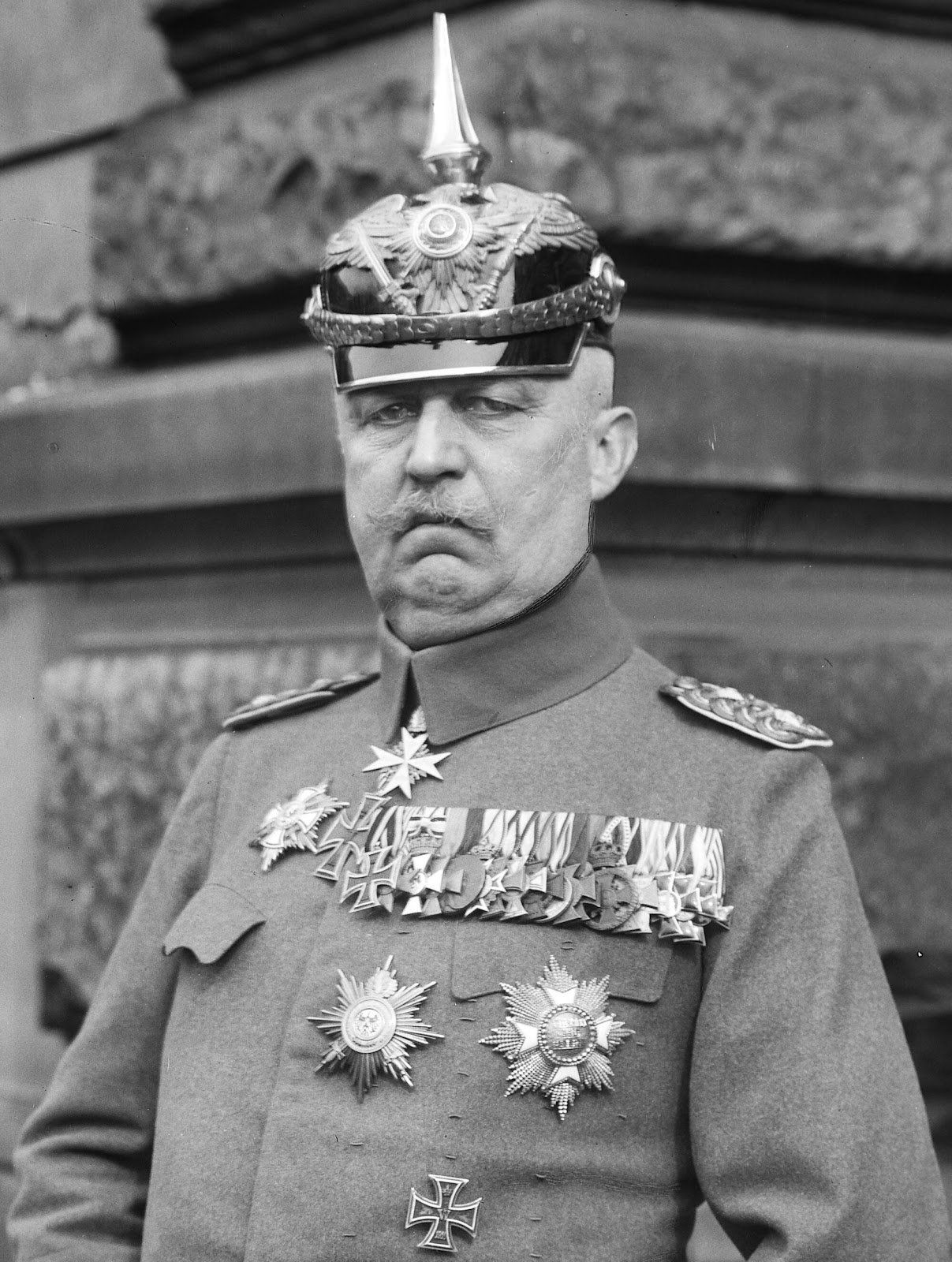
    Erich Ludendorff


    This is a summary of the reasons Germany lost World War I.


    The Entente was the alliance of France, Russia, and England, later including the United States. Sometimes called the Allies.


    German Planning (Schlieffen Plan)

    Germany’s strategy was based on the Schlieffen Plan, first developed by the head of the German General Staff in the 1890s. The essence was that most of the German Army would quickly attack France and defeat France in six weeks, before Russia could fully mobilize. Then much of the army could be quickly transported on Germany’s superb railroad system to the east to defeat Russia. The Plan was reviewed and updated by the German General Staff every year up to 1914, first under Schlieffen and then under his successor, von Moltke. Helmut von Moltke was the nephew (and namesake) of the general that led German forces to victory over France in the Franco-Prussian War of 1870-71.

    The German General Staff never seriously considered any alternative scenarios.


    The elder von Moltke, thinking about Germany’s future after his famous victory, believed that Germany, and its army, should fight the next war in the East. Block France’s expected offensive, concentrate on defeating Russia, and occupy Central and Eastern European territory. Then, if necessary, turn to defeating France. Schlieffen and the younger von Moltke changed the focus, expecting to defeat France quickly with a massive offensive before turning on Russia. In their private diaries, both expressed doubts about the success of their plan. 


    When World War I started, von Moltke led the German Army and was responsible for the success of the Plan. In six weeks, when Germany had failed to conquer France, von Moltke had a nervous breakdown and was relieved of command.


    • ·      Germany did not win a quick victory over France as planned and expected. 
    • ·      Underestimated how fast Russia mobilized and moved its army to attack Germany. German General Staff panicked and transferred a substantial number of soldiers from its armies in the West to the East.
    • ·      Believed (hope?) Britain would stay neutral. Then underestimated how fast the British army deployed in France. Although small, the British army was crucial in slowing down the German advance and later counter-attacking along the Marne.
    • ·      Hoped that Belgians would not fight. When they did, slowed down the advance into France.
    • ·      Underestimated logistical problems of a huge army moving by foot and horse in enemy territory.

    Could Germany have won the war in the West in 1914? Despite miscalculations, they came close (how close is still a matter of debate). The original attack almost succeeded. The two massive German armies that led the attack were commanded by generals who did not like each other and did not communicate with each other. At a critical moment when victory was possible along the Marne, one of the generals changed the direction of his army without telling the other general or von Moltke’s command center. This opened up a gap between the two armies which French and British units exploited, mauled one of the armies, and forced the Germans to retreat. When they stopped retreating, they took out their shovels and began to dig. The series of trenches they created became their front line for almost four years.


    Trench Warfare and Artillery


    Despite huge offensives on both sides, there was static trench warfare in the west for almost four years. Until the summer of 1918, all offensives failed with huge causalities.


    Both sides realized the quick offensive war had become a war of attrition after stalemates in France and in the East. Despite this, the Germans launched a huge offensive in 1916 against Verdun; to relieve pressure, the British launched its Somme offensive. Both offensives failed: there were massive causalities on both sides. 

    World War I became primarily an artillery war. Artillery was the largest cause of death. 

    Huge artillery barrages preceded attacks on lines of fortified trenches. The other side launched counter barrages against advancing infantry. 

    At the beginning of the war, Germany had advantages in deployed artillery and artillery production. In the long run, though, Germany could not keep up with British and French production of artillery shells and explosives.

    By 1917, England alone was producing more artillery shells and explosives than Germany.


     1917


    Again, World War I was a war of attrition. Germany had a chance to win the war in 1917. In 1917, the Russian Army collapsed and Russia was out of the war, the British Army’s size and effectiveness was diminished after the very heavy losses from the Somme offensive, and part of the French Army mutinied. Germany had to attack before large numbers of American troops began arriving and prepared for combat. But Germany had suffered huge losses in its attack on Verdun.

    In 1917, Germany’s submarine warfare in the Atlantic threatened to put England out of the war before American could enter in force. Britain depended on imports, especially for food. About 80% of grain for bread (and beer) was imported. By April, 1917, when America entered the war, Britain and France had only a few weeks inventory of wheat. But Germany’s U-Boot campaign to deny England food from Canada and American was never fully successful.

    Americans began to consider joining the war in 1917 as a result of the German navy’s renewed unlimited submarine warfare. Germany’s navy assured the kaiser they would starve out England before America could send over troops. Americans were also incensed on learning in March that the German government secretly offered German assistance to Mexico if it would attack the United States (the Zimmerman telegram).  That was the final straw; America declare war less than a month later.


    The American army was not ready for European warfare in 1917. The American army was very small and ill-equipped. Although America sent over a total of 2 million troops in 1917 and 1918, they were poorly-trained and lacked weapons like machine guns and artillery. France and England had to arm the American soldiers and teach them how to use the weapons to fight a new kind of war. But by the spring of 1918 about one million Americans were ready for combat.


    1918


    By 1918, German civilians were starving. This was mostly due to the English Navy’s blockade of Germany. 


    Ludendorff had to delay the massive offensive until the spring of 1918. The German Army in France was increased by 500,000 troops transferred from the Eastern Front after Russia collapsed.

    Again, the outcome was in doubt. Reasons for his failure were that the French Army had partly recovered from mutinies, draftees replaced volunteers in the decimated English Army, which was also fortified by Canadian and Australian corps. Both the French and English armies now contained large American divisions (an American division was twice the size of depleted French and English divisions). In addition, Americans helped stop the last German offensive and a large American army took part in the counter-attack (the Meuse-Argonne offensive). The Entente also now had an advantage in artillery and began to effectively deploy tanks and airplanes. After being hammered by the Germans for months, the Entente had sufficient troops to mount a counter-attack all along the German lines. The German army no longer had reserves to plug gaps in their lines. The Entente armies breached the Hindenburg Line, Germany’s last line of defense. The German army collapsed. Ludendorff fled to Holland, but only after advising Kaiser Wilhelm to surrender. Instead, Wilhelm also fled to Holland. The war was over.


    Other Factors

    Germany did not develop the new war technology of airplanes and tanks as fast as the Entente, although this was not a decisive factor in Entente victory. Germany produced very few tanks. Germany also produced fewer airplanes than England and France combined. By the end of the war, the Entente controlled the skies.

    Poison gas warfare gave Germany some advantage early in the war but Entente counter-measures and poison gas production partly neutralized the effect.


    The Entente had resources beyond the national resources of men and weapons. Germany had to rely mostly on its national resources.

    o   France had military manpower from its colonies, mostly from North Africa.

    o   England had manpower and resources from Dominion countries (Canada, Australia, New Zealand, and South Africa), India and its other colonies, and the United States, even before America entered the war. After the United States entered the war, America sent over approximately 1.4 million troops who fought or supported fighting in 1918.

    §  Food, horses, mules, steel, and artillery shells and high explosives from Canada and the United States, even before the United States entered the war. By 1916, the United States was providing England with 30% of its food.

    §  In 1914-1915, the soldiers provided by England’s India Army were critical in stopping German offensives after trench warfare began.

    o   The Entente imported approximately 300,000 Asians, Indians and Africans into labor brigades – to man supply depots and move supplies, and help build and repair railroads. Released manpower for the armies.


    As war continued, Germany’s ally Austria-Hungary became more of a burden than a help. German and Austro-Hungarian objectives were at odds. In the beginning of the war, Austria-Hungary wanted to use most of its army to attack Serbia. Germany wanted Austria-Hungary to use most of its army against Russia to help limit Russian attacks on Germany. Germany only had 1/8 of its army in the east to stop the Russian offensive. It depended on a large Austria-Hungary force to engage much of the Russian army. Austria-Hungary’s redeployment of troops did little to help German in the crucial first month of the war. 


    Austria-Hungary failed to defeat Serbia and suffered huge casualties in the four months of 1914 fighting on the eastern front. Later in the war, Germany had to divert troops at the western front to rescue Austria-Hungary in its war against Italy. By 1918, the new Austrian-Hungarian emperor began secret negotiations to take Austria-Hungary out of the war.


    Saul David, BBC, “How Germany lost the WWI arms race,” February 16, 2012.


    Niall Ferguson, The Pity of War:  Explaining WWI, 1998.


    Two essays on this blog by Professor Andrea Dragon documents the vital assistance America gave England and Russia even before entering World War I.


    New Jersey Artillery Explosives in World War I

    KELP IS ON THE WAY: How American Kelp Helped Save the English Explosives Industry in World War I

    Hal Brand, The Eurasian Century:  Hot Wars, Cold Wars, and the Making of the Modern World, Chapter 2.

    For a discussion of the weaknesses and problems of Austria-Hungary in the period leading up to World War I, see

    The Austro-Hungarian Empire Before World War I


    There are other posts on this blog that explore the period before World War I and what led up to the outbreak of the war:

    Bismarck and the Origins of World War I


    The Beginning of the Twentieth Century:  The Path to World War I


    Wealth and Power in Pre-World War I Europe 


    Europe on the Brink of World War I

    World War I had long-term consequences. Some are discussed in:


    The Immediate and Long-Run Historical Consequences of World War I


    The effect of WWI on the Stock Market Crash of 1929 and the Great Depression is discussed in:


    The Stock Market Crash of 1929 and the Beginning of the Great Depression


  • Europe on the Brink of World War I

    Europe on the Brink of World War I

    SVG Map_Europe_alliances_1914-fr.svg


    ORIGINS OF THE WAR

    This is an extraordinarily complicated story. One reason is that it is difficult for the modern reader to understand the mentality of the key decision-makers – their prejudices, mental frameworks, how they reacted to threats and stress. Fortunately, there are several excellent books that attempt to describe the key players’ assumptions, mentality and motivations.


    World War I was started by the decisions of a very small number of men, often in secret, implementing secret agreements and understandings, who represented the most reactionary, nationalistic or conservative groups in their countries and governments. Most were incompetent, narrow-minded, myopic and/or delusional. They thought going to war – appealing to nationalist sentiments – would solve or subsume social problems and political challenges that were mostly the result of industrialization and rapid economic  and social change. All planned to win in short offensives; Germany had a detailed plan to defeat France in six weeks. Very few people saw that a prolonged war would be a threat to the survival of traditional regimes and empires.


    None of the generals or their staffs thought in alternatives. They all had the same strategy – mobilize large numbers of soldiers quickly, go on the offense, overwhelm the opposition and win the war in a short period of time. Problems:


    Moving a huge number of troops over hundreds of miles, and keeping them supplied, was going to be difficult. Armies still moved by foot and supplies by horse-drawn wagons once they left  the railroads of their own countries. At one time, the English army had 870,000 horses.


    The problem with only planning offenses was that the new military technology favored defense – machine gun nests, barbed wire, rapid-fire field artillery. Tanks were primitive (slow, cumbersome), sometimes effective in breaking through defenses (when they didn’t break down). Airplanes were useful for reconnaissance and evolved rapidly (equipped with machine guns to strafe infantry) but were not decisive. New tactics to attack defenses evolved only near the end of the war after offensive attacks failed and incurred huge casualties. (In the first day of the 1916 British offense on the Somme, the British Army suffered 60,000 casualties, including 20,000 dead). One day!


    There was one war that European military officers observed where the two sides were large armies, fairly evenly matched and used some modern military equipment (and railroads). The American Civil War. It lasted four years with a total of about 500,000 deaths, out of a population substantially less than any of the four major continental combatants of WWI. Most offenses failed. (On the first day of the American Meuse-Argonne offensive in 1918, the Americans and French fired more shells than were fired by both sides in total in the four years of the American Civil War.)


    No army or their general staff ever seemed to have seriously analyzed the alternative of a long war with modern weapons. The only person who did so was a Polish banker named Jan Bloch, who published a six volume book in 1898 titled Modern Weapons and Modern War. He argued that in the next major European war “the spade will be as important as the rifle.” Infantry in trenches with machine guns behind barbed wire would have a large killing advantage against advancing infantry. Cavalry would be less than useless, with dead and dying horses slowing up and disorganizing the advancing infantry. He could see that the nations of Europe would mobilize millions of men. He predicted such a war would be a long one. The impact of a long war with large casualties would result in “the break-up of the whole social organization.” Writing about the military, he said “The steadfastness with which the military caste clings to the memory of a state of things which has already died is … costly and dangerous.” He didn’t live long enough to see just how costly. (Quoted in Richard J. Evans, The Pursuit of Power: Europe 1815 – 1914, 703)


    World War I was the last attempt of the conservative and reactionary ruling classes of Europe to remain in power. It was an easily avoided war that killed 8-10 million soldiers. If we include the long-run effects, hundreds of millions of people died.


    Any illusions about the rationale or romance of the war dissolved quickly. In the first four months of the war, more men were killed on the western front than in any subsequent year. The carnage of a modern war where soldiers were mostly killed by distant artillery and machine guns was shocking to soldiers and civilians.


    THE DECISION-MAKERS


    In each of the five major countries, there was a very small group of men who made the foreign policy decisions. They were outside the normal flow of domestic politics. They often made their own policies and decisions, keeping elected officials and other members of their government in the dark. They kept their treaties and understandings with other countries secret from their own people and government, and in England’s case, even from the leaders of their own party. In France, virtually no one outside of the President and a few top officials in the foreign office knew of the secret military clauses of the treaties and verbal commitments they made. They controlled the information flow; they lied and obfuscated. They ignored their own ministers. Even in republic France; after all, French politics were so unstable that there would be new ministers in a few months. 


    Military leaders in Germany and Austria-Hungary, nominally under the control of civilians (monarchs), pursued their own strategies. The military of France had contempt for most of the elected civilian leaders of France. Top English brass met secretly with French officers to plan the logistics of moving the entire British Army quickly to France in the event of war. In Russia, many of the top military leaders, including the head of the army, were relatives of the tsar.


    COUNTRIES ON THE BRINK OF WAR

    Serbia


    Russia and Austria-Hungary both focused their foreign policy on the Balkans. But by 1913 there was a third player, Serbia.


    The role of Serbia is usually forgotten after the assassination. But Serbia continued to be important. 


    There were Balkan Wars in 1912 and 1913. The first was a coalition of Balkan countries that eliminated the last vestiges of Ottoman rule in the Balkans. The second was among the Balkan countries over which country would control contested territory. Serbia was the winner in the second war, expanding its territory by 80% and increasing its population by 50%. Besides more resources, Serbia now had an experienced army, with better arms provided by France. (Remember that France was an opponent of the German/Austro-Hungarian alliance) It had strong support from the Russian ambassador to Belgrade. Serbia was not going to be the easy conquest assumed by the Austro-Hungarian military. Serbia asked the Russian government if Russia would support them if there was a war with Austria. The Russian government said yes.


    If Serbia was not quickly conquered and Russia declared war on Austria, then Austria would be fighting a two-front war, for which it was woefully unprepared. And that is what happened.


    Austria-Hungary

    For the background on Austria-Hungary, see Austria-Hungary Before the War.

    The danger was that if Austria attacked Serbia, it was very likely that Russia would come into the war. Austria could not handle both countries. But Austria had an ace in the hole. By 1914, Austria was Germany’s only reliable ally. Austria asked for German assurances before attacking Serbia. There were strong personal ties between the Emperors, the members of the political elite and the military leaders of the two countries. The German General Staff and its head, Helmut von Moltke, believed war with Russia was inevitable. Kaiser Wilhelm and the German military, in the crucial month between the assassination and the start of the war, told Austria they should they attack Serbia that Germany would stand by them if they were attacked by Russia.


    In some ways, the state of the Austrian army mirrored Austria-Hungary, a dazzling façade covering a declining and dysfunctional power. The army sported officers in colorful uniforms and elite cavalry units. It had underinvested in modern weapons. The long-time head of the Austrian army, Conrad von Hoetzendorf, had argued long and loud that Austria should attack Serbia. Despite this, he did not have a detailed plan for mobilization because he was unsure how to allocate units between fighting Serbia and Russia. But this was his chance. 


    One reason Conrad was so adamant about going to war was that in late middle-age he fell madly in love with the wife of an industrialist. Every day, he wrote long, passionate letters (3,000 in eight years) to the woman of his obsession. He never mailed them (they were discovered after the war.) He thought if he led the Austrian army to victory, if he were a war hero, she would divorce her husband and marry him.


    By the end of 1914, Conrad and the Austrian army had been defeated in three invasions of Serbia and by the Russians on Austria’s northeast frontier. He had lost as many as one million men. Austria’s frontline army and best units were destroyed. He basically fought defensive battles with the Russians An attempted offense against Italy was a costly failure until the Germans intervened. He was relieved of command in 1917.


    Germany


    I think it is fair to say that Germany is the one country that could have prevented the war. (This is controversial and hotly debated among German historians.) Again, Austria was Germany’s only ally. German leaders felt personal obligations of honor towards Austria’s leaders. But if Germany had said no to Austria and not mobilizing its army, the likelihood of a continental war would have been lower. But this did not reckon with the personality of Kaiser Wilhelm.


    Wilhelm became Emperor in 1888. He retired (fired) Bismarck. After uniting the German states under Prussian leadership in 1871, Bismarck spent the next 19 years trying to reduce threats to Germany. He signed a treaty with autocratic Russia (and Austria, which Germany had defeated in a short war in 1866). He tried to diplomatically negotiate conflicts among the European powers. He wanted to avoid war. In general, he succeeded.


    Wilhelm had a very high opinion of himself. He told government leaders (who he appointed) that he was going to be the new Bismarck. The gods laughed. Over the next 26 years, he poisoned the political atmosphere in Europe and alienated potential allies, especially England.


    It should have been easy to keep England neutral or have some sort of detente. He was the grandson of Queen Victoria. He was educated in England and spoke excellent English. He spent a great deal of time in England, socializing mostly with the royal and aristocratic elite. He like to wear English military uniforms (he was the honorary commander of British regiments and an honorary admiral of the British navy). But he had a love/hate relationship with the English. He envied but never could become a proper English gentleman.


    Yet, there was something very strange about his personality that alienated everyone, including top German government officials. He spent much of his time reading official documents, making hysterical marginal notes and coming up with new ideas and programs. After a few days, he would forget about them and talk at length about new ideas. He traveled incessantly, away from Berlin and his responsibilities about half the time. He had no mental filter, saying whatever came into his mind. He suffered from permanent “foot in mouth” disease. Some of his remarks did real damage, especially in England. In 1899-1902, the English were fighting a vicious war against the Boers (Dutch settlers) in South Africa. During the Boer War, Wilhelm sent a telegram to the Boers pledging German military aid. The English were not amused.


    Early in his reign, he was convinced that Germany had to build a naval force equal to that of England. They got into a naval arms race. By 1910, it was obvious that Germany would never have a main battle fleet equal to England’s. But the damage had been done; the naval arms race had poisoned relations with England.


    Wilhelm’s rhetoric was bellicose and belligerent when there was little chance of going to war. But as WWI seemed more likely in the month after the assassination of Archduke Franz Ferdinand, he tried to become more conciliatory. But his messages were muddled and changed often. In the end, the German army and their political supporters ignored him and prepared for war. He was also sidelined during the war.


    There is little justice in history. When Germany lost the war, Wilhelm fled to Holland, where he led a quiet existence. He lived long enough to still be alive when Hitler’s panzer divisions swept through France.


    The only personality I can think of that is somewhat similar to Wilhelm is Toad of Toad Hall.


    In the end, the decision to go to war was made by Helmut von Moltke, the head of the German Army. He was appointed to his position partly because of his uncle, also named Helmut von Moltke. The first Helmut had led the Prussian Army to victories over Austria-Hungary in 1866 and France in 1870, actions which were part of Bismarck’s strategy to unify the German states. 


    The younger Helmut probably had the wrong mentality to lead Germany into a major war. He was intellectual and musical and probably suffered from bouts of depression. But he had a fear of Russia and felt that Germany’s chances of defeating Russia would worsen over time. Thinking that war with Russia was inevitable, and thus so was a European war, he argued the time was the present. The Chancellor Theobald von Bethmann Hollweg was less certain and at first advised caution. But as the tension mounted, he supported von Moltke.


    Von Moltke had private doubts that the German war plan (the Schlieffen Plan) would succeed. The main idea was to attack France first with most of the German Army, then combined with Austria-Hungary to hold off the Russians and deal with Russia after victory.  Six weeks into the war he had a nervous collapse and was relieved of his command. He wrote a letter to his wife regretting the horrors he had unleashed on Europe and foresaw the dark future. He died in 1916.


    Russia


    Russia was the most autocratic of the five states. All power and ultimate decision-making resided with Tsar Nicholas. Unfortunately, Nicholas was a weak character – indecisive, paranoid, delusional. Factions around Nicholas in government and the military fought each other for power and influence.


    There were attempts at political reform only after the domestic unrest of 1905-06. Cabinets were headed by reformers like Witte and Stolypin. Nicholas allowed a parliament (Duma). But when the tsar regained control, Witte was dismissed and Stolypin was assassinated by a radical. The Duma was disbanded. When reinstated, Nicholas and the conservatives did everything to see it had no power or influence on government policies.


    During his long reign (1894 – 1917), Tsar Nicolas attempted expansion programs to extend Russian power. His last one was to expand Russian presence in the Far East, mostly in Manchuria. This put Russia in conflict with Japan. Most Russians believed they would easily win a war with “inferior” Asiatics.


    The war began with a surprise. Japan launched a surprise torpedo attack that destroyed most of Russia’s Pacific fleet in Port Arthur. (Japan would use similar tactics to attack Pearl Harbor; Admiral Yamamoto who planned the attack on Pearl Harbor was a young naval officer at the earlier attack.) 


    Nicholas ordered Russia’s main fleet, in the Baltic, to sail to Asia and engage the Japanese fleet. England would not allow the Russian fleet to use the Suez Canal because England was an ally of Japan. So the fleet had to go down the African coast, across the Indian Ocean and up the coast of China, a journey of 18,000 miles! When it finally reached Japan, the Russian fleet was in terrible physical shape and sailors were mutinous. It was quickly destroyed by the Japanese fleet.


    A land war ensued in Manchuria. Russia was finally defeated in the battle of Mukden. Two of the Russian generals accused each other of causing the defeat. In 1914, they headed the two Russian armies that invaded Germany. Their lack of cooperation contributed to the famous Russian defeat at Tannenberg. This battle also made the reputations of Hindenburg and Ludendorff, who would lead the German army from 1916 to the end of the war.


    It came as shock throughout Russia that the Russian army was defeated. Who to blame? There was already a great deal of domestic agitation because of the lack of food and the horrible working conditions of the new industrial work force. Large demonstrations broke out in St. Petersburg and other cities. There were hundreds of rural riots against the land-owning nobility. Manors were burned or looted. It seemed to some that revolution was in the air.


    The Tsar contained the demonstrations by calling out the army and gunning down demonstrators. He retreated to a palace south of St. Petersburg. There he would stay in isolation for the rest of his reign.


    After the situation calmed down, Nicholas unleashed his secret police and internal security forces; they carried out a savage campaign to kill or exile to Siberia all suspected revolutionaries. 


    Nicholas believed that the disturbances were caused by Jews. He unleashed his Cossacks and Black Hundreds (local militias) in a series of pogroms (race riots). Thousands of Jews were killed and imprisoned. Many left the country.


    Nicholas also believed that, despite everything, there was a “mystical” bond between him and the Russian people. His feeling was reenforced by the celebrations of 300 years of Romanov rule in 1913. At no time did he waver in his belief that he was an absolute ruler ordained by God. Russia and the Romanovs were one and the same.


    Russia had to rebuild its army and navy. It began a “Great Programme” of military reform in 1913. It called on France for financial support to expand its railroad network west towards Germany and to buy arms. Russia instituted some reforms in its military, including more artillery. This was a major source of concern to the German military. Von Moltke believed that these reforms and rearmament would be completed by 1917 and Germany’s relative military position would be weaker. Again, this fear motivated him to advocate war in 1914. 


    Russia and Austria-Hungary had been competing for influence in the Balkans since the 1870s. Now with the setback of their Far East policy and Austria-Hungary’s absorption of Bosnia in 1908, the rivalry became more intense, with Russia using Serbia as their main client state. Russian nationalists began talking about “Pan-Slavism.” Austria-Hungary reached the conclusion that the Balkans were the only area they could project  power and influence after being shut out of the German Confederation by Prussia. In addition, Austria thought that Serbia was now a threat to the survival of Austria-Hungary. After 1913, Serbia, backed by Russia, focused propaganda and terrorist acts on Bosnia. Serbia also appealed to the South Slavs (Slovenes, Croats and Serbs) in the Austro-Hungarian Empire to oppose the national policies towards minorities in Austria and Hungary. 


    Russia and Austria were on a collision course again. Only this time, they were part of opposing alliances – no talk of “balance of power” and European conferences to negotiate differences and make territorial adjustments through sign treaties.


    France


    Russia, like Austria-Hungary, also had a secret ace in the hole. Bismarck had negotiated a non-aggression treat with Russia. A few years after he fired Bismarck, Kaiser Wilhelm decided not to renew the treaty. France always worried that if they were attacked by Germany again, they might lose. But here was an opportunity to gain an ally. In series of secret agreements between 1891 and 1894, France signed treaties with Russia. While the treaties were known, the secret military obligations of both countries were not. If either country was attacked by Germany, the other would immediately mobilize its army and attack Germany. 


    Russia was trying to rebuild its military after the Asian fiasco. France offered huge loans to pay for rearmament and railroad expansion to move troops faster to the German and Austrian frontiers. But rather than France buying an ally to help fight the Germans, Russian now had an ally to help fight the Germans and Austrians if there was geopolitical conflict in the Balkans. And France would be attacked first. 


    Very few people in the French government knew about the military conditions of the treaty, most of them in the foreign office. It was only in 1913, when Raymond Poincare became president of France, was he told the details of the treaty. He was a conservative nationalist and hated Germany. Poincare came from the Alsace/Lorraine region, the French provinces lost to Germany after the Franco–Prussian war in 1870-1871. Just before war broke out, he traveled to Russia to strengthen ties.


    Instead of the powers of Europe negotiating differences and making adjustments collectively as in the past, there were now two exclusive alliances – Germany and Austria-Hungary on one side and Russia and France on the other. Russia competed with Austria-Hungary for influence in the Balkans. Both countries hoped their powerful allies would support them if conflict broke out. 

    The unknown was what England would do in the event of war.


    England


    England was the wild card. Germany, France, and Russia all tried to negotiate some sort of understanding (détente) with England in the years leading up to the war.


    The German foreign office made a lengthy attempt to improve relations with England. Much of England’s upper classes were pro-German. These efforts were undermined by the behavior and intemperate rhetoric of Kaiser Wilhelm. Russia and England had a long-running rivalry along the political fault lines of Persia, and between Central Asia and South Asia (India). This tension was eased by treaties and understandings negotiated before World War I. 


    Sir Edward Grey was the English foreign minister from 1905 to 1916. He was a rather strange person. He didn’t care about the British Empire, spoke no foreign languages and he hardly ever traveled outside of England and Scotland. He was secretive and devious. He had a small group of confidants within the Foreign Office; one was Winston Churchill. His passion was fly-fishing. He was often away from his office fishing. 


    While he never formally committed to one side or the other, Grey apparently disliked Germans despite that many of upper-class Englishmen were pro-German and liberals (he was a member of the Liberal Party) particularly loathed authoritarian Russia. But Grey, in typical English policy, was afraid of any country dominating Europe. He saw Germany as that country. So Grey secretly began building military and diplomatic connections to France beyond the conditions of their 1907 detente agreement. His own party was almost unanimously opposed to any involvement in a possible European war.


    With his encouragement, a small group of English officers met with French officers to plan the logistics of the landing of English troops if war broke out. English troops were able to be effective earlier in the war than German planners assumed. Although small in numbers, they were able to delay the progress of a far larger German army into France.


    Unlike the four continental powers, England had a small homeland army, only about 110,000 soldiers, because England relied on its navy to protect the island from invasion. Most of its army was patrolling the empire. England did not have conscription before the war; all its soldiers had signed up to be professional soldiers. England only began conscription in 1916 because of its large losses, especially after the battle of the Somme. 


    POLITICAL AND PERSONAL FACTORS


    Russia, with its massive new military spending, accelerated the arms race. More artillery and machine guns. Draft calls were higher, the size of the standing army and reservists were increased, and more money was spent on long-range artillery and howitzers. Russia had the largest standing army in Europe, although the quality of its soldiers and top officers was suspect. 


    By 1914, important trends that increased the chances of conflict were: 

    Two alliances. Replaced “concert of nations.” Not set in stone but limited diplomatic maneuvering. 

    An arms race, combined with offensive strategies and rapid mobilization, that military leaders believed (or hoped) would lead to a short war and victory.

    Many foreign policy officials and ambassadors slanted reports and lied to superiors to reflect their viewpoints. Some military leaders, mostly in Germany and Austria-Hungary, believed war was inevitable or desirable. 


    All countries assumed that mobilization was the actual beginning of the war. Leaves were canceled, units went to assigned positions. Reserves were called up, told which train depots they were to go to, and report to their staging areas. Railroad traffic was cleared for troop trains. War was declared almost immediately after mobilization. Troops and their logistical support began moving immediately towards frontiers for offensive action.


    PREPARING FOR WAR

    In the last few years before the war, against the background of rising tensions, an arms race broke out. The four European powers expanded the size of their armies and increased military expenditures. More conscripts led to larger standing armies and larger reserves of past conscripts. Only England had a professional army of volunteers. All countries had plans for rapid mobilization of recruits and reserves to go on the offensive.


    All four countries believed that the country that could mobilize first and get their army moving (first by railroad but mostly by foot) would have an advantage. This put added pressure on political leaders to call up reserves and mobilize their armies to start their offenses. Once one country mobilized, this set off a chain reaction for all four countries to immediately mobilize. This greatly increased the chances of war. All assumed that full mobilization was the runup to war.


    Government leaders thought that nationalism and war would rally their country’s populace and subsume internal conflicts. There was general enthusiasm for war after war was declared.They were right if it was a short war. Only a few planners and observers thought that the monarchies would be in danger if there was a long war. Especially in Russia.


    Here again is the tendency we can discern in the reasoning of so many of the actors in this crisis, to perceive oneself as operating under irresistible external constraints while placing the responsibility for deciding between peace and war firmly on the shoulders of the opponent.

                    Christopher Clark, The Sleepwalkers, 519


    The constraints were mostly internal – the assumptions and objectives of the ruling elite to preserve their privileged position in society. They were delusional. After the war, a great number of memoirs were written by the main actors; the theme of most was self-justification that they were not responsible for starting the war.


    CONCLUSION


    It seems that none of the decision-makers saw the coming conflict as an “existential” event, that is, that it threatened the existence of their country or the ruling regime. But the preparation of the four continental powers almost guaranteed it if the war was not the short war they all assumed. All four had greatly increased the size of their armies and their armies’ firepower. All resources, including reserves, were mobilized at the start. Casualties were huge in the first four months. After the Germans did not conquer France and the Russian offensive was stopped in the east, these large armies assumed static defensive positions for the winter. In the west, these positions would change little in four years despite massive attempts at offense to break the enemies’ lines. The maximum effort and huge losses at the beginning of the war increased the chances that the war had to be fought to the end. Military planners now saw the war as a war of attrition.


    Because of the stalemated military situation and the two alliances rather than five or six countries thinking about their political options, there was almost no call for negotiations or a conference to discuss how to end and war. The political leaders of the countries all realized that this war would end in unconditional surrender of one side or the collapse of one or more combatants. All combatants had to continue fighting, hoping that an opponent country would collapse first. World War I had become an “existential” war.


    Rather than thinking that the war increased the tensions at home, all decision-makers assumed that war, and the nationalist sentiments it would create, would overcome these tensions. If there was a victory or at least a negotiated settlement after the first battles, this might have happened. But the length of the war worked to worsen domestic tensions. In Russia, Germany and Austria-Hungary there was widespread hunger, even starvation, at home. This contributed to the overthrow of the tsarist government in early 1917. The new emperor of Austria-Hungary tried desperately in 1916 to get out of the war because he knew the existence of his empire was at stake. Large parts of the French Army mutinied. Germany and France knew any treaty was impossible because the winners would impose harsh conditions on the losers.


    WHO WAS RESPONSIBLE FOR STARTING WORLD WAR I?


    Historians have long debated which country was responsible for starting World War I? A more realistic question would be – which key decision-makers were responsible? The answer – all of them.


    There was a small number of them. One in Serbia, three in Germany, three in Austria-Hungary, one in Russia and one in France. Also one in England. At different times.


    1 Dragutin Dimitrejevic, known as Colonel Apis (the Bull), the head of Serbian military intelligence. He set up underground terrorist groups known as the “Black Hand.” Its goal was to forge a “Greater Serbia” that included Bosnia (controlled by Austria-Hungary), Croatia and Macedonia. The young Bosnian Serb who killed Archduke Franz Ferdinand was trained and armed by an officer of the Serbian military intelligence. Ultra-nationalist and violent, the more moderate elements in the Serbian government and the military were afraid of the Bull. With reason – in 1903 he was part of the small group of officers who killed and mutilated the bodies of the king and queen of Serbia. 


    2. Almost no one in Europe, including the people of Austria-Hungary, thought the Archduke’s assassination would lead to war. Or was an excuse to go to war. Except Conrad von Hoetzendorf, the head of the Austro-Hungarian army. He had been strenuously advocating war with Serbia for years. This was his best chance, even though the assassination was greeted with indifference by the Emperor (he did not attend the funeral) and throughout Austria-Hungary. Conrad convinced the foreign secretary Count Leopold Berchtold to support him. They convinced the aged and disengaged Emperor to agree to declare war on Serbia and instruct the military to invade Serbia.


    3. Austria-Hungary could not attack Serbia because of the high probability that Russia would come to Serbia’s aid by attacking Austria-Hungary. Austria-Hungary could not risk this without German backing. Kaiser Wilhelm and high government officials gave the key members of the Austrian government and military strong assurances that Germany would back Austria-Hungary.


    4. The key players in Germany were Kaiser Wilhelm, Chancellor Theobald von Bethmann-Hollweg (and foreign secretary) and Helmut von Moltke, the head of the German General Staff. Germany could have stopped the escalation by not fully backing Austria-Hungary. By Germany backing Austria-Hungary, it greatly increased the chances that Austria-Hungary would attack Serbia and that Germany was going to war with Russia and France. 


    Despite the Kaiser’s enthusiasm, which faltered as the war became more likely, some government officials had reservations. They used the actions of Russia in the last days before the war was declared as reasons (or excuses) to support going to war. 


    The Kaiser’s strong support of Austria in 1914 was somewhat unexpected. A year earlier, when Serbia went to war against other Balkan states, Austrian leaders thought about intervening against Serbia. Kaiser Wilhelm was opposed and told the Austrians he would not support them. (Charles Emmerson, 1913, 76) But this was different. Archduke Ferdinand was a personal friend of the Kaiser and Wilhelm was angry. Also, Chancellor Bethmann Hollweg and army chief Helmut von Moltke were in favor of war. Von Moltke believed that the ongoing military reforms in Russia would make it a more difficult opponent for Germany by 1917. War now, better than war later.


    5. The Russian tsar Nicolas could have restrained Serbia. The tsar did hesitate to fully mobilize his forces in the days just before the start of the war but didn’t offer any alternatives. Encouraged by “Pan-Slavic” ultra-nationalist government officials, some of whom were his relatives, he was pressured to declare war. Nicholas was a weak personality susceptible to the arguments of those around him.


    6. Raymond Poincare, the President of France, was a strong supporter of the secret treaty clauses between France and Russia. He saw this as insurance if Germany attacked France. France knew the general outline of the Schlieffen Plan. But he felt obligated if Germany attacked Russia. Just before the war started, he went to Russia to firm up support for the alliance.


    7. The behavior of England’s foreign minister Sir Edward Grey has always puzzled historians. He pursued his personal foreign policy in secret. No one knew if he advocated war. His own party was against war with Germany. But Grey had for years quietly strengthened ties with France beyond the somewhat vague alliance with France in 1907. Only a few close associates in the Foreign Office and the military knew. He supported secret meetings of top English and French officers to jointly plan the logistics of the transfer of the English army to France in case of war.  He seemed to dislike Germany (many of England’s elite were pro-German and liberals loathed Russia because of the absolute authoritarian rule of the tsar). After war started on the Continent, Grey convinced his party leaders to change their minds and declare war. One argument he seems to have used was the prospect of continental Europe dominated or controlled by Germany. He was motivated by traditional “balance of power” thinking, fear of Germany and personal prejudices.

    An important question to ask: of the key players, which ones wanted to go to war in 1914? The answer is Helmut von Moltke of Germany and Conrad von Hoetzendorf of Austria-Hungary. Their countries were allies. Austria-Hungary, under the insistent prodding of von Hoetzendorf and the backing of Germany, chose to start the war. Germany, under von Moltke, was ready to go to war against Russia.


    Main points of the Posts on World War I


    ·      Internal tension was rising in all major European countries due to the Industrial Revolution causing profound social change and conflict.


    ·      These changes threatened the power, income and status of the ruling class of landowning nobility, which controlled the highest positions in their governments and military.


    ·      Naval and army buildups in the years before the war increased tension among the major countries.


    ·      Tremendous increase in firepower due to new or deadlier weapons. The new weapons, and their mass production, were the results of the Industrial Revolution.


    ·      Generals tried to use the new firepower and mobility to fight a war using tactics and strategies from the past.


    ·      After the assassination of Archduke Franz Ferdinand, there was almost total indifference throughout Europe, even in Austria-Hungary. Like past recent political crises, it was shrugged off. People who thought about it expected it would be resolved without war.


    ·      But men in power saw it differently. Some were eager to go to war. Some accepted the inevitability of war at that time. Most made decisions without thinking about alternatives or consequences if it wasn’t a short war.


    ·      A very small group of men in the five “Great Powers” made decisions, mostly in secret, that led to war.


    ·      Total mobilization of all four continental combatants led to war.


    ·      While there were anti-war demonstrations just before the war, the war took on a grim acceptance after it started.


    ·      Most of the so-called “learning curve” was replacing aging generals with obsolete thinking with generals who were learning new lessons (slowly) as they fought the war.


    BIBLIOGRAPHY


    Christopher Clark, The Sleepwalkers:  How Europe Went to War in 1914. 2012.


    Margaret MacMillan, The War that Ended Peace:  How Europe Abandoned Peace for the First World War, 2013.


    These two books are vital to understanding the thinking and actions of the ruling elites of all countries in the critical years before the war. The mentalities of the diplomats and generals often seemed like their minds were still in the 19th century before 1870. They hadn’t absorbed the economic, technological and political changes.


    Charles Emmerson, In Search of the World Before the Great War. 2014.


    Makes the case that almost no one anywhere in the world was thinking about the political crisis in the Balkans and the possibility of war.


    Michael S. Neiberg, Dance of the Furies:  Europe and the Outbreak of World War I. 2011.


    Convincingly documents the thesis that most Europeans were not thinking of war, but rather believed that peace and prosperity would continue. No popular demands or pressure for war. If anything, just the opposite, with a strong trans-European peace movement and large Social Democratic parties opposed to war.


    The documentary They Shall Not Grow Old, which used actual WWI footage and interviews with WWI soldiers. About the British army in World War I. Based on photos and videos from the Imperial War Museum. On YouTube. Colorized.

    ===================================================================

    These posts could be read in order as background to this post.

    Related posts about the origins of World War I are:

    Bismarck and the Origins of World War I

    The Beginning of the Twentieth Century:  The Path to World War I


    Wealth and Power in Pre-World War I Europe 


    The Austro-Hungarian Empire Before World War I


    The Immediate and Long-Run Historical Consequences of World War I


    The following post by Professor Andrea Dragon gives some historical background on the invention and development of the machine gun, a new weapon that made the battlefield much more deadly. The Maxim machine gun was used by both sides. It could fire 600 rounds per minute; small groups could annihilate massed infantry and cavalry charges. 


    The Maxim Machine Gun and Smokeless Powder


    For a list of all posts on this blog, with links, see List of Posts by Topic


  • Innovate or Falll Behind. A Cautionary Tale – England and the Industrial Revolution

    Innovate or Falll Behind. A Cautionary Tale – England and the Industrial Revolution

    The Rocket – Famous Steam Locomotive


    England, more than any country, started the Industrial Revolution in the late 1700s. And for over 150 years, England continued to discover new products and technologies. Yet England eventually fell behind the United States and Germany in industrial technology, commercial innovation, production efficiency, and economic growth. What happened?


    The seeds of England’s relative economic decline were there right at the beginning. Producing cotton cloth was England’s first big industry. But millwrights, mechanics with specialized knowledge of how to build wool and cotton mills and their machinery, felt frustrated because they seldom became part owners and couldn’t find financing to start their own mills. Some illegally emigrated to the United States and France. Much of the early American textile mill technology was due to English immigrants and English technology. The first cotton spinning mills were designed by an English millwright financed by a Providence, Rhode Island merchant. Much of the early venture capital for the industry was provided by Boston merchants.


    The rapid mechanization of the textile industry displaced British exports as British firms failed to switch from the jenny or mule to the new, faster and cheaper technique of ring-spinning. By the end of the 19th century, the average American cotton spinning mill’s labor productivity was 30% higher than the average English mill. England would eventually lose one of its largest export industries.


    The inability to constantly improve machinery and production processes were part of England’s long term problem. An English company named Platt’s invented and produced an automatic loom for weaving cloth. Platt’s failed to find buyers in the home market but exported the new automatic looms to Japan and other countries. A new Japanese company named Toyoda bought Platt’s looms and began improving their design. By 1930, Toyoda had improved Platt’s technology to the point where Toyoda was exporting power looms to England. Toyoda later changed its name to Toyota.  


    England (actually, a Scot named James Watt) developed a much more efficient steam engine. Later, the improved high pressure steam engine was developed at almost the same time in England and the United States (by Oliver Evans). This engine was critical to the development of the railroad locomotives, steamboats, and later steamships. Steam engines were quickly adopted in the U.S. to propel steamboats on the Hudson River (Robert Fulton) and the vast Mississippi River system.


    The first general purpose railroad was developed in England in 1830. The first railroad locomotives in America were imported from England. Within two years, American engineers and mechanics were modifying the English locomotive, making it more flexible and powerful. American railroad companies developed cheaper and faster ways to lay track. By 1860 over half the world’s track was in the United States and America was exporting railroad expertise and equipment.


    Coal mining was a major industry in England but productivity began to fall until output per head in British coal mining was only half of that found in the American coal industry by 1914.


               Richard J. Evans, The Pursuit of Power:  Europe 1815-1914, 

              300.


    Already in the 1850s, English engineers were alarmed by superior American production techniques, including the new technology of interchangeable parts. They called it “the American System of Manufacturing.” 

    England began to fall behind the United States and Germany
    in the 1870s, at the start of the “Second Industrial Revolution.” Part of the
    problem was the inability of England to stay ahead in the new industries it helped to create.


    England invented the two ways to produce large amounts of cheap steel. But rather than just building steel mills, the inventors licensed the processes to both English and foreign companies. One purchaser was Andrew Carnegie, a Scottish immigrant in America. Within thirty years, America was the world’s low-cost producer of steel and produced over half the world’s steel. Germany produced about the same amount of steel as England, France and Russia combined by 1910.


    This had profound economic consequences. Large amounts of cheap steel were crucial to the development of better machine tools, better machinery, better railroads including steel rails, skyscrapers and automobiles. Also military consequences; at the beginning of World War I, German companies including Krupp were the world’s largest producer of heavy artillery.


    An English chemist discovered the first synthetic dye for cloth. But the development of the synthetic dye industry occurred in Germany. It was the basis for the world dominant German chemical industry. German companies went on to discover and develop new chemical products, including high explosives that gave Germany a decided edge in artillery in World War I.

    Germany and the United States developed the new technologies of electrical equipment. America dominated the global production of automobiles by 1913; America was the world’s largest producer. While Henry Ford was developing the mass production of automobiles, the English car industry still concentrated on producing a small number of expensive automobiles for the wealthy. 

    By 1900, the United States had replaced England as the largest economy in the world. Germany caught up by 1914; Germany was able to build a modern navy that challenged England’s naval superiority.


    The radio was invented and first exploited by an Italian immigrant in England (Marconi). Improvements were quickly made by American inventors. The radio industry’s full commercial potential was developed in the United States by a Russian immigrant (David Sarnoff) using the financial resources and patents of four of America’s largest corporations. Using radio vacuum tubes, it was a short technological step to develop television and early computers. 


    In World War I, England first developed and deployed the tank. But its further development, and a strategy for modern warfare built around the tank, was done in Germany. In 1927, the English army spend more money on hay for horses than fuel for tanks. In 1940, England paid the price as German tanks destroyed the English army and its inferior tanks.


    Before and during World War II, England discovered or developed a host of important new technologies – penicillin, radar, computers, jet engines. But England did not have the resources or industrial technology to develop, improve and mass produce these products. Knowledge of all four was shared with American companies during World War II and became the basis for large new American industries and American companies like Boeing, IBM and Pfizer.

    Losing technological leadership can have serious consequences for a country’s political and military power.


    The structure of DNA was decoded in England. Yet there were no English equivalents of early developers of drugs based on the new knowlege like the American companies Amgen and Genentech. There are now hundreds of American biotechnology companies creating one of the dominant industries of the 21th century.


    Inventing a new product or process does not lead to economic leadership or long-term economic growth if the country does not have the human, production, organizational, financial, and entrepreneurial resources to develop and continually improve them. England did not start engineering, scientific and technical schools on a scale as did the U.S. and Germany; there were no English equivalents of MIT or the German scientific research universities. Engineers (lumped together with mechanics) and entrepreneurs (often from dissenting religious groups or minority groups) were considered social inferiors, and “venture capital” (except for the railroad investment craze in the 1840s) went into trade and overseas investment.


    =====================================================

    Go back to the Guide to Posts by Topic.