 |
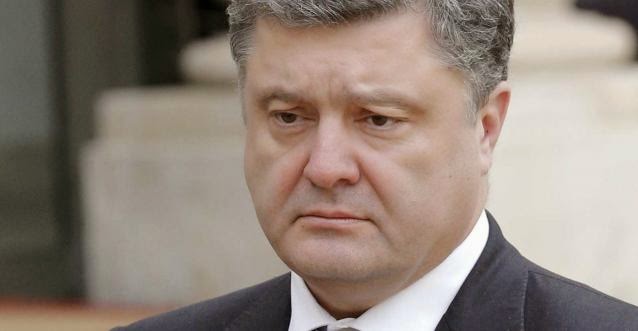
| Petro Poroshenko |
“You don’t
understand, George, that Ukraine is not even a state.”
Vladimir Putin to
George W. Bush, April 2008
FACT SHEET
Size of country – largest totally in Europe (size of Texas)
Borders
seven countries (see map), mostly Russia and Belarus
Russia or
pro-Russian countries and regions (Moldova) on three sides
Ethnic – 77%
Ukrainian
17% Russian
speaking (about 9-10 million people)
Mostly
in eastern provinces, Odessa and Crimea.
6% Other,
including Crimean Tatars
Also
religious divisions reflecting regional and political divisions.
Population – about 44-46 million. (minus 2.5 million in
Crimea)
Very low
birth rate and very high death rate.
Declining
population and labor force.
Very
low life expectancy among men.
Rapidly
aging population.
Heavy
per capita alcohol consumption.
Demographics
similar to Russia and Eastern Europe countries.
HISTORY
Ukraine was the original “Russia”
Scandinavian
name meaning Red.
Kievan “Rus” first Russian kingdom
to convert to Christianity (Orthodox).
Turbulent, bloody history because of location and wide
plains. Tribes going west from Central
Asia, Vikings going south to trade with Constantinople, buffer zone between
Ottomans and Russians, source of slaves and mercenaries. In modern times, often part of another
country’s empire.
Now between
Russia and European Union.
Western
influences in the western half, especially among young.
Crimea annexed by Russia in 1783; most of the rest of current Ukraine conquered by Catherine the Great in 1795.
Seized by
Russia after fall of Yanukovych in Febrauary 2014.
Only second time in the area’s history that Ukraine is a
separate country.
POLITICAL
Poorly governed since independence in 1991.
Corruption,
organized crime, oligarchs, lack of political reform.
Corrupt
police and judicial system.
Orange Revolution in 2004 (non-violent), repeated in 2013-14
(violent).
Both times, demonstrated against
corruption, for closer ties with Europe.
Forced resignation of President
Viktor Yanukovych, pro-Russian president.
Generational split, with older generation more inclined to
be sympathetic to Russia and younger generation more pro-West.
New president Petro Poroshenko (often spelled Porochenko in Western press), signs EU associative status
treaty, first move to closer ties with Europe.
Major players:
Viktor
Yanukovych (corrupt former president, generally
pro-Russian).
Yulia Tymoshenko
(leader of Orange Revolution, generally pro-West).
Petro
Poroshenko (current president, one of eight major oligarchs).
Vladimir
Putin (ruler of Russian since 2000.
Former KGB officer).
Oligarchs,
who seem to be supporting pro-West government and
opposing
Russian militias.
RULE BY OLIGARCHS
The new president, Petro Poroshenko, is one
of the oligarchs. He appointed three
oligarchs as provincial governors. Two refused,
one accepted. One who refused, Rinat
Akhmetov, is reported to be the richest man in Ukraine, with substantial
holdings in the disputed areas. A former
supporter of Yanukovych, he suggested a fourth oligarch be appointed governor
of Donetsk province. He was forced to
flee by separatist gunmen.
Akhmetov controls a personal militia. He was able to thwart pro-Russian separatists
in a key city south of Donetsk province.
North of Donetsk province, a key industrial city and province is ruled
by another oligarch, Ihor Kolomoisky. He
is strongly anti-Russian. Moving
quickly, he has used his personal wealth and power to equip Ukrainian military
forces and fund a professionally-trained provincial militia. Not surprising, a branch of his bank in
Moscow has been seized by the Russian government.
Wall Street Journal, “Ukraine’s
Secret Weapon Against Putin: A Feisty
Billionaire,” June 28-29, 2014.
ECONOMIC
Economic stagnation since independence in 1991.
At official exchange rates, Ukraine economy about $150 billion/year, about 1/3 the size of the economy of New Jersey.
Economic structure a legacy of Soviet Union.
About 1/4 of total Soviet
industrial production.
Much of industrial output still oriented towards Russia but
total exports to West now greater than to Russia.
Part of industrial area in eastern Ukraine adjacent to
Russia. Coal mines, iron ore, steel
mills, fabricated metal products like large diameter pipes, armaments for
Russia, oil refining, chemicals. Area of
pro-Russian protests.
Economically
depressed, especially Donetsk region.
Serious pollution problems.
Most of industrial companies owned by eight oligarchs.
Breadbasket of Soviet Union.
Provided
about 1/4 of food in Soviet Union.
Dependent on Russia for about 2/3 of natural gas supplies
and most of oil.
Russia’s export of gas and oil used
as political weapon. Gas supplies to
Ukraine cut off three times since 2006.
2010 treaty with Russia –
subsidized gas prices in exchange for extending lease for Russian fleet based
in Crimea. Treaty broken by Russia when Crimea
taken over this year. Gas prices raised
to European levels.
Gas use for heating, cooking and
industrial fuel heavily subsidized.
Extremely
wasteful use of fossil fuels.
Four of six oil refineries owned by
Russian companies.
Ukraine has potentially large shale
gas deposits.
UKRAINIAN NATURAL GAS IMPORTS
In 2012, Ukraine consumed 53.8 billion cubic
meters (bcm) of natural gas. Domestic
production was 19.7 bcm. Total imports
from Russia were 32.4 bcm, or about 63% of total usage. For a relatively poor country, Ukraine’s gas
usage is unusually high. Total usage is
three times that of Poland and larger than France. (Source:
International Energy Agency)
Cost of imported Russian natural gas about $10 billion per year. Ukraine having trouble paying. Needs Western financial assistance.
In 2013, the European Union (EU) countries
imported $166 billion of oil and natural gas from Russia. The EU ran an $86 billion trade deficit with
Russia.
LARGER ISSUES
Integration of former Soviet satellite countries in central
Europe into economic, military and political unions of Western Europe.
Best
opportunity for peaceful integration in over 1,000 years.
Resurgence of Russian nationalism – sees integrating Europe
as a geopolitical and military threat.
Supported
by Belarus and some factions in Ukraine.
Geographical
buffer zone next to NATO countries.
Lack of
political and economic reforms in all three countries.
Major
campaign to modernize Russian military weapons.
Russian use of oil and natural gas as geopolitical weapons.
May be less
effective in future.
Large
deposits of shale gas in Europe and Ukraine.
Alternative
European import sources.
Internal threats to European section of Russia.
Declining
European population.
Rising
Muslim and Asian population in southern and eastern areas of Russia.
Muslims
make up 10-15% of Russia’s population.
Potential threat of China to Eastern Siberia and Vladivostok
(Chinese territory until 1860).
Europe moving to reduce imports of Russian natural gas.
Opportunity
for U.S. Canada and other countries to export LNG to Europe.
Canada
building large LNG facility in eastern Canada to export
natural
gas to Europe.
Russian Black Sea pipeline to bypass Ukraine on hold.
SCENARIOS
Ukrainian forces defeat pro-Russian rebels
but guerrilla war continues.
Continued
centralized control.
President
appoints provincial governors.
Russia
reduces support but continues covert operations.
Ukraine
rebuilds military forces with outside assistance.
Continued fighting leading to new constitution that gives
substantially more autonomy to eastern provinces.
Possible if
Russian rebellion contained and truce holds.
Reduces highly centralized
political control of country.
Continued fighting and continued Russian pressure to
destabilize eastern provinces with ultimate aim of absorbing two to five
provinces without invasion of Russian troops.
Victory for
Russian nationalism without economic sanctions.
Russian interference has probably
strengthened desire of western 2/3 of Ukraine to move closer to EU and
eventually NATO.
Russian invasion of eastern Ukraine.
Russian annexation of two eastern
provinces, adding 5-6 million people to European Russia.
Harsher economic sanctions. Serious impact on Russian economy.
Ukraine signs economic treaty with EU and eventually becomes
a member of EU.
Receives
substantial financial aid.
Outside
pressure for political reform.
Scenarios are not mutually exclusive. Some or all may happen at different times in
the future. For example, if eastern
provinces become part of Russia, the rest of Ukraine will probably ask to
become a member of NATO and EU.
COMMENTS ON SCENARIOS
Ukraine’s president has signed an associative member agreement with the EU, as he promised he would. Russian nationals’ rebellion in two eastern provinces and Russian threats eliminated prior policy alternative of trying to balance Ukrainian foreign and economic policies between Russia and the West. One consequence is that Ukraine will probably now receive about $32 billion in economic aid and loans from IMF, EU and US. IMF loans come with strings attached – Ukraine will have to reduce domestic subsidies for natural gas users and begins to reform government. I would also guess that Ukraine will have access to Western military gear and training. In longer run, good chance Ukraine will join EU and NATO.
I think there’s a good chance that current
and threatened economic sanctions will lead Russia to lessen support for pro-Russian
rebels in Ukraine, especially if Donetsk falls to the Ukrainians. Russia
still controls Crimea. There will probably be less overt but continued
covert Russian support. Putin will reduce rhetoric. Russia may continue
to threaten Ukraine with invasion.
Putin cannot appear to totally abandon the pro-Russian rebels. His seizure of
Crimea, military buildup on the border, hawkish rhetoric and military support
for the Russians in eastern Ukraine increased his popularity in Russia. He has to
appear to be continuing his support for the rebels without triggering economic
sanctions that will seriously damage the Russian economy.
Russian oil output is declining.
Russian has huge shale and deepwater oil and gas deposits but needs
Western technology to get at them. This is more important to Putin’s strategic objectives than supporting
Ukrainian rebels. In addition to keeping large European market, increased
production opens up large new markets in Asia, especially China, which intends
to triple LNG imports in the next 8-10 years. Economic and military
resurgence of Russia and Russian nationalism depends on exports of oil and
gas.
Russia will continue
to attempt to destabilize and subvert Ukrainian government but won’t invade, despite
huge military advantage. Combination of economic sanctions (including
access to Western technology needed to develop huge untapped oil and gas
fields), fall in foreign investment and tourism,
and increased capital flight would seriously hurt Russian economy.
Exports, mostly oil and gas, are about 1/4 of Russian economy and pay for
military modernization among other Putin objectives. Europe will
accelerate trend to using less Russian natural gas and oil, but will remain a
major market for Russia.
Huge potential increase in
global supply because of new technology to get at shale natural gas (and oil)
will make up for potential loss of Russian natural gas to Europe.
Eventually. Other countries must
make massive investment in drilling, pipelines, LNG plans and LNG tankers. Needed new LNG ships will cost about $50
billion (New York Times, August 5).
Total elimination may take five to seven years but alternative sources of
supply already available.
Europe and Ukraine have their
own potentially huge deposits. Political opposition to fracking will slow
up development in France and Germany but probably not in Poland, Romania and
Ukraine, the countries with the largest potential deposits. Ukraine will
invite in Western oil countries to help develop natural gas reserves and
modernize economy. Hopefully, EU ties and foreign investments will lead
to economic growth.
If U.S. built a
pipeline network from North Dakota and Canadian shale natural gas fields to
Texas and/or east coast, and the U.S. government licenses liquified natural gas
(LNG) plants, the U.S. could export very large amounts of natural gas to Europe
at a lower price than Russia is currently charging. One new U.S. LNG
plant has been approved and seven more are pending. Canada has already started design work on an
LNG plant in eastern Canada. This could eliminate future Russian threat of
shutoff and strengthen ties of European economy to U.S. and Canada. Major
geopolitical change.
Speculative, more unlikely scenarios. 1) Ukraine voluntarily lets go of two eastern provinces. Gets rid of most of remaining Russian population and economic ties to Russia. Russian population in Ukraine less than 10%. Future firmly with West. 2) Government and judicial system becomes less corrupt and fights organized crime.
For an earlier discussion after Russia seized the Crimea, see The Crimea, Russian and U.S. Options.
ADDITIONAL INFORMATION
For a quick look at the huge disparity of the Russian and Ukrainian military forces, see
http://www.bbc.com/news/world-europe-26437359
Not in the video — Ukraine’s main battle tank, the Russian T-64, has been taken out of service in Russia because it is obsolete. Russia’s tank force includes about 550 T-90s that are comparable to the West’s best tanks. Next year, Russia says they are starting production on the T-95 which, on paper, may become the best tank in the world. It is also a step towards a fully robotic tank, which makes sense in a country with declining population. Russia’s military superiority may be irrelevant if Russia believes stronger economic sanctions will be imposed if they invade Ukraine.
By the way, U.S. design and production to replace the Abrams tank has been slowed by budget cuts and sequesters. The conservative Republicans are a danger to the national security of the country.
I would emphasize that many of the top leaders in the Ukrainian military, SBU and police started their careers, and were trained, by the Soviet Union. Also, since about 17-20% of Ukraine’s population is Russian, I would assume that a lot of police and military are unreliable. It is probably one reason some Ukrainian police and military units surrendered to Russian militia without a fight and gave the militias equipment. Poroshenko is replacing top military leaders. Then there is corruption.
Economic comparisons are harder because much of both economies are underground. Probably higher in Ukraine – one estimate by two Ukrainian economists in 2012 is that 44% of the economy is underground. Even adjusting for that, the Russian economy is about 10 times larger than Ukraine’s. Roughly, $200 billion vs. $2 trillion.
One of
the problems is that modernizing the Ukrainian economy does not necessarily
mean increasing employment. The world’s largest steel company took over
Ukraine’s largest steel complex. It spent billions modernizing the plants
and increasing capacity but reduced employment from 57,000 to 33,000. One
of the oligarch just built a fully automated steel pipe plant that created few
new jobs.
But Russia is vulnerable to economic sanctions and, in the near future, possibly declining exports of oil and natural gas. The two are related; economic sanctions would deny Russia the Western technology they need to get at huge untapped oil and natural gas deposits.
INFORMATION SOURCES
BBC News, “Ukraine Crisis Timeline”
http://www.bbc.com/news/world-middle-east-26248275
New York Times, “Ukraine Crisis in Maps”
http://www.nytimes.com/interactive/2014/02/27/world/europe/ukraine-divisions-crimea.html?_r=0
CIA World Factbook
Financial Times
Novenite (From Bulgaria, in English)
VICE – Russian Roulette (on YouTube)
Video interviews in areas controlled by pro-Russian militias.
kvivpost.com (from Ukraine, in English)