Tag: Europe

  • The Beginning of the Twentieth Century:  The Path to World War I

    The Beginning of the Twentieth Century: The Path to World War I

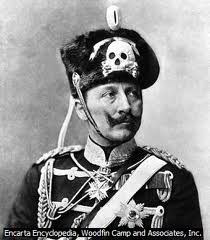
    Kaiser Wilhelm


    INTRODUCTION


    Some historians believe that the twentieth century began with World War I.  But how did World War I begin?


    The horrors of Europe’s
    twentieth century were born of this catastrophe; it was, as the American
    historian Fritz Stern put it, “the first calamity of the twentieth century, the
    calamity from which all other calamities sprang.”

    The consequences lasted at
    least until 1991, the breakup of the Soviet Union, which may mark the end of
    the twentieth century.  But the immediate
    cause of the war – instability and wars in the Balkans – reappeared again with the breakup of Serbian-dominated Yugoslavia, which was created after World War I. Rivalry among nations over influence in the Central European “borderlands” continues. Violence in the Middle East is partly a result of the arbitrary national boundaries drawn up by French and British imperialists during World War I.


    The economic dislocations caused by World War I were
    important causes of the onset and length of the Great Depression. The Great Depression was the catalyst that brough Adolf Hitler to power. The most dramatic economic and political events of the
    twentieth century have deep historical roots.

    THE BEGINNING OF THE BREAKUP OF BISMARCK’S EUROPEAN ORDER


    In the two books cited in the bibliography, George Kennan, the architect of America’s foreign policy at the beginning of the Cold War, gives a detailed account of the slow breakup of the fragile European political order put together by Bismarck. Bismarck’s foreign policy was based on isolating France and forging detente among the three conservative monarchies of Germany, Russia and Austria-Hungary.

    Kennan, as a Russian expert, concentrates on documenting the slow drift of Tsar Alexander III and the Russian political class from a tenuous alliance with Germany and Austria-Hungary to withdrawal and opposition. The surprise here, for me, was that the system came apart before Wilhelm became Kaiser and dismissed Bismarck.


    As far back as the 1880s the Balkans were a critical area of conflict between Russia and Austria-Hungary. Although the Balkans held almost no interest for Bismarck, he assumed that the continued existence of Germany’s ally Austria-Hungary as a “Great Power” was crucial to the maintenance of German security. The problem was that the Tsar and much of the Russian political elite had developed a hatred of Austria-Hungary because of their perception that Austria-Hungary was blocking Russian influence in the Balkans. By extension, they came to believe that Germany supported Austria-Hungary against Russian interests.

    In this atmosphere of Russian paranoia, France saw an opportunity to forge a military alliance with Russia against Germany. The military clauses of the treaty were negotiated in secrecy by a very small number of politicians and generals, and never made public in either country until a few years before the war. 


    Bismarck believed that a war between Russia and Austria-Hungary ran the large risk of the destruction of one or both of the monarchies. There is a hint that a war might even be a threat to the German monarchy and even the recent German federation he had cobbled together. Later German politicians and generals did not see this risk.


    THE BACKGROUND: 
    TRADITIONAL EUROPEAN POWER POLITICS
    AND
    PLAYERS


    This part of the post is mostly based on two recent attempts to answer
    the question of how World War I began.  They are Christopher Clark, The Sleepwalkers: 
    How Europe Went to War in 1914
    and Margaret Macmillan, The War That Ended Peace:  The Road to 1914.


    As Professor Clark says, the origins of the war were “obscure and
    convoluted.”  The book concentrates on the words and actions of
    the small groups of men in each of the five major powers whose collective
    decisions would lead to war.  It is in
    some ways an old-fashion history, telling the story of how foreign and military
    policy was made in a political atmosphere that died with the war.  Although four of the five powers had parliaments,
    policy makers almost totally ignored them.  German and Russian monarchs appointed ministers and influenced policy. Austria-Hungary’s policies were in the hands of the Foreign Secretary and the head of the army’s General Staff.  The president of France dominated the prime minister and ignored the legislature.  In England,
    the foreign secretary, Lord Grey, and a small group of politicians (including Winston Churchill) and military
    leaders, ignored their own Prime Minister and the majority of their own party
    in making foreign policy and military commitments to France, in secret.


    The author concentrates on the key political decision-makers,
    using mostly original sources.  As he
    explains in the Introduction, this is a treacherous undertaking, since much of
    the content of official documents, memoirs, papers and later interviews were
    self-serving, falsified, misleading, lost, or revised.  Key conversations were either not recalled
    truthfully or conveniently forgotten by participants. Almost all memoirs of the key players had the same theme:  I was not responsible for World War I. Yet Professor Clark, in over 500 dense pages,
    with 150 pages of notes, attempts to use this vast collection of papers to
    reconstruct the thinking, motivations and actions of the key players.


    By concentrating on the internal and often secret
    communications and conversations of foreign policy-makers in each country, the
    book conveys the feeling that they were operating in a hermetically-sealed
    environment.  That seems to be one of the
    main lessons.  They were all living in
    societies with tremendous tensions and instabilities. As members of reactionary conservative groups, they opposed or ignored the threats to their power and status
    from new economic and political groups and forces unleashed by the Industrial Revolution and calls for
    democracy and liberal reforms inspired by the French Revolution.  These conservative groups,
    often from the landed aristocracy or related to the monarchs, still
    controlled the foreign offices and often the highest ranks of the
    military.  They were playing traditional “Great Power” international politics under changed circumstances they either did not
    understand or willfully ignored. 


    But how did it happen?  The author does a masterful job documenting the diplomatic thinking and
    actions of the key players in the five powers. 
    But in the end, as the title suggests, they made a series of decisions
    over thirty years that cumulatively led to war. 
    For example, unlike Bismarck,
    whose flexible policies were to isolate France,
    avoid any involvement in the Balkans, and accommodate British colonial
    interests, succeeding German policy-makers under Kaiser Wilhelm took more aggressive
    steps that eventually led to the anti-German coalition Bismarck
    feared.  Rising mutual fear and mistrust,
    including paranoia, made political adjustments increasingly difficult. 


    Their thinking seems to have been narrowed by the
    assumptions they made about European power politics, conditioned by their elite
    position in their societies.  The military and foreign policy leaders had more
    in common with their counterparts in the other countries than they did with
    their own countrymen.  They thought they
    understood the thinking of their counterparts in opposing countries and could
    negotiate compromises.  

    Yet, in the end, most
    of the leaders wanted war or thought war was inevitable. Maybe they were not the sleepwalkers in the
    title of the book, but as they dealt with a series of political crises in the years leading up to 1914, their focus narrowed, military budgets and the size of armies grew rapidly, and political compromises to limit political conflicts became increasingly difficult. The cumulative tension of one crisis after another became almost unbearable and heightened nationalist and xenophobic rhetoric and feeling in all countries.


    In reading how the diplomatic conflicts unfolded, it feels
    like a Greek tragedy, which is one of the author’s intentions.  Like the Peloponnesian War, they would drift
    into a war that would destroy the polities they led.


    HOW DID WORLD WAR I BEGIN?


    The immediate trigger was the assassination of Archduke
    Franz Ferdinand, heir to the throne of the Austro-Hungarian Empire, by Bosnian Serb terrorists secretly armed, trained and financed by the Military Intelligence branch
    of the Serbian army.  That sounds very
    modern.


    Historical tragedy is often accompanied by irony.  Franz Ferdinand, heir to the Austro-Hungarian throne, was probably the only
    highly-placed person in the Austrian government who wanted a political, rather
    than military, approach to Serbia.  He was disliked or hated by virtually
    everyone in the Austrian government, including the Emperor Franz Joseph, who
    was 83 years old.  After his visit to Sarajevo,
    Ferdinand intended to sack the aggressive head of the army.  Ferdinand’s funeral arrangements in Vienna
    were embarrassingly short.  He was
    buried outside of Vienna, not in
    the royal tombs.


    Now comes the tragedy. 
    Austrian leaders were concerned over Serbian agitation in the Balkans, increasingly
    aimed at Austria.  Out of about 52 million people in the Austro-Hungarian Empire in 1914, about 30 million were Slavs.  Some wanted out.  Serbian agitation and calls for Slavic solidarity on the borders and inside the Empire resonated.  To “unite” the increasingly restless nationalities inside the Empire and deal with Serbia, the army high command had long advocated war with Serbia. The assassination gave them their opportunity (or excuse). The foreign office presented the Serbian
    government with a set of demands that they knew could never be agreed to. Surprisingly, Serbia agreed to all but one of the demands and offered a reasonable compromise to a direct threat to their sovereignty. But this was not the usual set of threats and bluffs that led to negotiated compromises in the past. Austria-Hungary’s leaders wanted war with Serbia. Only its stronger ally Germany could restrain Austria. It had restrained Austria in 1912 and 1913. But not this time.

    The military began improvising an invasion of
    Serbia. Why improvise?  Because all the great powers only planned on
    a full mobilization of large numbers of conscripted reserves. It would have been logistically difficult to start with a partial
    mobilization and then somehow expand to a full mobilization. It was all or nothing. Once full mobilization started, once trains pulled out of the stations, it meant war.


    Serbia
    had an agreement, only recently formalized, that Russia
    would come to their aid if attacked by Austria.  The Austro-Hungarian Empire would be in dire
    trouble if it had to fight both Russia
    and Serbia
    alone. But the Empire had a formal
    alliance treaty with Germany.  Since 1909 the
    Austro-Hungarian army’s commander had been discussing joint military operations against Russia with the
    German General Staff.  Russia
    had a secret formal alliance treaty with France,
    both of whom had an uneasy and vaguely worded alliance with England.  England
    and Russia had
    faced off along the southern frontiers of the English empire in the Middle
    East, Central Asia and South
    Asia.  England
    supported the Ottoman Empire’s attempt to keep a Russian fleet bottled up in the Black Sea and blocking its
    access through Turkey
    into the Mediterranean. 
    England
    appeared uncertain that it would come into the war unless Germany
    violated Belgium
    neutrality.  At one point, Lord Grey, England’s Foreign Secretary, toyed with the idea of reaching some sort of agreement with Germany.  In the past, great European powers had
    alliances, understandings and treaties with each other but they were fluid,
    subject to change and realignment, and uncertain in implementation. 


    Yet, as 1914 approached, the two alliances seemed to firm
    up.  Bismarck’s
    nightmare, a coalition of Russia,
    France and possibly England
    aimed at Germany,
    had become a reality.  Political options
    seemed to disappear and diplomatic maneuvering on both sides attempted to
    harden commitments to support allies.  There seemed to be an assumption that war was inevitable and even desirable. If
    war began, combatants could be reasonably certain that their allies would honor
    their commitments and enter the war.  And
    that’s what happened.


    Except for England, countries on both sides believed that the key to a quick victory was how
    fast countries could mobilize their huge army reserves and implement offensive
    strategies. Russia
    mobilized first, even while Tsar Nicholas and Kaiser Wilhelm were sending notes
    to each other saying they did not want war. Too late – the generals on both sides had already set the wheels in motion (literally
    – mobilization depended critically on railroads). All major powers went directly to full
    mobilization. Another localized war in
    the Balkans – the third in three years – was impossible; World War I was about to begin.


    The countries of both alliances immediately launched offensives.  Given the military balance of the two opposing alliances, the new military technology that seemed to favor the defensive, and the logistical difficulties of sustaining massive offensives, it was unlikely that either side would achieve swift victory. Ironically, one man who realized this was the author of Germany’s grand military strategy, the von Schlieffen plan. But his doubts came after he retired, at the end of his life.  


    After horrendous losses from repeated offensives in the first four months of the war, both sides dug in.  Failed offensives causing massive casualties would continue for four more years. 


    What strikes me is that foreign policy makers and military leaders in all the countries did not seem to think in terms of alternative scenarios or the longer-term political consequences if their offensive strategies failed.  With the exceptions of a young French officer named Charles de Gaulle, a few junior staff officers on the German General Staff, and the pessimistic thoughts of the head of the German General Staff in his private diary, no one seems to have thought ahead about how the war would be fought if neither alliance won a series of quick victories.  None of the men who started the war saw how a long war of attrition would end up destroying the social and political order they were trying to preserve.   


    CONSEQUENCES


    The immediate consequence was a war that mobilized over 60
    million troops, caused 20 million military and civilian deaths and 21 million wounded. The European order of Bismarck and other conservatives was shattered, replaced by chaos and violence.


    If the importance of an historical event is judged by its
    consequences, then World War I may be the most important historical event of
    the twentieth century.  Its immediate
    aftermath included:

    • the elimination of four monarchies, including the Ottoman Empire.
    • revolution in Russia, ending in a Communist government, civil war and invasion of Poland.
    • the breakup of the Austro-Hungarian and Ottoman Empires.
    • small, new, weak countries in Central
      Europe.
    • a Fascist government in Italy.
    • political and economic instability in Germany, leading to Hitler, World War II and the Holocaust.
    • English and French colonies and protectorates with arbitrary borders in the Middle East.
    • independence for part of Ireland, leaving the question of Northern Ireland unsettled.
    • a prolonged recession in England.
    • the rise of two new potentially dominant world powers outside of Europe,
      America and Japan.


    Equally important, economic historians who study the origins
    of the Great Depression generally believe the deepest underlying causes were
    the economic disruptions and instabilities created by World War I. The winners of the war could not, or would
    not, deal realistically with the economic dislocations. Criticisms of the disastrous economic
    policies of Winston Churchill in the 1920s by John Maynard Keynes had no
    effect. American exports of agricultural
    products to Europe fell drastically; a recession began
    in rural America
    in the 1920s. Thousands of rural banks
    failed. As the agricultural
    recession deepened in the 1930s, the rural banking system virtually collapsed,
    not all at once but in waves, prolonging the depression. 


    In Germany,
    the combination of bitterness over losing the war and the economic effects of
    the Great Depression would contribute to the rise and eventual success of
    Hitler and the Nazis. In the 1920s, the
    German army and navy were already planning on how to win the next war.  Hitler would inherit a military with a strategy on how to
    reverse the results of World War I.  He
    would use it. 

    History is the story of sudden, unexpected events with long tails and long consequences.

    ====================================================================

    READINGS: 

    The Unraveling of the European Order

    George F. Kennan, The Decline of Bismarck’s European Order:  Franco-Russian Relations, 1875-1890

    There are two valuable aspects to this book. The first is that this history gives a different perspective on the political factors leading up to World War I. The recent books on this topic concentrate on the immediate years before the war. They now appear to me to be incomplete, and somewhat misleading, in their analysis and conclusions. The second lessons is indirect. George Kennan is famous as the primary architect of America’s foreign policy at the beginning of the Cold War. He retired later to write a number of books. I think this book, and its sequel, are an attempt by Kennan to look back to find the deep roots of Russian and Soviet foreign policy. A key conclusion is his insistence that a national psychology is a crucial input into Russian decisions. If he is right, if this psychological continuity exists, then this book is relevant to understanding current, and probably future, Russian foreign policy.


    George F. Kennan, The Fateful Alliance:  France, Russia, and the Coming of the First World War


    This book is a continuation of Kennan’s earlier book, The Decline of Bismarck’s European Order. Shorter, more focused. Like Thucydides, Kennan seems to be looking for universal patterns, or at least relevant historical analogies.


    Throughout the book, George Kennan describes and comments on the hermetic environment of the very small number of diplomats and generals making the secret treaties and understandings that increased the chances of a military confrontation of two alliances. This is ironic coming from Kennan, who was part of a very small elite group of “Wise Men” who made Cold War strategy.


    There is a similarity to the political elite of the French Third Republic. Like them, The Wise Men seemed to believe that their “class” could conduct foreign policy in a political vacuum, without thinking about domestic politics, public opinion or democratic political institutions. I doubt if this is the historical analogy George Kennan intended. See Walter Isaacson and Evan Thomas, The Wise Men: Six Friends and the World That They Made.


    Kennan makes a major point of criticizing narrow military thinking to the exclusion of clear political objectives and flexible strategies. This reflects his feeling that his nuanced Cold War strategy against Russia was hijacked by the military, to the exclusion of exploring possible ways to reduce tension or reach limited detente. It is consistent that Kennan was skeptical and then critical of the Vietnam War, as were the surviving Wise Men.


    In a summary, Kennan seems to be saying that only the presence of nuclear weapons kept Russia and the United States from going to war.


    In the Introduction, Kennan says there will be a third book on the period 1894 to 1918. As far as I know, he never wrote this book. The two books he did write could have been preparatory to analyzing the seminal event of the 20th Century, the origins and outbreak of World War I. I can’t think of anyone who was better qualified to write this history. That he didn’t detracts from the value of these outstanding but narrowly focused histories.


    The Origins of World War I


    Christopher Clark, The Sleepwalkers:  How Europe Went to War in 1914


    Detailed account of the diplomatic decision makers and the hermetic atmosphere they worked in. His analysis tends to undermine his thesis implied in the title.


    Margaret Macmillan, The War That Ended Peace:  The Road to 1914.   

    Broader in scope than The Sleepwalkers, Professor Macmillan factors in how conservative leaders in all the five major powers thought they could use nationalism and the threat of war to overcome the deep divisions in their societies and counter the internal threats to their elite positions.


    Max Hastings, Catastrophe 1914:  Europe Goes to War


    Good summary of research on first five months of the war.  Numbers mobilized and casualties in first months were huge.  All armies offensive but didn’t have the numerical superiority and logistics to sustain attacks.  All countries’ war plans defective, leading to stalemate.  Trench warfare by the end of 1914.

    Nick Lloyd, Hundred Days:  The Campaign That Ended World War I


    Excellent, lucid history of a difficult, complicated topic.

    Emphasizes that the Allies finally learned the lessons from earlier mistakes. Foch and Haig came up with a winning strategy and new tactics. Had firepower and manpower advantages after failed German offensives of 1918 and the arrival of American troops. Preview of WWII as Allies coordinated use of tanks, airplanes and more flexible infantry/artillery tactics. Unfortunately, lessons learned by Germans, not Allies.


    Vienna and the Austro-Hungarian Empire


    John Stoye, The Siege of Vienna:  The Last Great Trial Between Cross and Crescent


    Detailed account of Ottoman Turk siege of Vienna in 1683.  Ottoman defeat led to the eventual loss of much of the Balkans and reorientation of Habsburg foreign policy from west to east.  Roots of later conflicts in the Balkans.  Shows how extremely complicated European politics were.


    Philipp Blom, The Vertigo Years:  Europe, 1900-1914.  2008.


    Despite the book’s structure of picking one theme in each year, surprisingly insightful look at the years before WWI.  Attemps at parallels to current (or continuing) society.  Emphasizes psychological stress and social disruption caused by economic change, and their political and cultural consequences.  Like Schorske’s book, does not delve too deeply into causes.


    Carl Schorske, Fin-De-Siecle Vienna:  Politics and Culture


    Brilliant book on how the liberal, capitalist, upper middle classes lost political and cultural dominance in Vienna.  Symbolized by the Ringstrasse and the buildings around it.  Rise of mass movements to challenge existing political order, including the use of anti-Semitism as a reactionary political weapon.  (Observed by a young Adolf Hitler.)  Cultural (and psychoanalytic) attack on rationalist and ordered culture of Vienna.  In the background, gradual disintegration of Austro-Hungarian Empire.  Nice tie-in with Morton’s book.


    Eric Kandel, The Age of Insight:  The Quest to Understand the Unconscious in Art, Mind, and Brain, from Vienna 1900 to the Present


    Brilliant book.  Worthy successor to Schorske.  Attempts to link innovations in thinking in medicine, psychology and art, with the theme of looking below the surface.  Origins of one psychology of the mind and influence on later art criticism.  Interesting that Freud didn’t seem to be interested in modern art in Vienna or had more contact with contemporary artists.  Author also argues painters seemed to be more interested in the psychology of women than Freud, whose explanations were superficial and stereotyped.


    Frederic Morton, Thunder at Twilight:  Vienna 1913/1914


    A number of extraordinary stories filled with irony.  How Vienna miscalculated.  Vignettes of famous people in Vienna during this period.


    Geoffrey Wawro,  A Mad Catastrophe:  The Outbreak of World War I and the Collapse of the Habsburg Empire.  2014.


    Excellent history of the combination of unreality, arrogance and stupidity of the military and political leaders of the Austro-Hungarian Empire that led to World War I.  Mostly a military history of the performance of the Austro-Hungarian army during the first year of the war.  Incredible incompetence leading to defeats and horrific casualties.


    The Immediate Aftermath of World War I


    Robert Gerwarth, The Vanquished:  Why the First World War Failed to End


    The clear detailing of the chaos, violence, ethnic hatreds and political instability in the six years after the end of World War I, especially in Central and Eastern Europe. While some political stability (and less violence) occurred after 1923, the author argues that the weak governments could not deal with the economic and political chaos created by the Great Depression. The weak democratic government of Germany was discredited and voters dramatically increased their support of far left and far right parties.


    =======================================================================


    WHY THE AFTERMATH OF WORLD WAR II WAS DIFFERENT THAN THE AFTERMATH OF WORLD WAR I


    World War I was the first time America sent a large army to fight in Europe and took part in the post-war peace negotiations. President Wilson attempted at the Versailles peace negotiations to construct a post-war world based on “national self-determination,” democracy, and collective security. This raised expectations of a “just peace” without retribution, and even decolonization. Not to be. The creation of a Communist Russia supporting revolution in Germany and Central Europe (and unsuccessfully invading Finland and Poland), political chaos and violence in Germany and Central Europe, ethnic hatreds in the new countries of Europe, and weak democratic institutions made it exceeding difficult to implement Wilson’s ideals. In addition, France was more concerned about punishing Germany, and England and France wanted to preserve and extend their empires. Americans at home became quickly disillusioned and returned to isolationism. Authoritarian leaders and parties in Europe promised order in place of the chaos of parliamentary democracy. Exploiting the bitterness of the Italian experience in the war and ensuing political chaos, Mussolini and the Fascists came to power promising order. The Great Depression strengthened the appeal of other extremist, anti-democractic parties, most tragically in the rise to power of Hitler and the Nazis in Germany. The result was World War II.


    Why was the outcome of World War II different? The same chaos and violence in Europe was present. But Soviet Russian rule of most of Central Europe suppressed potential conflicts in this unstable region. Ethnic hatred in the Balkans were controlled by a Communist Yugoslavia. On the other side, America did not retreat from Europe. Reacting to the threat of Soviet Russia, The United States supported and subsidized a program of economic reconstruction and democratic institutions in Western Europe. The European Union was created, to foster economic integration rather than national rivalry. NATO was created to provide military protection, ensuring a permanent American presence. Decolonization began. International institutions such as the IMF and the World Bank were established, partly to contain a repeat of the contagion of economic slumps.


    It was the political and ideological rivalry of the Soviet Union and the United States, rather than the political rivalry of traditional European “Great Powers,” that determined the shape of the post-World War II world.


    In a later post, I will argue that this post-WWII structure is coming to an end and we are returning to a world that somewhat resembles the world before World War I. Universal ideological themes like Communism and democracy are becoming less important. Narrower nationalist objectives are reasserting themselves at the expense of supranational structures created after World War Two. Rising internal tensions in many nation-states are having important influences on foreign policies.

    ======================================================================

    For readers with an interest in history, a deeper look at the causes of World War I can be found in Europe on the Brink of World War One.


    Go back to Guide to Posts by Topic.


  • Global Demographics and Economic Growth

    Global Demographics and Economic Growth

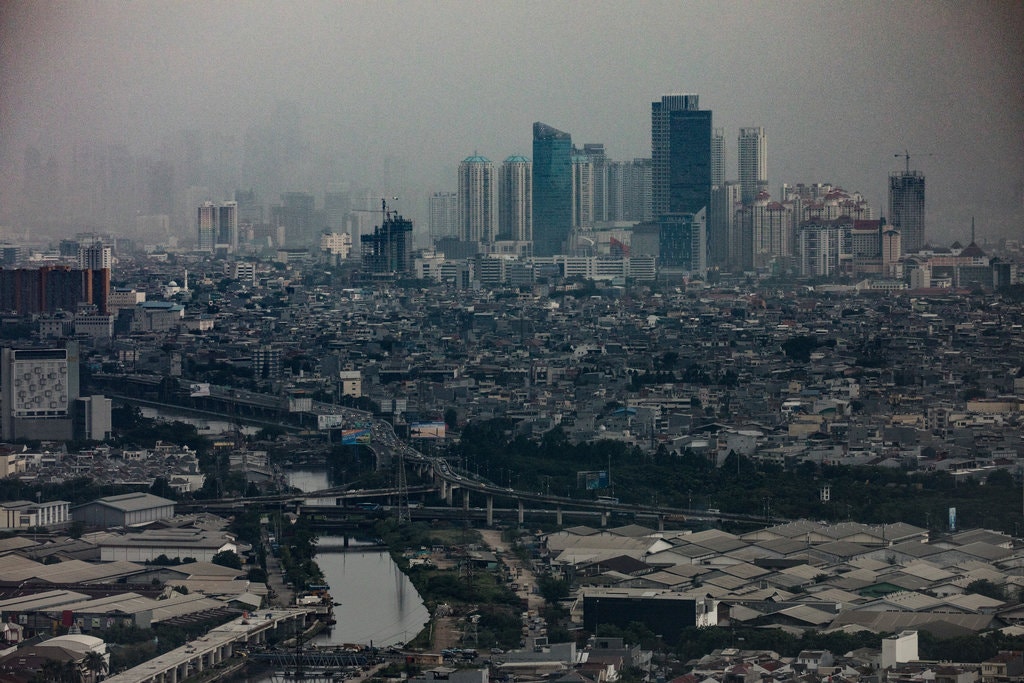
    1. Jakarta – 30 million people and sinking

    GLOBAL DEMOGRAPHICS

    Demographics, the study of the size and composition of population, will shape national and global economic growth and economic policy.  

    The period from 1950 to 2000 was highly unusual. The American “baby boom” started, temporarily reversing the long-term decline in birth rates.  Not just the United States but the global population experienced high birthrates and high population growth rates. In the middle of this period, partly due to more effective and more available birth control, birth rates began a rapid decline. The growth rate in world population began to fall. At the same time, much of the world’s population experienced rising standards of living. One consequence was longer life expectancies and rising average ages in industialized countries.  

    Countries with over a third of the world’s population and most of the world’s output now have birth rates below replacement. They are mostly the wealthy, industrialized countries, including the United States, Canada, Brazil, Western and Eastern Europe, Turkey, parts of Southeast Asia, Japan, Russia and China. Collectively, the size of their labor forces have stopped growing. All countries face the same challenges: Will they be able to invest in economic growth and development (innovation and structural change), deal with environmental costs and climate change effects, and support aging populations?  

    There are falling birthrates for most of the rest of the world’s population, coming down from very high levels. Mexico is at replacement and India is close to the replacement birthrate. But total population continues to grow, partly because of lower infant and child mortality rates, public health programs, better medicine, and subsequently longer lives in most of the world.  

    We are now in a period of a slowdown in total population growth rates. Global population is growing at about one percent per year and the rate continues to fall. But the increase in the number of people is large. In the most recent United Nations projection, the increase in global population from 2020 to 2050 is about 2 billion people, from 7.8 billion to 9.7 billion. The projected population increase over the following 50 years is lower, abour 1.2 billion. 

    Changes in total population may be points on an exponential decay curve. The UN projects that zero population growth will be achieved sometime shortly before 2100. The rate of decline could change with changes in the availability and cost of birth control, education of women, anti-aging medical technologies and more available health care for an aging population. (Estimates of future population are from June 17, 2019 UN projections. UN projections are revised about every two years.)

    The biggest unknown is future medical technology that will prolong life expectancies. Regardless of projection, the fastest growing age cohort is 65 years and over; within that cohort, the fastest growing age group is 80 years and older.

    Countries with birthrates well below replacement and aging populations may experience accelerating decreases in population. Family planning, combined with urbanization and more education of females, could lead to birth rates declining faster than projected in high birth-rate countries. In Africa, Ethiopia, Malawi and Rwanda promoted family planning and have seen large decreases in their birth rates. Kenya, after investing in family planning clinics and information, has seen its fertility rate fall from 6.5 in the late 1980s to 2.4, marginally above replacement and half the rate of most African countries.

    POOR COUNTRIES AND RICH COUNTRIES

    Wealthy countries have below replacement birth rates, no growth or declining populations and labor forces, low real economic growth, and aging populations and labor forces. Population will continue to concentrate in cities; the population of a small number of cities will be responsible for technological innovation and economic development. Rural areas will continue to lose population.

    Poor countries today have high but declining birth rates, young and increasing populations, and populations that want to emigrate (see case study below).

    Most of the largest and fastest growing urban areas in the world are in poor countries, China and India. Over half of the world’s population live in cities and the percent is rising. Almost all of the increased population in poor countries will live in or move to cities, which are already ecological disasters – traffic gridlock, poor air quality, lack of infrasturcture, sinking, raw sewage, and power outages. Many are coastal cities that are already experiencing periodic flooding and storm surges; rising sea levels and the increased number and severity of hurricanes will intensify urban problems. 

    Starting sometime in the 2050s, the world’s population outside of sub-Saharan Africa will stop growing and then slowly decline. All of the world’s net population growth will then be in Africa. How soon the world reaches zero population growth will depend critically on how fast birthrates decline in Africa.

    By 2100, Africa could have about as many people as Asia, about 4-5 billion. Together, Africa and Asia in 2100 could have about 80% of the world’s population.

    Throughout large parts of the Middle East, Africa and Latin America, governments have not been able to provide effective management of economic development for their young, growing population, which have high rates of unemployment and underemployment. Many of the governments are corrupt and/or repressive without free elections or civil liberties. Political activism, partly caused by stagnant or declining standards of living and lack of economic opportunity for young workers, commonly takes the form of mass protests and street demonstrations, aided by Internet social media. Governments typically react with riot police and the military, arrests, torture and prisons, rather than economic and political reform.

    THE DEMOGRAPHICS OF SPECIFIC REGIONS AND COUNTRIES

    A recent survey concludes that 46 countries have declining population or will have declining population in the near future. Declining population is already true in Japan (see below) and Russia and is about to be true in central and eastern Europe. South Korea, also with an extremely low birth rate, is looking at a demographic future similar to Japan’s (see below). South Korea’s current population of 51 million is expected to decline to about 30 million in 2100.

    Russia’s population is declining. Male life expectancies in Russia have been going down for decades but might have recently stabilized. While birthrates are below replacement, the decline of the national population has been offset in recent years by immigration. But lower rates of immigration in 2018 and 2019 have led to large decreases in population. The UN projection is that Russia’s current population of around 146 million will fall to about 85 million by the end of the century. 

    Because of very low birthrates and out-migration, central and eastern Europe is looking at population declines in this generation.  Some UN projections show that most countries in central and eastern Europe might have even larger total percent declines than Japan by the end of the century (over 50%).

    Western Europe is further along the population aging curve but because of immigration of younger people, the decline will not be as precipitous. And western Europe, like Japan, currently starts with more resources to support an aging population.  But high structural unemployment rates, low economic growth, restrictive labor laws and generous early retirement benefits will strain western Europe’s ability to grow and maintain current social welfare levels. A few European countries realize that current levels of social welfare are not sustainable and have begun reviews of retirement and health care programs. This problem is exacerbated by the currently high unemployment and underemployment rates among younger employees.

    China, which has enforced a “one-child” program since the 1970s until 2016, has a very low birthrate of about 1.6. Although this program has been relaxed in recent years, the national birthrate remains far below replacement. China currently has a young average-age population but the average age is rising very rapidly. 

    China’s working-age population began shrinking in 2012.  By around 2050, the decrease will be about the size of the current U.S. total labor force. Next year, the median (half above, half below) age in China will pass that of the United States. By around 2045, the percent of China’s population over the age of 65 will be about equal that of the United States. 

    A mature, experienced workforce should help maintain high but falling economic growth rates for another generation. After about 2050, demographics will begin working against Chinese economic growth. 

    China will grow old before it becomes rich (high per capita income). Even after decades of spectacular growth, per capita income is still about one-third to one-fourth that of South Korea and Japan. Even worse off are the economies of Southeast Asia, with per capita incomes below China, similar birthrates and rapidly aging populations.  

    Given current political strains and a large Chinese population outside of China, it is possible that China will have larger net outmigration in the future.

    DEMOGRAPHICS AND ECONOMIC GROWTH

    The following accounting identity shows the sources of economic growth. An accounting identity says nothing about causality, assumptions or feedbacks. But it introduces some general issues.

    The economic growth rate of a country roughly equals the growth rate of the labor force plus the increase in productivity (output per member of the labor force).

    If the labor force numbers are stable, all of the increase in output depends on the increase in productivity. The pressure on productivity is even greater if the labor force numbers are decreasing. So, for example, if a labor force is increasing at about 1% per year and productivity is increasing at about 1% per year, output will increase about 2% per year. If the workforce stops growing, productivity would have to double to 2% to yield the same economic growth. If the workforce were to decrease at 1% year, as it is in a number of countries already, productivity would have to increase 3% a year to achieve 2% economic growth. This is a high productivity growth rate for a developed economy.

    There is a small amount of research that suggests that an aging labor force is one cause of slowing productivity growth.

    Low rates of productivity growth with accelerating rates of labor force and population decline could lead to less output (negative growth rates) and declining standards of living.

    A member of the industrial/information workforce today is better educated, with new skills, compared to a member of the labor force a generation or two ago. The difference should show up in an increase in labor productivity. Increase in total factor productivity will be due to innovation in capital equipment – including information technology, robotics and artificial intelligence algorithms – and demand for employees with new skills and knowledge. Other factors are public investment and organizational innovation. But these changes have not shown up in productivity measurements. Productivity growth rates are low, although I suspect that the methodology used to compute these figures underestimates the gains.

    Demographics are heavily influencing the areas of investment in wealthy countries; these sectors will drive future economic growth. The three most active areas of research and net investment are robots and AI (reaction to declining workforce), driverless vehicles (same), and biotechnology (health care for an aging population).

    Demographics also influence the demand side of economies. The changing age structure of the economy influences the “market basket” of consumer spending. Certainly the large increase in the number of senior citizens (and their income) is having a major impact on health care spending. To say nothing about the increase in demand for tourism, gambling and south Florida real estate. (I once predicted that marijuana would be legalized when a large number of baby boomers became 65 and older.)

    An aging population is not necessarily bad for economic growth. A healthy population beyond retirement age is leading in the United States to an increasing percent of senior citizens remaining in the work force. With a rising percent of the population over 65 and living longer, health care is a growing percent of output. The health care sector is very innovative, which is a source of economic development and thus economic growth. 

    Companies use demographic information when planning marketing and advertising strategies. Changing demographics are analyzed when developing new products, changing product mix, and segmenting markets. The explosion of detailed demographic information about smaller and smaller segments, including individuals, combined with online marketing technology, is revolutionizing marketing and advertising.

    Areas of the world like Africa face the opposite problem. Working-age population will increase rapidly for a generation or two. But unemployment rates may be high and marginal productivity may be close to zero, or negative in rural areas. With high growth rates of population, economic growth rates will have to be high – over 6% per year – for a sustained period to raise real per capita income (standard of living) and reduce unemployment.  

    IMPLICATIONS FOR ECONOMIC POLICY

    The standard economic models demonstrate that the demographic changes we are seeing are a function of economic growth and development. Industrializing, better educated, urbanizing populations have declining birth rates. But the experience of the poorer regions of the world tends to indicate that these demographic changes are occurring even without economic growth and development.

    Although wealthier countries concentrate on the costs of their rapidly growing retired population, for most of the world the critical question over the next two generations will be how to accelerate economic growth to provide jobs and opportunity for the growing working age population.  The related challenge is how to improve education, training, and economic opportunity to raise standards of living now to provide the resources for the aging population in the future. 

    For the entire world, these objectives are complicated by how to pay for the social costs of past industrialization and environmental degradation, and the future costs of climate change.

    Increasing population and rising real income in emerging economies, especially in Asia, are increasing the demand for energy. China, which had no privately owned cars in 1979, is now the world’s largest automobile market. A dramatic increase in the number of cars is the main reason for the continuing increase in the global demand for oil.  Increased demand for electricity is being met largely with new power plants burning fossil fuels. For at least another generation, these trends will make it difficult to meet global goals to drastically slow down or stop global warming.

    Demographics is interacting with climate change in another important area – food production. Many scientists believe the most serious effect of climate change will be its impact on food production. Global warming and more extreme weather events will make it more difficult to expand food production using current technology. As in other areas, trend projections can be changed by the development of new techology.

    In the long run, the positive side of declining global population will probably be less demand for resources. Combined with substitute technology, global warming might slow down or stop. Climate change might not have quite the devastating effects trend projections indicate.

    The advanced and industrialized countries with stable or declining populations and workforces will have to consider the following:

    Economic growth will have to come from large increases in productivity (output per member of the workforce). To achieve this, and also meet social welfare costs, most countries and regions such as the European Union will have to make radical changes in economic policies. Particularly disruptive and contentious will be the adoption of automated factories and offices. On the positive side they will increase labor and total productivity; on the negative side they will probably eliminate or “deskill” a large number of existing and future jobs.

    Large increases in retirement age populations is leading to serious underfunding of public and private pension funds. Taxes to fund public pension funds are rising rapidly, both in amount and as percent of government budgets. Despite this, unfunded liabilities – promised future benefits not covered by projected future revenue from taxes – are also rising rapidly.

    Multinational corporations will develop and adopt the new technology. Countries that do not have quality education, encourage innovation and change economic incentives will not be able to attract investment and compete in the global economy. And their best educated and most motivated people may go somewhere else, as is happening in eastern Europe and many developing countries.

    On the other hand, poor countries with decent transportation, energy and communication infrastructure will probably attract foreign investment. Real wages of at least part of the labor force will rise.

    Attitudes towards immigration might change from the current restrictive policies of some countries. Attracting “human capital” will be just as important as attracting investment capital. Trans-border movement of people will increase. New national, regional and international agreements will have to be negotiated.  Remittances back to the home country will be a more important part of the economy of many countries and global capital flows. 

    Attitudes about work, labor laws, retirement and retirement ages will change. The benchmark age of 65 was arbitrarily set by Bismarck almost 150 years ago when less than one percent of the German population lived that long. When the United States adopted Social Security, life expectancy was 56 years. The life expectancy of America’s younger workers is already over 80 years.

    DEMOGRAPHICS AND PUBLIC ECONOMIC POLICIES

    If the labor force is not growing or actually shrinking, as it is in most industrialized economies, and the non-working population is growing, one consequence is likely to be growing government budget deficits. Growing government deficits as a percent of GDP may be a function of no economic growth or slow economic growth, not the other way around as suggested by economic research.

    It is how a government spends its income, more than the size of the deficit, that matters. Public investment substitutes for stagnant private consumption spending. Investment, both public and private, substitutes demand for innovation for demand for existing goods. This could increase productivity and result in new products and services. Economic growth then will depend on high levels of new technology and increased productivity (output per employee).

    JAPAN AS A POSSIBLE MODEL (OR WARNING) FOR INDUSTRIAL COUNTRIES

    Figures are from The Economist, “Japan’s economic troubles offer a glimpse of a sobering future,” December 5, 2019.

    Japan is a possible model for the future of other wealthy countries. Japan has a shrinking population and workforce. This will continue. It is not surprising Japan leads the world in developing and installing robots. Robots and AI are also alternatives to immigrants. Japanese companies export capital and technology. Facing falling population, Japan is slowly increasing the number of foreigners allowed into Japan on temporary work permits. But the number remains small, below 1%.

    Japan’s real GDP has been basically stagnant (about one percent per year) over the last 30 years. Without immigration and structural changes to Japan’s political and economic system, Japan’s real GDP in the future will grow slowly at best and eventually decline along with its population. In the long run, Japan will continue on its path to demographic and economic self-destruction.

    CONCLUSIONS

    Demographic trends have important consequences for economic growth and public policies. They cannot be seen in isolation. Neither can any of the other major trends. They are interrelated. 

    ·      Rising global population but at lower rates, mostly in poor countries, for the remainder of the century. After the 2050s, all of the world’s net population increase will occur in Africa. Global population may stop growing by the end of the century. 

    ·      Rising population in poor countries makes high rates of economic growth both pressing and difficult. Emigration pressure from poor regions of the world will probably increase unless there are high rates of economic growth.

    ·      Most of the world’s population increase will take place in cities and surrounding metropolitan areas, creating even larger massive urban areas. Large urban areas are increasing rapidly in poorer countries. 

    ·      Static, falling and aging populations in the wealthier, industrialized countries. Static or declining labor forces mean all economic growth will depend on increases in productivity. To counter demographic trends, technological innovation (robotics and software) leading to high rates of productivity growth will be necessary to increase standards of living (real income per person).

    ·      Problems with unemployment and underemployment, stagnant and declining real incomes and income inequality will probably get worse as artificial intelligence and robotics accelerates the substitution of capital for labor.

    Economic development and growth since the beginning of the Industrial Revolution has been aided by large increases in populations and especially the working age population. But in the future, economic development and growth in most of the world will have to occur with stagnant or declining labor forces and aging populations.

    =====================================================

  • Energy and Geopolitics II:  The World ex-United States

    Energy and Geopolitics II: The World ex-United States

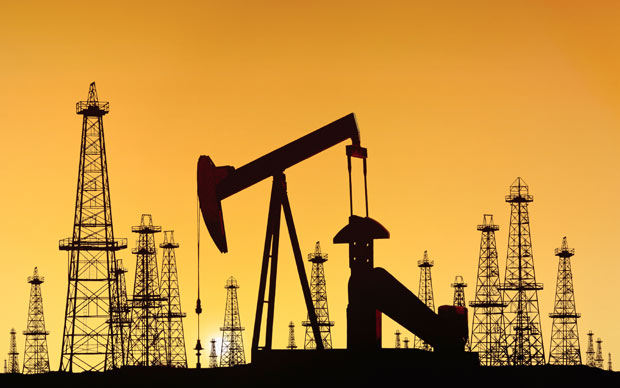
    Middle East Oil Wells

    OVERVIEW

    Outside of the United States and Canada, most of the world’s
    oil and natural gas is owned and produced by governments or
    government-dominated companies with minority shareholders. Two examples of the
    latter, public companies with stockholders, are Petrobras in Brazil and Gazprom
    in Russia.  But government officials,
    especially the president, control management and make the important decisions.

    Production and investment decisions are not made based on
    financial criteria alone.  Often,
    internal political or foreign geopolitical factors are more important. Many countries’ economies and government budgets depend critically on oil and natual gas revenue from exports. Maintaining internal peace and welfare programs are more important than rational economic considerations.

    What this means is that production and distribution
    decisions in these countries are made using different criteria than by private
    companies in the United States and Canada. Producing and exporting oil and natural gas are mostly political
    decisions. Petrostates like Russia, Brazil, Venezuela, Nigeria,
    Algeria and other countries in the Middle East and Africa have not used their
    oil and gas revenue to industrialize or diversify their economies.  Generating revenue for government, not profits for investment, is the main
    concern of these countries.  

    For many countries, exporting oil or natural gas (and other
    commodities) is the major source of hard currency revenue and government
    income.  Domestic spending, importing
    consumer goods, government social welfare and subsidy programs, foreign policy
    and even internal stability and corruption depend on commodity export
    earnings. As does servicing foreign
    borrowing, which has grown rapidly in the last six years. 

    With much greater potential supply of oil and natural gas
    because of new discoveries and innovative production technology, and growing
    substitutes, no one country or small group of countries will be able to control global
    supply or price.

    Among the fossil fuels, the long run outlook (20 years) of
    natural gas appears to be the best.  Even
    without the fall in natural gas prices, the global trend away from coal to gas to generate power will likely
    continue and increase demand for gas. In Asia, however, both coal and natural gas production are increasing because of the huge increase in the demand for electricity.  

    Massive increases in profitable
    reserves and technological changes in production and distribution will
    permanently bring down prices of natural gas in high-cost areas like Asia and
    Europe. LNG, more tankers and interconnect pipelines will make the global
    gas market more integrated, more like the global oil market.

    Three new potential major producers of natural gas are
    Argentina, Bangladesh and Egypt.  Qatar
    and Australia have completed and can expand large new LNG complexes. Some of Qatar’s new gas revenue is supporting Sunni fundamentalist
    groups in Syria and Iraq.

    Substitutes for oil and gas should be cost competitive in
    the near future.  Solar, especially
    decentralized solar on buildings, will continue to grow rapidly as the
    technology improves and the costs keep coming down.  Adoption of solar
    will accelerate if battery storage costs come down and countries don’t have to
    build or expand electricity plants and grids. 
    Solar panel costs are falling rapidly and Elon Musk says his new lithium
    battery plant in Nevada will reduce storage costs by 30%.  Wind turbine currently depends on subsidies
    but there is some new technology that may eliminate the gigantic windmills
    (375 feet high) and lower costs.  

    Many countries are looking at nuclear
    again because of major advancements in technology and safety.  
    There are currently 437 nuclear power reactors operating worldwide. 60 more are under construction, another 165 are planned, and 331 more are proposed.  The number of nuclear power plants in the world could easily double in the next two decades. China alone plans to build 46 new ones by 2020.  Japan, which paid $270 billion to import fossil fuels (mostly natural gas) in 2013, currently plans to start up 15 shut-down nuclear power plants.  On the other hand, Germany is shutting down the last of its 17 nuclear power plants, substituting solar and wind (interruptible) backed by gas.

    Other sources of energy beyond the use of fossil fuels are
    being researched and developed in laboratories.

    The key is how long oil and gas prices stay at current
    levels and what the new equilibrium prices will be.  This is not just
    an economic question.  Domestic policies,
    like China’s and America’s policies to reduce carbon emissions from coal, and
    geopolitics will play key roles.  Also,
    there will be major shifts in where oil and gas are produced, who exports, new
    technology and the expanding importance of substitutes.  

    THE EASTERN MEDITERRANEAN

    Huge new natural gas fields have been discovered in the
    eastern Mediterranean.  The largest so
    far are in the coastal waters of Israel, Gaza, Egypt and Cyprus.  The fields may extend north to Greece, Lebanon
    and Syria.  Israel, now self-sufficient
    in natural gas, could supply Palestine and Jordan. Pipelines could be built
    from Israel, Gaza and Egypt to Cyprus and then another set to Greece, which
    would connect into the proposed integrated pipeline systems of central Europe
    and, through Austria, to the rest of Europe.  Or a pipeline could be built to connect with the large pipeline running through Turkey to Europe.  South-Central European countries could eliminate their almost complete
    dependence on Russian natural gas and threaten “reverse flow” to Ukraine.  Egypt already has an LNG plant and other
    producers could construct them, expanding their geographical market for their
    gas.

    If this occurred, it would be a tremendous economic boon to
    all the countries involved.  So what’s
    the problem?  Geopolitics.  There are countries involved that don’t like
    each other.  To say the least.  Besides Israel and Gaza, Cyprus is divided
    into Turkish and Greek areas.  Would the
    economic benefits be great enough to overcome political rivalries, many based
    on long-standing hatred and conflict?

    RUSSIA AND EUROPE

    Russia is Europe’s largest external source of oil and
    natural gas.  Europe is Russia’s largest
    customer for both.  But the conflict in
    Ukraine has changed the geopolitics.  Russia
    may pay a very high economic price for its intervention in Ukraine.  

    It is also one reason that I don’t think Russia will invade
    and conquer the whole country, as Putin has threaten to do.  Or even increase destabilization pressure.  Europe would expand sanctions, look to new
    sources of energy and accelerate programs to import less Russian oil and
    gas. 

    While these policies will probably have little short-run
    effect on the volume of Russian exports of oil and gas to Europe, a longer-run
    combination of lower prices and less volume would have serious economic
    consequences for the Russian economy. 
    Since Putin’s and his successors’ political popularity in Russia partly
    depends on continuing the high rates of economic growth and standards of living
    made possible by increased revenue from energy and commodity exports, pursuing
    an aggressive or confrontational policy against Ukraine and Europe could have
    serious domestic consequences for the current and future Russian governments.    

    Under U.S. pressure, Europe has imposed some economic
    sanctions on Russia, the most effective being that Russian companies cannot
    access European financial markets.  As
    loans come due, the companies, many of which are government owned or
    controlled, have to borrow hard currency from the Russian government.  Russia’s foreign reserves of hard currency
    are shrinking.  Over half are committed
    to future retirement costs, although the fund can be raided. 

    New internal capital to modernize old fields and develop new
    fields is not available.  Global bond
    markets are closed.  Russia’s response
    has been to relax rules limiting foreign investment in Russian oil and gas.

    In addition, Europe is beginning to institute actions that
    will reduce its dependence on Russian oil and natural gas, which means lower
    export earnings for Russia regardless of the change in energy prices.

    Europe has large natural gas reserves but will not develop
    them quickly because of political opposition, lack of infrastructure and more
    difficult drilling geology than the U.S. 

    RUSSIA AND CHINA

    China imports more oil than does the United States. Before the tariff batlle, China was importing more U.S. crude oil.  China is about to become a major importer of natural gas as it substitutes gas for domestic coal production.  So China has joined the United States as a large market on the demand side.


    Russia is now China’s largest supplier of oil.

    Russia’s president Vladimir Putin has his own “pivot towards
    Asia.”  Russia’s main market for oil and
    natural gas is Europe.  With the
    expectation that sales will be lower in the future and that older fields are
    declining in production, Putin has turned to China for capital investment and
    as a major export market.  China plans on
    substituting natural gas (and other energy sources) for its dependence on coal
    (cough, cough).  Russia has a huge new
    field in eastern Siberia it wants to develop. 
    The cost is somewhere between $55 billion and $100 billion.  Russia doesn’t have the capital and can’t
    raise it in western financial markets because of the economic sanctions.  So, apparently, the deal is that China
    supplies part of the capital and agrees to take the production for the next 30
    years.  Although secret, apparently at a
    low price.  Russia originally announced
    that sales to China would bring in $400 billion over the 30 years but that was
    before the large drop in the price of natural gas, especially in Asia, and the
    reality that there will be a lot more natural gas available from other sources.

    Russia is now encouraging China and other Asian countries to
    invest in Siberian oil and gas.  Knowing
    that Russia has used oil and gas exports as a geopolitical weapon against
    Ukraine, Europe, Georgia, Serbia and Armenia, potential investors in China,
    Japan and South Korea have to be worried about the political consequences of
    becoming too dependent on Russian oil and gas. 
    And having their investments expropriated by future Russian government.

    There is another complication.  China is rapidly extending its influence into
    the old Soviet republics in central Asia. 
    China has offered economic aid, including railroads and natural gas
    pipelines connecting China and central Asian republics.  One of the world’s largest natural gas fields
    is in Turkmenistan; this is where Russia gets some of the natural gas it sells
    to Europe.  There are other possible gas fields.  All of this creates the potential for
    geopolitical rivalry between Russia and China in the area.

    China also borders Kazakhstan, another former Soviet
    republic.  Kazakhstan is a large oil
    producer and has the potential to produce more. 
    Russia sees Kazakhstan as in its sphere of influence.  The president of Kazakhstan was the Communist
    boss of the republic when it broke away in 1991.  The Chinese, however, have made a number of
    proposals that would divert some of Kazakhstan’s oil to China.  Russia is not happy about this prospect.

    In the long run, this policy could create
    serious geopolitical problems for Russia.  Supplying China with cheap
    oil and gas while China expands its influence in Central Asia and renews its
    claims (legitimate) on eastern Siberia is a dangerous policy.  But that
    will someone else’s problems, not Putin.

    OPEC

    OPEC has been ineffectual as an oil cartel, probably since 1985 when Saudi Arabia cut production with disastrous results.  Iraq has invaded both Iran and Kuwait to grab large oil fields.  Saudi Arabia and Iran are deadly enemies and compete to dominate the Persian Gulf region (and Islam).  Many of the oil exporting states have seen civil wars and declining production.  OPEC’s exports and net exports have been declining while global production is rising. 

    OPEC’s control has also been eroded by the growth and development of oil production in non-OPEC countries, even before shale.  What shale does is greatly increase potential global oil production in non-OPEC countries if prices rise.  Maybe even more important, shale oil greatly increases oil reserves outside of OPEC countries.  Before shale, a high percent of the proven reserves in the world were in OPEC countries, mostly in the Middle East.  This implied that OPEC’s market power would last a long time.  No longer.

    NAFTA

    NAFTA (The U.S., Canada and Mexico) is the new OPEC.  Almost all of the net increase in global oil
    production since 2007 has come from NAFTA countries.  Future increases in oil production will come
    mostly from American and Canadian fracking, and deep-water rigs in the Gulf of
    Mexico.

    NAFTA is the new OPEC also in the sense that the American
    and Canada companies, using fracking technology, can react quicker to changes
    in global supply and demand, and subsequent price changes.  New technology, better management and organization, and large cost reductions because of low prices have reduced the break-even cost of shale oil and gas.

    The best oil fields in the United States have marginal costs
    of pumping out and distributing oil about equal to all but the lowest cost fields in the Middle
    East.  Because of fracking technology, fixed
    cost/barrel to modernize and expand existing fields is probably higher in most of the
    Middle East and the rest of the world than expanding or opening new fields in the United States.

    The geopolitical implication of all this is the United
    States could cut off all oil imports from the Middle East and quickly substitute
    NAFTA oil, mostly American. There are
    major geopolitical implications if the United States has oil security, doesn’t
    need Middle East oil and becomes a major exporter of petroleum and natural gas. Maybe the Iranian agreement, over strenuous
    Israeli and Saudi objections, is an indication of the changing, more flexible
    geopolitical policies of the U.S. in the Middle East.

    SUMMARY

    Global demand for energy will continue to increase in the foreseeable future. Global production of all sources of energy, including coal production in Asia, will increase. New technology on both the demand side (electric vehicles and autonomous driving) and supply side (fracking, LNG) will change the economics of energy. This will have geopolitical consequences. Middle East oil will become relatively less important. U.S. exports of oil and natual gas might have geopolitical effects. Development and sales of new technology such as solar and wind, may, in the long run, become more important than fossil fuel extraction.

    ======================================================

    This is a summary of prior posts plus new information and conclusions.  The latest related post was on Russia and the Geopolitics of Energy.

    For an excellent history of the rise of OPEC, see Daniel Yergin, The Prize.


    For an excellent, detailed article on Gazprom, see http://oilprice.com/Energy/Energy-General/How-Russias-Energy-Giant-Imploded.html.  Gazprom has a virtual monopoly on Russian natural gas production and exports.  Its management has very close ties with the Russian government.  Putin has used Gazprom to implement both internal and foreign policy objectives.  Gazprom owns a TV network and a major bank.  Some of its profits were diverted to pay for the incredibly expensive Olympic Winter Games, with billions of dollars ending up in the pockets of oligarchs and government officials.  Overseas, Gazprom has cut off  or threatened to cut off gas supplies to Europe, Ukraine, Georgia, Armenia, the Baltic States, Slovakia and Serbia on orders from the Kremlin. In each case, Gazprom was used as a blunt geopolitical weapon to change another country’s democratic or anti-Russian politics.