Tag: Germany

  • The Stock Market Crash of 1929 and the Beginning of the Great Depression

    The Stock Market Crash of 1929 and the Beginning of the Great Depression

    Before You Begin

    If you don’t know the background of this complicated story, you might want to first read a shorter version that introduces some of the key factors explaining the Crash and the Depression. See,

    Introduction to the Stock Market Crash of 1929 and the Beginning of the Great Depression

    Before reading this essay, I strongly recommend you see the PBS video on YouTube. Type in Stock Market Crash 1929. Look for US – The Crash of 1929 (PBS), ALLHISTORIES – PLAYLIST. 

    Documentary broken into 6 parts to show commercials. Or buy the video on Amazon Prime. Great documentary with wonderful photos, videos, and scenes from movies of the 1920s and the crash. Shows what a crazy time it was.

    The video is also a great introduction to Andrew Ross Sorkin, 1929:  Inside the Greatest Crash in Wall Street History – and How It Shattered a Nation. This book concentrates on the roles played by a small number of key men; the video also focuses on these men and their social environment.

    The following quote that introduces this essay is from Mr. Sorkin’s book.

    The stock market is a mirror whose function it is to provide an image of the underlying or fundamental situation. Cause and effect run from the economy to the stock market, never the reverse. An unstable economy can be disturbed by all kinds of incidents that on the surface appear extraneous.

        Jesse Livermore

        Famous stock market speculator 

    INTRODUCTION

    The usual reason given for the Great Depression – the stock market crash in October 1929 and the later collapse of the banking system – does not tell the whole story. Available economic data (there were no national income accounts in 1929) indicate that a recession had already begun before the stock market crash. The crash of October and November of 1929 was a catalyst that made the recession worse, but the partial stock market recovery in early 1930 did not end the recession. Industrial production continued to fall quickly and unemployment rose rapidly in 1930. As the economy sunk lower into depression and unemployment reached catastrophic heights, continuing farm and businesses failures over the next two years wiped out thousands of small rural banks and threatened total financial collapse in early 1933.  

    For a fuller explanation, we have to go back to the 1920s to see additional reasons for the stock market crash of 1929 and the rapid decline in output at the beginning of the Great Depression. We have to look at the international financial situation and how it contributed to America’s depression, including the attempt after World War I to reestablish the pre-war gold standard.

    Economic Growth in the 1920s:  Industrial Production and the Real Economy

    There was a spectacular increase in industrial production starting in the 1870s and continuing into the 1920s. The 1920s were a decade of economic growth and development. The large increase in manufacturing output in this decade was driven by innovation in new and greatly expanding industries and companies.

    The structure of the economy changed in the 1920s, with consequences for the stock market and financial markets in general. Industrial production, especially of large corporations, were a larger and more important part of the total economy. In contrast, agriculture stagnated in the 1920s. In 1920, agriculture accounted for 18% of Gross Domestic Product (GDP, a measure of total output); by 1929, agriculture’s share had fallen to 12%. 

    The foundations of the new economic structure were corporations building large-scale manufacturing plants with electricity replacing steam as the power source, new steel machinery, lower transportation and information costs, increased productivity (output per worker), and lower unit cost.

    The drivers of economic growth were the new and developing technologies.

    • consumer durables, especially autos, electrical appliances, and radios. 
    • electricity utilities.
    • mass communication (phones) and entertainment (radios, phonographs, movies). 
    • mass-produced consumer nondurables such cosmetics, toiletries, processed food, and cigarettes.

    Steel was the basis for the new auto industry, modern machinery, and skyscrapers. The amount of railroad track increased eight times from 1870. Thousands of miles of paved roads were built in the 1920s. The telephone system became ubiquitous and transcontinental with an increase in transmission bandwidth.

    The 1920s was a decade of economic growth and development but it was uneven. It began with a severe deflationary (prices going down) recession as the economy adjusted from the World War I wartime economy to a peacetime economy. Economic growth began in 1922. The stock market grew rapidly in 1922 and 1923, and kept growing until late in 1929. But in 1927 and 1928, the economy hardly grew at all. Growth for the two years was about 1% per year. One reason for the 1927 stagnation was the bursting of the Florida land boom bubble (in video). This bubble showed large numbers were willing to speculate on something they knew nothing about but thought they would get rich quick. (See Marx Brothers movie Cocoanuts. Groucho was wiped out by the market crash. The movie, ironically, was released in 1929.)

    Another reason was the total shutdown of Ford in 1927. Henry Ford finally scrapped the Model T and retooled his plants to produce an entirely new auto. He laid off 60,000 workers. There were spillover effects on other major industries such as steel, tires, and glass. Full production was not reached until 1929.

    But strong economic growth returned in 1929. The annual growth rate was 6%. Industrial output grew faster. This strong growth was led by increased production of autos, radios, electrical appliances, and new consumer goods.  

    The economic expansion of 1921-1929 was based on the development of new technologies like radio and the expansion and sales of consumer durables like autos. The urban and regional buildout of the electric grid (and lower rates) led to demand for new electrical appliances and large productivity gains in mass production. Car ownership increased from about 7 million in 1919 to 27 million in 1929, on average about one car per household. This created demand for complementary products and services such as steel alloys, refined oil products, gas stations and mechanics, paved roads, and motels. 

    Radio (RCA) and others went from selling hobby kits in 1919 to sales of $60 million in 1922 to sales of $426 million in 1929. (Figures on car and radio sales are from digital history.uh.edu, “The Consumer Economy and Mass Entertainment.”)

    Auto production was an important part of the industrial economy in the years leading up to the stock market crash. The auto industry produced approximately 4 million cars in 1926, fell to 3.1 million in 1927 because of the Ford shutdown, recovered in 1928, and reached a record 5.4 million in 1929. 

    Sales of these products was greatly enhanced by a large increase in consumer credit. General Motors started its own credit operation in 1919. Sears quickly followed by offering installment plans on appliances and other products. (Singer Sewing Machine Company started an installment payment plan in the 1800s.) Hundreds of new consumer credit companies were started in the 1920s. 

    New industries were created or greatly expanded in new types of passive entertainment (movies and phonographs) and mass consumption products like packaged food, cigarettes, toiletries, and cosmetics. Marketing and advertising encouraged consumption.

    Economic growth and industrial production helped to create and expand a new middle class including managers, engineers, accountants, and lawyers. So did the expansion of the financial sector. This middle class had rising income and savings. They provided many of the new speculators in stocks in the 1920s.

    Industrial Corporations and Stock Markets

    Starting in the late 1800s, new and rapidly-growing industrial corporations needed large amounts of investment and expansion capital, far more than what they could generate from internal cash flow. Capital was needed to take advantage of scalability (economies of scale).

    The stock market, and the financial sector in general, had become increasingly important to the American economy during the 60 years leading up to the crash of 1929. In the 1920s, the financial sector doubled as a percent of the national economy. Its growth paralleled the financial requirements of new and growing companies. New, capital-intensive, large, and growing corporations needed investment capital far in excess of what company founders and rich backers could provide. The solution was the creation of the publicly financed, limited liability corporation. The canals starting in the 1820s, the railroads starting in the 1830s and then the industrial corporations starting in the 1870s issued stocks and bonds to the public to finance their capital requirements. In an expanding economy, investors could expect to collect dividends and watch their stocks appreciate in price.  

    Equity capital (stock) had the advantage over bonds that the corporation was not obligated to buy back the securities. Or pay a fixed amount of interest. But investors were “locked-in.” This might have limited the attraction of equity investment except that investors in public companies could exit by selling their stock to others in “secondary” markets like the New York Stock Exchange (NYSE).

    So large companies and stock exchanges were connected, complementary, and grew together.

    The Stock Market Crash of 1929

    In the 1920s, the “stock market” meant the New York Stock Exchange. This is where the shares of most large companies were bought and sold. 

    The New York Stock Exchange was a private company, owned by its members. Until the 1920s, most stock traders were full-time professionals. There were no rules or laws. Traders lied, cheated, and deceived among themselves. In the 1920s, they could now also do this to naïve small investors. They viewed small investors as sheep to be shorn.

    In 1929, there were 1,334 companies whose stock was traded on the New York Stock Exchange. This was a tiny percent of all the farms and businesses in America. But these were most of America’s largest companies. They accounted for much of the economic growth in the 1920s.

    Many of the companies on the NYSE dominated their industries and markets. They had exhibited large increases in sales and profits over time, which led to high expectations for rapid future growth in company sales and profits.

    The impression that “everyone” was playing the stock market is an exaggeration. By 1929, fewer than one out of ten families had money in the market. They were about half of all families with financial assets. Stocks, like consumer durables, were often bought on credit, or “margin,” by some of the speculators. About half of small investors bought on margin. Typically, the investors put up 10 – 20% of the value of the stock and borrowed the other 80 – 90% from the broker. The stock was collateral for the loan. The broker, in turn, borrowed the money from banks and other institutions with spare cash. Brokers’ loans (also known as “call money” because they were overnight loans and could be “called” in one day) increased  about $1 billion in 1920 to $4.4 billion in early 1928 to $8.5 billion in October 1929. 

    About 80% of the brokers loans came from sources outside the banking system, including overseas, so Fed pressure on member banks not to make call loans had little effect. The loans seemed safe as long as the stock collateral increased in value. Interest rates were higher than alternative short-term loans.

    Small investors leveraged their bets even more by using margin to buy stock in new investment trusts. Investment trusts were similar to today’s mutual funds except they were also leveraged – selling both shares to investors and floating bonds. Then leveraged investment trusts bought shares in other leveraged investment trusts. Alas, leverage also worked on the downside; owners of shares in investment trusts were wiped out even when the shares of the underlying companies still had some value.

    The speculative bubble, when stock prices rose much faster than earnings and earnings per share, began in March 1928. As measured by the Dow Jones Industrial Average, stock prices doubled and reached an all-time high the day after Labor Day,  September 3, 1929. The Dow Jones index went from 200 to 390. The total value of stocks had gone from $25 billion to over $50 billion, in an economy of $100 billion.

    By 1929, investors had high expectations about the percent increase in stock prices. Based on the yearly increases from the beginning of 1928 to September 29, conservative investors who paid cash and bought a diversified portfolio of stock like the Dow Jones index, expected returns of 50%/year. If they bought stock on 20% margin, they expected to make over 200% a year; on 10% margin, over 400% a year.

    Investors who bought leveraged investment instruments like investment trusts with margin expected an even higher yearly return.

    Speculators bet on companies like Radio (RCA). RCA was up 500% since beginning of 1928.

    There were also short-term bets based on rumors about big pools of capital going into a stock. Often a big speculative pool started buying a stock. They paid for a lot of publicity, including bribing financial journalists to hype their stock. As more small speculators piled in, the pool started selling. Small investors were left holding a bag of stocks with rapidly falling prices. (See video)

    While corporate profits were going up, stock prices were going up even faster. This led to record high stock price/earnings per share (P/E) ratios. This was viewed as an indication of rising confidence that the market would continue to go up. But the market’s P/E ratio would have to continue to rise if the market continued to go up at 50% a year.

    The Dow Jones index reached its high on September 3, 1929. The market slowly declined for a few weeks and then crashed at the end of October. The market was down nearly 13% on Monday, October 28. The climax, in massive volume, was the next day, October 29 (Black Tuesday), when the market fell 12%. The total drop from its September high to the end of October was 40%.

    By the end of November 1929, the stock market had fallen 50% and had wiped out all of the speculative gains since early 1928. In early 1930, it reversed direction and regained 40% of its 1929 losses. Volume was high. But in April commodity prices started to fall again. Industrial production continued to decline all through 1930. Unemployment rose quickly. The market turned down again. By late 1930, the stock market had fallen below its November 1929 lows.

    The entry of large “pools” of outside speculative capital and small investors into the stock market was one reason for the bubble. This was something new; until the 1920s, stock market participation was an insider’s game of professional speculators. But now insiders and investment managers of outside capital could manipulate stock prices at the expense of small investors.

    Partners of the largest investment banks, market analysts, government officials, congressional committee hearings, and Fed officials had private doubts or warned the public of the dangers of the “over-priced” market. But their messages were drowned out by reassuring and optimistic statements of market boosters like Charlie Mitchell of National City Bank who had done much to encourage margin buying by new small investors. Negative comments were ignored by speculators caught up in the frenzy. Instead, they listened to advisors like the foremost astrologer of the day, who predicted the market would go up forever. Presumably to the stars (see video).

    The stock market crash of October 1929 did not come as a surprise to everyone. Some of the biggest speculators like Jesse Livormore and investment bankers like some of the partners at J.P. Morgan sold their positions before the crash. Livormore shorted the market (bet it would go down); when he came home on the worse day of the crash, he told his wife he had made more money that day than any other day in over 20 years of speculating. 

    Before World War I, about a half a million shares were traded on a typical day. In 1928 and 1929, volume was rising rapidly, averaging about five million shares a day. On October 29, volume hit an all-time high of 16 million shares. Stock prices were on average six times higher than earlier in the 1920s, so that the combination of more speculators, and more of them acting like short-term traders, led to a huge increase in the dollar value of the stock market.

    Investors’ and large speculators’ margin of 10%-20% was wiped out in just two days, October 28 and October 29. Margin calls for more cash went out; if not provided immediately, the broker tried to sell the underlying stock, increasing supply. Banks and other providers called their loans. All this led to a cascade of hitting stop-loss orders and more margin calls.  In the fall of 1929, about $2 billion of brokers’ loans were pulled out or wiped out.

    Large investment pools, like the one controlled by Billy Durant (who put together General Motors and then drove it into bankruptcy), speculated on margin and also lost heavily in the stock market crash. When stock prices fell, they doubled down – buying more stock – only to see their losses increase. Durant personally lost $18 million. One of the richest men in America (on paper) in 1929, he never recovered and finally declared personal bankruptcy in 1936. Jesse Livermore, probably the most successful individual speculator in the 1920s, made a series of bad bets in the 1930s and committed suicide in 1940. 

    The large, sharp decline in the stock market had an immediately negative impact on aggregate (total) demand, especially demand for consumer durables usually bought on credit and luxury goods and services. Expectations of rising personal wealth and a higher standard of living from rising stock prices were shattered.

    After the bubble burst, the New York Fed reacted quickly. In the six months after the crash, the New York Fed injected $500 million of liquidity into the banking system. It cut its rediscount (loan) rate to banks from 6.0% to 2.5%. New York banks, in response, took over $1 billion in brokers’ loans. No major New York bank failed. The market rallied in the first half of 1930. It appeared the crash had been contained. It wasn’t.

    It was not because of:

    • the weaknesses in the American economy, especially the farm sector.
    • the fragile international financial system, based on the gold standard, constructed after World War I.
    • the fragmented American banking system watched over by passive regional Fed banks.
    • the rising importance of the financial sector, and how it interacted with the real economy.

    The Farm Economy

    The period from the mid-1890s to 1918 has been called the “Golden Age of American Agriculture.” Expansion into new areas, rising demand from American and European urban areas and industry, rising prices, and World War I (large food exports to England) all led to prosperity for the farming sector. 

    In addition to the usual seasonal loans, farmers went deeper in debt to expand acreage (the average size farm increased) and buy large amounts of new equipment, including tractors, to increase productivity and lower unit cost. They also bought new cars (mostly Model T Fords) with borrowed money. During this period, thousands of new banks were started in rural areas to finance this expansion.

    Agriculture was still a major part of the economy. In 1920, the farm population was 30% of the total U.S. population.  Almost 50% of Americans lived on the farm or in towns with fewer than 2.500 people, many of them in rural areas dependent on agriculture.

    The farm economy went into recession during the price deflation after World War I and remained stagnant during the 1920s. Farm prices fell in half after World War I and then slowly declined as American farmers lost their European markets. European demand fell because of the violence, chaos, and disruption caused by the war. 

    Attempts by the Hoover Administration to stabilize farm prices through purchasing surpluses failed. In 1930, the market price of wheat fell in half.  Further large decreases after 1930 in farm prices and the “Dust Bowl” collapsed the agricultural sector, farmers defaulted on loans at a rate of 1,000 a day, resulting in the bankruptcy of thousands of small, rural banks. 

    Eight rural states set up deposit insurance programs before and during the 1920s. All failed by 1929. Depositors (savers) were ruined along with the banks since there was no federal deposit insurance before 1933.

    Large industrial corporations created and dominated markets. The raising of large amounts of financial capital fueled buying the more efficient capital equipment and industrial expansion. Large industrial companies employed factory workers, office workers and new types of professionals like engineers, chemists, accountants, and managers. Combined with the stagnation of the rural sector, America became an urban, industrialized society.

    Investors in corporate stock did not always understand why stock prices were rising. Mass production processors and assemblers had high fixed costs in capital equipment. Some of it was financed with debt, creating financial leverage. Companies had to run at a high percent of rated capacity to make a profit. A small increase in sales (output) resulted in a leveraged increase in profit. Stock prices rose with rising profits; expectations of future increases in profits led to higher stock price to earnings (P/E) ratios, also increasing stock prices. This worked in reverse, starting in late 1929. Decreases in sales led to leveraged decreases in profits. Stock prices fell. Expectations of further decreases in profits lowered P/E ratios causing even lower stock prices.

    Real incomes rose in the 1920s. But, like today, income and especially wealth was concentrated.

    One estimate is that about one-third of all income was going to the top 5%. Sales of luxury goods and services soared. In contrast, farm families experienced a fall in total real income. 

    Demand for many consumer durables was partly paid for with a large increase in consumer debt called installment loans (buy now, pay later). As an expanding urban middle class and working class financed their rising standards of living partly through increased borrowing, household debt rose faster than income. By 1929, about 60% of cars and 75% of all radios were bought on credit. (A top-of-the-line radio cost as much as the average cost of a car!) Total consumer debt doubled in just four years, going from $1.4 billion in 1925 to $3.0 billion in 1929. Hundreds of new banks and finance companies were started to provide consumer credit.

    Home ownership financed by new forms of mortgage debt rose rapidly. Mortgage debt rose over eight times from 1920 to 1929. Hundreds of new “saving” banks were started to supply mortgages. 

    Household balance sheets were leveraged with consumer debt and mortgages backed by illiquid assets as collateral that quickly lost market value starting in the fall of 1929. Even as savings were being wiped out, families still had to make installment and mortgage payments.

    By October 1929, the economy was already in recession. Railroad car loadings and steel production had been falling since summer. The Fed’s Index of Industrial Production was also declining. Auto inventories were rising. But a general recession wasn’t recognized and declared until late in 1929. These numbers had little influence on analysts or investors.

    1930

    The recession was sudden and severe. Industrial production fell about 5% in October and another 5% in November. The contraction continued into 1930; industrial production fell another 30%. Unemployment doubled, from about 1.5 million (3% of the workforce) in the summer of 1929 to about 3 million (6%) in the spring of 1930, and then rose to about 5 million (10%) at the end of 1930. At least 25% of American families – a higher percent of non-farm families – were hit by unemployment sometime before the end of 1930. About half of the Great Depression’s total decrease in industrial production and about half of the increase in unemployment had already occurred by late 1930. Families experiencing unemployment couldn’t meet loan payments. (Most urban families were one-income families. Also, there wasn’t unemployment benefits like today.)

    In 1930, farmers were hit with lower prices, the Dust Bowl (huge dust clouds), loss of deposits in local failed banks, and inability to make loan payments on equipment. Farmers started to lose their farms; banks foreclosed on about 100,000 farms in 1930. (See the movie and/or read the book about this – The Grapes of Wrath.) The Dust Bowl continued until 1940, helping to wipe out many more farmers (see PBS video on the Dust Bowl; the dust clouds are unbelievable).

    Demand for consumer durables was especially hard hit. Car sales were 5.4 million in 1929, falling about one-third to 3.4 million in 1930. (At the bottom of the depression, auto production would fall by 90%.) Sales went from $3.5 billion in 1929 to $0.8 billion in 1932. Repossessed and used cars glutted the market. (Good for my grandfather; he bought a used truck in the 1930s for $30 to start a small business. The seller had to teach him how to drive.)

    AFTER 1930 – A QUICK SUMMARYAs the Great Depression got worse, stock prices kept going down, about 5,000 more banks went under wiping out depositors, unemployment rose to catastrophic heights, families couldn’t meet loan payments and lost their houses and cars.Eventually, almost half of all mortgages were in default.When the worse was over, real GDP fell by about 25% and nominal GDP went from about $100 billion in 1929 to about $50 billion in 1932. In 1929, corporations made total profits of about $10 billion; in 1932, they lost about $3 billion. Business investment disappeared.The depression and consequent disappearance of corporate profits (earnings) had consequences for stock prices. Using valuation metrics like price/earnings (P/E) ratios, there was no support level, no bottom, for stock prices. The other support for stock prices – dividends – also fell drastically as profits disappeared. Trading volume fell, from an average around 10 million shares per day in October 1929 to around a half a million shares per day in 1932.By 1932, market indexes had fallen 80-90% from October 1929.The negative reinforcing feedback effects between the real economy and the financial sector created the Great Depression. Again, the size of the total economy was about $100 billion in 1929. Between 1929 and 1932, stocks (and stockholders) lost about $30-$40 billion in value. Total bank credit fell $20 billion.

    WAGES AND PRICES

    Wages and prices acted differently at the beginning of the Great Depression compared to earlier recessions. The Consumer Price Index (CPI) went down only 2.6% in 1930. Nominal (current dollar or money) wages in the large industrial corporations, and other large companies, stayed virtually constant in 1930. Industrial prices also did not decline. Instead, large manufacturing firms laid off employees and cut production, watching sales and profits plummet. Investment stopped, hurting the capital goods sector. The question all this raises is:  Why didn’t large companies quickly cut wage and prices, as in prior recessions?In a series of conferences in November and December 1929, President Herbert Hoover urged the leaders of the largest companies not to cut wages. Many corporate presidents agreed, including the presidents of General Motors, Ford, General Electric, Westinghouse, Standard Oil, U.S. Steel, Du Pont, Firestone, and Goodrich. The idea was that by not cutting the wages, and therefore income, of their workers, they were helping to limit the fall in overall (aggregate) demand. Keeping wages and thus prices high probably contributed to the large decreases in demand for consumer durables. As demand and output fell, these companies laid off workers, contributing to the rapid increase in unemployment. It was only in late 1930 and 1931 that large companies began cutting wages.In 1933, President Franklin Roosevelt had Congress pass the National Recovery Act (NRA), an economy-wide, mandatory version of President Hoover’s voluntary program.


    FINANCING ECONOMIC GROWTH AND DEVELOPMENT IN THE 1920S
    The financial sector as a whole was a growing part of the economy in the 1920s. Finance doubled as a share of GDP with most of the growth coming in the second half.The raising of large amounts of financial capital fueled the economic expansion, not just on the supply side but also on the demand side.An expanding urban middle class financed its rising standard of living partly through increased borrowing; household debt rose faster than income. In addition, mortgage debt rose rapidly. Household balance sheets were leveraged with debt backed by illiquid assets that quickly lost market value starting in the fall of 1929.The purchase of consumer durables such as autos, radios (some cost as much as cars), furniture, and some electrical appliances was usually financed with debt, often with money borrowed at the new consumer finance companies. Miss one payment and the product was repossessed. One of the largest banks that specialized in car loans, controlled by Henry Ford’s son Edsel, went under. 

    THE AMERICAN BANKING SYSTEM AND THE FED

    At the beginning of 1929, the United States had 25,000 banks. Most, about two-thirds, were outside the Federal Reserve System (the Fed). States and the federal government had passed laws to protect local banks from competition from larger banks by limiting the geographical reach of banks. The small rural banks depended on the health of the local farm economy. It should have been an alarm bell as thousands went under in the decade before the crash.Between 1929 and 1933, the U.S. banking system – unregulated, fragmented, without deposit insurance – went through waves of bankruptcies as farmers, businesses, and consumers defaulted. In the two years 1929 and 1930, about 10% in of the total number of banks failed. About a third of all banks would disappear during the Great Depression. Depositors lost their savings. Farmers and processors could not repay loans and small, local banks went under. Solvent farmers could not get credit to produce. Urban and suburban banks started to go bankrupt as consumers, local businesses, and homeowners defaulted on loans. At the depth of the depression, half of all mortgages were in default.

    Why did not the Fed save the banking system from collapse?  One of the Fed’s powers was to be the “lender of last resort” to member banks. Banks in a liquidity squeeze could borrow at the rediscount window at the Fed banks. This was limited since one-third of banks were members of the Federal Reserve System. But they were the larger banks; smaller banks typically held part of their reserves at larger banks. As the economic crisis deepened, small, local banks began asking for their deposits at the larger banks. This reduced reserves at the larger banks which were not balanced by new liquidity from the Fed.

    Through all this, the eleven regional Fed banks outside of New York and the governing board in Washington did virtually nothing. Controlled by local bankers and manufacturers, they did not believe it was their responsibility to save the banking system. Their governing boards limited the types of collateral they were willing to accept from borrowing banks at the discount window. They did not actively encourage local banks to apply for funds. The exception was the sixth regional located in Atlanta. They faced the first regional banking crisis and successfully contained it.  

    This attitude of letting the economy and its banks to go to hell was shared by Andrew Mellon, Hoover’s Secretary of the Treasury, who believed a major recession was good for the health of the economy. (He was too busy adding to his fabulous art collection by secretly and illegally buying art from the Soviet Union, which needed hard currency to finance its spying operations. These paintings, taken from the Hermitage, are now in the National Gallery collection in Washington. The spies later stole America’s atomic bomb secrets.)

    By the spring of 1933, the American banking system was near total collapse. Over half the states had declared a “bank holiday,” closing all the banks in their states to see which ones could be saved. This meant that depositors could not withdraw their savings. The new Roosevelt Administration’s first act in March 1933 was to declare a national bank holiday. Roosevelt’s second act was to take the United States off the gold standard. 


    INTERNATIONAL ASPECTS
    In the 1920s, New York had become the center of the global financial system. This was a consequence of World War I and its aftermath. During the war, England and France partly financed their war effort with substantial borrowing from New York banks. England and France could not borrow from the American government because Wilson was afraid isolationists could help defeat him for reelection in 1916. During the 1920s, Germany borrowed large sums from New York banks to restart its economy and pay war reparations to England and France.Central bankers and large investment banks spent the 1920s trying to rebuild the global financial system shattered by World War I. They saw the pre-war gold standard as a control mechanism to overcome the economic dislocation and instability caused by the war. The key, as they saw it, was to fix the value of national currencies in gold and thus, to each other. By 1929, almost all currencies, including the dollar, were on the gold standard. (In a bit of bad timing, Japan went on the gold standard in January 1930.)The gold standard depended critically on the pound sterling and London before the war, and the dollar and New York after the war. The New York Fed chairman (Benjamin Strong) worked closely with the chairman of the Bank of England (Montagu Norman) and other central bankers to coordinate policy, primarily changes in interest rates to influence currency and gold flows. Central banks and investment banks, mostly American, would also loan money to foreign governments to ease pressure on their currency. But America’s commitment to reforming the global financial system was limited. There were three major problems:1) Entente (Allies) war debts and German reparations. The Entente countries, including England and France, had borrowed over $10 billion in America to help finance the war. After the war, the Allies imposed reparations on Germany, payable mostly to England and France. These two countries relied on payments from Germany to meet the interest and principal payments on their debt to the United States. But the German economy had a hard time recovering from the war and taxing its people to raise reparation funds. Instead, Germany depended on borrowing from private banks in New York. Some of the funds would then go to London and Paris, to be cycled back to New York. Towards the end of the 1920s, more of the loans were short-term (“hot money”) rather than the usual long-term credits. The system functioned as long as American bankers were willing to lend to Germany, that is, to roll over rather than call short-term loans. 

    2) England went back on the gold standard in 1925 at the pre-war parity. It overvalued the pound compared to other currencies. English exports were priced out of global markets; imports were relatively cheap. As a consequence, the English economy had a hard time recovering from the war, experiencing deflationary stagnation. England ran a trade surplus before the war but a trade deficit after the war. Defending sterling’s price in gold meant high interest rates to attract foreign funds, low economic growth, deflation (with pressure on wages), and high unemployment rates.

    The New York Fed often changed American interest rates to accommodate the Bank of England’s attempts to deal with England’s economic and financial problems.

    3) Central bankers would change interest rates to influence cross-country capital and gold movements. But changes in interest rates also affected domestic economies. Interest rates in New York were actually lowered at the beginning of the stock market boom to encourage money flows to England. But lowered rates also reduced the cost of call money and brokers’ loans to speculators, fueling the stock market bubble.Gold was also “high-powered” money, a part of the banking system’s reserves. An influx of gold allowed a country’s banking system to created money by creating new loans. Throughout the 1920s there was a net inflow of gold into the United States. American banks could increase the amount of loans to American consumers, stock market speculators, farmers, and corporations.

    Just when it seemed the global financial system was stabilizing, it started to unwind. Germany went into recession in 1928. The head of Germany’s central bank threatened to stop paying reparations. Money flowed out of Germany. American bankers stopped expanding short-term loans to Germany. The American government refused to reduce Allied war debts; England and France could not reduce debt payments to private American banks. By 1929, Germany had reduced paying war reparations and the crucial cycle of American loans to Germany, German reparation payments to England and France, and their war debt payments to American banks began to unravel. American banks were now sitting on billions of dollars of bad loans. A delegation of American bankers went to Europe to renegotiate the repayment timetable of German reparations.
    A slowdown in economic growth in the industrialized countries led to a large decrease in global commodity prices (inelastic demand). Countries that depended on commodity exports went into recession and were the first countries to leave the gold standard.

    The U.S. economy went into recession and the stock market crashed. One consequence was that American banks started calling in German loans, deepening the German recession. There was a large and sudden increase in German unemployment. This contributed to the rise of Hitler and the Nazi Party, which received only 2.6% of the vote in 1928 but over 35% in 1930. The Nazi Party was the largest right-wing party, making it almost inevitable that Hitler would become Chancellor as conservatives tried to form an effective government to counter rising left-wing support. In office in January 1933, Hitler quickly renounced all reparations payments.


    By 1931, the English government realized that England would not get out of long-term stagnation without eliminating the deflationary effects of the gold standard. England and 20 trading partners left the gold standard. The English pound sterling depreciated (went down in value) against the dollar, making America’s recovery more difficult.

    THE GOLD STANDARD AND DOMESTIC POLICY


    The Hoover Administration’s and the Fed’s commitment to the gold standard limited domestic policy options. Budget deficits, lower interest rates, or increasing the money supply through Fed lending to banks would have tempted foreign central banks and depositors to withdraw gold. This was one reason the Fed did not use gold as part of the monetary base to expand credit through its discount window. Another reason:  the Fed might lose gold and contracted credit would also happen if Americans used dollars to buy gold. This was legal until President Roosevelt took America off the gold standard in early 1933. 

    The worsening recession and the gold standard led to deflation. Deflation led to the higher real cost of debt to borrowers, and then defaults as incomes and asset prices fell. The banking system weakened. Banks failures rose dramatically in 1931 and 1932. Seeing the deep recession and the weak financial sector, foreigners began pulling gold out in 1932. The Fed raised interest rates to keep the gold in the U.S. The Hoover Administration raised taxes to reduce deficits and signal “fiscal responsibility.” Again, by early 1933, the entire U.S. banking system was approaching total collapse.

    THE SMOOT-HAWLEY ACT OF 1930

    At the beginning of the Great Depression, Congress passed the Smoot-Hawley tariff bill of 1930 to protect farmers. Of course, everyone in Congress added their favorite worthy group of constituents who wanted protection. Tariffs went up to 60%. 1,000 economists, a rather conservative bunch in 1930, warned of the negative consequences of the bill.

    The main target was Canada, America’s largest trading partner. The more anti-American party won the next Canadian election. 

    Anti-American boycotts of American products started in Europe. American exports to Europe and Japan fell.

    England walled off its Dominion countries and colonies from American imports; France and Holland did the same with their colonies. Since imports and exports were a small percent of the American economy, about 5% in total, the Smoot-Hawley tariff bill was probably not a major cause of the Great Depression. Both imports and exports fell by about $1 billion, so the Act had little net macroeconomic effect. But, on the margin, it probably contributed somewhat to the length and depth of the Great Depression. 

    Tariffs and other barriers to trade reenforced America’s isolationism. To keep America out of the looming European war (on England’s and France’s side), a strong America First movement arose. Some of its members, including Charles Lindbergh and a future president of Yale, were pro-Hitler. The organization effectively disbanded in December, 1941.

    A LONGER VIEW OF THE STOCK MARKET CRASH OF 1929

    By the end of 1929, the Dow Jones Index was back to the beginning of 1928. It was only 17% lower than the beginning of 1929 – a year of above-average gains followed by larger losses. So any investor who bought stock for cash at the beginning of 1928 or earlier, was about even. Anyone bought stock at the beginning of 1929 was even by the end of the first quarter of 1930, before the market turned down again. Only speculators who bought stock on margin were wiped out. This included many large speculators. Of course, anyone who held their stock until the end of 1932 lost almost of the value anyway. And anyone who bought on “dips” between 1929 and 1932 lost money.

    It is likely that many families who still had stock after 1929 were later forced to sell because of some combination of unemployment, lose of savings in a collapsed bank, and to meet installments on borrowings for consumption and maybe a mortgage on their home.

    Anyone who bought at the top in September 1929 and held onto their shares had to wait until 1954 to break even.

    Since 2000, there has been three market contractions of similar magnitude to October 1929. The last two could have led to a prolong depression. But they didn’t. The difference is that the federal government stepped in with massive fiscal stimulus and support for failing companies.

    SUMMARYIt is a mistake to see the stock market as separate from the rest of the economy. It was part of the financial sector, which greatly expanded in the 1920s and became a more important part of the economy. The financial sector helped finance the economic growth and new products of the 1920s, especially demand for the new consumer durables. Gains from the stock market helped to finance the flamboyant life-style of a small percentage of consumers, symbolized when wealthy Americans on luxury trans-Atlantic steamers could radio their brokers in New York with stock orders. The boom in buying consumer durables and housing was made possible by the expansion of consumer loans and home mortgages. Increases in consumption and consumer loans were tied together. In contrast, small local banks were tied to the stagnant, leveraged agricultural sector. Although the bottom of the Great Depression came over three years after the start, over half the fall in output and real income occurred in the first year, by the end of 1930. This was a large and rapid decline. The stock market crash was a catalyst; it accelerated the decline in income, wealth and the demand for goods and services through feedback effects between the financial sector and the real economy.The stock market crash of 1929 was not the only reason for the depression. Many of the systemic risks were due to global and domestic problems caused by the First World War and its aftermath. There were continuous feedback effects between the real sector and the financial sector. What changed was the size and importance of the American financial sector – as an international lender, as a raiser of capital, as a provider of household credit, as a seller of financial instruments. 

    The continuous feedback effects also help explain why the depression lasted so long and was so deep. Waves of bank failures, loss of savings and assets, lack of the Fed’s responsibility as “lender of last resort” all contributed to lengthening the depression and making the recovery difficult

    Many of the government recovery programs of the Hoover Administration and the early Roosevelt Administration were substitutes for a financial sector that had ceased to function.  

    The American economy in the 1920s became not only larger but also more complex. There were more “fault lines.” Recent studies of “complex adaptive systems” indicate they can go from seemingly stable to unstable very quickly. New potential fault lines were added in the 1920s – stock market speculation,  agricultural stagnation and debt, consumer durables bought with loans, and America’s involvement in international finance. 

    The structure (including rules and lack of rules) of the financial sector when the crisis hit was important. The banking structure and much of the rest of the financial markets had not adjusted to the economic changes of the 1920s. Fragmented domestic banking, the gold standard, lack of information and analysis, absence of oversight, and widespread manipulation and fraud all contributed to a financial sector that was ill-prepared to handle the stresses beginning in 1929. Changing the rules – increasing the confidence of depositors, borrowers and investors – was an important part of the New Deal.
    The depression was made worse by the antiquated mentalities of those in power. They were faced with the instabilities and dislocations of an international financial system radically changed by World War I. Their response was to revert back to the rigidity and deflationary pressure of the gold standard. American officials and the three Republican presidents in the 1920srefused to decrease Allied war debt, a necessary condition to stabilize the international financial system. In America, an increasingly industrialized, mass consumption economy fueled by financial capital and consumer debt depended on a fragmented banking system of small, local banks designed for a decentralized agrarian economy. Fed and government officials strongly believed in market competition and laissez-faire, which was ill-suited to an economy dominated by large, mass production corporations and a greatly expanded financial sector.

    CONCLUSION

    The real economy was growing rapidly, probably around 6% in 1929. This growth rate was unsustainable. Part of it was because of pent-up demand for autos; many consumers had waited for Ford to get back to full production. There was a big increase in the purchase of autos and other consumer durables during this period. A high percent of consumer durables were bought on credit.Rising domestic optimism was behind the big increases in both output and the stock market. Employment levels were high. This optimism is hard to quantify but it was pervasive outside of some rural districts. (See video)Recessions start with an unexpected shock. They are often outside of economic models used at the time of the shock. In 1929, the stock market decline was mostly independent of the real economy recession. In 1930, stock market recovered 40% in first quarter, indicating investors believed the decline was a “correction” and stock prices were cheap. But the real economy continued its rapid deterioration. When recognized, investors realized their optimism was misplaced and the stock market turned down again. The recession of 1930 does not show up in financial figures except for the stock market and more than the usual number of small banks failing. As the buying of consumer durables and other mass-produced consumer products declined, profits fell. Investment in manufacturing declined, as the reason for increasing capacity disappeared. The government did not make up any of the loss of income in 1930 through welfare programs or fiscal deficits. (Even during the 1930s, Roosevelt’s budget deficits were much smaller than the decline in private incomes and corporate investment. A misguided policy to balance the budget in 1937 led to a severe recession that wiped much of the output and employment gains of the prior four years.)The structure of the economy had fundamentally changed since the last depression that occurred in the 1890s. New economic and financial fault lines appeared in both rural and industrial America. The situation was made more dangerous as the global economy struggled to recover from World War I and its chaotic aftermath. Only the New York Fed and large New York banks worried about international instability and its possible consequences. Eventualy, all Americans would become aware of the consequences of post-WWI overseas problems, the stock market crash of 1929, and the beginning of the Great Depression in 1930. On December 7, 1941.


    ======================================================
    The best introduction to the 1920s and the stock market crash is Frederick Lewis Allen, Only Yesterday; An Informal History of the 1920’s. This is a wonderful popular history of the 1920s and the crash. It shows how the economic, social, and psychological changes in the 1920s contributed to the speculative frenzy in the stock market. Allen lived through it all. You can skip some of the chapters the first time through; for example, skip Chapters III, VI, IX, And X.If all of this seems complicated and confusing (it is), you might want to see a summary:

    Introduction to the Stock Market Crash of 1929 and the Start of the Great Depression

    For a look at the similarities and differences between the stock market falls in 1929 and 2020 (written in 2021), see

    The Stock Market:  Party Like It’s 1929! For a (hopefully humorous) explanation of the 2007-08 financial crisis, see

    Explaining Derivatives – An Analogy

    AMERICAN ECONOMIC HISTORY

    The Beginning of the Industrial Revolution in America
    How America Industrialized and Became Wealth
    Alice in Wonderland and the Origins of Silicon Valley

  • Why Germany Lost World War I

    Why Germany Lost World War I


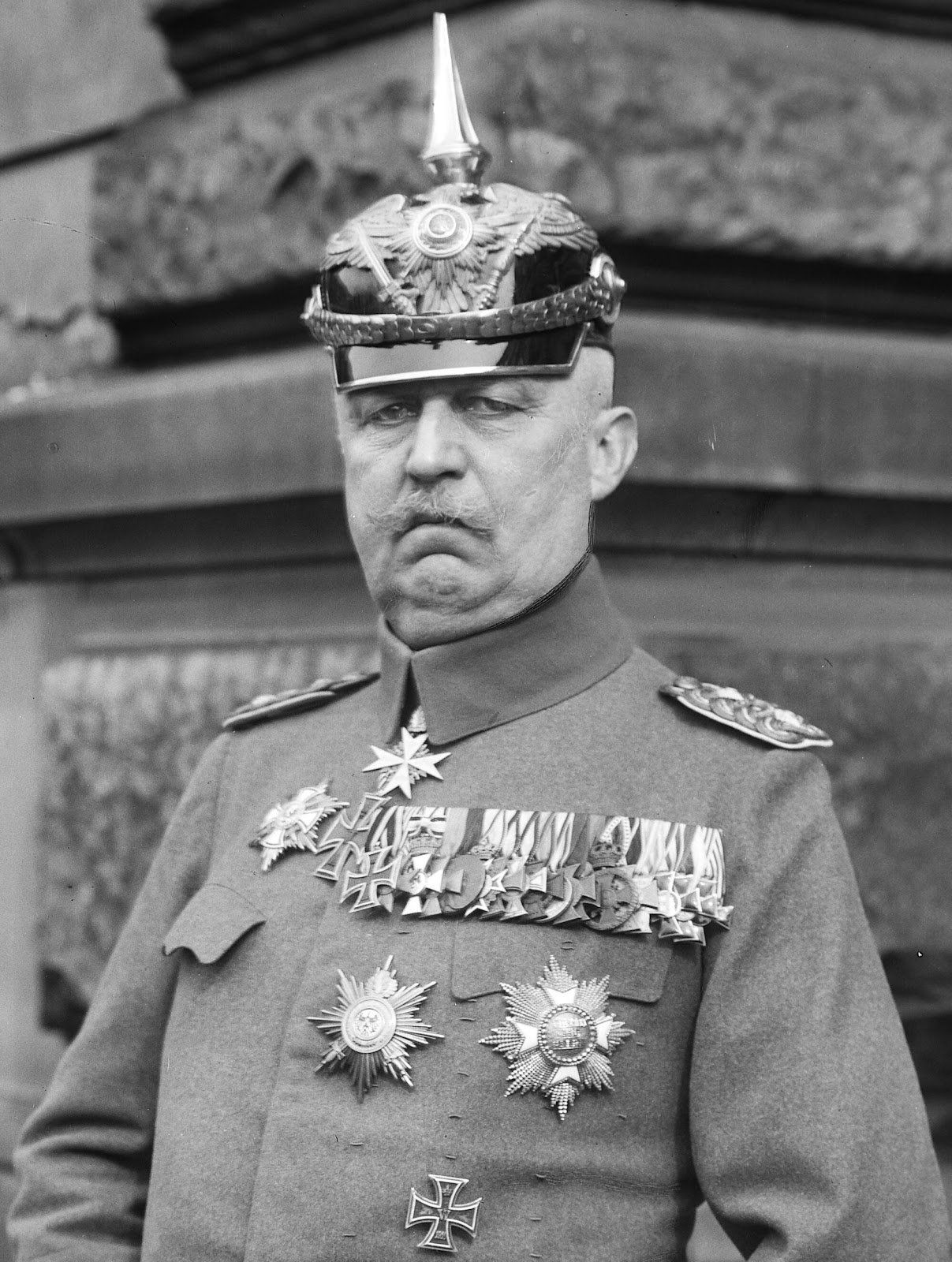
    Erich Ludendorff


    This is a summary of the reasons Germany lost World War I.


    The Entente was the alliance of France, Russia, and England, later including the United States. Sometimes called the Allies.


    German Planning (Schlieffen Plan)

    Germany’s strategy was based on the Schlieffen Plan, first developed by the head of the German General Staff in the 1890s. The essence was that most of the German Army would quickly attack France and defeat France in six weeks, before Russia could fully mobilize. Then much of the army could be quickly transported on Germany’s superb railroad system to the east to defeat Russia. The Plan was reviewed and updated by the German General Staff every year up to 1914, first under Schlieffen and then under his successor, von Moltke. Helmut von Moltke was the nephew (and namesake) of the general that led German forces to victory over France in the Franco-Prussian War of 1870-71.

    The German General Staff never seriously considered any alternative scenarios.


    The elder von Moltke, thinking about Germany’s future after his famous victory, believed that Germany, and its army, should fight the next war in the East. Block France’s expected offensive, concentrate on defeating Russia, and occupy Central and Eastern European territory. Then, if necessary, turn to defeating France. Schlieffen and the younger von Moltke changed the focus, expecting to defeat France quickly with a massive offensive before turning on Russia. In their private diaries, both expressed doubts about the success of their plan. 


    When World War I started, von Moltke led the German Army and was responsible for the success of the Plan. In six weeks, when Germany had failed to conquer France, von Moltke had a nervous breakdown and was relieved of command.


    • ·      Germany did not win a quick victory over France as planned and expected. 
    • ·      Underestimated how fast Russia mobilized and moved its army to attack Germany. German General Staff panicked and transferred a substantial number of soldiers from its armies in the West to the East.
    • ·      Believed (hope?) Britain would stay neutral. Then underestimated how fast the British army deployed in France. Although small, the British army was crucial in slowing down the German advance and later counter-attacking along the Marne.
    • ·      Hoped that Belgians would not fight. When they did, slowed down the advance into France.
    • ·      Underestimated logistical problems of a huge army moving by foot and horse in enemy territory.

    Could Germany have won the war in the West in 1914? Despite miscalculations, they came close (how close is still a matter of debate). The original attack almost succeeded. The two massive German armies that led the attack were commanded by generals who did not like each other and did not communicate with each other. At a critical moment when victory was possible along the Marne, one of the generals changed the direction of his army without telling the other general or von Moltke’s command center. This opened up a gap between the two armies which French and British units exploited, mauled one of the armies, and forced the Germans to retreat. When they stopped retreating, they took out their shovels and began to dig. The series of trenches they created became their front line for almost four years.


    Trench Warfare and Artillery


    Despite huge offensives on both sides, there was static trench warfare in the west for almost four years. Until the summer of 1918, all offensives failed with huge causalities.


    Both sides realized the quick offensive war had become a war of attrition after stalemates in France and in the East. Despite this, the Germans launched a huge offensive in 1916 against Verdun; to relieve pressure, the British launched its Somme offensive. Both offensives failed: there were massive causalities on both sides. 

    World War I became primarily an artillery war. Artillery was the largest cause of death. 

    Huge artillery barrages preceded attacks on lines of fortified trenches. The other side launched counter barrages against advancing infantry. 

    At the beginning of the war, Germany had advantages in deployed artillery and artillery production. In the long run, though, Germany could not keep up with British and French production of artillery shells and explosives.

    By 1917, England alone was producing more artillery shells and explosives than Germany.


     1917


    Again, World War I was a war of attrition. Germany had a chance to win the war in 1917. In 1917, the Russian Army collapsed and Russia was out of the war, the British Army’s size and effectiveness was diminished after the very heavy losses from the Somme offensive, and part of the French Army mutinied. Germany had to attack before large numbers of American troops began arriving and prepared for combat. But Germany had suffered huge losses in its attack on Verdun.

    In 1917, Germany’s submarine warfare in the Atlantic threatened to put England out of the war before American could enter in force. Britain depended on imports, especially for food. About 80% of grain for bread (and beer) was imported. By April, 1917, when America entered the war, Britain and France had only a few weeks inventory of wheat. But Germany’s U-Boot campaign to deny England food from Canada and American was never fully successful.

    Americans began to consider joining the war in 1917 as a result of the German navy’s renewed unlimited submarine warfare. Germany’s navy assured the kaiser they would starve out England before America could send over troops. Americans were also incensed on learning in March that the German government secretly offered German assistance to Mexico if it would attack the United States (the Zimmerman telegram).  That was the final straw; America declare war less than a month later.


    The American army was not ready for European warfare in 1917. The American army was very small and ill-equipped. Although America sent over a total of 2 million troops in 1917 and 1918, they were poorly-trained and lacked weapons like machine guns and artillery. France and England had to arm the American soldiers and teach them how to use the weapons to fight a new kind of war. But by the spring of 1918 about one million Americans were ready for combat.


    1918


    By 1918, German civilians were starving. This was mostly due to the English Navy’s blockade of Germany. 


    Ludendorff had to delay the massive offensive until the spring of 1918. The German Army in France was increased by 500,000 troops transferred from the Eastern Front after Russia collapsed.

    Again, the outcome was in doubt. Reasons for his failure were that the French Army had partly recovered from mutinies, draftees replaced volunteers in the decimated English Army, which was also fortified by Canadian and Australian corps. Both the French and English armies now contained large American divisions (an American division was twice the size of depleted French and English divisions). In addition, Americans helped stop the last German offensive and a large American army took part in the counter-attack (the Meuse-Argonne offensive). The Entente also now had an advantage in artillery and began to effectively deploy tanks and airplanes. After being hammered by the Germans for months, the Entente had sufficient troops to mount a counter-attack all along the German lines. The German army no longer had reserves to plug gaps in their lines. The Entente armies breached the Hindenburg Line, Germany’s last line of defense. The German army collapsed. Ludendorff fled to Holland, but only after advising Kaiser Wilhelm to surrender. Instead, Wilhelm also fled to Holland. The war was over.


    Other Factors

    Germany did not develop the new war technology of airplanes and tanks as fast as the Entente, although this was not a decisive factor in Entente victory. Germany produced very few tanks. Germany also produced fewer airplanes than England and France combined. By the end of the war, the Entente controlled the skies.

    Poison gas warfare gave Germany some advantage early in the war but Entente counter-measures and poison gas production partly neutralized the effect.


    The Entente had resources beyond the national resources of men and weapons. Germany had to rely mostly on its national resources.

    o   France had military manpower from its colonies, mostly from North Africa.

    o   England had manpower and resources from Dominion countries (Canada, Australia, New Zealand, and South Africa), India and its other colonies, and the United States, even before America entered the war. After the United States entered the war, America sent over approximately 1.4 million troops who fought or supported fighting in 1918.

    §  Food, horses, mules, steel, and artillery shells and high explosives from Canada and the United States, even before the United States entered the war. By 1916, the United States was providing England with 30% of its food.

    §  In 1914-1915, the soldiers provided by England’s India Army were critical in stopping German offensives after trench warfare began.

    o   The Entente imported approximately 300,000 Asians, Indians and Africans into labor brigades – to man supply depots and move supplies, and help build and repair railroads. Released manpower for the armies.


    As war continued, Germany’s ally Austria-Hungary became more of a burden than a help. German and Austro-Hungarian objectives were at odds. In the beginning of the war, Austria-Hungary wanted to use most of its army to attack Serbia. Germany wanted Austria-Hungary to use most of its army against Russia to help limit Russian attacks on Germany. Germany only had 1/8 of its army in the east to stop the Russian offensive. It depended on a large Austria-Hungary force to engage much of the Russian army. Austria-Hungary’s redeployment of troops did little to help German in the crucial first month of the war. 


    Austria-Hungary failed to defeat Serbia and suffered huge casualties in the four months of 1914 fighting on the eastern front. Later in the war, Germany had to divert troops at the western front to rescue Austria-Hungary in its war against Italy. By 1918, the new Austrian-Hungarian emperor began secret negotiations to take Austria-Hungary out of the war.


    Saul David, BBC, “How Germany lost the WWI arms race,” February 16, 2012.


    Niall Ferguson, The Pity of War:  Explaining WWI, 1998.


    Two essays on this blog by Professor Andrea Dragon documents the vital assistance America gave England and Russia even before entering World War I.


    New Jersey Artillery Explosives in World War I

    KELP IS ON THE WAY: How American Kelp Helped Save the English Explosives Industry in World War I

    Hal Brand, The Eurasian Century:  Hot Wars, Cold Wars, and the Making of the Modern World, Chapter 2.

    For a discussion of the weaknesses and problems of Austria-Hungary in the period leading up to World War I, see

    The Austro-Hungarian Empire Before World War I


    There are other posts on this blog that explore the period before World War I and what led up to the outbreak of the war:

    Bismarck and the Origins of World War I


    The Beginning of the Twentieth Century:  The Path to World War I


    Wealth and Power in Pre-World War I Europe 


    Europe on the Brink of World War I

    World War I had long-term consequences. Some are discussed in:


    The Immediate and Long-Run Historical Consequences of World War I


    The effect of WWI on the Stock Market Crash of 1929 and the Great Depression is discussed in:


    The Stock Market Crash of 1929 and the Beginning of the Great Depression


  • Bismarck and the Origins of World War I.

    Bismarck and the Origins of World War I.


    Otto von Bismarck


    The recent excellent histories on the factors leading up to World War One don’t go back far enough in time.


    The main contention of this essay is that the road to World War One begins with the long-run consequences of the policies and strategies of Otto von Bismarck and the way he created the First German Reich in 1871.


    The heart of the Treaty of Vienna at the end of the Napoleonic Wars (1815) was the “Holy Alliance,” an agreement of the monarchs of Russia, Prussia (later Germany) and Austria (later Austria-Hungary) to stamp out any return to the revolutionary ideals of the French Revolution. The three monarchies cooperated until the Crimean War.


    The Crimean War (1853-56) was triggered by Russian attempts to expand its influence around the Black Sea, force the Ottoman Empire to allow Russian warships through the Dardanelles and increase influence in the Balkans as the Ottoman Empire retreated. To keep Russia bottled up in the Black Sea and out of the Mediterranean, England and France came into the war on the side of the Ottoman Empire. Prussia remained neutral. Austria-Hungary also remained neutral but Russia expected Austrian support. After the war, Russian leaders believed that Austria used the war to expand its own influence in the Balkans.  Russia and Austria-Hungary became rivals in the Balkans, with increasing Russian paranoia and anger towards Austria-Hungary. This broke up the “Holy Alliance” and began the long-term rivalry of Russia and Austria-Hungary.  (For an excellent history of the Crimean War, its origins and consequences, see Orlando Figes, The Crimean War).

    In the next decade, Otto von Bismarck began his series of wars to unite the various German states under Prussian hegemony and create modern Germany. He was anti-Austria at this time because he wanted to unite the German states under Prussia and replace Austrian influence in the southern German states. After being defeated in battle by Prussia in 1866, Austria focused on the Balkans because its German neighbors in the German Confederation had become part of the new Germany. 


    The last war Bismarck initiated was the Franco-Prussian war of 1870-71. Prussia and its German allies won a quick victory over France and declare the creation of the first German Reich. The Prussians rubbed French noses in it by creating the new Germany at Versailles. The new Germany annexed the French provinces of Alsace and Lorraine.


    Bismarck had achieved his goal of a united Germany but at the expense of creating an implacable foe in France, bent on revenge and recovery of lost territory.


    The German Reich was to be dominated by Prussia. The monarch was both the king of Prussia and the emperor (kaiser) of Germany. Bismarck was the head of both the new German and Prussian governments.


    Bismarck was a Junker (Prussian landowning noble) and deeply conservative. Prussia had a strong military tradition; there would be few checks on the German military from the elected national parliament (Reichstag). German foreign policy was made by a small group of men who did not answer to the public or to their elected representatives. Germany was to become an autocratic state with little input from the public or its representatives in the parliament.


    The Reichstag had limited powers. In the new German Reich, all the top government officials and military officers were appointed by the kaiser, not the parliament. With a weak emperor, that meant Bismarck appointed the officials.


    Bismarck also skillfully managed the German parliament, to limit any democratic influence on his government. He was usually successful, sidelining the Social Democratic Party and liberal parties from having influence on domestic policy.


    Bismarck’s domestic policy was to weaken or eliminate any political party or organization (like the Catholic Church) that he thought threatened Prussia’s hegemony. He succeeded but at the expense of alienating many of Germany’s organizations and political parties, including the largest, the Social Democratic Party (the SPD). This would have serious consequences when Germany entered the World War I and there was little cooperation between the military and political parties on the management of the domestic economy.


    Bismarck spent the next nineteen years managing the creation of the new state under Prussian dominance and Germany’s European security. His foreign policy strategy was to make sure Germany would never have to fight a two-front war. He signed a formal treaty with Austria-Hungary in 1876, becoming allies. He also had a separate secret agreement with Russia not to attack each other. This isolated France and reduced the chances that a combination of Russia and France would attack Germany.


    Although Bismarck had created a powerful Germany that disrupted the “balance of power” equilibrium of Europe, his careful diplomacy kept the peace. Germany did not try to expand in Europe and opted for stability. Bismarck opposed the creation of an overseas colonial empire, which might have antagonized Britain. He counted on the rivalry between Russia and Britain for influence in central Asia and Persia to keep the two countries from cooperating against Germany.


    But even before Bismarck was forced to resign by Kaiser Wilhelm in 1890, Bismarck’s careful European political structure was unraveling. Russia refused to renew secret “reinsurance” (nonaggression) treaties with Germany, mostly because of Russia’s increasing anger at Austria-Hungary’s policies in the Balkans, and by extension its German ally. Russia and France began talks that would culminate in an 1894 treaty containing secret military cooperation aimed at the alliance of Germany and Austria-Hungary.


    Towards the end of his rule, Bismarck bowed to nationalist pressures to create an overseas empire. This led to political conflicts with France and threats to Britain’s African empire. German attempts at seizing colonial territory would later create added French and British animosity towards Germany.

    In sum, Bismarck used warfare rather than political negotiation to create a powerful, militaristic Germany. The new constitution and his actions after unification aimed to guarantee the dominance of Prussia and Prussian values. Bismarck centralized power in himself as the embodiment of an authoritarian government. Parliament and democratic parties were legal but had little power or influence over the policies of Bismarck. Rather than moving towards a more open and democratic political structure, Bismarck’s Germany remained a reactionary bulwark in a rapidly changing world.

    His careful policies of detente with Russia, not antagonizing England and no overseas empire began to unravel towards the end of his regime. The ascension of Wilhelm to kaiser in 1890 accelerated the change and created a military alliance of Russia, France and England against Germany.  


    ======================================================================

    For the beginnings of World War I, its consequences, and a bibliography, see The Beginning of the Twentieth Century:  The Path to World War I.


    Also see other related posts:


     Wealth and Power in Pre-World War I Europe 


    The Austro-Hungarian Empire Before World War I

     The Immediate and Long-Run Historical Consequences of World War I


    The Maxim Machine Gun and Smokeless Powder


    Go back to the List of Posts by Topic

  • Europe on the Brink of World War I

    Europe on the Brink of World War I

    SVG Map_Europe_alliances_1914-fr.svg


    ORIGINS OF THE WAR

    This is an extraordinarily complicated story. One reason is that it is difficult for the modern reader to understand the mentality of the key decision-makers – their prejudices, mental frameworks, how they reacted to threats and stress. Fortunately, there are several excellent books that attempt to describe the key players’ assumptions, mentality and motivations.


    World War I was started by the decisions of a very small number of men, often in secret, implementing secret agreements and understandings, who represented the most reactionary, nationalistic or conservative groups in their countries and governments. Most were incompetent, narrow-minded, myopic and/or delusional. They thought going to war – appealing to nationalist sentiments – would solve or subsume social problems and political challenges that were mostly the result of industrialization and rapid economic  and social change. All planned to win in short offensives; Germany had a detailed plan to defeat France in six weeks. Very few people saw that a prolonged war would be a threat to the survival of traditional regimes and empires.


    None of the generals or their staffs thought in alternatives. They all had the same strategy – mobilize large numbers of soldiers quickly, go on the offense, overwhelm the opposition and win the war in a short period of time. Problems:


    Moving a huge number of troops over hundreds of miles, and keeping them supplied, was going to be difficult. Armies still moved by foot and supplies by horse-drawn wagons once they left  the railroads of their own countries. At one time, the English army had 870,000 horses.


    The problem with only planning offenses was that the new military technology favored defense – machine gun nests, barbed wire, rapid-fire field artillery. Tanks were primitive (slow, cumbersome), sometimes effective in breaking through defenses (when they didn’t break down). Airplanes were useful for reconnaissance and evolved rapidly (equipped with machine guns to strafe infantry) but were not decisive. New tactics to attack defenses evolved only near the end of the war after offensive attacks failed and incurred huge casualties. (In the first day of the 1916 British offense on the Somme, the British Army suffered 60,000 casualties, including 20,000 dead). One day!


    There was one war that European military officers observed where the two sides were large armies, fairly evenly matched and used some modern military equipment (and railroads). The American Civil War. It lasted four years with a total of about 500,000 deaths, out of a population substantially less than any of the four major continental combatants of WWI. Most offenses failed. (On the first day of the American Meuse-Argonne offensive in 1918, the Americans and French fired more shells than were fired by both sides in total in the four years of the American Civil War.)


    No army or their general staff ever seemed to have seriously analyzed the alternative of a long war with modern weapons. The only person who did so was a Polish banker named Jan Bloch, who published a six volume book in 1898 titled Modern Weapons and Modern War. He argued that in the next major European war “the spade will be as important as the rifle.” Infantry in trenches with machine guns behind barbed wire would have a large killing advantage against advancing infantry. Cavalry would be less than useless, with dead and dying horses slowing up and disorganizing the advancing infantry. He could see that the nations of Europe would mobilize millions of men. He predicted such a war would be a long one. The impact of a long war with large casualties would result in “the break-up of the whole social organization.” Writing about the military, he said “The steadfastness with which the military caste clings to the memory of a state of things which has already died is … costly and dangerous.” He didn’t live long enough to see just how costly. (Quoted in Richard J. Evans, The Pursuit of Power: Europe 1815 – 1914, 703)


    World War I was the last attempt of the conservative and reactionary ruling classes of Europe to remain in power. It was an easily avoided war that killed 8-10 million soldiers. If we include the long-run effects, hundreds of millions of people died.


    Any illusions about the rationale or romance of the war dissolved quickly. In the first four months of the war, more men were killed on the western front than in any subsequent year. The carnage of a modern war where soldiers were mostly killed by distant artillery and machine guns was shocking to soldiers and civilians.


    THE DECISION-MAKERS


    In each of the five major countries, there was a very small group of men who made the foreign policy decisions. They were outside the normal flow of domestic politics. They often made their own policies and decisions, keeping elected officials and other members of their government in the dark. They kept their treaties and understandings with other countries secret from their own people and government, and in England’s case, even from the leaders of their own party. In France, virtually no one outside of the President and a few top officials in the foreign office knew of the secret military clauses of the treaties and verbal commitments they made. They controlled the information flow; they lied and obfuscated. They ignored their own ministers. Even in republic France; after all, French politics were so unstable that there would be new ministers in a few months. 


    Military leaders in Germany and Austria-Hungary, nominally under the control of civilians (monarchs), pursued their own strategies. The military of France had contempt for most of the elected civilian leaders of France. Top English brass met secretly with French officers to plan the logistics of moving the entire British Army quickly to France in the event of war. In Russia, many of the top military leaders, including the head of the army, were relatives of the tsar.


    COUNTRIES ON THE BRINK OF WAR

    Serbia


    Russia and Austria-Hungary both focused their foreign policy on the Balkans. But by 1913 there was a third player, Serbia.


    The role of Serbia is usually forgotten after the assassination. But Serbia continued to be important. 


    There were Balkan Wars in 1912 and 1913. The first was a coalition of Balkan countries that eliminated the last vestiges of Ottoman rule in the Balkans. The second was among the Balkan countries over which country would control contested territory. Serbia was the winner in the second war, expanding its territory by 80% and increasing its population by 50%. Besides more resources, Serbia now had an experienced army, with better arms provided by France. (Remember that France was an opponent of the German/Austro-Hungarian alliance) It had strong support from the Russian ambassador to Belgrade. Serbia was not going to be the easy conquest assumed by the Austro-Hungarian military. Serbia asked the Russian government if Russia would support them if there was a war with Austria. The Russian government said yes.


    If Serbia was not quickly conquered and Russia declared war on Austria, then Austria would be fighting a two-front war, for which it was woefully unprepared. And that is what happened.


    Austria-Hungary

    For the background on Austria-Hungary, see Austria-Hungary Before the War.

    The danger was that if Austria attacked Serbia, it was very likely that Russia would come into the war. Austria could not handle both countries. But Austria had an ace in the hole. By 1914, Austria was Germany’s only reliable ally. Austria asked for German assurances before attacking Serbia. There were strong personal ties between the Emperors, the members of the political elite and the military leaders of the two countries. The German General Staff and its head, Helmut von Moltke, believed war with Russia was inevitable. Kaiser Wilhelm and the German military, in the crucial month between the assassination and the start of the war, told Austria they should they attack Serbia that Germany would stand by them if they were attacked by Russia.


    In some ways, the state of the Austrian army mirrored Austria-Hungary, a dazzling façade covering a declining and dysfunctional power. The army sported officers in colorful uniforms and elite cavalry units. It had underinvested in modern weapons. The long-time head of the Austrian army, Conrad von Hoetzendorf, had argued long and loud that Austria should attack Serbia. Despite this, he did not have a detailed plan for mobilization because he was unsure how to allocate units between fighting Serbia and Russia. But this was his chance. 


    One reason Conrad was so adamant about going to war was that in late middle-age he fell madly in love with the wife of an industrialist. Every day, he wrote long, passionate letters (3,000 in eight years) to the woman of his obsession. He never mailed them (they were discovered after the war.) He thought if he led the Austrian army to victory, if he were a war hero, she would divorce her husband and marry him.


    By the end of 1914, Conrad and the Austrian army had been defeated in three invasions of Serbia and by the Russians on Austria’s northeast frontier. He had lost as many as one million men. Austria’s frontline army and best units were destroyed. He basically fought defensive battles with the Russians An attempted offense against Italy was a costly failure until the Germans intervened. He was relieved of command in 1917.


    Germany


    I think it is fair to say that Germany is the one country that could have prevented the war. (This is controversial and hotly debated among German historians.) Again, Austria was Germany’s only ally. German leaders felt personal obligations of honor towards Austria’s leaders. But if Germany had said no to Austria and not mobilizing its army, the likelihood of a continental war would have been lower. But this did not reckon with the personality of Kaiser Wilhelm.


    Wilhelm became Emperor in 1888. He retired (fired) Bismarck. After uniting the German states under Prussian leadership in 1871, Bismarck spent the next 19 years trying to reduce threats to Germany. He signed a treaty with autocratic Russia (and Austria, which Germany had defeated in a short war in 1866). He tried to diplomatically negotiate conflicts among the European powers. He wanted to avoid war. In general, he succeeded.


    Wilhelm had a very high opinion of himself. He told government leaders (who he appointed) that he was going to be the new Bismarck. The gods laughed. Over the next 26 years, he poisoned the political atmosphere in Europe and alienated potential allies, especially England.


    It should have been easy to keep England neutral or have some sort of detente. He was the grandson of Queen Victoria. He was educated in England and spoke excellent English. He spent a great deal of time in England, socializing mostly with the royal and aristocratic elite. He like to wear English military uniforms (he was the honorary commander of British regiments and an honorary admiral of the British navy). But he had a love/hate relationship with the English. He envied but never could become a proper English gentleman.


    Yet, there was something very strange about his personality that alienated everyone, including top German government officials. He spent much of his time reading official documents, making hysterical marginal notes and coming up with new ideas and programs. After a few days, he would forget about them and talk at length about new ideas. He traveled incessantly, away from Berlin and his responsibilities about half the time. He had no mental filter, saying whatever came into his mind. He suffered from permanent “foot in mouth” disease. Some of his remarks did real damage, especially in England. In 1899-1902, the English were fighting a vicious war against the Boers (Dutch settlers) in South Africa. During the Boer War, Wilhelm sent a telegram to the Boers pledging German military aid. The English were not amused.


    Early in his reign, he was convinced that Germany had to build a naval force equal to that of England. They got into a naval arms race. By 1910, it was obvious that Germany would never have a main battle fleet equal to England’s. But the damage had been done; the naval arms race had poisoned relations with England.


    Wilhelm’s rhetoric was bellicose and belligerent when there was little chance of going to war. But as WWI seemed more likely in the month after the assassination of Archduke Franz Ferdinand, he tried to become more conciliatory. But his messages were muddled and changed often. In the end, the German army and their political supporters ignored him and prepared for war. He was also sidelined during the war.


    There is little justice in history. When Germany lost the war, Wilhelm fled to Holland, where he led a quiet existence. He lived long enough to still be alive when Hitler’s panzer divisions swept through France.


    The only personality I can think of that is somewhat similar to Wilhelm is Toad of Toad Hall.


    In the end, the decision to go to war was made by Helmut von Moltke, the head of the German Army. He was appointed to his position partly because of his uncle, also named Helmut von Moltke. The first Helmut had led the Prussian Army to victories over Austria-Hungary in 1866 and France in 1870, actions which were part of Bismarck’s strategy to unify the German states. 


    The younger Helmut probably had the wrong mentality to lead Germany into a major war. He was intellectual and musical and probably suffered from bouts of depression. But he had a fear of Russia and felt that Germany’s chances of defeating Russia would worsen over time. Thinking that war with Russia was inevitable, and thus so was a European war, he argued the time was the present. The Chancellor Theobald von Bethmann Hollweg was less certain and at first advised caution. But as the tension mounted, he supported von Moltke.


    Von Moltke had private doubts that the German war plan (the Schlieffen Plan) would succeed. The main idea was to attack France first with most of the German Army, then combined with Austria-Hungary to hold off the Russians and deal with Russia after victory.  Six weeks into the war he had a nervous collapse and was relieved of his command. He wrote a letter to his wife regretting the horrors he had unleashed on Europe and foresaw the dark future. He died in 1916.


    Russia


    Russia was the most autocratic of the five states. All power and ultimate decision-making resided with Tsar Nicholas. Unfortunately, Nicholas was a weak character – indecisive, paranoid, delusional. Factions around Nicholas in government and the military fought each other for power and influence.


    There were attempts at political reform only after the domestic unrest of 1905-06. Cabinets were headed by reformers like Witte and Stolypin. Nicholas allowed a parliament (Duma). But when the tsar regained control, Witte was dismissed and Stolypin was assassinated by a radical. The Duma was disbanded. When reinstated, Nicholas and the conservatives did everything to see it had no power or influence on government policies.


    During his long reign (1894 – 1917), Tsar Nicolas attempted expansion programs to extend Russian power. His last one was to expand Russian presence in the Far East, mostly in Manchuria. This put Russia in conflict with Japan. Most Russians believed they would easily win a war with “inferior” Asiatics.


    The war began with a surprise. Japan launched a surprise torpedo attack that destroyed most of Russia’s Pacific fleet in Port Arthur. (Japan would use similar tactics to attack Pearl Harbor; Admiral Yamamoto who planned the attack on Pearl Harbor was a young naval officer at the earlier attack.) 


    Nicholas ordered Russia’s main fleet, in the Baltic, to sail to Asia and engage the Japanese fleet. England would not allow the Russian fleet to use the Suez Canal because England was an ally of Japan. So the fleet had to go down the African coast, across the Indian Ocean and up the coast of China, a journey of 18,000 miles! When it finally reached Japan, the Russian fleet was in terrible physical shape and sailors were mutinous. It was quickly destroyed by the Japanese fleet.


    A land war ensued in Manchuria. Russia was finally defeated in the battle of Mukden. Two of the Russian generals accused each other of causing the defeat. In 1914, they headed the two Russian armies that invaded Germany. Their lack of cooperation contributed to the famous Russian defeat at Tannenberg. This battle also made the reputations of Hindenburg and Ludendorff, who would lead the German army from 1916 to the end of the war.


    It came as shock throughout Russia that the Russian army was defeated. Who to blame? There was already a great deal of domestic agitation because of the lack of food and the horrible working conditions of the new industrial work force. Large demonstrations broke out in St. Petersburg and other cities. There were hundreds of rural riots against the land-owning nobility. Manors were burned or looted. It seemed to some that revolution was in the air.


    The Tsar contained the demonstrations by calling out the army and gunning down demonstrators. He retreated to a palace south of St. Petersburg. There he would stay in isolation for the rest of his reign.


    After the situation calmed down, Nicholas unleashed his secret police and internal security forces; they carried out a savage campaign to kill or exile to Siberia all suspected revolutionaries. 


    Nicholas believed that the disturbances were caused by Jews. He unleashed his Cossacks and Black Hundreds (local militias) in a series of pogroms (race riots). Thousands of Jews were killed and imprisoned. Many left the country.


    Nicholas also believed that, despite everything, there was a “mystical” bond between him and the Russian people. His feeling was reenforced by the celebrations of 300 years of Romanov rule in 1913. At no time did he waver in his belief that he was an absolute ruler ordained by God. Russia and the Romanovs were one and the same.


    Russia had to rebuild its army and navy. It began a “Great Programme” of military reform in 1913. It called on France for financial support to expand its railroad network west towards Germany and to buy arms. Russia instituted some reforms in its military, including more artillery. This was a major source of concern to the German military. Von Moltke believed that these reforms and rearmament would be completed by 1917 and Germany’s relative military position would be weaker. Again, this fear motivated him to advocate war in 1914. 


    Russia and Austria-Hungary had been competing for influence in the Balkans since the 1870s. Now with the setback of their Far East policy and Austria-Hungary’s absorption of Bosnia in 1908, the rivalry became more intense, with Russia using Serbia as their main client state. Russian nationalists began talking about “Pan-Slavism.” Austria-Hungary reached the conclusion that the Balkans were the only area they could project  power and influence after being shut out of the German Confederation by Prussia. In addition, Austria thought that Serbia was now a threat to the survival of Austria-Hungary. After 1913, Serbia, backed by Russia, focused propaganda and terrorist acts on Bosnia. Serbia also appealed to the South Slavs (Slovenes, Croats and Serbs) in the Austro-Hungarian Empire to oppose the national policies towards minorities in Austria and Hungary. 


    Russia and Austria were on a collision course again. Only this time, they were part of opposing alliances – no talk of “balance of power” and European conferences to negotiate differences and make territorial adjustments through sign treaties.


    France


    Russia, like Austria-Hungary, also had a secret ace in the hole. Bismarck had negotiated a non-aggression treat with Russia. A few years after he fired Bismarck, Kaiser Wilhelm decided not to renew the treaty. France always worried that if they were attacked by Germany again, they might lose. But here was an opportunity to gain an ally. In series of secret agreements between 1891 and 1894, France signed treaties with Russia. While the treaties were known, the secret military obligations of both countries were not. If either country was attacked by Germany, the other would immediately mobilize its army and attack Germany. 


    Russia was trying to rebuild its military after the Asian fiasco. France offered huge loans to pay for rearmament and railroad expansion to move troops faster to the German and Austrian frontiers. But rather than France buying an ally to help fight the Germans, Russian now had an ally to help fight the Germans and Austrians if there was geopolitical conflict in the Balkans. And France would be attacked first. 


    Very few people in the French government knew about the military conditions of the treaty, most of them in the foreign office. It was only in 1913, when Raymond Poincare became president of France, was he told the details of the treaty. He was a conservative nationalist and hated Germany. Poincare came from the Alsace/Lorraine region, the French provinces lost to Germany after the Franco–Prussian war in 1870-1871. Just before war broke out, he traveled to Russia to strengthen ties.


    Instead of the powers of Europe negotiating differences and making adjustments collectively as in the past, there were now two exclusive alliances – Germany and Austria-Hungary on one side and Russia and France on the other. Russia competed with Austria-Hungary for influence in the Balkans. Both countries hoped their powerful allies would support them if conflict broke out. 

    The unknown was what England would do in the event of war.


    England


    England was the wild card. Germany, France, and Russia all tried to negotiate some sort of understanding (détente) with England in the years leading up to the war.


    The German foreign office made a lengthy attempt to improve relations with England. Much of England’s upper classes were pro-German. These efforts were undermined by the behavior and intemperate rhetoric of Kaiser Wilhelm. Russia and England had a long-running rivalry along the political fault lines of Persia, and between Central Asia and South Asia (India). This tension was eased by treaties and understandings negotiated before World War I. 


    Sir Edward Grey was the English foreign minister from 1905 to 1916. He was a rather strange person. He didn’t care about the British Empire, spoke no foreign languages and he hardly ever traveled outside of England and Scotland. He was secretive and devious. He had a small group of confidants within the Foreign Office; one was Winston Churchill. His passion was fly-fishing. He was often away from his office fishing. 


    While he never formally committed to one side or the other, Grey apparently disliked Germans despite that many of upper-class Englishmen were pro-German and liberals (he was a member of the Liberal Party) particularly loathed authoritarian Russia. But Grey, in typical English policy, was afraid of any country dominating Europe. He saw Germany as that country. So Grey secretly began building military and diplomatic connections to France beyond the conditions of their 1907 detente agreement. His own party was almost unanimously opposed to any involvement in a possible European war.


    With his encouragement, a small group of English officers met with French officers to plan the logistics of the landing of English troops if war broke out. English troops were able to be effective earlier in the war than German planners assumed. Although small in numbers, they were able to delay the progress of a far larger German army into France.


    Unlike the four continental powers, England had a small homeland army, only about 110,000 soldiers, because England relied on its navy to protect the island from invasion. Most of its army was patrolling the empire. England did not have conscription before the war; all its soldiers had signed up to be professional soldiers. England only began conscription in 1916 because of its large losses, especially after the battle of the Somme. 


    POLITICAL AND PERSONAL FACTORS


    Russia, with its massive new military spending, accelerated the arms race. More artillery and machine guns. Draft calls were higher, the size of the standing army and reservists were increased, and more money was spent on long-range artillery and howitzers. Russia had the largest standing army in Europe, although the quality of its soldiers and top officers was suspect. 


    By 1914, important trends that increased the chances of conflict were: 

    Two alliances. Replaced “concert of nations.” Not set in stone but limited diplomatic maneuvering. 

    An arms race, combined with offensive strategies and rapid mobilization, that military leaders believed (or hoped) would lead to a short war and victory.

    Many foreign policy officials and ambassadors slanted reports and lied to superiors to reflect their viewpoints. Some military leaders, mostly in Germany and Austria-Hungary, believed war was inevitable or desirable. 


    All countries assumed that mobilization was the actual beginning of the war. Leaves were canceled, units went to assigned positions. Reserves were called up, told which train depots they were to go to, and report to their staging areas. Railroad traffic was cleared for troop trains. War was declared almost immediately after mobilization. Troops and their logistical support began moving immediately towards frontiers for offensive action.


    PREPARING FOR WAR

    In the last few years before the war, against the background of rising tensions, an arms race broke out. The four European powers expanded the size of their armies and increased military expenditures. More conscripts led to larger standing armies and larger reserves of past conscripts. Only England had a professional army of volunteers. All countries had plans for rapid mobilization of recruits and reserves to go on the offensive.


    All four countries believed that the country that could mobilize first and get their army moving (first by railroad but mostly by foot) would have an advantage. This put added pressure on political leaders to call up reserves and mobilize their armies to start their offenses. Once one country mobilized, this set off a chain reaction for all four countries to immediately mobilize. This greatly increased the chances of war. All assumed that full mobilization was the runup to war.


    Government leaders thought that nationalism and war would rally their country’s populace and subsume internal conflicts. There was general enthusiasm for war after war was declared.They were right if it was a short war. Only a few planners and observers thought that the monarchies would be in danger if there was a long war. Especially in Russia.


    Here again is the tendency we can discern in the reasoning of so many of the actors in this crisis, to perceive oneself as operating under irresistible external constraints while placing the responsibility for deciding between peace and war firmly on the shoulders of the opponent.

                    Christopher Clark, The Sleepwalkers, 519


    The constraints were mostly internal – the assumptions and objectives of the ruling elite to preserve their privileged position in society. They were delusional. After the war, a great number of memoirs were written by the main actors; the theme of most was self-justification that they were not responsible for starting the war.


    CONCLUSION


    It seems that none of the decision-makers saw the coming conflict as an “existential” event, that is, that it threatened the existence of their country or the ruling regime. But the preparation of the four continental powers almost guaranteed it if the war was not the short war they all assumed. All four had greatly increased the size of their armies and their armies’ firepower. All resources, including reserves, were mobilized at the start. Casualties were huge in the first four months. After the Germans did not conquer France and the Russian offensive was stopped in the east, these large armies assumed static defensive positions for the winter. In the west, these positions would change little in four years despite massive attempts at offense to break the enemies’ lines. The maximum effort and huge losses at the beginning of the war increased the chances that the war had to be fought to the end. Military planners now saw the war as a war of attrition.


    Because of the stalemated military situation and the two alliances rather than five or six countries thinking about their political options, there was almost no call for negotiations or a conference to discuss how to end and war. The political leaders of the countries all realized that this war would end in unconditional surrender of one side or the collapse of one or more combatants. All combatants had to continue fighting, hoping that an opponent country would collapse first. World War I had become an “existential” war.


    Rather than thinking that the war increased the tensions at home, all decision-makers assumed that war, and the nationalist sentiments it would create, would overcome these tensions. If there was a victory or at least a negotiated settlement after the first battles, this might have happened. But the length of the war worked to worsen domestic tensions. In Russia, Germany and Austria-Hungary there was widespread hunger, even starvation, at home. This contributed to the overthrow of the tsarist government in early 1917. The new emperor of Austria-Hungary tried desperately in 1916 to get out of the war because he knew the existence of his empire was at stake. Large parts of the French Army mutinied. Germany and France knew any treaty was impossible because the winners would impose harsh conditions on the losers.


    WHO WAS RESPONSIBLE FOR STARTING WORLD WAR I?


    Historians have long debated which country was responsible for starting World War I? A more realistic question would be – which key decision-makers were responsible? The answer – all of them.


    There was a small number of them. One in Serbia, three in Germany, three in Austria-Hungary, one in Russia and one in France. Also one in England. At different times.


    1 Dragutin Dimitrejevic, known as Colonel Apis (the Bull), the head of Serbian military intelligence. He set up underground terrorist groups known as the “Black Hand.” Its goal was to forge a “Greater Serbia” that included Bosnia (controlled by Austria-Hungary), Croatia and Macedonia. The young Bosnian Serb who killed Archduke Franz Ferdinand was trained and armed by an officer of the Serbian military intelligence. Ultra-nationalist and violent, the more moderate elements in the Serbian government and the military were afraid of the Bull. With reason – in 1903 he was part of the small group of officers who killed and mutilated the bodies of the king and queen of Serbia. 


    2. Almost no one in Europe, including the people of Austria-Hungary, thought the Archduke’s assassination would lead to war. Or was an excuse to go to war. Except Conrad von Hoetzendorf, the head of the Austro-Hungarian army. He had been strenuously advocating war with Serbia for years. This was his best chance, even though the assassination was greeted with indifference by the Emperor (he did not attend the funeral) and throughout Austria-Hungary. Conrad convinced the foreign secretary Count Leopold Berchtold to support him. They convinced the aged and disengaged Emperor to agree to declare war on Serbia and instruct the military to invade Serbia.


    3. Austria-Hungary could not attack Serbia because of the high probability that Russia would come to Serbia’s aid by attacking Austria-Hungary. Austria-Hungary could not risk this without German backing. Kaiser Wilhelm and high government officials gave the key members of the Austrian government and military strong assurances that Germany would back Austria-Hungary.


    4. The key players in Germany were Kaiser Wilhelm, Chancellor Theobald von Bethmann-Hollweg (and foreign secretary) and Helmut von Moltke, the head of the German General Staff. Germany could have stopped the escalation by not fully backing Austria-Hungary. By Germany backing Austria-Hungary, it greatly increased the chances that Austria-Hungary would attack Serbia and that Germany was going to war with Russia and France. 


    Despite the Kaiser’s enthusiasm, which faltered as the war became more likely, some government officials had reservations. They used the actions of Russia in the last days before the war was declared as reasons (or excuses) to support going to war. 


    The Kaiser’s strong support of Austria in 1914 was somewhat unexpected. A year earlier, when Serbia went to war against other Balkan states, Austrian leaders thought about intervening against Serbia. Kaiser Wilhelm was opposed and told the Austrians he would not support them. (Charles Emmerson, 1913, 76) But this was different. Archduke Ferdinand was a personal friend of the Kaiser and Wilhelm was angry. Also, Chancellor Bethmann Hollweg and army chief Helmut von Moltke were in favor of war. Von Moltke believed that the ongoing military reforms in Russia would make it a more difficult opponent for Germany by 1917. War now, better than war later.


    5. The Russian tsar Nicolas could have restrained Serbia. The tsar did hesitate to fully mobilize his forces in the days just before the start of the war but didn’t offer any alternatives. Encouraged by “Pan-Slavic” ultra-nationalist government officials, some of whom were his relatives, he was pressured to declare war. Nicholas was a weak personality susceptible to the arguments of those around him.


    6. Raymond Poincare, the President of France, was a strong supporter of the secret treaty clauses between France and Russia. He saw this as insurance if Germany attacked France. France knew the general outline of the Schlieffen Plan. But he felt obligated if Germany attacked Russia. Just before the war started, he went to Russia to firm up support for the alliance.


    7. The behavior of England’s foreign minister Sir Edward Grey has always puzzled historians. He pursued his personal foreign policy in secret. No one knew if he advocated war. His own party was against war with Germany. But Grey had for years quietly strengthened ties with France beyond the somewhat vague alliance with France in 1907. Only a few close associates in the Foreign Office and the military knew. He supported secret meetings of top English and French officers to jointly plan the logistics of the transfer of the English army to France in case of war.  He seemed to dislike Germany (many of England’s elite were pro-German and liberals loathed Russia because of the absolute authoritarian rule of the tsar). After war started on the Continent, Grey convinced his party leaders to change their minds and declare war. One argument he seems to have used was the prospect of continental Europe dominated or controlled by Germany. He was motivated by traditional “balance of power” thinking, fear of Germany and personal prejudices.

    An important question to ask: of the key players, which ones wanted to go to war in 1914? The answer is Helmut von Moltke of Germany and Conrad von Hoetzendorf of Austria-Hungary. Their countries were allies. Austria-Hungary, under the insistent prodding of von Hoetzendorf and the backing of Germany, chose to start the war. Germany, under von Moltke, was ready to go to war against Russia.


    Main points of the Posts on World War I


    ·      Internal tension was rising in all major European countries due to the Industrial Revolution causing profound social change and conflict.


    ·      These changes threatened the power, income and status of the ruling class of landowning nobility, which controlled the highest positions in their governments and military.


    ·      Naval and army buildups in the years before the war increased tension among the major countries.


    ·      Tremendous increase in firepower due to new or deadlier weapons. The new weapons, and their mass production, were the results of the Industrial Revolution.


    ·      Generals tried to use the new firepower and mobility to fight a war using tactics and strategies from the past.


    ·      After the assassination of Archduke Franz Ferdinand, there was almost total indifference throughout Europe, even in Austria-Hungary. Like past recent political crises, it was shrugged off. People who thought about it expected it would be resolved without war.


    ·      But men in power saw it differently. Some were eager to go to war. Some accepted the inevitability of war at that time. Most made decisions without thinking about alternatives or consequences if it wasn’t a short war.


    ·      A very small group of men in the five “Great Powers” made decisions, mostly in secret, that led to war.


    ·      Total mobilization of all four continental combatants led to war.


    ·      While there were anti-war demonstrations just before the war, the war took on a grim acceptance after it started.


    ·      Most of the so-called “learning curve” was replacing aging generals with obsolete thinking with generals who were learning new lessons (slowly) as they fought the war.


    BIBLIOGRAPHY


    Christopher Clark, The Sleepwalkers:  How Europe Went to War in 1914. 2012.


    Margaret MacMillan, The War that Ended Peace:  How Europe Abandoned Peace for the First World War, 2013.


    These two books are vital to understanding the thinking and actions of the ruling elites of all countries in the critical years before the war. The mentalities of the diplomats and generals often seemed like their minds were still in the 19th century before 1870. They hadn’t absorbed the economic, technological and political changes.


    Charles Emmerson, In Search of the World Before the Great War. 2014.


    Makes the case that almost no one anywhere in the world was thinking about the political crisis in the Balkans and the possibility of war.


    Michael S. Neiberg, Dance of the Furies:  Europe and the Outbreak of World War I. 2011.


    Convincingly documents the thesis that most Europeans were not thinking of war, but rather believed that peace and prosperity would continue. No popular demands or pressure for war. If anything, just the opposite, with a strong trans-European peace movement and large Social Democratic parties opposed to war.


    The documentary They Shall Not Grow Old, which used actual WWI footage and interviews with WWI soldiers. About the British army in World War I. Based on photos and videos from the Imperial War Museum. On YouTube. Colorized.

    ===================================================================

    These posts could be read in order as background to this post.

    Related posts about the origins of World War I are:

    Bismarck and the Origins of World War I

    The Beginning of the Twentieth Century:  The Path to World War I


    Wealth and Power in Pre-World War I Europe 


    The Austro-Hungarian Empire Before World War I


    The Immediate and Long-Run Historical Consequences of World War I


    The following post by Professor Andrea Dragon gives some historical background on the invention and development of the machine gun, a new weapon that made the battlefield much more deadly. The Maxim machine gun was used by both sides. It could fire 600 rounds per minute; small groups could annihilate massed infantry and cavalry charges. 


    The Maxim Machine Gun and Smokeless Powder


    For a list of all posts on this blog, with links, see List of Posts by Topic


  • Austria – Hungary Before World War I

    Austria – Hungary Before World War I


    Vienna Ringstrasse -Parliament Building

    OVERVIEW


    Austria-Hungary was a multinational, multiethnic empire. It had 11 recognized languages. It promoted, or at least tolerated, internal free trade, economic development and internal mobility in the period 1870-1914. Hungary was a major exporter of agricultural products to the rest of Europe. The railroad network was expanding, helping to tie the Empire together. New industries in metal-working and electrical appliances were established, especially in Bohemia (Czechoslovakia). Major cities had industrial districts. Banks and financial companies raised large amounts of capital to finance development and expansion.


    Its economy was modernizing but the government bureaucracy, especially in foreign affairs and in the military, were controlled by conservative elements – nobility, royalty and the court, and landed aristocracy. The political structure of dual sovereignty, both between Hungary and Austria, and between central government in Vienna and provinces, was cumbersome and ultimately proved unworkable. The national parliament in Vienna was reduced to a propaganda forum for rival nationalist groups. Every nationality group spoke in its own language. There were no translators. Power still resided mostly in the aging Emperor, the heads of foreign affairs, finance and the military, all dominated by the upper levels of landed aristocracy or their supporters.


    Outside of Vienna, the combination of economic growth, some reform, and a large bureaucracy gave the Empire some stability. Nationalist leaders of the northern provinces thought political alternatives were worse – independent countries would be absorbed by Russia or Germany. Landowners and farmers were given some protection and prosperity because Austria-Hungary was also a customs union – free trade inside, protective tariffs outside.


    FOREIGN POLICY


    Austria had ambitions to head a southern German confederation. The states in southern Germany had more in common with Austria than Prussia in the north. But Bismarck in Prussia wanted to unite all the states in the German Confederation under Prussian hegemony (dominance). But without Austria. So Prussia went to war with Austria in 1866 and defeated them, eliminating Austrian ambitions in Germany. Austria needed a counterweight to Prussian influence. The only country available was Hungary.


    The merger of Austria and its provinces with Hungary in 1867 was considered an emergency, and possible temporary, situation. The agreement was revisited every 10 years and could be renegotiated. As the decades went by, the Austrian government in Vienna became increasingly unhappy with Hungary’s treatment of Slavic minorities and Rumanians within its borders and its obstructionist attitude towards Austria. This was a source of increasing tension and conflict within the Empire.


    Austria-Hungary focused its attention on the Balkans. It saw Serbia as a disruptive influence. Russia also focused on the Balkans. Tension between Russia and Austria-Hungary in the Balkans went back to the 1870s. Russia supported the newly independent countries in the Balkans, especially Serbia. Serbia was an aggressive and disruptive force with its own agenda to dominate the Balkans. Tension increased as Serbia expanded in the years just before the outbreak of WWI.


    Austria felt isolated. It needed allies. Despite its military defeat by Germany, the only possibility was the new Germany. Germany and Austria-Hungary concluded a mutual defense treaty in 1879. Later, they would be opposed by the alliance of Russia and France. 


    LOST CHANCE AT REFORM BEFORE WWI


    Archduke Franz Ferdinand was the heir to Emperor Franz Joseph. He was both an insider by birth and an outsider by personality and ideas. He knew the Austro-Hungarian Empire could not survive in its present form. There was too much tension between Austria and Hungary. In addition, the various ethnic groups would increase their demands for more power and autonomy. The threats from the Balkans were getting worse. While waiting to become Emperor, he established a “shadow cabinet” that worked for him. They discussed possible reforms – break up the Empire by forcing Hungary out; change the internal structure to resemble a federation like the United States; give ethnic groups more say in managing local functions like education (an acceleration of a slow trend); a real national parliament; a southern Slavic federation without Hungary.


    Franz Ferdinand also believed that Austria had to come to some sort of accommodation with the countries in the Balkans, especially Serbia. Most of the other Austrian leaders, especially the head of the Austrian army, believed that the best course of action was war with Serbia.


    It is intriguing to speculate what would have happened if Emperor Franz Joseph had died in 1912 or earlier and Franz Ferdinand became Emperor. In 1912, Franz Joseph was 82 years old, semi-retirement and had reigned for 64 years (since 1848). He died in 1916.


    The horrible irony is that Archduke Franz Ferdinand was the Austrian assassinated by Serbian nationalists at Sarajevo in 1914. It was the excuse that Austrian leaders needed to declare war on Serbia, which led to WWI.


    VIENNA


    Economic growth and development generated economic, demographic, cultural and political stresses in Austria, especially Vienna. Vienna experienced rapid population growth as Slavs, Jews and other non-German-speaking groups from the provinces and neighboring countries moved to Vienna. Vienna’s population increased from 551,000 in 1850 to 2,083,000 in 1910. Budapest also experienced rapid population growth; Hungarian nationalism became increasingly shrill and oppressive as the percent of non-Hungarians increased in Hungary.


    The liberal, democratic ideals and institutions, layered on top of Vienna’s traditional society, were the basis of the complex of buildings of the Ringstrasse. By the late 1800s, these ideals were being attacked from the political right and left. Culturally, the new psychology of Sigmund Freud and a new generation of artists and thinkers attacked the underlying assumptions of rationality. (See the bibliography, especially the books by Schorske and Kandel).


    Austria-Hungary’s political and social elite saw the changes in the Empire as mostly negative, including a threat to their dominant position in society and government. They kept the new economic elite out of government and out of the higher reaches of Viennese society. The newly wealthy channeled their energy into supporting culture, especially music (an obsession of Vienna). Their sons became doctors, lawyers, scientists, professors and intellectuals. Probably the most famous were Gustave Mahler and Sigmund Freud.


    There is an irony surrounding the expansion of male suffrage in Austria-Hungary in 1882. It led to the rise of the Christian Social Party, a right-wing populist party that was a political counterweight to the socialist Social Democrats. The party leader, Karl Lueger, appealed to a voting base of mostly German-speaking lower middle-class artisans and shopkeepers who were losing their economic security and status to a rising liberal capitalist class. He allied his party to conservative, reactionary and religious elements. The party appealed to clerical Catholicism, German nationalism, and traditional values, Mr. Lueger became very popular and was elected mayor of Vienna (1897-1910). As mayor, he initiated and managed new public works projects in Vienna that benefitted his constituency. Eventually, he was reluctantly accepted by the court and the aristocracy. 


    Mr. Lueger and the Christian Social Party used anti-Semitism as an effective political weapon. Karl Lueger did not create the populist anti-Semitism of Vienna but shrewdly exploited it for political gain. (for an excellent depiction of Vienna in this period, see the Netflix detective series Vienna Blood).


    The party advocated racist policies against non-German speaking minorities. It supported a bill to restrict immigration of Russian and Romanian Jews into Austria-Hungary. After World War I, the Christian Social Party would morph into a Fascist party that dominated Austrian politics until the Anschluss (union) with fascist Germany in 1938.


    The old order and the newer liberal capitalist order were also attacked by the rise of an industrial working class politically organized by a strong socialist party, the Social Democratic Party. 


    One person living in Vienna who watched and learned from the success of the political rhetoric of the Christian Social Party and the mass organizing techniques of Social Democrats was Adolph Hitler.


    There is a brilliant study of Vienna in the decades before the war, 

    Fin-De-Siecle Vienna by Carl Schorske. It describes the increasing strains in Vienna; it also reminds us that trends in politics, economics, culture and art can be interrelated and feed back on each other in times of heightened social stress.


    IMPACT OF WORLD WAR ONE


    Austria-Hungary was destroyed by the internal stresses made worse by World War I. After the war, Austria and Hungary split apart into separate nation-states. Most of the nationalities in the Austrian-Hungarian Empire also became separate nation-states. They were unstable amidst the chaos and violence that followed World War I, new democracies that often quickly became authoritarian. Governments and ultra-nationalist organizations resorted to violent adjustments including killing and forcing out minorities. Instability and chaos made Central European countries vulnerable to Communist appeal, authoritarian governments and then an expansionist Nazi Germany. (see Robert Gerwarth, The Vanquished:  Why the First World War Failed to End)


    POSSIBLE MODERN ANALOGY?


    Austria-Hungary may serve as an imperfect but suggestive historical analogy to the European Union. 


    In the end, Austria-Hungary could not resolve the conflict between the antiquated, dysfunctional multinational political structure it inherited from the Habsburg monarchy and the rising nationalisms of the many ethnic groups in the empire. The movement of population, especially religious and ethnic minorities, from the rural areas to cities generated social strains somewhat analogous to the impact today of labor mobility and immigration in Europe.

    The Austro-Hungarian empire was a monarchy containing many ethnic nationalities. The European Union is based on nation-states that freely join and can peacefully leave. World War I, World War II and their immediate aftermaths were a historical watershed that separated the two political worlds. But the expansion of markets, both industrial and financial, from national to regional to global creates new tensions between and within the sovereign nation-states. 


    These tensions are mitigated by regional organizations such as the European Union. But the European Union is blamed by nationalist leaders for the dislocations and stresses caused by technological and organizational change. If the EU collapses, it will be due to political, economic, social and cultural factors that were similar to those that ripped Austria-Hungary apart.

    =========================================================

    Bibliography:  Vienna and the Austro-Hungarian Empire


    John Stoye, The Siege of Vienna:  The Last Great Trial Between Cross and Crescent


    Detailed account of Ottoman Turk siege of Vienna in 1683.  Ottoman defeat led to the eventual loss of much of the Balkans and reorientation of Habsburg foreign policy from west to east.  Roots of later conflicts in the Balkans.  Shows how extremely complicated European politics were.


    Philipp Blom, The Vertigo Years:  Europe, 1900-1914. 2008.


    Despite the book’s structure of picking one theme in each year, surprisingly insightful look at the years before WWI.  Attempts at parallels to current (or continuing) society.  Emphasizes psychological stress and social disruption caused by economic change, and their political and cultural consequences.  Like Schorske’s book, does not delve too deeply into causes.


    Carl Schorske, Fin-De-Siecle Vienna:  Politics and Culture. 1980.


    Brilliant book on how the liberal, capitalist, upper middle classes lost political and especially cultural dominance in Vienna. The cultural, political and intellectual façade of Vienna was made visible by the Ringstrasse buildings. There was an artistic and psychoanalytic attack on the rationalist and ordered culture of Vienna. In the background was the gradual disintegration of the Austro-Hungarian Empire. Nice tie-in with Morton’s book.


    Eric Kandel, The Age of Insight:  The Quest to Understand the Unconscious in Art, Mind, and Brain, from Vienna 1900 to the Present


    Brilliant book by a Nobel Prize winner in biology.  Worthy successor to Schorske. Attempts to link innovations in thinking in medicine, psychology and art, with the theme of looking below the surface. Origins of one psychology of the mind and influence on later art criticism. Interesting that Freud didn’t seem to be interested in modern art in Vienna or had more contact with contemporary artists. Author also argues painters seemed to be more interested in the psychology of women than Freud, whose explanations were superficial and stereotyped.


    Frederic Morton, Thunder at Twilight:  Vienna 1913/1914


    A number of extraordinary stories filled with irony. How Vienna miscalculated. Vignettes of famous people in Vienna during this period.

    Geoffrey Wawro, A Mad Catastrophe:  The Outbreak of World War I and the Collapse of the Habsburg Empire.  2014.


    Excellent history of the combination of unreality, arrogance and stupidity of the military and political leaders of the Austro-Hungarian Empire that led to World War I.  Mostly a military history of the performance of the Austro-Hungarian army during the first year of the war. Incredible incompetence and confusion leading to defeats and horrific casualties.


    Simon Winder, Danubia:  A Personal History of Habsburg Europe.


    Quirky, funny history/travel/personal thoughts on Habsburg Empire.  Last part emphasizes the history of the Balkans in 18th and 19th Century – the retreat of the Ottoman Empire and the breakup of Austria-Hungary, which led to the release of virulent nationalisms and “ethnic cleansing.”  Continued during WWII and after the war, into 1990s. 


    There are some wonderful Austrian novels that illustrate the brittle façade and slow disintegration of Austria-Hungary in the decades preceding WWI. Probably the starting point is Joseph Roth’s The Radetzky March. The Radetzky March commemorated an earlier Austrian military victory. The Vienna Philharmonic Orchestra still plays this song as the climax to its New Year’s Eve concert.


    For the psychological disintegration of the upper classes, see the novel by Robert Musil, A Man Without Qualities.


     ==============================================================


    For related posts, which could be read in order or separately, see


    Bismarck and the Origins of World War I

    The Beginning of the Twentieth Century:  The Start of World War I

    Wealth and Power in Pre-World War I Europe 


    Origins of World War I

    The Long Historical Consequences of World War I


    The Maxim Machine Gun and Smokeless Powder


    For a list of all posts, with links, on this blog, see List of Posts by Topic


  • The Immediate and  Long-Run Historical Consequences of World War I

    The Immediate and Long-Run Historical Consequences of World War I

    Lenin and Stalin, 1923

    The conflict was “the first calamity of the 20th century, the calamity from which all other calamities sprang.”

           Fritz Stern, German-American historian. Cited in The Economist, “Still In the Grip of the Great War,” March 27, 2014. 

    IMMEDIATE CONSEQUENCES


    The immediate consequence was a war that mobilized over 60 million troops, caused 20 million military and civilian deaths and 21 million wounded. The European order of Bismarck and other conservatives was shattered, replaced by chaos and violence.


    If the importance of an historical event is judged by its consequences, then World War I may be the most important historical event of the twentieth century.  Its immediate aftermath included:

    • the elimination of four monarchies, including the Ottoman Empire.
    • revolution in Russia, ending in a Communist government, civil war and invasion of Poland.
    • the breakup of the Austro-Hungarian and Ottoman Empires.
    • small, new, weak countries in Central Europe fighting each other.
    • a Fascist government in Italy.
    • political and economic instability in Germany, leading to Hitler, World War II and the Holocaust.
    • English and French colonies and protectorates with arbitrary borders in the Middle East.
    • independence for part of Ireland, leaving the question of Northern Ireland unsettled.
    • a prolonged recession in England.
    • the rise of two new potentially dominant world powers outside of Europe, America and Japan.

    DISCONTINUITIES:  THE IMMEDIATE AFTERMATH OF WORLD WAR I

    The 19th century ended in August, 1914. The 20th century began in November, 1918.


    World War I was the “seminal tragedy” of the 20th century. If we judge the importance of a historical event by its long-term consequences, then WWI is the most important event of the 20th century. Much of the violence, wars, conflicts, and economic disruptions stem from the consequences of WWI. Every time I think the consequences of WWI are over, sometime else happens – the breakup and genocide in the former Yugoslavia (created as a result of post-WWI treaties), political and military conflict over the Central Europe “borderlands,” violence in the Middle East partly due to the artificial national boundaries drawn by the English and French imperialists during WWI. The continuing conflict between Jews and Arabs  is partly due to the political mess the English left behind when they exited from Palestine.


    WWI was the last attempt of the ancien regime conservative, reactionary and nationalist ruling classes of Europe to remain in power. Tens of millions of people died during and just after WWI. If we include the long-run effects, hundreds of millions of people died.


    Many of the old regimes collapsed – tsarism in Russia, Kaiser Wilhelm and Prussian dominance in Germany, the Austro-Hungarian Empire, and the Ottoman Empire. The traditional ruling classes of monarchs, royal courts and landed aristocracy – the ruling class in Russia, Germany and Austria-Hungary – were swept away. New leaders – the heads of mass movements like Communism, Fascism, Social Democracy, and Labor – rose in their place.


    At the Treaty of Versailles, new, unstable states were created in Europe partly because of the misplaced idealism of Woodrow Wilson. Wilson, despite talking about “self-determination,” was not able to convince England or France to give up their colonies. 

    England and France kept their colonial empires, but political elites in European colonies heard the rhetoric of “self-determination” and began to organize anti-colonial movements in their countries. Probably foremost was Gandhi and the Congress Party in India. 


    Germany lost 13% of its territory and 10% of its population. Austria-Hungary was dismantled, creating new states in Central Europe and the small country of Austria. Hungary lost two-thirds of its territory after conflict with its neighbors. France suffered much physical damage and loss of life; its political divisions became worse after the war. The Balkan countries contested the possession of the Dalmatian Coast with Italy. Yugoslavia, under Serbian dominance, was created, leading to future problems and violence in the Balkans. The Ottoman Empire was dismantled and the resulting country of Turkey lost all of the Middle East lands of the former Ottoman Empire. They were arbitrarily divided up as spheres of influence between England and France with no regard to ethnic or religious differences. This was one of the sources of later Middle East conflicts.


    Europe in the post-World War I period did not get a resumption of economic growth, more trade among nations or new democratic governments. Instead, Europe got Mussolini, Hitler, Lenin and Stalin, and autocratic or Fascists regimes in Spain and most of central Europe. Communist Russia got gulags and Germany and Europe got the Hitler and the Holocaust.


    The ”concert of nations” of pre-war Europe no longer existed. European dominance became a struggle between Fascist Germany and Communist Russia. After WWII, Europe became a political battleground contested by a Communist Russia and the United States. With the loss of colonies, European influence in the world decreased even more. 


    Some economic historians believe that the economic and financial disruptions caused by WWI contributed to the American stock market crash of 1929 and to the length and depth of the global Great Depression. The stock market crash and the Great Depression started only 11 years after the end of the war and contributed to global political instability.


    Pre-war industrialization and rising standards of living for the middle-class did not resume after WWI. Recovery from the massive damage, loss of life and dislocations of the war was slow and difficult over all of Europe. Then came World War II. Western Europe did not start to economically recover until the late 1940s and 1950s, a generation after the end of WWI.

    Two countries benefitted from World War I. Both were outside of Europe – America and Japan. 


    GERMANY

    Erich Ludendorff (center) with Adolf Hitler and other Nazi leaders, 1924
    From Bundesarchiv

    Erich Ludendorff, the commander of the German army, saw the future of Germany in 1916. It was German dominance of eastern Europe. He proposed German colonization of the area along with the elimination of its Slavic population.


    During the war, he set up puppet states in the Baltic regions under German control. Germany controlled a huge amount of land in eastern Europe and western Russia after the Treaty of Brest-Litovsk with the Bolshevik (Communist) government. But Germany couldn’t hold them. Fearing another one million American troops coming to France in 1918, Ludendorff decided on one last huge offensive campaign. He needed most of eastern-front troops in France.


    Germany’s new government of the Weimar Republic was attacked by right-wing and Fascists organizations containing violent paramilitary wings. Many Germans did not believe Germany had been militarily defeated in the war. In 1923, Ludendorff joined Hitler in the Munich putsch to overthrow the Bavarian government. It failed. Hitler was sentenced to a short and easy prison term, during which he wrote Mein Kampf. Ludendorff continued active in far-right-wing politics but was overshadowed by Hitler.


    Hitler slowly marginalized Ludendorff, partly because of Ludendorff’s conspiracy theories. Ludendorff died two years before Hitler’s armies conquer Poland and started to dominate central and eastern Europe in a war with Russia.


    German inflation in the early 1920s wiped out the savings of the middle class. Germany went into recession in 1928. As the recession worsened, German voters moved to supported left-wing and right-wing parties. In the election of 1932, the left-wing parties gained two million more votes than in the prior election. German conservatives, fearful of a left-wing government, prevailed on a very old President Hindenburg to appoint Adolf Hitler as chancellor in January, 1933.


    Although stripped of its navy and its army much reduced in numbers and armaments, a small group of German army officers began planning the next war in the 1920s. More than the victors, German tactical and strategic plans were based on integrating the new military technology of tanks, airplanes, machine guns and artillery to achieve offensive victories. Germany was able to quickly rearm under Hitler, leading to Panzer divisions led by Rommel and Guderian (graduates of 1920s planning groups) and World War II. 


    ENGLAND

    England experienced a stagnant economy in 1920s, made worse by returning to the gold standard at the pre-war exchange ratio. The country was wracked by large labor strikes during the 1920s. The English landowning class continued to decline because of land taxes, death duties and cheaper food imports. The Labor Party replaced the Liberal Party as England’s second party.


    The English pound, the de facto international currency before the war, was overvalued relative to other currencies after the war. This made exports expensive and imports cheap. England ran trade surpluses before the war but trade deficits after the war. 


    England had to repatriate much of its large foreign investment and borrowed heavily from the United States during the war. After the war, London lost its role as the global financial center to New York.


    CHINA AND JAPAN

    About 100,000 Chinese and Vietnamese were brought to France as workers during the war. Many were radicalized. Zhou EnLai (Chou En-lai) and Ho Chi Minh went to France after the war. Both were influenced by the Russian Revolution. Ho was a founding member of the French Communist Party and Zhou joined a Chinese Communist cell in France. When they went home, Chou En-lai eventually became the number two man in the Chinese Communist government and Ho Chi Minh led the fight against the French in Indochina and established a Communist government in Vietnam. He may also have the distinction of being the only person to be a founding member of two Communist parties.

    The Versailles Treaty gave Japan the Pacific islands formerly controlled by Germany. (America would learn the names of these islands after December 7, 1941.) The Treaty also gave Japan control of a part of China formerly occupied by Germany (Shandong province). Demonstrations by outraged Chinese students and intellectuals in 1919 is considered the beginning of modern Chinese nationalism.

    The Japanese military and nationalists, seeing a weakening of European colonial power in Asia, took over Manchuria and began planning a Japanese empire in China and Southeast Asia. Japan, now the strongest imperialist power in Asia, invaded China in 1937 and conquered eastern and southeast Asia in 1941-42.


    The war with Japan gave the Chinese Communists, almost annihilated by the Chinese Nationalists in the 1930s, a new lease on political life that led to victory in the Chinese civil war and the founding of Communist China in 1949.


    THE UNITED STATES

    The United States had already passed England in industrial production and total output before the war. But the United States did not leverage its military contribution to Allied victory in World War I and its financial and industrial power into global political power. Instead, America reverted to its traditional isolationism.


    U.S learned the cost of choosing isolation after WWI. There was no return to isolationism after WWII. The global situation had changed – American leaders saw the Soviet Union as a direct threat to U.S. The combination of Russian atomic bombs, ICBMs and long-range bombers meant that Ameria could no longer hide behind two oceans. New military and civilian institutions were created to support new strategies.


    New weapons such as tanks and airplanes, new logistics and communications, and new strategies (mobile all arms offensives) that were developed near the end of World War I would be crucial in World War II. The United States far outproduced Germany and Japan in the new weapons of war.

    EUROPE’S CULTURAL AND INTELLECTUAL DOMINANCE


    It also seems that the great creative surge in Europe from the 1880s to 1914 did not continue with the same intensity after the war.  Much of European art and literature in the quarter century before WWI seems to express an uneasiness with the middle-class culture of the times. There seems to have been an artistic intuition of the disintegration, chaos and violence to come. Russian artists and writers explored revolutionary themes after the failure of the 1905-06 Revolution. Thomas Mann’s The Magic Mountain and Robert Musil’s A Man Without Qualities explored new forms of neurotic behavior in the ruling class. In Austria, Mahler’s symphonies introduce chaos and deconstruction into Romantic music and Schiele’s nudes illustrated stark terror in human relations. Stravinsky outraged France with The Rites of Spring.

    Italian futurists celebrated machine-based violence and would support the Fascists after the war. Possibly, Cubism represented the new sensibility.


    Many European artists, intellectuals and scientists migrated to United States, including Sigmund Freud and Albert Einstein. Many Europeans who created the new media of movies – producers, directors, writers, actors and composers – ended up in Hollywood after the war. Except for Humphrey Bogart, almost everyone connected with Casablanca (my favorite movie) was a European emigrant or refugee.

    European physicists and chemists were crucial in designing the American atomic bomb. One of them – Edward Teller – led the team that designed the more powerful and destructive hydrogen bomb. Calculations for the bomb were done on an innovative computer designed and built under the supervision of his Hungarian friend John von Neumann. Many departments of American universities were dominated by European refugees, including the Economics Department of Harvard, which produced many of America’s first generation of Nobel Prize winners in economics. In biology, James Watson, the co-discover of the structure of DNA, was educated by a European refugee biologist. Many of the Nobel Prizes won by “Americans” after the war were earned by European refugees.


    CONCLUSION

    There was too much dislocation, too much damage, too many new disputes, too much violence after World War I for the old order to be reestablished. But there was no stabilizing new order to bring Europe back to 1913 because of chaos, fear, anger and resentment everywhere in Europe. It was only after the Great Depression and the horrors of World War II did western Europe, with American financial support and military protection, begin the transition to a reduced but peaceful and prosperous future.


    ============================================================

    The Immediate Aftermath of World War I

    Robert Gerwarth, The Vanquished:  Why the First World War Failed to End

    The clear detailing of the chaos, violence, ethnic hatreds and political instability in the six years after the end of World War I, especially in Central and Eastern Europe. While some political stability (and less violence) occurred after 1923, the author argues that the weak governments could not deal with the economic and political chaos created by the Great Depression. The weak democratic government of Germany was discredited and voters dramatically increased their support of far left and far right parties.

    For about 50 excellent video lectures on the world right after World War I, see Jesse Alexander, The Great War, on YouTube. This series also has hundreds of video lectures on all aspects of the war, including the war outside of Europe. Highly recommended.

    The first five posts are best read in order.

    For posts on various influences leading up to World War I, see

    Bismarck and the Origins of World War I

    The Beginning of the Twentieth Century:  The Start of World War I

    Wealth and Power in Pre-World War I Europe 

    The Austro-Hungarian Empire Before World War I

    Europe on the Brink of World War I

    The next two posts illustrate that the Entente powers (England, France and Russia) had access to resources beyond their national boundaries, which was one reason they won the war.

    New Jersey Artillery Explosives Production in World War I

    The Maxim Machine Gun and Smokeless Powder

    For a list of all posts, with links, on this blog, see List of Posts by Topic

    LONGER-RUN CONSEQUENCES


    Equally important, economic historians who study the origins of the Great Depression generally believe the deepest underlying causes were the economic disruptions and instabilities created by World War I. The winners of the war could not, or would not, deal realistically with the economic dislocations. Criticisms of the disastrous economic policies of Winston Churchill in the 1920s by John Maynard Keynes had no effect. American exports of agricultural products to Europe fell drastically; a recession began in rural America in the 1920s. Thousands of rural banks failed. As the agricultural recession deepened in the 1930s, the rural banking system virtually collapsed, not all at once but in waves, prolonging the depression. 


    In Germany, the combination of bitterness over losing the war and the economic effects of the Great Depression would contribute to the rise and eventual success of Hitler and the Nazis. In the 1920s, the German army and navy were already planning on how to win the next war.  Hitler would inherit a military with a strategy on how to reverse the results of World War I.  He would use it.  
    History is the story of sudden, unexpected events with long tails and long consequences.


    =======================================================================


    WHY THE AFTERMATH OF WORLD WAR II WAS DIFFERENT THAN THE AFTERMATH OF WORLD WAR I


    World War I was the first time America sent a large army to fight in Europe and took part in the post-war peace negotiations. President Wilson attempted at the Versailles peace negotiations to construct a post-war world based on “national self-determination,” democracy, and collective security. This raised expectations of a “just peace” without retribution, and even decolonization. Not to be. The creation of a Communist Russia supporting revolution in Germany and Central Europe (and unsuccessfully invading Finland and Poland), political chaos and violence in Germany and Central Europe, ethnic hatreds in the new countries of Europe, and weak democratic institutions made it exceeding difficult to implement Wilson’s ideals. In addition, France was more concerned about punishing Germany, and England and France wanted to preserve and extend their empires. Americans at home became quickly disillusioned and returned to isolationism. Authoritarian leaders and parties in Europe promised order in place of the chaos of parliamentary democracy. Exploiting the bitterness of the Italian experience in the war and ensuing political chaos, Mussolini and the Fascists came to power promising order. The Great Depression strengthened the appeal of other extremist, anti-democractic parties, most tragically in the rise to power of Hitler and the Nazis in Germany. The result was World War II.


    Why was the outcome of World War II different? The same chaos and violence in Europe was present. But Soviet Russian rule of most of Central Europe suppressed potential conflicts in this unstable region. Ethnic hatred in the Balkans were controlled by a Communist Yugoslavia. On the other side, America did not retreat from Europe. Reacting to the threat of Soviet Russia, The United States supported and subsidized a program of economic reconstruction and democratic institutions in Western Europe. The European Union was created, to foster economic integration rather than national rivalry. NATO was created to provide military protection, ensuring a permanent American presence. Decolonization began. International institutions such as the IMF and the World Bank were established, partly to contain a repeat of the contagion of economic slumps.


    It was the political and ideological rivalry of the Soviet Union and the United States, rather than the political rivalry of traditional European “Great Powers,” that determined the shape of the post-World War II world.


    In a later post, I will argue that this post-WWII structure is coming to an end and we are returning to a world that somewhat resembles the world before World War I. Universal ideological themes like Communism and democracy are becoming less important. Narrower nationalist objectives are reasserting themselves at the expense of supranational structures created after World War Two. Rising internal tensions in many nation-states are having important influences on foreign policies.