Tag: Global Population

  • Introduction to Demographics and Global Population Projections

    Photo by Ahmad Shakir Shamsulbadri on Pexels.com


     OVERVIEW


    Much of this is taken from the summary of the longer and more detailed

    Global Demographics and Population Projections


    This is a summary and overview of the demographics and population projection essays on this blog (links below). The world is at the beginning of a major shift in population, from large population increases since 1950 to decreasing populations in many countries and, in the long run, in the world as a whole. This historical shift in global and national populations will have a big influence on what happens in the future.


    In summary,

    ·      Huge population increases since 1900, especially after 1950.

    ·      Because of a big decrease in birth rates, global population will increase until the 2060s and then start to decrease.

    ·      Some countries are already seeing a population decrease. More will follow in the near future, including the United States. Yearly population decreases will grow larger. At the same time, working-age populations will grow smaller while over-65 population will grow larger.

    ·     These trends will have a big effect on all other changes – economic, political, environmental. 

    Think of the world as divided into Africa and Not-Africa (rest of the world). Between now and sometime in the 2060s, the increase in population in Africa will be greater than the decrease in population in Not-Africa. From the 2060s to 2100, the decrease in population in Not-Africa will be greater than the slowing increase in population in Africa.


    DEFINITIONS AND BIRTH RATE PROJECTIONS

    Demographics is the study of populations and how a population breaks down by age, gender, race, and other variables.


    There is one concept that is crucial for population projections:

    Total Fertility Ratio (TFR). This is the ratio of the average number of children of women in child-bearing ages. For a population to be stable, women must have an average of 2.1 children each. Any smaller number means the population is “below replacement” and may decrease in the future.


    The global birth rate (total fertility rate) is now about 2.3, slightly above the replacement rate of 2.1, and falling. How fast it falls depends critically on how fast it falls in India and in Africa.


    The global Total Fertility Ratio (TFR) is forecasted to be 1.7 in 2100, well below replacement. Currently, the lowest birth rates in the world, at around 1.0, are in East Asia – China, Japan, and South Korea. Europe as a whole has birth rates almost as low.


    A population may have below replacement birth rates and for some time also have expanding population if in the past it had above replacement birth rates, a large percent of its population were children and young adults, and the adult population is experiencing rising life expectancies. Or, the decrease in population is offset by immigration.


    Total populations eventually fall, as the number of children fall, the number of adults below 65 fall, and then the number of senior citizens fall.  A birth rate below replacement will lead to fewer children. Then it will lead to a smaller working-age population (18-65). And finally, a smaller over-65 population.


    GLOBAL POPULATION IN THE PAST

    Since the beginning of the Agricultural Revolution (farming and domesticating animals) about 10,000 years ago, demographics meant high birth rates, high infant mortality rates, low life expectancies, and high death rates. The world’s population didn’t change very much until the Industrial Revolution, starting in the late 1700s. Death rates fell faster than birth rates; better health and health care reduced infant mortality rates.

    At the same time, much of the world’s population experienced rising standards of living. Better public health reached poorer parts of the world. Urbanization, which lowers birth rates, greatly expanded. Better education, especially of females, is correlated to falls in birth rates. One consequence was longer life expectancies and rising average ages in industrialized countries and then in poorer countries. The age composition of the global population changed, as the average age of the populations in most countries started rising.

    During this transition period, from the late 1800s to the present, average life expectancies increased from roughly 30 years to 75-80 years in industrializing countries.

    Global population:

    1900 – Approximately 1.6 billion people

    After World War II, the global population exploded:

    1950 – 2.6 billion

    2024 – 8.0 billion (November, 2023)

    The global population has more than doubled since 1970, going from 3.7 billion people to the current (November, 2023) total of 8.0 billion (UN numbers).

    The period from 1950 to 2000 was unusual. Not just in the United States, the global population experienced high birthrates and high population growth rates. In the middle of this period, partly due to more effective and more available birth control, birth rates began declining in the industrialized countries. The growth rate of the world population began to slow.

    POPULATION PROJECTIONS

    The global population is projected to be:

    2064 – 9.7 billion (the peak global population)

    2100 – 8.8 billion

    By the 2060s, the global birth rate will be below replacement. Over the next 40 years (2025-2065), the world’s population will rise by about 1.7 billion and then over the 35 years after that, decline by approximately 0.9 billion (900 million). By 2100, the global population will have fallen to 8.8 billion.

    By 2050, 151 countries (out of 192) are forecasted to have a birth rate lower than the replacement rate (<2.1). 23 countries are forecasted to have population declines greater than 50% by 2100. China’s population is forecasted to decline by 48%, from the current 1.4 billion to about 750 million in 2100.

    Compared to the present, Africa is expected to have about 2.2 billion more people in 2100. The rest of the world is expected to see a decrease of about 1.4 billion people. One billion of the decrease will occur in China (about 750-800) and India (about 250-300). The rest of the decrease will occur mostly in Europe, southeast and southern Asia, and Japan. The US may be at the beginning of the downward population curve if the recent trends of a below (and falling) replacement birth rate and the current decrease in net immigration continue. 

    About 500 million of the African increase will happen in Nigeria. (See essay in this blog on Nigeria) Nigeria’s population growth will be so great that by 2100 the country may pass or equal China as the second most populous country in the world.

    The global population is aging, with the over-65 age group becoming a larger percent of the total. By 2100, there will be 2.4 billion individuals older than 65 years compared to 1.7 billion individuals younger than 20 years.  

    The industrialized and modernizing parts of the world now have low birth rates – mostly below replacement – and low death rates. Birth rates are also falling in much of the rest of the world. 

    Declining population is already true in Japan, China and Russia, and is about to be true for most of Europe and much of Southeast Asia.

    As the population and the labor force of a country decrease, it is possible that income per capita will continue to rise for a generation or two. But in the long run, income per capita will probably fall.

    It is nearly impossible to predict technological and organizational change over the next 25 or 50 years. This will help determine if increases in productivity will counter the decrease in the size of the working population. This raises questions about the role robots in manufacturing and distribution (Amazon warehouses) and AI models in offices will play in the future. Robots are used more in countries with a declining number of employees now or in the near future (Japan, South Korea, and China).

    GLOBAL DEMOGRAPHICS

    Outside of Africa, the global birth rate is already below replacement but longer life expectancies will lead to continued population growth for one or two generations. Many countries already have or are about to have declining populations.

    Countries with over a third of the world’s population and most of the world’s output now have birth rates below or at replacement. They are mostly the wealthy, industrialized countries, including the United States, Canada, Brazil, Western and Central Europe, Turkey, parts of Southeast Asia, Japan, Russia, and China. Collectively, the size of their workforces has stopped growing. India, the exception, has a birth rate that just fell to replacement and will probably continue to fall. This will add another 17% of the world’s population that has a below replacement birth rate.
     
    There are falling birth rates for most of the rest of the world’s population, coming down from very high levels. But total population continues to grow, partly because of lower infant and child mortality rates, public health programs, better medicine, and longer lives in most of the world.

    Regardless of what happens to the size of the labor forces in individual countries, the size of the global labor force after around 2100 will start to fall. An important question may be how it is allocated by migration.

    GLOBAL FORECASTS 

    We are now in a period of a slowdown in total population growth rates. Global population is growing at about one percent per year and the rate continues to fall. But the increase in the number of people is large. 

    Changes in total population may be points on an exponential decay curve. The decline in numbers after achieving the maximum number of people in the 2060s will depend on how fast the African birth rate falls. Countries with birthrates well below replacement and aging populations may experience accelerating decreases in population. 

    The rate of decline could change with changes in the availability and cost of birth control, anti-aging medical technologies and more available health care for an aging population.

    A big unknown is future medical technology that prolongs life expectancies. Technological advances might also decrease medical costs per capita. Regardless of the projections, the fastest growing age cohort in the foreseeable future is 80 years and older.

    Countries with birthrates well below replacement and aging populations may experience accelerating decreases in population.

    POOR COUNTRIES AND RICH COUNTRIES

    Wealthy countries have below replacement birth rates, no growth or declining populations and labor forces, low real economic growth, and aging populations and labor forces. Population will continue to concentrate in cities; the population of a small number of cities will be responsible for technological innovation and economic development. Rural areas will continue to lose population.

    Africa and a few poor countries outside of Africa will have the opposite problem. They will have above replacement birth rates for a generation or two. This will lead to high growth rates in labor force age groups and total population. Whether or not this will translate into high economic growth rates is problematic, depending on many other factors. These countries could be a source of large immigration to richer countries.

    Many poor countries have poor infrastructure, poor education and health facilities, diseases, parasitic and corrupt political elites and bureaucracies, military coups, and internal violence including civil wars for political control. As an example, the next essay I will send you is a quick look at Nigeria.

    All countries will sooner or later face the same challenges:  With declining populations and smaller labor forces, will they be able to invest in economic growth and development (innovation and structural change), deal with environmental costs and climate change, and support aging populations?


    (DISCLAIMER:  MY LAWYER FORCED ME TO ADD THIS)

    The posts on demographics contain long-term forecasts. They give the best estimates, given the assumptions. All contain large ranges of uncertainty (standard deviations or uncertainty interval), which is one reason to learn about statistics. Generally, the further out the forecast, the larger the uncertainty interval. It is impossible to forecast major changes in health care and AI technology, immigration laws, and other variables that could change the exponential trends.

    ==================================================

    For more on future demographics and how population trends might interact with economic variables, see


    Global Demographics and Population Projections


    Demographics and Economic Growth


    Demographics, Immigration and Future Economic Growth of the United States

    Demographics and Population Projections of Japan


    For how the expected demographic trends might influence future United States government finances and deficits, see


    Government Finance 101. Fiscal Policy:  Welcome to Alice in Wonderland
  • Global Demographics and Economic Growth

    Global Demographics and Economic Growth

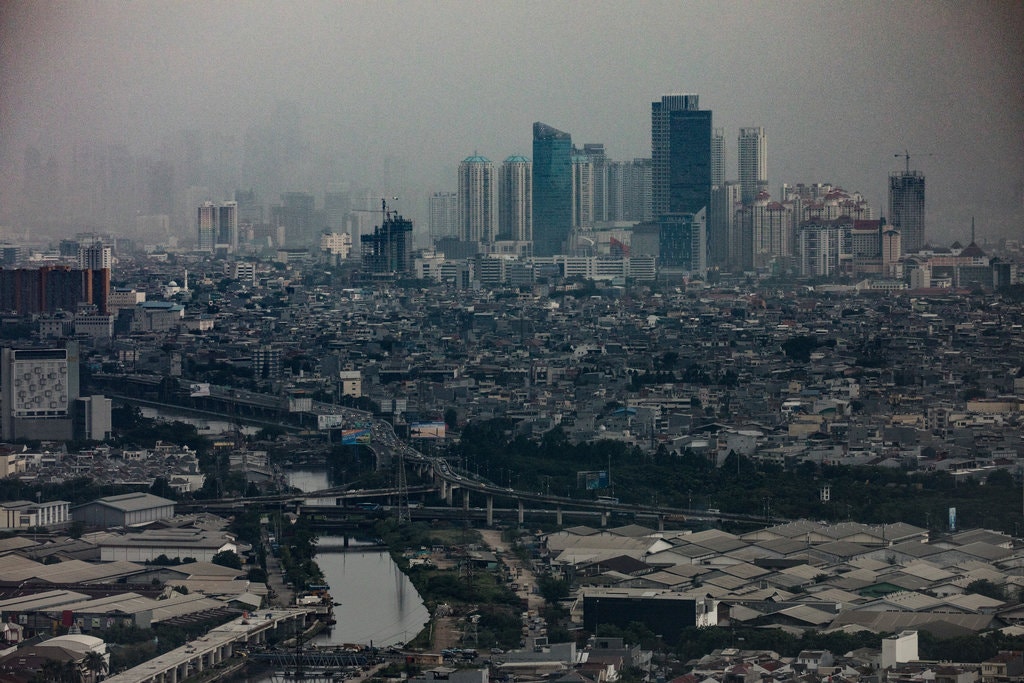
    1. Jakarta – 30 million people and sinking

    GLOBAL DEMOGRAPHICS

    Demographics, the study of the size and composition of population, will shape national and global economic growth and economic policy.  

    The period from 1950 to 2000 was highly unusual. The American “baby boom” started, temporarily reversing the long-term decline in birth rates.  Not just the United States but the global population experienced high birthrates and high population growth rates. In the middle of this period, partly due to more effective and more available birth control, birth rates began a rapid decline. The growth rate in world population began to fall. At the same time, much of the world’s population experienced rising standards of living. One consequence was longer life expectancies and rising average ages in industialized countries.  

    Countries with over a third of the world’s population and most of the world’s output now have birth rates below replacement. They are mostly the wealthy, industrialized countries, including the United States, Canada, Brazil, Western and Eastern Europe, Turkey, parts of Southeast Asia, Japan, Russia and China. Collectively, the size of their labor forces have stopped growing. All countries face the same challenges: Will they be able to invest in economic growth and development (innovation and structural change), deal with environmental costs and climate change effects, and support aging populations?  

    There are falling birthrates for most of the rest of the world’s population, coming down from very high levels. Mexico is at replacement and India is close to the replacement birthrate. But total population continues to grow, partly because of lower infant and child mortality rates, public health programs, better medicine, and subsequently longer lives in most of the world.  

    We are now in a period of a slowdown in total population growth rates. Global population is growing at about one percent per year and the rate continues to fall. But the increase in the number of people is large. In the most recent United Nations projection, the increase in global population from 2020 to 2050 is about 2 billion people, from 7.8 billion to 9.7 billion. The projected population increase over the following 50 years is lower, abour 1.2 billion. 

    Changes in total population may be points on an exponential decay curve. The UN projects that zero population growth will be achieved sometime shortly before 2100. The rate of decline could change with changes in the availability and cost of birth control, education of women, anti-aging medical technologies and more available health care for an aging population. (Estimates of future population are from June 17, 2019 UN projections. UN projections are revised about every two years.)

    The biggest unknown is future medical technology that will prolong life expectancies. Regardless of projection, the fastest growing age cohort is 65 years and over; within that cohort, the fastest growing age group is 80 years and older.

    Countries with birthrates well below replacement and aging populations may experience accelerating decreases in population. Family planning, combined with urbanization and more education of females, could lead to birth rates declining faster than projected in high birth-rate countries. In Africa, Ethiopia, Malawi and Rwanda promoted family planning and have seen large decreases in their birth rates. Kenya, after investing in family planning clinics and information, has seen its fertility rate fall from 6.5 in the late 1980s to 2.4, marginally above replacement and half the rate of most African countries.

    POOR COUNTRIES AND RICH COUNTRIES

    Wealthy countries have below replacement birth rates, no growth or declining populations and labor forces, low real economic growth, and aging populations and labor forces. Population will continue to concentrate in cities; the population of a small number of cities will be responsible for technological innovation and economic development. Rural areas will continue to lose population.

    Poor countries today have high but declining birth rates, young and increasing populations, and populations that want to emigrate (see case study below).

    Most of the largest and fastest growing urban areas in the world are in poor countries, China and India. Over half of the world’s population live in cities and the percent is rising. Almost all of the increased population in poor countries will live in or move to cities, which are already ecological disasters – traffic gridlock, poor air quality, lack of infrasturcture, sinking, raw sewage, and power outages. Many are coastal cities that are already experiencing periodic flooding and storm surges; rising sea levels and the increased number and severity of hurricanes will intensify urban problems. 

    Starting sometime in the 2050s, the world’s population outside of sub-Saharan Africa will stop growing and then slowly decline. All of the world’s net population growth will then be in Africa. How soon the world reaches zero population growth will depend critically on how fast birthrates decline in Africa.

    By 2100, Africa could have about as many people as Asia, about 4-5 billion. Together, Africa and Asia in 2100 could have about 80% of the world’s population.

    Throughout large parts of the Middle East, Africa and Latin America, governments have not been able to provide effective management of economic development for their young, growing population, which have high rates of unemployment and underemployment. Many of the governments are corrupt and/or repressive without free elections or civil liberties. Political activism, partly caused by stagnant or declining standards of living and lack of economic opportunity for young workers, commonly takes the form of mass protests and street demonstrations, aided by Internet social media. Governments typically react with riot police and the military, arrests, torture and prisons, rather than economic and political reform.

    THE DEMOGRAPHICS OF SPECIFIC REGIONS AND COUNTRIES

    A recent survey concludes that 46 countries have declining population or will have declining population in the near future. Declining population is already true in Japan (see below) and Russia and is about to be true in central and eastern Europe. South Korea, also with an extremely low birth rate, is looking at a demographic future similar to Japan’s (see below). South Korea’s current population of 51 million is expected to decline to about 30 million in 2100.

    Russia’s population is declining. Male life expectancies in Russia have been going down for decades but might have recently stabilized. While birthrates are below replacement, the decline of the national population has been offset in recent years by immigration. But lower rates of immigration in 2018 and 2019 have led to large decreases in population. The UN projection is that Russia’s current population of around 146 million will fall to about 85 million by the end of the century. 

    Because of very low birthrates and out-migration, central and eastern Europe is looking at population declines in this generation.  Some UN projections show that most countries in central and eastern Europe might have even larger total percent declines than Japan by the end of the century (over 50%).

    Western Europe is further along the population aging curve but because of immigration of younger people, the decline will not be as precipitous. And western Europe, like Japan, currently starts with more resources to support an aging population.  But high structural unemployment rates, low economic growth, restrictive labor laws and generous early retirement benefits will strain western Europe’s ability to grow and maintain current social welfare levels. A few European countries realize that current levels of social welfare are not sustainable and have begun reviews of retirement and health care programs. This problem is exacerbated by the currently high unemployment and underemployment rates among younger employees.

    China, which has enforced a “one-child” program since the 1970s until 2016, has a very low birthrate of about 1.6. Although this program has been relaxed in recent years, the national birthrate remains far below replacement. China currently has a young average-age population but the average age is rising very rapidly. 

    China’s working-age population began shrinking in 2012.  By around 2050, the decrease will be about the size of the current U.S. total labor force. Next year, the median (half above, half below) age in China will pass that of the United States. By around 2045, the percent of China’s population over the age of 65 will be about equal that of the United States. 

    A mature, experienced workforce should help maintain high but falling economic growth rates for another generation. After about 2050, demographics will begin working against Chinese economic growth. 

    China will grow old before it becomes rich (high per capita income). Even after decades of spectacular growth, per capita income is still about one-third to one-fourth that of South Korea and Japan. Even worse off are the economies of Southeast Asia, with per capita incomes below China, similar birthrates and rapidly aging populations.  

    Given current political strains and a large Chinese population outside of China, it is possible that China will have larger net outmigration in the future.

    DEMOGRAPHICS AND ECONOMIC GROWTH

    The following accounting identity shows the sources of economic growth. An accounting identity says nothing about causality, assumptions or feedbacks. But it introduces some general issues.

    The economic growth rate of a country roughly equals the growth rate of the labor force plus the increase in productivity (output per member of the labor force).

    If the labor force numbers are stable, all of the increase in output depends on the increase in productivity. The pressure on productivity is even greater if the labor force numbers are decreasing. So, for example, if a labor force is increasing at about 1% per year and productivity is increasing at about 1% per year, output will increase about 2% per year. If the workforce stops growing, productivity would have to double to 2% to yield the same economic growth. If the workforce were to decrease at 1% year, as it is in a number of countries already, productivity would have to increase 3% a year to achieve 2% economic growth. This is a high productivity growth rate for a developed economy.

    There is a small amount of research that suggests that an aging labor force is one cause of slowing productivity growth.

    Low rates of productivity growth with accelerating rates of labor force and population decline could lead to less output (negative growth rates) and declining standards of living.

    A member of the industrial/information workforce today is better educated, with new skills, compared to a member of the labor force a generation or two ago. The difference should show up in an increase in labor productivity. Increase in total factor productivity will be due to innovation in capital equipment – including information technology, robotics and artificial intelligence algorithms – and demand for employees with new skills and knowledge. Other factors are public investment and organizational innovation. But these changes have not shown up in productivity measurements. Productivity growth rates are low, although I suspect that the methodology used to compute these figures underestimates the gains.

    Demographics are heavily influencing the areas of investment in wealthy countries; these sectors will drive future economic growth. The three most active areas of research and net investment are robots and AI (reaction to declining workforce), driverless vehicles (same), and biotechnology (health care for an aging population).

    Demographics also influence the demand side of economies. The changing age structure of the economy influences the “market basket” of consumer spending. Certainly the large increase in the number of senior citizens (and their income) is having a major impact on health care spending. To say nothing about the increase in demand for tourism, gambling and south Florida real estate. (I once predicted that marijuana would be legalized when a large number of baby boomers became 65 and older.)

    An aging population is not necessarily bad for economic growth. A healthy population beyond retirement age is leading in the United States to an increasing percent of senior citizens remaining in the work force. With a rising percent of the population over 65 and living longer, health care is a growing percent of output. The health care sector is very innovative, which is a source of economic development and thus economic growth. 

    Companies use demographic information when planning marketing and advertising strategies. Changing demographics are analyzed when developing new products, changing product mix, and segmenting markets. The explosion of detailed demographic information about smaller and smaller segments, including individuals, combined with online marketing technology, is revolutionizing marketing and advertising.

    Areas of the world like Africa face the opposite problem. Working-age population will increase rapidly for a generation or two. But unemployment rates may be high and marginal productivity may be close to zero, or negative in rural areas. With high growth rates of population, economic growth rates will have to be high – over 6% per year – for a sustained period to raise real per capita income (standard of living) and reduce unemployment.  

    IMPLICATIONS FOR ECONOMIC POLICY

    The standard economic models demonstrate that the demographic changes we are seeing are a function of economic growth and development. Industrializing, better educated, urbanizing populations have declining birth rates. But the experience of the poorer regions of the world tends to indicate that these demographic changes are occurring even without economic growth and development.

    Although wealthier countries concentrate on the costs of their rapidly growing retired population, for most of the world the critical question over the next two generations will be how to accelerate economic growth to provide jobs and opportunity for the growing working age population.  The related challenge is how to improve education, training, and economic opportunity to raise standards of living now to provide the resources for the aging population in the future. 

    For the entire world, these objectives are complicated by how to pay for the social costs of past industrialization and environmental degradation, and the future costs of climate change.

    Increasing population and rising real income in emerging economies, especially in Asia, are increasing the demand for energy. China, which had no privately owned cars in 1979, is now the world’s largest automobile market. A dramatic increase in the number of cars is the main reason for the continuing increase in the global demand for oil.  Increased demand for electricity is being met largely with new power plants burning fossil fuels. For at least another generation, these trends will make it difficult to meet global goals to drastically slow down or stop global warming.

    Demographics is interacting with climate change in another important area – food production. Many scientists believe the most serious effect of climate change will be its impact on food production. Global warming and more extreme weather events will make it more difficult to expand food production using current technology. As in other areas, trend projections can be changed by the development of new techology.

    In the long run, the positive side of declining global population will probably be less demand for resources. Combined with substitute technology, global warming might slow down or stop. Climate change might not have quite the devastating effects trend projections indicate.

    The advanced and industrialized countries with stable or declining populations and workforces will have to consider the following:

    Economic growth will have to come from large increases in productivity (output per member of the workforce). To achieve this, and also meet social welfare costs, most countries and regions such as the European Union will have to make radical changes in economic policies. Particularly disruptive and contentious will be the adoption of automated factories and offices. On the positive side they will increase labor and total productivity; on the negative side they will probably eliminate or “deskill” a large number of existing and future jobs.

    Large increases in retirement age populations is leading to serious underfunding of public and private pension funds. Taxes to fund public pension funds are rising rapidly, both in amount and as percent of government budgets. Despite this, unfunded liabilities – promised future benefits not covered by projected future revenue from taxes – are also rising rapidly.

    Multinational corporations will develop and adopt the new technology. Countries that do not have quality education, encourage innovation and change economic incentives will not be able to attract investment and compete in the global economy. And their best educated and most motivated people may go somewhere else, as is happening in eastern Europe and many developing countries.

    On the other hand, poor countries with decent transportation, energy and communication infrastructure will probably attract foreign investment. Real wages of at least part of the labor force will rise.

    Attitudes towards immigration might change from the current restrictive policies of some countries. Attracting “human capital” will be just as important as attracting investment capital. Trans-border movement of people will increase. New national, regional and international agreements will have to be negotiated.  Remittances back to the home country will be a more important part of the economy of many countries and global capital flows. 

    Attitudes about work, labor laws, retirement and retirement ages will change. The benchmark age of 65 was arbitrarily set by Bismarck almost 150 years ago when less than one percent of the German population lived that long. When the United States adopted Social Security, life expectancy was 56 years. The life expectancy of America’s younger workers is already over 80 years.

    DEMOGRAPHICS AND PUBLIC ECONOMIC POLICIES

    If the labor force is not growing or actually shrinking, as it is in most industrialized economies, and the non-working population is growing, one consequence is likely to be growing government budget deficits. Growing government deficits as a percent of GDP may be a function of no economic growth or slow economic growth, not the other way around as suggested by economic research.

    It is how a government spends its income, more than the size of the deficit, that matters. Public investment substitutes for stagnant private consumption spending. Investment, both public and private, substitutes demand for innovation for demand for existing goods. This could increase productivity and result in new products and services. Economic growth then will depend on high levels of new technology and increased productivity (output per employee).

    JAPAN AS A POSSIBLE MODEL (OR WARNING) FOR INDUSTRIAL COUNTRIES

    Figures are from The Economist, “Japan’s economic troubles offer a glimpse of a sobering future,” December 5, 2019.

    Japan is a possible model for the future of other wealthy countries. Japan has a shrinking population and workforce. This will continue. It is not surprising Japan leads the world in developing and installing robots. Robots and AI are also alternatives to immigrants. Japanese companies export capital and technology. Facing falling population, Japan is slowly increasing the number of foreigners allowed into Japan on temporary work permits. But the number remains small, below 1%.

    Japan’s real GDP has been basically stagnant (about one percent per year) over the last 30 years. Without immigration and structural changes to Japan’s political and economic system, Japan’s real GDP in the future will grow slowly at best and eventually decline along with its population. In the long run, Japan will continue on its path to demographic and economic self-destruction.

    CONCLUSIONS

    Demographic trends have important consequences for economic growth and public policies. They cannot be seen in isolation. Neither can any of the other major trends. They are interrelated. 

    ·      Rising global population but at lower rates, mostly in poor countries, for the remainder of the century. After the 2050s, all of the world’s net population increase will occur in Africa. Global population may stop growing by the end of the century. 

    ·      Rising population in poor countries makes high rates of economic growth both pressing and difficult. Emigration pressure from poor regions of the world will probably increase unless there are high rates of economic growth.

    ·      Most of the world’s population increase will take place in cities and surrounding metropolitan areas, creating even larger massive urban areas. Large urban areas are increasing rapidly in poorer countries. 

    ·      Static, falling and aging populations in the wealthier, industrialized countries. Static or declining labor forces mean all economic growth will depend on increases in productivity. To counter demographic trends, technological innovation (robotics and software) leading to high rates of productivity growth will be necessary to increase standards of living (real income per person).

    ·      Problems with unemployment and underemployment, stagnant and declining real incomes and income inequality will probably get worse as artificial intelligence and robotics accelerates the substitution of capital for labor.

    Economic development and growth since the beginning of the Industrial Revolution has been aided by large increases in populations and especially the working age population. But in the future, economic development and growth in most of the world will have to occur with stagnant or declining labor forces and aging populations.

    =====================================================