 |
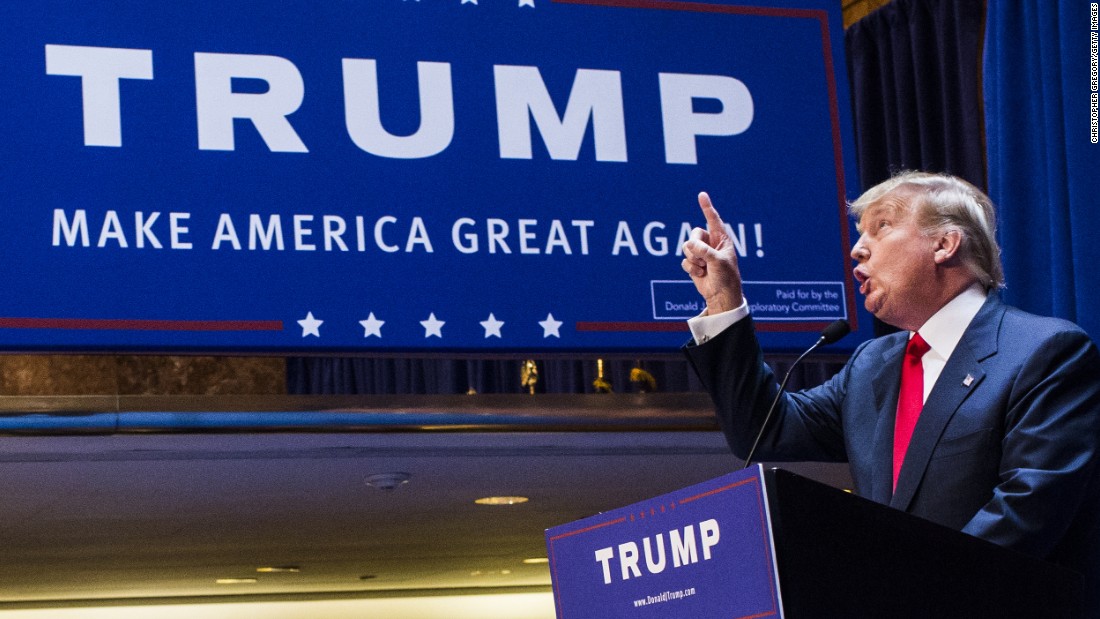
| President Trump |
Might
Washington, like Rome, fall victim to imperial overstretch?
Could
military force abroad eventually have to be withdrawn because of bankruptcy at
home?
Might
the whole idea of America eventually be challenged and destroyed by some
charismatic new faith: some fundamentalist variant on Christianity?
Or
will nature disrupt America’s new world order?
Robert Harris, “Does Rome’s fate await the
US?,” The Mail on Sunday, October 12, 2003 (1)
INTRODUCTION: FOREIGN POLICY AND DOMESTIC POLITICS
This post will discuss American foreign policy, with an emphasis on economic aspects. It will focus on the structure of America’s trade treaties and policies, and the interaction of America’s foreign economic policies and domestic politics. The companion post, “Pax Americana”: The World That America Made, the will discuss America’s projection of global power and influence through military power, security arrangements, global economic institutions, and ideological influence.
During the Cold War (1940s – 1991) and until recently, Americans tended to separate foreign policy and domestic policy. This is no longer true.
For Americans, there was prosperity at home and security abroad. There was a foreign policy consensus around anti-Communism, that America should take the lead in containing the Soviet Union and China. This consensus made possible large military and national security expenditures. Fortunately, this was a prosperous time for America. There was economic growth, fueled by new technology and pent-up demand following World War II. America was by far the world’s largest economy and American companies did not have to worry about imports from other countries. There were some concerns – Vietnam in the 1960s, supply and price of imported oil in the 1970s, and Japanese competition in the 1980s – but they were peripheral to the core objective of defending western Europe and matching Soviet military forces.
Americans no long see foreign policy and domestic policy as separate. Al-Qaeda’s attack on the World Trade Center came as a terrible shock. America’s subsequent attempt to contain Islamic fundamentalism has been inconclusive at best. China is now the main concern. Unlike Russia or Japan earlier, China is seen as a foreign rival and a threat to the domestic economy. America’s networks of military and economic alliances seem to be unraveling. The value of the most important military alliance, NATO, is being questioned. Multilateral agreements are attacked as constraints on national actions and concerns.
America is no longer isolated from the global economy. Imports and exports as a percent of GDP are rising, although still lower than most industrialized economies. Industrial supply chains are global. The largest American corporations have become multinational, making investment decisions increasingly independent of America’s national economic interests and policies.
President Trump believes in negotiating bilateral (country to country) economic agreements and ignores multilateral organizations. Multinational companies generally prefer global rules. They are opposed to President Trump’s nationalistic economic policies of increased tariffs and other barriers to trade.
TRADE TREATIES AND AMERICAN FOREIGN POLICY
What we might be seeing in
the United States and globally is the end of the post-WWII era, the “American
Century.” Why have a majority of Americans stopped supporting the global
institutions that the United States created after World War II? Will America
react creatively to guide the world to a new set of rules and regulations? Or
will the United States revert to isolationism and protectionism, as it did
after World War I, the last time America tried to impose a “New World Order”?
America, through many
rounds of multilateral and bilateral trade negotiations since World War II, has
set the rules and regulations for the current global economy. These trade
treaties had three aspects:
·
Reduce barriers
to trade such as tariffs and quotas.
·
Economic and
political integration of the non-Communist world.
·
Access to the huge American market in exchange for military alliances and bilateral security
agreements, including American bases abroad.
With the collapse of the
Soviet Union in 1991, it appeared that the economic and the national security aspects
were separated. The global economy continued to expand. The combination
of relatively free trade and new communications and transportation technology made it possible for
large national corporations to evolve from exporters into multinational
corporations. Technology, capital, management, finance and labor became mobile,
creating complex financial structures and supply networks.
AMERICA AND THE GLOBAL ECONOMY
But there was growing opposition in America to the global economy. Presidential candidate
Donald Trump tapped into and focused widespread discontent with free trade and
the global economy.
89% of Americans
think that the loss of US jobs to China is a somewhat or very serious issue,
according to Pew Research statistics…Only 46% of Americans think NAFTA was good
for the economy.
Business Insider, November 13, 2016.
As in Europe, nationalist,
anti-immigration politicians have turned long-standing economic problems and
rising discontent into a political agenda. Rather than dealing with them
domestically, these politicians blame outside groups and institutions –
international organizations, immigrants, “unfair” foreign competition.
Strangely, they don’t blame the organizations that actually moved jobs and
investment overseas – multinational corporations. Top managers and owners of
multinationals with large overseas investments are well represented in the
current administration – Rex Tillerson, Wilbur Ross and Donald Trump.
What is the source of this
discontent? One source is the change in the global economy. From the 1940s to
roughly the 1980s, American corporations owned the American economy and didn’t
worry about foreign competition. The rest of the world was devastated by World
War II. There was new technology to develop, pent-up demand, and wartime
savings. The result was rising real wages and employment security.
By the 1980s, that began
to change. The success of Japanese exports of autos and consumer electronics to
the U.S. created a U.S. trade deficit with Japan, which became a political
issue. American corporations found themselves competing with foreign companies
at home and abroad. Capital (automation) continued to replace production and
assembly labor even as industries such as autos and steel recovered. Real wages
and real incomes stagnated for workers in the older industries. Job security
and pensions disappeared.
REALITY CHECK:
THE GLOBAL ECONOMY
President Trump has a
simple-minded view of global trade and the structure of the global economy that
is at least two generations out of date. As a consequence, there is a disconnect
between economic reality and political rhetoric.
In outline:
·
Countries don’t
trade, corporations do. About 60% of “Chinese” exports are produced by foreign multinational corporations.
·
The mental
picture of a country’s companies producing at home and then exporting is
obsolete.
- o
There are complicated
global supply networks and an every-changing dynamic international division of labor. - ·
Where goods are
produced is less important than where value is added. - o
Nike does not
produce any shoes in the U.S. but most of the value-added occurs here. Same for
Apple and many consumer electronics companies. - ·
There are
complicated relationships between American and foreign companies. - ·
Over 25% of
American manufacturing is owned by foreign corporations. - o Foreign car
companies account for most of American production. - ·
About 20% of
America’s merchandise trade is intra-company. - · About half the
sales and profits of America’s 500 largest corporations are outside the United
States. Overseas operations account for most of their growth in investment, sales, and profits. - ·
A large part of
American imports is of products and services created and marketed in the United States and
produced by American companies abroad. - ·
The fastest
growing part of American exports is high value-added services. This creates high-paying jobs. The U.S. runs a large trade surplus in services.
·
As discussed
later, consumers in the United States, not “Mexico” or “China,” pay increased
tariffs (taxes) on imports.
The economic reality is that
multinational corporations, made possible by the global economic order that
America created, are crucial to American economic growth. A return to
nationalism will increase conflict between domestic politics and the economic
growth needed to address domestic problems.
As discussed below,
attempting to reduce America’s trade deficits through increased tariffs and
other trade restrictions will not work.
TARIFFS AND TRADE
What would happen if U.S.
unilaterally renounced trade agreements and imposed tariffs? A tariff is a tax.
The income from tariffs goes to the U.S. government. It is a tax mostly
paid by American consumers. It would raise prices on imports, including imports
of inputs like parts and subassemblies. It would also raise prices on some
American-produced products that compete with imports.
Other countries would
retaliate. (2) The net result for America would be higher costs and prices
(inflation), and lower standards of living. There would be few if any net new
jobs in assembly or manufacturing.
Multinational corporations would direct new investment to countries that
were not threatened, that didn’t retaliate or to countries that depreciated
their currencies against the dollar since they would have relatively lower  costs. Chinese and American
companies in China are already moving labor-intensive production and assembly to countries like Vietnam,
Bangladesh and Malaysia. Even hi-tech companies like Chinese solar panel
producers have started doing this. (3)
American exports would
suffer as other countries retaliate. Companies in the U.S. would accelerate
research and investment in robotics and AI in the United States, substituting
fully automated assembly lines for manufacturing workers.
America’s economic growth
depends on innovating new products and services, keeping the high value-added
part in the U.S., outsourcing the low value-added part to the global supply
chain, and selling in the global market. Much of U.S. imports are raw materials
such as crude oil and other inputs into processed or final assembled products
with high labor, low wage content. Much of America’s exports are processed or
manufactured goods with high capital and human capital content such as refined
petroleum products and aircraft. We also run a trade surplus in services such
as financial, consulting, and software. Any retaliation will damage American
research and development, the source of economic growth. So will the proposed
cutbacks in federal support for basic research, especially in the area of
biotechnology.
The stated goal of
reducing the U.S. trade deficit might not happen. A reduced trade deficit could
lead to an appreciation of the dollar against other currencies. This would
increase the cost of American exports and reduce the cost of all imports,
offsetting the economic effects of increased tariffs.
Jobs leave the U.S. for
other reasons besides lower wages. In the Carrier example, the president of the
parent company, United Technologies, said the Mexican workforce is not only
cheaper but also more productive, easier to train, and has lower rates of absenteeism
than the American workforce.
REDUCING DOMESTIC AND GLOBAL ECONOMIC GROWTH
President Trump can reduce
global growth through his trade and tariff policies. A president can raise
tariffs or label a country a “currency manipulator” through executive
privilege, without Congress’ approval.
Candidate Trump promised to
put a 45% tariff on Chinese exports, brand China a currency manipulator, tax
Mexican imports, increase tariffs on German and Japanese cars, “rip up”
existing trade agreements and kill the Trans-Pacific Partnership (TPP), which
he called “a rape of our country.” If he did all this, he would ignite a global
trade war, which the chief economist of Citi said “could easily trigger a
global recession.” Other bank economists have said that even modest increases
in tariffs on Chinese and Mexican imports could reduce real GDP growth by 0.5 –
1.0%. (Business Insider, November 13,
2016)
Summarizing his analysis,
Citi’s chief economist, Willem Buiter, concluded:
The
U.S. has been the champion of free trade and open borders for decades. A
retreat from globalization by the US would likely lead to reciprocal actions
from other countries, and reinforce the latest shift towards deglobalization
and could be another nail in the coffin of the liberal global economic world
that has supported prosperity since 1948. (Business
Insider, November 13, 2016)
DOMESTIC AMERICAN POLITICS AND FOREIGN POLICY
Imperial overstretch, also
known as imperial overreach,
is a hypothesis which suggests that an empire or world power can extend itself
beyond its ability to maintain or expand its military and economic commitments.
The idea was popularized by Yale University historian Paul Kennedy in his 1987
book The Rise and Fall of the Great Powers.
America has financed its
global military and economic commitments through borrowing, much of it in
recent years from foreign governments and institutions. The Federal budget
deficits over the last 16 years have been roughly equal to Defense Department
spending. (Total spending on national security is higher.) The Chinese
government is the largest foreign holder of U.S. government debt.
A great power like the
United States can also retreat into isolationism and protectionism if its
people lose the will or ability to pay the costs or believe they are not
benefiting from foreign commitments. A sense of frustration sets in. Foreign
economic ties may be seen as a source of domestic economic and social problems.
The American president and foreign policy strategists stop talking about the
primacy of democratic governments and American ideals in foreign affairs.
During the Cold War with the Soviet Union, Americans were willing to accept the idea of prolonged conflict without certain victory. Since the collapse of the Soviet Union, domestic support for prolonged wars and political conflicts to contain enemies rather than defeat them has been seriously eroded.
There is irony when the
country that built the greatest wall in history is now talking about open trade
while the country that has led the post-war campaign to expand trade is talking
about extending a wall. As Chinese emperors knew, walls are as much
psychological as physical.
Domestic problems may take
precedence and divert resources. The combination of the rapidly rising cost of
health care and social security for an aging population, large military and
national defense expenditures, a rising backlog of public investment, proposed tax
cuts, larger fiscal deficits, and large trade deficits is not sustainable. The
proposed programs of the Trump administration will make the problem worse and
probably accelerate the crisis.
Decades of fiscal deficits
and trade deficits, financed increasingly by foreign borrowing, have led to
high and rising levels of the national debt-to-GDP ratio. Borrowing at low
interest rates has made this possible. If the Federal government had to borrow
at the post-war average, it would add over $250 billion to annual deficits.
The next round of tax cuts
for upper-income households and corporations will lead to larger structural
deficits even in years of economic growth. The United States will find it
increasing expensive (higher interest rates) to finance national defense and
global commitments. This will reinforce President Trump’s call for reduced
American involvement abroad. (4)
Donald Trump blamed job loss
and stagnant incomes on imports, particularly from China. While economic
studies show that over 80% of job loss is due to technological change, and some
of the rest to domestic trends like leveraged buyouts and corporate cost
cutting, blaming “unfair” trade rules and other countries had more political appeal. As president,
Donald Trump has said he will oppose the trade agreement with Pacific Rim
countries (TPP), intends to unilaterally change some of the tariffs and trade
rules of NAFTA, and has no intention to continuing trade negotiations with the
European Union (this may change). Candidate Trump also singled out Japanese and
German auto companies as targets for increased tariffs, despite the fact their
investment in the United States revitalized the American auto industry.
The related campaign theme
was the emotional issue of immigration, both legal and illegal. Donald Trump
demonized Mexicans and Muslims, blaming them for job loss of Americans, crime
and domestic terrorism. Travel bans on Muslim countries, revoking of visas, and
mass deportations were begun as soon as he became president. Combined with
rhetoric that was racist and xenophobic, this will not endear the United States
to its Latin American and Muslim allies, and fuels anti-American feeling.
President Trump has
encouraged similar rhetoric in European and South American countries. He has
antagonized and isolated America’s strongest ally on the European continent,
Germany.
Immigrants are vital to
American economic growth and development. Graduates of elite foreign
universities often came to the United States; “over 75 percent of the graduates
of the Indian Institutes of Technology in the 1980s emigrated to America.” (5) Over
half of the science and math graduate students in American universities are
foreign. Keeping them in the U.S. with H1-B visas is vital. Immigrants and
their children are entrepreneurial, accounting for a disproportionate share of
new businesses. Managers from all over the world are necessary if American
multinationals are to remain competitive.
Mr. Trump’s call for
economic nationalism and isolationism reverses 70 years of American foreign
economic policy. Global economic integration will continue but without the
United States setting the rules. The United States has pulled out of global organizations attempting to reduce global warming and intends to loosen domestic environmental regulations. China, on the other hand, is taking up leadership to
combat climate change.
Exports, including tourism,
will suffer, thus reducing a major driver of American economic growth and job
creation. Tariff and trade wars will hurt U.S. economic growth and development.
They will increase the insecurity and frustration of more Americans.
Blaming the social costs of
technological and economic change on foreign scapegoats will make it more
difficult to deal with these ongoing problems. This will continue to fuel
domestic anger and support for isolationist and protectionist policies.
President Trump does not
believe that government is responsible for dealing with the “negative
externalities” or social costs of industrialization and rapid economic and
social change. The Trump administration is not concerned with pollution and
climate change. This reduces American influence in dealing with these important
global problems. This makes the transition to non-fossil fuel energy more
difficult. It also means that new energy technologies such as solar panels and
wind turbines cannot expect any government support, ceding these high-tech,
growth industries to corporations in other countries.
The issue of global warming
illustrates the loss of American leadership in international attempts to solve global
problems. The American denial of global warming will have consequences to
American influence. Candidate Trump denounced global warming as a “hoax.” As
president, he has quickly supported of fossil fuel companies by relaxing environmental
rules on the production of oil, natural gas and coal, particularly on the
release of methane and carbon into the atmosphere. His first proposed budget
slashes support for climate research, solar and wind turbine power, and
electric cars. President Trump has also announced that he does not support the
latest global agreement setting targets to reduce carbon emissions. Appointing
the CEO of Exxon/Mobil as Secretary of State, in charge of America’s foreign
policy, is a clear message.
POSSIBLE SHIFTS IN FOREIGN POLICY
President Trump is pessimistic
about the global order and America as a global power. If he believes America
can influence global events from behind “Fortress America,” he is deluding
himself and the American people. If he thinks he can be isolationist, protectionist,
and xenophobic without damaging American power and influence, he is deluding
himself. If he thinks he can praise Putin
and support right-wing, anti-EU parties in Europe without damaging American
influence, he is deluding himself. If he thinks he can insult the governments
of Germany, England and other allies without consequences, he is deluding himself. If he
thinks he can denounce, repeal or unilaterally change trade treaties without
consequences to the U.S. economy, the global economy and American leadership,
he is deluding himself. If he thinks he can reduce America’s commitment to NATO
without reducing American power and influence in Europe, he is deluding himself. And us.
The damage has already been
done. Even if President Trump backtracks
on some of his threats, no one can trust that what he says
at any moment will not change. For domestic political reasons, he will probably
return to the nationalist, anti-global themes that got him elected, and could
get him reelected. America has become an unreliable ally. Allies will reevaluate their national interests and foreign policies in light of uncertain American support.
CONCLUSION
The last presidential
election shows that many Americans, probably most, are no longer willing to pay
the cost of maintaining American power and influence in the world. Domestic
problems are blamed on “unfair” global competition, global institutions,
immigrants and foreign governments.
It matters little if
President Trump does not follow through with his threats. The damage has been
done. Increased tariffs and trade restrictions will hurt the American economy
and make it more difficult to deal with domestic political issues. Scapegoating
foreign governments, minority groups and corporations will fuel anger and discontent,
making it less likely America will react creatively to its economic challenges. The coming massive disruptions of robotics and artificial intelligence will increase domestic tensions.
More Americans are against
global institutions and against the United States bearing the cost of being the
world’s global power. Pew Research polls showed that this trend started well
before Donald Trump ran for president. Mr. Trump has tapped into these feelings,
making them the driving force of a successful presidential campaign. His continued focus on these themes will probably continue to erode American support for the post-war economic institutions and rules America established.
America’s commitment to
promoting democracy and free trade around the world is waning. America’s
current president seems comfortable with authoritarian rulers and
anti-democratic far-right political leaders in Europe. Many of these leaders
want to dismantle the European Union and return to national currencies and national economic policies. Some,
like Marine Le Pen of France, want out of NATO.
China has replaced Japan as
the cause of America’s economic problems. America’s relationship with China is
moving from détente to confrontation.
America’s allies in Europe and Asia are recalibrating their relations with
Russia and China as the American president talks of isolationism. America is
becoming an unreliable ally.
America’s resolve to bear
the costs of being a global power is waning. America’s domestic social and
economic change has generated a politically powerful backlash. Most white
Americans do not want their government to support or promote social change, do
not support the open global economic order America created, do not want to bear
the cost of being a global superpower. These are related. Continued
presidential rhetoric, despite his policies, will encourage and broaden these
beliefs. Trump’s dark, pessimistic picture of America’s isolationist,
protectionist future may be a self-fulfilling prophecy.
America’s “New World Order”
is coming apart. The last election and opinion polls indicate that most
Americans do not believe in it. America’s allies in Europe are under attack
from nationalist groups that want to dismantle it and appease the Russian
autocrat. These groups are given vocal support and encouragement by the
American president.
President Trump, by
renouncing TPP, has signaled America’s abdication of influence in East Asia;
allies now have to look to a combination of nationalism and accommodating
China. New national security and economic arrangements among Asian countries will be considered. For example, South Korea has taken the first steps to signal easing tensions with North Korea, over the objections of the United States. The TPP countries intend to continue with the treaty without the United States. China has started an ambitious economic and strategic program called “One Belt, One Road” to circumvent American military and strategic containment. Economic growth for East Asian countries will be increasingly tied to economic
alliances and trade agreements with China.
All of the political and
economic institutions that the United States created or supported after World
War II, mostly in response to the Communist challenges of the Soviet Union and
China, are now under domestic attack. One group believes the post-war
framework has outlived its usefulness, that it no longer deals with changed
geopolitical and economic circumstances and is need of drastic reform. Probably
a larger group no longer supports the foundations of the American world order.
——————————————————————————————————
1. For
suggestive analogies between America and the Rome, see “The Roman Republic Commits Suicide: A Cautionary Tale for America,” June 19, 2011.
https://politicaleconomicsprof.com/2011/06/pax-americana-i-washington-imperial.html
2. Reuters, “China prepares
to counter any U.S. trade penalties: sources,”
March 20, 2017
http://finance.yahoo.com/news/china-prepares-counter-u-trade-093343375.html
3. The New York Times, “When
Solar Panels Became Job Killers,” April 9, 2017, page 1 of the Sunday Business
section.
4. “The Economy After the
2016 Elections,” November 26, 2016
https://politicaleconomicsprof.com/2016/11/the-economy-after-2016-election.html
5. Fareed Zakaria, The Post-American World, 129.
============================================================
See the companion post: “Pax Americana”: The World That America Made.” https://politicaleconomicsprof.com/2017/03/the-beginning-of-end-of-pax-americana.html
If you like history and speculative historical analogies, you might like the following two essays:
The Roman Republic and America
The Roman Republic Commits Suicide: A Cautionary Tale for America
For a list of all posts and economic tutorials in Pages, see Guide to Posts.