“The age is running mad after innovation.” Samuel Johnson
 |
| In the Beginning |
Why study economic theory and analysis, read economic history, and make economic forecasts? The short answer is because of the Industrial Revolution and the attempt to understand its dynamics and structure. Economics is an attempt to understand the material world we live in, the environment created by the Industrial Revolution.
THE BEGINNING OF THE INDUSTRIAL REVOLUTION
The Industrial Revolution began in England in the late 1700s. It then spread to America and western European countries. This post will summarize its origins in England and describe the early decades of the Industrial Revolution in America.
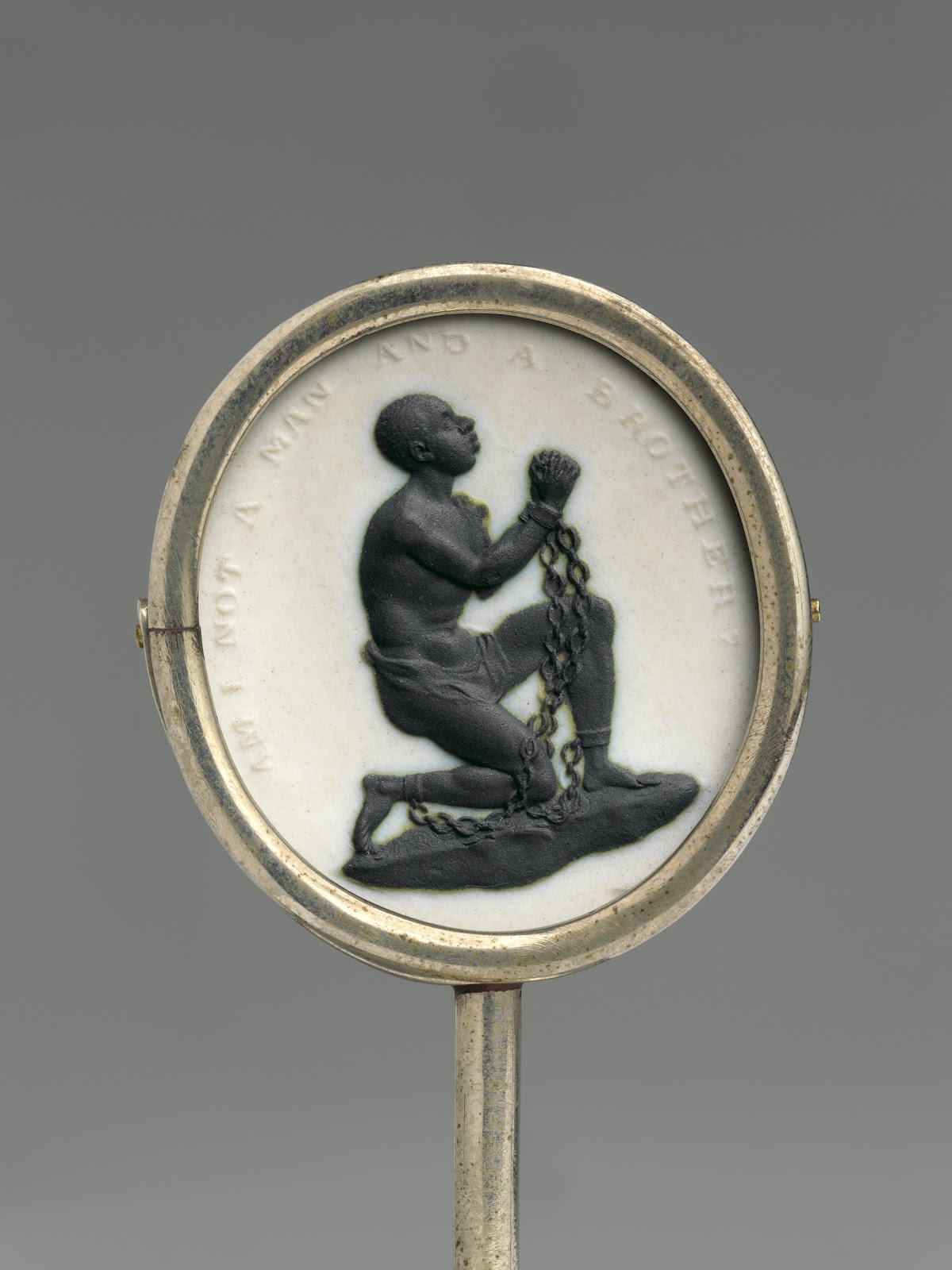
The Industrial Revolution was a radical break in history. But in England, many of the preconditions were already in place, as can be seen by the history of the Wedgwood company.
The revolutionary generation that first adopted steam engines saw the following trends and changes:
Manufacturing was being modernized by a small group of entrepreneurs. Much of the new raw material processing and manufacturing was concentrated in a small area in the middle of England, away from London. These modernizing entrepreneurs formed a new economic, intellectual and social network.
Modernizing entrepreneurs like Wedgwood, Darby, Wilkinson, and others tended to be members of Dissenting sects or Nonconforming churches (not members of the Church of England), Whig (liberals) in politics, and believers in “progress.” They were optimistic about the future, influenced by the ideas of Hume, Rousseau, Locke and Adam Smith. They believed their society could be reformed and they were active agents for improvement.
They believed in studying and understanding the material world through reason, data, experience, and experimentation. They had personal ties with scientists and intellectuals.
Like Wedgwood, many came from poor backgrounds. Because of their backgrounds and religious beliefs, they could not attend Oxford or Cambridge. They were cut off from the traditional avenues of social advancement – government official, army or navy officers, and the Church of England. They were not large landowners. The Industrial Revolution gave them opportunities for economic success denied them under a pre-industrial society. Entrepreneurs could develop these opportunities because of a long political struggle in England to establish the rule of law, individual rights, property rights and limits on governmental power.
The Industrial Revolution began when steam power was applied to drive newly invented metal machinery. A greatly improved steam engine was developed and patented by James Watt. Watt was convinced by a Midlands metal manufacturer named Matthew Boulton to start of company producing his new steam engine. The cylinders of the steam engines were produced for Boulton and Watt by John Wilkinson, who had perfected a method of boring more exact cylinders, first applied to making cannon for the English navy.
Steam engines replaced less powerful waterwheels. They also could be used where there were no rivers or streams to drive the waterwheels. The first use in London was to greatly expand a bakery.
This became the starting point for the development and mass production of everyday products and services. The motivation was private profit.
The buildings housing power-driven machinery were the beginning of another innovation – the modern factory with a disciplined industrial labor force. Advancements in production planning, management and control exploiting the new production technology led to increased output and lower unit cost.
The most important discovery of the Industrial Revolution in England – what made it a revolution – was the invention of…invention. But inventions then had to be turned into innovations, the design of power-driven machinery, metal tools and machines, and large-scale production of useful products and services that people besides the rich could afford. Final products had to be continuously improved from prototypes to commercial products that customers found to be valuable (however defined), easier to use, and cheaper. Capital inputs and production methods changed together to mass-produce the products at lower real cost. New markets were created. Companies competed on coming out with new and better products.
A detailed look at the early years of the Industrial Revolution in Great Britain reveals a hurricane of inventive activity. Hundreds of mechanics, engineers and tinkerers attempted to improve on the new and existing technology, develop variations, solve specific technical problems, propose new applications, and apply for patents to protect their ideas. Better machine tools and larger, faster machines were invented. New production systems and methods produced large quantities of new and improved goods at lower and lower real cost. The main reason for this explosion was the opportunity to profit from the sale and application of technical knowledge.
The first industry to be transformed was the cloth industry. Cotton cloth, an expensive luxury product before the Industrial Revolution, was mass-produced by power-driven iron textile machinery. Huge increases in productivity led to a large fall in price and increased demand. Cotton cloth became England’s largest export throughout the 19th century. Power-driven metal machinery would transform the production of many traditional industries.
We can measure the long-run results of ceaseless innovation in the weaving of cloth. A weaver today using modern looms can produce 100
times the amount of cloth per hour produced by a hand-loom weaver 200 years ago.
Many of the advances came together to create the railroad in the 1830s. Railroad locomotives were make possible by the development of high-pressure steam engines, an improvement James Watt decided to ignore and denounce. It took 25 years of experimentation and development to work out the technical details of an efficient locomotive and a practical railroad. Even failures often showed at least one technical improvement, solving one technical problem.
The first general-purpose railroad was built in 1830 between the port of Liverpool and the new manufacturing center of Manchester. The railroad’s main function was to transport imported cotton to Manchester and cotton cloth back to Liverpool for export.
=========================================================
For two excellent books describing the invention and development of the Industrial Revolution in England, see
William Rosen, The Most Powerful Idea in the World: A Story of Steam, Industry and Invention. 2010.
Gavin Weightman, The Industrial Revolutionaries: The Making of the Modern World, 1776-1914. 2007.
Related Blog Posts:
Adam Smith’s Pin Factory At the beginning of the Industrial Revolution. Why Adam Smith’s Wealth of Nations does not explain the origins of the Industrial Revolution. How pin and nail production evolved later.
For an excellent example of an innovative entrepreneur at the beginning of the Industrial Revolution in England, see
Josiah Wedgwood, the Wedgwood Pottery Company, and the Beginning of the Industrial Revolution.
How England lost its economic and technological leads. Moral – keep innovating or fall behind.
A Cautionary Tale – England and the Industrial Revolution.
Why America was in an excellent position to take advantage of the Industrial Revolution that began in England.
The Beginning of the Industrial Revolution in America.
For a list of related posts, see the Guide to Posts. There are essays on American Economic History, American History, China’s Economy, and the English East India Company. And much more.