Tag: Multinational Corporations

  • The English East India Company (EIC):  Trade with Asia

    The English East India Company (EIC): Trade with Asia


    The Mughal emperor Shah Alam hands a scroll to Robert Clive, the governor of Bengal, which transferred tax collecting rights in Bengal, Bihar and Orissa to the East India Company. Illustration: Benjamin West (1738–1820)/British Library

    INTRODUCTION


    The English East India Company (EIC) was an innovative new type of corporation. It is a model for the modern limited-liability, stockholder-funded modern corporation.


    The EIC also illustrates that the prototype of the modern multinational corporation was created to develop global trade.


    HISTORIC BACKGROUND


    The creation of the English East India Company (EIC) and its Dutch equivalent (the VOC) were part of the 400-year expansion of European power, trade, and influence. Much of the rest of the world became colonies, part of imperial empires.


    By 1600, both England and Holland had a wealthy merchant and shipping class, bankers, substantial liquid capital (wealth) not tied up in land, and risk-takers. These categories overlapped.


    Both countries had limited monarchies. In England, the king and Parliament were about to begin a long struggle for power. In Holland, the monarch was mostly subservient to Holland’s powerful and wealthy merchant class.


    THE EIC: STRUCTURE AND STRATEGY


    The East India Company (EIC) was chartered in 1600 by Queen Elizabeth I to promote and monopolize English trade with Asia. England, a poor country in the 1600s but with colonial ambitions after defeating the Spanish Armada in 1588, outsourced its colonial ambitions to the East India Company and other private companies. 


    The East India Company was originally privately funded by 218 merchants and other investors. It was the first modern multinational corporation. The EIC was a joint stock company, that is, a company with publicly traded stock bought and sold in a secondary stock market. Like modern companies, the EIC issued financial reports, held annual meetings for stockholders, and had quarterly meetings of the Board of Directors.


    It was also a limited liability corporation. Stockholders’ potential personal financial loss was limited to their investment in the company. Creditors could not go after their personal assets.


    The EIC was vertically integrated. The company designed, built and repaired its own ships, built its own docks and warehouses in London and in India. It had a large corporate headquarters in London. The company held sales auctions of its imports in its headquarters. It was a major employer in London. It was an “enlightened” employer, offering fringe benefits, including pensions. It provided a retirement home in London for sailors.


    The EIC designed and built a new type of ship, called East India Indiaman. They were built for long-distance trade. Because of commercial rivalry with other European states and local hostilities in Asia, EIC merchant ships were heavily armed and often contained marines.


    East India Company Indiaman Armed Merchant Ship

     ©National Maritime Museum


    The EIC had to build forts to protect its warehouses and trading stations. It hired a mercenary army and develop a navy (Bombay Marine) to protect property and trade routes. It negotiated with local rulers and signed treaties. 


    In short, the company built its own self-contained infrastructure and pursued its independent strategies. 


    The company ran its own management training programs and military academy. The selection process of employees was highly competitive, including written exams. Many of its recruits were ambitious young men from the lower and middle classes who were barred from the traditional paths of upward mobility and status. It employed “foreigners,” Scots and Anglo-Irish. Later, the EIC employed Asians and Anglo-Indians in secondary positions.


    Economists have a warm spot in their hearts (yes, economists do have hearts) because the EIC was the first organization to employ and pay economists – Thomas Robert Malthus, James Mill, and his son John Stuart. John Stuart Mill was effectively the CEO for many years. Contrary to their economic writings, they did not support free trade with Asian countries. 


    EIC “officers” and employees were loyal to the EIC. They saw personal opportunities and advancement within the company. They had opportunities for personal power and wealth that were not available at home. Because of their lower class origins and nationality, wealthy returning EIC officers were often resented as upstarts.


    The EIC created a powerful lobbying group in England. The company attempted to get the English government to continue to support its monopoly on English trade with Asia. Important politicians and royal officials were bribed.


    Unlike other private trading and colonization corporations established in England at about the same time, the EIC was set up as primarily an importing company. The company had the problem of how to pay for products bought in Asia. English exports to Asia such as English woolens were in limited demand. Asian sellers wanted silver. This created a drain of silver out of England, which was a source of friction between the company and the government.


    CORPORATE STRATEGIES AND POLITICAL ENVIRONMENT


    Besides the English-Asian trade, the East India Company was willing to trade anywhere in Asia, looking for profitable opportunities. Its resources, both ships and men, were highly mobile.


    The EIC operated in a violent, insecure environment in Asia. Beside pirates and local conflicts with Asian rulers, England was usually at war with one or more European countries. The conflicts extended to trade rivalry in Asia. The EIC had to fight battles with other national trading companies, foremost of which was the Dutch East India Company (VOC, the initials of the Dutch name of the company). The EIC could not expect much support from England, which was unable to consistently project power in Asia until the 1800s.


    The EIC lost out to the Dutch East India Company in its attempts to control the Spice Islands, the source of much of the profitable spice trade. The EIC also lost its footholds in Java and nearly islands, which became the Dutch East Indies (later Indonesia) controlled by the VOC. 


    Many early trading stations failed in other parts of Asia. Eventually, operations were centered on trading ports (entrepots) and stations in India, the traditional transit area for Asian products bound for the Middle East and Europe. India was also an important source of pepper.


    The EIC was caught up in the Seven Years War (1756-1763) between England and France for dominance in Europe, North America (called French and Indian War in America), the West Indies, and India. The EIC, under the leadership of Robert Clive, was able to defeat the French in India and expand alliances with many local rulers. The company’s well-organized military assets with superior firepower made the company a prized ally for local rulers. In exchange, the company was given extensive privileges including the right to collect taxes.


    At the same time, the company was developing what would be its most important trade – importing Chinese tea to England. To support this trade, the EIC established new stations that would grow to be Singapore and Hong Kong.


    They immediately ran into an old problem – China didn’t want any English imports. Chinese merchants only wanted silver, which led to a major drain of silver out of England. The EIC solved the problem by growing and selling opium produced in India to private traders who smuggled it into China. Some of the financial transactions were handled by a bank that eventually became HSBC.  (One the traders was Franklin D. Roosevelt’s grandfather.) 


    Chinese attempts to ban this trade resulted in a war between China and England (the Opium War, 1839-1842). China was defeated by superior English warships; the subsequent treaty was the first of many that opened up China to foreign influence and then domination. This would have important long-run consequences.


    The demand for tea exploded in the 1700s. The EIC had trouble fulfilling the demand with tea from China. Growing and processing tea was a closely guarded secret in China. But the company smuggled out plants to start new tea plantations in northern India (Assam). These plantations were successful and an increasing source of tea for the EIC. By 1770, EIC exports of Indian tea to England reached £800,000.


    ORGANIZATION STRUCTURE, CONTROL, AND GOVERNANCE


    Besides the EIC’s legal, financial, and governance structures which were innovative, the EIC had an internal management and control structure very much like a modern multinational corporation. It had to find a balance between home office control and branch management initiative. Given the problems of long distances, slow communication, and changing local operational information, the company was forced into a decentralized structure. 


    The Board of Governors combined the oversight of corporate managers with the setting of governing rules and regulations. Much of their control was financial. There was also detailed supervision and control of the voyages sent out from England.


    While officers of the company often sent detailed instructions about policy to local managers, direct operational control was difficult. It often took over two months for a letter from London to reach India. Local managers had discretion to react to local problems and trading opportunities. They had their own staff and resources. They were similar to “divisional” managers of early railroads and large industrial corporations. Even more similar to corporate presidents and their local staffs of national subsidiaries of multinational corporations.


    THE EVOLUTION OF THE EIC FROM A GLOBAL TRADING COMPANY TO A VIRTUAL SOVEREIGN STATE


    The painting above shows the moment when the EIC began its evolution from profit-making global trading company to de facto sovereign state. The year was 1765. The Mughal emperor was forced to turn over tax collection in Bengal and two other states

    to the EIC.


    It was at this moment that the East India Company (EIC) ceased to be a conventional corporation, trading in silks and spices, and became something much more unusual. Within a few years, 250 company clerks backed by the military force of 20,000 locally recruited Indian soldiers had become the effective rulers of Bengal. An international corporation was transforming itself into an aggressive colonial power.


        William Dalrumple, The Guardian, “The East India Company:  The Original Corporate Raiders,” March 4, 2015.


    The EIC was profitable in its early years. The EIC started its evolution from a purely private commercial company to an organization with its own substantial political and governmental responsibilities. For almost 100 years after the Seven Years War, it governed much of India from Bombay (Mumbai), Calcutta (Kolkata) and Madras (Chennai). The large areas around company headquarters in Calcutta, Bombay, and Madras were also effectively ruled by the company, often through “concessions” offered by regional rulers.


    The company performed the major functions of a government – collected taxes, funded a military, made laws and regulations, and established a national bureaucracy. Many of its officers became rich because of IPOs (Indian Political Opportunities – aka bribes, private deals, kickbacks on contracts). Stockholders back in London just wanted profits but EIC officials in India saw the personal possibilities as tax collectors and political administrators.


    As the EIC evolved from a commercial venture to ruling much of India, it became unprofitable almost from the beginning. By 1773, low tax revenue partly due to famines contribute to £1.5 million in debt and a £1 million unpaid tax bill owed to the English government. The company asked for a large loan, over £1 million from the Bank of England, but received only £200,000. 


    This began many rounds of negotiation between the EIC and the English government. The company began borrowing large sums of money from the English government. In the early 1800s, the company exchanged loans from Parliament for government over-site and military support. Parliament stripped the EIC of its trading monopolies between Asia and England. Finally, after the 1857 Sepoy Mutiny, the English government took over overall management and supervision of the company and then annexed India as a British colony.  


    The EIC also came into conflict with the English government when the government tried to impose mercantilist goals on the company. The government, under pressure from its woolen textile industry and then the new English cotton textile mills, banned the company from exporting competing Indian cotton goods (calicos) into England. India cotton, not cotton textiles, was exported to England. India became a large market for the export of English cotton goods.


    The EIC start out as a profit-seeking trading company and ended up ruling much of the Indian subcontinent. The costs of administering India would eventually contribute to bankrupting the company; it was forced to turn over the rule of India to the English government.   


    The home nation-states such as England were becoming more powerful and were able to project power and influence globally. They did not need private trading monopolies to further mercantilist or economic goals.

    CONJECTURE

    This conjecture is a bridge to the next essay on the EIC :

    The English East India Company:  Model for Future Multinational Corporations?


    In 1765, the EIC took over the running of a large territory in India – policing, military, tax collection, and administration. By 1772, it would deeply in debt and needed a large bailout from the English government. They gave it. It was followed by subsequent bailouts until the English government finally took over the EIC after the 1857 Sepoy Mutiny.  Why? Why not take it over earlier?


    Subsidizing EIC was the least bad option.  In 1763, England completed its victory over France. It was the third war with France in the 1700s. England was deeply in debt. As a result of incredible stupidity, England had to commit naval and army assets to control the restless American colonies. The English navy also had to protect the sugar islands in the West Indies, and to its primary task of securing the English Channel. It did not have the military assets to commit halfway around the world to India. It was not necessary – The EIC had a private army of over 20,000 troops that grew to 260,000 in the early 1800s, plus a heavily-armed merchant maring, as the EIC took over governing most of India. This number was far larger than the English army.


    Ten years after the EIC became sovereign in Bengal, the American Revolution broke out. England sent a large part of its army and about half of its navy to quell the revolt. After a few years, when English officers realized the cause of subduing the colonies was hopeless, some of the assets were withdrawn but sent to the West Indies. England withdraw its armed forces from America in 1783. Ten years later England was at war with France; the war, mostly with Napoleon, lasted 22 years. At the end, England was deeply in debt.


    With the loss of the American colonies, India was the foundation of the British Empire. Although losing money, the EIC was responsible for generating nearly half of England global trade. India was a major market for English exports. Quite simply, the EIC was England’s surrogate colonial masters in Asia. It was cheaper to subsidize the EIC than to take over direct governing of India.


    Another reason was that the EIC have bribed government ministers and members of Parliament. Returning EIC personnel, often personally wealthy, also formed a strong lobbying group in England.


    But after four decades of peace in Europe and reducing its public debt, England was ready to begin governing India and projecting imperial power throughout Asia.

    ======================================================


    One starting point of reading about the East India Company is:

    K.N.Chaudhuri, The English East India Company:  The Study of an Early Joint Stock Company, 1600-1640, Frank Cass & Co Ltd, London, 1965.

    For the historical background and context on the EIC, and its role in helping England become a global economic and political power in the 1600s, see

    England in the 1600s:  The Beginning of England’s Rise to Global Power and Wealth

    For the argument that the EIC may be a model for future multinational corporations, see

    The English East India Company:  Model for Future Multinational Corporations? 

    Elsewhere in this blog, I argue that the main form of America’s economic competition, and probably geopolitical competition, with China will depend on the success of American companies in developing new technologies and global links. See


    American Tariffs and the U.S. Economic War with China

    For a case study of a country that became independent after World War II and illustrates the internal chaos of many countries, see


    Nigeria


    You might also be interested in

    The Stock Market Crash of 1929 and the Beginning of the Great Depression


    In the 1920s, the United States developed new technologies in virtual isolation from the rest of the world. It didn’t end well.


    For a list of all the posts on this blog, see List of Posts by Topic

    with links to all other posts. There are posts on Adam Smith, the Beginning of the Industrial Revolution, American Economic History, American History and even economics.



  • “Pax Americana”:  America as a Global Power

    “Pax Americana”: America as a Global Power

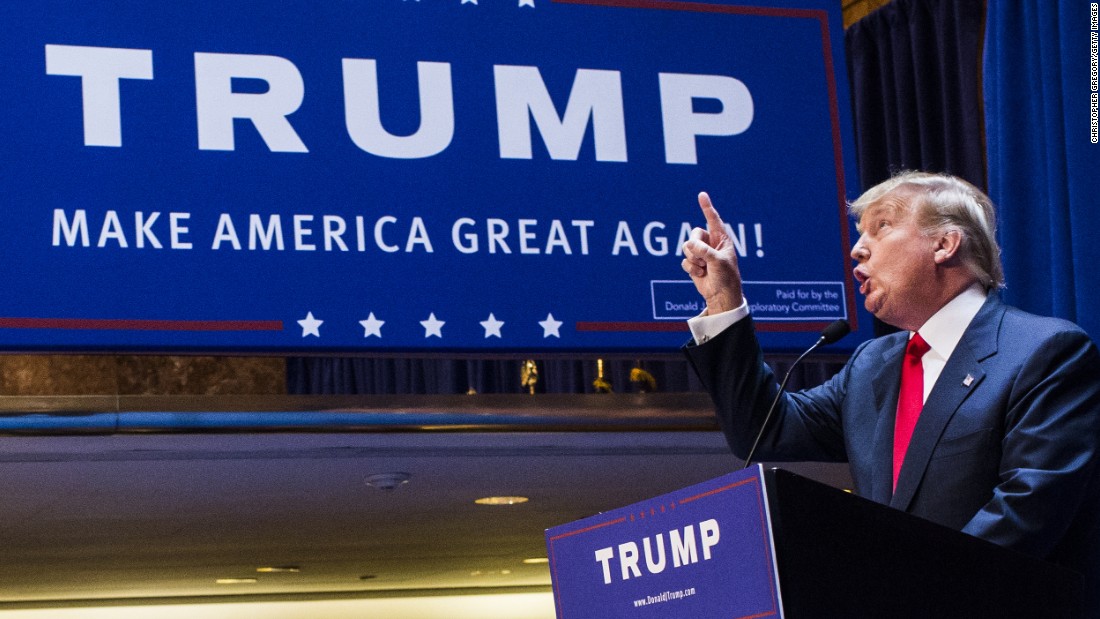
    President Trump

    Might
    Washington, like Rome, fall victim to imperial overstretch?

    Could
    military force abroad eventually have to be withdrawn because of bankruptcy at
    home?

    Might
    the whole idea of America eventually be challenged and destroyed by some
    charismatic new faith: some fundamentalist variant on Christianity?

    Or
    will nature disrupt America’s new world order?


    Robert Harris, “Does Rome’s fate await the
    US?,” The Mail on Sunday, October 12, 2003 (1)


    INTRODUCTION:  FOREIGN POLICY AND DOMESTIC POLITICS

    This post will discuss American foreign policy, with an emphasis on economic aspects. It will focus on the structure of America’s trade treaties and policies, and the interaction of America’s foreign economic policies and domestic politics. The companion post, “Pax Americana”: The World That America Made, the will discuss America’s projection of global power and influence through military power, security arrangements, global economic institutions, and ideological influence.


    During the Cold War (1940s – 1991) and until recently, Americans tended to separate foreign policy and domestic policy. This is no longer true.


    For Americans, there was prosperity at home and security abroad. There was a foreign policy consensus around anti-Communism, that America should take the lead in containing the Soviet Union and China. This consensus made possible large military and national security expenditures. Fortunately, this was a prosperous time for America. There was economic growth, fueled by new technology and pent-up demand following World War II. America was by far the world’s largest economy and American companies did not have to worry about imports from other countries. There were some concerns – Vietnam in the 1960s, supply and price of imported oil in the 1970s, and Japanese competition in the 1980s – but they were peripheral to the core objective of defending western Europe and matching Soviet military forces. 


    Americans no long see foreign policy and domestic policy as separate. Al-Qaeda’s attack on the World Trade Center came as a terrible shock. America’s subsequent attempt to contain Islamic fundamentalism has been inconclusive at best. China is now the main concern. Unlike Russia or Japan earlier, China is seen as a foreign rival and a threat to the domestic economy. America’s networks of military and economic alliances seem to be unraveling. The value of the most important military alliance, NATO, is being questioned. Multilateral agreements are attacked as constraints on national actions and concerns. 


    America is no longer isolated from the global economy. Imports and exports as a percent of GDP are rising, although still lower than most industrialized economies. Industrial supply chains are global. The largest American corporations have become multinational, making investment decisions increasingly independent of America’s national economic interests and policies. 


    President Trump believes in negotiating bilateral (country to country) economic agreements and ignores multilateral organizations. Multinational companies generally prefer global rules. They are opposed to President Trump’s nationalistic economic policies of increased tariffs and other barriers to trade.


    TRADE TREATIES AND AMERICAN FOREIGN POLICY


    What we might be seeing in
    the United States and globally is the end of the post-WWII era, the “American
    Century.” Why have a majority of Americans stopped supporting the global
    institutions that the United States created after World War II? Will America
    react creatively to guide the world to a new set of rules and regulations? Or
    will the United States revert to isolationism and protectionism, as it did
    after World War I, the last time America tried to impose a “New World Order”? 


    America, through many
    rounds of multilateral and bilateral trade negotiations since World War II, has
    set the rules and regulations for the current global economy. These trade
    treaties had three aspects:


    ·     
    Reduce barriers
    to trade such as tariffs and quotas.

    ·     
    Economic and
    political integration of the non-Communist world.

    ·     
    Access to the huge American market in exchange for military alliances and bilateral security
    agreements, including American bases abroad.


    With the collapse of the
    Soviet Union in 1991, it appeared that the economic and the national security aspects
    were separated. The global economy continued to expand. The combination
    of relatively free trade and new communications and transportation technology made it possible for
    large national corporations to evolve from exporters into multinational
    corporations. Technology, capital, management, finance and labor became mobile,
    creating complex financial structures and supply networks.


    AMERICA AND THE GLOBAL ECONOMY


    But there was growing opposition in America to the global economy. Presidential candidate
    Donald Trump tapped into and focused widespread discontent with free trade and
    the global economy.


    89% of Americans
    think that the loss of US jobs to China is a somewhat or very serious issue,
    according to Pew Research statistics…Only 46% of Americans think NAFTA was good
    for the economy.

    Business Insider, November 13, 2016.


    As in Europe, nationalist,
    anti-immigration politicians have turned long-standing economic problems and
    rising discontent into a political agenda. Rather than dealing with them
    domestically, these politicians blame outside groups and institutions –
    international organizations, immigrants, “unfair” foreign competition.
    Strangely, they don’t blame the organizations that actually moved jobs and
    investment overseas – multinational corporations. Top managers and owners of
    multinationals with large overseas investments are well represented in the
    current administration – Rex Tillerson, Wilbur Ross and Donald Trump.


    What is the source of this
    discontent? One source is the change in the global economy. From the 1940s to
    roughly the 1980s, American corporations owned the American economy and didn’t
    worry about foreign competition. The rest of the world was devastated by World
    War II. There was new technology to develop, pent-up demand, and wartime
    savings. The result was rising real wages and employment security.


    By the 1980s, that began
    to change. The success of Japanese exports of autos and consumer electronics to
    the U.S. created a U.S. trade deficit with Japan, which became a political
    issue. American corporations found themselves competing with foreign companies
    at home and abroad. Capital (automation) continued to replace production and
    assembly labor even as industries such as autos and steel recovered. Real wages
    and real incomes stagnated for workers in the older industries. Job security
    and pensions disappeared.


    REALITY CHECK: 
    THE GLOBAL ECONOMY


    President Trump has a
    simple-minded view of global trade and the structure of the global economy that
    is at least two generations out of date. As a consequence, there is a disconnect
    between economic reality and political rhetoric.


    In outline:


    ·     
    Countries don’t
    trade, corporations do. About 60% of “Chinese” exports are produced by foreign multinational corporations. 

    ·     
    The mental
    picture of a country’s companies producing at home and then exporting is
    obsolete.

    • o  
      There are complicated
      global supply networks and an every-changing dynamic international division of labor.
    • ·     
      Where goods are
      produced is less important than where value is added.
    • o  
      Nike does not
      produce any shoes in the U.S. but most of the value-added occurs here. Same for
      Apple and many consumer electronics companies.
    • ·     
      There are
      complicated relationships between American and foreign companies.
    • ·     
      Over 25% of
      American manufacturing is owned by foreign corporations.
    • o    Foreign car
      companies account for most of American production.
    • ·     
      About 20% of
      America’s merchandise trade is intra-company.
    • ·      About half the
      sales and profits of America’s 500 largest corporations are outside the United
      States. Overseas operations account for most of their growth in investment, sales, and profits.
    • ·     
      A large part of
      American imports is of products and services created and marketed in the United States and
      produced by American companies abroad.
    • ·     
      The fastest
      growing part of American exports is high value-added services. This creates high-paying jobs. The U.S. runs a large trade surplus in services.


    ·     
    As discussed
    later, consumers in the United States, not “Mexico” or “China,” pay increased
    tariffs (taxes) on imports.


    The economic reality is that
    multinational corporations, made possible by the global economic order that
    America created, are crucial to American economic growth. A return to
    nationalism will increase conflict between domestic politics and the economic
    growth needed to address domestic problems.


    As discussed below,
    attempting to reduce America’s trade deficits through increased tariffs and
    other trade restrictions will not work.


    TARIFFS AND TRADE


    What would happen if U.S.
    unilaterally renounced trade agreements and imposed tariffs? A tariff is a tax.
    The income from tariffs goes to the U.S. government. It is a tax mostly
    paid by American consumers. It would raise prices on imports, including imports
    of inputs like parts and subassemblies. It would also raise prices on some
    American-produced products that compete with imports. 


    Other countries would
    retaliate. (2) The net result for America would be higher costs and prices
    (inflation), and lower standards of living. There would be few if any net new
    jobs in assembly or manufacturing. 
    Multinational corporations would direct new investment to countries that
    were not threatened, that didn’t retaliate or to countries that depreciated
    their currencies against the dollar since they would have relatively lower costs. Chinese and American
    companies in China are already moving labor-intensive production and assembly to countries like Vietnam,
    Bangladesh and Malaysia. Even hi-tech companies like Chinese solar panel
    producers have started doing this. (3)


    American exports would
    suffer as other countries retaliate. Companies in the U.S. would accelerate
    research and investment in robotics and AI in the United States, substituting
    fully automated assembly lines for manufacturing workers.


    America’s economic growth
    depends on innovating new products and services, keeping the high value-added
    part in the U.S., outsourcing the low value-added part to the global supply
    chain, and selling in the global market. Much of U.S. imports are raw materials
    such as crude oil and other inputs into processed or final assembled products
    with high labor, low wage content. Much of America’s exports are processed or
    manufactured goods with high capital and human capital content such as refined
    petroleum products and aircraft. We also run a trade surplus in services such
    as financial, consulting, and software. Any retaliation will damage American
    research and development, the source of economic growth. So will the proposed
    cutbacks in federal support for basic research, especially in the area of
    biotechnology.


    The stated goal of
    reducing the U.S. trade deficit might not happen. A reduced trade deficit could
    lead to an appreciation of the dollar against other currencies. This would
    increase the cost of American exports and reduce the cost of all imports,
    offsetting the economic effects of increased tariffs.


    Jobs leave the U.S. for
    other reasons besides lower wages. In the Carrier example, the president of the
    parent company, United Technologies, said the Mexican workforce is not only
    cheaper but also more productive, easier to train, and has lower rates of absenteeism
    than the American workforce.


    REDUCING DOMESTIC AND GLOBAL ECONOMIC GROWTH


    President Trump can reduce
    global growth through his trade and tariff policies. A president can raise
    tariffs or label a country a “currency manipulator” through executive
    privilege, without Congress’ approval.


    Candidate Trump promised to
    put a 45% tariff on Chinese exports, brand China a currency manipulator, tax
    Mexican imports, increase tariffs on German and Japanese cars, “rip up”
    existing trade agreements and kill the Trans-Pacific Partnership (TPP), which
    he called “a rape of our country.” If he did all this, he would ignite a global
    trade war, which the chief economist of Citi said “could easily trigger a
    global recession.” Other bank economists have said that even modest increases
    in tariffs on Chinese and Mexican imports could reduce real GDP growth by 0.5 –
    1.0%. (Business Insider, November 13,
    2016)


    Summarizing his analysis,
    Citi’s chief economist, Willem Buiter, concluded:


    The
    U.S. has been the champion of free trade and open borders for decades. A
    retreat from globalization by the US would likely lead to reciprocal actions
    from other countries, and reinforce the latest shift towards deglobalization
    and could be another nail in the coffin of the liberal global economic world
    that has supported prosperity since 1948. (Business
    Insider
    , November 13, 2016) 


    DOMESTIC AMERICAN POLITICS AND FOREIGN POLICY


    Imperial overstretch, also
    known as imperial overreach,
    is a hypothesis which suggests that an empire or world power can extend itself
    beyond its ability to maintain or expand its military and economic commitments.
    The idea was popularized by Yale University historian Paul Kennedy in his 1987
    book The Rise and Fall of the Great Powers.


    America has financed its
    global military and economic commitments through borrowing, much of it in
    recent years from foreign governments and institutions. The Federal budget
    deficits over the last 16 years have been roughly equal to Defense Department
    spending. (Total spending on national security is higher.) The Chinese
    government is the largest foreign holder of U.S. government debt.


    A great power like the
    United States can also retreat into isolationism and protectionism if its
    people lose the will or ability to pay the costs or believe they are not
    benefiting from foreign commitments. A sense of frustration sets in. Foreign
    economic ties may be seen as a source of domestic economic and social problems.
    The American president and foreign policy strategists stop talking about the
    primacy of democratic governments and American ideals in foreign affairs.

    During the Cold War with the Soviet Union, Americans were willing to accept the idea of prolonged conflict without certain victory. Since the collapse of the Soviet Union, domestic support for prolonged wars and political conflicts to contain enemies rather than defeat them has been seriously eroded.

    There is irony when the
    country that built the greatest wall in history is now talking about open trade
    while the country that has led the post-war campaign to expand trade is talking
    about extending a wall. As Chinese emperors knew, walls are as much
    psychological as physical.


    Domestic problems may take
    precedence and divert resources. The combination of the rapidly rising cost of
    health care and social security for an aging population, large military and
    national defense expenditures, a rising backlog of public investment, proposed tax
    cuts, larger fiscal deficits, and large trade deficits is not sustainable. The
    proposed programs of the Trump administration will make the problem worse and
    probably accelerate the crisis.


    Decades of fiscal deficits
    and trade deficits, financed increasingly by foreign borrowing, have led to
    high and rising levels of the national debt-to-GDP ratio. Borrowing at low
    interest rates has made this possible. If the Federal government had to borrow
    at the post-war average, it would add over $250 billion to annual deficits.


    The next round of tax cuts
    for upper-income households and corporations will lead to larger structural
    deficits even in years of economic growth. The United States will find it
    increasing expensive (higher interest rates) to finance national defense and
    global commitments. This will reinforce President Trump’s call for reduced
    American involvement abroad. (4)


    Donald Trump blamed job loss
    and stagnant incomes on imports, particularly from China. While economic
    studies show that over 80% of job loss is due to technological change, and some
    of the rest to domestic trends like leveraged buyouts and corporate cost
    cutting, blaming “unfair” trade rules and other countries had more political appeal. As president,
    Donald Trump has said he will oppose the trade agreement with Pacific Rim
    countries (TPP), intends to unilaterally change some of the tariffs and trade
    rules of NAFTA, and has no intention to continuing trade negotiations with the
    European Union (this may change). Candidate Trump also singled out Japanese and
    German auto companies as targets for increased tariffs, despite the fact their
    investment in the United States revitalized the American auto industry.


    The related campaign theme
    was the emotional issue of immigration, both legal and illegal. Donald Trump
    demonized Mexicans and Muslims, blaming them for job loss of Americans, crime
    and domestic terrorism. Travel bans on Muslim countries, revoking of visas, and
    mass deportations were begun as soon as he became president. Combined with
    rhetoric that was racist and xenophobic, this will not endear the United States
    to its Latin American and Muslim allies, and fuels anti-American feeling. 

    President Trump has
    encouraged similar rhetoric in European and South American countries. He has
    antagonized and isolated America’s strongest ally on the European continent,
    Germany.


    Immigrants are vital to
    American economic growth and development. Graduates of elite foreign
    universities often came to the United States; “over 75 percent of the graduates
    of the Indian Institutes of Technology in the 1980s emigrated to America.” (5) Over
    half of the science and math graduate students in American universities are
    foreign. Keeping them in the U.S. with H1-B visas is vital. Immigrants and
    their children are entrepreneurial, accounting for a disproportionate share of
    new businesses. Managers from all over the world are necessary if American
    multinationals are to remain competitive.


    Mr. Trump’s call for
    economic nationalism and isolationism reverses 70 years of American foreign
    economic policy. Global economic integration will continue but without the
    United States setting the rules. The United States has pulled out of global organizations attempting to reduce global warming and intends to loosen domestic environmental regulations. China, on the other hand, is taking up leadership to
    combat climate change.


    Exports, including tourism,
    will suffer, thus reducing a major driver of American economic growth and job
    creation. Tariff and trade wars will hurt U.S. economic growth and development.
    They will increase the insecurity and frustration of more Americans. 


    Blaming the social costs of
    technological and economic change on foreign scapegoats will make it more
    difficult to deal with these ongoing problems. This will continue to fuel
    domestic anger and support for isolationist and protectionist policies.


    President Trump does not
    believe that government is responsible for dealing with the “negative
    externalities” or social costs of industrialization and rapid economic and
    social change. The Trump administration is not concerned with pollution and
    climate change. This reduces American influence in dealing with these important
    global problems. This makes the transition to non-fossil fuel energy more
    difficult. It also means that new energy technologies such as solar panels and
    wind turbines cannot expect any government support, ceding these high-tech,
    growth industries to corporations in other countries.


    The issue of global warming
    illustrates the loss of American leadership in international attempts to solve global
    problems. The American denial of global warming will have consequences to
    American influence. Candidate Trump denounced global warming as a “hoax.” As
    president, he has quickly supported of fossil fuel companies by relaxing environmental
    rules on the production of oil, natural gas and coal, particularly on the
    release of methane and carbon into the atmosphere. His first proposed budget
    slashes support for climate research, solar and wind turbine power, and
    electric cars. President Trump has also announced that he does not support the
    latest global agreement setting targets to reduce carbon emissions. Appointing
    the CEO of Exxon/Mobil as Secretary of State, in charge of America’s foreign
    policy, is a clear message.


    POSSIBLE SHIFTS IN FOREIGN POLICY


    President Trump is pessimistic
    about the global order and America as a global power. If he believes America
    can influence global events from behind “Fortress America,” he is deluding
    himself and the American people. If he thinks he can be isolationist, protectionist,
    and xenophobic without damaging American power and influence, he is deluding
    himself.  If he thinks he can praise Putin
    and support right-wing, anti-EU parties in Europe without damaging American
    influence, he is deluding himself. If he thinks he can insult the governments
    of Germany, England and other allies without consequences, he is deluding himself. If he
    thinks he can denounce, repeal or unilaterally change trade treaties without
    consequences to the U.S. economy, the global economy and American leadership,
    he is deluding himself. If he thinks he can reduce America’s commitment to NATO
    without reducing American power and influence in Europe, he is deluding himself. And us.


    The damage has already been
    done.  Even if President Trump backtracks
    on some of his threats, no one can trust that what he says
    at any moment will not change. For domestic political reasons, he will probably
    return to the nationalist, anti-global themes that got him elected, and could
    get him reelected. America has become an unreliable ally. Allies will reevaluate their national interests and foreign policies in light of uncertain American support.


    CONCLUSION


    The last presidential
    election shows that many Americans, probably most, are no longer willing to pay
    the cost of maintaining American power and influence in the world. Domestic
    problems are blamed on “unfair” global competition, global institutions,
    immigrants and foreign governments.


    It matters little if
    President Trump does not follow through with his threats. The damage has been
    done. Increased tariffs and trade restrictions will hurt the American economy
    and make it more difficult to deal with domestic political issues. Scapegoating
    foreign governments, minority groups and corporations will fuel anger and discontent,
    making it less likely America will react creatively to its economic challenges. The coming massive disruptions of robotics and artificial intelligence will increase domestic tensions.


    More Americans are against
    global institutions and against the United States bearing the cost of being the
    world’s global power. Pew Research polls showed that this trend started well
    before Donald Trump ran for president. Mr. Trump has tapped into these feelings,
    making them the driving force of a successful presidential campaign. His continued focus on these themes will probably continue to erode American support for the post-war economic institutions and rules America established.


    America’s commitment to
    promoting democracy and free trade around the world is waning. America’s
    current president seems comfortable with authoritarian rulers and
    anti-democratic far-right political leaders in Europe. Many of these leaders
    want to dismantle the European Union and return to national currencies and national economic policies. Some,
    like Marine Le Pen of France, want out of NATO.


    China has replaced Japan as
    the cause of America’s economic problems. America’s relationship with China is
    moving from détente to confrontation.
    America’s allies in Europe and Asia are recalibrating their relations with
    Russia and China as the American president talks of isolationism. America is
    becoming an unreliable ally.


    America’s resolve to bear
    the costs of being a global power is waning. America’s domestic social and
    economic change has generated a politically powerful backlash. Most white
    Americans do not want their government to support or promote social change, do
    not support the open global economic order America created, do not want to bear
    the cost of being a global superpower. These are related. Continued
    presidential rhetoric, despite his policies, will encourage and broaden these
    beliefs. Trump’s dark, pessimistic picture of America’s isolationist,
    protectionist future may be a self-fulfilling prophecy.


    America’s “New World Order”
    is coming apart. The last election and opinion polls indicate that most
    Americans do not believe in it. America’s allies in Europe are under attack
    from nationalist groups that want to dismantle it and appease the Russian
    autocrat. These groups are given vocal support and encouragement by the
    American president.


    President Trump, by
    renouncing TPP, has signaled America’s abdication of influence in East Asia;
    allies now have to look to a combination of nationalism and accommodating
    China. New national security and economic arrangements among Asian countries will be considered. For example, South Korea has taken the first steps to signal easing tensions with North Korea, over the objections of the United States. The TPP countries intend to continue with the treaty without the United States.  China has started an ambitious economic and strategic program called “One Belt, One Road” to circumvent American military and strategic containment. Economic growth for East Asian countries will be increasingly tied to economic
    alliances and trade agreements with China.


    All of the political and
    economic institutions that the United States created or supported after World
    War II, mostly in response to the Communist challenges of the Soviet Union and
    China, are now under domestic attack. One group believes the post-war
    framework has outlived its usefulness, that it no longer deals with changed
    geopolitical and economic circumstances and is need of drastic reform. Probably
    a larger group no longer supports the foundations of the American world order.


    ——————————————————————————————————

    1. For
    suggestive analogies between America and the Rome, see “The Roman Republic Commits Suicide:  A Cautionary Tale for America,” June 19, 2011.
    https://politicaleconomicsprof.com/2011/06/pax-americana-i-washington-imperial.html


    2. Reuters, “China prepares
    to counter any U.S. trade penalties:  sources,”
    March 20, 2017

    http://finance.yahoo.com/news/china-prepares-counter-u-trade-093343375.html


    3. The New York Times, “When
    Solar Panels Became Job Killers,” April 9, 2017, page 1 of the Sunday Business
    section.


    4. “The Economy After the
    2016 Elections,” November 26, 2016

    https://politicaleconomicsprof.com/2016/11/the-economy-after-2016-election.html


    5. Fareed Zakaria, The Post-American World, 129.


    ============================================================


    See the companion post:  “Pax Americana”:  The World That America Made.”  https://politicaleconomicsprof.com/2017/03/the-beginning-of-end-of-pax-americana.html

    If you like history and speculative historical analogies, you might like the following two essays:

    The Roman Republic and America

    The Roman Republic Commits Suicide:  A Cautionary Tale for America

    For a list of all posts and economic tutorials in Pages, see Guide to Posts.


  • Breaking Away:  Britain and the European Union

    Breaking Away: Britain and the European Union

    Breaking Away – Now What?

    INTRODUCTION

    No one, especially the British leaders who advocated Great
    Britain leaving the European Union, have any idea what is going to happen.  But the short-run economic problems from the breakup are easier to deal with than the underlying social and political problems.  It is these underlying problems that could tear the EU apart.  

    PRELIMINARY THOUGHTS

    Some preliminary thoughts on Britain breaking away from the
    European Union:

    Direct economic effects will be minimal, both for Britain and
    the EU.

         London will remain the financial capital of Europe.  The alternative isn’t Frankfurt; it’s New York.

         Much of Britain’s trade with EU is part of complicated supply chains within or between multinational firms.  This will also continue.  Both sides need each either.


         This will accelerate the current trade negotiations between the U.S and the EU.  Both sides want a deal in place before President Obama leaves office.  Both sides, and Britain, see this as a partial solution to the problems caused by the breakup.

    In longer run, lots of
    alternatives and economic agents (read multinational corporations) will adjust.


    Adjustment process in Britain probably not too difficult because:

    Britain not in Eurozone, so already controls own monetary
    and fiscal policy.

    Britain did not sign the EU free labor movement treaty, so
    already controls borders.

    Does get rid of stupid EU regulations but England has
    enough itself.

    Getting out of EU will not bring back British coal mining,
    steel industry, shipbuilding, textiles or fishing.


    The break weakens the EU more than Britain.  If all the uncertainty and panic leads to a global recession, Britain will survive. The EU might not.


    The discussion about future EU-Britain trade agreements is mostly irrelevant.  The EU does not have trade agreements with China, Japan and the U.S.  Most trade is governed now by the WTO, and bilateral and multilateral agreements. Neither side can afford to disrupt financial and trade flows.

    British voters may have also destroyed Great Britain.  Increases odds of Scotland leaving Great Britain and taking the North Sea oil with them.

    Scottish National Party got creamed in last national
    election; basis for comeback?

    Political effects in EU could be serious, with possible
    follow-on economic effects in the future.

    Now OK for people in other countries to vote to get out of
    EU.

         Questions of national sovereignty and immigration not limited to Britain.

    Continued attraction of nationalist parties appealing to
    racism and xenophobia, many anti-democratic.

    Long-term danger of reversion to nationalist economic policies that would damage global economy.

    Partial break-up of EU, maybe back to primarily free-trade zone
    agreement.

    Reverse of drive to further European integration as expense of national sovereignty.

    German economy depends critically on exporting to EU countries.  Would probably give up support of EU objectives to preserve free-trade zone.

    Further erosion of influence of U.S. in Europe and U.S
    commitment to NATO.

               Signaled by weak U.S. response to Russian pressure on Ukraine.

    Russia attempts to exploit EU weakness and eliminate economic sanctions.  Germany resists. European politics in the future will center on German-led
    Central European bloc, direct geopolitical rivalry with Russia.

               Poland becomes a major geopolitical player in
    Europe.

               If EU holds together, Germany becomes even more
    dominant.

    Most of European national governments just as dysfunctional as
    EU.  Unlike Britain after Thatcher, they do not have national economic policies that promote economic growth.

    Free markets and financial sector dominated by large,
    multinational corporations.  England
    becomes less attractive to foreign (non-European) multinationals as an entry
    point into the EU.

    Maybe British MNCs got it wrong; maybe they’ll be better
    off without EU regulations.

    Overall, Europe and the EU are increasingly less important to
    the world, both economically and politically. 

    The current American administration recognizes this with
    its “pivot” towards Asia.

    Britain leaving EU part of this trend.

    COMMENTS

    This vote brings out some wider questions about the EU and
    European politics.

    It is important to remember what were the original objectives of
    the EU:

    Promote free trade (low tariffs, no quotas, less national
    preference), economic recovery and economic integration of Europe.  Why?

    Reduce chances of another European war.


    Promote economic growth and development through
    cooperation.

    Promote democracy and democratic political institutions,
    often in countries where they were weak or historically non-existent.


    Contain Germany in an economically-integrated Europe.


    Provide economic foundation to oppose Soviet Union


    Lessen appeal of Communist parties in Europe.

    Has the EU fulfilled its original objectives and is less important
    today?  How relevant is it to the
    economic and political future of Europe? 

    How effective has the EU been in defining and meeting its new
    objectives since the collapse of the Soviet Union? 

    As the EU has taken on more ambitious objectives, become more complicated (bureaucratic?), and usurped more of the
    functions of national governments, has it become less effective and lost
    political support?

    The EU is no longer a vehicle for economic growth for the more developed countries of Europe.  Structural unemployment has been high for the entire EU for a long time.  National governments have used EU assistance and loans to avoid domestic reforms.

    It is the EU, not Britain, that is facing a political and economic crisis.  I would suggest that if the
    EU is to survive and be an effective set of institutions and policies in the
    future, it has to undergo a radical rethinking of its objectives, procedures
    and structure, including its relationship with the national governments of
    Europe.  And it has to do it now.  The British vote was a wake-up call.

    FOOTNOTE. By coincidence, I’ve been doing a lot of reading about Europe during the generation before World War I and evolving German political objectives during World War I.  Much of my reading has been on the Austro-Hungarian Empire and the rising tensions in Central Europe.  There are some similarities to the current situation, including the class and social tensions partly driven by technological change.  

    One way to understand what is happening, in Europe and throughout the world, is through geopolitical thinking.  Two place to start:

    George Friedman, his articles in stratfor.com, Geopolitical Futures, and his book Flashpoints.


    Robert Kaplan, The Revenge of Geography.  Half of the book is an introduction to past geopolitical thinking and the other half is an application of geopolitical analysis to current conflicts.

    President Obama’s announcement of a “pivot” towards Asia echoes the founding article of modern geopolitics, H. J. Mackinder, “The Geographical Pivot of History,” 1904.  Copies are on the Internet.

    =====================================================================

    For a list of all posts and economic tutorials in Pages, see Guide to Posts and Pages.