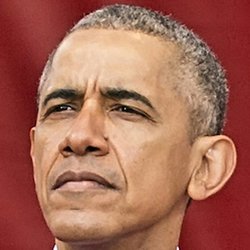
Tag: Obama

  • President Obama Learns Some Game Theory

    President Obama Learns Some Game Theory


    INTRODUCTION


    For background, see prior post
    on The Limits of Negotiation.


    ECONOMIC NEGOTIATIONS


    Basic game theory works best
    in economic negotiations.  The players
    have the same assumptions (act rationally, make money), enter into the negotiations
    voluntarily and negotiate which positive payoff matrix they will agree on.  Economists usually assume that people are
    playing a positive sum (win – win) game. 
    That is, how to divide up the monetary or utility gains.


    Game theory indicates there
    is a better chance at cooperation or reaching good faith agreements if the
    players know they will be playing the game repeatedly or if both players see an
    advantage to a long-term agreement.


    Economic rationality implies
    that an agent will not agree to an outcome if the individual will be worse off
    than not negotiating. The alternatives
    are not to negotiate or find another party with whom to reach a positive or
    better agreement. A competitive economy,
    however imperfect, provides alternatives.


    ECONOMIC GAMES AND
    INFORMATION


    In simple games, the players
    know what the payoff matrix looks like when the two players try to decide which
    strategy to use and what their opponents’ strategy is.  Economists know that even a simple, deterministic
    outcome is unlikely.  One reason is
    asymmetric information.


    Economic theory usually
    assumes that all parties (agents in econspeak) have total information.  This is especially true in finance
    theory.  But in the real world, this is
    often not true.  The agent with superior
    information has a negotiating advantage. 
    It is likely that the outcome will be different than the full
    information outcome.  The more informed
    agent will probably end up with a larger share of the profits.  The increased profits may be a function of
    the difference in the relative information known by the players.  But it is still a positive sum game.


    POLITICAL NEGOTIATIONS


    Political negotiations are
    different.  Other factors are important –
    ideology, moral beliefs, coercion, threat of violence, and a sense of fairness, in
    addition to not negotiating.  Zero and
    negative sum games are more likely, especially if an alternative strategy is
    violence. History is full of  such examples, where politics is seen as a
    kill or be killed zero-sum game. Since the end of World War Two, there have been over 150 civil wars. 


    The payoff matrix of
    political games is often measured in power, not money. The value of the payoffs is more difficult
    to quantify and more uncertain.  Often,
    negotiations are delaying tactics and agreements are broken. 


    In American politics, there
    are political incentives not to agree. 
    An example occurs when there are term limits, especially in the second
    term of the president.  The opposition
    has no incentive to agree to a reasonable policy if they believe the
    president’s party will benefit politically. 
    They have every incentive to attack the president’s policies, even if
    they agree with the objective.  Even
    members of the president’s own party may not support him as they maneuver to
    become future presidential candidates.


    CREDIBLE THREATS

    An important aspect of political conflict is the concept of “credible threats.”  If a country or group wants another country or group to change its behavior or negotiate, one means is to threaten it with some action.  A threat is like a bluff. If an opponent calls a country’s bluff, the country must be willing to carrying out the threat. If if doesn’t, it loses credibility and is more likely to be ignored when it makes future threats. It is more likely that other countries or groups will continue or increase their behavior. Power and influence declines.


    PRESIDENT OBAMA LEARNS GAME
    THEORY


    President Obama became
    president with a belief that he could negotiate rationally, that he could use
    logic and persuasion to convince
    political opponents and special interests to compromise for the general good.  He played an economic game. His opponents here and abroad played political
    games. President Obama has finally
    realized that.


    He has had to deal with an
    increasingly conservative Republican party, many of whose most active members
    personally detest him. 10% of Americans, presumably Republicans and
    conservatives, believe Obama is the Anti-Christ.  Internationally, he has had to deal with
    Islamic fundamentalist groups, Iran, Syria, Iraq, Afghanistan, North Korea, armed militias
    of ethnic groups, the chaos of the aftermath of the overthrow of Quadaffi in
    Libya, Hugo Chavez in Venezuela and Vladimir Putin in Russia.  None of these groups and their leaders fit
    the rationalist profile of a game theory player.

    President Obama inherited a number of immediate and
    long-term problems.
     He believed that
    there were rational solutions to the problems, which could be reached through
    logical arguments based on facts and reason, leading to negotiations and
    mutually beneficial compromises.
      His
    political opponents didn’t share this assumption.
     Again and again, President Obama appeared
    exasperated by the irrationality of his political opponents, both at home and abroad.
     He shouldn’t be surprised any more. 

    ========================================================

    Please see related post, American Foreign Policy Since 1991.


    Also, The Limits of Negotiations:  A Little Applied Game Theory
      

  • The Limits of Negotiation:  A Little Applied Game Theory

    The Limits of Negotiation: A Little Applied Game Theory

    INTRODUCTION

    Much of the political news
    is about negotiations.  American
    politicians, in both domestic and foreign disputes, don’t seem to know much
    about negotiation strategy.  Maybe a
    little applied game theory would help.

    IS NEGOTIATION POSSIBLE? 

    The first question is
    whether or not negotiation is possible or just a waste of time and effort.

    Negotiations will be
    fruitless if at least one party believes there are no possible outcomes that are
    better than not negotiating.  Compromise
    is impossible.  Fanatics, true believers,
    proponents of “Victory at any cost” or “Give me victory or give me death” or
    parties who believe their opponents are evil are not likely to negotiate.

    Sometimes leaders act to
    limit their options or those of their followers.  The famous historical example is when Cortes
    burned his boats that brought him and his men to Mexico.  Returning to Cuba was no longer an
    option.  Cortes forced his men to make
    the “credible” commitment to conquer the Aztecs.  By their past actions, Israel’s policy of
    never negotiating with airplane hijackers is credible.

    Bashar al-Assad of Syria has
    put himself and his regime in this situation through the brutality of their
    past actions.  He has eliminated any
    option for himself except being dictator or being killed.  At this point, there is nothing to be gained
    by negotiating a political settlement.

    In business and other types of negotiations, there are two stages. Both sides of a potential agreement must believe that they will benefit from an agreement – increased sales, reduced costs, increased profit. This is the “win-win” or “positive sum” stage. The second stage is how the increased benefits are to be split. This is a “zero-sum” negotiation.

    THE LIMITS OF NEGOTIATION

    There are limits to what a
    party to a negotiation will accept. 
    These limits are set mostly by a party’s perception of the consequences
    if no agreement is reached.   When
    President Obama negotiated budget reductions in 2011 under House Republicans’
    threats to shut down the Federal government, he was facing reelection and felt
    pressure to compromise.  In 2013, after
    winning reelection, he felt he was in a stronger position to resist Republican
    demands.  The consequence of losing an
    election had disappeared.

    Knowing this, why did the
    Republicans again threaten to close down the government?  Because they perceived that the consequences
    of not challenging the president were greater than challenging the president
    and losing.   The Republican Party was
    becoming increasingly conservative.  The
    vast majority of House Republicans knew they came from safe districts.  The major threat to reelection in 2014 was
    losing to a more conservative Republican in the primary.  By again threatening the extreme action of
    shutting down the government they eliminated the main argument of a potential
    Republican primary rival.

    In addition, although
    circumstances had changed, President Obama’s compromises in 2011, seen as a
    victory by many Republicans, cast doubt on the credibility of his threat not to
    negotiate. 

    INCREASING THE CHANCES TO
    NEGOTIATE

    One way to increase the
    chances the other party will negotiate is to change the “payoff matrix” or
    cost/benefit of analysis of the other party, preferably before negotiations
    begin.  The idea is to raise the cost of
    not negotiating or increasing the options of the other party in negotiations.

    Iran is a recent
    example.  For years, Iran went through
    the motions of negotiating a moratorium on enriching uranium to develop an
    atomic bomb.  As long as the rest of the
    world thought there might be a chance of Iran slowing or stopping its atomic
    bomb project, there were no consequences to Iran of continuing the program.  They were even able to buy thousands of
    centrifuges from a West German company. 
    It was only after the United States and Western Europe finally imposed
    economic and financial sanctions that Iran was willing to seriously
    negotiate.  The sanctions had wrecked the
    economy and threatened the ayatollahs’ rule.

    THE ULTIMATUM GAME 

    This has become one of the
    most famous games in game theory.  It has
    been played many times by different groups in different countries.

    There are two players.   One player is given an amount of money.  He has to offer part of the amount to a
    second player.  If the second player
    accepts, they split the gain.  If the
    second player refuses, neither player gets any money.  This puts a limit on the number of possible
    outcomes.  One party maybe be better off
    accepting a proposal than refusing to negotiate but may decline the proposal
    because it is not “fair.” 

    To an economist, the offer
    is obvious.  If the amount is $1, the
    first player offers the second player the minimum, one cent.  The second player is better off accepting
    than refusing, so he accepts.  But that’s
    not what happens when the game is actually played.  For almost all groups and across different
    cultures, the second player typically rejects offers below 25-30% of the
    total.  There is an almost universal
    sense of “fairness.”  Even worse, the
    second party may feel insulted by the offer, making future and better offers
    more likely to be refused.

    MORE THAN TWO PLAYERS 

    In general, the more players
    there are in a game, the more difficult it is to reach an agreement.  Even a relatively weak or unimportant player
    can threaten to “hold up” an agreement at the last minute unless they get a
    better payoff.  This is true of global
    trade agreements and close votes in Congress.

    This is also one reason that
    the Assad regime in Syria has a good chance of surviving.  There are at least 20 anti-government
    organizations fighting the regime.  They
    have different sponsors and different visions of what a post-Assad Syria should
    be like.  Recently, they have been
    fighting among themselves.  In addition,
    the Syrian regime can count on financial and military support from Iran and
    military assistance from Hezbollah.  The
    regime also has some military support and diplomatic cover from Russia.

    CONCLUSION 

    While much of the discussion
    about negotiation is about how to negotiate, assumptions about the players are
    important.  Negotiations have a greater
    chance of succeeding if all the players share some basic assumptions, see a
    noticeable advantage of negotiating versus not negotiating, see the game as
    fair, and intend to actually abide by the agreement.  Even when negotiations lead to a treaty or
    agreement, they are often only a ploy by one side to buy time, to temporarily
    ward off sanctions or conflict.

    ==================================================================

    Related Post:

    President Obama Learns Some Game Theory