 |
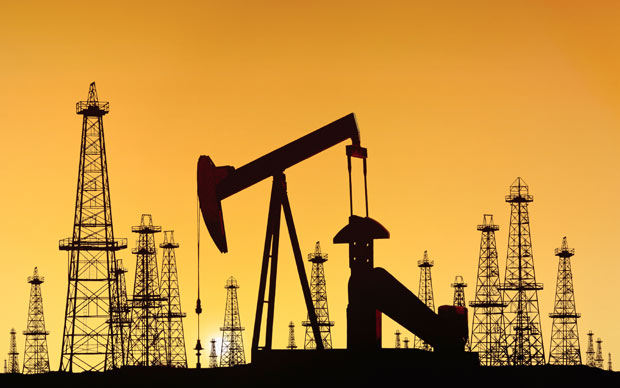
| Middle East Oil Wells |
OVERVIEW
Outside of the United States and Canada, most of the world’s
oil and natural gas is owned and produced by governments or
government-dominated companies with minority shareholders. Two examples of the
latter, public companies with stockholders, are Petrobras in Brazil and Gazprom
in Russia. But government officials,
especially the president, control management and make the important decisions.
Production and investment decisions are not made based on
financial criteria alone. Often,
internal political or foreign geopolitical factors are more important. Many countries’ economies and government budgets depend critically on oil and natual gas revenue from exports. Maintaining internal peace and welfare programs are more important than rational economic considerations.
What this means is that production and distribution
decisions in these countries are made using different criteria than by private
companies in the United States and Canada. Producing and exporting oil and natural gas are mostly political
decisions. Petrostates like Russia, Brazil, Venezuela, Nigeria,
Algeria and other countries in the Middle East and Africa have not used their
oil and gas revenue to industrialize or diversify their economies. Generating revenue for government, not profits for investment, is the main
concern of these countries.
For many countries, exporting oil or natural gas (and other
commodities) is the major source of hard currency revenue and government
income. Domestic spending, importing
consumer goods, government social welfare and subsidy programs, foreign policy
and even internal stability and corruption depend on commodity export
earnings. As does servicing foreign
borrowing, which has grown rapidly in the last six years.
With much greater potential supply of oil and natural gas
because of new discoveries and innovative production technology, and growing
substitutes, no one country or small group of countries will be able to control global
supply or price.
Among the fossil fuels, the long run outlook (20 years) of
natural gas appears to be the best. Even
without the fall in natural gas prices, the global trend away from coal to gas to generate power will likely
continue and increase demand for gas. In Asia, however, both coal and natural gas production are increasing because of the huge increase in the demand for electricity.
Massive increases in profitable
reserves and technological changes in production and distribution will
permanently bring down prices of natural gas in high-cost areas like Asia and
Europe. LNG, more tankers and interconnect pipelines will make the global
gas market more integrated, more like the global oil market.
Three new potential major producers of natural gas are
Argentina, Bangladesh and Egypt. Qatar
and Australia have completed and can expand large new LNG complexes. Some of Qatar’s new gas revenue is supporting Sunni fundamentalist
groups in Syria and Iraq.
Substitutes for oil and gas should be cost competitive in
the near future. Solar, especially
decentralized solar on buildings, will continue to grow rapidly as the
technology improves and the costs keep coming down. Adoption of solar
will accelerate if battery storage costs come down and countries don’t have to
build or expand electricity plants and grids.
Solar panel costs are falling rapidly and Elon Musk says his new lithium
battery plant in Nevada will reduce storage costs by 30%. Wind turbine currently depends on subsidies
but there is some new technology that may eliminate the gigantic windmills
(375 feet high) and lower costs.
Many countries are looking at nuclear
again because of major advancements in technology and safety.
Other sources of energy beyond the use of fossil fuels are
being researched and developed in laboratories.
The key is how long oil and gas prices stay at current
levels and what the new equilibrium prices will be. This is not just
an economic question. Domestic policies,
like China’s and America’s policies to reduce carbon emissions from coal, and
geopolitics will play key roles. Also,
there will be major shifts in where oil and gas are produced, who exports, new
technology and the expanding importance of substitutes.
THE EASTERN MEDITERRANEAN
Huge new natural gas fields have been discovered in the
eastern Mediterranean. The largest so
far are in the coastal waters of Israel, Gaza, Egypt and Cyprus. The fields may extend north to Greece, Lebanon
and Syria. Israel, now self-sufficient
in natural gas, could supply Palestine and Jordan. Pipelines could be built
from Israel, Gaza and Egypt to Cyprus and then another set to Greece, which
would connect into the proposed integrated pipeline systems of central Europe
and, through Austria, to the rest of Europe. Or a pipeline could be built to connect with the large pipeline running through Turkey to Europe. South-Central European countries could eliminate their almost complete
dependence on Russian natural gas and threaten “reverse flow” to Ukraine. Egypt already has an LNG plant and other
producers could construct them, expanding their geographical market for their
gas.
If this occurred, it would be a tremendous economic boon to
all the countries involved. So what’s
the problem? Geopolitics. There are countries involved that don’t like
each other. To say the least. Besides Israel and Gaza, Cyprus is divided
into Turkish and Greek areas. Would the
economic benefits be great enough to overcome political rivalries, many based
on long-standing hatred and conflict?
RUSSIA AND EUROPE
Russia is Europe’s largest external source of oil and
natural gas. Europe is Russia’s largest
customer for both. But the conflict in
Ukraine has changed the geopolitics. Russia
may pay a very high economic price for its intervention in Ukraine.
It is also one reason that I don’t think Russia will invade
and conquer the whole country, as Putin has threaten to do. Or even increase destabilization pressure. Europe would expand sanctions, look to new
sources of energy and accelerate programs to import less Russian oil and
gas.
While these policies will probably have little short-run
effect on the volume of Russian exports of oil and gas to Europe, a longer-run
combination of lower prices and less volume would have serious economic
consequences for the Russian economy.
Since Putin’s and his successors’ political popularity in Russia partly
depends on continuing the high rates of economic growth and standards of living
made possible by increased revenue from energy and commodity exports, pursuing
an aggressive or confrontational policy against Ukraine and Europe could have
serious domestic consequences for the current and future Russian governments.
Under U.S. pressure, Europe has imposed some economic
sanctions on Russia, the most effective being that Russian companies cannot
access European financial markets. As
loans come due, the companies, many of which are government owned or
controlled, have to borrow hard currency from the Russian government. Russia’s foreign reserves of hard currency
are shrinking. Over half are committed
to future retirement costs, although the fund can be raided.
New internal capital to modernize old fields and develop new
fields is not available. Global bond
markets are closed. Russia’s response
has been to relax rules limiting foreign investment in Russian oil and gas.
In addition, Europe is beginning to institute actions that
will reduce its dependence on Russian oil and natural gas, which means lower
export earnings for Russia regardless of the change in energy prices.
Europe has large natural gas reserves but will not develop
them quickly because of political opposition, lack of infrastructure and more
difficult drilling geology than the U.S.
RUSSIA AND CHINA
China imports more oil than does the United States. Before the tariff batlle, China was importing more U.S. crude oil. China is about to become a major importer of natural gas as it substitutes gas for domestic coal production. So China has joined the United States as a large market on the demand side.
Russia is now China’s largest supplier of oil.
Russia’s president Vladimir Putin has his own “pivot towards
Asia.” Russia’s main market for oil and
natural gas is Europe. With the
expectation that sales will be lower in the future and that older fields are
declining in production, Putin has turned to China for capital investment and
as a major export market. China plans on
substituting natural gas (and other energy sources) for its dependence on coal
(cough, cough). Russia has a huge new
field in eastern Siberia it wants to develop.
The cost is somewhere between $55 billion and $100 billion. Russia doesn’t have the capital and can’t
raise it in western financial markets because of the economic sanctions. So, apparently, the deal is that China
supplies part of the capital and agrees to take the production for the next 30
years. Although secret, apparently at a
low price. Russia originally announced
that sales to China would bring in $400 billion over the 30 years but that was
before the large drop in the price of natural gas, especially in Asia, and the
reality that there will be a lot more natural gas available from other sources.
Russia is now encouraging China and other Asian countries to
invest in Siberian oil and gas. Knowing
that Russia has used oil and gas exports as a geopolitical weapon against
Ukraine, Europe, Georgia, Serbia and Armenia, potential investors in China,
Japan and South Korea have to be worried about the political consequences of
becoming too dependent on Russian oil and gas.
And having their investments expropriated by future Russian government.
There is another complication. China is rapidly extending its influence into
the old Soviet republics in central Asia.
China has offered economic aid, including railroads and natural gas
pipelines connecting China and central Asian republics. One of the world’s largest natural gas fields
is in Turkmenistan; this is where Russia gets some of the natural gas it sells
to Europe. There are other possible gas fields. All of this creates the potential for
geopolitical rivalry between Russia and China in the area.
China also borders Kazakhstan, another former Soviet
republic. Kazakhstan is a large oil
producer and has the potential to produce more.
Russia sees Kazakhstan as in its sphere of influence. The president of Kazakhstan was the Communist
boss of the republic when it broke away in 1991. The Chinese, however, have made a number of
proposals that would divert some of Kazakhstan’s oil to China. Russia is not happy about this prospect.
In the long run, this policy could create
serious geopolitical problems for Russia. Supplying China with cheap
oil and gas while China expands its influence in Central Asia and renews its
claims (legitimate) on eastern Siberia is a dangerous policy. But that
will someone else’s problems, not Putin.
OPEC
OPEC has been ineffectual as an oil cartel, probably since 1985 when Saudi Arabia cut production with disastrous results. Iraq has invaded both Iran and Kuwait to grab large oil fields. Saudi Arabia and Iran are deadly enemies and compete to dominate the Persian Gulf region (and Islam). Many of the oil exporting states have seen civil wars and declining production. OPEC’s exports and net exports have been declining while global production is rising.
OPEC’s control has also been eroded by the growth and development of oil production in non-OPEC countries, even before shale. What shale does is greatly increase potential global oil production in non-OPEC countries if prices rise. Maybe even more important, shale oil greatly increases oil reserves outside of OPEC countries. Before shale, a high percent of the proven reserves in the world were in OPEC countries, mostly in the Middle East. This implied that OPEC’s market power would last a long time. No longer.
NAFTA
NAFTA (The U.S., Canada and Mexico) is the new OPEC. Almost all of the net increase in global oil
production since 2007 has come from NAFTA countries. Future increases in oil production will come
mostly from American and Canadian fracking, and deep-water rigs in the Gulf of
Mexico.
NAFTA is the new OPEC also in the sense that the American
and Canada companies, using fracking technology, can react quicker to changes
in global supply and demand, and subsequent price changes. New technology, better management and organization, and large cost reductions because of low prices have reduced the break-even cost of shale oil and gas.
The best oil fields in the United States have marginal costs
of pumping out and distributing oil about equal to all but the lowest cost fields in the Middle
East. Because of fracking technology, fixed
cost/barrel to modernize and expand existing fields is probably higher in most of the
Middle East and the rest of the world than expanding or opening new fields in the United States.
The geopolitical implication of all this is the United
States could cut off all oil imports from the Middle East and quickly substitute
NAFTA oil, mostly American. There are
major geopolitical implications if the United States has oil security, doesn’t
need Middle East oil and becomes a major exporter of petroleum and natural gas. Maybe the Iranian agreement, over strenuous
Israeli and Saudi objections, is an indication of the changing, more flexible
geopolitical policies of the U.S. in the Middle East.
SUMMARY
Global demand for energy will continue to increase in the foreseeable future. Global production of all sources of energy, including coal production in Asia, will increase. New technology on both the demand side (electric vehicles and autonomous driving) and supply side (fracking, LNG) will change the economics of energy. This will have geopolitical consequences. Middle East oil will become relatively less important. U.S. exports of oil and natual gas might have geopolitical effects. Development and sales of new technology such as solar and wind, may, in the long run, become more important than fossil fuel extraction.
======================================================
This is a summary of prior posts plus new information and conclusions. The latest related post was on Russia and the Geopolitics of Energy.
For an excellent history of the rise of OPEC, see Daniel Yergin, The Prize.
For an excellent, detailed article on Gazprom, see http://oilprice.com/Energy/Energy-General/How-Russias-Energy-Giant-Imploded.html. Gazprom has a virtual monopoly on Russian natural gas production and exports. Its management has very close ties with the Russian government. Putin has used Gazprom to implement both internal and foreign policy objectives. Gazprom owns a TV network and a major bank. Some of its profits were diverted to pay for the incredibly expensive Olympic Winter Games, with billions of dollars ending up in the pockets of oligarchs and government officials. Overseas, Gazprom has cut off or threatened to cut off gas supplies to Europe, Ukraine, Georgia, Armenia, the Baltic States, Slovakia and Serbia on orders from the Kremlin. In each case, Gazprom was used as a blunt geopolitical weapon to change another country’s democratic or anti-Russian politics.