Tag: Politics

  • The Roman Republic Commits Suicide:  A Cautionary Tale for America

    The Roman Republic Commits Suicide: A Cautionary Tale for America


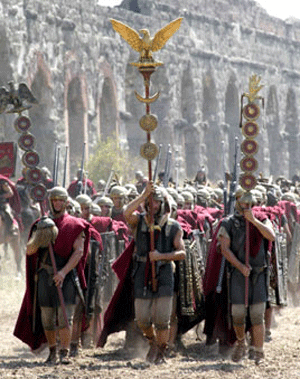
    Roman Legion


    Why Study Rome?


    Americans have focused on comparisons between Rome and America twice in American history.  The first time was during the period from before the Revolution to after the ratification of the Constitution and Bill of Rights, when the founding fathers and others looked to the Roman Republic for ideas and inspiration on how to structure the new government. After the American Revolution, the founding fathers, having read the Roman authors detailing the collapse of the Roman republic, worried about internal threats to the survival of their new republic.  


    The second time was when the United States became a superpower, especially after WWII, and then again after the collapse of the Soviet Union in 1991. Commentators compared America to the Roman Empire at the height of its power. There was some discussion about how America became a permanent warfare state and how it affected domestic democracy and civil society.


    And now a third time. Have Americans and their leaders concluded that the costs of maintain global leadership and power are too high? That the creation of the global economy under American rules and protection is responsible for domestic economic problems including stagnant and declining incomes of many Americans while a small elite controlling and managing global corporations are becoming very rich? Will the resulting domestic political conflicts lead to fewer resources and lessened commitment to the global order America created? In short, can America, like Rome, be both a republic and a global power?


    It is difficult to appreciate today how extraordinary was the Roman Republic. The city was governed for 500 years without a king or conqueror. Power was not concentrated in one person; leaders were elected. Nowhere else in the world, except in parts of Greece and overseas Greek cities, was there the idea of citizenship. Nowhere else could power be shared and transferred peaceably through elections. Nowhere else were conflicts resolved through compromise and according to rules of law. Nowhere, not even Athens, was more democratic, in terms of the percent of the male adult population who voted and enjoyed the rights of citizenship.


    Many of the American founding fathers read Roman historians. Roman historians generally praised Rome’s republic, its political structure, and its underlying civic and individual virtues. They condemned Rome’s subsequent emperors as tyrants and their society as corrupt. This learning had a profound effect on American political thinking and governmental institutions.


    Historians like to write about the “decline and fall of the Roman Empire.” But of more historical relevance for the United States now is the last 100 years of the Roman Republic (146-49 BC). It was during this period that Roman legions, after the final destruction of Carthage, conquered western Europe and the Mediterranean world. The Republic created the Empire. But the consequences of these military victories undermined and then destroyed the Republic. 


    How did this happen?  Could it have been avoided?  What does this say about the relationship between becoming an imperial power, military power, internal security and liberty? How does being a global superpower impact domestic society and politics? Can a republic become a global superpower and survive as a republic? Are there any possible lessons to be learned from Rome’s experience?


    The Suicide of the Roman Republic:  The Building of Empire and the Projection of Military and Political Power

    The Roman Republic did not “fall” or “collapse.” It did not fail because of one dramatic event such as Julius Caesar and his legions crossing the Rubicon River in 49 B.C., invading Rome and later declaring himself Dictator. The Roman Republic weakened and then committed suicide, or was killed, over a long period of time.


    Rome, like America, began its modern history by overthrowing a foreign king and declaring a republic. But even before, America had a long history of local self-government; the American Revolution was partly caused by England’s attempt to impose more control on its American colonies. The subsequent republican government was partly modeled on Rome’ republic. This is not surprising. Both countries were suspicious of concentrating power in one man and wanted to diffuse power. But not too far; both believed that political power and government offices should rest in the hands of a political elite with “civic virtue.” The center power was the Senate, whose members were part of “patrician” clans. This political elite, for a long time, believed in “civic virtue,” which included ideas about contributing to the common good, focusing on national interests, and gaining personal status (gravitas) by contributing to the welfare of the state. In America, the man who embodied this ideal was George Washington. There is a statue of him wearing a Roman toga.


    The Roman Republic lasted approximately 500 years, If America’s experience with self-government begins in the early 1600s, America has had some form of representative government for about 400 years.


    One way Rome grew, as did America, was taking in immigrants, no questions asked. In the long run, immigrants were a source population and economic growth, new citizens, and soldiers. In America, immigrants played a similar role.


    Both republics were founded – their basic constitution and laws were written, representative institutions established – when both countries were agrarian societies based on independent landowning farmers. All were citizens. Citizens had rights under Roman law similar to the rights of American citizens. While candidates for political offices usually came from the patrician clans, they were elected by the citizens. 


    Citizens also had obligations. The most important was that all citizens were required to serve as soldiers. For centuries, the Roman army was a part-time militia. Citizens were called up after planting, fought against other Italian towns or tribes during the summer or if a military emergency, and were then sent home for harvesting. There was no standing (permanent) army but all male citizens were a permanent military reserve, an obligation that could last a lifetime. Armies were led by one or two elected consuls (the highest political office, somewhat similar to the American president) who served for one year.


    The American version was local militas. In colonial times, all white males beween the ages of 16 and 60 were required to be members of local militas. Required time of active service was usually 30-60 days and militas only fought locally. They chose their officers. They could be activated if there was a local threat such as fighting Indians on the frontier or the British in the Revolutionary War. After the Revolution, Americans opposed the idea of a permanent standing army. Until December 7, 1941. 


    For hundreds of years, republican Rome expanded by fighting local enemies on the Italian peninsula. The American equivalent was expanding across the American continent and avoiding overseas conflicts. Any fighting that occurred before the Civil War, usually against native Americans, was done by locally-raised militias. Jefferson, who approved the Louisiana Purchase, said that America was creating “an empire of liberty.”


    As Rome conquered surrounding towns and territories, some of them were given the choice of becoming subordinated allies. In exchange for some privileges, including local rule and citizenship rights for local elites, allies were expected to provide “auxillary” military forces to the Roman army. Rome drew on this expanding manpower pool. Often, in both the Republic and Empire, the number of auxillary troops were more or about the same as the number of soldiers who were Roman citizens in legions.


    Similarly, America did not treat purchased or conquered territory as colonies. Most of the existing population and new America settlers enjoyed the same rights as Americans in the original states. New states were formed with the same government structure and political rights as the older states.


    After WWII, the United States, like Rome, was able to turn former enemies into allies. American and allied military forces were combined into military structures like NATO, dominated by the United States.


    Rome and Carthage:  The Beginning of a Superpower


    As Rome became the dominant power in Italy, Carthage became the dominant economic and trading power in the western Mediterranean. Rome had an army but no navy; Carthage had a strong navy to protect its merchant ships and Mediterranean trade. Rome and Carthage had a long history of treaties and alliances with each other. They had different sphere of influence with no important geopolitical areas of conflict.


    Rome and Carthage finally came into contact in Sicily after Rome conquered southern Italy. Sicily was close to both Rome and Carthage, sat astride important shipping lanes in the Mediterranean, and was a source of grain for Rome. Both Rome and Carthage had city-state allies in Sicily, although most of Sicily was dominated by Carthage and the independent city-state of Syracuse. As allied troops demonstrated in World War II, Sicily was a convenient staging area for invading southern Italy. Carthage in Sicily and Rome in southern Italy were now only a few miles apart.


    The Punic Wars between Rome and Carthage lasted off and on from 264 BC until 146 BC. The First Punic War was during 264-241 BC, the Second between 218-202 BC, and the Third between 149 and 146 BC. The greatest danger to Rome was the Second Punic War, when Hannibal invaded Italy, defeated one Roman army after another, and threatened Rome and its Italian allies.


    Carthage could only defeat Rome if they built an army, invaded Italy and threatened Rome. Rome could only defeat Carthage if they could build a navy and defeat the Carthaginian navy, thus clearing the way for Roman legions to invade North Africa and conquer Carthage.  


    Rome fought a life or death struggle against Carthage for the dominance of the western Mediterranean. Rome eventually triumphed over Hannibal and Carthage because of its ability to mobilize all of its citizen manpower supplemented by troops from Italian allies, appoint long-term commanders and officers, create a navy, and send its full-time legions overseas. By the end of the Third Punic War, Rome was a strong military force in the Mediterranean world and could project its military over long distances. 


    In the period before the Punic Wars, Rome typically conscripted yearly enough men to fill two legions, about 10,000 men. The size of this force was sometimes doubled by military quotas Rome imposed on its Italian allies. During the Second Punic War, large Roman armies were annihilated again and again by Hannibal and had to be rebuilt. At the battle of Cannae, it is estimated that the Roman army had 80,000 men (and over 60,000 of them were killed by Hannibal’s forces). By the end of the Second Punic War, the Roman army had an estimated 100,000 men. From then on, Roman legions would fight and be stationed throughout the Roman Empire. Throughout the period of the Roman Empire, Rome tried to maintain a permanent standing army of over 200,000 men. This put economic and administrative strains on Rome that Rome’s tax system and republican institutions found it difficult to manage.


    A rough analogy might be America just before its entrance into World War I in 1917 (very small and unprepared standing army), World War II, and the Cold War with the Soviet Union until the collapse of the Soviet Union in 1991. Carthage was Rome’s equivalent of the combination Germany and Japan in World War II and then the Soviet Union during the Cold War. Because of the threat of the Soviet Union, America could not demobilize its armed forces and return to isolationism. Also, for the first time, America had to station large forces overseas, especially in Europe. 


    Rome as a Superpower


    Again, almost all of the Roman Empire was conquered while Rome was still a republic. The “Roman Empire” as a form of government substituted monarchical rule for a combination of oligarchy and representative democracy. 


    In the last 100 years of the Roman Republic, from the end of the long war with Carthage to Julius Caesar establishing a dictatorship in 49 BC, Roman legions and auxillaries conquered Spain, France, the Lowlands, North Africa, the Balkans, Greece and Macedonia, Turkey and Asia Minor to the Black Sea, and most of the eastern Mediterranean as far as Syria. In the middle of these conquests, Rome stopped a major invasion of Italy by Germanic tribes, fought a major civil war with its Italian allies and defeated Mithridates, a formidable opponent in Asia Minor. These conquests brought great wealth to Rome, with serious domestic political consequences. 


    Roman legions often fought more than one war at the same time. Conquests and pacification often took many years, sometimes decades. Rome needed a much larger army able to campaign for long periods of time and permanently occupy distant territories. Short-term conscripted citizens were replaced by long-term professionals, who signed up for as long as 25 years. The Roman army transitioned from a conscripted militia of short-term citizen soldiers to a well-trained, well-equipped permanent force of professional soldiers and officers. As did the American army after Vietnam.


    Rome’s antiquated tax system had difficulty paying for the greatly expanded costs of the army. New legions were sometimes financed by private individuals, usually from generals of the patrician class (Sulla, Pompey, Caesar), to further their ambitions and power. 


    Legionaries were often loyal to their general, not Rome, and expected to be rewarded with booty, bonuses, and land. Conquered territories were often considered power bases for the general and his legions that conquered them.


    In the last decades of the republic, Roman generals and their legions fought other Roman generals and their legions for control of the republic. Marius vs. Sulla. Pompeii vs. Caesar. 


    Later in the Empire, Roman legions were increasingly used to patrol and defend frontiers. The most important frontiers were far from Rome – the Rhine River, the Danube River, and roughly the Tigris-Euphrates Rivers in Syria and Iraq. Two thousand years later, American troops fought and stood guard along some of the same frontiers.


    Domestic Consequences of the Empire


    The new wealth and the military needs of the Empire weakened the foundations of the republic. The patrician class of senators and their clients seized much of the increased wealth, first as military commanders receiving much of the immense booty. After a province was established, the Senate appointed provincial governors and staff from their own ranks. This was another opportunity to get rich quickly. Some of this private wealth was spent back in Rome to buy power and influence. Some of it was used to buy large tracts of land in Italy to create large plantations usually worked by slaves. Senators and ambitious politician/generals used bribery, gangs, assassination and patronage to control and manipulate the Roman population and their popular assembles and elections.


    As earlier in the Republic, private influence was also gained by sponsoring public buildings, lavish games, spectacles, and entertainment for the increasing population of Rome; this was a common way to gain influence with the volatile mobs and plebs in the streets. But now the elites also enjoyed “conspicuous consumption,” a higher level of luxury.


    During this transition period, there was an explosion of population of Rome, going from about 200,000 to one million in about 50 years. Many of the new residents were citizen-farmers and their families who had lost their land to creditors, unemployed ex-legionaries, refugees, and slaves, the poor and dispossessed, first from Italy and then from all parts of the Empire. But the Roman government did not create new institutions to govern or manage the larger city and its unemployed. Instead, generals and politicians attempted to curry favor with the mobs with free bread and spectacular entertainments. 


    At the beginning of the final century of the republic, wealthy elites were seen as venal, corrupt and refusing to share power with the people. Demagogues arose to articulate plebeian anger and frustration. The Senate was challenged by more aggressive tribunes, who were elected by the people and represented their interests. The Senators tried to reduce the power of the tribunes through coopting them, corrupting them, or paying to have tribunes sympathetic to the Senate elected in the first place. Political tactics included mob violence and assassination; the most famous of the tribunes were killed by a mob of senators.


    Rome was able to provide security along trade routes and sea lanes. More long-distance trade was made possible by the increased security of the Mediterranean world. Rome increased its imports of grain and other products to feed its growing urban population. Rome’s wealthy upper-classes imported luxury goods. 


    Local citizen farmers found it increasingly difficult to compete with the cheaper imported grain and other agricultural products. Many went into debt and lost their farms. Wealthy patricians were able to seize much of this land. Dispossessed farmers drifted into Rome and other cities, became part of the unemployed poor, joined the army as professional soldiers, or became tenant-farmers or laborers on the landed estates of the wealthy. Patricians increasingly used slaves to work their large plantations. It is likely that this new wealth and income was concentrated in the hands of a small group, mostly patrician clans. The Republic base of citizen-farmers was fatally weakened.


    The Empire and the new Roman “global economy” created new opportunities for a class called publicani. The Roman government “outsourced” much of the economic and financial management of the Empire to the publicani. This group of imperial merchants and moneylenders grew rich handling long-distance trade, collecting taxes in the provinces, supplying the army, and managing the Empire’s finances. Government contracts were given to influential senators, who subcontracted to their publicani clients. Primitive limited liability corporations were created to spread risk.


    As this concentration of power and wealth played out, the hard-won political privileges and power the plebeian classes gained earlier were eroded. Successful generals dominated the Senate and had themselves elected consuls for long periods of time or dictators (rulers with extra-legal authority).


    The link between Rome’s citizens and citizen army was broken. Generals pursued personal glory and power through military conquest. Ambitious patricians and newly-wealthy generals financed the creation of new legions. Professional soldiers were recruited from the lower classes and the provinces. Politician/generals such as Marius, Sulla, Pompey, and Julius Caesar used wealth and booty captured in military campaigns to reward their legions and buy political power and influence when they returned to Rome. Legions, far from Rome, shifted their allegiance from Rome to their commanders. Roman legions loyal to one general fought wars against Roman legions loyal to another general. Successful generals became consuls or dictators with emergency powers. This dynamic reached its climax when ambitious generals like Sulla and Julius Caesar committed the ultimate treason to the Republic by marching their legions into Rome and seizing power. After decades of fighting among legion armies, Julius Caesar became undisputed leader (Dictator) of Rome. He appointed new senators, men to fill all political, religious and legal posts in Rome, and provincial governors and their staff. His assassination by republican Senators cut his dictatorship short. But Caesar’s adopted successor, Octavian (Julius Caesar’s great-nephew, later named Caesar Augustus) became the first emperor in all but name. In an act of historical symbolism, part of his campaign to kill anyone with republican sympathies, Augustus ordered his thugs to kill Cicero, the great republican orator. The Republic was dead.


    The Last Act. Octavian and Marc Antony


    Octavian was a poor military commander but fortunately for him, a childhood friend named Agrippa turned out to be an excellent general. Agrippa won the wars.


    Octavian was a genius at political propaganda. He convinced many Romans he was saving the republic while he was “hollowing out” its republican institutions.  His final conflict was with Marc Antony, Julius Caesar’s top commander.  What was the usual Roman conflict for control, Octavian cleverly created support against Antony.


    Antony lived in Egypt with Cleopatra (queen of Egypt) and controlled the eastern half of the Roman Empire. It was the wealthier half. Octavian started a propaganda campaign portraying Antony as under the influence of a foreign queen and no longer a true Roman. Octavian spread rumors that Antony wanted to move the capital of the Roman Empire to Alexandria in Egypt. In the end, Octavian’s forces under Agrippa defeated Antony. Antony and Cleopatra committed suicide. Octavian was the undisputed ruler of the new Roman Empire.


    The End of the Roman Republic


    Octavian (Caesar Augustus) did not destroy the institutions of the Roman Republic.  He finished “hollowing” them out, completing the process began by his uncle Julius Caesar and Caesar’s predecessors (Marius and Sulla, Caesar’s former commander). 


    Augustus was able to do this with a minimum use of violence but only after 13 years of warfare and the elimination of political rivals and defenders of the Republic. Augustus ruthlessly hunted down his uncle’s assassins and anyone else suspected of republican sympathies. Many senators were killed and Augustus appointed replacements. The Senate and elected magistrates continued to exist but were totally subservient to Augustus. He wrote the laws. Like his uncle, he appointed the Senators and the administers of Rome. Caesar Augustus, not the Senate, appointed the generals and provincial governors who ruled the empire. He named his successor. The Senate lost all domestic political power. 


    Augustus curtailed citizen rights, especially the right to free speech and dissent. He punished anyone who had the courage to criticize him. He was above the law and any legal constraint.


    In summary, during the last decades of the Roman Republic there was a breakdown of a sense of community, political compromise and sharing power and responsibilities, and “civic virtue.” Rome’s republican institutions were not strong enough to stand up to the new opportunities for personal power and wealth presented by military success and the creation of conquered territories.


    The Roman people were tired of decades of internal violence and political chaos. Augustus promised a return to the “domestic tranquility” destroyed by the creation of the Roman Empire. He attempted to legislate traditional morality and republican virtues to a society dominated by a wealthy elite, a society that was no longer republican. He failed.


    ======================================================

    For a related post, see The Roman Republic and America

    List of Posts by Topic


    There are essays on American History and American Economic History. Other essays on:

    Information, innovation, and how markets work. 

    Business, finance and economics. 

    Also a series of essays on demographics, population projections, and speculations on how decreasing and aging populations will interact with the economies of individual countries and the global economy. 


  • Who Do You Fear More, Big Business or Big Government?

    OK, who do you fear more, big government or big business?  

    Historically, Americans saw a relatively small government with regulatory powers as a check on monopoly and big business.  But the rise of big government because of the Great Depression, World War II, the Cold War, and the Great Society changed that.  Americans had a choice.  There was a general consensus that we had to spend a lot of money for national and international security during the Cold War.  But the expansion of the social welfare state and environmental regulations changed attitudes towards the federal government.  The two largest programs of the social welfare state, Social Security and Medicare, have been financed by very large tax increases. These tax increases are somewhat offset by federal income tax cuts.  

    Since the 1980s, there has been a well-financed campaign to roll back the regulation of big business, especially the finance sector. This campaign has been successful.  Most populist outrage, despite the financial system causing a recession, structural unemployment and large federal budget deficits, is now directed at government, as opposed to big business in the past. Attention is focused on the effects, not the underlying causes, which are still there. 

    Limiting government social welfare programs has somehow been tied to even less regulation and oversight of big business.  How did this happen?  

    One reason is that much of the financing of the Tea Party movement and organizations like ALEC come from big businesses and the very wealthy owners and managers who control them. Many of them share the Tea Party and Christian right outrage over lack of government regulation and prohibition of personal behavior they find morally reprehensible.  Somehow, a generalized anger and rage over government protection and even support of this behavior has been channeled to limiting government regulation of business, including rollback of environmental legislation and regulation.

    The logical Republican candidate for president, representing this generalized fear directed as loathing of government, is Donald Trump.

    The American political nightmare in the past has been that big business and big government become partners rather than adversaries. There are exceptions. We accepted it in the areas of defense technology and infrastructure spending. We denounced it if it led to regulatory capture or was a barrier to technological progress. We were angry if we believed that the rich were using government to transfer income from the middle class to themselves.  We seem to have lost this outrage.

    In addition, this cooperation has been raised to new levels with the need for huge sums of money to get elected and virtually no limits or accountability because of the recent Supreme Court decision allowing super PACs. They channel large sums of money to support candidates who tap into widespread fear and anger about American society and government.  These elected officials are also pro-business (reduce taxes on the rich and corporations, less environmental regulation, no anti-trust, no oversight of financial companies) or at least anti-government, which amounts to the same economic policies.

    It really isn’t a question of “getting government out of people’s lives.”  Social conservatives want more government interference in individuals’ lives. It seems to be a question of big business not paying the social costs of a capitalist economic system. It’s a question of getting government out of big businesses’ lives. Regulatory capture has become total government capture.

    The stagnation of middle class incomes and rising income inequality, the threat of widespread unemployment because of automation and AI, and the huge rise in temps and “consultants” without any benefits don’t seem to be major political issues. Why? Who makes the decisions that result in all this? Who outsources jobs to China and threaten American workers with more outsourcing, keeping wages down? Who eliminates pensions and other fringe benefits? Who wiped out home equity for ten million homeowners? Who is buying record numbers of robots to replace workers? Large corporations, most of which are multinational companies. The result? Record profits and bonuses even in a period of slow economic growth. This is a major reason for the redistribution of income from the middle class to the rich. No wonder the rich are willing to spend a great deal of money to protect this trend from possible government interference.

    And deflect blame. President Trump reflects the belief that America’s economic and employment problems are due to illegal Mexican immigrants and “China.” “China” doesn’t export to the United States; multinational corporations and Chinese companies do. About 60% of imports from China come from American and foreign multinationals. Much of the exports of Chinese companies are part of the global supply chain of American companies.

    Perversely, the debate seems to be centered on conservative attacks on the increased cost of programs like unemployment benefits, disability benefits, Medicaid and Obamacare, nutrition aid for poor mothers and infants, and food stamps.  Programs for the poor, sick and unemployed.  Major reductions in social welfare and social safety net programs are at the heart of Republican budget proposals. These cuts are necessary to keep the Bush and Trump tax cuts for upper-income families and corporations without increasing the yearly deficits.   

    The only realistic way smaller deficits will happen, let alone a balanced budget, is a combination of strong economic growth – creating strong growth in tax revenue – and tax increases, mostly disguised as eliminating deductions and subsidies.

    The Republican rhetoric about smaller deficits is ideological cover for slashing social welfare and other programs that conservatives oppose. 

    For the first time in American history, populist anger is aimed at government, not big business.  The federal government is seen as supporting programs and groups that are anathema to conservatives. Big business has supported this attitude in return for support for pro-business policies. You could call this ideological capture.

    The situation is made worse by a zero-sum mentality. In a world of low growth and increased fear and insecurity, there is less room for compromise. There is widespread middle class perception that minority groups and the poor are getting unfair amounts of social welfare benefits that come out of middle class taxes. This is ironic since the two largest social welfare programs are Social Security and Medicare, which overwhelmingly benefit the middle class, and the lower half of the middle class do not pay any income tax. And, sadly, we seem to be losing any sense of shared community or compassion for others. 

    We are seeing government in a period of disruptivd social and economic change.  Over the last 50 years, we have become a more tolerant, open and inclusive society. One result of this is behavior and culture that many people, not just conservatives, find distasteful or immoral. Combining this moral outrage with economic insecurity and a fear of the loss of power and status, is a potent political combination. The irony is that conservatives want to use the coercive powers of government to limit or outlaw some of these consequences. 

  • The Limits of Negotiation:  A Little Applied Game Theory

    The Limits of Negotiation: A Little Applied Game Theory

    INTRODUCTION

    Much of the political news
    is about negotiations.  American
    politicians, in both domestic and foreign disputes, don’t seem to know much
    about negotiation strategy.  Maybe a
    little applied game theory would help.

    IS NEGOTIATION POSSIBLE? 

    The first question is
    whether or not negotiation is possible or just a waste of time and effort.

    Negotiations will be
    fruitless if at least one party believes there are no possible outcomes that are
    better than not negotiating.  Compromise
    is impossible.  Fanatics, true believers,
    proponents of “Victory at any cost” or “Give me victory or give me death” or
    parties who believe their opponents are evil are not likely to negotiate.

    Sometimes leaders act to
    limit their options or those of their followers.  The famous historical example is when Cortes
    burned his boats that brought him and his men to Mexico.  Returning to Cuba was no longer an
    option.  Cortes forced his men to make
    the “credible” commitment to conquer the Aztecs.  By their past actions, Israel’s policy of
    never negotiating with airplane hijackers is credible.

    Bashar al-Assad of Syria has
    put himself and his regime in this situation through the brutality of their
    past actions.  He has eliminated any
    option for himself except being dictator or being killed.  At this point, there is nothing to be gained
    by negotiating a political settlement.

    In business and other types of negotiations, there are two stages. Both sides of a potential agreement must believe that they will benefit from an agreement – increased sales, reduced costs, increased profit. This is the “win-win” or “positive sum” stage. The second stage is how the increased benefits are to be split. This is a “zero-sum” negotiation.

    THE LIMITS OF NEGOTIATION

    There are limits to what a
    party to a negotiation will accept. 
    These limits are set mostly by a party’s perception of the consequences
    if no agreement is reached.   When
    President Obama negotiated budget reductions in 2011 under House Republicans’
    threats to shut down the Federal government, he was facing reelection and felt
    pressure to compromise.  In 2013, after
    winning reelection, he felt he was in a stronger position to resist Republican
    demands.  The consequence of losing an
    election had disappeared.

    Knowing this, why did the
    Republicans again threaten to close down the government?  Because they perceived that the consequences
    of not challenging the president were greater than challenging the president
    and losing.   The Republican Party was
    becoming increasingly conservative.  The
    vast majority of House Republicans knew they came from safe districts.  The major threat to reelection in 2014 was
    losing to a more conservative Republican in the primary.  By again threatening the extreme action of
    shutting down the government they eliminated the main argument of a potential
    Republican primary rival.

    In addition, although
    circumstances had changed, President Obama’s compromises in 2011, seen as a
    victory by many Republicans, cast doubt on the credibility of his threat not to
    negotiate. 

    INCREASING THE CHANCES TO
    NEGOTIATE

    One way to increase the
    chances the other party will negotiate is to change the “payoff matrix” or
    cost/benefit of analysis of the other party, preferably before negotiations
    begin.  The idea is to raise the cost of
    not negotiating or increasing the options of the other party in negotiations.

    Iran is a recent
    example.  For years, Iran went through
    the motions of negotiating a moratorium on enriching uranium to develop an
    atomic bomb.  As long as the rest of the
    world thought there might be a chance of Iran slowing or stopping its atomic
    bomb project, there were no consequences to Iran of continuing the program.  They were even able to buy thousands of
    centrifuges from a West German company. 
    It was only after the United States and Western Europe finally imposed
    economic and financial sanctions that Iran was willing to seriously
    negotiate.  The sanctions had wrecked the
    economy and threatened the ayatollahs’ rule.

    THE ULTIMATUM GAME 

    This has become one of the
    most famous games in game theory.  It has
    been played many times by different groups in different countries.

    There are two players.   One player is given an amount of money.  He has to offer part of the amount to a
    second player.  If the second player
    accepts, they split the gain.  If the
    second player refuses, neither player gets any money.  This puts a limit on the number of possible
    outcomes.  One party maybe be better off
    accepting a proposal than refusing to negotiate but may decline the proposal
    because it is not “fair.” 

    To an economist, the offer
    is obvious.  If the amount is $1, the
    first player offers the second player the minimum, one cent.  The second player is better off accepting
    than refusing, so he accepts.  But that’s
    not what happens when the game is actually played.  For almost all groups and across different
    cultures, the second player typically rejects offers below 25-30% of the
    total.  There is an almost universal
    sense of “fairness.”  Even worse, the
    second party may feel insulted by the offer, making future and better offers
    more likely to be refused.

    MORE THAN TWO PLAYERS 

    In general, the more players
    there are in a game, the more difficult it is to reach an agreement.  Even a relatively weak or unimportant player
    can threaten to “hold up” an agreement at the last minute unless they get a
    better payoff.  This is true of global
    trade agreements and close votes in Congress.

    This is also one reason that
    the Assad regime in Syria has a good chance of surviving.  There are at least 20 anti-government
    organizations fighting the regime.  They
    have different sponsors and different visions of what a post-Assad Syria should
    be like.  Recently, they have been
    fighting among themselves.  In addition,
    the Syrian regime can count on financial and military support from Iran and
    military assistance from Hezbollah.  The
    regime also has some military support and diplomatic cover from Russia.

    CONCLUSION 

    While much of the discussion
    about negotiation is about how to negotiate, assumptions about the players are
    important.  Negotiations have a greater
    chance of succeeding if all the players share some basic assumptions, see a
    noticeable advantage of negotiating versus not negotiating, see the game as
    fair, and intend to actually abide by the agreement.  Even when negotiations lead to a treaty or
    agreement, they are often only a ploy by one side to buy time, to temporarily
    ward off sanctions or conflict.

    ==================================================================

    Related Post:

    President Obama Learns Some Game Theory

  • Superpower: The United States and Terrorism


    When al Qaeda struck the World Trade towers and the Pentagon in 2001, the United States had been the world’s only superpower for ten years. But what does it mean to be a superpower in the modern world? A world of over 200 countries, multinational corporations, global financial markets, global mobility of people and information, and a myriad of competing groups like non-governmental organizations (NGOs) such as Human Rights Watch, global religious groups, drug cartels and terrorist groups. How much power does the United States have to control, or at least influence, events outside the United States? What does it depend on?

    As throughout history, it partly depends on the strategic choices made by the political leadership of the superpower and how skillfully that leadership reacts to opportunities.

    Al Qaeda overplayed its hand with the attack on the World Trade center. As the only superpower, there was a lot of resentment aimed against the United States. Countries and NGOs that didn’t like any modern trend could focus their anger on the United States, which was identified with the global economy, democracy, tolerance, popular culture, pollution, economic dominance and anything else they didn’t like. But al Qaeda’s attack did something extraordinary. The horrific images lead to an unexpected outpouring of sympathy for the United States. Many other countries, especially in Europe, had a growing Muslim population and could easily imagine that they could also be targets, a fear that would be realized in the future. Russia and China (geopolitical rivals), India and the Philippines were reminded that they also had political problems with Muslim minorities in their countries and on their borders.

    The United States had an unexpected opportunity to form a de facto global alliance aimed at Muslim terrorists. Limited cooperation in this area of mutual security interest could lead to further cooperation in related areas. National and regional conflicts of interest or differences of opinion (such as how to fight global warming) might have had a better chance of being muted or negotiated.

    I think to a large extent the United States did not exploit this opportunity. Just the opposite; strident, arrogant, “go it alone” rhetoric has dissipated much of this goodwill. But future attacks by Muslim extremists groups in other countries might create new opportunities.

    If the attack presented the United States with an opportunity, there was also a huge danger. Muslim extremists groups could, and did, emphasize the theme that this attack was part of a global religious war between Islam and Christianity (or modernism or secularism or all three). If the United States reacted by appearing to attack or even criticize Muslims in general, al Qaeda and other extremists groups would score a propaganda victory in the Muslim world. It appears that the United States has generally avoided this trap.

    There was another unexpected opportunity. The ultimate targets of groups like al Qaeda were the 20 or so secular Muslim states. Fundamentalist Muslim groups would like to come to power to institute governments like those of Iran, Gaza or the Taliban in Afghanistan. Many of these states, including Saudi Arabia, Libya, Pakistan and Syria supported extremist groups outside their countries. Others, like Egypt, Algeria, Yemen, Indonesia, Lebanon and Jordan, have problems with fundamentalist Muslim groups inside their countries.

    The attack on the United States probably increased the prestige of these groups among part of the Muslim population and therefore the threat they posed for secular Muslim states. The opportunity was that these secular Muslim would stop supporting extremist Muslim groups, which were now a more visible threat to them.

    After orchestrating the overthrow of the Taliban in Afghanistan, the United States did something stupid. It attacked a major Muslim secular state, Iraq. The rationales were flimsy at best and cynical at worst. A large American-led force of infidels was now in the heart of the Muslim Middle East. Anti-American Muslim groups now had a target closer to home on Muslim soil. The United States was running the risk of precipitating the religious war it was trying to avoid.

    So far, the political damage from this move seems to have been minimal. Secular Muslim states, or their political and military elites, have come to realize that supporting or tolerating extremist Muslim groups does not buy them internal security. Bombings in Saudi Arabia, Syria and Pakistan, and the attempted assassination of Qaddafi in Libya, have led to attempts at internal political crackdowns and probably less support for external political groups. All of these countries have increased cooperation with the United States in attempting to suppress terrorist groups, although they have continued to have ties with some groups. Looking at their own national self-interest and security, it appears that the U.S. invasion of Iraq has had less negative consequences than it might have had because of terrorist attacks inside of secular Muslim states.

    But the invasions of Iraq diverted resources and focus on keeping the Taliban and al Qaeda from coming to power in Afghanistan. As in Iraq, enemies of the United States know that the U.S. will not be able to keep a permanent occupying military force in the country. All factions in both countries, and in Pakistan, are planning on their strategy when the Americans leave. So should the United States. In Afghanistan and Pakistan, there are groups opposed to the Taliban and al Qaeda. Half the people in Afghanistan are members of minority groups that suffered under the earlier Taliban government. The United States should start now supporting these groups with money, training and weapons. If the Taliban does come to power, they should face the type of guerilla warfare now waged against the United States.

    It seems strange that politicians and military strategists do not seem to have learned anything from the war in Vietnam, or from studying Russia’s war in Afghanistan.

    There is one other danger for the United States. U.S influence in the world also depends on the ideals it projects and promotes in the world. If it appears that to fight terrorism the United States condones torture, limits civil liberties, allows illegal wiretapping and generally seems to be a less tolerant society, then it will lessen American influence abroad and compromise American ideals at home.

  • The Oil Curse

    The Oil Curse


    I asked the following question on one of my economics exams:

    You are the leader of a country that is trying to economically develop. Your head geologist bursts into your office with the news that he has just found a huge pool of oil. He hasn’t told anyone. What do you do?

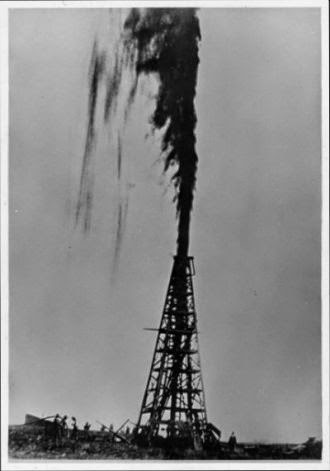
    The answer: Shoot him. Why? Because relying on the export of oil or mineral wealth has been more of a curse than a benefit. Recent history shows relying on raw material exports retards, not promotes, economic development, political change towards democracy, and social change toward tolerance and equality.

    The cautionary tale from history is Spain. In 1492 Spain was finally (after over a 400 year crusade) united under a Catholic government. Much of Spain’s educated elite, minority groups of Muslims and Jews, were persecuted by the Inquisition and forced to leave Spain and later Portugal (enriching Holland). But a lucky bet on Columbus led to immense mineral wealth, mostly silver, from Spanish America. This wealth was used for about 150 years to pay for Europe’s largest military and very conspicuous consumption by the royal family and the nobility.

    Much of this wealth actually benefited the rest of Europe as Spain exported silver to buy mercenaries and luxury products, armor from Germany, and ships from Genoa. The Spanish government’s income never covered its expenditures to support its imperial ambitions, so that some of its mineral wealth went to enrich foreign lenders.

    Underneath it, however, Spain remained a feudal, backward, poor country. As the silver mined in Peru decreased, so did Spanish power and wealth. By the late 1600s, Spain was no longer the major power in Europe and would never again even be an important political or military factor in European power politics. It also collapsed economically, to becoming an impoverished country until late in the 20th century.

    Let’s look at the modern equivalents. Many African countries have immense mineral or oil wealth – diamonds, oil, copper, uranium and other minerals. The result? Corruption, civil wars (to fight over which group gets rich from exports), internal terror and violence, and widespread poverty. The Congo is one of the richest countries in mineral wealth in the world but also one of the poorest, most corrupt and most violent. The per capita income in sub-Saharan Africa is probably lower than it was 40 years ago when African countries became independent.

    What about the major oil exporters? Certainly it has greatly helped a number of less developed countries to get rich, especially countries with small populations like Saudi Arabia and the United Arab Emirates. But even here the picture is mixed. Much of the Saudi wealth has gone into military spending, luxury products, supporting extremist groups, buying foreign real estate, and importing foreign labor. The extended royal family and a few politically-connected families like the bin Ladens has become extreme wealthy. Most Saudis work for the government or government-related companies. The political system is still autocratic, there is a religious police, and the social system is still intolerant and discriminatory towards women, religious minority groups (Shiites) and infidels. Sound familiar?

    In most countries, little of the oil wealth has filtered down to the people. Much of it has been expropriated by the political elite in countries like Nigeria and Indonesia. Many oil exporters (Algeria, Iran, Angola) have experienced civil wars. A great deal of the oil wealth has gone into military spending (Iraq, Saudi Arabia), including developing atomic weapons (Iran). Some has gone to support terrorist groups, particularly in Libya. Iraq used its oil wealth and a subsidy from Saudi Arabia to fight a long and costly war with Iran. Kuwait was invaded for its oil and trashed by Iraq before the United States military pushed the Iraqis out. The people in Latin American countries like Venezuela, Mexico and Ecuador have not benefited very much from oil wealth. Venezuela has descended into poverty and chaos. Saudi Arabia has a government and government policies that are similar to Spain’s in the 1500s  And, in a crazy irony, Iran (the third largest exporter of crude oil) is a major importer of refined oil products like gasoline. Some of its oil export earnings are used to subsidize imported gasoline.

    Saudi Arabia, with about one-fourth of the world’s proven oil reserves, has a lower per capita income than Israel, which has no oil and virtually no other natural resources. Japan became the world’s second largest economy after World War II despite having almost no natural resources and importing all its oil. China is a huge importer of natural resources, especially oil. An important point: The global economy is a substitute for controlling natural resources through imperial conquest. It is no longer necessary to own or control natural resources if they can be purchased through the markets of the global economy.

    But there are political consequences. Europe and Ukraine are dependent on Russian natural gas, which gives Russia political leverage. Oil revenue funds the current or former anti-American governments of Libya, Iran, Iraq, Sudan, Russia and Venezuela. Oil money has been used to finance terrorist groups. This is not smart foreign policy.

    It is too bad that the oil exporting countries have not learned the lesson of Spain. The economies of almost all oil and natural gas exporters (and other natural resources) are still, after 40 years, heavily dependent on exporting unrefined products. Most of these countries had not been successful in using their exporting earnings to industrialize away from dependence on raw material exports. As in Spain, they also have not modernized their internal social, political or economic structures. The root cause is that the resources are owned by the government so that the money earned from exports goes to support the political agenda of the government or is diverted to the private wealth of political elites.

    When the resources run out, or prices fall, or the industrialized countries find substitutes (electric vehicles, solar), or step up recycling and conservation, the economies of the oil and natural resource exporters will no longer be based on the export earnings of raw materials. Maybe, like Mexico, they will search for and find better strategies to sustain economic growth and development. For the sake of the people in these countries and the peace of the world, let’s hope so.

  • Why Study History? Lessons for Americans

    Why Study History? Lessons for Americans

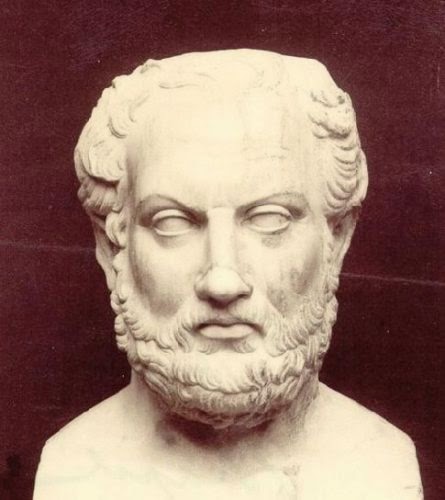
    Thucydides


    A friend of mine recently said that the most “useless” course he took in college was history.

    Let’s start with Thucydides, The History of the Peloponnesian War. This was a war that took place over 2,400 years ago. What possible relevance could it have to Americans?

    In this war, Athens and Sparta, the two “superpowers” of Greece, were locked into a long war for the dominance of Greece. The climax to the story in Thucydides was that Athens decided to send its formidable fleet and much of its army to attack Syracuse, an ally of Sparta, far away across the Mediterranean Sea in Sicily (still there). The campaign was a disaster, leading to political instability at home and weakening Athens’ military position in Greece. Sound familiar? Remind you of our involvement in Vietnam?

    This is not a direct analogy but suggestive of some of the consequences of the Vietnam War. These potential consequences were not factored into the decision to make a major commitment in Vietnam.

    Fortunately, Soviet leaders also didn’t read history and a few years later became bogged down in a similar war in Afghanistan. The consequences were more severe; Russia suffered the same fate as Athens. Arrogant people in power seldom seem to learn from the mistakes of others.

    There was another historical analogy to the war in Vietnam, one we should have known about. The American Revolution.

    The British were a global superpower, having just defeated France for global imperial rule. But France was still a formidable enemy in the main theater of war, Europe. Then the far-away Americans revolted. On paper, the British should have won easily. And they did. After the embarrassment of Boston, England sent a large part of its navy and regular army to deal with the rebels. In the key battle for New York, the British almost annihilated the American Continental Army. Washington barely escaped to Valley Forge with a remnant of his army. Eventually, however, Washington realized a strategic truth. This was not a traditional war. He didn’t have to win battles to win American independence, the goal of the revolt. What he had to do was keep the Continental Army together as a symbol that the revolt was still alive.


    This was essential because for the Americans, as for the Viet Minh, they were not fighting to get a negotiated settlement. This was an “existential” war; either the Americans were going to be free on their own territory or they would suffer under harsh English colonial rule.

    Time was on Washington’s side. There was opposition to the war in England from merchants, manufacturers like Wedgwood, intellectuals (Adam Smith), powerful Whig politicians and even from some top military leaders, including General Lord Cornwallis. Generals and officers who headed the British army in America wrote in their private diaries that the war could not be won.  


    The war was expensive, as most of the navy had to protect long-distance logistic and supply lanes across the Atlantic in addition to blockading the American coast and ferrying the British army around. The longer the American army was in the field, tying down large British military assets, the better the chance that France would deliver the promised aid to the Americans, increasing the chances the American army could survive and become stronger. France supported the American rebels and then entered the war in a big way, contributing to the final victory at Yorktown.

    In the end, the British realized that they would never have enough resources to defeat the Americans or even occupy American territory outside of a few major cities. And there was the strategic danger that major military resources would not available in case of renewed hostilities with France in Europe.

    By 1781, the war had dragged on for six years. An ill-conceived attempt to reestablish British presence in the southern colonies was met with a brilliant campaign of skirmishes and battles where a part of the Continental Army and local militias (and disease) ground down the British force. A classic campaign of guerrilla warfare and attrition. The British goal failed; even if the defeated and diseased remnant of Cornwallis’ army had been successfully sea-lifted out of Yorktown, the war was probably over for the Brits. There was no reason to continue since it was obvious to almost everyone that England didn’t have the will or the resources to put down the revolt. The only move left was to negotiate a peace treaty giving the Americans their independence and refocus on the French.

    If American political leaders in 1964/65 had read Thucydides and understood the historical lessons of the American Revolution better, would they still have made a major commitment in Vietnam? I don’t know. But they might have had a more realistic internal debate on the dynamics and possible outcome of the war.

    Maybe as citizens of the United States we should spend some time tomorrow, the Fourth of July, thinking about or reading some history.


    ___________________________________________________________________________

    Related Posts:

    Some of the topics introduced in this post are discussed in more depth in other posts.


    For more detail on how the American rebels won the American Revolution, see


    Revolution and the New Country:  American History, 1775-1790


    For how the consequences of WWI might have contributed to the American stock market crash of 1929 and the subsequent Great Depression, see

    The Stock Market Crash of 1929 and the Great Depression

    Also see the posts comparing the U.S. and Rome, starting with

    Pax America I:  Washington as an Imperial City


    For an analysis of why the Roman Republic collapsed after becoming a “global” power, see


    The Roman Republic Commits Suicide:  A Cautionary Tale for America

    For a discussion of the short-run and long-run consequences of World War I, see

    The Immediate and Long-Run Historical Consequences of World War I