Tag: Russia

  • New Jersey Artillery Explosives Production in World War I

    New Jersey Artillery Explosives Production in World War I


    Written by Andrea Dragon, Ph.D. Dr. Dragon investigates and writes about New Jersey’s industrial history. Professor Dragon will be teaching a continuing education course on “New Jersey’s Explosives History” at Rutgers – New Brunswick on October 8, 2025. See details at the end of this essay. 


    1914:  World War I Breaks Out


    Russia started to modernize its army in 1913, with substantial French financial and weapons support. The beginning of a five-year plan, one of the main goals was to expand artillery to catch up with Germany. But war broke out. 


    After the first four months of the war, all combatants realized they were in for a long war with deadly modern weapons. Every country’s strategy of a quick victory through offensive warfare failed. Germany did not defeat France and England in the west, and the Russian offensive against Germany in the east ended in disaster. The result was four years of trench warfare in the west and three years of large-scale but inconclusive warfare in the east. Russia stayed in the war only because of imports of weapons, especially through large orders in the U.S.


    Russia, like all combatants in World War I, was not prepared for a long war. Russia’s stockpile of shells was inadequate for the high rates of fire. The Russian army used up most of its inventory of shells in the first four months of the war. Russia did not have the production capacity to resupply shells for its large army.


    Financing Russia’s Need for Artillery Shells and Explosives: First England and then J. P. Morgan and American Loans


          Russia needed foreign loans because it couldn’t produce the quantity of war materiel needed to engage in modern warfare. When the war began in the late summer of 1914, Russia had a large standing army of over one million soldiers and through conscription and reserves Czar Nicholas II had the ability to draft and call up millions more for the army. What Czar Nicholas didn’t have was the industrial capability to manufacture artillery, artillery shells and ammunitions in the quantities necessary to turn his large army into a modern fighting force. 


          The Czar’s cousin, King George V of England, and his parliament, were willing to spend whatever it took to keep the Czar’s army fighting on Germany’s eastern borders because every German soldier sent east to fight the Russians meant one less soldier to fight British soldiers in the trenches of France and Belgium.


          In the early months of the war, Britain loaned Russia money to buy armaments on the world market, but Britain attached conditions to the loans (buying in England?). Although the munitions themselves would be made to Russian specifications, the contracting for their manufacture would be handled by the British.


          Russia chafed under these conditions and wanted a free hand to choose the manufacturers, delivery times, and most important of all, how and when the contracts would be paid.  Russia tried to go around Britain and seek loans directly from bankers in the neutral United States believing those conditions would be less onerous than the British ones.  


    Obtaining U.S. Financing


    J.P. Morgan was an investment bank. It did not have the financial assets of a large commercial bank. Morgan syndicated loans through wealthy corporate and individual clients and other banks. It made its money from commissions.


          A compromise of sorts was reached in the fall of 1914 when Chancellor of the Exchequer and later Minister of Munitions David Lloyd George asked J. P. Morgan, Jr. who was heading up his father’s banking house, to loan Russia $12,000,000 (about $300 million in today’s dollars) to buy weapons and ordnance. A few months later, Morgan responded to additional requests by beginning a long process of bundling a staggering $500,000,000 worth of loans from his bank and from other American banks.


    Only a few people in the United States outside of the government knew that seventy-five percent of the Morgan-brokered money was designated to be funneled through obscure channels to Russia to buy munitions from American ordnance companies. Although these direct loans from privately owned banks to governments at war with Germany were not illegal because they did not violate America’s official policy of neutrality, they were the subject of fierce debate among members of President Wilson’s cabinet.  The new loans granted Russian officials the ability to act without British oversight enabling them to add layers of regulations to manufacturing contracts by inserting a boggling array of parties, terms, penalties and conditions. The U.S. government refused to make or guarantee loans because of Wilson’s policy of neutrality. America was still strongly isolationist, so any government loans would probably be politically unpopular. And Wilson was facing reelection in 1916.


          On September 22, 1915, representatives of the Russian and British government, with J.P. Morgan, Jr. acting as purchasing agent, signed a contract with New Jersey’s Union Powder Company for the manufacture of several million rounds of both high explosive and shrapnel shells for the Russian version of the French 75mm (76.2mm due to Russia’s unique system of measurement) field artillery gun. These were the first Allied shells made in America.


    New Jersey Artillery Explosives Production and Shipping for Russia


    Russia contracted with American companies, mostly in New Jersey, to produce shells and explosives as early as 1915. 


         ”Soon to be erected on the north side of the Raritan River between the towns of Fords and Metuchen will be the world’s largest munitions factory.”

          Daily Home News, New Brunswick, New Jersey, July 17, 1915.     


          The newspaper didn’t name the Raritan River factory, but it was the Nixon Nitration Works and its sole customer was the Russian Imperial Army.  It was owned by New Jersey explosives pioneer Lewis Nixon.


    Lewis Nixon was the top graduate of his 1882 U.S. Naval Academy class.  After graduating, he pursued graduate work in naval architecture at the Royal Naval College in England where the future King George V was his classmate.  After finishing his studies in England, Nixon moved to Russia where he spent a few years building torpedo boats for the Czar’s navy before returning to the U.S. and managing shipyards in Philadelphia and Elizabeth, New Jersey. In 1897, he supervised the building of the U.S. Navy’s first commissioned submarine.  


          Despite his success in ship building, Nixon lost interest in naval architecture and decided to switch to manufacturing the explosive propellant nitrocellulose, commonly known as smokeless powder.  Even though he knew the basics of smokeless powder manufacture (soaking cotton in nitric and sulfuric acid with the aid of a solvent) Nixon couldn’t just start manufacturing because unlike gunpowder, smokeless powder was proprietary and he risked being sued for patent infringement if he proceeded without a obtaining a license from a patent holder.  He contacted a Naval Academy classmate, John Baptiste Bernadou, who was conducting research on smokeless powder at the Naval Torpedo Station in Newport, Rhode Island.  Like Nixon, Bernadou had traveled to Russia and spoke the language which came in handy because he was also the naval station’s official translator of international research articles including those written by the Russian chemist Mendeleev, the same Mendeleev who devised the periodic table.  In 1897, Bernadou and a colleague, George Converse, received an American patent for smokeless powder that was very similar to the one Mendeleev had patented years earlier. (For the story of the development of smokeless powder, see my post The Maxim’s Machine Gun and Smokeless Powder.)


          After buying a license from Bernadou, Nixon began manufacturing smokeless powder in the Raritan River town of Sayerville.  Unsurprisingly, right away Nixon received orders from the U.S. Navy and from several European armies and by 1902 his factory was producing 6,000 pounds of power a day.


           In 1904 Nixon sold his business to the explosives giant DuPont and returned to naval architecture. But the advent of war revived his interest in smokeless power and utilizing his knowledge of Russian, and his royal contacts in Britain, he obtained a contract to supply Russia with 1,000,000 pounds of smokeless powder in 1915. In his new company (the world’s largest munitions factory referred to in the above quote) which was spread out over twelve square miles along the Raritan River, hundreds of powder men and women and their Russian supervisors produced 75,000 pounds of smokeless powder a day, producing over 200,000,000 pounds by the end of the war.


          Nixon wasn’t the only New Jersey powder man who made explosives for the Russians in WWI, but he was among the largest.  One thing all manufacturers had in common was all received payment for the powder and shells they produced from the money Russia had borrowed via a bewilderingly complex system of loans.


    Union Powder company was owned by another New Jersey explosives pioneer, T.A. Gillespie, who had no experience making munitions but as owner of an important New York civil engineering firm he had experience getting government contracts.   His company was one of several New Jersey shell-loading subcontractors doing business with the lead contractor, Canadian Car and Foundry, a Montreal-based manufacturer of heavy railroad equipment.  In October, 1914, just few weeks after the war began, Canadian Car had received a contract from the British government to manufacture 5,000,000 shells for Russia even though the company had no experience making munitions.  Early in 1915, Canadian Car purchased fifty acres of New Jersey swamp land near the town of Lyndhurst and began building what was billed as the world’s largest shell-loading facility, “Kingsland,” where hundreds of employees working under Russian supervision would load smokeless powder propellant that had been made by Nixon and other powder men plus shrapnel and high explosives into shell bodies shipped to Kingsland via railroad.


          Only about half of the shells specified in the contract had been delivered in January of 1917 when a devastating explosion nearly destroyed the facility, but Canadian Car partially rebuilt and loading operations limped along at a reduced pace until August of that year when the political situation in Russia began to change following Lenin’s return from exile.   Because the Russian Imperial Army was Kingsland’s only customer, the facility’s future depended on whether the new government in Petrograd was going to continue to fight on, or get out of the war altogether.  Sensing which way the wind was blowing, Canadian Car closed down their Russian shell-loading operation in Kingsland a few weeks later.


    The three largest shell-loading plants in the United States were in New Jersey.


    The United States Enters the War


          Russia left the war late in late 1917 because of the Russian Revolution. The new Bolshevik (Communist) government defaulted on Imperial Russia’s obligations to pay for the munitions it had received from American suppliers and subcontractors. Fortunately for New Jersey explosives manufacturers, the United States entered the war in April, 1917.


    After the U.S. declared war, the New Jersey explosives industry shifted into a much higher gear. For example, an all-female crew working at DuPont’s explosives plant in Carney Point, New Jersey, produced 1,000,000 pounds of powder a day


    The United States army had little artillery. The French “rented” artillery to the U.S. Army who paid the rent in picric acid (TNP) filled shells. The French supplied the hardware and the U.S. supplied the manpower and the explosive shells. This was General Pershing’s deal. New Jersey workers made the picric acid, loaded it into shells, then shipped the shells to Europe via South Amboy and Jersey City.


    For security reasons, shell production figures were never published and exact numbers remain elusive. A reasonable guess is that between four and five million high-explosive shells were manufactured at all the shell-loading plants in the U.S. between April 1917 and November 1918.


    In the summer of 1918, the U.S. government contracted with Gillespie to build a giant shell-loading facility, one of the largest in the world. 


          How many of that number Gillespie’s Morgan plant produced may never be known because on October 4, 1918, the Gillespie plant was destroyed by an explosion that killed over 100 workers, many of them women and teenage girls.  The explosion destroyed twelve million pounds of high explosives. 


          No evidence of sabotage was ever found.


    Conclusions


    This is a good example of two key aspects of World War I.


    First, the United States as the world’s largest and most diverse industrial power could provide Russia and later France with war materiel they could not produce themselves in sufficient quantity.


    Second, England, France and Russia had resources beyond what they could domestically produce or provide. In this example, access to artillery shells from Canada and the United States. In addition, England and France could call upon substantial numbers of troops from colonies and Dominion countries (Canada, Australia, New Zealand and South Africa).


    NeJersey’s Explosive History 


    WednesdaysOct. – Nov. (weeks10:30 a.m. – 11:30 a.m.

    Locationinperson in New Brunswick Member$40 NonMember$60 

    The explosives industry in New Jersey began in the late 19th century when handful of entrepreneurs built an industry and powder town” near the Raritan River with the help of few eccentrics including crook or twoand former New Jersey resident sharpshooter Annie OakleyDecades later during WWIthe New Jersey explosive industry had expanded to other sites in the state and had grown so large it was able to supply half of the explosives used by all the AlliesAlthough their story is largely forgottenthousands of brave New Jersey menwomen and teenage girls made millions of tons of explosives and loaded them into shells destined for the battlefields of Europe and over hundred of them lost their lives in terrible explosions(course code NBV38

    InstructorAndrea Dragon


    ========================================================


    For related posts by Dr. Dragon, see


    The Maxim’s Machine Gun and Smokeless Powder


    KELP IS ON THE WAY:  How American Kelp Helped Save the English Explosives Industry in World War I


  • Europe on the Brink of World War I

    Europe on the Brink of World War I

    SVG Map_Europe_alliances_1914-fr.svg


    ORIGINS OF THE WAR

    This is an extraordinarily complicated story. One reason is that it is difficult for the modern reader to understand the mentality of the key decision-makers – their prejudices, mental frameworks, how they reacted to threats and stress. Fortunately, there are several excellent books that attempt to describe the key players’ assumptions, mentality and motivations.


    World War I was started by the decisions of a very small number of men, often in secret, implementing secret agreements and understandings, who represented the most reactionary, nationalistic or conservative groups in their countries and governments. Most were incompetent, narrow-minded, myopic and/or delusional. They thought going to war – appealing to nationalist sentiments – would solve or subsume social problems and political challenges that were mostly the result of industrialization and rapid economic  and social change. All planned to win in short offensives; Germany had a detailed plan to defeat France in six weeks. Very few people saw that a prolonged war would be a threat to the survival of traditional regimes and empires.


    None of the generals or their staffs thought in alternatives. They all had the same strategy – mobilize large numbers of soldiers quickly, go on the offense, overwhelm the opposition and win the war in a short period of time. Problems:


    Moving a huge number of troops over hundreds of miles, and keeping them supplied, was going to be difficult. Armies still moved by foot and supplies by horse-drawn wagons once they left  the railroads of their own countries. At one time, the English army had 870,000 horses.


    The problem with only planning offenses was that the new military technology favored defense – machine gun nests, barbed wire, rapid-fire field artillery. Tanks were primitive (slow, cumbersome), sometimes effective in breaking through defenses (when they didn’t break down). Airplanes were useful for reconnaissance and evolved rapidly (equipped with machine guns to strafe infantry) but were not decisive. New tactics to attack defenses evolved only near the end of the war after offensive attacks failed and incurred huge casualties. (In the first day of the 1916 British offense on the Somme, the British Army suffered 60,000 casualties, including 20,000 dead). One day!


    There was one war that European military officers observed where the two sides were large armies, fairly evenly matched and used some modern military equipment (and railroads). The American Civil War. It lasted four years with a total of about 500,000 deaths, out of a population substantially less than any of the four major continental combatants of WWI. Most offenses failed. (On the first day of the American Meuse-Argonne offensive in 1918, the Americans and French fired more shells than were fired by both sides in total in the four years of the American Civil War.)


    No army or their general staff ever seemed to have seriously analyzed the alternative of a long war with modern weapons. The only person who did so was a Polish banker named Jan Bloch, who published a six volume book in 1898 titled Modern Weapons and Modern War. He argued that in the next major European war “the spade will be as important as the rifle.” Infantry in trenches with machine guns behind barbed wire would have a large killing advantage against advancing infantry. Cavalry would be less than useless, with dead and dying horses slowing up and disorganizing the advancing infantry. He could see that the nations of Europe would mobilize millions of men. He predicted such a war would be a long one. The impact of a long war with large casualties would result in “the break-up of the whole social organization.” Writing about the military, he said “The steadfastness with which the military caste clings to the memory of a state of things which has already died is … costly and dangerous.” He didn’t live long enough to see just how costly. (Quoted in Richard J. Evans, The Pursuit of Power: Europe 1815 – 1914, 703)


    World War I was the last attempt of the conservative and reactionary ruling classes of Europe to remain in power. It was an easily avoided war that killed 8-10 million soldiers. If we include the long-run effects, hundreds of millions of people died.


    Any illusions about the rationale or romance of the war dissolved quickly. In the first four months of the war, more men were killed on the western front than in any subsequent year. The carnage of a modern war where soldiers were mostly killed by distant artillery and machine guns was shocking to soldiers and civilians.


    THE DECISION-MAKERS


    In each of the five major countries, there was a very small group of men who made the foreign policy decisions. They were outside the normal flow of domestic politics. They often made their own policies and decisions, keeping elected officials and other members of their government in the dark. They kept their treaties and understandings with other countries secret from their own people and government, and in England’s case, even from the leaders of their own party. In France, virtually no one outside of the President and a few top officials in the foreign office knew of the secret military clauses of the treaties and verbal commitments they made. They controlled the information flow; they lied and obfuscated. They ignored their own ministers. Even in republic France; after all, French politics were so unstable that there would be new ministers in a few months. 


    Military leaders in Germany and Austria-Hungary, nominally under the control of civilians (monarchs), pursued their own strategies. The military of France had contempt for most of the elected civilian leaders of France. Top English brass met secretly with French officers to plan the logistics of moving the entire British Army quickly to France in the event of war. In Russia, many of the top military leaders, including the head of the army, were relatives of the tsar.


    COUNTRIES ON THE BRINK OF WAR

    Serbia


    Russia and Austria-Hungary both focused their foreign policy on the Balkans. But by 1913 there was a third player, Serbia.


    The role of Serbia is usually forgotten after the assassination. But Serbia continued to be important. 


    There were Balkan Wars in 1912 and 1913. The first was a coalition of Balkan countries that eliminated the last vestiges of Ottoman rule in the Balkans. The second was among the Balkan countries over which country would control contested territory. Serbia was the winner in the second war, expanding its territory by 80% and increasing its population by 50%. Besides more resources, Serbia now had an experienced army, with better arms provided by France. (Remember that France was an opponent of the German/Austro-Hungarian alliance) It had strong support from the Russian ambassador to Belgrade. Serbia was not going to be the easy conquest assumed by the Austro-Hungarian military. Serbia asked the Russian government if Russia would support them if there was a war with Austria. The Russian government said yes.


    If Serbia was not quickly conquered and Russia declared war on Austria, then Austria would be fighting a two-front war, for which it was woefully unprepared. And that is what happened.


    Austria-Hungary

    For the background on Austria-Hungary, see Austria-Hungary Before the War.

    The danger was that if Austria attacked Serbia, it was very likely that Russia would come into the war. Austria could not handle both countries. But Austria had an ace in the hole. By 1914, Austria was Germany’s only reliable ally. Austria asked for German assurances before attacking Serbia. There were strong personal ties between the Emperors, the members of the political elite and the military leaders of the two countries. The German General Staff and its head, Helmut von Moltke, believed war with Russia was inevitable. Kaiser Wilhelm and the German military, in the crucial month between the assassination and the start of the war, told Austria they should they attack Serbia that Germany would stand by them if they were attacked by Russia.


    In some ways, the state of the Austrian army mirrored Austria-Hungary, a dazzling façade covering a declining and dysfunctional power. The army sported officers in colorful uniforms and elite cavalry units. It had underinvested in modern weapons. The long-time head of the Austrian army, Conrad von Hoetzendorf, had argued long and loud that Austria should attack Serbia. Despite this, he did not have a detailed plan for mobilization because he was unsure how to allocate units between fighting Serbia and Russia. But this was his chance. 


    One reason Conrad was so adamant about going to war was that in late middle-age he fell madly in love with the wife of an industrialist. Every day, he wrote long, passionate letters (3,000 in eight years) to the woman of his obsession. He never mailed them (they were discovered after the war.) He thought if he led the Austrian army to victory, if he were a war hero, she would divorce her husband and marry him.


    By the end of 1914, Conrad and the Austrian army had been defeated in three invasions of Serbia and by the Russians on Austria’s northeast frontier. He had lost as many as one million men. Austria’s frontline army and best units were destroyed. He basically fought defensive battles with the Russians An attempted offense against Italy was a costly failure until the Germans intervened. He was relieved of command in 1917.


    Germany


    I think it is fair to say that Germany is the one country that could have prevented the war. (This is controversial and hotly debated among German historians.) Again, Austria was Germany’s only ally. German leaders felt personal obligations of honor towards Austria’s leaders. But if Germany had said no to Austria and not mobilizing its army, the likelihood of a continental war would have been lower. But this did not reckon with the personality of Kaiser Wilhelm.


    Wilhelm became Emperor in 1888. He retired (fired) Bismarck. After uniting the German states under Prussian leadership in 1871, Bismarck spent the next 19 years trying to reduce threats to Germany. He signed a treaty with autocratic Russia (and Austria, which Germany had defeated in a short war in 1866). He tried to diplomatically negotiate conflicts among the European powers. He wanted to avoid war. In general, he succeeded.


    Wilhelm had a very high opinion of himself. He told government leaders (who he appointed) that he was going to be the new Bismarck. The gods laughed. Over the next 26 years, he poisoned the political atmosphere in Europe and alienated potential allies, especially England.


    It should have been easy to keep England neutral or have some sort of detente. He was the grandson of Queen Victoria. He was educated in England and spoke excellent English. He spent a great deal of time in England, socializing mostly with the royal and aristocratic elite. He like to wear English military uniforms (he was the honorary commander of British regiments and an honorary admiral of the British navy). But he had a love/hate relationship with the English. He envied but never could become a proper English gentleman.


    Yet, there was something very strange about his personality that alienated everyone, including top German government officials. He spent much of his time reading official documents, making hysterical marginal notes and coming up with new ideas and programs. After a few days, he would forget about them and talk at length about new ideas. He traveled incessantly, away from Berlin and his responsibilities about half the time. He had no mental filter, saying whatever came into his mind. He suffered from permanent “foot in mouth” disease. Some of his remarks did real damage, especially in England. In 1899-1902, the English were fighting a vicious war against the Boers (Dutch settlers) in South Africa. During the Boer War, Wilhelm sent a telegram to the Boers pledging German military aid. The English were not amused.


    Early in his reign, he was convinced that Germany had to build a naval force equal to that of England. They got into a naval arms race. By 1910, it was obvious that Germany would never have a main battle fleet equal to England’s. But the damage had been done; the naval arms race had poisoned relations with England.


    Wilhelm’s rhetoric was bellicose and belligerent when there was little chance of going to war. But as WWI seemed more likely in the month after the assassination of Archduke Franz Ferdinand, he tried to become more conciliatory. But his messages were muddled and changed often. In the end, the German army and their political supporters ignored him and prepared for war. He was also sidelined during the war.


    There is little justice in history. When Germany lost the war, Wilhelm fled to Holland, where he led a quiet existence. He lived long enough to still be alive when Hitler’s panzer divisions swept through France.


    The only personality I can think of that is somewhat similar to Wilhelm is Toad of Toad Hall.


    In the end, the decision to go to war was made by Helmut von Moltke, the head of the German Army. He was appointed to his position partly because of his uncle, also named Helmut von Moltke. The first Helmut had led the Prussian Army to victories over Austria-Hungary in 1866 and France in 1870, actions which were part of Bismarck’s strategy to unify the German states. 


    The younger Helmut probably had the wrong mentality to lead Germany into a major war. He was intellectual and musical and probably suffered from bouts of depression. But he had a fear of Russia and felt that Germany’s chances of defeating Russia would worsen over time. Thinking that war with Russia was inevitable, and thus so was a European war, he argued the time was the present. The Chancellor Theobald von Bethmann Hollweg was less certain and at first advised caution. But as the tension mounted, he supported von Moltke.


    Von Moltke had private doubts that the German war plan (the Schlieffen Plan) would succeed. The main idea was to attack France first with most of the German Army, then combined with Austria-Hungary to hold off the Russians and deal with Russia after victory.  Six weeks into the war he had a nervous collapse and was relieved of his command. He wrote a letter to his wife regretting the horrors he had unleashed on Europe and foresaw the dark future. He died in 1916.


    Russia


    Russia was the most autocratic of the five states. All power and ultimate decision-making resided with Tsar Nicholas. Unfortunately, Nicholas was a weak character – indecisive, paranoid, delusional. Factions around Nicholas in government and the military fought each other for power and influence.


    There were attempts at political reform only after the domestic unrest of 1905-06. Cabinets were headed by reformers like Witte and Stolypin. Nicholas allowed a parliament (Duma). But when the tsar regained control, Witte was dismissed and Stolypin was assassinated by a radical. The Duma was disbanded. When reinstated, Nicholas and the conservatives did everything to see it had no power or influence on government policies.


    During his long reign (1894 – 1917), Tsar Nicolas attempted expansion programs to extend Russian power. His last one was to expand Russian presence in the Far East, mostly in Manchuria. This put Russia in conflict with Japan. Most Russians believed they would easily win a war with “inferior” Asiatics.


    The war began with a surprise. Japan launched a surprise torpedo attack that destroyed most of Russia’s Pacific fleet in Port Arthur. (Japan would use similar tactics to attack Pearl Harbor; Admiral Yamamoto who planned the attack on Pearl Harbor was a young naval officer at the earlier attack.) 


    Nicholas ordered Russia’s main fleet, in the Baltic, to sail to Asia and engage the Japanese fleet. England would not allow the Russian fleet to use the Suez Canal because England was an ally of Japan. So the fleet had to go down the African coast, across the Indian Ocean and up the coast of China, a journey of 18,000 miles! When it finally reached Japan, the Russian fleet was in terrible physical shape and sailors were mutinous. It was quickly destroyed by the Japanese fleet.


    A land war ensued in Manchuria. Russia was finally defeated in the battle of Mukden. Two of the Russian generals accused each other of causing the defeat. In 1914, they headed the two Russian armies that invaded Germany. Their lack of cooperation contributed to the famous Russian defeat at Tannenberg. This battle also made the reputations of Hindenburg and Ludendorff, who would lead the German army from 1916 to the end of the war.


    It came as shock throughout Russia that the Russian army was defeated. Who to blame? There was already a great deal of domestic agitation because of the lack of food and the horrible working conditions of the new industrial work force. Large demonstrations broke out in St. Petersburg and other cities. There were hundreds of rural riots against the land-owning nobility. Manors were burned or looted. It seemed to some that revolution was in the air.


    The Tsar contained the demonstrations by calling out the army and gunning down demonstrators. He retreated to a palace south of St. Petersburg. There he would stay in isolation for the rest of his reign.


    After the situation calmed down, Nicholas unleashed his secret police and internal security forces; they carried out a savage campaign to kill or exile to Siberia all suspected revolutionaries. 


    Nicholas believed that the disturbances were caused by Jews. He unleashed his Cossacks and Black Hundreds (local militias) in a series of pogroms (race riots). Thousands of Jews were killed and imprisoned. Many left the country.


    Nicholas also believed that, despite everything, there was a “mystical” bond between him and the Russian people. His feeling was reenforced by the celebrations of 300 years of Romanov rule in 1913. At no time did he waver in his belief that he was an absolute ruler ordained by God. Russia and the Romanovs were one and the same.


    Russia had to rebuild its army and navy. It began a “Great Programme” of military reform in 1913. It called on France for financial support to expand its railroad network west towards Germany and to buy arms. Russia instituted some reforms in its military, including more artillery. This was a major source of concern to the German military. Von Moltke believed that these reforms and rearmament would be completed by 1917 and Germany’s relative military position would be weaker. Again, this fear motivated him to advocate war in 1914. 


    Russia and Austria-Hungary had been competing for influence in the Balkans since the 1870s. Now with the setback of their Far East policy and Austria-Hungary’s absorption of Bosnia in 1908, the rivalry became more intense, with Russia using Serbia as their main client state. Russian nationalists began talking about “Pan-Slavism.” Austria-Hungary reached the conclusion that the Balkans were the only area they could project  power and influence after being shut out of the German Confederation by Prussia. In addition, Austria thought that Serbia was now a threat to the survival of Austria-Hungary. After 1913, Serbia, backed by Russia, focused propaganda and terrorist acts on Bosnia. Serbia also appealed to the South Slavs (Slovenes, Croats and Serbs) in the Austro-Hungarian Empire to oppose the national policies towards minorities in Austria and Hungary. 


    Russia and Austria were on a collision course again. Only this time, they were part of opposing alliances – no talk of “balance of power” and European conferences to negotiate differences and make territorial adjustments through sign treaties.


    France


    Russia, like Austria-Hungary, also had a secret ace in the hole. Bismarck had negotiated a non-aggression treat with Russia. A few years after he fired Bismarck, Kaiser Wilhelm decided not to renew the treaty. France always worried that if they were attacked by Germany again, they might lose. But here was an opportunity to gain an ally. In series of secret agreements between 1891 and 1894, France signed treaties with Russia. While the treaties were known, the secret military obligations of both countries were not. If either country was attacked by Germany, the other would immediately mobilize its army and attack Germany. 


    Russia was trying to rebuild its military after the Asian fiasco. France offered huge loans to pay for rearmament and railroad expansion to move troops faster to the German and Austrian frontiers. But rather than France buying an ally to help fight the Germans, Russian now had an ally to help fight the Germans and Austrians if there was geopolitical conflict in the Balkans. And France would be attacked first. 


    Very few people in the French government knew about the military conditions of the treaty, most of them in the foreign office. It was only in 1913, when Raymond Poincare became president of France, was he told the details of the treaty. He was a conservative nationalist and hated Germany. Poincare came from the Alsace/Lorraine region, the French provinces lost to Germany after the FrancoPrussian war in 1870-1871. Just before war broke out, he traveled to Russia to strengthen ties.


    Instead of the powers of Europe negotiating differences and making adjustments collectively as in the past, there were now two exclusive alliances – Germany and Austria-Hungary on one side and Russia and France on the other. Russia competed with Austria-Hungary for influence in the Balkans. Both countries hoped their powerful allies would support them if conflict broke out. 

    The unknown was what England would do in the event of war.


    England


    England was the wild card. Germany, France, and Russia all tried to negotiate some sort of understanding (détente) with England in the years leading up to the war.


    The German foreign office made a lengthy attempt to improve relations with England. Much of England’s upper classes were pro-German. These efforts were undermined by the behavior and intemperate rhetoric of Kaiser Wilhelm. Russia and England had a long-running rivalry along the political fault lines of Persia, and between Central Asia and South Asia (India). This tension was eased by treaties and understandings negotiated before World War I. 


    Sir Edward Grey was the English foreign minister from 1905 to 1916. He was a rather strange person. He didn’t care about the British Empire, spoke no foreign languages and he hardly ever traveled outside of England and Scotland. He was secretive and devious. He had a small group of confidants within the Foreign Office; one was Winston Churchill. His passion was fly-fishing. He was often away from his office fishing. 


    While he never formally committed to one side or the other, Grey apparently disliked Germans despite that many of upper-class Englishmen were pro-German and liberals (he was a member of the Liberal Party) particularly loathed authoritarian Russia. But Grey, in typical English policy, was afraid of any country dominating Europe. He saw Germany as that country. So Grey secretly began building military and diplomatic connections to France beyond the conditions of their 1907 detente agreement. His own party was almost unanimously opposed to any involvement in a possible European war.


    With his encouragement, a small group of English officers met with French officers to plan the logistics of the landing of English troops if war broke out. English troops were able to be effective earlier in the war than German planners assumed. Although small in numbers, they were able to delay the progress of a far larger German army into France.


    Unlike the four continental powers, England had a small homeland army, only about 110,000 soldiers, because England relied on its navy to protect the island from invasion. Most of its army was patrolling the empire. England did not have conscription before the war; all its soldiers had signed up to be professional soldiers. England only began conscription in 1916 because of its large losses, especially after the battle of the Somme. 


    POLITICAL AND PERSONAL FACTORS


    Russia, with its massive new military spending, accelerated the arms race. More artillery and machine guns. Draft calls were higher, the size of the standing army and reservists were increased, and more money was spent on long-range artillery and howitzers. Russia had the largest standing army in Europe, although the quality of its soldiers and top officers was suspect. 


    By 1914, important trends that increased the chances of conflict were: 

    Two alliances. Replaced “concert of nations.” Not set in stone but limited diplomatic maneuvering. 

    An arms race, combined with offensive strategies and rapid mobilization, that military leaders believed (or hoped) would lead to a short war and victory.

    Many foreign policy officials and ambassadors slanted reports and lied to superiors to reflect their viewpoints. Some military leaders, mostly in Germany and Austria-Hungary, believed war was inevitable or desirable. 


    All countries assumed that mobilization was the actual beginning of the war. Leaves were canceled, units went to assigned positions. Reserves were called up, told which train depots they were to go to, and report to their staging areas. Railroad traffic was cleared for troop trains. War was declared almost immediately after mobilization. Troops and their logistical support began moving immediately towards frontiers for offensive action.


    PREPARING FOR WAR

    In the last few years before the war, against the background of rising tensions, an arms race broke out. The four European powers expanded the size of their armies and increased military expenditures. More conscripts led to larger standing armies and larger reserves of past conscripts. Only England had a professional army of volunteers. All countries had plans for rapid mobilization of recruits and reserves to go on the offensive.


    All four countries believed that the country that could mobilize first and get their army moving (first by railroad but mostly by foot) would have an advantage. This put added pressure on political leaders to call up reserves and mobilize their armies to start their offenses. Once one country mobilized, this set off a chain reaction for all four countries to immediately mobilize. This greatly increased the chances of war. All assumed that full mobilization was the runup to war.


    Government leaders thought that nationalism and war would rally their country’s populace and subsume internal conflicts. There was general enthusiasm for war after war was declared.They were right if it was a short war. Only a few planners and observers thought that the monarchies would be in danger if there was a long war. Especially in Russia.


    Here again is the tendency we can discern in the reasoning of so many of the actors in this crisis, to perceive oneself as operating under irresistible external constraints while placing the responsibility for deciding between peace and war firmly on the shoulders of the opponent.

                    Christopher Clark, The Sleepwalkers, 519


    The constraints were mostly internal – the assumptions and objectives of the ruling elite to preserve their privileged position in society. They were delusional. After the war, a great number of memoirs were written by the main actors; the theme of most was self-justification that they were not responsible for starting the war.


    CONCLUSION


    It seems that none of the decision-makers saw the coming conflict as an “existential” event, that is, that it threatened the existence of their country or the ruling regime. But the preparation of the four continental powers almost guaranteed it if the war was not the short war they all assumed. All four had greatly increased the size of their armies and their armies’ firepower. All resources, including reserves, were mobilized at the start. Casualties were huge in the first four months. After the Germans did not conquer France and the Russian offensive was stopped in the east, these large armies assumed static defensive positions for the winter. In the west, these positions would change little in four years despite massive attempts at offense to break the enemies lines. The maximum effort and huge losses at the beginning of the war increased the chances that the war had to be fought to the end. Military planners now saw the war as a war of attrition.


    Because of the stalemated military situation and the two alliances rather than five or six countries thinking about their political options, there was almost no call for negotiations or a conference to discuss how to end and war. The political leaders of the countries all realized that this war would end in unconditional surrender of one side or the collapse of one or more combatants. All combatants had to continue fighting, hoping that an opponent country would collapse first. World War I had become an “existential” war.


    Rather than thinking that the war increased the tensions at home, all decision-makers assumed that war, and the nationalist sentiments it would create, would overcome these tensions. If there was a victory or at least a negotiated settlement after the first battles, this might have happened. But the length of the war worked to worsen domestic tensions. In Russia, Germany and Austria-Hungary there was widespread hunger, even starvation, at home. This contributed to the overthrow of the tsarist government in early 1917. The new emperor of Austria-Hungary tried desperately in 1916 to get out of the war because he knew the existence of his empire was at stake. Large parts of the French Army mutinied. Germany and France knew any treaty was impossible because the winners would impose harsh conditions on the losers.


    WHO WAS RESPONSIBLE FOR STARTING WORLD WAR I?


    Historians have long debated which country was responsible for starting World War I? A more realistic question would be – which key decision-makers were responsible? The answer – all of them.


    There was a small number of them. One in Serbia, three in Germany, three in Austria-Hungary, one in Russia and one in France. Also one in England. At different times.


    1 Dragutin Dimitrejevic, known as Colonel Apis (the Bull), the head of Serbian military intelligence. He set up underground terrorist groups known as the “Black Hand.” Its goal was to forge a “Greater Serbia” that included Bosnia (controlled by Austria-Hungary), Croatia and Macedonia. The young Bosnian Serb who killed Archduke Franz Ferdinand was trained and armed by an officer of the Serbian military intelligence. Ultra-nationalist and violent, the more moderate elements in the Serbian government and the military were afraid of the Bull. With reason – in 1903 he was part of the small group of officers who killed and mutilated the bodies of the king and queen of Serbia. 


    2. Almost no one in Europe, including the people of Austria-Hungary, thought the Archduke’s assassination would lead to war. Or was an excuse to go to war. Except Conrad von Hoetzendorf, the head of the Austro-Hungarian army. He had been strenuously advocating war with Serbia for years. This was his best chance, even though the assassination was greeted with indifference by the Emperor (he did not attend the funeral) and throughout Austria-Hungary. Conrad convinced the foreign secretary Count Leopold Berchtold to support him. They convinced the aged and disengaged Emperor to agree to declare war on Serbia and instruct the military to invade Serbia.


    3. Austria-Hungary could not attack Serbia because of the high probability that Russia would come to Serbia’s aid by attacking Austria-Hungary. Austria-Hungary could not risk this without German backing. Kaiser Wilhelm and high government officials gave the key members of the Austrian government and military strong assurances that Germany would back Austria-Hungary.


    4. The key players in Germany were Kaiser Wilhelm, Chancellor Theobald von Bethmann-Hollweg (and foreign secretary) and Helmut von Moltke, the head of the German General Staff. Germany could have stopped the escalation by not fully backing Austria-Hungary. By Germany backing Austria-Hungary, it greatly increased the chances that Austria-Hungary would attack Serbia and that Germany was going to war with Russia and France. 


    Despite the Kaiser’s enthusiasm, which faltered as the war became more likely, some government officials had reservations. They used the actions of Russia in the last days before the war was declared as reasons (or excuses) to support going to war. 


    The Kaiser’s strong support of Austria in 1914 was somewhat unexpected. A year earlier, when Serbia went to war against other Balkan states, Austrian leaders thought about intervening against Serbia. Kaiser Wilhelm was opposed and told the Austrians he would not support them. (Charles Emmerson, 1913, 76) But this was different. Archduke Ferdinand was a personal friend of the Kaiser and Wilhelm was angry. Also, Chancellor Bethmann Hollweg and army chief Helmut von Moltke were in favor of war. Von Moltke believed that the ongoing military reforms in Russia would make it a more difficult opponent for Germany by 1917. War now, better than war later.


    5. The Russian tsar Nicolas could have restrained Serbia. The tsar did hesitate to fully mobilize his forces in the days just before the start of the war but didn’t offer any alternatives. Encouraged by “Pan-Slavic” ultra-nationalist government officials, some of whom were his relatives, he was pressured to declare war. Nicholas was a weak personality susceptible to the arguments of those around him.


    6. Raymond Poincare, the President of France, was a strong supporter of the secret treaty clauses between France and Russia. He saw this as insurance if Germany attacked France. France knew the general outline of the Schlieffen Plan. But he felt obligated if Germany attacked Russia. Just before the war started, he went to Russia to firm up support for the alliance.


    7. The behavior of England’s foreign minister Sir Edward Grey has always puzzled historians. He pursued his personal foreign policy in secret. No one knew if he advocated war. His own party was against war with Germany. But Grey had for years quietly strengthened ties with France beyond the somewhat vague alliance with France in 1907. Only a few close associates in the Foreign Office and the military knew. He supported secret meetings of top English and French officers to jointly plan the logistics of the transfer of the English army to France in case of war.  He seemed to dislike Germany (many of England’s elite were pro-German and liberals loathed Russia because of the absolute authoritarian rule of the tsar). After war started on the Continent, Grey convinced his party leaders to change their minds and declare war. One argument he seems to have used was the prospect of continental Europe dominated or controlled by Germany. He was motivated by traditional “balance of power” thinking, fear of Germany and personal prejudices.

    An important question to ask: of the key players, which ones wanted to go to war in 1914? The answer is Helmut von Moltke of Germany and Conrad von Hoetzendorf of Austria-Hungary. Their countries were allies. Austria-Hungary, under the insistent prodding of von Hoetzendorf and the backing of Germany, chose to start the war. Germany, under von Moltke, was ready to go to war against Russia.


    Main points of the Posts on World War I


    ·      Internal tension was rising in all major European countries due to the Industrial Revolution causing profound social change and conflict.


    ·      These changes threatened the power, income and status of the ruling class of landowning nobility, which controlled the highest positions in their governments and military.


    ·      Naval and army buildups in the years before the war increased tension among the major countries.


    ·      Tremendous increase in firepower due to new or deadlier weapons. The new weapons, and their mass production, were the results of the Industrial Revolution.


    ·      Generals tried to use the new firepower and mobility to fight a war using tactics and strategies from the past.


    ·      After the assassination of Archduke Franz Ferdinand, there was almost total indifference throughout Europe, even in Austria-Hungary. Like past recent political crises, it was shrugged off. People who thought about it expected it would be resolved without war.


    ·      But men in power saw it differently. Some were eager to go to war. Some accepted the inevitability of war at that time. Most made decisions without thinking about alternatives or consequences if it wasn’t a short war.


    ·      A very small group of men in the five “Great Powers” made decisions, mostly in secret, that led to war.


    ·      Total mobilization of all four continental combatants led to war.


    ·      While there were anti-war demonstrations just before the war, the war took on a grim acceptance after it started.


    ·      Most of the so-called “learning curve” was replacing aging generals with obsolete thinking with generals who were learning new lessons (slowly) as they fought the war.


    BIBLIOGRAPHY


    Christopher Clark, The Sleepwalkers:  How Europe Went to War in 1914. 2012.


    Margaret MacMillan, The War that Ended Peace:  How Europe Abandoned Peace for the First World War, 2013.


    These two books are vital to understanding the thinking and actions of the ruling elites of all countries in the critical years before the war. The mentalities of the diplomats and generals often seemed like their minds were still in the 19th century before 1870. They hadn’t absorbed the economic, technological and political changes.


    Charles Emmerson, In Search of the World Before the Great War. 2014.


    Makes the case that almost no one anywhere in the world was thinking about the political crisis in the Balkans and the possibility of war.


    Michael S. Neiberg, Dance of the Furies:  Europe and the Outbreak of World War I. 2011.


    Convincingly documents the thesis that most Europeans were not thinking of war, but rather believed that peace and prosperity would continue. No popular demands or pressure for war. If anything, just the opposite, with a strong trans-European peace movement and large Social Democratic parties opposed to war.


    The documentary They Shall Not Grow Old, which used actual WWI footage and interviews with WWI soldiers. About the British army in World War I. Based on photos and videos from the Imperial War Museum. On YouTube. Colorized.

    ===================================================================

    These posts could be read in order as background to this post.

    Related posts about the origins of World War I are:

    Bismarck and the Origins of World War I

    The Beginning of the Twentieth Century:  The Path to World War I


    Wealth and Power in Pre-World War I Europe 


    The Austro-Hungarian Empire Before World War I


    The Immediate and Long-Run Historical Consequences of World War I


    The following post by Professor Andrea Dragon gives some historical background on the invention and development of the machine gun, a new weapon that made the battlefield much more deadly. The Maxim machine gun was used by both sides. It could fire 600 rounds per minute; small groups could annihilate massed infantry and cavalry charges. 


    The Maxim Machine Gun and Smokeless Powder


    For a list of all posts on this blog, with links, see List of Posts by Topic


  • Global Demographics and Economic Growth

    Global Demographics and Economic Growth

    1. Jakarta – 30 million people and sinking

    GLOBAL DEMOGRAPHICS

    Demographics, the study of the size and composition of population, will shape national and global economic growth and economic policy.  

    The period from 1950 to 2000 was highly unusual. The American “baby boom” started, temporarily reversing the long-term decline in birth rates.  Not just the United States but the global population experienced high birthrates and high population growth rates. In the middle of this period, partly due to more effective and more available birth control, birth rates began a rapid decline. The growth rate in world population began to fall. At the same time, much of the world’s population experienced rising standards of living. One consequence was longer life expectancies and rising average ages in industialized countries.  

    Countries with over a third of the world’s population and most of the world’s output now have birth rates below replacement. They are mostly the wealthy, industrialized countries, including the United States, Canada, Brazil, Western and Eastern Europe, Turkey, parts of Southeast Asia, Japan, Russia and China. Collectively, the size of their labor forces have stopped growing. All countries face the same challenges: Will they be able to invest in economic growth and development (innovation and structural change), deal with environmental costs and climate change effects, and support aging populations?  

    There are falling birthrates for most of the rest of the world’s population, coming down from very high levels. Mexico is at replacement and India is close to the replacement birthrate. But total population continues to grow, partly because of lower infant and child mortality rates, public health programs, better medicine, and subsequently longer lives in most of the world.  

    We are now in a period of a slowdown in total population growth rates. Global population is growing at about one percent per year and the rate continues to fall. But the increase in the number of people is large. In the most recent United Nations projection, the increase in global population from 2020 to 2050 is about 2 billion people, from 7.8 billion to 9.7 billion. The projected population increase over the following 50 years is lower, abour 1.2 billion. 

    Changes in total population may be points on an exponential decay curve. The UN projects that zero population growth will be achieved sometime shortly before 2100. The rate of decline could change with changes in the availability and cost of birth control, education of women, anti-aging medical technologies and more available health care for an aging population. (Estimates of future population are from June 17, 2019 UN projections. UN projections are revised about every two years.)

    The biggest unknown is future medical technology that will prolong life expectancies. Regardless of projection, the fastest growing age cohort is 65 years and over; within that cohort, the fastest growing age group is 80 years and older.

    Countries with birthrates well below replacement and aging populations may experience accelerating decreases in population. Family planning, combined with urbanization and more education of females, could lead to birth rates declining faster than projected in high birth-rate countries. In Africa, Ethiopia, Malawi and Rwanda promoted family planning and have seen large decreases in their birth rates. Kenya, after investing in family planning clinics and information, has seen its fertility rate fall from 6.5 in the late 1980s to 2.4, marginally above replacement and half the rate of most African countries.

    POOR COUNTRIES AND RICH COUNTRIES

    Wealthy countries have below replacement birth rates, no growth or declining populations and labor forces, low real economic growth, and aging populations and labor forces. Population will continue to concentrate in cities; the population of a small number of cities will be responsible for technological innovation and economic development. Rural areas will continue to lose population.

    Poor countries today have high but declining birth rates, young and increasing populations, and populations that want to emigrate (see case study below).

    Most of the largest and fastest growing urban areas in the world are in poor countries, China and India. Over half of the world’s population live in cities and the percent is rising. Almost all of the increased population in poor countries will live in or move to cities, which are already ecological disasters – traffic gridlock, poor air quality, lack of infrasturcture, sinking, raw sewage, and power outages. Many are coastal cities that are already experiencing periodic flooding and storm surges; rising sea levels and the increased number and severity of hurricanes will intensify urban problems. 

    Starting sometime in the 2050s, the world’s population outside of sub-Saharan Africa will stop growing and then slowly decline. All of the world’s net population growth will then be in Africa. How soon the world reaches zero population growth will depend critically on how fast birthrates decline in Africa.

    By 2100, Africa could have about as many people as Asia, about 4-5 billion. Together, Africa and Asia in 2100 could have about 80% of the world’s population.

    Throughout large parts of the Middle East, Africa and Latin America, governments have not been able to provide effective management of economic development for their young, growing population, which have high rates of unemployment and underemployment. Many of the governments are corrupt and/or repressive without free elections or civil liberties. Political activism, partly caused by stagnant or declining standards of living and lack of economic opportunity for young workers, commonly takes the form of mass protests and street demonstrations, aided by Internet social media. Governments typically react with riot police and the military, arrests, torture and prisons, rather than economic and political reform.

    THE DEMOGRAPHICS OF SPECIFIC REGIONS AND COUNTRIES

    A recent survey concludes that 46 countries have declining population or will have declining population in the near future. Declining population is already true in Japan (see below) and Russia and is about to be true in central and eastern Europe. South Korea, also with an extremely low birth rate, is looking at a demographic future similar to Japan’s (see below). South Korea’s current population of 51 million is expected to decline to about 30 million in 2100.

    Russia’s population is declining. Male life expectancies in Russia have been going down for decades but might have recently stabilized. While birthrates are below replacement, the decline of the national population has been offset in recent years by immigration. But lower rates of immigration in 2018 and 2019 have led to large decreases in population. The UN projection is that Russia’s current population of around 146 million will fall to about 85 million by the end of the century. 

    Because of very low birthrates and out-migration, central and eastern Europe is looking at population declines in this generation.  Some UN projections show that most countries in central and eastern Europe might have even larger total percent declines than Japan by the end of the century (over 50%).

    Western Europe is further along the population aging curve but because of immigration of younger people, the decline will not be as precipitous. And western Europe, like Japan, currently starts with more resources to support an aging population.  But high structural unemployment rates, low economic growth, restrictive labor laws and generous early retirement benefits will strain western Europe’s ability to grow and maintain current social welfare levels. A few European countries realize that current levels of social welfare are not sustainable and have begun reviews of retirement and health care programs. This problem is exacerbated by the currently high unemployment and underemployment rates among younger employees.

    China, which has enforced a “one-child” program since the 1970s until 2016, has a very low birthrate of about 1.6. Although this program has been relaxed in recent years, the national birthrate remains far below replacement. China currently has a young average-age population but the average age is rising very rapidly. 

    China’s working-age population began shrinking in 2012.  By around 2050, the decrease will be about the size of the current U.S. total labor force. Next year, the median (half above, half below) age in China will pass that of the United States. By around 2045, the percent of China’s population over the age of 65 will be about equal that of the United States. 

    A mature, experienced workforce should help maintain high but falling economic growth rates for another generation. After about 2050, demographics will begin working against Chinese economic growth. 

    China will grow old before it becomes rich (high per capita income). Even after decades of spectacular growth, per capita income is still about one-third to one-fourth that of South Korea and Japan. Even worse off are the economies of Southeast Asia, with per capita incomes below China, similar birthrates and rapidly aging populations.  

    Given current political strains and a large Chinese population outside of China, it is possible that China will have larger net outmigration in the future.

    DEMOGRAPHICS AND ECONOMIC GROWTH

    The following accounting identity shows the sources of economic growth. An accounting identity says nothing about causality, assumptions or feedbacks. But it introduces some general issues.

    The economic growth rate of a country roughly equals the growth rate of the labor force plus the increase in productivity (output per member of the labor force).

    If the labor force numbers are stable, all of the increase in output depends on the increase in productivity. The pressure on productivity is even greater if the labor force numbers are decreasing. So, for example, if a labor force is increasing at about 1% per year and productivity is increasing at about 1% per year, output will increase about 2% per year. If the workforce stops growing, productivity would have to double to 2% to yield the same economic growth. If the workforce were to decrease at 1% year, as it is in a number of countries already, productivity would have to increase 3% a year to achieve 2% economic growth. This is a high productivity growth rate for a developed economy.

    There is a small amount of research that suggests that an aging labor force is one cause of slowing productivity growth.

    Low rates of productivity growth with accelerating rates of labor force and population decline could lead to less output (negative growth rates) and declining standards of living.

    A member of the industrial/information workforce today is better educated, with new skills, compared to a member of the labor force a generation or two ago. The difference should show up in an increase in labor productivity. Increase in total factor productivity will be due to innovation in capital equipment – including information technology, robotics and artificial intelligence algorithms – and demand for employees with new skills and knowledge. Other factors are public investment and organizational innovation. But these changes have not shown up in productivity measurements. Productivity growth rates are low, although I suspect that the methodology used to compute these figures underestimates the gains.

    Demographics are heavily influencing the areas of investment in wealthy countries; these sectors will drive future economic growth. The three most active areas of research and net investment are robots and AI (reaction to declining workforce), driverless vehicles (same), and biotechnology (health care for an aging population).

    Demographics also influence the demand side of economies. The changing age structure of the economy influences the “market basket” of consumer spending. Certainly the large increase in the number of senior citizens (and their income) is having a major impact on health care spending. To say nothing about the increase in demand for tourism, gambling and south Florida real estate. (I once predicted that marijuana would be legalized when a large number of baby boomers became 65 and older.)

    An aging population is not necessarily bad for economic growth. A healthy population beyond retirement age is leading in the United States to an increasing percent of senior citizens remaining in the work force. With a rising percent of the population over 65 and living longer, health care is a growing percent of output. The health care sector is very innovative, which is a source of economic development and thus economic growth. 

    Companies use demographic information when planning marketing and advertising strategies. Changing demographics are analyzed when developing new products, changing product mix, and segmenting markets. The explosion of detailed demographic information about smaller and smaller segments, including individuals, combined with online marketing technology, is revolutionizing marketing and advertising.

    Areas of the world like Africa face the opposite problem. Working-age population will increase rapidly for a generation or two. But unemployment rates may be high and marginal productivity may be close to zero, or negative in rural areas. With high growth rates of population, economic growth rates will have to be high – over 6% per year – for a sustained period to raise real per capita income (standard of living) and reduce unemployment.  

    IMPLICATIONS FOR ECONOMIC POLICY

    The standard economic models demonstrate that the demographic changes we are seeing are a function of economic growth and development. Industrializing, better educated, urbanizing populations have declining birth rates. But the experience of the poorer regions of the world tends to indicate that these demographic changes are occurring even without economic growth and development.

    Although wealthier countries concentrate on the costs of their rapidly growing retired population, for most of the world the critical question over the next two generations will be how to accelerate economic growth to provide jobs and opportunity for the growing working age population.  The related challenge is how to improve education, training, and economic opportunity to raise standards of living now to provide the resources for the aging population in the future. 

    For the entire world, these objectives are complicated by how to pay for the social costs of past industrialization and environmental degradation, and the future costs of climate change.

    Increasing population and rising real income in emerging economies, especially in Asia, are increasing the demand for energy. China, which had no privately owned cars in 1979, is now the world’s largest automobile market. A dramatic increase in the number of cars is the main reason for the continuing increase in the global demand for oil.  Increased demand for electricity is being met largely with new power plants burning fossil fuels. For at least another generation, these trends will make it difficult to meet global goals to drastically slow down or stop global warming.

    Demographics is interacting with climate change in another important area – food production. Many scientists believe the most serious effect of climate change will be its impact on food production. Global warming and more extreme weather events will make it more difficult to expand food production using current technology. As in other areas, trend projections can be changed by the development of new techology.

    In the long run, the positive side of declining global population will probably be less demand for resources. Combined with substitute technology, global warming might slow down or stop. Climate change might not have quite the devastating effects trend projections indicate.

    The advanced and industrialized countries with stable or declining populations and workforces will have to consider the following:

    Economic growth will have to come from large increases in productivity (output per member of the workforce). To achieve this, and also meet social welfare costs, most countries and regions such as the European Union will have to make radical changes in economic policies. Particularly disruptive and contentious will be the adoption of automated factories and offices. On the positive side they will increase labor and total productivity; on the negative side they will probably eliminate or “deskill” a large number of existing and future jobs.

    Large increases in retirement age populations is leading to serious underfunding of public and private pension funds. Taxes to fund public pension funds are rising rapidly, both in amount and as percent of government budgets. Despite this, unfunded liabilities – promised future benefits not covered by projected future revenue from taxes – are also rising rapidly.

    Multinational corporations will develop and adopt the new technology. Countries that do not have quality education, encourage innovation and change economic incentives will not be able to attract investment and compete in the global economy. And their best educated and most motivated people may go somewhere else, as is happening in eastern Europe and many developing countries.

    On the other hand, poor countries with decent transportation, energy and communication infrastructure will probably attract foreign investment. Real wages of at least part of the labor force will rise.

    Attitudes towards immigration might change from the current restrictive policies of some countries. Attracting “human capital” will be just as important as attracting investment capital. Trans-border movement of people will increase. New national, regional and international agreements will have to be negotiated.  Remittances back to the home country will be a more important part of the economy of many countries and global capital flows. 

    Attitudes about work, labor laws, retirement and retirement ages will change. The benchmark age of 65 was arbitrarily set by Bismarck almost 150 years ago when less than one percent of the German population lived that long. When the United States adopted Social Security, life expectancy was 56 years. The life expectancy of America’s younger workers is already over 80 years.

    DEMOGRAPHICS AND PUBLIC ECONOMIC POLICIES

    If the labor force is not growing or actually shrinking, as it is in most industrialized economies, and the non-working population is growing, one consequence is likely to be growing government budget deficits. Growing government deficits as a percent of GDP may be a function of no economic growth or slow economic growth, not the other way around as suggested by economic research.

    It is how a government spends its income, more than the size of the deficit, that matters. Public investment substitutes for stagnant private consumption spending. Investment, both public and private, substitutes demand for innovation for demand for existing goods. This could increase productivity and result in new products and services. Economic growth then will depend on high levels of new technology and increased productivity (output per employee).

    JAPAN AS A POSSIBLE MODEL (OR WARNING) FOR INDUSTRIAL COUNTRIES

    Figures are from The Economist, “Japan’s economic troubles offer a glimpse of a sobering future,” December 5, 2019.

    Japan is a possible model for the future of other wealthy countries. Japan has a shrinking population and workforce. This will continue. It is not surprising Japan leads the world in developing and installing robots. Robots and AI are also alternatives to immigrants. Japanese companies export capital and technology. Facing falling population, Japan is slowly increasing the number of foreigners allowed into Japan on temporary work permits. But the number remains small, below 1%.

    Japan’s real GDP has been basically stagnant (about one percent per year) over the last 30 years. Without immigration and structural changes to Japan’s political and economic system, Japan’s real GDP in the future will grow slowly at best and eventually decline along with its population. In the long run, Japan will continue on its path to demographic and economic self-destruction.

    CONCLUSIONS

    Demographic trends have important consequences for economic growth and public policies. They cannot be seen in isolation. Neither can any of the other major trends. They are interrelated. 

    ·      Rising global population but at lower rates, mostly in poor countries, for the remainder of the century. After the 2050s, all of the world’s net population increase will occur in Africa. Global population may stop growing by the end of the century. 

    ·      Rising population in poor countries makes high rates of economic growth both pressing and difficult. Emigration pressure from poor regions of the world will probably increase unless there are high rates of economic growth.

    ·      Most of the world’s population increase will take place in cities and surrounding metropolitan areas, creating even larger massive urban areas. Large urban areas are increasing rapidly in poorer countries. 

    ·      Static, falling and aging populations in the wealthier, industrialized countries. Static or declining labor forces mean all economic growth will depend on increases in productivity. To counter demographic trends, technological innovation (robotics and software) leading to high rates of productivity growth will be necessary to increase standards of living (real income per person).

    ·      Problems with unemployment and underemployment, stagnant and declining real incomes and income inequality will probably get worse as artificial intelligence and robotics accelerates the substitution of capital for labor.

    Economic development and growth since the beginning of the Industrial Revolution has been aided by large increases in populations and especially the working age population. But in the future, economic development and growth in most of the world will have to occur with stagnant or declining labor forces and aging populations.

    =====================================================

  • “Pax Americana”:  The World That America Made

    “Pax Americana”: The World That America Made


    There are two kinds of empires: the kind that rules through ruthless exploitation, and the kind that seeks to induce allies into defending themselves through economic incentives. (George Friedman)


    INTRODUCTION


    America’s power and influence in the world rests on three broad, interrelated bases:


    1) Overwhelming military power that can be projected anywhere in the world,
     supplemented by security arrangements with allies and supporters.


    2) A large, innovative, dynamic domestic economy as the basis for global economic and technological leadership. The economy provides the resources and technology to support the military and a global foreign policy.


    3) Claims to moral and ideological leadership and influence, particularly the promotion of liberal democratic societies and supporting political institutions.

    This post will discuss the economic aspects and related security objectives of American foreign policy. It will focus on the structure of the global economy that America created after World War II, America’s trade treaties and policies, and the interaction of America’s foreign economic and political policies. It will analyze the current state of America’s projection of global power and influence through military power, security arrangements, and ideological and moral leadership and influence.


    The United States has been the primary force creating post-WWII economic institutions, global trade rules, and strategic alliances.

    Trade and strategic interests are intertwined.


    The coming decline of American leadership and influence in the world is due to the “critical state” of domestic and foreign trends. They have been building for a long time, at least since the collapse of the Soviet Union in 1991. They are converging to reduce American global power, credibility and influence. The post-World War II international structures that the United States created need reform. If unsuccessful,  internal pressures plus opposition from new groups of geopolitical and ideological rivals may bring the structures to an end.


    American voters decided in the presidential election of 2016 to elect a president who is disdainful of the global and regional institutions and treaties created by the United States after World War II. Mr. Trump signaled his beliefs by supporting the Brexit (or Leave) campaign in the United Kingdom and nationalist parties in Europe that want their countries to leave the European Union. These parties and leaders enjoy the support and encouragement of both President Trump and President Putin.


    President Trump has threatened and insulted the governments and policies of almost every American ally.  He has unilaterally threatened or invoked tariffs on allies’ exports to the U.S. President Trump questions whether America should be committed to NATO. He has questioned or denounced virtually every existing or pending trade treaty. He has mused about possibly leaving the World Trade Organization (WTO), the organization that oversees the rules of global trade. He has undermined America’s moral leadership by supporting authoritarian and anti-democratic political leaders, refusing to invoke American ideals as part of America’s foreign policy, and denouncing climate change and international attempts to combat it. 


    American foreign policy is retreating to protectionism and isolationism, a reduction in foreign commitments. This reflects a change in the psychology of a majority of the American people, who no longer believe that America benefits from being, or has an obligation to be, the world’s global power. 

    Many of President Trump’s threats are not credible or sustainable; they may not be carried out or reversed later. They are based on a simplistic world view that has long disappeared. But President Trump has the power – the economic and military might of the U.S. – to do damage. As a consequence, other countries are reviewing their national interests and adjusting to an international order where American power and credibility are diminished or uncertain.


    AMERICAN FOREIGN POLICY AFTER WORLD WAR II


    Since the end of the Second World War, the United States has led the global promotion of democracy, capitalism, and international economic cooperation. The projection of American force and influence was based on a desire not to repeat the perceived isolationist mistakes made after the First World War. 

    New military and economic alliances were formed within these frameworks to oppose Russian and Chinese Communism. Stated American ideals were often compromised in combating the spread of Communist influence. With the collapse of the Soviet Union and the economic opening of China to foriegn investment, many foreign policy-makers in the American government believed that America could return to the original post-WWII ideals.


    Right after WWII, the United States built a set of supranational institutions, starting with the United Nations. The economic institutions included the World Bank, the International Monetary Fund (IMF), global (GATT, later the World Trade Organization) and bilateral free trade agreements. Later, the United States would support the creation of the European Union and the North America version, NAFTA. The result of these policies were spectacular – extremely low tariff rates, fewer non-barriers to trade, global trade expanding twice as fast as global GDP, global mobility of capital, technology and labor. American allies adopted export-driven growth strategies, made possible by global markets and access to the large U.S. market.


    American military commitments were formalized in NATO, regional and bilateral military alliances (many on China’s periphery), military aid and foreign bases. Vast sums were spent on long-range projection of nuclear and conventional forces. Vital sea lanes were patrolled and controlled by the United States Navy. No foreign power could challenge the growth of international trade or the flow of raw materials to the industrialized and modernizing economies. Most foreign wars were fought on the periphery of the Eurasian continent in regions accessible by sea-based logistics and air power.


    The economic integration of the non-Communist world increased, the complement of the global military and foreign policy commitments of the United States and allies. Economic aid, trade treaties, access to the American market, and mutual security treaties were often intertwined.


    1989-1991 AND THE LACK OF REEVALUATION


    The overriding political objective was the containment and eventual collapse of Soviet Communism. To almost everyone’s surprise, it happened. After the breakup of the Soviet Union in 1991, global trade and economic treaties, the World Trade Organization (WTO), and regional trade groups like the European Union extended their economic objectives into new areas as many countries, including China, India, and former Communist countries in Central Europe, opened up their countries to foreign investment, joined the global economy, and promised to play by the free trade rules of the WTO and the European Union.  

    The global economy was created. It was increasingly dominated by huge global multinational corporations. made possible by the free trade economic framework created by the United States and Europe, and the encouragement of foreign corporate investment in China and other emerging countries. A massive amount of mergers and acquisition occurred, about $3 trillion a year, with little legal (anti-trust and anti-competitive rules) or political interference.

    These changes suggested that the regional and global economic institutions had a new economic roles to play in addition to reducing tariffs and non-tariff barriers to trade – establishing global standards for workers’ rights, pollution reduction, and protecting intellectual property; setting new and expanded rules for global competition among multinational corporations (MNCs); and mediating disputes between nation-states and multinational corporations. MNCs created new or sharper cross-border problems that needed new rules and regulations. Regional and global economic institutions were slow in recognizing the problems or attempting to deal with them, as was the United States. 


    Huge global multinational corporations were created, made possible by the free trade economic framework created by the United States and Europe, and the encouragement of foreign corporate investment in China and other emerging countries. As a result, multinational corporations (MNCs) now control most of the world’s economic resources, including advanced technology, and account for almost all of economic and technological innovation.


    POST-COLD WAR EUROPE AND NEW PROBLEMS 


    In Europe after 1991, American and European strategists saw the extension of post-war institutions to former Soviet satellites in Central Europe as the primary objective. Central European countries had to become democratic and capitalist to join the European Union and receive large infusions of aid and foreign investment. Besides economic growth, most of the new EU countries also joined NATO for protection against potential Russian expansionist policies and actions. As Putin consolidated power, he began to assert traditional Russian national interests in Central Europe. NATO, the European Union, and the United States found themselves once again opposing Russia but in a more complicated and fluid situation than during the Cold War/Iron Curtain period. 


    The long-range political strategy was the further economic and political integration of Western Europe, with the possible ultimate objective of a “United States of Europe.” A single currency and a European central bank were created. Some EU countries agreed to make labor mobility easier. But EU planners lost sight of the fundamental objective of promoting economic growth, now an end in itself and not a strategy of Cold War conflict or political integration.


    Economic growth in Europe was easier when Europe was recovering from the devastation of war and reconstruction was underwritten by American aid. Now, 60 years later since the beginning of European economic integration, recovery was complete in Western Europe and the economic challenges were more complicated. Europe, like Japan, now had to go beyond reconstruction and technological “catch-up.” To compete, Europe and its corporations had to compete on the technological frontiers to generate economic growth and employment.

    The large European “Common Market,” rather than fostering more cross-border competition, led to massive mergers and acquisitions to create European and global corporations. What was lacking were European startups and big company competitive innovation in the new industries that were driving economic growth. What was needed were radical reforms of traditional national and regional rules and behavior to promote economic growth and innovation. It did not happen. 


    Since 1991, Europe has experienced low economic growth, high structural unemployment, rising social welfare costs of an aging population, public debt rising faster than nominal GDP, and a relative lack of innovation. European output has substantially declined as a percent of global output. The dual nature of sovereign states and regional institutions is combining the worse of both – dysfunctional national governments along with a large EU bureaucracy that does not seem interested in promoting economic change. EU rules, the use of the euro and the power of the European Central Bank (ECB) led to rigid national monetary and fiscal policies that made internal adjustments more difficult. The promise of high rates of economic growth as a result of the free movement of products, services, capital, and labor was not fulfilled. 


    CONTINUING IDEOLOGICAL CONFLICT


    The collapse of Communism as an alternative did not mean the disappearance of opposition to liberal democracy, individual rights and private capitalism. Critical authoritarian regimes replaced Communist regimes in Russia and China. Traditional appeals to national interests and objectives replaced the universal ideology of Commmunism. Similar attacks of liberal democracy are occurring in Europe and in the United States. Democratic governments are widely perceived as incapable of dealing with the problems and challenges of a rapidly changing and uncertain world. Out of anger and frustration, voters are rejecting established parties and candidates. They are increasingly turning to candidates and parties that are critical of existing policies and the underlying political liberal democratic institutions and ideals that support them.


    Defending private capitalism in the greatly expanded global economy dominated by huge multinational corporations means defending the global economic order. But it also calls for continuing to reform the global economic rules as technology changes, as new transportation and communications technologies emerge, and as new “negative externalities” threatened the system. Regional and global trade treaties have to address not only barriers to trade such as tariffs and quotas, but also topics such as pollution, access to information, human rights, intellectual property, technology transfer, climate change, immigration and working conditions. If not, nationalist politicians will blame their domestic economic problems on the institutions and rules of the global economy. Continued economic integration and even global economic growth could be at risk.


    Support for democracy and human rights has been part of America’s influence around the world. But the American use of torture, widespread surveillance and wiretapping of American citizens, combined with President Trump’s threats to jail political opponents, support of torture, intimidation of the judiciary and the press, and demonizing ethnic groups, opponents and critics have all undermined American moral leadership. Even more damaging, President Trump has expressed admiration for authoritarian leaders who have challenged democracy at home and American ideals abroad.


    Political support for private capitalism has always been difficult. Private capitalism claim to legitimacy rests on its continuing success in raising people’s standard of living, not on a set of moral arguments. The private capitalist form of industrialization has been incredibly successful over the last 200 years but, at any given time, is open to criticism and attack. Those who do not benefit often seek political solutions, or scapegoats.


    THE UNITED STATES, EUROPE AND RUSSIA


    This is a review of the rapidly changing politics of Europe, and American responses.


    Europe in 2017 is very different than the Europe of 60 years ago, at the beginning of what became the European Union. The Europe of 1957 was still recovering from the devastation of World War II. The Europe of 2017 has a total GDP equal to that of the United States. The Europe of 1957 had living standards far below that of the United States. The Europe of 2017 contains many countries with living standards equal or above those of the United States.


    An increasing number of Europeans see the European Union (EU) and related institutions as the source of their problems. Besides low economic growth and high structural unemployment, Europeans blame the EU for allowing unwanted immigration (and terror); being a huge, unresponsive, undemocratic bureaucracy; the cause of a loss of national sovereignty and national identity; and contributing to, not solving, the social costs of economic change. They see the economic benefits of the European Union accruing mostly to large multinational corporations, their owners, managers, and well-educated employees. The Brexit vote – England leaving the EU – was partly a revolt against England’s political and economic elite.


    Right-wing governments friendly to Russia have been elected in Hungary and other Central European countries. Democracy is under attack in Poland and Turkey. Political parties that are openly hostile to the EU have formed the new government in Italy.


    Far-right parties, some with neo-Nazi roots, have been increasing their share of votes in almost every European country. Even if far-right parties do not win this round of elections, they will have increased support, a larger voice in national legislatures, and will put continuing pressure on center-right parties and national coalitions. New events such as terrorist attacks or a deep recession could increase anti-EU rhetoric, and the appeal of their messages.

    It is difficult to understand how EU leaders thought that bringing recently independent, former Communist countries with dependence on Russia for natural gas and oil would strengthen the European Union.


    Great Britain (1)


    While opposition to the EU has been building in Europe, it has been given a boost by the vote in Great Britain to leave the EU.


    Great Britain’s vote in 2016 to leave the EU encourages and accelerates the breakup of the European Union and possibly related organizations.  Mr. Trump supported the “Leave” position; President Obama supported the “Remain” position.


    The consequences could be serious, including the breakup of the United Kingdom. Scotland voted 62% to 38% to stay in the EU. The Prime Minister of Scotland has called for a referendum on Scottish independence from the United Kingdom. If Scotland leaves the UK, it takes the North Sea oil with it. Northern Ireland also voted to stay in the EU; this might give Catholics a non-ideological argument to reunite with Ireland.


    England’s remaining power and influence will be diminished. The English economy will suffer, with the greatest threat to the global financial sector in London. There will be no countervailing “special relationship” with a protectionist and isolationist U.S. president. 


    With England outside the EU and without an economic agreement with the EU, England’s preeminent position as the financial capital of Europe is at risk. 


    Germany


    During the presidential campaign, Mr. Trump called Hillary Clinton “America’s Angela Merkel” and Germany’s humane refugee policy “insane.” He singled out German automobile companies as a future target for increased tariffs. At the first meeting of President Trump and Chancellor Merkel, President Trump pointedly refused to shake her hand. President Trump has unnecessarily antagonized America’s most important ally on the European continent.


    Germany could be returning to Bismarck’s nightmare – being a large, isolated power in the center of Europe surrounded by enemies and with weak allies. The EU and NATO were established partly to guarantee that this would not happen.

    Germany is the largest and strongest economy in Europe. It exports about half of its GDP, primarily to EU countries and the United States. Germany has economic incentives to keep the EU together.  


    Given current political trends in Central European countries and subject to the results of the German election, it is unlikely that Germany will form a separate security alliance with Poland and the Baltic states in the near future. Germany and Poland have strong economic ties but fundamental and increasing bitter political differences that are weakening the European Union. Without the support and encouragement from the United States and Germany, Central European governments might be forced to be more accommodating to Russian demands.


    Russia and Mr. Trump’s Vocal Support for Vladimir Putin


    Combined with questioning America’s commitment to NATO and the EU, Mr. Trump’s praise of Mr. Putin encourages Mr. Putin to increase pressure on Central European and other countries on Russia’s periphery. Ukraine is a potential flashpoint. As Mr. Trump’s naïve admiration of Mr. Putin seems to encourage and support President Putin, Mr. Putin appeals to Russian nationalism and the illusion that Russia is a great power. As part of this these, Mr. Putin emphasizes foreign conspiracies, nationalism and xenophobia as political themes to bolster domestic political support. The historic Russian-German rivalry over the “borderlands” of Central Europe is again a possibility, with the United States currently playing an uncertain and often confusing role.


    As President Trump talks about American isolationism and “Fortress America,” Russian President Putin uses the old rhetoric of “spheres of influence.”


    NATO


    There has been no strategic reappraisal in the mission of NATO since the collapse of the Soviet Union in 1991. Believing Russia did not pose a military or political threat, European countries reduced military spending. Military preparedness, especially in Germany, deteriorated.  


    NATO never became an integrated regional or global military force. There was little European support for American wars in Afghanistan and Iraq. European forces (and their governments) were unwilling or incapable of even intervening in the conflicts that erupted from the breakup of Yugoslavia.


    A basic problem with NATO, as with all European institutions, is that sovereign nation-states have veto power over collective decisions. But unlike the other pan-European institutions, the United States dominated NATO, providing some cohesion to NATO’s strategy.


    The rise of nationalism, greater social welfare costs, and the weak fiscal condition of some European governments could make financing collective security less likely.


    European countries are much wealthier in 2017 than right after World War II but continue to rely on American nuclear and logistical support rather than building a European core in NATO. European defense spending as a percent of total GDP has been falling since 1991. This may be changing. Poland, the Baltic States and Germany have increased defense spending in response to increased Russian pressure.  


    Candidate Trump criticized the cost and questioned the usefulness of NATO.  President Trump may become more supportive of NATO if he is briefed on the new military reality. Russia is modernizing its conventional and nuclear forces. A particular threat to Europe is a new generation of intermediate-range cruise missiles with nuclear warheads. It remains to be seen how Europe and the United States respond to renewed Russian political pressure and military threats. Specifically, what role NATO will play in the future.


    Anticipating American force reduction or withdrawal from NATO, Germany and France have set up a small joint-planning operation outside of NATO, with plans to expand it in the future. Central European militaries have held joint discussions and military games outside of NATO. The new president of France has called for a European military force, apparently without American leadership or participation.


    Total European military spending is quite substantial, over $200 billion a year. Europe could be moving towards an alternative – no American oversight of NATO, a nationalist government in Germany controlling the strongest military force west of Russia, facing an expansionist Russia. This is not a scenario any sane American or European would like to see occur. Again.


    Strategic questions remain:


    ·      Will the U.S. continue to provide a nuclear umbrella over Europe if NATO collapses? 

    ·      What will happen to Ukraine and Central European countries?

    ·      What types of new defense alliances will be created in Europe, without the United States? 

    ·      What type of bilateral military arrangements will the United States have with the 28 countries in NATO? What bilateral commitments is the United States willing to make to Central European governments, especially Ukraine?

    ·      How will the United States respond to a rapidly modernizing Russian conventional and nuclear military force? “Fortress America” or greater involvement in NATO? Or both?


    EUROPEAN POLITICS


    The anti-EU and anti-immigrant movements represent the latest phase in the decline and collapse of the traditional post-war parties in Europe. Recent elections and polls in France show a rightward drift of the traditional center-right and conservative parties. More dramatic is the reduced support, almost collapse, of the center-left and socialist parties.


    Recent votes may represent a continuing, fundamental change in the structure of the underlying economies and their workforce. Political parties and movements seem to reflect less and less the traditional class interests of industrialized societies. The industrial working class, the basis of socialist parties, is a declining percent of the workforce. As the middle class loses income and security because of automation, artificial intelligence software and machines, and “deskilling”, new political parties and leaders may use new political rhetoric to blame multinational corporations and the technological elite. Hints of the new rhetoric can be seen in President Trump’s denouncing of both foreign and domestic multinationals for America’s economic problems.  

    Single-issue parties such as “green parties”; regional parties in Scotland, Wales, Catalonia and northern Italy; anti-EU parties; and anti-immigration parties are on the rise and threatening the established parties. It is hard to put these parties on a political spectrum. But collectively they seem to reflect increasing frustration and anger with the staus quo, partly caused by the inability to adjust to globalization. The immediate target is the European Union, its policies, and related pan-European institutions.


    The tension between national politics and economic growth can be seen in Poland. The Polish government is attempting to weaken internal checks and balances to its power, has challenged many of the policies of the EU, and has deteriorating and increasingly bitter relations with Germany. But German corporations are the largest foreign investors in Poland.


    EUROPE


    The extension of the euro beyond the economic core of EU has weakened the EU. The adoption of the euro and the European Central Bank eliminated many of the macroeconomic adjustment tools of national governments – exchange rate, fiscal policy, monetary policy, relative interest rates. Whether European economies could have grown any faster without these new institutions is unlikely. But pan-European institutions are conveniently blamed for low economic growth and periodic crises.


    Even if the post-war institutions survive, there is a question of how valuable European countries will be as American allies. Many of the countries are facing a stagnant workforce, stable or declining populations, rising social costs of aging populations, and probably unsustainable fiscal policies. Budget deficits creating rapidly rising public debt have papered over the necessity of making hard economic and political choices. No government would voluntarily go through what Greece has been forced to do over the last eight years.

    With low economic growth, competition for funds for social welfare costs and national defense approaches a zero-sum game. It is difficult to imagine electorates voting to support tax increases to pay for large increases in defense spending. Domestic problems plus increasing anti-EU sentiment implies less support for European institutions and cross-border defense commitments.


    ASIA:  The United States, China and Japan


    The United States and Japan


    Japan is a politically stagnant, rigid, rentier society with a declining population and the oldest population of any country. Since the collapse of asset values in the early 1990s, Japan has had very low economic growth, a stagnant and now declining workforce, no reform to a rigid political and social structure, and massive government deficits to support the status quo in place of economic and political reform. Japan has the highest public debt/GDP ratio of any industrialized country. The Japanese people vote for a conservative program of preserving their high standard of living and stable social structure for as long as possible. 


    Japanese multinationals have exported large amounts of capital and technology, especially to China. China has replaced the United States as Japan’s largest trading partner. Japanese multinationals have a huge investment in China.


    Japan has the resources, but apparently not the collective will, to project economic and military power in East Asia. This may change if Japan feels threatened by China or North Korea and does not believe it can rely on American military protection. Early indications of possible changes has been the government quietly ignoring the constitutional limit of 1% of GDP for military spending (imposed by the American occupation after WWII) and joint military and naval exercises with other Asian countries.


    The United States and China


    We are seeing the end of forty years of détente, partly aimed at Russia. Mr. Trump’s call to the president of Taiwan, and subsequent comments, early undermined the basis for American-Chinese détente. For forty years, American presidents have supported a “One China” policy. Chinese and American leaders have tacitly agreed not to discuss Taiwan. Mr. Trump’s phone call to the president of Taiwan, the leader of the Taiwanese independence party, reversed this agreement.


    This is the third rail issue in China. The phone call angered China. It came after the pro-Russian sentiments of President Trump and Trump’s threat of a trade war with China. Candidate and then President Trump has gone out of his way to antagonize China.


    Both countries believed in the past that Russia was the primary geopolitical threat, the basis for detente. The current American government believes China is the more serious threat. Combined with Mr. Trump blaming American job loss on Chinese exports and economic retaliation like high tariffs, and his praise of Russia’s president, China will accelerate its efforts to eliminate American influence in Asia and elsewhere. China may also conclude it is in their long-run interests to form stronger ties with Russia, although history and conflicting national strategic interests may work against it happening.


    Under Presidents Bush and Obama, the Trans-Pacific Partnership (TPP) was America’s main effort to counter rising Chinese influence in Asia. President Trump has walked away from the completed treaty. The other signatories to the treaty are proceeding without the United States. Countries in Asia and on the Eurasian continent, including American allies such as Japan and Australia, are signing up with the alternative, a multinational, Chinese-dominated investment bank. The Chinese government is also financing its massive “Belt and Road” initiatives, which have potentially serious geopolitical and military consequences for the United States.


    Unlike the provisions in TPP, trading with China and borrowing from China does not entail commitments to allow free trade unions, employee protection, environmental protection, observing intellectual property rights, or free access to information and the Internet. The United States will not be setting the future trade rules in Asia.


    If the Trump administration imposes greater trade restrictions and higher tariffs on Chinese exports, how could China retaliate?


    ·      Increased tariffs and trade restrictions on American exports to China

    ·      Devalue currency to offset higher cost of exports (already being done)

    ·      Pressure companies like Boeing to manufacture in China

    ·      Restrictions on American multinational corporations in China

    ·      Stop buying or start selling U.S. government debt, which will increase U.S. government interest expense and budget deficits

    ·      Step up political campaigns to oust American influence in East Asia and throughout the world


    China no longer needs increased exports to the United States to drive economic growth. Total Chinese exports (and imports) are a declining percent of the Chinese economy as the economy continues to grow through domestic consumption foreign investment, and government investment. 


    Most of the growth in Chinese exports over the last decade has come from exports to Asian countries. For most Asian countries, including Japan, China is now their largest trading partner and overseas market. Asian countries are more inclined to accommodate Chinese political interests.


    “Silk Road” projects and investments in Central Asia and other parts of Eurasia could lead to Chinese economic dominance over much of Eurasia. If China follows through with its ambitious plans to build high-speed railroads, roads, pipelines, and port networks across Eurasia, either through or around Russia, this will weaken the American potential threat to cut off imports to China through international shipping lanes and chokepoints like the Persian Gulf and the Strait of Malacca.


    The United States seems to be ignoring a strategic response to rising Chinese influence in Asia – closer ties with India. This would be part of a global strategy that recognizes the geopolitical reality of the increased importance of potential regional hegemons. The United States should reexamine its relationship with such countries as India, Turkey, Poland, and Iran. This would be part of adapting to the “post-American world.” (The title of a book by Fareed Zakaria)


    GEOPOLITICS AND THE GLOBAL ECONOMY


    The return of geopolitics – the primacy of national interests – is not surprising after colonial independence plus the breakup of the Soviet empire and Yugoslavia created over 100 new or newly independent nation-states. Historical greivances and ethnic antagonisms resurfaced. What is different is the huge growth in the global economy, increasingly dominated by multinational corporations.

    Surprisingly, most of the economic growth in the last 30 years has occurred outside of the established industrialized countries. Europe and Japan have exhibited low rates of economic growth. As workforce growth rates slow down (Europe) or stop (Japan), economic growth fueled by high levels of capital investment and a better-educated workforce should lead to high rates of labor productivity growth, about equal increases in real wages, and lower unemployment. But real wage growth is kept down by substituting labor-saving capital for labor (automation) and moving labor-intensive jobs to lower-wage countries. Instead, low rates of productivity growth combined with low rates of growth in the labor force have led to low rates of national economic growth. Two partial solutions to this problem – labor mobility in Europe and increased H1-B visa immigration in the United States – are under severe political attack. As a sign of the divergence of corporate and national political objective, large multinational corporations support both programs.

    The United States experiences better productivity growh and higher rates of economic growth. Some proposed reasons are a growing workforce, more efficient use of capital, more technological innovation, and more support and less opposition (until recently) to disruptive technological development. But real wages have been stagnant for much of the labor force. A major reason is that large American corporations have become multinationals, transferring much of their increased capital and technology to other countries as part of a corporate strategy to reduce costs and to obtain most of their growth in sales and profits overseas.

    So low rates of domestic (home country) economic growth do not limit the growth of multinational corporations, as they continue to expand geographically and grow faster than the economies and markets in developed and developing countries. Investors and managers of these corporations, along with supporting technological, financial and organizational experts, are experiencing rising real incomes. The remaining home market workforce is experiencing stagnant real incomes. The widening income inequality and insecurity fuel domestic political anger and reduces support and tax resources for domestic and multilateral economic adjustment programs. This also makes it more difficult to pay the social costs of an aging population and technological change without large budget deficits. Domestic support in the United States for traditional foreign policies and institutions is declining.


    Returning economic oversight power to nation-states and weakening supranational institutions will make it more difficult to deal with global problems such as global warming, pollution, drug trafficking, cyberwarfare, and terrorism. There were be less cross-border control over the behavior of multinational corporations. The bargaining power of multinational corporations will be strengthened when negotiating with individual nation-states. The conflicts between concentrated economic power in multinational corporations and democratic governments could become worse.


    CONCLUSION


    With nationalist feelings running high in Europe and America rejecting or criticizing the global economic institutions and security structures it created, America is on the verge of a loss of power and influence in the world.


    America’s allies in Europe and Japan have stagnant or declining populations, low rates of economic growth and development (innovation), high structural unemployment and deteriorating fiscal conditions. These economic problems, fueling political conflicts and social stress, are lessening the value of these countries as allies. It is unlikely they will substantially increase defense expenditures for collective security unless they feel threatened and can no longer count on American protection and support.


    With the American president criticizing allies and questioning support for supranational institutions created by the United States after World War II, allies are looking to their national interests without relying on the United States. There will be political realignments in Asia and Europe. South Korea is pursuing a policy towards North Korea at odds with America’s policies. Asian countries are increasing military and economic contacts among themselves.  China will become more aggressive in pursuing national interests in Asia and Eurasia. Russia may step up pressure on Central European countries.


    According to polls, a majority of Americans no longer supports free trade and the cost of America’s global commitments. It is uncertain, or even desirable, that countries like Germany or Japan want to or are able to fill the widening void.


    Threatening to increase tariffs on imports from China, Japan, Mexico, Canada, and Germany reverses 70 years of American foreign economic policy. Opposing trade treaties with Pacific Rim countries (TPP) means that China will now set regional trade policy in East Asia. Opposing a trade agreement with the European Union (TTIP) – not creating the world’s largest free trade zone – will weaken the strongest argument for the continued existence of the European Union.


    Even if the European Union ceases to have influence as a political institution, maybe the original “customs union” aspects of the EU would survive (no tariffs, quotas or other barriers to trade). This seems to be the basis of the Brexit negotiations. Other countries may consider a similar relationship with the European Union.


    Countries in Central Europe might not be able to look to the United States and NATO for security. For some time in the future, these countries will be dependent on Russia for natural gas. Unless Germany fills the political void (unlikely), security for these countries will be negotiated with Moscow.


    Some countries saw the “New World Order” as a vision of American global dominance, the triumph of one nationalism and its ideals. Movement towards a “United States of Europe” was stymied by national political and institutional rigidity and the nationalism of newly freed states. As time went by, the social costs of globalization and rapid economic change became political issues. Multinational corporations and supranational organizations like the EU and NAFTA were blamed for domestic problems. Rising nationalist political parties and their leaders call for increased national power and control.


    The democratic revolution and battle for individual rights begun over 200 years ago will continue but with less America’s moral, verbal and financial support. America’s “soft power,” which includes support for liberal democracy and human rights, will diminish every time President Trump praises Vladimir Putin or some other authoritarian politician.


    Less support for supranational organizations and rules and a return to nationalism will make it harder to deal with regional, continental and global problems until a new set of institutions are created.


    Multinational corporations have reached the inflection point where they will be truly global. They will be able to create dynamic comparative advantage anywhere because of the fluid international division of labor, based on the free movement of capital, information, and technology.  Corporate policies to increase sales and profits will come into increasing conflict with nation-states, their national economic policies, and their political agendas. How these conflicts play out will determine the next “New World Order.”


    America’s allies – Western European democracies and Japan – are increasing opposition to immigration. They resist political and social change that threatens a desire to preserve their existing societies and high standards of living.


    So far, the supranational institutions and treaties that were the foundations of the post-war world, the Pax Americana, could not deal with a new set of challenges or the resulting the anti-global nationalism of nation-states. The collapse of Soviet Communism in 1991 took away the main argument for support. American management of the global order has not been flexible enough or imaginative enough to create a compelling substitute. The consequence, a return to nationalism and nation-state rivalry, is occurring. Nations and political leaders will talk more about the country’s national interests and appeal to the ethnic and historical basis of the country’s special version of nationalism. This will probably continue until a series of crises, such as global warming or the loss of any control over their national economy, forces national political leaders to create new supranational organizations or new forms of cooperation.

    The United States has confronted a number of foreign threats to American security since the end of the Cold War – al-Qaeda, ISIS, Iran, Putin’s Russia, Xi’s China, and supposedly Hussein’s Iraq. Yet the most serious threat to America’s national security are current American policies, supported by a substantial percent of the American people. Alienating allies and supporters and attacking rather than reforming global economic institutions undermine the global order America created after World War II. Most Americans do not recognize that a global economy based on free trade and the free movement of economic resources is the new basis of America’s economic prosperity. Attacking the institutional structure of liberal democracy at home and refusing to promote American ideals abroad weakens America’s claims to moral and ideological leadership. In the end, only the foreign policies of the American government and the changing political beliefs of the American people can bring the Pax Americana to an end. 


    ==========================================================


    (1) For my immediate reaction to Great Britain leaving the EU, see“Breaking Away:  Britain and the European Union,”June 27, 2016. 


    =====================================================================


    See the related post:  “The Beginning of the End of “Pax Americana”:  America


    If you like history and speculative historical analogies, you might like the following two essays:

    The Roman Republic and America

    The Roman Republic Commits Suicide:  A Cautionary Tale for America

    For a list of all posts and economic tutorials in Pages, see Guide to Posts and Pages. The economic tutorials are equivalent to a course in economics.
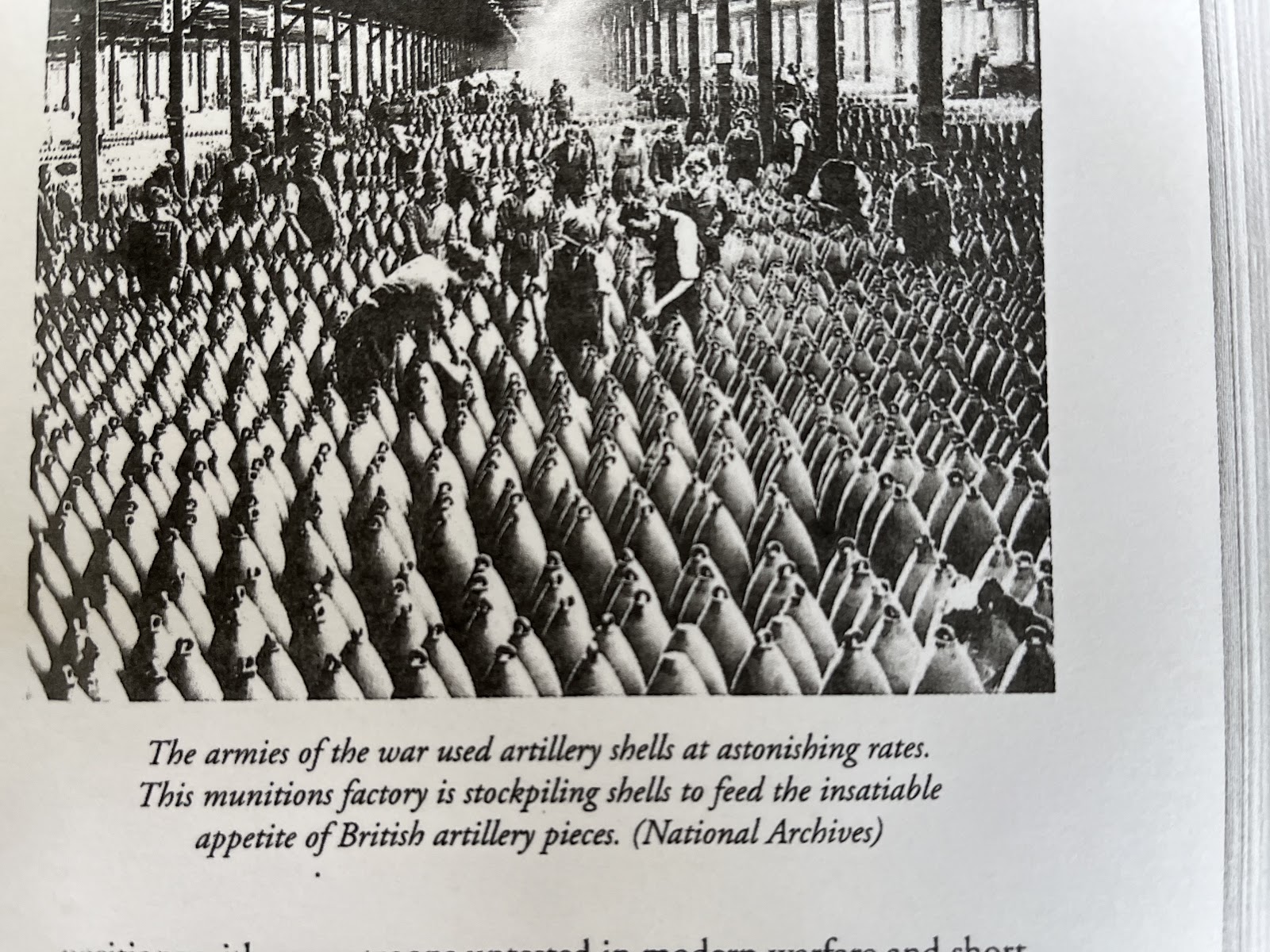


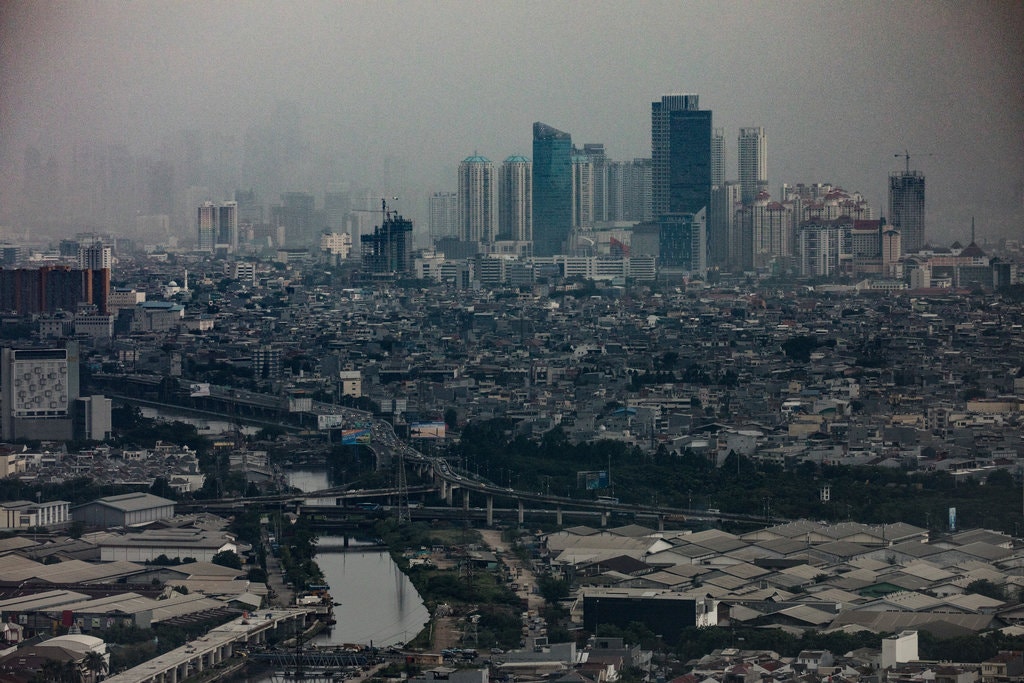

  • A Note on the Geopolitics of Oil

    A Note on the Geopolitics of Oil

    Saudi Oil Minister

    BACKGROUND INFORMATION

    Oil is measured in barrels.

    A barrel is 42 gallons.

    Total global daily production is around 96-97 million barrels/day.

    Saudi Arabia, Russia and the United States all produce around 10
    million barrels a day.  With their
    allies, these three countries account for close to 40% of global production.

    Because of the improved technology of shale oil
    production, U.S. output has gone up almost 5 million barrels/day since 2008.

    Currently, total global production is greater than total demand by
    somewhere between one and three million barrels/day.

    There are record amounts of oil in storage.

    A small percentage increase of supply over demand has led to a
    large decrease in price.

    In the fall of 2014, a barrel of oil cost about $100/barrel.  Last month the price fell to around
    $30/barrel.  Since then, it has rallied
    to around $40/barrel.

    THE ECONOMICS AND GEOPOLITICS OF OIL

    The economies of seventeen countries critically depend on oil
    production and the price of exported oil.  Many others, like Brazil and Mexico, partly depends on oil exports.

    It has been a year and a half since the price of oil began to
    fall.  Many countries are now in
    recession.  Government revenues, mostly
    dependent on oil sales, have fallen drastically and budgets are showing large
    deficits.  In some countries, including Venezuela and Nigeria, the situation is serious enough to threaten the stability of the
    country.

    Given global inelastic demand, a small percent decrease in global
    supply, around 3%, would lead to a large increase in price, probably around
    60-100%.  All countries, including Saudi
    Arabia, would be economically better off. 
    Many other oil producers, but not Iran, have called for lower
    production.  So why hasn’t it happened?

    Saudi Arabia and its Persian Gulf allies have had a number of objectives
    in pumping out a record level of oil and watching the drastic fall in price:

    •         Punish Iran, a Shia rival for power in the Persian Gulf and
      throughout the Arab world.  Saudi Arabia
      is Sunni.
    •         Punish Russia for supporting Iran and then Syria.
    •         Stop the growth of shale oil production in the United States.
    •         Drastically reduce the level of global capital investment in oil.
    •         Reduce production of high cost oil by making it unprofitable
      to continue production.

    Two geopolitical changes in the last 18 months have hardened Saudi
    Arabia’s determination to produce record amounts of oil:

                        Lifting of economic sanctions
    against Iran

    Saudi anger at the U.S. in
    supporting the end of sanctions.

              Russian military intervention
    supporting the Shia regime in Syria

    Both events strengthened Saudi Arabia’s intentions of punishing
    Russia, the United States, and Iran by keeping production at record levels and prices
    low.  If Saudi Arabia and their Gulf
    allies agreed to reduce production and prices rose, the U.S., Iran, and Russia
    would benefit.

    THE SAUDIS MISCALCULATE

    The Saudis have not succeeded in meeting their goals as much or as
    quickly as they expected.  The overall
    strategy was to force other countries to cut back production of unprofitable
    oil and the Saudis and their allies would benefit from their high output and
    higher prices.

    They miscalculated.  Like
    Saudi Arabia, most of the oil is pumped by government-owned or government-controlled
    companies.  They don’t care about
    profits, only revenue.  Government oil
    companies are a source of power, employment, patronage and corruption.  Except in the extreme where less revenue
    threatens the regime, these countries have no incentive to reduce output.  A substantial reduction will lead to higher
    market prices; other countries or companies will maintain or increase
    output.  Without widespread cooperation,
    the end result will be the same total output and the same low prices, except
    the countries that reduced output will lose market share and end up with even
    less revenue.

    The only hope is that major producers, both OPEC and non-OPEC, can
    get together and agree to a collective reduction in production.  A meeting is scheduled in Qatar on April 17.  Saudi Arabia and Russia say they will attend
    the meeting; U.S. oil companies probably won’t. 

    Iran won’t attend and says it will increase production regardless
    of what other producers do.  They have
    softened their position by recently saying that if they are allowed to increase
    production to some unspecified level, they will stop any further increase in
    production.

    What changed?  Why is Saudi
    Arabia signaling it might reduce output?

    Internal pressures.  Fragile society with suppressed
    tensions.  Kept together by a huge social
    welfare system financed by oil revenue.  The
    Saudi government is running a large budget deficit which is rapidly reducing its sovereign wealth fund that finances the lost revenue.

    Saudi would be the “last man standing” but it
    might be a Pyrrhic victory.  The price
    might be too high.

    The Russian economy is really hurting.  A continuation of low prices for oil and
    natural gas could eventually threaten Putin’s power.

    Clear signal to Saudis that they want, or need,
    an end to low prices.  Given the
    continuing economic pain at home, Putin appears willing to cooperate with Saudi Arabia – the geopolitical rival of its client states in the Middle East – in exchange for a stable domestic economy and increased government
    revenues at home.

    A third miscalculation.  U.S.
    shale production hasn’t gone down anywhere near as much or as fast as the
    Saudis expected.  Two reasons:

    Private companies look to marginal costs and
    shutdown expenses, not average cost, in deciding whether to continue
    production.  Reacting to low prices, they
    have lowered their costs and reduced their losses. 
    American drillers adapted to lower prices by shutting down low-producing wells, using new technology to increase output per well, reducing drilling costs by drilling deeper and faster with fewer workers, and forcing suppliers to reduce their prices to producers.

    Until first quarter of 2016, many oil producers
    had locked in higher selling prices through futures contracts.

    American oil executives are saying that in the better shale oil
    areas, new wells can be profitable at $30/barrel.  Oil experts believe that at $45-$50/barrel, total
    U.S. shale production will stop falling. 
    Above $50/barrel, U.S. shale oil production will increase again. 

    Some countries may not cut production as promised.  U.S. shale producers can offset a reduction
    in total supply.  In that sense, the
    U.S., not Saudi Arabia, has become the swing producer.

    Both U.S. and global inventory are at record levels.  Even if production falls three million
    barrels a day, inventory drawdowns can make up most or all of the
    decrease.  Total supply would
    remain at current high levels and prices would fall again.

    THE RECENT PRICE INCREASE

    The futures market and speculators have driven the price of oil
    from around $30/barrel to $40/barrel. 
    Little has changed from the underlying supply/demand balance that drove
    the price from $100/barrel to $30/barrel. 
    Why the increase?

    Speculators look ahead.  Like
    gamblers at a roulette wheel, they pick a number and “puts down their money and
    takes their chances.”   They are betting
    that the major oil producers have reached the panic point and will agree to
    reduce production on April 17.  They are also covering short positions  These actions increased the world price of oil.  But, as the
    above comments indicate, only temporarily.


    THE UNITED STATES:  NAFTA IS THE NEW OPEC


    The United States is poised to become the world’s largest producer of oil and possibly  the world’s largest exporter of refined oil products. Combined with a fall in domestic demand for refined oil products because of electric and hybrid vehicles, the United States could become a net exporter. All of America’s remaining import needs could be filled by Canada and Mexico. Already, the United States does not need any Middle East oil. One reason for past American involvement in the Middle East no longer exists. The main economic reason for an alliance with Saudi Arabia no longer exists.


    The United States controls the technology of shale production. This technology is vital to opening new fields and recovering residual oil in old fields. It is also a geopolitical weapon. Currently, U.S. sanctions against Russia includes withholding oil drilling technology. 

    Related, the United States is already self-sufficient in natural gas, exporting to Mexico, and building liquid natural gas (LNG) plants for export. To reduce dependence on Russia, Poland and Lithuania are building LNG receiving plants. Poland is considering a pipeline from its LNG plant to Ukraine. The United States, plus new natural gas finds in the Mediterranean and shale fields in Poland and Ukraine, could replace much of the Russian exports to Europe.   

    CONCLUSION 

    The geopolitics of oil complicates the economics of oil. Inelastic demand for oil implies that a small percentage decrease in output will lead to a large percentage increase in price and revenue. But geopolitical rivalries make cooperation difficult and probably temporary.  Some of these rivalries have an overlay of intense religious or historical animosity. Virtually every OPEC member has a history of cheating on production quotas. And now any reduction agreement can be countered by increased output in the United States, Canada, and Mexico.

    Oil prices are the result of a complicated interaction of political and economic factors.  Oil buys power and influence.  Saudi Arabia is betting that they can use their oil policy to reassert some control over the tangled conflicts in the Middle East.  Russia hopes that oil and natural gas exports will fuel domestic political stability and geopolitical ambitions. Oil and natural gas exports to Europe are Russia’s most effective foreign policy weapons. Ironically, both countries’ ambitions are at the mercy of increased output and technological improvements in American shale oil production.


    =========================================================

    For further reading, see

    https://politicaleconomicsprof.com/2015/11/saudi-arabia-oil-and-geopolitics.html

    https://politicaleconomicsprof.com/2015/09/energy-and-geopolitics-ii-world-ex.html

    https://politicaleconomicsprof.com/2015/09/energy-and-geopolitics-i-united-states.html

    https://politicaleconomicsprof.com/2015/04/the-russian-economy-and-geopolitics-of.html

    https://politicaleconomicsprof.com/2015/04/the-death-of-opec-sheikh-rattle-and-roil.html

    https://politicaleconomicsprof.com/2015/01/changing-oil-prices-different.html

    https://politicaleconomicsprof.com/2014/12/cheaper-oil-winners-and-losers.html

    For excellent ongoing analysis of the geopolitics and economics of
    the global and national oil markets, see
    http://oilprice.com.

    The classic book on the history of the global oil industry and the
    rise of OPEC is Daniel Yergin, The Prize.

  • Note on the Current Global Oil Market

    Note on the Current Global Oil Market

    Saudi Arabia Oil Minister


    U.S. Oil Production


    Energy prices could go up
    at the same time that energy production could continue to decrease, although
    not as much as simple supply/demand forecasts would expect (see prior post).  Crude oil prices would have to rise from
    current $35/barrel level to at least $50/barrel to stabilize production and
    over $60/barrel to start increasing production. 
    Similar percent increases would be needed for natural gas.

    For most shale oil and
    natural gas producers, virtually all operating revenue is now going to debt
    payments.  After hedges come off, the
    number of bankruptcies and “distressed debt” will accelerate in second quarter
    of 2016.  The companies can continue
    production but bondholders, lenders and stockholders will suffer even larger
    losses.  This trend has already started
    in the junk bond market and the fall of public oil companies’ stock prices.


    Why Saudi Arabia Misjudged U.S. Oil Production


    While OPEC countries produce 40% of the world’s oil, there
    is no consensus on policy.  Just the
    opposite.  There are deep rifts between
    countries, as discussed in earlier posts. 


    Saudi Arabia and its allies believed that all-out production
    would quickly create a global glut, falling prices and a sharp cutback in U.S.
    and Canadian production.  Unlike most
    countries, American oil is produced by private companies that have to worry
    about profits and meeting debt obligations. 
    But over the last year, U.S. oil production has stayed high and is only
    now beginning to decline.  This has
    occurred even though the number of drilling rigs has decreased.  What the Saudis misjudged was that American
    drillers adapted to lower prices by shutting down low-producing wells, using new
    technology to increase output per well, reducing drilling costs by drilling
    deeper faster, and forcing suppliers to reduce their prices to producers.  Breakeven prices came down.  However, at $35/barrel, virtually all drillers
    are losing money.  More and more are
    having trouble meeting debt payments from operating income.  In the last two weeks, three junk bond funds
    have folded, mostly because of losses on energy junk bonds.  Total oil production is starting to decrease.


    One reason that American oil production stayed at higher
    levels than the Saudis expected is that when oil prices began to go down in
    late 2014, many drillers hedged part their production.  This means that they locked in prices higher
    than the declining market (spot) prices. 
    Revenue was higher than forecasted just from looking at market prices. 


    If I Were the Oil Minister of Saudi Arabia


    There is still too much global oil production as inventories
    continue to build up.  There is an
    estimated 30 billion barrels of oil in inventory, about 33 days of
    consumption.  The only growth sector of
    the oil industry is the building of storage facilities.  Some oil is being stored on tankers at sea. 


    Price increases will lag any production declines as
    inventory is worked down.  Global
    production will probably have to decrease by at least 2 million barrels per day
    for some time before supply comes back into balance with demand and prices rise,
    even if global demand is stagnant.


    As Saudi oil minister, I would continue all-out
    production.   Most of the American hedges
    expire in the fourth quarter of 2015 and the first quarter of 2016.  By the end of the second quarter of 2016, the
    financial condition of American drillers should be critical.  More drillers will declare bankruptcy.  But again, the decrease in production will be
    less than forecasted.  By declaring Chapter
    11 bankruptcy, drilling companies can continue in operation without the major cost
    of debt expense.  Companies will merge
    and assets will be sold.  Even given
    this, the Saudis can probably expect total U.S. and Canadian production will
    decline by about one million barrels a day.


    Besides Saudi Arabia and its allies, a number of other
    countries both within OPEC and outside OPEC would also like to decrease
    production.  Prices would rise but only
    if other countries did not raise production to take away market share. 


    With inelastic demand, the percent reduction in total output
    would be less than the percent increase in price.  Total export revenue would increase.


    If I Were Vladimir Putin


    While a number of countries might be willing to make a small
    percent reduction in production, the two wildcards are Russia and Iran.  Russia and Iran, as supporters of the
    government of Syria, are geopolitical rivals of Saudi Arabia.  But another year of low oil prices would put
    serious strains on the domestic economy and the government finances of
    Russia.  President Putin might calculate
    that the political risks of continued low oil (and related natural gas) prices
    are too high.


    Russia, one of the three largest oil producers, might keep
    production high for domestic political reasons and “free-ride” on a global
    price increase.  Iran, recently released
    from economic sanctions, has announced planned increases in production.  Russia might work out a long-term deal with
    Iran that would have economic and geopolitical benefits.  Russia would slightly cut back production
    (about 2 1/2% to start) and buy Iran’s increased output as a substitute and
    resell it to Europe.  Over time, Russia’s
    older fields would have declining production and Russia would abandon plans for
    very expensive (and unprofitable) Arctic exploration projects, which relies on
    Western technology.  Instead, Russia
    would buy increasing amounts of Iranian oil. 
    In exchange, Russia would build more nuclear power plants in Iran and
    supply Iran with uranium (and arms).  Russia
    and Iran have already agreed to the first steps of a nuclear power plant deal;
    it could be expanded as Iran sells more oil to Russia.  Both Russia and Iran would benefit from higher
    global oil prices without an explicit deal with Saudi Arabia.


    Conclusion


    Global oil production has to fall by about 2 million
    barrels/day from its current level of around 92 million barrels/day to work
    down inventories and increase prices.  By
    the middle of next year, half of the decrease will come from the U.S. and
    Canada.  So the rest of the world only
    has to decrease production by 1%-2% for prices to eventually rise.  A price increase to the $50-$60 range –
    40-70% from the current benchmark prices – would greatly increase the hard
    currency export earnings of all oil exporters and probably not lead to
    production increases in the U.S. and Canada.


    This seems like a no-brainer.  But will it happen?  A game theorist familiar with the Prisoner’s
    Dilemma would be somewhat doubtful.  These
    are not the purely rational players of game theory.  Despotic political leaders and their
    political elite more concerned about staying in power and other domestic
    concerns head many of these countries.  Some are also geopolitical rivals, often with
    an overlay of intense religious or historical animosity.  And virtually every OPEC member has a history
    of cheating on production quotas.

    ==================================================================

    A number of prior posts discuss these themes in more detail.  See the recent post on Saudi Arabia.