Tag: steam engines

  • The Beginning of the Industrial Revolution in England

    The Beginning of the Industrial Revolution in England


    “The age is running mad after innovation.” Samuel Johnson


    In the Beginning


    Why study economic theory and analysis, read economic history, and make economic forecasts? The short answer is because of the Industrial Revolution and the attempt to understand its dynamics and structure. Economics is an attempt to understand the material world we live in, the environment created by the Industrial Revolution.


    THE BEGINNING OF THE INDUSTRIAL REVOLUTION


    The Industrial Revolution began in England in the late 1700s. It then spread to America and western European countries. This post will summarize its origins in England and describe the early decades of the Industrial Revolution in America.


    The Industrial Revolution was a radical break in history. But in England, many of the preconditions were already in place, as can be seen by the history of the Wedgwood company.


    The revolutionary generation that first adopted steam engines saw the following trends and changes:


    Manufacturing was being modernized by a small group of entrepreneurs. Much of the new raw material processing and manufacturing was concentrated in a small area in the middle of England, away from London. These modernizing entrepreneurs formed a new economic, intellectual and social network.


    Modernizing entrepreneurs like Wedgwood, Darby, Wilkinson, and others tended to be members of Dissenting sects or Nonconforming churches (not members of the Church of England), Whig (liberals) in politics, and believers in “progress.” They were optimistic about the future, influenced by the ideas of Hume, Rousseau, Locke and Adam Smith. They believed their society could be reformed and they were active agents for improvement.


    They believed in studying and understanding the material world through reason, data, experience, and experimentation. They had personal ties with scientists and intellectuals. 


    Like Wedgwood, many came from poor backgrounds. Because of their backgrounds and religious beliefs, they could not attend Oxford or Cambridge. They were cut off from the traditional avenues of social advancement – government official, army or navy officers, and the Church of England. They were not large landowners. The Industrial Revolution gave them opportunities for economic success denied them under a pre-industrial society. Entrepreneurs could develop these opportunities because of a long political struggle in England to establish the rule of law, individual rights, property rights and limits on governmental power.


    The Industrial Revolution began when steam power was applied to drive newly invented metal machinery. A greatly improved steam engine was developed and patented by James Watt. Watt was convinced by a Midlands metal manufacturer named Matthew Boulton to start of company producing his new steam engine. The cylinders of the steam engines were produced for Boulton and Watt by John Wilkinson, who had perfected a method of boring more exact cylinders, first applied to making cannon for the English navy. 

    Steam engines replaced less powerful waterwheels. They also could be used where there were no rivers or streams to drive the waterwheels. The first use in London was to greatly expand a bakery.

    This became the starting point for the development and mass production of everyday products and services. The motivation was private profit. 


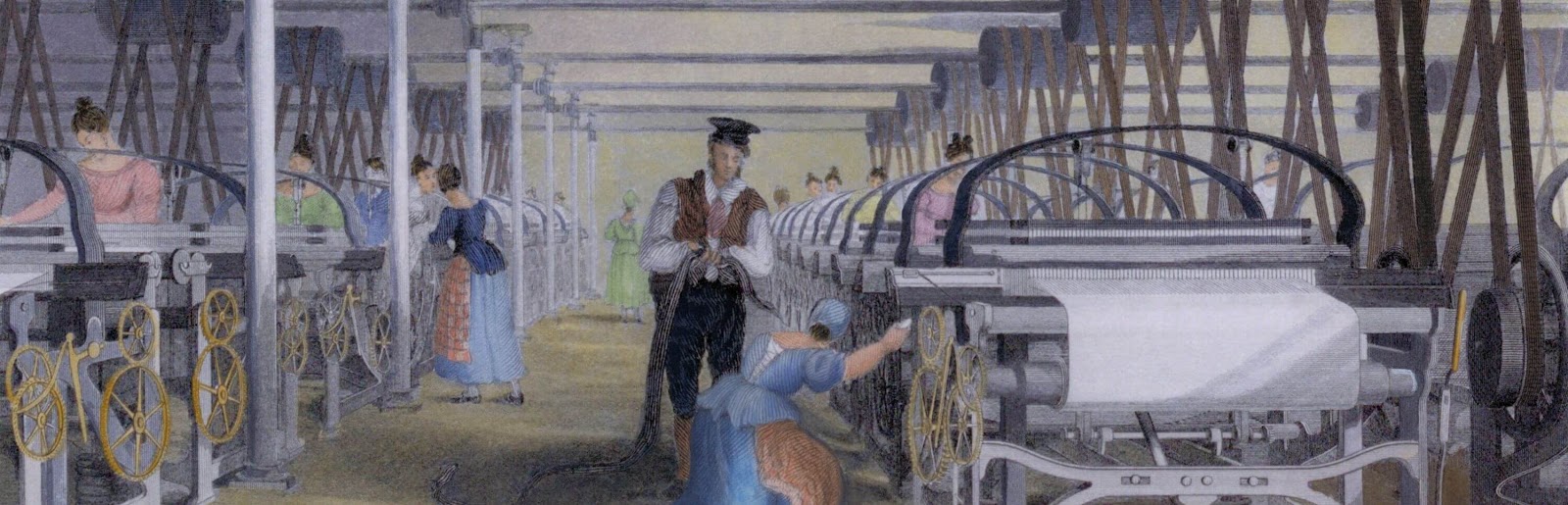
    The buildings housing power-driven machinery were the beginning of another innovation – the modern factory with a disciplined industrial labor force. Advancements in production planning, management and control exploiting the new production technology led to increased output and lower unit cost.  


    The most important discovery of the Industrial Revolution in England – what made it a revolution – was the invention of…invention. But inventions then had to be turned into innovations, the design of power-driven machinery, metal tools and machines, and large-scale production of useful products and services that people besides the rich could afford. Final products had to be continuously improved from prototypes to commercial products that customers found to be valuable (however defined), easier to use, and cheaper. Capital inputs and production methods changed together to mass-produce the products at lower real cost.  New markets were created. Companies competed on coming out with new and better products. 


    A detailed look at the early years of the Industrial Revolution in Great Britain reveals a hurricane of inventive activity. Hundreds of mechanics, engineers and tinkerers attempted to improve on the new and existing technology, develop variations, solve specific technical problems, propose new applications, and apply for patents to protect their ideas. Better machine tools and larger, faster machines were invented. New production systems and methods produced large quantities of new and improved goods at lower and lower real cost. The main reason for this explosion was the opportunity to profit from the sale and application of technical knowledge.


    The first industry to be transformed was the cloth industry. Cotton cloth, an expensive luxury product before the Industrial Revolution, was mass-produced by power-driven iron textile machinery. Huge increases in productivity led to a large fall in price and increased demand. Cotton cloth became England’s largest export throughout the 19th century. Power-driven metal machinery would transform the production of many traditional industries.


    We can measure the long-run results of ceaseless innovation in the weaving of cloth. A weaver today using modern looms can produce 100

    times the amount of cloth per hour produced by a hand-loom weaver 200 years ago.


    Many of the advances came together to create the railroad in the 1830s. Railroad locomotives were make possible by the development of high-pressure steam engines, an improvement James Watt decided to ignore and denounce. It took 25 years of experimentation and development to work out the technical details of an efficient locomotive and a practical railroad. Even failures often showed at least one technical improvement, solving one technical problem.


    The first general-purpose railroad was built in 1830 between the port of Liverpool and the new manufacturing center of Manchester. The railroad’s main function was to transport imported cotton to Manchester and cotton cloth back to Liverpool for export.


    =========================================================

    For two excellent books describing the invention and development of the Industrial Revolution in England, see


    William Rosen, The Most Powerful Idea in the World:  A Story of Steam, Industry and Invention. 2010.


    Gavin Weightman, The Industrial Revolutionaries:  The Making of the Modern World, 1776-1914.  2007.


    Related Blog Posts:

    Adam Smith’s Pin Factory At the beginning of the Industrial Revolution. Why Adam Smith’s Wealth of Nations does not explain the origins of the Industrial Revolution. How pin and nail production evolved later.

    For an excellent example of an innovative entrepreneur at the beginning of the Industrial Revolution in England, see


    Josiah Wedgwood, the Wedgwood Pottery Company, and the Beginning of the Industrial Revolution.

    How England lost its economic and technological leads. Moral – keep innovating or fall behind.


    A Cautionary Tale – England and the Industrial Revolution.

    Why America was in an excellent position to take advantage of the Industrial Revolution that began in England.

    The Beginning of the Industrial Revolution in America.


    For a list of related posts, see the Guide to Posts. There are essays on American Economic History, American History, China’s Economy, and the English East India Company. And much more.


  • The Beginning of the Industrial Revolution in America

    The Beginning of the Industrial Revolution in America


    In the Beginning

    PRECONDITIONS OF THE INDUSTRIAL REVOLUTION IN AMERICA

    Before industrialization began in the 1820s, there was a set of political institutions and cultural values, mostly inherited from England, that encouraged profit-seeking individuals to start new companies.  They included fairly secure property rights, increasing legal limits on monopolies, an independent judiciary that enforced contracts, emphasis on individual rights rather than social obligations, patents, tolerance of markets, and less government regulation of markets than in the past.  Much of this was stated or implied in the Constitution; an activist Supreme Court under John Marshall extended these trends. The Constitution also helped to create a national market and reduce transaction costs by mandating a national currency and limiting states’ ability to make economic policy that favored their own residents.


    What America did not inherit from England was important. Unlike England, the new United States did not have a king and a landowning nobility to siphon off capital. Settled by members of dissenting sects and persecuted religious minorities, there would be no state-supported national religion. As a consequence, capital would not be diverted to royal palaces, aristocratic castles, or cathedrals.


    Economists interested in economic development often advocate land reform in a traditional agricultural society as a necessary first step to modernization. This breaks the power of the conservative landlord class. America did not have to go through this step. Laws were passed even before the Constitution that made free and cheap land available to everyone. America began as a nation of landowning farmers. Thomas Jefferson saw independent farmers as the foundation of a democratic society.


    By winning the American Revolution, the new United States retained from England the political policies and ideas that would encourage individual economic “striving” and reject most of the English institutions opposed to progress and change. America was fortunate that it created a political structure, a democratic society, and an ideology that would support the coming Industrial Revolution. 


    In the early period of industrialization (1820-1870), a rapidly growing population (from 3 million in 1790 to almost 10 million in 1820 to 30 million in 1860) created an increased potential demand for new consumer products. Western expansion generated an agricultural surplus of commercial crops that were exchanged for cash to buy manufactured goods. Exports of cotton helped pay for imports of machinery, locomotives and manufactured goods.


    These conditions together could encourage economic growth but not necessarily industrialization, the large-scale production of capital goods (machinery) and consumer goods using inanimate power (steam engines and waterwheels) to drive faster, more powerful machinery. For that to happen, mechanics, tinkerers, investors, and entrepreneurs had to invent, innovate and organize new finance, production, distribution and marketing methods. Economic development drove economic growth.

    THE BEGINNING OF THE INDUSTRIAL REVOLUTION IN AMERICA

    A key factor explaining why America industrialized so early and so quickly was the country’s continuing ties with England after the American Revolution. Americans quickly understood the profitable opportunities of the new production methods being created in England. Americans also had access to much of the scientific and technical knowledge being created and applied in England. Ambitious Englishmen with technical knowledge, like Samuel Slater the founder of the American textile industry, came to America because they had more opportunity here to get rich. Americans read English scientific and technical journals; often, American like Robert Fulton went to England to see the new methods and machinery. The future Baltimore and Ohio Railroad sent an engineer over to England to find out about English railroad technology even before England had completed its first general purpose railroad. American mechanics and engineers quickly adapted English railroad technology to the American environment.

    One reason industrialization spread was the association of entrepreneurs with investment capital looking for new profit opportunities with mechanics interested in designing and developing new power-driven machinery, especially metal-working machinery.  In the beginning, many of the machine tools and power-driven machinery could be built using traditional craft skills, using traditional materials like wood and hand (or foot) operated tools. The power sources to drive the machinery were not a problem. Waterwheels had been used for hundreds of years in Europe; steam engines could be imported from England. They would soon be designed, improved and produced in America.

    America’s wealthy merchant class was more willing than England’s merchant class to invest in new industrial ventures.  The exception was railroads. There were speculative railroad investment booms in England in the 1840s and 1860s. 

    There were inspired geniuses like James Watt in England and Oliver Evans in America who greatly improved the steam engine, which had been in use in England since the early 1700s. Then modifications and adaptations of existing power-driven machinery and machine tools like lathes often led to large increases in productivity of particular products. In one early example, an American axe manufacturer hired a mechanic to design and development a die forging machine to produce axe heads. His machine increased the productivity of a single skilled striker and an assistant from 12 to 300 axe heads per day. It was these kinds of innovations that drove the Industrial Revolution.

    Americans often surpassed the English in their ability to mass-produce products at a lower cost. American products were generally not as good as English products but their lower cost, plus constant improvement, led to a great deal of innovation and high growth rates. Americans developed a reputation of making it fast, making it cheap today and improving it tomorrow. 

                                                                                                                 
    LABOR

    There was no labor shortage for the factories and mines because of high birthrates, high rates of population growth, open immigration, and the use of women in the industrial workforce. This was also a high quality labor force with high literacy rates among native-born workers. Also, there were no entrenched guilds of craft workers to discourage introduction of new production techniques or influence the organization of work in the factories.

    ADVANCES IN RAW MATERIAL PRODUCTION

    The Industrial Revolution would have been a limited affair if not for the huge increase in the production of metals, especially iron. The new steam engines, machine tools, and machinery were made out of iron and other metals. Fortunately, much of the new production technology – smelting iron ore with anthracite (hard) coal or coke and puddling pig iron to reduce the carbon content for forging – had been worked out in England and Wales in the 1700s. Americans had access to or knowledge of this technology when the demand for iron skyrocketed after 1820. Entrepreneurs built larger furnaces, brought over the new Welsh technology of smelting iron ore with anthracite coal, installed steam engines to heat and blow air into the furnace, and recycled waste heat to raise temperatures. The result was a big increase in iron production at a lower cost per ton. The increasing production of iron for casting and forging eliminated a potential bottleneck to rapid industrialization.

    Large amounts of iron would be vital to the development of the railroad industry.

    TRANSPORTATION COSTS

    The single largest transaction cost at the beginning of the Industrial Revolution was transportation costs. High overland transportation costs because of long distances and rugged terrain limited the size of markets and made products expensive.

    These high costs were first attacked on a large scale with the building of canals, inspired by the spectacular success of the Erie Canal (fully opened in 1825). Overland transportation costs fell by about 80%. At the same time, steamboats on Western rivers reduced costs and permitted upstream navigation. America had the largest navigable river network in the world. Then, starting in the 1830s, came railroads, another new technology developed in England. Within two years, American mechanics and engineers were modifying English designs to match America’s harsher conditions. American companies began producing locomotives and other rolling stock. American railroad companies figured out how to lay down track quicker and at a lower cost than the better built railroads of England. This was an early example of the American business ethos – build it fast, build it cheap, get it up and running, generate revenue, then fix and improve it.

    Compared to canals and steamboats, railroads offered huge increases in total carrying capacity, year-round operation, lower cost, greater flexibility and reliability, and big savings in time moving goods, people, and information. The explosion of needed information to run a large railroad created serious management problems, to say nothing of trains crashing into each other. The problem was partly solved by the creation of the telegraph. Railroads financed many of the early telegraph lines, often strung alongside railroad tracks. 
    Railroads also pioneered the decentralization of operations management into divisions that suggested the organizational structure for later industrial corporations.

    Throughout the Industrial Revolution, America had by far the largest railroad transportation system in the world. It overcame large distances and supported western expansion. Railroads moved agricultural goods to urban markets and ports, and manufactured goods to rural areas. They were vital to the creation of a national market.

    THE SPREAD OF THE INDUSTRIAL REVOLUTION

    The thinking of Francis Cabot Lowell, a Boston merchant, was indicative of a new kind of mentality that was crucial to the success of the Industrial Revolution in America. He was a newly rich merchant looking for new investments. Lowell saw cotton textile production as an integrated system in one factory. He thought about how the different production steps could be coordinated in one, large mill to reduce handling costs and increase overall productivity. Lowell raised the investment funds from fellow Boston merchants to pay for the high upfront capital costs of constructing large buildings and textile machinery. He was the founder of America’s first large-scale manufacturing industry – cotton textiles. He is also famous because he went to England to steal the designs of power-driven looms.

    What mill managers and mechanics subsequently learned from experience was that whenever they increased the productivity in any part of the production system it created bottlenecks elsewhere in the system. Better, faster machines would then have to be designed for other stages of production. This would create new bottlenecks; the process was one of continuous improvement in the production flow.

    Back to the axe example. When die-forging machines made many more axe heads per hour, this created a serious bottleneck problem in the milling (or grinding) of the head into the right shape.  New power equipment was invented to plane (or sand) the heads faster than the old technology. This, in turn, put pressure on the methods to temper (or harden) the heads; innovative new specialized ovens were designed to increase the product flow and improve quality. This same process worked in all successful companies in all industries that adopted power-driven machinery.

    Americans like Thomas Jefferson, Eli Whitney, and the technically trained officers of the army realized early the potential of the mass production of interchangeable parts that could be fitted together quickly by unskilled labor to produce and repair guns. Interchangeable parts, when fitted together with other interchangeable parts, eliminated the slow and expensive need for hand filing and fitting to make metal parts fit together. It took over 30 years to make the system operational. It made possible the mass production of new metal products such as sewing machines, typewriters, and automobiles. This new manufacturing process was so radical that English engineers called it the American System of Manufacturing.

    The cumulative effect of this industrializing process was increasing productivity, higher volume of output, better quality and lower unit cost. This trend spread to other industries with the application of general-purpose machine tools to new uses. Itinerant mechanics adapted their knowledge and experience to modernize the production of new products. Techniques developed in one industry were often transferable to new industries. Success in one industry inspired entrepreneurs to apply the same methods in other industries.  This is how the Waltham Watch Company got started; the founder was inspired by a visit to the Springfield Armory, famous for the mass production of rifles. Sometimes this occurred in the same company; Remington went from producing guns to producing sewing machines to producing typewriters.

    At first, industrial products were familiar products just produced at a lower unit cost by power-driven machinery in factories. Examples included cloth, shoes, paper, nails, clocks, and guns. Lower prices had the same effect as higher income; consumers had money left over to buy more of other products. But as production technology advanced – new and more specialized machine tools, the mass production of steel and the ability to work new materials – it became possible to design and produce new, complicated metal consumer and producer durables. New production techniques developed, such as the stamping rather than the grinding of parts. This led to the mass production of the automobile.===============================================================

    For a general discussion of American history between 1789 and 1860, see


    A New Nation, American History from 1789 to 1860


    Compare the American experience with that of England:

    The Beginning of the Industrial Revolution in England


    For the limits of Adam Smith’s thinking in explaining the origins of the Industrial Revolution, see

    Adam Smith’s Pin Factory


    For an excellent example of an entrepreneur at the beginning of the Industrial Revolution in England, see


    Josiah Wedgwood, the Wedgwood Pottery Company, and the Beginning of the Industrial Revolution.

    For the story of how England lost its economic leadership, see 

    A Cautionary Tale:  England and the Industrial Revolution.

    For a list of all posts, see List of Posts by Topic.


  • Josiah Wedgwood, the Wedgwood Pottery Company, and the Beginning of the Industrial Revolution in England

    Josiah Wedgwood, the Wedgwood Pottery Company, and the Beginning of the Industrial Revolution in England


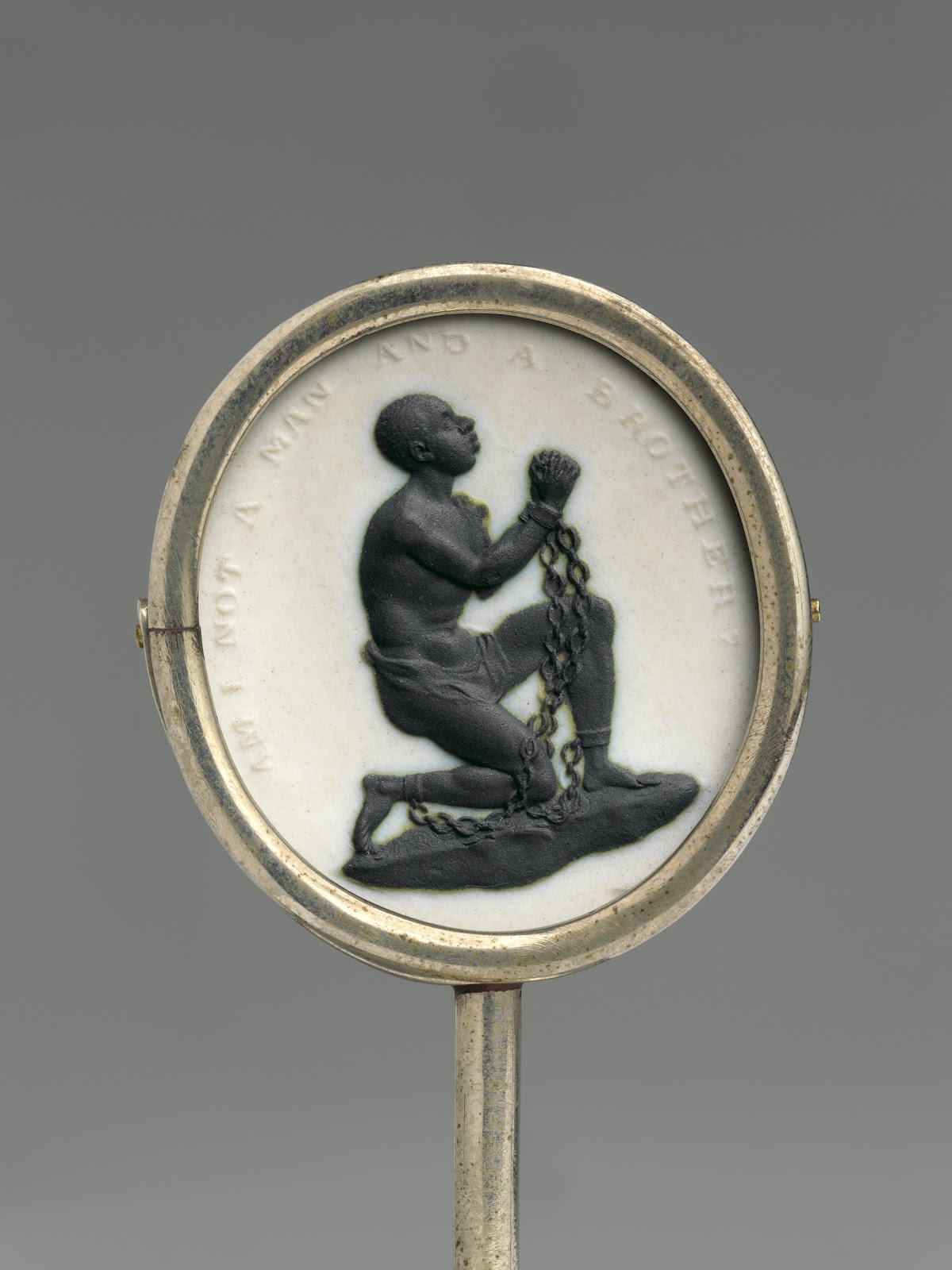
    Wedgwood Anti-Slavery Cameo

    A better introduction to the beginning of the Industrial Revolution than Adam Smith is the history of Josiah Wedgwood and the Wedgwood Pottery Company.


    This is how one company actually ushered in the Industrial Revolution.


    The revolutionary generation that first adopted steam engines saw the following trends and changes:


    Manufacturing was being modernized by a small group of entrepreneurs. Much of the new raw material processing and manufacturing was concentrated in a small area in the middle of England, away from London. These modernizing entrepreneurs formed a new economic, intellectual and social network.


    Modernizing entrepreneurs like Wedgwood tended to be members of Dissenting sects (like Quakers) or Nonconformist churches (not members of the Church of England), Whigs (liberals) in politics, and believers in “progress.” They were optimistic about the future, influenced by the ideas of Hume, Rousseau, Locke and Adam Smith. They believed their society could be reformed and they were active agents for improvement.


    In 1787, Wedgwood produced a ceramic medallion to support the abolition of slavery. It had a chained African pleading, “Am I not a man and a brother?” This was in the country that became rich by dominating the African slave trade and raising Caribbean sugar with slaves working under brutal conditions. 


    They believed in studying and understanding the material world through reason, data, experience, and experimentation. They had personal ties with scientists and intellectuals. 


    Like Wedgwood, many came from poor backgrounds. Because of their backgrounds and dissenting religious beliefs, they could not attend Oxford or Cambridge. They were cut off from the traditional avenues of social advancement – government official, army officer, and the Church of England. 


    The Industrial Revolution gave them opportunities for economic success denied them under the pre-industrial society. Entrepreneurs could develop these opportunities because of a long political struggle in England to establish the rule of law, individual rights, property rights, patents and limits on governmental power. It also helped that they were largely ignored by the king and the landowning aristocracy.


    The Industrial Revolution was a radical break in history. But in England, many of the preconditions were already in place, as can be seen by the history of the Wedgwood company.  


    Josiah Wedgwood came from a family of potters. He founded the famous Wedgwood pottery company in 1759. 


    Wedgwood and many of his business associates and acquaintances were modernizing entrepreneurs. Wedgwood and others built large factories recruited and industrial labor force, and understood the division of labor. They were constantly looking to improve their businesses – better machines, larger and more efficient production, new and improved products, new materials and marketing.


    A limiting factor was power to run the machinery. Waterwheels were inefficient, with not enough power to drive the larger, faster, heavier machinery. English rivers were flat, sluggish, and sometimes dry because of droughts. The solution – Watt’s steam engine, which was first manufactured in 1775.

    James Watt invented and patented a more efficient steam engine but it was Matthew Boulton, a friend and sometime business partner of Josiah Wedgwood, who partnered with Watt and built the factory that produced Watt’s steam engines. Boulton heard about Watt’s engine through a mutual acquaintance in his network of correspondents. Boulton, a successful manufacturer, established and ran a new company (Boulton and Watt) that dominate steam engine production and marketing for a generation. Watt concentrated on improving his steam engine and inventing related technology. Like many later industrial companies, Boulton and Watt was the combination of a businessman and an inventor/mechanic.


    Innovation at Wedgwood was based on science and experimentation. Josiah Wedgwood carried out thousands of experiments in his lifetime analyzing all aspects of pottery manufacturing and decoration, and record the results in detailed notebooks. He read chemistry books and knew and corresponded with the foremost chemists of his day. He tried to reduce the traditional hit or miss methods of producing pottery to more scientific measurement and control. (This tradition of careful observation and scientific understanding of the natural world was passed on to Josiah Wedgwood’s grandson, Charles Darwin.)


    Josiah Wedgwood used power-driven machinery and early assembly line techniques to mass-produce pottery. He was the first manufacturer to install a Watt steam engine.


    Wedgwood was always on the lookout for new styles, better machinery (lathes and kilns) and new production methods. He believed in retaining employees and training them to become increasingly productive. To keep employees, he provided housing and retirement benefits. Wedgwood cooperated with other manufacturers he knew to introduce new materials and new processes into the production of pottery.

    Wedgwood expanded sales and profits by selling in foreign markets. He provided a large amount of specially designed pottery to the English and Russian royal families. Wedgwood turned a luxury product for royalty and the very rich into a mass market product for the expanding upper middle class. In addition to European countries, Wedgwood made a special effort to sell to the American colonies. He designed different styles at different price points for different markets. Today we would call this market segmentation.  


    His experiments with new materials and production methods led to the creation of new styles of pottery, which he believed were necessary to increase sales. Wedgwood changed styles every few years, backed by innovations in marketing such as showrooms and branding that were to become standard in the selling of consumer goods.


    In summary, he exploited new production technology and combined it with scientific production control and management. His innovative design and selling strategies became standard for future consumer goods companies.


    ==============================================

    See the related post, Adam Smith’s Pin Factory.

    For the rise of England as a global economic and political power in the 1600s, see

    England in the 1600s:  The Beginning of England’s Rise to Global Power and Wealth

    These posts analyze the factors behind the start of the Industrial Revolution in England and America.  Pre-conditions were important. They illustrate some of the reasons why, in the long run, America was able to continue industrializing better than England, why England fell behind.


    The Beginning of the Industrial Revolution in England


    The Beginning of the Industrial Revolution in America


    Innovate or Fall Behind. A Cautionary Tale – England and the Industrial Revolution

    Some related posts: