Tag: U.S. Foreign Policy

  • Implementing Foreign Policy:  Issues and Strategies

    Implementing Foreign Policy: Issues and Strategies

    THE BASIC PROBLEM

    The most important fact about international relations is that the United States is the only global power.  Unlike China, Iran or Russia, the United States has to deal with foreign affairs everywhere in the world.  At the same time.  Although possessing huge resources, these resources are not unlimited.  

    The American president has to make two sets of related “economic” decisions – how to allocate foreign policy resources among many possible combinations of objectives, and the mix of resources in pursuing each objective.  The temptation is to rely solely on America’s powerful military.  But even this simple strategy has limitations, as experienced by failure in Vietnam, Lebanon, Somalia, and Afghanistan. The military success in invading Iraq was followed by the bungling of the “morning after” occupation that resulted in Iran dominating Iraqi politics and many officers of the disbanded Iraqi army joining ISIS.

    The level and mix of resources – military, diplomatic, economic, political, ideological – brought to bear on one political problem affects the resources available for other problems.  Committing most of America’s front-line military resources to fight in Iraq reduced America’s ability to react to threats elsewhere, especially in Europe and Afghanistan. It probably delayed focusing on the looming threat of China.  Deploying a carrier group in the Persian Gulf meant it was not available to defend the Strait of Malacca or challenge China in the South China Sea.

    Each game, each competition, cannot be played in isolation. They are all connected, as the past and current geopolitical thinking in terms of all of Eurasia makes explicit. There are feedback effects from actions in one area of the world on other areas. There are constraints on strategy with future (uncertain) payoffs.

    There are overall resource and cost constraints.  Paul Kennedy wrote an influential book on the dire consequences when the cost of foreign commitments of powerful countries outruns their resources.  The United States cannot run large budget and trade deficits forever and expect the rest of the world, especially China, to loan us the money to pay for our expensive military and intelligence operations.

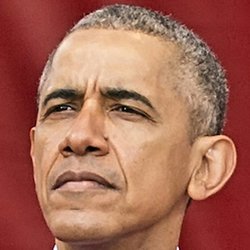
    PRESIDENT OBAMA LEARNS TO THINK LIKE AN ECONOMIST

    President Obama inherited foreign relations in shambles.  The war in Iraq had degraded
    America’s military capacity to respond elsewhere and promoted radicalism in the
    Middle East.  A review of our relations
    with Pakistan, Saudi Arabia and Iran was long overdue.  Europe and NATO were neglected, with no clear strategic objectives.  Potential regional hegemons such as Turkey
    and India were ignored.  We did not see
    how China’s economic resurgence would finance a return of traditional Chinese
    foreign policies in Asia.  President
    Bush’s response to the challenge of Vladimir Putin was naïve at best.   

    President Obama learned that he could not deal with every
    foreign policy challenge with the optimal set of resources. There were tradeoffs. Resources committed have to be proportional
    to the importance of the objective.

    THE LONG RUN GAME

    There is another consideration.  It is important for the American president to
    realize that the game never ends. 
    America, more than any other country, has to play a complicated, long
    run strategy.  A skillful set of foreign
    policies must consider how decisions made today affect the future.  Sports analogies are misleading.  There is always a “morning after” to any
    “Mission Accomplished.”  The game doesn’t
    end.  The collapse of the Soviet Union
    did not mean that traditional Russian geopolitical objectives disappeared. The U.S. will never defeat the Taliban as long as there are sanctuaries in Pakistan.

    When President Obama assumed office, he was fond of using
    sports metaphors to describe foreign policy. 
    In an article in The Economist, he used the metaphor of
    a relay race to describe foreign policy. 

    The United States, unlike other countries such as Russia and
    China, must find the right combination of Realpolitik
    and ideological objectives.  This was
    easier to do during the Cold War.  Now
    the United States should continue to promote democratic ideals without seeming
    to use its military and political power to impose its will on other
    countries.  The overseas perception of
    how well America’s democracy is functioning, how well it deals with economic
    and social change, is an important part of foreign policy. Again, the United States is playing a long
    game.

    Supporting democratic ideals and democratic groups around the world has become complicated in the post-Cold War world. Supporting groups like Solidarity was easy; supporting democratic opponents to repressive or autocratic regimes that are nominal political allies of the United States is more complicated. If democratic ideals, institutions and groups are destroyed by repressive, autocratic and right-wing populist regimes, can America survive as an influential global power?

    The United States has to recognize that there are limits to
    its influence.  Other groups and
    countries just see the Realpolitik or
    even a new form of imperialism.  Arrogant
    statements followed by military action or threats often lead to long run
    problems and lack of credibility. Bombing with drones is easy.  Using patient
    diplomacy, economic sanctions and other foreign policy tools that don’t have an
    immediate payoff is difficult to implement and often difficult to explain.

    DOMESTIC POLITICAL INFLUENCES AND CONSTRAINTS

    It is tough to conduct a patient, long run foreign policy in
    a democracy, especially when an increasing number of adults suffer from
    political A.D.D., also known as cable newsitis. 
    Sometimes the immediate policy alternatives are bad, worse, and
    disastrous.  Sometimes the best
    alternative is to do nothing.  Sometimes,
    wait to see how things develop and decide how to act later.  Political opponents will criticize the
    president for being weak or soft.

    In a democracy, there are domestic political constraints
    that can’t be ignored or silenced.  Many
    Americans have emotional ties with other countries and will protest and lobby for
    that country if they object to American policy. 
    Cuba and Israel come to mind; Americans of Polish descent may become a
    domestic pressure group if Russia threatens Poland. It remains to be seen how a large Latin American population will affect U.S. attitudes and policies towards Latin America.

    More Americans are blaming their personal economic difficulties on the global economy. New actors such as American multinational corporations and issue-oriented NGOs (non-governmental organizations) are also trying to influence American foreign policy.

    Domestic political and economic policies have international consequences. For example, energy mix and carbon emissions. If America reduces carbon emissions, then foreign policies and influence in this area will be credible. If not, America loses leadership in this critical global area. The same is true in related national policies to deal with other aspects of climate change.

    In the modern world, economic and political factors are
    intermixed.  Trade agreements have been
    as much about political objectives as foreign trade.  The Trans-Pacific Partnership is as much
    about containing Chinese influence in Southeast Asia and strengthening
    political ties in Latin America as it is in promoting world trade.  The proposed trade agreement with the
    European Union, and a similar agreement with Britain, is a key move to holding
    the European alliance together.

    THE FOREIGN POLICY DEBATE

    The question debated in the last presidential election was whether or not Americans are still willing “bear the burden,” pay the cost,
    of being democracy’s premier power. 
    There was isolationist rhetoric not heard since the 1930s.  Many Americans, maybe a majority, seem to
    believe the global engagement costs to the United States are greater than the
    benefits, however difficult to define and defend in the post-Cold War world. 

    If the United States becomes more isolationist and
    protectionist (economic nationalism, threatening virutally every major trading partner with tariffs and trade restriction), there will be political and economic consequences.  Trade, and American multinational
    corporations, are vulnerable to retaliation. 
    Ambitious leaders of other countries would love to fill the political
    and military vacuums America leaves behind.

    Increasingly dysfunctional domestic political and economic
    institutions affect the resources and long range focus necessary for foreign
    policy.  There are other countries
    throughout history that have turned from looking outward to looking inward, to
    disengage from the rest of the world. Huge Chinese fleets dominated Asian waters as far as the east coast of Africa in the early 1400s. Then China became isolationist. By the early 1500s, these waters were increasingly dominated by Europeans. Eventually the Europeans reached China, leading to and contributing to the colonial carving up of China, civil wars, widespread use of opium and the disastrous Communist regime. Over 100 years of violence and suffering. It is a logical contradiction for a regional or global power to be isolationist.

    ====================================================================


    For an earlier, related discussions, see


    President Obama is Still Trying to Save American Capitalism and Global Influence

    President Obama Learns Some Game Theory

    For a list of posts and economic tutorials in Pages, see Guide to Posts and Pages.
      

  • Saudi Arabia, Oil and Geopolitics

    Saudi Arabia, Oil and Geopolitics

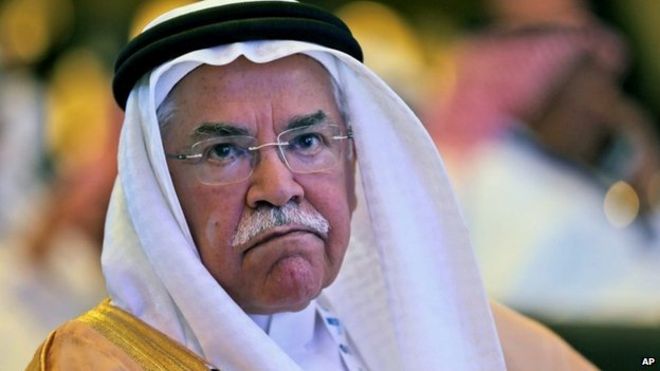
    Saudi Oil Minister

    Introduction: The Fall in Oil Prices in 2015

    Crude oil prices temporarily rose because Saudi Arabia signaled that it
    would cooperate with OPEC and non-OPEC producers to “stabilize” oil
    prices.  Nothing specific was
    mentioned.  At the current price and for
    political reasons, it is unlikely Saudi Arabia and its Persian Gulf allies will
    cut production or negotiate joint production cuts with other large
    producers.  The comments are probably an
    indication that Saudi Arabia might be part of a global reduction in crude oil
    production if prices go much lower and the political situation in Syria changes.

    Until recently, Saudi Arabia was seeing the results it
    wanted.  Some are economic, having to do
    with the current and future price and production of oil.  The economic targets were shale production in
    the U.S and tar sands production in Canada. 
    The geopolitical targets were Iran and Russia.  But unexpected economic and geopolitical
    changes have increased the cost to the Saudis of continuing their
    policies.  Low prices will continue
    longer than the Saudis expected.  At the
    same time, geopolitical changes have made it more unlikely that Saudi Arabia can
    change its strategy or negotiate a favorable change in the global oil industry.

    Economic Goals

    Until 2014, increased production in the U.S. and Canada was
    matched by increased demand by China and other developing countries. Prices remained at record high levels, over $100/barrel.  But a continued increase in U.S. shale production combined
    with slower growth in Chinese and global demand in 2014 led to surplus
    production and rising inventories.  Since
    both global supply and global demand are inelastic, a small percentage increase
    in global supply relative to global demand led to a decrease in exports and a
    large decrease in price.  Thus far, about
    45%.

    The fall in the price of oil is part of a bigger picture,
    the fall in the price of virtually all globally-traded energy products,
    minerals, metals and agricultural products. 
    Strong growth in global demand before and after the last recession, led
    by China, encouraged countries and companies to expand capacity and production
    in almost all commodity industries.  A
    slowing of global growth resulted in excess supply and large decreases in world
    prices.  This implies that the pricing and supply problems of the global oil industry is not just caused industry variables but is part of a larger global trend of slowing manufacturing and exports.

    Oil production in many countries cannot be reduced for
    domestic political reasons. In some countries, the state owns or controls oil production and relies on oil export income for government revenue, earning hard currency to service rising foreign debt and maintaining employment and politically-necessary welfare programs and subsidies.  In countries like the United States, where oil production is done by private companies, producers try to maintain output as long as price is above marginal production costs, thus contributing to covering ongoing financial costs
    (interest and principal payments on increased levels of debt) and avoiding penalties for shutting down output of producing wells.

    Saudi Arabia and its allies knew if they cut back production
    and the price of oil rose, other countries and companies would expand
    production.  American shale production
    would continue to increase if the domestic price (WTI, a few dollars below
    Brent, the world benchmark price) stayed above $60/barrel.  At the current price range of $40-$45/barrel,
    some American production has been shut down and most drillers are
    losing money.  But total production has not gone down as far or a fast as the Saudis expected.  One reason is that many of the drillers hedged the price of some of the oil they sold when the price began to fall.  Another is that production costs are falling, partly due to new drilling technology. Their average selling price is high enough to cover lower marginal drilling and ongoing financial costs.  Some are even making a profit.

    The only question is how
    long will it take for some American shale companies to go bankrupt and the rest
    to decrease production further. 
    Apparently it is taking longer than the Saudis expected. American
    shale producers have cut costs of production, squeezed suppliers, and become
    much more efficient, reducing their marginal cost break-even price.  But a high percent of operating revenue is going to debt repayments.  A few highly leveraged producers have gone bankrupt. Production assets are being sold to other companies.

    Oil producers are still losing money, their bankers
    are getting nervous but total production has only decreased about ½ million
    barrels/day.  If oil prices don’t rise to around $60/barrel before the middle of next year, the decrease in production will accelerate.

    Many of the hedges come off this quarter and the first quarter of 2016.  We should see increased financial pressure on drillers in the second quarter of 2016.  The Saudis can wait that long to see how quickly the financial position of American producers deteriorate and if declines in production accelerate.

    Russia has also reduced its cost/barrel and break-even price by applying new technology, better organization and apparently lower taxes and fees on oil production.

    Saudi Arabia has actually increased production after
    completing a $100 billion modernization and expansion of their oil
    infrastructure.  The increased production
    and processing was for increased domestic consumption and more refining.  Exports have remained
    constant.  In the future, more of Saudi oil exports will be refined products and petrochemicals rather than crude oil.  This put them on a collision course with U.S. refineries, who have dramatically increased exports of refined petroleum products. 

    Saudi Arabia has been
    fighting hard for market share.  They
    have taken market share away from Russia in China by offering larger discounts
    off list prices.  They have also increased
    sales to Europe by also offering lower prices. 
    This is one of the benefits of being the world’s lowest cost producer
    and having a $700 billion sovereign wealth fund.  But the government is running a huge deficit relative to GDP.  At some point, the combination of lower oil revenue, large government deficits, the proxy and air war in Yemen, supporting Sunni militias in Syria, and the need for newer military equipment may force the Saudi government to reconsider its geopolitical strategy.  And, as discussed below, a change in American policy in the Middle East might be another reason for changing its oil strategy.

    A major goal of Saudi Arabia’s low-price strategy was to reduce global investment in oil exploration and production capacity.  This seems to be working.  A year of low prices has led to the
    cancellation of many oil capital projects to maintain production in old fields
    and open up new fields in other countries. 
    So far, industry analysts think about $200 billion of capital projects
    have already been cancelled or delayed. Many U.S. shale drilling rigs have been taken out of production.  This means
    less global oil production in the future, higher prices and a stronger long-term
    position for Saudi Arabia.  And possibly for the United States.  When WTI crude prices go above $60/barrel, or possibly lower with the continuing reduction in production costs, U.S. shale production will start expanding and new drilling will raise production above the recent level of 9.2 million barrels/day.

    Geopolitics and Religion: 
    Saudi Arabia, Iran and Russia

    Saudi Arabia and Russia are the world’s two largest
    exporters of oil.  Between them and with Saudi
    Arabia’s allies, they could jointly reduce exports and raise world prices.  As long as the world price stayed below $60/barrel, most U.S. shale producers would continue to lose money and probably be
    forced to reduce production further. 
    This would also reduce the economic pressure in Russia, which is in
    recession.  Russia would probably run a larger trade surplus and earn more hard currency to support domestic debt and reduce the government’s deficit. Russia might also decide to match Saudi discounts.  Europe still depends on
    Russia for most of its imported oil and natural gas.  If Russia can maintain its dominant position in Europe, the end result might be the lifting of European sanctions and more Russian interference in Ukraine.

    But geopolitics has intervened.  Iran, subject to punishing economic
    sanctions, agreed to delay its nuclear weapons program in exchange for the
    lifting of the sanctions.  This resulted in tens of
    billions of dollars becoming unfrozen and Iran could increase oil production and
    exports.  Iran has said it will use some
    of the money to modernize and expand its oil industry, increase exports by ½
    million barrels/day almost immediately and continue to increase production and
    exports in the future.  This negates the
    Saudi’s strategy of reducing global production by pressuring American shale
    producers.

    There is no way that Saudi Arabia will do a deal with Iran.  They are bitter enemies.  Besides rivals for control of the Persian
    Gulf, Iran is the leading Shia country in the Middle East and Saudi Arabia is
    the dominant Sunni country.  They are
    fighting a war by proxy in Yemen.

    To make the situation even more bitter, if possible, there
    is Syria.  The Syrian government is Shia,
    supported by Iran, and Iran’s and Syria’s client, Hezbollah.  Both Iran and Hezbollah have sent troops and
    military aid to the Syrian government, whose main opponents are Sunni, including al-Qaeda
    and Islamic State. 

    The Syrian government has long been a client state of Russia.  Vladimir Putin has decided to give military
    aid and air power support to Syria.  After Turkey shot down a Russian bomber, Russia increased the military technology, and probably the number of Russians, it based in Syria.  It
    is highly unlikely there will be a political settlement in Syria, where Shias are
    in the minority, that would be acceptable to the Syrian president, Russia, Iran, Saudi Arabia and the Sunni opposition groups. 

    Russia has also signed economic and technical agreements
    with Iran.  Any chance that Russia and
    Saudi Arabia would cooperate to reduce global oil production in the near future has disappeared.

    The United States and Saudi Arabia

    One reason that Russia has initiated more contacts with
    Iran, and supported Iran’s goals in Syria, is that it appears the Obama
    administration has been slowly moving away from the alliance with Saudi Arabia
    and towards some sort of détente with Iran. 
    Washington worked hard to come to an agreement with Iran, despite past
    animosity.  Also, American support of
    Saudi Arabia’s bombing campaign of Shias in Yemen has been almost invisible.

    The United States (and Russia) have learned some bitter
    lessons about the limits of military power in Afghanistan and the Middle
    East.  Maybe it is time to review
    America’s reliance on Saudi Arabia as an ally. 
    Think of the history:

    Going as far back as Franklin Roosevelt, the U.S. and the
    House of Saud agreed that Saudi Arabia and American oil companies would supply
    America and its allies with oil at low prices in exchange for American
    protection of Saudi Arabia and its oil fields.  Since then:

    Saudi Arabia has nationalized its oil fields and kicked out
    American oil companies (and their alien influence).

    Saudi Arabia has twice cut off oil exports to the United
    States.

    OPEC, dominated by Saudi Arabia and its allies, increased
    the price of crude oil by a factor of 10 ($3/barrel to over $30/barrel) between
    1973 and 1979.

    The Saudi government supports a fundamentalist version of
    Sunni Islam (Wahhabi) and spends money to spread its version of Islam throughout
    the Muslim world.

    Wahhabi Islam is the theological justification for al-Qaeda
    and its offshoot, Islamic State. 
    Al-Qaeda was originally begun by Saudi Arabia and America as a weapon to
    fight the Russians in Afghanistan.  After
    the Russians left, did America think that al-Qaeda would disband?  Did American leaders think that al-Qaeda
    wouldn’t go after secular Muslim states and not remember that Islam has been
    fighting against Christian states for over 1,300 years?

    15 of the 19 terrorists involved in the 9/11 attacks were
    Saudis.   None of the subsequent terrorist
    plots or bombings in the U.S. or Europe were by Shias.

    Saudi Arabia remains one of the most repressive countries in
    the world, complete with religious police.

    America no longer needs Saudi oil.  The U.S. imports only 400,000 barrels per day
    of Saudi oil, only because Saudi Arabia sends the oil to American refineries it
    partly owns.

    America’s protection of Saudi Arabia and its oil fields has come at a high price.  The United
    States committed most of its front-line military to defeat Iraq when Iraq invaded
    Kuwait and threatened nearby Saudi oil fields. 
    Subsequent military involvement in the Middle East has strained American
    military resources and diverted resources from Afghanistan.  One result has been
    the hollowing out of NATO, which could have serious consequences for America’s
    position in Europe.  Eastern European
    leaders, eager in the past to join NATO for protection from Russia, have
    expressed doubts about how much military and political support they could
    expect from NATO in light of increased Russian pressure.  America’s almost total lack of support for
    the pro-West Ukrainian government has made Eastern European governments more
    nervous and, in some states, led them to reconsider their relationship with
    Russia.  A few have called for ending
    economic sanctions against Russia.

    Conclusion: Implications for U.S. Foreign Policy

    The problem with being a global power is that all political
    and military actions in one part of the world have repercussions in other parts of the world and unintended
    consequences like blowback in the future.  This calls for a subtle and flexible set of
    foreign policies.  Adapting to changing
    circumstances and recognizing sometimes there are limited options is
    crucial.  Relying on an outdated set of
    circumstances for an alliance with a rigid Saudi Arabian government limits
    American options in the Middle East. 
    American foreign policy makers should question the wisdom of basing
    decisions in the Middle East on the geopolitical interests of a repressive
    government with no important allies in the region.

    UPDATE (January 17, 2016)

    By executing a Shiite cleric, the Saudis are
    playing a devious and dangerous game. 
    Saudi Arabia sees Shiite Iran as their main geopolitical threat and is
    very nervous about the treaty between Iran and the major powers.  By inflaming relations between Shia and Sunni
    countries, the Saudis are making it more difficult for the U.S. to follow up on
    the lifting of economic sanctions against Iran. 
    The Saudis do not want any détente between the U.S. and Iran, which
    implies a more flexible U.S. relationship with Saudi Arabia.  By executing the imam, the Saudis also hope
    it is more likely that the Iranian hard-liners, who also don’t like the treaty,
    will defeat the moderates in the current government in the upcoming  elections. 
    If they denounce or reject the treaty, the U.S. is once more dependent
    on Saudi Arabia as the foundation for its Middle East policy.  Iran will then be forced to strengthen its
    ties to Russia and China.

    At the same time, the Saudis continue to flood
    the global oil market, leading to even lower prices.  The main target of this strategy is the U.S.
    shale oil industry.  The Saudis hope to
    force the industry to drastically cut production because of heavy financial
    losses.  So far this hasn’t happened but
    virtually the entire industry is losing money (negative cash flow).  On the positive side for the Saudis, the U.S.
    and global oil industry is cutting investment, implying less
    production capacity in the near future. Lower prices is leading to investment by the U.S. shale producers in new technology to reduce extraction costs.

    The Saudis seem to believe that the United
    States government can mentally separate the Saudi’s geopolitical strategy from
    the Saudi’s oil strategy.  They may be
    right.

    Saudi Arabia had a sovereign wealth fund of about $700 billion at the beginning of 2014.  Their government deficit is running at around $100 billion per year.  Cost reductions are politically dangerous because over 80% of Saudis, directly or indirectly, receive their income from the government.  The government runs large social welfare programs and subsidizes the cost of food, fuel and electricity. Over 80% of the country’s export revenue and government revenue come from oil exports.  I would guess that the Saudi government will start to reconsider their oil export strategy sometime in the fourth quarter of this year. 


  • The Crimea, Russia, and U.S. Options

    The Crimea, Russia, and U.S. Options

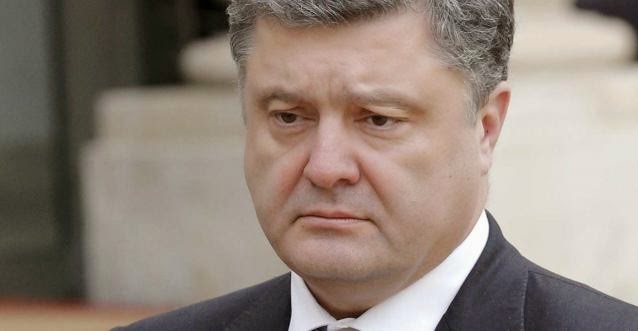
    Ukraine President

    Russia’s
    illegal invasion and annexation of the Crimea will set off a chain of events
    that could strengthen U.S. power and influence, especially in Eastern Europe.  Putin is gambling that President Obama and
    conservative Republican leaders lack the will to energetically react to Russian
    expansion.  First U.S. reactions have
    been weak.  Unless there is a change,
    Putin might be encouraged to annex other Russian-dominated areas outside
    current Russian borders.

    Ukraine
    has tried to balance Western and Russian pressure.  The popular revolt against the pro-Russian
    Ukrainian Prime Minister upset the balance and precipitated the crisis.

    Putin may have decided to upset the unstable status quo in Eastern Europe, starting with Ukraine and Moldova.  Russia’s next step could be to annex the eastern third of Ukraine.  This area includes the Donetz Basin, which
    contains a Russian majority and industrial resources.  If successful, Russia could then move along the
    north shore of the Black Sea to Odessa and maybe to the Rumanian border.  Russia
    already controls the eastern third of Moldova, presenting Ukraine, especially
    the Kiev region, with the possibility of being threatened or attacked from both
    the east and the southwest.

    The
    Russians are very concerned about their long-term demographic trends.  Russia’s population is declining.
     Russia’s population is now about 1/2 that of the U.S. and the gap is
    widening.  And, in the foreseeable future, European Russians will be
    outnumbered by Asians (east of the Urals) and Muslims within Russia.  Adding millions of European Russians may have
    played a part in the decision to annex the Crimea.

    All of
    this has domestic advantages for Putin.  His moves are popular in Russia.
     Future leaders will probably also have to be nationalistic and probably
    expansionist, putting pressure on Russia’s periphery.  It was naive of the U.S. to 
    think that Russian nationalism suddenly disappeared with the Soviet Union.

    An
    expansionist Russian foreign policy entails huge risks.

    About 40%
    of the population in the Crimea is Ukrainian and Tartar.  Both groups in the region have centuries-old
    historical grudges against the Russians.  By making a de facto control de jure, the Russians are making sure that 40% of the Crimean population will now feel
    like a conquered minority and will look to Ukraine for support.  

    The takeover might also finally unite the pro-West political leaders in the Ukraine. Ukraine
    has already signed the economic cooperation treaty with the EU that started the
    crisis.
      Ukraine needs immediate
    financial support.
      With loss of
    territory and increased Russian pressure, Ukraine will probably ask to join
    NATO if it can be guaranteed U.S. military support in weapons systems and
    training.
      If this happens, Russia will
    be faced with another enemy, along its crucial southern European border.
      Putin is gambling this won’t happen.

    It is also likely that Putin’s land grabs will reinvigorate NATO and focus  U.S. attention on European security issues.  

    All this will affect Poland. Poland
    does not have a border with Russia, except for a short strip to
    the north with the Russian enclave of Kaliningrad.
      Poland has long borders with Ukraine and
    Belarus.  Belarus – the old Russian province of Byelorussia or White
    Russia – is between Poland and Russia.  But Belarus is for all intents and
    purposes still a province of Russia.  Poland, and NATO, still has to plan
    that Russia could put troops on the Polish border and attack across the
    northern Polish plain.  Poland will probably 
    have to step up military spending and ask for more NATO support.

    The U.S.
    is putting an advanced air defense system in Eastern Europe, mostly in Poland.
     One consequence will probably be to extend the system to southern Balkan
    countries and step up other types of military aid to Eastern European countries
    that are members of NATO or the EU.

    The
    Crimean takeover should drive Eastern European countries even closer to NATO
    and the EU.  But the U.S. has to provide substantial military support in
    training and weapons.  Given the sequester’s effects on the military
    budget, there is some doubt this will happen.

    Beside
    military support to NATO, especially Eastern Europe, the U.S. has a number
    of good responses, including a rapid increase in oil and especially natural gas
    exports to Europe.  I’m not sure Obama has the political will to overcome
    opposition within the Democratic Party to the pipelines and LNG
    plants to quickly approve them, although Putin has handed him a
    potent new argument.   Combined with developing huge untapped reserves of
    natural gas in shale around the world, the Europeans would be assured that they
    would not be dependent on Russian gas in a few years.  

    Russian
    sales of oil and natural gas account for about 70% of their export
    income.  Combined with economic
    sanctions, a fall in foreign investment, capital flight and a loss of tourism,
    the Russian economy could be severely damaged.

    Maybe
    Western European countries will wake up and realize that Russia is still a
    political and military threat.  If the
    U.S. does not act energetically and decisively, European countries, especially
    Eastern European countries, may decide they have to accommodate Russian
    aggression.  The danger is greatest for
    the next few years when Europe will still be dependent on Russian natural gas.

    Turkey, a
    long-time member of NATO, should finally be admitted into the European Union.

    Another
    possible consequence of Russian expansion could be America’s relationship with
    China.  If China sees Russia as more aggressive, this could improve
    relations between China and the U.S.  An extreme but interesting gambit
    would be for the U.S. to support Chinese claims to resource-rich eastern
    Siberia.

    ===================================================================

    See related post, President Obama Learns Some Game Theory.