Tag: World War 1

  • KELP IS ON THE WAY:  How American Kelp Helped Save the English Explosives Industry in World War I

    KELP IS ON THE WAY: How American Kelp Helped Save the English Explosives Industry in World War I


    Dr. Andrea Dragon


    Seaweed Saves England


        Each of the hundreds of millions of shells Great Britain fired from thousands of field guns, howitzers and mortars during World War I contained two explosives: cordite, a kind of nitrocellulose (what Americans call smokeless powder) to propel the shell out of the artillery piece and send it flying toward the target, and TNT, the shell’s high explosive payload to blow up the target on impact.  

    In the early months of the war, the demand for cordite far exceeded the manufacturing capacity of Great Britain’s explosives factories.  To meet production demands, in October, 1914, the British Army contacted representatives from DuPont and its 1912 spinoff Hercules, who were the leaders of New Jersey’s established explosives industry, and signed agreements with them to produce nitrocellulose and cordite, load it and TNT into shells, and ship them from New Jersey ports to the Western Front.

           But cordite was different from the nitrocellulose-based smokeless powder products New Jersey explosives pioneers had been manufacturing in “powder towns” since the late 19th century. Unlike American smokeless powder, cordite included nitroglycerin transforming it into a “double-base” explosive.  Although New Jersey’s powder industry had decades of experience with nitroglycerin (at that time, anything, even a liquid, that exploded was a “powder”), no one had ever added it to smokeless powder because nitroglycerin damaged gun barrels.  That’s why the British cordite formula (30% nitroglycerin, 65% nitrocellulose, 0.8% acetone) also included 5% vaseline to coat and shield gun barrels from this kind of damage.

           At first, executives of the New Jersey explosives industry believed nothing much stood in the way of them making tons of cordite and tons of money. Not only was manufacturing nitroglycerin in sufficient quantities fairly easily done, vaseline could be sourced from the large Cheeseborough-Ponds factory in Perth Amboy. America’s vast railroad network could transport the cotton needed to make nitrocellulose from southern states to New Jersey’s powder towns.  Everything seemed to be in place to start building factories for cordite production, but there was still one very big problem the explosives industry had to solve – where to obtain acetone.

           Most readers are familiar with the organic chemical acetone because it’s useful to have around the house not only as a nail polish (which is mostly nitrocellulose) remover but also because there’s nothing better for removing paint or sticky gunk children have spread around.  Bought at the local home improvement center, acetone efficiently cleans off lacquer and oily finishes from metal surfaces before repainting.  Today, it’s one of the many products produced by the petroleum industry and is inexpensive and ubiquitous, but during WWI acetone was scarce because Germany had been the world’s leading supplier.

           It wasn’t as if Great Britain’s early 20th century chemists didn’t know how to make acetone, which was a by-product of burning wood to make charcoal.  The basic principles of acetone production had been known since the Middle Ages, weren’t covered by patents, and didn’t require sophisticated technical equipment. 

    Output estimates vary, but roughly speaking it took a hundred tons of wood to yield just one ton of acetone.  When the war began in 1914, most of Great Britain’s forest reserve was long gone, but Germany’s vast Black Forest had ample trees for making acetone and dominating the market.

           Since 1862, when Louis Pasteur discovered that alcohol was a product of fermentation by clostridium bacteria, chemists had been experimenting with fermentation to learn how the process produced various alcohol-like substances.  One of these chemists, Chaim Weizmann, a Russian immigrant scientist and one of the founders of the modern state of Israel, was researching methods of producing synthetic rubber at the University of Manchester when he discovered that acetone, butanol and ethanol could be created by fermenting starchy grains or potatoes using a type of clostridium bacterium (other, more sinister clostridia bacteria cause botulism and C. difficile) commonly found in soil.  Weizmann patented it two years later.  This breakthrough meant that instead of clear-cutting and burning up Great Britain’s meager remaining forests, acetone could be produced much more efficiently by fermenting an (easily) renewable crop like corn.

           Soon tons of American-grown corn were being shipped to Great Britain to be fermented into acetone, but this process became problematic for three reasons.  First, German U-boat activity made trans-Atlantic shipping  risky.  Second, corn took up precious space in ships that could be used for more high-value cargo.  Third, corn was a food crop and during the war many people in Great Britain were hungry, making it hard for the government to justify turning food into an industrial chemical.  England was importing 30% of its food consumption from U.S. and Canada.  Clearly, other sources of fermentable starch had to be found.  For a while, British children were encouraged to gather horse chestnuts, but fermenting them was unsuccessful and the search for ways to make acetone continued.  

    In 1916, the situation had become so desperate that Prime Minister Lloyd George proposed taking over all distilleries in the United Kingdom and transforming them into acetone factories.

             American explosives manufacturers weren’t sure how they would solve the acetone problem.  Nevertheless, in February of 1915 Hercules Powder Company signed a contract to produce millions of pounds of cordite at its New Jersey nitrocellulose “powder works.”  The contract stipulated that Hercules would have to find an acetone supplier who wasn’t part of any current supply chain to prevent Hercules from either reducing the existing supply of acetone, or from cornering the market.  Not only that, to get the cordite contract, Hercules promised to keep track of all the acetone it used and supply Great Britain with an equal amount. 

           Why was acetone required to make cordite?  Why was a solvent needed to make any kind of smokeless powder?  At its most basic level, nitrocellulose is simply cotton that has been soaked in nitric acid and then dried until it forms a stiff, white mass.  Because ignited nitrocellulose burns first on its surface, forcing a solid mass of nitrocellulose through a large extruding machine not unlike a modern pasta-maker increases its external surface by transforming the single mass into many spaghetti-like strands, or cords.  But before that could happen, the stiff lump of nitrocellulose had to be mixed with a solvent to change it into a gelatinous dough pliable enough to go into the hopper of the extruding machine, be forced through the holes, and come out the other end as strands of cordite.

           Hercules and other American smokeless powder manufacturers used ether-alcohol as a solvent, but the British specified acetone because cordite made with it required less of the gun barrel-corroding nitroglycerin than powder made with ether-alcohol.  At first, Hercules management tried to make acetone from acetic acid bought from manufacturers of table vinegar but weren’t successful.  Then the company tried arranging with industrial distillers of wood alcohol to produce acetone, but the process was developing too slowly and didn’t produce the quantities needed to fulfill the cordite contract.  Not only was Hercules falling behind the cordite production schedule to the tune of a million pounds a month, it was also woefully short on its promised deliveries of acetone to Great Britain.

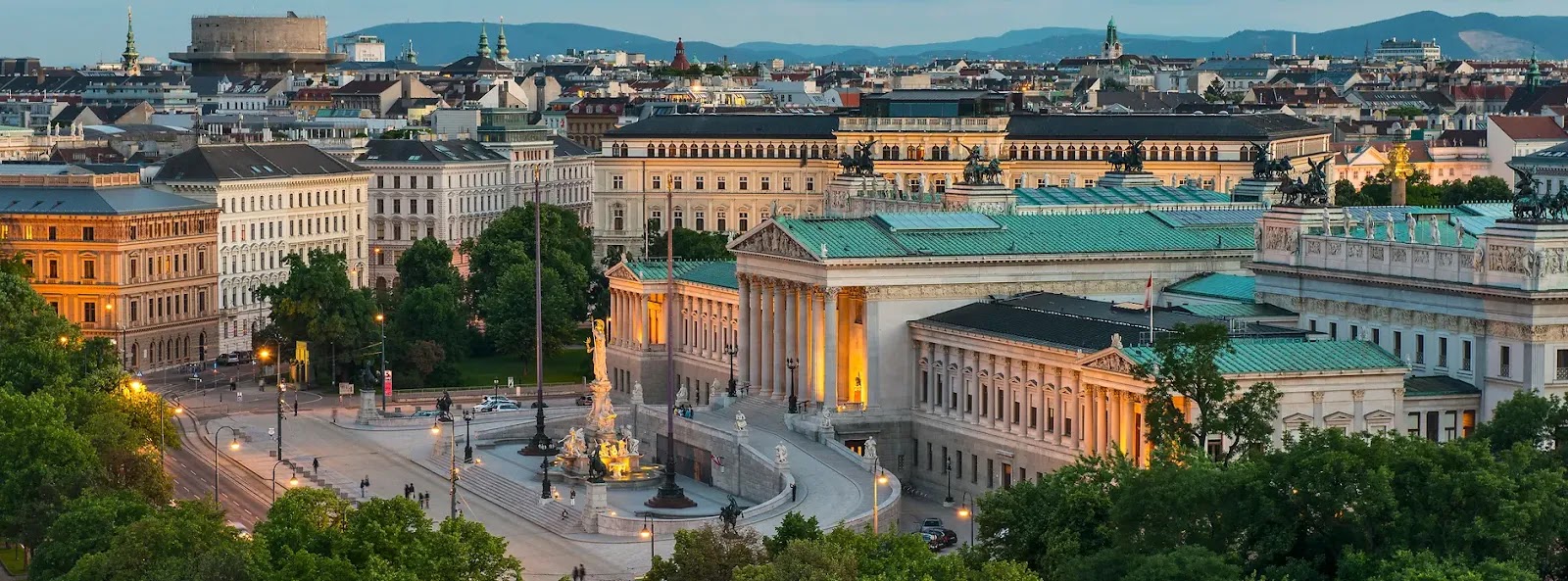
             Hercules’s management investigated making acetone from beer slop, molasses, and wood pulp without much success.  The company’s situation was bleak when George Markell, vice-president and general manager of the company’s New Jersey operations, read in an old encyclopedia that Scots living near the coast once gathered kelp from the ocean, dried and burned it in retort-like ovens recovering potash which they used as a fertilizer.  After he learned that acetic acid could be produced by fermenting kelp, Markell developed a plan to harvest kelp from the Pacific Ocean off the coast of Southern California, put it in vats, allow it ferment like beer, capture the acetic acid given off in the fermentation process, and make acetone from the acetic acid.

           Markell knew a huge bed of kelp existed a short distance from San Diego and best of all, it was essentially free.  Markell went to California in 1915 and began buying up land near Chula Vista, then contracted with a Midwest farm equipment manufacturer to design and build a large hay-mower capable of operating in sea water.  Hercules wasn’t the only explosives company seeking to cash in on the skyrocketing demand for acetone so Markell concocted a cover story claiming his company was going to “farm” kelp to make potash fertilizer.  Soon 1,500 Hercules employees were using the special mowers to harvest tons of kelp, load it onto barges which transferred it to shore where some of it was used to make potash while the rest was put into two-hundred 50,000-gallon wooden tanks and allowed to ferment producing acetic acid that was further processed yielding not only acetone, but other useful ketones such as methyl-ethyl ketone, a lacquer thinner, as well as potassium nitrate (saltpeter) one of the ingredients of black gunpowder. By the middle of 1917, nearly one million pounds of acetone, produced from 600,000 tons of kelp, had been loaded into railroad tank cars and shipped to New Jersey where 5,000 tough, brave powder men and women working in hazardous conditions made cordite for Great Britain at a rate of 100,000 pounds per day.

           After the war, Hercules closed its Chula Vista operation in 1919 and today the site is a nature center.

           Recently, I ran across a 2022 scholarly article describing new efforts to produce acetone from kelp harvested off the coast of Scotland.  This article ran to forty-two pages, had eleven authors, and contained eighty-five footnotes but not a single word about the Americans who fermented kelp, produced acetone, and made the cordite that helped Great Britain achieve victory in World War I.


    Dr. Dragon teaches a course at Rutgers University, New Brunswick, New Jersey on the New Jersey explosives industry.


    Related essays by Dr. Dragon:


    The Maxim Machine Gun and Smokeless Powder


    New Jersey Artillery Explosives Production in World War I


  • Europe on the Brink of World War I

    Europe on the Brink of World War I

    SVG Map_Europe_alliances_1914-fr.svg


    ORIGINS OF THE WAR

    This is an extraordinarily complicated story. One reason is that it is difficult for the modern reader to understand the mentality of the key decision-makers – their prejudices, mental frameworks, how they reacted to threats and stress. Fortunately, there are several excellent books that attempt to describe the key players’ assumptions, mentality and motivations.


    World War I was started by the decisions of a very small number of men, often in secret, implementing secret agreements and understandings, who represented the most reactionary, nationalistic or conservative groups in their countries and governments. Most were incompetent, narrow-minded, myopic and/or delusional. They thought going to war – appealing to nationalist sentiments – would solve or subsume social problems and political challenges that were mostly the result of industrialization and rapid economic  and social change. All planned to win in short offensives; Germany had a detailed plan to defeat France in six weeks. Very few people saw that a prolonged war would be a threat to the survival of traditional regimes and empires.


    None of the generals or their staffs thought in alternatives. They all had the same strategy – mobilize large numbers of soldiers quickly, go on the offense, overwhelm the opposition and win the war in a short period of time. Problems:


    Moving a huge number of troops over hundreds of miles, and keeping them supplied, was going to be difficult. Armies still moved by foot and supplies by horse-drawn wagons once they left  the railroads of their own countries. At one time, the English army had 870,000 horses.


    The problem with only planning offenses was that the new military technology favored defense – machine gun nests, barbed wire, rapid-fire field artillery. Tanks were primitive (slow, cumbersome), sometimes effective in breaking through defenses (when they didn’t break down). Airplanes were useful for reconnaissance and evolved rapidly (equipped with machine guns to strafe infantry) but were not decisive. New tactics to attack defenses evolved only near the end of the war after offensive attacks failed and incurred huge casualties. (In the first day of the 1916 British offense on the Somme, the British Army suffered 60,000 casualties, including 20,000 dead). One day!


    There was one war that European military officers observed where the two sides were large armies, fairly evenly matched and used some modern military equipment (and railroads). The American Civil War. It lasted four years with a total of about 500,000 deaths, out of a population substantially less than any of the four major continental combatants of WWI. Most offenses failed. (On the first day of the American Meuse-Argonne offensive in 1918, the Americans and French fired more shells than were fired by both sides in total in the four years of the American Civil War.)


    No army or their general staff ever seemed to have seriously analyzed the alternative of a long war with modern weapons. The only person who did so was a Polish banker named Jan Bloch, who published a six volume book in 1898 titled Modern Weapons and Modern War. He argued that in the next major European war “the spade will be as important as the rifle.” Infantry in trenches with machine guns behind barbed wire would have a large killing advantage against advancing infantry. Cavalry would be less than useless, with dead and dying horses slowing up and disorganizing the advancing infantry. He could see that the nations of Europe would mobilize millions of men. He predicted such a war would be a long one. The impact of a long war with large casualties would result in “the break-up of the whole social organization.” Writing about the military, he said “The steadfastness with which the military caste clings to the memory of a state of things which has already died is … costly and dangerous.” He didn’t live long enough to see just how costly. (Quoted in Richard J. Evans, The Pursuit of Power: Europe 1815 – 1914, 703)


    World War I was the last attempt of the conservative and reactionary ruling classes of Europe to remain in power. It was an easily avoided war that killed 8-10 million soldiers. If we include the long-run effects, hundreds of millions of people died.


    Any illusions about the rationale or romance of the war dissolved quickly. In the first four months of the war, more men were killed on the western front than in any subsequent year. The carnage of a modern war where soldiers were mostly killed by distant artillery and machine guns was shocking to soldiers and civilians.


    THE DECISION-MAKERS


    In each of the five major countries, there was a very small group of men who made the foreign policy decisions. They were outside the normal flow of domestic politics. They often made their own policies and decisions, keeping elected officials and other members of their government in the dark. They kept their treaties and understandings with other countries secret from their own people and government, and in England’s case, even from the leaders of their own party. In France, virtually no one outside of the President and a few top officials in the foreign office knew of the secret military clauses of the treaties and verbal commitments they made. They controlled the information flow; they lied and obfuscated. They ignored their own ministers. Even in republic France; after all, French politics were so unstable that there would be new ministers in a few months. 


    Military leaders in Germany and Austria-Hungary, nominally under the control of civilians (monarchs), pursued their own strategies. The military of France had contempt for most of the elected civilian leaders of France. Top English brass met secretly with French officers to plan the logistics of moving the entire British Army quickly to France in the event of war. In Russia, many of the top military leaders, including the head of the army, were relatives of the tsar.


    COUNTRIES ON THE BRINK OF WAR

    Serbia


    Russia and Austria-Hungary both focused their foreign policy on the Balkans. But by 1913 there was a third player, Serbia.


    The role of Serbia is usually forgotten after the assassination. But Serbia continued to be important. 


    There were Balkan Wars in 1912 and 1913. The first was a coalition of Balkan countries that eliminated the last vestiges of Ottoman rule in the Balkans. The second was among the Balkan countries over which country would control contested territory. Serbia was the winner in the second war, expanding its territory by 80% and increasing its population by 50%. Besides more resources, Serbia now had an experienced army, with better arms provided by France. (Remember that France was an opponent of the German/Austro-Hungarian alliance) It had strong support from the Russian ambassador to Belgrade. Serbia was not going to be the easy conquest assumed by the Austro-Hungarian military. Serbia asked the Russian government if Russia would support them if there was a war with Austria. The Russian government said yes.


    If Serbia was not quickly conquered and Russia declared war on Austria, then Austria would be fighting a two-front war, for which it was woefully unprepared. And that is what happened.


    Austria-Hungary

    For the background on Austria-Hungary, see Austria-Hungary Before the War.

    The danger was that if Austria attacked Serbia, it was very likely that Russia would come into the war. Austria could not handle both countries. But Austria had an ace in the hole. By 1914, Austria was Germany’s only reliable ally. Austria asked for German assurances before attacking Serbia. There were strong personal ties between the Emperors, the members of the political elite and the military leaders of the two countries. The German General Staff and its head, Helmut von Moltke, believed war with Russia was inevitable. Kaiser Wilhelm and the German military, in the crucial month between the assassination and the start of the war, told Austria they should they attack Serbia that Germany would stand by them if they were attacked by Russia.


    In some ways, the state of the Austrian army mirrored Austria-Hungary, a dazzling façade covering a declining and dysfunctional power. The army sported officers in colorful uniforms and elite cavalry units. It had underinvested in modern weapons. The long-time head of the Austrian army, Conrad von Hoetzendorf, had argued long and loud that Austria should attack Serbia. Despite this, he did not have a detailed plan for mobilization because he was unsure how to allocate units between fighting Serbia and Russia. But this was his chance. 


    One reason Conrad was so adamant about going to war was that in late middle-age he fell madly in love with the wife of an industrialist. Every day, he wrote long, passionate letters (3,000 in eight years) to the woman of his obsession. He never mailed them (they were discovered after the war.) He thought if he led the Austrian army to victory, if he were a war hero, she would divorce her husband and marry him.


    By the end of 1914, Conrad and the Austrian army had been defeated in three invasions of Serbia and by the Russians on Austria’s northeast frontier. He had lost as many as one million men. Austria’s frontline army and best units were destroyed. He basically fought defensive battles with the Russians An attempted offense against Italy was a costly failure until the Germans intervened. He was relieved of command in 1917.


    Germany


    I think it is fair to say that Germany is the one country that could have prevented the war. (This is controversial and hotly debated among German historians.) Again, Austria was Germany’s only ally. German leaders felt personal obligations of honor towards Austria’s leaders. But if Germany had said no to Austria and not mobilizing its army, the likelihood of a continental war would have been lower. But this did not reckon with the personality of Kaiser Wilhelm.


    Wilhelm became Emperor in 1888. He retired (fired) Bismarck. After uniting the German states under Prussian leadership in 1871, Bismarck spent the next 19 years trying to reduce threats to Germany. He signed a treaty with autocratic Russia (and Austria, which Germany had defeated in a short war in 1866). He tried to diplomatically negotiate conflicts among the European powers. He wanted to avoid war. In general, he succeeded.


    Wilhelm had a very high opinion of himself. He told government leaders (who he appointed) that he was going to be the new Bismarck. The gods laughed. Over the next 26 years, he poisoned the political atmosphere in Europe and alienated potential allies, especially England.


    It should have been easy to keep England neutral or have some sort of detente. He was the grandson of Queen Victoria. He was educated in England and spoke excellent English. He spent a great deal of time in England, socializing mostly with the royal and aristocratic elite. He like to wear English military uniforms (he was the honorary commander of British regiments and an honorary admiral of the British navy). But he had a love/hate relationship with the English. He envied but never could become a proper English gentleman.


    Yet, there was something very strange about his personality that alienated everyone, including top German government officials. He spent much of his time reading official documents, making hysterical marginal notes and coming up with new ideas and programs. After a few days, he would forget about them and talk at length about new ideas. He traveled incessantly, away from Berlin and his responsibilities about half the time. He had no mental filter, saying whatever came into his mind. He suffered from permanent “foot in mouth” disease. Some of his remarks did real damage, especially in England. In 1899-1902, the English were fighting a vicious war against the Boers (Dutch settlers) in South Africa. During the Boer War, Wilhelm sent a telegram to the Boers pledging German military aid. The English were not amused.


    Early in his reign, he was convinced that Germany had to build a naval force equal to that of England. They got into a naval arms race. By 1910, it was obvious that Germany would never have a main battle fleet equal to England’s. But the damage had been done; the naval arms race had poisoned relations with England.


    Wilhelm’s rhetoric was bellicose and belligerent when there was little chance of going to war. But as WWI seemed more likely in the month after the assassination of Archduke Franz Ferdinand, he tried to become more conciliatory. But his messages were muddled and changed often. In the end, the German army and their political supporters ignored him and prepared for war. He was also sidelined during the war.


    There is little justice in history. When Germany lost the war, Wilhelm fled to Holland, where he led a quiet existence. He lived long enough to still be alive when Hitler’s panzer divisions swept through France.


    The only personality I can think of that is somewhat similar to Wilhelm is Toad of Toad Hall.


    In the end, the decision to go to war was made by Helmut von Moltke, the head of the German Army. He was appointed to his position partly because of his uncle, also named Helmut von Moltke. The first Helmut had led the Prussian Army to victories over Austria-Hungary in 1866 and France in 1870, actions which were part of Bismarck’s strategy to unify the German states. 


    The younger Helmut probably had the wrong mentality to lead Germany into a major war. He was intellectual and musical and probably suffered from bouts of depression. But he had a fear of Russia and felt that Germany’s chances of defeating Russia would worsen over time. Thinking that war with Russia was inevitable, and thus so was a European war, he argued the time was the present. The Chancellor Theobald von Bethmann Hollweg was less certain and at first advised caution. But as the tension mounted, he supported von Moltke.


    Von Moltke had private doubts that the German war plan (the Schlieffen Plan) would succeed. The main idea was to attack France first with most of the German Army, then combined with Austria-Hungary to hold off the Russians and deal with Russia after victory.  Six weeks into the war he had a nervous collapse and was relieved of his command. He wrote a letter to his wife regretting the horrors he had unleashed on Europe and foresaw the dark future. He died in 1916.


    Russia


    Russia was the most autocratic of the five states. All power and ultimate decision-making resided with Tsar Nicholas. Unfortunately, Nicholas was a weak character – indecisive, paranoid, delusional. Factions around Nicholas in government and the military fought each other for power and influence.


    There were attempts at political reform only after the domestic unrest of 1905-06. Cabinets were headed by reformers like Witte and Stolypin. Nicholas allowed a parliament (Duma). But when the tsar regained control, Witte was dismissed and Stolypin was assassinated by a radical. The Duma was disbanded. When reinstated, Nicholas and the conservatives did everything to see it had no power or influence on government policies.


    During his long reign (1894 – 1917), Tsar Nicolas attempted expansion programs to extend Russian power. His last one was to expand Russian presence in the Far East, mostly in Manchuria. This put Russia in conflict with Japan. Most Russians believed they would easily win a war with “inferior” Asiatics.


    The war began with a surprise. Japan launched a surprise torpedo attack that destroyed most of Russia’s Pacific fleet in Port Arthur. (Japan would use similar tactics to attack Pearl Harbor; Admiral Yamamoto who planned the attack on Pearl Harbor was a young naval officer at the earlier attack.) 


    Nicholas ordered Russia’s main fleet, in the Baltic, to sail to Asia and engage the Japanese fleet. England would not allow the Russian fleet to use the Suez Canal because England was an ally of Japan. So the fleet had to go down the African coast, across the Indian Ocean and up the coast of China, a journey of 18,000 miles! When it finally reached Japan, the Russian fleet was in terrible physical shape and sailors were mutinous. It was quickly destroyed by the Japanese fleet.


    A land war ensued in Manchuria. Russia was finally defeated in the battle of Mukden. Two of the Russian generals accused each other of causing the defeat. In 1914, they headed the two Russian armies that invaded Germany. Their lack of cooperation contributed to the famous Russian defeat at Tannenberg. This battle also made the reputations of Hindenburg and Ludendorff, who would lead the German army from 1916 to the end of the war.


    It came as shock throughout Russia that the Russian army was defeated. Who to blame? There was already a great deal of domestic agitation because of the lack of food and the horrible working conditions of the new industrial work force. Large demonstrations broke out in St. Petersburg and other cities. There were hundreds of rural riots against the land-owning nobility. Manors were burned or looted. It seemed to some that revolution was in the air.


    The Tsar contained the demonstrations by calling out the army and gunning down demonstrators. He retreated to a palace south of St. Petersburg. There he would stay in isolation for the rest of his reign.


    After the situation calmed down, Nicholas unleashed his secret police and internal security forces; they carried out a savage campaign to kill or exile to Siberia all suspected revolutionaries. 


    Nicholas believed that the disturbances were caused by Jews. He unleashed his Cossacks and Black Hundreds (local militias) in a series of pogroms (race riots). Thousands of Jews were killed and imprisoned. Many left the country.


    Nicholas also believed that, despite everything, there was a “mystical” bond between him and the Russian people. His feeling was reenforced by the celebrations of 300 years of Romanov rule in 1913. At no time did he waver in his belief that he was an absolute ruler ordained by God. Russia and the Romanovs were one and the same.


    Russia had to rebuild its army and navy. It began a “Great Programme” of military reform in 1913. It called on France for financial support to expand its railroad network west towards Germany and to buy arms. Russia instituted some reforms in its military, including more artillery. This was a major source of concern to the German military. Von Moltke believed that these reforms and rearmament would be completed by 1917 and Germany’s relative military position would be weaker. Again, this fear motivated him to advocate war in 1914. 


    Russia and Austria-Hungary had been competing for influence in the Balkans since the 1870s. Now with the setback of their Far East policy and Austria-Hungary’s absorption of Bosnia in 1908, the rivalry became more intense, with Russia using Serbia as their main client state. Russian nationalists began talking about “Pan-Slavism.” Austria-Hungary reached the conclusion that the Balkans were the only area they could project  power and influence after being shut out of the German Confederation by Prussia. In addition, Austria thought that Serbia was now a threat to the survival of Austria-Hungary. After 1913, Serbia, backed by Russia, focused propaganda and terrorist acts on Bosnia. Serbia also appealed to the South Slavs (Slovenes, Croats and Serbs) in the Austro-Hungarian Empire to oppose the national policies towards minorities in Austria and Hungary. 


    Russia and Austria were on a collision course again. Only this time, they were part of opposing alliances – no talk of “balance of power” and European conferences to negotiate differences and make territorial adjustments through sign treaties.


    France


    Russia, like Austria-Hungary, also had a secret ace in the hole. Bismarck had negotiated a non-aggression treat with Russia. A few years after he fired Bismarck, Kaiser Wilhelm decided not to renew the treaty. France always worried that if they were attacked by Germany again, they might lose. But here was an opportunity to gain an ally. In series of secret agreements between 1891 and 1894, France signed treaties with Russia. While the treaties were known, the secret military obligations of both countries were not. If either country was attacked by Germany, the other would immediately mobilize its army and attack Germany. 


    Russia was trying to rebuild its military after the Asian fiasco. France offered huge loans to pay for rearmament and railroad expansion to move troops faster to the German and Austrian frontiers. But rather than France buying an ally to help fight the Germans, Russian now had an ally to help fight the Germans and Austrians if there was geopolitical conflict in the Balkans. And France would be attacked first. 


    Very few people in the French government knew about the military conditions of the treaty, most of them in the foreign office. It was only in 1913, when Raymond Poincare became president of France, was he told the details of the treaty. He was a conservative nationalist and hated Germany. Poincare came from the Alsace/Lorraine region, the French provinces lost to Germany after the FrancoPrussian war in 1870-1871. Just before war broke out, he traveled to Russia to strengthen ties.


    Instead of the powers of Europe negotiating differences and making adjustments collectively as in the past, there were now two exclusive alliances – Germany and Austria-Hungary on one side and Russia and France on the other. Russia competed with Austria-Hungary for influence in the Balkans. Both countries hoped their powerful allies would support them if conflict broke out. 

    The unknown was what England would do in the event of war.


    England


    England was the wild card. Germany, France, and Russia all tried to negotiate some sort of understanding (détente) with England in the years leading up to the war.


    The German foreign office made a lengthy attempt to improve relations with England. Much of England’s upper classes were pro-German. These efforts were undermined by the behavior and intemperate rhetoric of Kaiser Wilhelm. Russia and England had a long-running rivalry along the political fault lines of Persia, and between Central Asia and South Asia (India). This tension was eased by treaties and understandings negotiated before World War I. 


    Sir Edward Grey was the English foreign minister from 1905 to 1916. He was a rather strange person. He didn’t care about the British Empire, spoke no foreign languages and he hardly ever traveled outside of England and Scotland. He was secretive and devious. He had a small group of confidants within the Foreign Office; one was Winston Churchill. His passion was fly-fishing. He was often away from his office fishing. 


    While he never formally committed to one side or the other, Grey apparently disliked Germans despite that many of upper-class Englishmen were pro-German and liberals (he was a member of the Liberal Party) particularly loathed authoritarian Russia. But Grey, in typical English policy, was afraid of any country dominating Europe. He saw Germany as that country. So Grey secretly began building military and diplomatic connections to France beyond the conditions of their 1907 detente agreement. His own party was almost unanimously opposed to any involvement in a possible European war.


    With his encouragement, a small group of English officers met with French officers to plan the logistics of the landing of English troops if war broke out. English troops were able to be effective earlier in the war than German planners assumed. Although small in numbers, they were able to delay the progress of a far larger German army into France.


    Unlike the four continental powers, England had a small homeland army, only about 110,000 soldiers, because England relied on its navy to protect the island from invasion. Most of its army was patrolling the empire. England did not have conscription before the war; all its soldiers had signed up to be professional soldiers. England only began conscription in 1916 because of its large losses, especially after the battle of the Somme. 


    POLITICAL AND PERSONAL FACTORS


    Russia, with its massive new military spending, accelerated the arms race. More artillery and machine guns. Draft calls were higher, the size of the standing army and reservists were increased, and more money was spent on long-range artillery and howitzers. Russia had the largest standing army in Europe, although the quality of its soldiers and top officers was suspect. 


    By 1914, important trends that increased the chances of conflict were: 

    Two alliances. Replaced “concert of nations.” Not set in stone but limited diplomatic maneuvering. 

    An arms race, combined with offensive strategies and rapid mobilization, that military leaders believed (or hoped) would lead to a short war and victory.

    Many foreign policy officials and ambassadors slanted reports and lied to superiors to reflect their viewpoints. Some military leaders, mostly in Germany and Austria-Hungary, believed war was inevitable or desirable. 


    All countries assumed that mobilization was the actual beginning of the war. Leaves were canceled, units went to assigned positions. Reserves were called up, told which train depots they were to go to, and report to their staging areas. Railroad traffic was cleared for troop trains. War was declared almost immediately after mobilization. Troops and their logistical support began moving immediately towards frontiers for offensive action.


    PREPARING FOR WAR

    In the last few years before the war, against the background of rising tensions, an arms race broke out. The four European powers expanded the size of their armies and increased military expenditures. More conscripts led to larger standing armies and larger reserves of past conscripts. Only England had a professional army of volunteers. All countries had plans for rapid mobilization of recruits and reserves to go on the offensive.


    All four countries believed that the country that could mobilize first and get their army moving (first by railroad but mostly by foot) would have an advantage. This put added pressure on political leaders to call up reserves and mobilize their armies to start their offenses. Once one country mobilized, this set off a chain reaction for all four countries to immediately mobilize. This greatly increased the chances of war. All assumed that full mobilization was the runup to war.


    Government leaders thought that nationalism and war would rally their country’s populace and subsume internal conflicts. There was general enthusiasm for war after war was declared.They were right if it was a short war. Only a few planners and observers thought that the monarchies would be in danger if there was a long war. Especially in Russia.


    Here again is the tendency we can discern in the reasoning of so many of the actors in this crisis, to perceive oneself as operating under irresistible external constraints while placing the responsibility for deciding between peace and war firmly on the shoulders of the opponent.

                    Christopher Clark, The Sleepwalkers, 519


    The constraints were mostly internal – the assumptions and objectives of the ruling elite to preserve their privileged position in society. They were delusional. After the war, a great number of memoirs were written by the main actors; the theme of most was self-justification that they were not responsible for starting the war.


    CONCLUSION


    It seems that none of the decision-makers saw the coming conflict as an “existential” event, that is, that it threatened the existence of their country or the ruling regime. But the preparation of the four continental powers almost guaranteed it if the war was not the short war they all assumed. All four had greatly increased the size of their armies and their armies’ firepower. All resources, including reserves, were mobilized at the start. Casualties were huge in the first four months. After the Germans did not conquer France and the Russian offensive was stopped in the east, these large armies assumed static defensive positions for the winter. In the west, these positions would change little in four years despite massive attempts at offense to break the enemies lines. The maximum effort and huge losses at the beginning of the war increased the chances that the war had to be fought to the end. Military planners now saw the war as a war of attrition.


    Because of the stalemated military situation and the two alliances rather than five or six countries thinking about their political options, there was almost no call for negotiations or a conference to discuss how to end and war. The political leaders of the countries all realized that this war would end in unconditional surrender of one side or the collapse of one or more combatants. All combatants had to continue fighting, hoping that an opponent country would collapse first. World War I had become an “existential” war.


    Rather than thinking that the war increased the tensions at home, all decision-makers assumed that war, and the nationalist sentiments it would create, would overcome these tensions. If there was a victory or at least a negotiated settlement after the first battles, this might have happened. But the length of the war worked to worsen domestic tensions. In Russia, Germany and Austria-Hungary there was widespread hunger, even starvation, at home. This contributed to the overthrow of the tsarist government in early 1917. The new emperor of Austria-Hungary tried desperately in 1916 to get out of the war because he knew the existence of his empire was at stake. Large parts of the French Army mutinied. Germany and France knew any treaty was impossible because the winners would impose harsh conditions on the losers.


    WHO WAS RESPONSIBLE FOR STARTING WORLD WAR I?


    Historians have long debated which country was responsible for starting World War I? A more realistic question would be – which key decision-makers were responsible? The answer – all of them.


    There was a small number of them. One in Serbia, three in Germany, three in Austria-Hungary, one in Russia and one in France. Also one in England. At different times.


    1 Dragutin Dimitrejevic, known as Colonel Apis (the Bull), the head of Serbian military intelligence. He set up underground terrorist groups known as the “Black Hand.” Its goal was to forge a “Greater Serbia” that included Bosnia (controlled by Austria-Hungary), Croatia and Macedonia. The young Bosnian Serb who killed Archduke Franz Ferdinand was trained and armed by an officer of the Serbian military intelligence. Ultra-nationalist and violent, the more moderate elements in the Serbian government and the military were afraid of the Bull. With reason – in 1903 he was part of the small group of officers who killed and mutilated the bodies of the king and queen of Serbia. 


    2. Almost no one in Europe, including the people of Austria-Hungary, thought the Archduke’s assassination would lead to war. Or was an excuse to go to war. Except Conrad von Hoetzendorf, the head of the Austro-Hungarian army. He had been strenuously advocating war with Serbia for years. This was his best chance, even though the assassination was greeted with indifference by the Emperor (he did not attend the funeral) and throughout Austria-Hungary. Conrad convinced the foreign secretary Count Leopold Berchtold to support him. They convinced the aged and disengaged Emperor to agree to declare war on Serbia and instruct the military to invade Serbia.


    3. Austria-Hungary could not attack Serbia because of the high probability that Russia would come to Serbia’s aid by attacking Austria-Hungary. Austria-Hungary could not risk this without German backing. Kaiser Wilhelm and high government officials gave the key members of the Austrian government and military strong assurances that Germany would back Austria-Hungary.


    4. The key players in Germany were Kaiser Wilhelm, Chancellor Theobald von Bethmann-Hollweg (and foreign secretary) and Helmut von Moltke, the head of the German General Staff. Germany could have stopped the escalation by not fully backing Austria-Hungary. By Germany backing Austria-Hungary, it greatly increased the chances that Austria-Hungary would attack Serbia and that Germany was going to war with Russia and France. 


    Despite the Kaiser’s enthusiasm, which faltered as the war became more likely, some government officials had reservations. They used the actions of Russia in the last days before the war was declared as reasons (or excuses) to support going to war. 


    The Kaiser’s strong support of Austria in 1914 was somewhat unexpected. A year earlier, when Serbia went to war against other Balkan states, Austrian leaders thought about intervening against Serbia. Kaiser Wilhelm was opposed and told the Austrians he would not support them. (Charles Emmerson, 1913, 76) But this was different. Archduke Ferdinand was a personal friend of the Kaiser and Wilhelm was angry. Also, Chancellor Bethmann Hollweg and army chief Helmut von Moltke were in favor of war. Von Moltke believed that the ongoing military reforms in Russia would make it a more difficult opponent for Germany by 1917. War now, better than war later.


    5. The Russian tsar Nicolas could have restrained Serbia. The tsar did hesitate to fully mobilize his forces in the days just before the start of the war but didn’t offer any alternatives. Encouraged by “Pan-Slavic” ultra-nationalist government officials, some of whom were his relatives, he was pressured to declare war. Nicholas was a weak personality susceptible to the arguments of those around him.


    6. Raymond Poincare, the President of France, was a strong supporter of the secret treaty clauses between France and Russia. He saw this as insurance if Germany attacked France. France knew the general outline of the Schlieffen Plan. But he felt obligated if Germany attacked Russia. Just before the war started, he went to Russia to firm up support for the alliance.


    7. The behavior of England’s foreign minister Sir Edward Grey has always puzzled historians. He pursued his personal foreign policy in secret. No one knew if he advocated war. His own party was against war with Germany. But Grey had for years quietly strengthened ties with France beyond the somewhat vague alliance with France in 1907. Only a few close associates in the Foreign Office and the military knew. He supported secret meetings of top English and French officers to jointly plan the logistics of the transfer of the English army to France in case of war.  He seemed to dislike Germany (many of England’s elite were pro-German and liberals loathed Russia because of the absolute authoritarian rule of the tsar). After war started on the Continent, Grey convinced his party leaders to change their minds and declare war. One argument he seems to have used was the prospect of continental Europe dominated or controlled by Germany. He was motivated by traditional “balance of power” thinking, fear of Germany and personal prejudices.

    An important question to ask: of the key players, which ones wanted to go to war in 1914? The answer is Helmut von Moltke of Germany and Conrad von Hoetzendorf of Austria-Hungary. Their countries were allies. Austria-Hungary, under the insistent prodding of von Hoetzendorf and the backing of Germany, chose to start the war. Germany, under von Moltke, was ready to go to war against Russia.


    Main points of the Posts on World War I


    ·      Internal tension was rising in all major European countries due to the Industrial Revolution causing profound social change and conflict.


    ·      These changes threatened the power, income and status of the ruling class of landowning nobility, which controlled the highest positions in their governments and military.


    ·      Naval and army buildups in the years before the war increased tension among the major countries.


    ·      Tremendous increase in firepower due to new or deadlier weapons. The new weapons, and their mass production, were the results of the Industrial Revolution.


    ·      Generals tried to use the new firepower and mobility to fight a war using tactics and strategies from the past.


    ·      After the assassination of Archduke Franz Ferdinand, there was almost total indifference throughout Europe, even in Austria-Hungary. Like past recent political crises, it was shrugged off. People who thought about it expected it would be resolved without war.


    ·      But men in power saw it differently. Some were eager to go to war. Some accepted the inevitability of war at that time. Most made decisions without thinking about alternatives or consequences if it wasn’t a short war.


    ·      A very small group of men in the five “Great Powers” made decisions, mostly in secret, that led to war.


    ·      Total mobilization of all four continental combatants led to war.


    ·      While there were anti-war demonstrations just before the war, the war took on a grim acceptance after it started.


    ·      Most of the so-called “learning curve” was replacing aging generals with obsolete thinking with generals who were learning new lessons (slowly) as they fought the war.


    BIBLIOGRAPHY


    Christopher Clark, The Sleepwalkers:  How Europe Went to War in 1914. 2012.


    Margaret MacMillan, The War that Ended Peace:  How Europe Abandoned Peace for the First World War, 2013.


    These two books are vital to understanding the thinking and actions of the ruling elites of all countries in the critical years before the war. The mentalities of the diplomats and generals often seemed like their minds were still in the 19th century before 1870. They hadn’t absorbed the economic, technological and political changes.


    Charles Emmerson, In Search of the World Before the Great War. 2014.


    Makes the case that almost no one anywhere in the world was thinking about the political crisis in the Balkans and the possibility of war.


    Michael S. Neiberg, Dance of the Furies:  Europe and the Outbreak of World War I. 2011.


    Convincingly documents the thesis that most Europeans were not thinking of war, but rather believed that peace and prosperity would continue. No popular demands or pressure for war. If anything, just the opposite, with a strong trans-European peace movement and large Social Democratic parties opposed to war.


    The documentary They Shall Not Grow Old, which used actual WWI footage and interviews with WWI soldiers. About the British army in World War I. Based on photos and videos from the Imperial War Museum. On YouTube. Colorized.

    ===================================================================

    These posts could be read in order as background to this post.

    Related posts about the origins of World War I are:

    Bismarck and the Origins of World War I

    The Beginning of the Twentieth Century:  The Path to World War I


    Wealth and Power in Pre-World War I Europe 


    The Austro-Hungarian Empire Before World War I


    The Immediate and Long-Run Historical Consequences of World War I


    The following post by Professor Andrea Dragon gives some historical background on the invention and development of the machine gun, a new weapon that made the battlefield much more deadly. The Maxim machine gun was used by both sides. It could fire 600 rounds per minute; small groups could annihilate massed infantry and cavalry charges. 


    The Maxim Machine Gun and Smokeless Powder


    For a list of all posts on this blog, with links, see List of Posts by Topic

  • Austria – Hungary Before World War I

    Austria – Hungary Before World War I


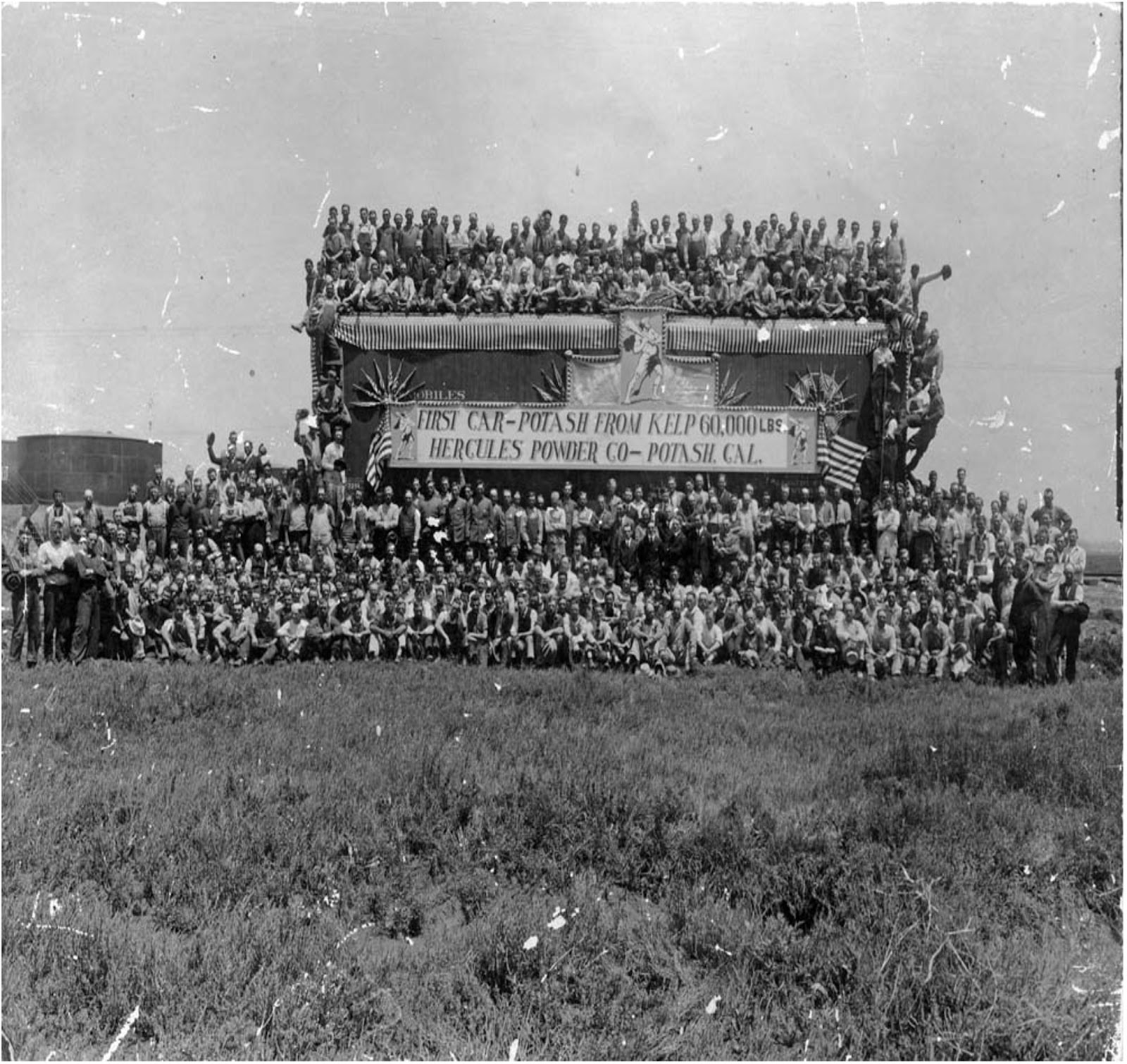
    Vienna Ringstrasse -Parliament Building

    OVERVIEW


    Austria-Hungary was a multinational, multiethnic empire. It had 11 recognized languages. It promoted, or at least tolerated, internal free trade, economic development and internal mobility in the period 1870-1914. Hungary was a major exporter of agricultural products to the rest of Europe. The railroad network was expanding, helping to tie the Empire together. New industries in metal-working and electrical appliances were established, especially in Bohemia (Czechoslovakia). Major cities had industrial districts. Banks and financial companies raised large amounts of capital to finance development and expansion.


    Its economy was modernizing but the government bureaucracy, especially in foreign affairs and in the military, were controlled by conservative elements – nobility, royalty and the court, and landed aristocracy. The political structure of dual sovereignty, both between Hungary and Austria, and between central government in Vienna and provinces, was cumbersome and ultimately proved unworkable. The national parliament in Vienna was reduced to a propaganda forum for rival nationalist groups. Every nationality group spoke in its own language. There were no translators. Power still resided mostly in the aging Emperor, the heads of foreign affairs, finance and the military, all dominated by the upper levels of landed aristocracy or their supporters.


    Outside of Vienna, the combination of economic growth, some reform, and a large bureaucracy gave the Empire some stability. Nationalist leaders of the northern provinces thought political alternatives were worse – independent countries would be absorbed by Russia or Germany. Landowners and farmers were given some protection and prosperity because Austria-Hungary was also a customs union – free trade inside, protective tariffs outside.


    FOREIGN POLICY


    Austria had ambitions to head a southern German confederation. The states in southern Germany had more in common with Austria than Prussia in the north. But Bismarck in Prussia wanted to unite all the states in the German Confederation under Prussian hegemony (dominance). But without Austria. So Prussia went to war with Austria in 1866 and defeated them, eliminating Austrian ambitions in Germany. Austria needed a counterweight to Prussian influence. The only country available was Hungary.


    The merger of Austria and its provinces with Hungary in 1867 was considered an emergency, and possible temporary, situation. The agreement was revisited every 10 years and could be renegotiated. As the decades went by, the Austrian government in Vienna became increasingly unhappy with Hungary’s treatment of Slavic minorities and Rumanians within its borders and its obstructionist attitude towards Austria. This was a source of increasing tension and conflict within the Empire.


    Austria-Hungary focused its attention on the Balkans. It saw Serbia as a disruptive influence. Russia also focused on the Balkans. Tension between Russia and Austria-Hungary in the Balkans went back to the 1870s. Russia supported the newly independent countries in the Balkans, especially Serbia. Serbia was an aggressive and disruptive force with its own agenda to dominate the Balkans. Tension increased as Serbia expanded in the years just before the outbreak of WWI.


    Austria felt isolated. It needed allies. Despite its military defeat by Germany, the only possibility was the new Germany. Germany and Austria-Hungary concluded a mutual defense treaty in 1879. Later, they would be opposed by the alliance of Russia and France. 


    LOST CHANCE AT REFORM BEFORE WWI


    Archduke Franz Ferdinand was the heir to Emperor Franz Joseph. He was both an insider by birth and an outsider by personality and ideas. He knew the Austro-Hungarian Empire could not survive in its present form. There was too much tension between Austria and Hungary. In addition, the various ethnic groups would increase their demands for more power and autonomy. The threats from the Balkans were getting worse. While waiting to become Emperor, he established a “shadow cabinet” that worked for him. They discussed possible reforms – break up the Empire by forcing Hungary out; change the internal structure to resemble a federation like the United States; give ethnic groups more say in managing local functions like education (an acceleration of a slow trend); a real national parliament; a southern Slavic federation without Hungary.


    Franz Ferdinand also believed that Austria had to come to some sort of accommodation with the countries in the Balkans, especially Serbia. Most of the other Austrian leaders, especially the head of the Austrian army, believed that the best course of action was war with Serbia.


    It is intriguing to speculate what would have happened if Emperor Franz Joseph had died in 1912 or earlier and Franz Ferdinand became Emperor. In 1912, Franz Joseph was 82 years old, semi-retirement and had reigned for 64 years (since 1848). He died in 1916.


    The horrible irony is that Archduke Franz Ferdinand was the Austrian assassinated by Serbian nationalists at Sarajevo in 1914. It was the excuse that Austrian leaders needed to declare war on Serbia, which led to WWI.


    VIENNA


    Economic growth and development generated economic, demographic, cultural and political stresses in Austria, especially Vienna. Vienna experienced rapid population growth as Slavs, Jews and other non-German-speaking groups from the provinces and neighboring countries moved to Vienna. Vienna’s population increased from 551,000 in 1850 to 2,083,000 in 1910. Budapest also experienced rapid population growth; Hungarian nationalism became increasingly shrill and oppressive as the percent of non-Hungarians increased in Hungary.


    The liberal, democratic ideals and institutions, layered on top of Vienna’s traditional society, were the basis of the complex of buildings of the Ringstrasse. By the late 1800s, these ideals were being attacked from the political right and left. Culturally, the new psychology of Sigmund Freud and a new generation of artists and thinkers attacked the underlying assumptions of rationality. (See the bibliography, especially the books by Schorske and Kandel).


    Austria-Hungary’s political and social elite saw the changes in the Empire as mostly negative, including a threat to their dominant position in society and government. They kept the new economic elite out of government and out of the higher reaches of Viennese society. The newly wealthy channeled their energy into supporting culture, especially music (an obsession of Vienna). Their sons became doctors, lawyers, scientists, professors and intellectuals. Probably the most famous were Gustave Mahler and Sigmund Freud.


    There is an irony surrounding the expansion of male suffrage in Austria-Hungary in 1882. It led to the rise of the Christian Social Party, a right-wing populist party that was a political counterweight to the socialist Social Democrats. The party leader, Karl Lueger, appealed to a voting base of mostly German-speaking lower middle-class artisans and shopkeepers who were losing their economic security and status to a rising liberal capitalist class. He allied his party to conservative, reactionary and religious elements. The party appealed to clerical Catholicism, German nationalism, and traditional values, Mr. Lueger became very popular and was elected mayor of Vienna (1897-1910). As mayor, he initiated and managed new public works projects in Vienna that benefitted his constituency. Eventually, he was reluctantly accepted by the court and the aristocracy. 


    Mr. Lueger and the Christian Social Party used anti-Semitism as an effective political weapon. Karl Lueger did not create the populist anti-Semitism of Vienna but shrewdly exploited it for political gain. (for an excellent depiction of Vienna in this period, see the Netflix detective series Vienna Blood).


    The party advocated racist policies against non-German speaking minorities. It supported a bill to restrict immigration of Russian and Romanian Jews into Austria-Hungary. After World War I, the Christian Social Party would morph into a Fascist party that dominated Austrian politics until the Anschluss (union) with fascist Germany in 1938.


    The old order and the newer liberal capitalist order were also attacked by the rise of an industrial working class politically organized by a strong socialist party, the Social Democratic Party. 


    One person living in Vienna who watched and learned from the success of the political rhetoric of the Christian Social Party and the mass organizing techniques of Social Democrats was Adolph Hitler.


    There is a brilliant study of Vienna in the decades before the war, 

    Fin-De-Siecle Vienna by Carl Schorske. It describes the increasing strains in Vienna; it also reminds us that trends in politics, economics, culture and art can be interrelated and feed back on each other in times of heightened social stress.


    IMPACT OF WORLD WAR ONE


    Austria-Hungary was destroyed by the internal stresses made worse by World War I. After the war, Austria and Hungary split apart into separate nation-states. Most of the nationalities in the Austrian-Hungarian Empire also became separate nation-states. They were unstable amidst the chaos and violence that followed World War I, new democracies that often quickly became authoritarian. Governments and ultra-nationalist organizations resorted to violent adjustments including killing and forcing out minorities. Instability and chaos made Central European countries vulnerable to Communist appeal, authoritarian governments and then an expansionist Nazi Germany. (see Robert Gerwarth, The Vanquished:  Why the First World War Failed to End)


    POSSIBLE MODERN ANALOGY?


    Austria-Hungary may serve as an imperfect but suggestive historical analogy to the European Union. 


    In the end, Austria-Hungary could not resolve the conflict between the antiquated, dysfunctional multinational political structure it inherited from the Habsburg monarchy and the rising nationalisms of the many ethnic groups in the empire. The movement of population, especially religious and ethnic minorities, from the rural areas to cities generated social strains somewhat analogous to the impact today of labor mobility and immigration in Europe.

    The Austro-Hungarian empire was a monarchy containing many ethnic nationalities. The European Union is based on nation-states that freely join and can peacefully leave. World War I, World War II and their immediate aftermaths were a historical watershed that separated the two political worlds. But the expansion of markets, both industrial and financial, from national to regional to global creates new tensions between and within the sovereign nation-states. 


    These tensions are mitigated by regional organizations such as the European Union. But the European Union is blamed by nationalist leaders for the dislocations and stresses caused by technological and organizational change. If the EU collapses, it will be due to political, economic, social and cultural factors that were similar to those that ripped Austria-Hungary apart.

    =========================================================

    Bibliography:  Vienna and the Austro-Hungarian Empire


    John Stoye, The Siege of Vienna:  The Last Great Trial Between Cross and Crescent


    Detailed account of Ottoman Turk siege of Vienna in 1683.  Ottoman defeat led to the eventual loss of much of the Balkans and reorientation of Habsburg foreign policy from west to east.  Roots of later conflicts in the Balkans.  Shows how extremely complicated European politics were.


    Philipp Blom, The Vertigo Years:  Europe, 1900-1914. 2008.


    Despite the book’s structure of picking one theme in each year, surprisingly insightful look at the years before WWI.  Attempts at parallels to current (or continuing) society.  Emphasizes psychological stress and social disruption caused by economic change, and their political and cultural consequences.  Like Schorske’s book, does not delve too deeply into causes.


    Carl Schorske, Fin-De-Siecle Vienna:  Politics and Culture. 1980.


    Brilliant book on how the liberal, capitalist, upper middle classes lost political and especially cultural dominance in Vienna. The cultural, political and intellectual façade of Vienna was made visible by the Ringstrasse buildings. There was an artistic and psychoanalytic attack on the rationalist and ordered culture of Vienna. In the background was the gradual disintegration of the Austro-Hungarian Empire. Nice tie-in with Morton’s book.


    Eric Kandel, The Age of Insight:  The Quest to Understand the Unconscious in Art, Mind, and Brain, from Vienna 1900 to the Present


    Brilliant book by a Nobel Prize winner in biology.  Worthy successor to Schorske. Attempts to link innovations in thinking in medicine, psychology and art, with the theme of looking below the surface. Origins of one psychology of the mind and influence on later art criticism. Interesting that Freud didn’t seem to be interested in modern art in Vienna or had more contact with contemporary artists. Author also argues painters seemed to be more interested in the psychology of women than Freud, whose explanations were superficial and stereotyped.


    Frederic Morton, Thunder at Twilight:  Vienna 1913/1914


    A number of extraordinary stories filled with irony. How Vienna miscalculated. Vignettes of famous people in Vienna during this period.

    Geoffrey Wawro, A Mad Catastrophe:  The Outbreak of World War I and the Collapse of the Habsburg Empire.  2014.


    Excellent history of the combination of unreality, arrogance and stupidity of the military and political leaders of the Austro-Hungarian Empire that led to World War I.  Mostly a military history of the performance of the Austro-Hungarian army during the first year of the war. Incredible incompetence and confusion leading to defeats and horrific casualties.


    Simon Winder, Danubia:  A Personal History of Habsburg Europe.


    Quirky, funny history/travel/personal thoughts on Habsburg Empire.  Last part emphasizes the history of the Balkans in 18th and 19th Century – the retreat of the Ottoman Empire and the breakup of Austria-Hungary, which led to the release of virulent nationalisms and “ethnic cleansing.”  Continued during WWII and after the war, into 1990s. 


    There are some wonderful Austrian novels that illustrate the brittle façade and slow disintegration of Austria-Hungary in the decades preceding WWI. Probably the starting point is Joseph Roth’s The Radetzky March. The Radetzky March commemorated an earlier Austrian military victory. The Vienna Philharmonic Orchestra still plays this song as the climax to its New Year’s Eve concert.


    For the psychological disintegration of the upper classes, see the novel by Robert Musil, A Man Without Qualities.


     ==============================================================


    For related posts, which could be read in order or separately, see


    Bismarck and the Origins of World War I

    The Beginning of the Twentieth Century:  The Start of World War I

    Wealth and Power in Pre-World War I Europe 


    Origins of World War I

    The Long Historical Consequences of World War I


    The Maxim Machine Gun and Smokeless Powder


    For a list of all posts, with links, on this blog, see List of Posts by Topic


  • The Maxim Machine Gun and Smokeless Powder

    The Maxim Machine Gun and Smokeless Powder

    Written by Andrea Dragon, Ph.D. Dr. Dragon investigates and writes about New Jersey’s industrial history. Professor Dragon will be teaching a continuing education course on “New Jersey’s Explosive History” at Rutgers – New Brunswick, starting on October 8, 2025. For details, see the course description at the end of this essay. 


    Hiram Maxim and his machine gun

    Hiram and Hudson Maxim:  Inventors of the Machine Gun and Developers of Smokeless Powder


    New Jersey’s eccentrically brilliant brothers, Hudson Maxim (1853-1927) and his cantankerous, womanizing older brother Hiram Stevens Maxim (1840-1916) were both born into a poor, rural Maine family. Hudson claimed receiving his first shoes when he was sixteen. He rarely attended school and was self-taught. Astonishingly, Hudson Maxim’s earliest claim to fame was as the author of a popular “teach yourself” book on penmanship. He also possessed a breathtakingly large ego, once bragging that he could write an article on almost any subject in the world without doing any research.


    Both brothers were prolific inventors; Hiram received 200 patents in his lifetime, the most significant was for the machine gun. Hudson was also a serial inventor and tinkerer who received 60 patents, including one for smokeless powder. 


    In 1881, when he was twenty-eight, Hudson sailed to London to help his brother Hiram establish an English branch of Hiram’s company, U.S. Electric Lighting Company headquartered in New York. Hiram was not only the company’s founder, but he was also the chief engineer who supervised the installation of the first electric lights in a New York office building. Hiram also claimed to be the original inventor of the light bulb, saying Thomas Edison knew more about patent law than electricity. When the brothers sailed for London, Hiram Maxim had a home in Fanwood, New Jersey, where he lived with his wife and three children. He may have had business reasons for travelling to England, but in addition he wanted to escape the public uproar over his bigamous marriage to his mistress who was traveling with him. He had another reason to beat it out of New Jersey – he may have fathered a child by a 15-year-old girl who claimed he had bigamously married her.


    The Maxim Machine Gun


    Hiram may have begun developing the machine gun while living in New Jersey, but after moving to England and with financial backing from Albert Vickers, Hiram was able to build a workshop where he refined his machine gun, receiving a patent in 1883 then establishing the Maxim Gun Company in 1884. It wasn’t until 1889 that Maxim was able to sell a manufacturing license to the British Army. 


    In 1888, Maxim hit the road selling his gun. One of his early targets was the German army but negotiating a license with arms manufacturers there was a cumbersome process involving several entities that already had interests in his British operation as well. He finally sold a seven-year license to his machine gun to the German company Ludwig Lowe in1892.  The Lowe Company joined with Mauser in 1896 to form Deutsche Waffen-und Munitionsfabriken AG and the Maxim license was re-negotiated.


    Long before the war, the Vickers company had become a major shareholder in the Maxim Machine Gun Company and in 1897 Hiram Maxim sold all his remaining shares to Vickers.


    Hudson Maxim

    Smokeless Powder


    The Maxim brothers knew Hiram’s machine gun could revolutionize the way artillery was used in warfare, but until a way could be found to reduce the smoke it produced, promoting the gun was challenging. While the Maxim gun could fire up to 600 rounds per minute, the smoke generated by that many gunpowder-fired rounds produced a black cloud so large and so dense the gun’s eye-watering, coughing three-man crew couldn’t see the target, but the enemy could easily locate the position of the gun.


    Of all the late 19th century American and European explosives pioneers eagerly promoting smokeless powder as a replacement for black gunpowder, Hiram and Hudson Maxim are among the most intriguing. Although their contributions to the development and commercialization of smokeless powder are largely forgotten, the Maxim brothers were important early participants and merit greater recognition. 


    Some kind of smokeless powder was needed to make the machine gun more commercially viable. Fortunately, the Maxims had invented one, or rather each brother had invented one. Hudson claimed he had developed a type of smokeless powder before 1881 when he left for England, while his older brother Hiram claimed he invented smokeless powder long before his brother did. But neither brother invented smokeless powder. The real inventor of nitrocellulose, what Americans call smokeless powder, was a Swiss chemistry professor named Christian Schonbein who was working at his home in 1845 in Basel, Switzerland, when he accidently spilled nitric acid onto his kitchen table. Fearful of being scolded by his wife who didn’t approve of his kitchen-based experiments, Schonbein grabbed the nearest cloth, his wife’s cotton apron, used it to wipe up the spill then hung the apron over the oven door to dry. After it was dry, a “flash,” or a “spark” (depending on who’s telling the story) occurred igniting the apron that instantly burned up without producing any smoke.


    Whether or not that story is true, Schonbein recognized that soaking cotton (cellulose) in nitric acid created a new molecule, nitrocellulose, that burns without smoke and could replace smoky black power in ammunition. He attempted to commercialize his discovery by selling a manufacturing license to a British company, but shortly afterward an explosion leveled the English factory killing eighteen workers. Schonbein returned to teaching chemistry.


    As word of Schonbein’s discovery spread, other European chemically-inclined entrepreneurs filed nitrocellulose patents. Among them were Paul Vielle of France in 1884, Dimitri Mendeleev (of periodical table fame) of Russia in 1892, and Alfred Nobel (the dynamite king) of Sweden in 1887. Each man established companies with production facilities, claimed their ideas had been stolen by at least one of the others, and devoted much time and energy suing each other for patent infringement.


    European armies were becoming increasingly interested in smokeless powder and in 1889, coinciding with the British army’s purchase of the Maxim gun, the British Explosives Committee began the process of selecting a nitrocellulose-based powder to replace the black gunpowder used to propel shells and bullets from guns large and small. The powder selected would become the official military powder of Great Britain to the exclusion of all others. Because all inventors were invited to submit samples to be tested, the American Hiram Maxim submitted a sample of his smokeless powder, and so did the Swede Alfred Nobel.


    Neither the American nor the Swedish sample was selected. The winner was a type of nitrocellulose called “cordite” submitted by British citizens Frederick Abel and James Dewar. As members of the British Explosives Committee, they had examined all the submissions and read all the accompanying documentation before submitting their sample. The inventors who weren’t selected claimed the selection process was rigged to favor the British citizens. Both Hiram Maxim and Alfred Nobel sued but lost in British courts and cordite became the official propellant for all artillery in the British Army. 


    Twenty-five years later during WWI, vast quantities of it were used to fire bullets from the Vickers-Maxim machine gun, which may have been responsible for as many casualties as cordite-fired shells from field artillery pieces. Because the British army was unable to produce the tremendous quantities of cordite needed to fire all that ammunition, it contracted with New Jersey explosives manufacturers to make millions of tons of cordite and load it into shells which were shipped to Europe via South Amboy and Jersey City.


    The Later Years of the Maxim Brothers 


    Wealthy from the proceeds of the sale of his machine gun company, Hiram Maxim became a British citizen and settled into a comfortable life in England but became estranged from his brother Hudson, who had returned to New Jersey. Hiram was knighted in 1902 and the French awarded him the Legion of Honor. In his final years he wrote about philosophy and Christianity. In 1946, Hollywood released a modestly successful feature film about him, “So Goes My Love” based on the memoir A Genius in the Family written by his son, Hiram Percy Maxim, inventor of the gangster-friendly handgun silencer. The film, starring Don Ameche and Myrna Loy, is said to be a comedy. 


    In 1890, Hudson Maxim established a smokeless powder factory in central New Jersey in a newly created town called “Maxim.” He hoped to make a powder that would become the official powder of the U.S. army in the same way that cordite had become the official powder of the British Army. Although he sold Maxim powder to the army, it never became an official powder. Hudson Maxim retired to his mansion on Lake Hopatcong where he wrote The Science of Poetry and the Philosophy of Language, publishing it in 1910.


    COMMENT.  About one million machine guns were produced in World War One.  England was able to greatly increase its cordite production after a chemist developed a new and more efficient way to produce it. The chemist later became the first president of Israel.

    After the United States entered the war, large quantities of another type of explosive was produced for French guns in exchange for France “loaning” artillery to the American army.


    Dr. Dragon is teaching a course at Rutgers University, New Brunswick, New Jersey:


    NNew Jersey’s Explosive History 


    WednesdaysOct. – Nov. (weeks10:30 a.m. – 11:30 a.m.

    Locationinperson in New Brunswick Member$40 NonMember$60 

    The explosives industry in New Jersey began in the late 19th century when handful of entrepreneurs built an industry and powder town” near the Raritan River with the help of few eccentrics including crook or twoand former New Jersey resident sharpshooter Annie OakleyDecades later during WWIthe New Jersey explosive industry had expanded to other sites in the state and had grown so large it was able to supply half of the explosives used by all the AlliesAlthough their story is largely forgottenthousands of brave New Jersey menwomen and teenage girls made millions of tons of explosives and loaded them into shells destined for the battlefields of Europe and over hundred of them lost their lives in terrible explosions(course code NBV38

    InstructorAndrea Dragon

    Osher Lifelong Learning Institute at Rutgers University


    =====================================================================

    Related posts by Dr. Dragon:

    KELP IS ON THE WAY:  How American Kelp Helped Save the English Explosives Industry in World War I


    New Jersey Artillery Explosives Production in World War I

    For a related article on Hiram Maxim, see


    https://digitalcommons.library.umaine.edu/cgi/viewcontent.cgi?article=1243&context=mainehistoryjournal


    For the beginnings of World War I, its consequences, and a bibliography, see 

    The Beginning of the Twentieth Century:  The Start of World War I.

    Bismarck and the Origins of World War I


    Europe on the Brink of World War I


    Also see other related posts:


    Wealth and Power in Pre-World War I Europe 

    The Austro-Hungarian Empire Before World War I

    It is argued in the following post that the First World War was a major cause of much of the violence and disruptions of the 20th century.

    The Immediate and Long-Run Historical Consequences of World War I

    For a list of all posts, with links, on this blog, see List of Posts by Topic