Author: Bennett Greenberg

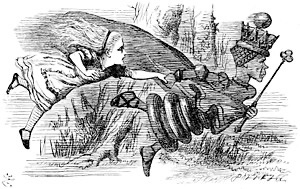
  • Government Finance 102:  Monetary Policy. The Red Queen’s Race

    Government Finance 102: Monetary Policy. The Red Queen’s Race


    The Red Queen’s Race


    TWO DEFINITIONS


    Fed funds rate


    The Fed funds rate is the interest rate banks charge other banks that borrow their excess reserves. It is a very short-term (overnight) rate. An increase in the Fed funds rate increases the cost of capital of large banks (net borrowers) and puts pressure on these banks to raise their lending rates. A change in the rate also changes the rate charged by other sources of short-term funds.


    The Fed funds rate is the most watched interest rate in the United States and probably the world. It is not set by supply and demand in financial markets. It is set (fixed) by the Federal Reserve Bank (the Fed), America’s central bank. 


    The Fed funds rate determines or heavily influences almost all other short-term interest rates in financial markets. It also indirectly influences many other longer term interest rates. It summarizes how the Fed views the economy and near-term changes. It is at the heart of monetary policy.


    Nominal vs. real interest rates

    Nominal interest rates are the reported interest rates, also called current interest rates. Real interest rates are nominal rates minus some measure of inflation. Both nominal and real rates can be negative. For many years recently, nominal interest rates on many countries’ national debt have been negative. No longer. Although almost all countries have raised central bank rates, the inflation rate in the United States and many other countries was above almost all nominal interest rates, making real rates negative. This is no longer true in the U.S., as inflation has come down below the Fed funds rate but the Fed has not started to lower rates. (As of 7/24)


    MONETARY POLICY


    The Fed’s mandate is to make monetary policy. The objectives of monetary policy and the tools the Fed uses to implement policy have changed from the past.  


    In the past, the Fed’s main functions were to fight inflation by raising interest rates and slow down the growth rate of the money supply, and to fight recessions by lowering interest rates. The Fed could also be the “lender of last resort” to banks if the banking system got into serious trouble. Most of the time, however, the economy grew and the Fed had little to do. In the last few years, especially during Covid and after, the Fed has bought huge quantities of federal debt (Treasuries) to keep interest rates low. It is currently slowly selling off its inventory. It is uncertain if the Fed will continue to sell off Treasury inventory when it starts to lower interest rates.


    Although never publicly stated, the Fed seems sensitive to supporting asset prices, particularly stock prices. Bond prices move inversely to interest rates. Rising interest rates lowers prices of existing bonds and raises the interest expense of new debt. The largest single borrower is the U.S. government.


    With the deregulation and globalization of the banking system and the explosion of nonbank financing, the Fed has less direct control of the finance sector than in the past. But as long as the dollar is the international currency and non-bank financial institutions fund their operations by borrowing from banks, the Fed will have indirect influence on the rest of the financial markets. 


    The Fed funds rate is in the range of 5.25-5.50% while the inflation rate is under 3.0%. This has been the Fed funds rate since May, 2022. The Fed started reducing the Fed funds rate to 4.75-5.00% in September. If the inflation rate stays low, this will decrease both nominal and real rates of interest.


    The recent history of Fed policy has been unusual. The Fed under Ben Bernanke and Tim Geithner and the Treasury under Henry Paulson were extremely aggressive during the 2008-09 financial crisis in containing the real threat of a total meltdown of the national and global financial system. They extended loans to and guaranteed debt of banks and non-bank corporations. They promoted shotgun marriages between banks, creating megabanks and accelerating the consolidation of the banking system.  But their policies of historically low interest rates and purchasing of public debt continued long after the economy resumed growing. From 2008 to early 2022, the Fed funds rate has been below 1% in 12 out of the 14 years. This is extraordinary; the last time the Fed funds rate was below 1% was for a short time in 1958. And, during this recent past period, real interest rates were negative. The Fed obviously believed that a massive interest rate subsidy was necessary to get the U.S. economy out of the Covid-caused recession and for continue economic growth.


    A major beneficiary of low interest rates has been the federal government. The government has been able to greatly increase the national debt with little increase in interest expense. Interest rates on government debt before the 2022 inflation, less than 1% on ten-year government bonds, were the lowest they’ve been since the end of World War II. But since 2022, interest expense on the national debt has been rising rapidly and will continue to rise unless there is a large decrease in government borrowing costs. This is unlikely.

    Extremely low interest rates by themselves did not seem to have much of an impact on economic growth rates. But a combination of low interest rates and the corporate tax cuts of President Trump have helped to increase after-tax corporate profits. They have grown much faster than the economy and total income, reaching a record high as a percent of GDP. Over the last 40 years, stock prices have increased faster than wage income. No wonder families with financial assets have seen their incomes grow faster than families without financial assets.


    While the Fed has increased the number of tools it is willing to use, it usually cannot prevent accelerating inflation or a recession. These are often caused by exogenous (outside) events the Fed has no control over. OPEC raising oil prices, Asian and Russian debt crises, Covid, Chinese lockdown policies, global supply-chain problems, war in Ukraine, Russia shutting off oil and gas supply to Europe, disruptions caused by effects of global warming. The Fed is judged on how quickly and effectively it reacts.  

    THE CORONAVIRUS AND MONETARY POLICY


    The Federal government spent trillions of dollars to maintain total income, keep companies and state and local governments from going bankrupt, paying for emergency services and once again backstopping the entire financial system.

    The government’s financial response to the coronavirus was unprecedented in peacetime. Starting with the 2008-10 playbook, the Fed and the Treasury, working together, came up with massive new programs to keep the economy from falling into a prolonged depression, buy time until the virus abated, and guaranteed virtually all debt in the country. In the first round, over $3 trillion will be spent on income maintenance. Congress added another $1.9 trillion in the first months of President Biden’s administration, which will be spent over the next decade.

    All of the government income maintenance programs cost at least $300 billion a month, about equal to the fall in total income. This was extraordinary – a deep recession (fall in total output and rise in unemployment) without a decrease in total income. The economy recovered quickly. There were falling levels of unemployment already in 2021 and near record lows by the first half of 2022.  Since then, the unemployment rate has remained low despite a continuous increase in the size of the labor force.


    The lagged effect of earlier income maintenance programs plus the 2021 “stimulus” expenditures pushed total income above the long-term trend line, resulting in increases in total spending and falling unemployment rates. The inflation rate rose through 2021, reaching levels far above 2% before the Russian invasion of Ukraine and the resulting increases in energy prices. The Fed did not start increasing interest rates until the middle of 2022. But, to make up for a tardy start, it raised rates rapidly.


    The Covid stimulus programs had another effect. Total household liquid financial savings went up by about $3 trillion, about equal to the cost of the programs. Add-on savings from higher income and a stock market boom has kept total liquid savings from declining very much, if at all. In other words, the net financial effect of Covid stimulus programs has been to increase public (federal government) debt offset by increased private (household) savings.


    Assuming a 3% interest rate on the national debt, much of the increase in tax revenue since 2022 will go towards paying the increased interest expense on the national debt. Much of this has already occurred. Interest expense was around $450 billion a year in 2022; it is currently (2024) around $890 billion because of the increase in interest rates. By 2034, interest expense is projected by the CBO to be $1.7 trillion, about double the 2024 expense. By 2034, the increase in interest expense will be abut 60% of the increase in total expenditures minus the self-funding Social Security and Medicare programs. (BTW, the CBO projects that both Social Security and Medicare expenditures will increase about 5-6% a year. I find this hard to believe.)


    For the details behind these projections, see The Congressional Budget Office. (Update as of June, 2024.), especially their Executive Summary.  


    How is the government paying for all this? Borrowing. Selling new debt to cover yearly deficits and rolling over existing debt at higher interest rates. 

    2020-2022

    Much of the new debt created for the Covid programs was financed indirectly by the Fed, that is, the Fed created money to buy the same amount of debt. The Fed also underwrote the risks of virtually the entire debt market, even announcing it was willing to buy junk bonds. Much of the junk bond market consists of bonds issued by frackers who were in danger of going bankrupt because of low oil prices. The government would loan money and provide assistance (guarantee corporate debt) to companies in danger of going bankrupt.

    2022 and 2023:  FIGHTING INFLATION

    All U.S. government fiscal and monetary programs in 2020 and 2021 were aimed at countering the sudden recession and economic dislocations caused by the Covid epidemic. But throughout 2021, the Fed was ignoring the financial effects of the stimulus programs financed by Fed’s buying of the rising national debt and massive expansion of the money supply.

    The Fed has stated for a long time that it will tolerate an inflation rate of 2% but will be concerned if the inflation rate goes above 2%. The inflation rate started to go above 2% in March, 2021. It rose steadily to 7-9% by the end of 2021 (depending on which measurement was used). The unemployment rate fell rapidly, reaching 4% by the end of the year. The unemployment rate has been below 4% since 2022. This is close to what economists consider full employment. Until March, 2022, the Fed continued to purchase large amounts of U.S. government debt.

    The $1.9 trillion stimulus program of March, 2021 was “a bridge too far.” A smaller program was probably needed to continue the recovery. The problem was the size. If you (or Fed economists) added the creation of new income to the trend in total income due to the rapid increase in employment and wage income, the total was greater than the amount of total income leading to full employment. That suggested that sometime in the foreseeable future (the Fed’s planning horizon), the inflation rate would go up, well past 2%.

    Even with the inflation rate around 7% at the end of 2021, the Fed didn’t react. The Fed funds rate was still around zero.  The inflation situation was made marginally worse by Russia’s invasion of Ukraine in March and the rise in energy prices (since reversed, at least the U.S. price of crude oil). Not until May, 2022, did the Fed start getting serious about raising the Fed funds rate and stop increasing its holdings of government debt. The Fed raised rates rapidly to make up for its delayed reaction to high inflation. They raised rates even while the inflation rate was coming down.


    MONETARY POLICY AND MACROECONOMICS

    The Fed made it clear they would keep the Fed funds rate high until the inflation rate would show a substantial downward trend towards 2%. Back to the old-time religion – fight inflation come hell or high water! Don’t support any aggressive fiscal policy to fight a possible recession that might result from rising interest rates. In fact, the Fed, to support higher Fed funds rates, has been selling its holdings of government securities to reduce the money supply. This risks the possibility of a recession before the inflation rate falls below 2%.

    The Fed could get lucky. Many commodity prices are falling, which might counter some of the increased wage and salary costs. Shortages due to global supply chain dislocations started to clear up. Almost all large corporations are saying they are “increasing free cash flow,” a nice way of saying they are slashing costs. A recession might lead to a moderate increase in measured unemployment because the labor force is growing at a much slower rate than in the past. Fewer than expected new entrants. So small increases in the unemployment rate, as are now happening, do not seem to influence the Fed to lower the Fed funds rate. 

    If the price index as measured by some version of the CPI stops going up but stabilizes at the current high levels, the year over year inflation rate will go down. Why? Because the price level – the inflation rate – rose rapidly in the second half of 2021. The same current price level will be divided by increasingly higher past price levels, resulting in a lower yearly inflation rate.

    Leads and lags again. Don’t “follow the data,” which is past news. Since there are lags in reporting economic data and the Fed has to look at trends and averages in the data, it will usually be behind the current and near future data. If there is large and rapid increase in the data, as recently, the Fed has to make up its delays in policy changes by large and rapid changes in instruments like the Fed funds rate. Anticipate the future and build in lags in the impact of policy changes. Like everyone else making financial decisions, the Fed should forecast the future and place its bets. As my old econ prof used to say – you puts down your money and you takes your chances. 

    The Fed should have anticipated that an aggressive monetary policy supporting massive fiscal stimulus to fight the disruptive recession caused by Covid could led to higher inflation rates if taken too far. As it did, the Fed should have started fighting the resulting inflation earlier, before it accelerated and raised inflation expectations. Large, delayed increases in the Fed funds rate chasing higher inflation rates now runs the risk of impacting the future economy as it enters a recession. To continue with cliches – the Fed gets the devil and the deep blue sea at the same time. 

    CONCLUDING REMARKS

    There are indirect effects of the Fed’s monetary policies. Very low interest rates, money creation, bailouts to avoid company bankruptcies, and massive bond buying to avoid debt defaults all directly or indirectly helped stock prices. Asset prices increase while the real economy has falling inflation. But the 2021-22 inflation and rise in interest rates temporarily reversed asset price increases, especially stock prices. Since then, the stock market has had a strong boom, fueled by AI stocks (especially Nvidia) in addition to general rising corporate profits and speculation in crytocurrencies. The increased return on bonds does not seem to have diverted demand for stocks.


    In short, the Fed bought massive amounts of private and public debt and paid for it by creating money. The federal yearly deficit is structural; unless there are radical changes in government spending and/or tax rates, the yearly deficit will continue and the national debt will increase.

    This is short-run Keynesian economic policy on meth. Massive income maintenance through deficit spending. This is unlike government spending in the Great Depression, when some of the government spending led to public investment and new jobs – WPA, PWA, CCC, TVA, dams, rural electrification. The recent infrastructure bill provides potential tax subsidies to private investment in designated industries, particularly public investment, domestic chip production and renewable energy. Even before passage of the bill, large, global chip designers and manufacturers announced investment in new plants in the United States.

    This is also Modern Monetary Theory on steroids – run large fiscal deficits and have the central bank (the Fed) create electronic money to buy the government debt. Keep interest rates low, preferably near zero, so the federal government can continue to run larger and larger deficits with small increases in the total interest expense on the national debt. The government has been doing this for years; only the high inflation rates forced the Fed (and financial markets) to increase interest rates.

    There is research done by Carmen Reinhart, Vincent Reinhart, and Kenneth Rogoff that when government debt rises above 90% of GDP, economic growth slows down. Government debt held by the public is already above this ratio. The CBO projects the ratio will be 122% in 2034. 

    What if the causality is the other way? Or there are feedback effects? What if slowing economic growth and low rates of inflation mean a slowing growth rate in taxable income? In the “everybody wins” fantasy of democratic politics, it is difficult to control total spending or to refuse tax cuts or tax breaks. Rapidly rises expenditures for Social Security and Medicare because of an aging society is increasingly paid for out of general tax revenue. Payroll tax rates for Social Security and Medicare might not rise. When the Social Security Trust Fund goes to zero in the mid-2030s, about 20-25% of Social Security expenditures will come out of the general budget. This could add about $300 billion to yearly deficits. 

    Total tax revenue for the rest of the decade will only cover Social Security, Medicare, interest expense, government pensions and social welfare programs like Medicaid and food stamps. The rest of the budget – defense and discretionary spending – will be paid for out of borrowing. Borrowing more money is politically easier than “fiscal discipline.” Surprisingly, the CBO is projecting that short-term government borrowing rates on national debt will go down, but longer rates will stay about the same. This implies that average rates will decrease and the inverted yield curve will disappear.

    All of these fiscal and monetary trends can go on for a long time but not forever. Japan has been doing this since the early 1990s, soaking up most of the country’s past savings to fight off a stagnant economy, deflationary pressures, an aging population, and lack of any structural reform. Japan has had very low rates of economic growth over the last 30 years; I doubt if the U.S. economy and society could tolerate very low growth rates over a long period of time.

    The U.S. can continue running large budget deficits as long as the dollar is the international reserve currency, interest rates decline from current levels, and U.S. government debt is considered risk-free. Or if the growth rate of national debt is lower than the growth rate of nominal GDP. Currently, interest rates on the national debt are trending higher as the government rolls over the existing debt and attempts to attract buyers of the large amount of new debt.

    In the past, conventional wisdom said that fiscal policy and monetary policy had contradictory goals. Fiscal policy was supposed to encourage and support economic growth and job creation. Deficits would increase if there were a recession or low economic growth. This was in the personal interest of elected officials. But too much stimulus or for too long could lead to higher rates of inflation. The Fed would then raise interest rates until inflation rates eventually came down. This would slow down spending and risk a recession.  But over the last 30 years or so, the two institutions seem to be coordinating their policies. The government now has structural deficits rather than a counter business cycle (Keynesian) strategy. The Fed has a bias towards low (below market) interest rates, which also encourages borrowing and increased aggregate demand. Only if the inflation rate rises to a level that threatens growth will the Fed be aggressive in raising rates. So the CBO can project real growth, rising national debt, and falling government borrowing rates from the current levels. Even as the national debt/GDP ratio rises. Again, this might go on for a long time, but not forever. 

    ===============================================

    See companion post Government Finance 101:  Fiscal Policy. Alice in Wonderland.

    For a list of all posts on this blog, see List of Posts by Topic with links to all other posts.


  • Competition:  Strategies and Structure

    Competition: Strategies and Structure


    Competition: Two Meanings of the Idea of Competition


    This essay discusses the supply side of a market. It introduces the specialized meaning of the concept of competition used in economics. 


    The word “competition” is used in two ways.  One way is the common usage – the strategies or processes companies use to compete with each other.  But economists use the word in another way – to describe the structure of an industry or market.


    Economists divide industries or markets into two groups – perfect competition and (not surprisingly) imperfect competition.  Imperfect competition is then subdivided into three types.  They are called monopoly, monopolistic competition, and oligopoly. Oligopoly is a market structure where a small number of companies account for a large percent of total sales. It is the dominant market structure for many large markets. A later essay will discuss a special version of oligopoly called bilateral oligopoly.


    Competitors’ Business Strategies:  Eliminating All of Them Leads to Perfect Competition


    What is the difference between perfect competition and imperfect competition? Perfect competition assumes away all strategies of competition except price competition. Besides all forms of marketing, perfect competition ignores:


    • ·      brand names, trademarks, and copyrights. 
    • ·      price discrimination and dynamic pricing (charging different groups of customers different prices).
    • ·      economies of scale (larger size leads to lower unit cost) of mass production, distribution, marketing, retailing, financing or online businesses. 
    • ·      proprietary or “firm-specific” knowledge, including patents.  
    • ·      innovation or the creation of proprietary knowledge.
    • ·      all forms of market friction and transaction costs (costs to the company of doing business with other companies or customers). 
    • ·      positive and negative externalities (negative externalities are costs of doing business that the company does not pay, such as pollution).


    Imperfect competition includes any or all of the above. All are business competitive strategies and possible sources of competitive advantage. They can change a market structure. If they are eliminated, what is left is perfect competition.


    Perfect competition assumes its market structure. The model then explores the dynamics inside the structure that define equilibrium. Possible strategies are limited so as not to change the structure.


    Perfect Competition Model


    Perfect competition is the economist’s favorite type of competition.  It is also the ideal type.  Economists believe that an economy consisting of nothing but perfectly competitive (PC) industries is the best of all possible (economic) worlds.


    Perfect competition is defined by four conditions that describe the industry. These conditions are:


    1.    Homogeneous product. In English, this means that all the products offered by all the competitors are exactly alike.  Another word for homogeneous product is “commodity.” Farm products, raw materials and minerals are often used as examples. This implies that all types of marketing, such as advertising or fancy packaging or brand names, are a waste of effort and money.  Buyers know that all competing products are alike. Purchasers are only influenced by price, not at all by marketing.


    2.    Lots of buyers, lots of sellers.  This implies that no one buyer or seller is big enough to have “market power,” the power to influence the market price of the product.  It is usually assumed that economies of scale are nonexistent.  This means that small firms, small relative to the size of the industry, can produce at minimum average cost.


    3.    “Perfect information.” This means that everyone in the market knows everything.  No trade secrets, no patents, no proprietary information.  All information is public and readily available.  No buyer or seller has a market advantage because of private knowledge or inside information.


    4.    Easy entry, easy exit. Easy entry is related to number 3. This says that a new entrant can learn whatever is needed to know to compete equally with existing producers. “Incumbent” firms have no cost or technological advantage over potential entrants. There are no barriers to entry. Easy exit implies that a firm that wants to leave the industry can recover its original capital costs, its original investment.  Thus, the fear of losing all or part of the initial investment is not a deterrent to entry.


    Every company’s demand curve is horizontal, which illustrates that the company can sell as much as it can produce at the market price. But all companies use the same technology, which limits each one of them to a very small percentage of total output. 


    Thus, PC companies are price-takers and quantity adjusters.  The only short-run decision a manager or owner makes is how much to produce.  The rule is to expand output as long as marginal cost (the increase in unit variable cost) is less than price, thus increasing profit.  The only long-run decision is to stay in the industry or exit.


    Perfect Competition as the Ideal Industry Structure


    The conditions that define a perfectly competitive industry are strict. That is why it is the ideal type of industry structure. 


    For examples of PC industries, economists usually point to agricultural products like wheat and milk. One problem is that farming in all industrialized countries is subsidized and protected by governments, interfering with the setting of equilibrium price.  Some raw material and metals markets were good approximations, although now most of the world’s production is performed by huge mining corporations or government-owned companies. A recent counter example has been the introduction of fracking technology, which has led to the entry of hundreds of relatively small American companies into the activity of crude oil extraction.   


    Companies in a PC Industry Do Not Compete on Price


    Because all companies produce exactly the same product, customers are only concerned with the market price. They do not care, and usually do not know, which company produced the product they buy. Producers of grains like wheat, for example, usually deposit their output in huge grain silos (storage tanks) where it is mixed with the grain from many other producers.


    Market price is determined by the interaction of total market supply with total demand. No one company has any control over the price it charges or receives. So companies do not even compete on the basis of charging different prices or using different price strategies such as price discrimination. 


    Many Small, Local Companies Do Not Equal Perfect Competition


    According to the 2015 Census of Businesses, there are about 28 million businesses in the United States. About 10 million are home-based. Some of them may not be active. 


    Of the 28 million businesses, over 22 million are small businesses that are individually or family owned and operated. About six million have at least one paid employee, of which about 3.6 million have four or fewer employees.


    Many of these companies are not only small but also serve a small or local market. 


    There is tremendous diversity among small and local businesses. This diversity is a major source of the economy’s flexibility. Many small companies are small stores, local services like hair and nail salons, specialized services connected with maintaining homes and commercial real estate, professional services (lawyers, accountants, doctors), or restaurants. Small businesses can often compete with large corporations (restaurant chains, large hardware stores like Home Depot). But this does not mean there are a large number of similar companies in the local market. Also, local customers do not pick companies solely on the basis of price. Companies like restaurants attempt to differentiate their business from competitors and establish steady customers who like their food and atmosphere. This is a good example of Pareto’s, or the 20/80 Rule. Reputation is important, especially with customer evaluations posted on the Internet.


    Equilibrium and Disequilibrium in a PC Industry


    For given hypothetical industry supply and demand curves, economic theory has a simple explanation of how the industry reaches equilibrium (intended supply equals intended demand). But there is no explanation of why the industry was in disequilibrium (supply not equal to demand) or how long it takes to reach equilibrium.


    If the industry is in equilibrium, and a supply curve or a demand curve shifts, the industry is in disequilibrium. The reasons for the shifts occur outside the industry. On the demand side, the industry demand curve might shift because of changes in consumer “preferences,” possibly because of new or improved competing products or services developed outside the industry. Also, demand for a primary commodity like wheat is “derived” from demand for products made with wheat such as wheat bread, Wheaties or Wheat Thins. They compete with commodities that are inputs into competing consumer products such as oats in Cheerios or Quaker Oats oatmeal. These branded, advertised products are not sold in a perfectly competitive market or market segment.


    Farmers do not sell their wheat directly to consumers. They sell to large food processors. Many of the final markets or market niches (product categories) are oligopolistic and companies use many or all of the competitive strategies listed at the beginning of this essay.


    On the supply side, shifts in the industry supply curve may be due to changes in the cost or productivity of inputs bought from capital goods or other input industries. Inputs are often produced by large companies in oligopolistic industries. 


    =====================================================================


    The Agricultural Revolution II:  A Function of the Industrial Revolution


    Because of the Industrial Revolution, agriculture has been radically transformed. Like other industries, agriculture has gone through waves of absorbing innovation and new technology developed by input suppliers.


    An agricultural, raw material or mining industry can be transformed by innovation or economies of scale in input supplier companies. Agriculture, especially grain production, has been transformed by 

    • steel plows and implements. 
    • animal-drawn harvesters and combines. 
    • tractors and other mechanized equipment.
    • chemical fertilizers.
    • pesticides.
    • herbicides.
    • irrigation systems.
    • hybrid and genetically-modified seeds.
    • production planning information systems.


    Many suppliers became large corporations, including Ford (tractors), John Deere, International Harvester, Caterpillar, and Monsanto. Modern equipment manufacturers are currently incorporating sensors, robotics, GPS-based production systems, and artificial intelligence into their products and software. Driverless tractors and automated computer-controlled planting, growing, and harvesting systems are being developed.


    Farmers have combined many of these inputs to realize economies of scale. The result of all this innovation, plus better-educated farmers, has been dramatic increases in productivity – output per acre and output per farmer – and reduction in real unit costs.
    Organic farmers use fewer inputs (no chemical fertilizers, no herbicides, no pesticides) so should have lower costs. But yields (output per acre) are so much lower that the unit cost is higher.


    A consequence of the “industrialization” of agriculture has been that farming has changed from subsistence farming (raising food to feed the farming family) to commercial farming (growing crops to sell in markets). Owners of larger farms also tend to specialize. 


    Even if some agriculture continues to retain some aspects of perfect competition, they rely on suppliers of inputs to provide them with waves of innovation to reduce unit costs and increase productivity. They sell to large food production companies that rely on new product development, branding, marketing, price discrimination, and economies of scale to increase sales and profits.


    Agriculture, the dominant economic activity before the Industrial Revolution, has been radically transformed by the technological innovations of the Industrial Revolution. Before the Industrial Revolution, about 90% of producers were farmers or farm workers. Today, about 2% of the workforce is in farming. About 6 million farmers and agricultural workers produce enough food to feed 335 million Americans and over $140 billion of exports.


    –>

  • Imperfect Competition:  Large Companies and Oligopoly

    Imperfect Competition: Large Companies and Oligopoly


    Introduction:  From Perfect Competition to Imperfect Competition


    This post is about one form of imperfect competition, oligopoly. Oligopoly is a industry structure where a small number of large companies account for a large percent of industry sales. A later post describes a special type of market structure called bilateral oligopoly.


    It seems that running or owning a business in a perfectly-competitive industry is not much fun. Managers and owners have virtually no control over their business, the risk of failure is high, and profit margins are minimal. What could a manager do to have more control, reduce risk and increase profits?


    The basic idea is to pursue strategies that change competition from accepting and reacting to changes in the industry price to include other, controllable factors. Some of them are listed in Competition, Perfect and Imperfect. Another set of strategies is to grow the company through innovation – developing or adopting new technology, new products and production processes, and organizational innovation. These strategies will change the industry structure from perfect competition to imperfect competition.


    One way is through technological innovation in production that leads to economies of scale.  Suppliers of capital equipment and production systems, including information technology, are under constant competitive pressure to improve the equipment, software and services they sell to manufacturers. This is a major source of increased productivity and innovation in our economy. Companies that buy the latest capital equipment and management information systems often can increase the size (scale) and complexity (scope) of their operations and reduce their unit costs. This dynamic leads to an industry dominated by a small number of large producers relative to the size of the market. This is the definition of an oligopoly.


    Oligopoly – The Dominant Market Structure of Imperfect Competition


    An oligopoly is an industry dominated by large companies. A small number of companies account for a large percent of industry sales.

    In an industrialized economy, it is the dominant type of market structure.


    A small number of large companies dominate the American economy. About 5,000 companies out of a total of over 20 million account for about half of total output (GDP). 


    Many of these companies are also an important part of the global economy as they have become multinational corporations. For the companies in the S&P 500 (the 500 publicly-owned companies with the highest market value), overseas sales account for about 37% of total corporate sales (2017). The 100 largest companies in the S&P 500 obtain over 45% of their sales and earnings from outside the United States. Foreign operations have accounted for over half of these companies’ growth in sales and profits.


    In a perfect competition (PC) world, industries compete with other industries selling similar products or services (substitutes). In the imperfect competition world like oligopoly, companies compete with companies. Parts of companies compete with parts of other companies in many different markets. Companies compete with companies in market niches (specialized markets) across industries and markets.


    It is difficult to define an imperfectly competitive industry or market with differentiated products and services. The boundaries of such an industry, especially in information technology, are in flux as new products and services are brought to market. It is sometimes more useful to concentrate on more narrowly defined market niches. 


    A word about economic theory. Equilibrium price and output are determined by total industry supply and demand. All producers make exactly the same product. But in an oligopoly with differentiated products there is no unique supply curve. Thus, no unique equilibrium price and output.

    Three Questions


    Economic theory, to be relevant, has to answer questions:


    How are large companies created?

    Why are most industries oligopolies?

    How do large corporations continue to dominate markets?


    Different Concepts of Competition


    The definition of competition is central to understanding a capitalist economic system. Competition among privately-owned companies is also what differentiates capitalism from socialism.


    There are two definitions of competition. One is competition in economic theory; the other is competition in the real world. The first is taught in economics courses; the second in business courses. Economics talks about price competition and abstracts away from non-price competition. Business courses discuss types of non-price competition.


    Basic economic theory concentrates on competition among industries with commodities. This is called perfect competition. In perfect competition, there is no price competition among the companies in an industry. Every company produces exactly the same product and charges the same price. Every company is too small relative to the size of the market to influence price. Other forms of competition such as marketing are assumed away.


    In economic theory, there is also imperfect competition. In monopoly, one company and the industry are the same. Otherwise, there is competition among companies within an industry. In a modern, industrialized economy, industries and markets tend to be dominated by large corporations that have developed and adopted production and marketing technology. Large scale, capital intensive production leads to economies of scale. Using communication technology creates economies of scale in marketing. Together, they often lead to concentrated industries and markets.


    If there are any sources of economies or new technology leading to falling unit cost, there is no equilibrium market price. If there are concentrated markets or differentiated products, there is probably multiple prices and price discrimination (different prices for different groups of consumers for the same product or service).


    Economic theory tries to explain market and economy-wide equilibrium. Equilibrium, by itself, would tend to stability or stagnation.  This does not happen because there is another form of competition – competition based on innovation. This creates new types of competition. There are new challengers to established companies, often based on creating new technology or new applications. This process of creative disruption never stops; the economy is dynamic. It never reaching a permanent market equilibrium or economic stability.


    Competition through innovation also occurs among existing companies. In many industries, it is the primary long-run form of competition. Some examples are health care, fashion merchandising, entertainment, the capital goods sector, and the IT sector. Also supplying the military. But all industries innovate to some extent – buying capital equipment and IT systems from outside suppliers (available to all), internal innovation, and adapting outside innovation. Proprietary knowledge, the result of innovation, is the ultimate basis of economic profit beyond the cost of capital. And economic profit provides the funds for further investment and innovation for corporate growth and development.


    There are two general types of innovation – technological (production) and organizational. Both are necessary, sometimes occurring together. Historically, corporate growth depended on eliminating internal information bottlenecks to growth and expansion. This made possible new, larger organizational structures with increased management oversight and control through internal cost accounting and financial systems.


    Past and continuing innovation causes corporate growth and resulting macroeconomic growth, and especially growth in real per capita income.


    Both economic theory of imperfect competition and business courses usually focus on competition among companies in an industry or market. But companies in an industry are also competing (and cooperating) with suppliers and corporate customers. There is price competition across supply chains, not just within a market or industry or against substitutes in other markets. Prices and terms are often negotiated by corporate professionals like sales reps and purchasing agents in large corporations. They are negotiating how profits are divided.


    While economics talks about the interaction (negative feedback) of supply and demand, the dynamics of a capitalist economy is on the supply side. Innovators (and marketers of established companies) create demand. Aggregate demand for existing products and services can be temporarily increased through the creation of money and borrowing for consumption. Without innovation, this eventually leads to inflation and no growth. Innovation creates lower prices and economic growth over time.


    The Creation of Large Companies


    Large companies and the resulting industry structure of oligopoly are often the result of technology and how organizations use technology to generate growth. Large companies institutionalize technology and innovation.


    In the past, the main reason for the creation of the modern large corporation was to exploit the profitable economies of capital-intensive production. Large amounts of capital were needed to purchase the land, build the plants, purchase and install machinery and production systems, buy material inputs, and create the organizational and informational hierarchy to manage it all. 


    There are now potential new sources for corporate development and rapid growth – the ability of acquiring new customers at very low or zero marginal cost through applications on the Internet. 


    Large corporations are the result of past innovations and profitable improvement and marketing through organizational development. Innovation in organizational development is necessary to fully exploit technological innovations and improvements.


    Mature Large Companies


    Mature large companies are a combination of competitive market capitalism and internal economic planning. Price flexibility and competitive pressure to innovate and improve are retained. Managers of large companies must worry about potential new entrants. But companies must be big enough to efficiently use large-scale production technology to realize economies of scale. Economies of scale (size) and scope (complexity) are a result of all forms of innovation.


    A large corporation in an oligopoly combines many of the features of competitive capitalism and central planning. If socialism is a way to “nationalize” monopolies and large company oligopolies, large company oligopolies is a way to “privatize” central planning. More than a socialist economic system, private oligopolies keep competition, innovation, and profits as a way to measure performance.


    Large corporations are a combination of competition and planning, of order and innovation. Internally, large companies should attempt to find the optimal combination of innovation and stability. This may be a function of the company’s information and control systems, as implied by Hayek.


    Large companies are organizations of opposites. This creates internal tensions of:


    Competitive capitalism and central planning

    Defensive (mature) and aggressive (innovative, attacking)

    Specialization and diversity

    Short run diminishing returns and long run increasing returns

    Order and stability vs. chaos and disruption


    The growth and survival of large corporations depends on how successful they are in allocating resources and investment between these opposites.


    Large Corporations and Economic Development


    Large companies that dominate their markets managed most of the economy’s resources. They rely mostly on increased real income of consumers for internal growth (the demand curves for their products shift outwards as real income increases). So the average growth rate of large companies, especially those that sell to consumers, will be about equal to the growth of real income over time. Most industries grow at about the same rate as the whole economy.


    What if two or more companies begin at about the same time with slightly different products or services, and all the companiesdiscover increasing returns? Many food processors used similar mass production and packaging technology to create different food and beverage products. They solidified positions in market niches with marketing such as branding and advertising using new mass information channels including magazines aimed at women and radio. All can survive and grow if they develop different specialized products and market niches.


    If there were only diminishing returns, small companies with homogeneous or differentiated products that could be easily copied would probably dominate the economy. If there were only increasing returns, the economy and most markets would be controlled by monopolies. Successful large companies tend to create increasing returns at the early stages of new technology applications and then experience diminishing returns later. A large company is also often amix of diminishing returns in some parts or processes of a company and increasing returns in other parts or processes. 


    A small number of large companies provide order and stability, with some flexibility of adjustment, to market niches, markets, and the whole economy. They do this in an environment in flux. They do it without their markets ever reaching equilibrium.


    Large companies contribute to economic growth when they reduce unit costs and prices. Lower prices raise real income even if there is no growth in real wages. This increases demand for a company’s products anddemand for other companies’ products and services due to increased real income.


    Internal innovation mostly supports and preserves existing businesses. A common strategy is to reduce unit costs and increase productivity. Fortunately, because of intense competition based on innovation, the price of many investment goods (capital and IT inputs) fall over time.


    Mature large corporations are consumers (buyers and adopters) of new technology. Mature companies are not just the targets of innovators (“creative destruction”) but also major customers of innovative companies.

    But they are not passive buyer of inputs. Internal innovation adapts inputs to the specific requirements of the company. They modify and customize outside (purchased) inputs into “firm-specific” assets. This creates proprietary knowledge, the basis for asymmetric information, competitive advantage, and profit margins above the cost of capital.


    Large Company Market Dominance:  Marketing and Market Niches


    The usual strategy of large companies to maintain market dominance, especially companies that sell to final consumers, is marketing. Marketing is the way to manage demand. The emphasis is on strategies to preserve market share rather than risker strategies to innovate products or enter new markets to increase growth rates and profits.


    It is very common in imperfectly competitive markets for companies to practice price discrimination, the strategy of charging different groups of customers different prices. For some companies, like Amazon, they have collected so much data on customers that they can pick a price for each individual customer. Facebook probably has even more information about its users. Facebook sells this information to third parties so they or their clients can design highly focused marketing and advertising campaigns.


    A large company may have a large share of a broadly defined industry but close to a monopoly position in specialized market niches within the industry. An example is the airlines industry. Mergers continue to reduce the number of airlines and increase concentration in the domestic markets. There are four big national airlines, down from six a few years ago. One airline controls most of landing slots at many airports, including large ones. Examples include United Continental in Newark (former competitors) and Delta in Atlanta.


    Strategies of Large Corporations


    The objectives of most mature large corporations are order, control and stability to generate high and steady profits and dividends. 


    Strategies, including most innovation adoption, are mostly defensive – geographic expansion of existing business, new capital equipment to reduce unit costs, product line extension, organizational development, and high levels of marketing and advertising of existing products.


    There are two types of dangers – attack from within industry from new companies or new products and development of competing technology or products outside the industry. Also, changes in demand (consumer preferences), sometimes because of shift in spending income to buy new products or services.


    A company has to find the optimal combination of market competition and internal planning. Related to optimal combination of innovation and stability. The effectiveness of corporate planning and mangement control may be a function of internal information and control systems, as implied by Hayek.

    Large mature companies have to find the optimal combination of defensive strategies and innovative strategies. Defensive strategies support the existing business and can usually be implemented with little risk. The company possesses a large amount of internal information, including experience, about its existing businesses. This information can be used to make reasonably accurate forecasts of sales, prices and costs of new marketing or cost reduction strategies.

    Innovative strategies are riskier, with a higher probability of failure because of uncertainty. A company has to search for and create new proprietary information to create and develop innovative products or services. 


    Companies become vulnerable if there is too much internal order and stability and not enough attention to external threats and internal innovation. On the other hand, conglomerates often become chaotic because of too much diversity. They become unmanageable and disintegrate.


    A suggestive model (or metaphor) from evolutionary biology on how to think about combining these two strategies is that of “rugged landscapes.” (See Stuart Kauffman, At Home in the Universe)


    Mergers and Acquisitions (M&A)


    In addition to the development of innovations and internal growth as a source of growth for corporations and the formation of oligopolies, large corporations are often formed through mergers and acquisitions.


    “Merger Mania” in the late 19th century, often promoted by J. P. Morgan and culminating in 1895-1904, created many of America’s largest companies. Many would continue to dominate their industries well into the late 20th century.


    One indication of the continuing impact of mergers among large companies and acquisition of smaller companies is the decrease in the number of publicly traded companies. In the mid-1990s, there were around 8,000 publicly traded companies in America. In 2016, the number had fallen to 3,627.

    For many years recently, America’s corporations have spent more than $1 trillion a year on mergers and acquisitions. Globally, M&A is around $3 trillion a year. Some of the largest mergers recombined companies that were broken up in earlier anti-trust cases. Cross-border and cross-regional mergers and acquisitions are creating global companies, called multinational corporations (MNCs).


    The result is increasing concentration. Two finance professors at the University of Southern California estimate that nearly a third of American industries were highly concentrated in 2013, up from a quarter of all industries in 1996.


    Many of America’s 500 largest corporations spend more money every year on mergers and acquisitions than on net capital investment. 


    Why? What are they buying?


    Some mergers are between large corporations to reduce combined costs, reduce competition, merge related product lines or realize some economies of scale. Many large companies acquire smaller companies to eliminate potential competition, acquire new technology, acquire more innovative managers and employees, expand product line, or expand markets to other countries. While the United States and other countries have anti-trust laws, they are seldom used to block mergers or acquisitions. Governments often tolerate or even encourage mergers, believing larger companies are necessary to compete in regional (European Union) or global markets. 

    While most merger and acquisitions do not make financial sense – they do not earn the companies’ cost of capital – they may make sense from a strategic point of view by eliminating actual or potential competition.


    Acquisitions of competitors or new companies that have specialized knowledge or are perceived as a current or potential threat is another defensive strategy to preserve market positions over time. Acquisitions, seldom a good investment, are the cost some corporations pay for stability and long-term survival.


    Concluding Remarks


    A few comments on how the economic system actually works.  Maybe the most important is that only the innovative survive in an industry or market with changing technology and tastes. Even mature companies defending current positions in stable markets must buy and create new production processes, better marketing, and more efficient organizational management to stay competitive. 


    Competition is dynamic; companies must constantly adapt to a changing economic and technological environment.  Merging and downsizing sometimes buys time to become more competitive. Often, however, the most innovative employees are the ones who leave.


    In the long run, the major advantage of being a large corporation is being large. But the largest corporations have a high failure rate. Being a big company isn’t worth much when trying to control markets or making an economic profit. I will go further, based on my corporate and academic experience analyzing industries and markets. When technology and consumer tastes are changing, being an established large company may put the company at a competitive disadvantage. Large companies are committed to existing technologies, existing products, existing distribution channels, and the internal thinking and routines of the past. Again and again, I saw new, small companies come into an industry or market and clobber an entrenched dominant firm. Think about what has happened to iconic companies like General Motors, Sears, IBM, GE, RCA and former hi-tech companies like Xerox, Polaroid, and Kodak. All are companies that lost large market share or even left markets they once dominated. Most of the 500 largest public corporations of 30 years ago have gone bankrupt, been acquired or are a much smaller company.


    Eventually, most large corporations are replaced by successful small companies that become the new dominating corporations. Small companies succeed because they:


        are quicker to buy or develop new technology that give them a cost advantage over existing firms.

       develop new products or services, or improve existing products or services, that met consumer needs better than existing products.

        do not attack large competitors head on in all markets, but rather go after a market niche existing firms ignore or supply poorly in terms of what customers want. Using military metaphors, these types of attacks are called “guerilla” or “asymmetric” tactics.

        take advantage of new methods of marketing or new marketing channels.  Amazon vs. “big box” store retailers.

       provide higher quality or higher net value products or services.


    This is how a very small percent of today’s small companies will become tomorrow’s big companies.


    As Wee Willie Keeler, small but one of the best hitters in the history of baseball, said, “Hit them where they ain’t.”

  • Bismarck and the Origins of World War I.

    Bismarck and the Origins of World War I.


    Otto von Bismarck


    The recent excellent histories on the factors leading up to World War One don’t go back far enough in time.


    The main contention of this essay is that the road to World War One begins with the long-run consequences of the policies and strategies of Otto von Bismarck and the way he created the First German Reich in 1871.


    The heart of the Treaty of Vienna at the end of the Napoleonic Wars (1815) was the “Holy Alliance,” an agreement of the monarchs of Russia, Prussia (later Germany) and Austria (later Austria-Hungary) to stamp out any return to the revolutionary ideals of the French Revolution. The three monarchies cooperated until the Crimean War.


    The Crimean War (1853-56) was triggered by Russian attempts to expand its influence around the Black Sea, force the Ottoman Empire to allow Russian warships through the Dardanelles and increase influence in the Balkans as the Ottoman Empire retreated. To keep Russia bottled up in the Black Sea and out of the Mediterranean, England and France came into the war on the side of the Ottoman Empire. Prussia remained neutral. Austria-Hungary also remained neutral but Russia expected Austrian support. After the war, Russian leaders believed that Austria used the war to expand its own influence in the Balkans.  Russia and Austria-Hungary became rivals in the Balkans, with increasing Russian paranoia and anger towards Austria-Hungary. This broke up the “Holy Alliance” and began the long-term rivalry of Russia and Austria-Hungary.  (For an excellent history of the Crimean War, its origins and consequences, see Orlando Figes, The Crimean War).

    In the next decade, Otto von Bismarck began his series of wars to unite the various German states under Prussian hegemony and create modern Germany. He was anti-Austria at this time because he wanted to unite the German states under Prussia and replace Austrian influence in the southern German states. After being defeated in battle by Prussia in 1866, Austria focused on the Balkans because its German neighbors in the German Confederation had become part of the new Germany. 


    The last war Bismarck initiated was the Franco-Prussian war of 1870-71. Prussia and its German allies won a quick victory over France and declare the creation of the first German Reich. The Prussians rubbed French noses in it by creating the new Germany at Versailles. The new Germany annexed the French provinces of Alsace and Lorraine.


    Bismarck had achieved his goal of a united Germany but at the expense of creating an implacable foe in France, bent on revenge and recovery of lost territory.


    The German Reich was to be dominated by Prussia. The monarch was both the king of Prussia and the emperor (kaiser) of Germany. Bismarck was the head of both the new German and Prussian governments.


    Bismarck was a Junker (Prussian landowning noble) and deeply conservative. Prussia had a strong military tradition; there would be few checks on the German military from the elected national parliament (Reichstag). German foreign policy was made by a small group of men who did not answer to the public or to their elected representatives. Germany was to become an autocratic state with little input from the public or its representatives in the parliament.


    The Reichstag had limited powers. In the new German Reich, all the top government officials and military officers were appointed by the kaiser, not the parliament. With a weak emperor, that meant Bismarck appointed the officials.


    Bismarck also skillfully managed the German parliament, to limit any democratic influence on his government. He was usually successful, sidelining the Social Democratic Party and liberal parties from having influence on domestic policy.


    Bismarck’s domestic policy was to weaken or eliminate any political party or organization (like the Catholic Church) that he thought threatened Prussia’s hegemony. He succeeded but at the expense of alienating many of Germany’s organizations and political parties, including the largest, the Social Democratic Party (the SPD). This would have serious consequences when Germany entered the World War I and there was little cooperation between the military and political parties on the management of the domestic economy.


    Bismarck spent the next nineteen years managing the creation of the new state under Prussian dominance and Germany’s European security. His foreign policy strategy was to make sure Germany would never have to fight a two-front war. He signed a formal treaty with Austria-Hungary in 1876, becoming allies. He also had a separate secret agreement with Russia not to attack each other. This isolated France and reduced the chances that a combination of Russia and France would attack Germany.


    Although Bismarck had created a powerful Germany that disrupted the “balance of power” equilibrium of Europe, his careful diplomacy kept the peace. Germany did not try to expand in Europe and opted for stability. Bismarck opposed the creation of an overseas colonial empire, which might have antagonized Britain. He counted on the rivalry between Russia and Britain for influence in central Asia and Persia to keep the two countries from cooperating against Germany.


    But even before Bismarck was forced to resign by Kaiser Wilhelm in 1890, Bismarck’s careful European political structure was unraveling. Russia refused to renew secret “reinsurance” (nonaggression) treaties with Germany, mostly because of Russia’s increasing anger at Austria-Hungary’s policies in the Balkans, and by extension its German ally. Russia and France began talks that would culminate in an 1894 treaty containing secret military cooperation aimed at the alliance of Germany and Austria-Hungary.


    Towards the end of his rule, Bismarck bowed to nationalist pressures to create an overseas empire. This led to political conflicts with France and threats to Britain’s African empire. German attempts at seizing colonial territory would later create added French and British animosity towards Germany.

    In sum, Bismarck used warfare rather than political negotiation to create a powerful, militaristic Germany. The new constitution and his actions after unification aimed to guarantee the dominance of Prussia and Prussian values. Bismarck centralized power in himself as the embodiment of an authoritarian government. Parliament and democratic parties were legal but had little power or influence over the policies of Bismarck. Rather than moving towards a more open and democratic political structure, Bismarck’s Germany remained a reactionary bulwark in a rapidly changing world.

    His careful policies of detente with Russia, not antagonizing England and no overseas empire began to unravel towards the end of his regime. The ascension of Wilhelm to kaiser in 1890 accelerated the change and created a military alliance of Russia, France and England against Germany.  


    ======================================================================

    For the beginnings of World War I, its consequences, and a bibliography, see The Beginning of the Twentieth Century:  The Path to World War I.


    Also see other related posts:


     Wealth and Power in Pre-World War I Europe 


    The Austro-Hungarian Empire Before World War I

     The Immediate and Long-Run Historical Consequences of World War I


    The Maxim Machine Gun and Smokeless Powder


    Go back to the List of Posts by Topic

  • The Beginning of the Twentieth Century:  The Path to World War I

    The Beginning of the Twentieth Century: The Path to World War I

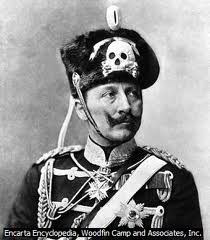
    Kaiser Wilhelm


    INTRODUCTION


    Some historians believe that the twentieth century began with World War I.  But how did World War I begin?


    The horrors of Europe’s
    twentieth century were born of this catastrophe; it was, as the American
    historian Fritz Stern put it, “the first calamity of the twentieth century, the
    calamity from which all other calamities sprang.”

    The consequences lasted at
    least until 1991, the breakup of the Soviet Union, which may mark the end of
    the twentieth century.  But the immediate
    cause of the war – instability and wars in the Balkans – reappeared again with the breakup of Serbian-dominated Yugoslavia, which was created after World War I. Rivalry among nations over influence in the Central European “borderlands” continues. Violence in the Middle East is partly a result of the arbitrary national boundaries drawn up by French and British imperialists during World War I.


    The economic dislocations caused by World War I were
    important causes of the onset and length of the Great Depression. The Great Depression was the catalyst that brough Adolf Hitler to power. The most dramatic economic and political events of the
    twentieth century have deep historical roots.

    THE BEGINNING OF THE BREAKUP OF BISMARCK’S EUROPEAN ORDER


    In the two books cited in the bibliography, George Kennan, the architect of America’s foreign policy at the beginning of the Cold War, gives a detailed account of the slow breakup of the fragile European political order put together by Bismarck. Bismarck’s foreign policy was based on isolating France and forging detente among the three conservative monarchies of Germany, Russia and Austria-Hungary.

    Kennan, as a Russian expert, concentrates on documenting the slow drift of Tsar Alexander III and the Russian political class from a tenuous alliance with Germany and Austria-Hungary to withdrawal and opposition. The surprise here, for me, was that the system came apart before Wilhelm became Kaiser and dismissed Bismarck.


    As far back as the 1880s the Balkans were a critical area of conflict between Russia and Austria-Hungary. Although the Balkans held almost no interest for Bismarck, he assumed that the continued existence of Germany’s ally Austria-Hungary as a “Great Power” was crucial to the maintenance of German security. The problem was that the Tsar and much of the Russian political elite had developed a hatred of Austria-Hungary because of their perception that Austria-Hungary was blocking Russian influence in the Balkans. By extension, they came to believe that Germany supported Austria-Hungary against Russian interests.

    In this atmosphere of Russian paranoia, France saw an opportunity to forge a military alliance with Russia against Germany. The military clauses of the treaty were negotiated in secrecy by a very small number of politicians and generals, and never made public in either country until a few years before the war. 


    Bismarck believed that a war between Russia and Austria-Hungary ran the large risk of the destruction of one or both of the monarchies. There is a hint that a war might even be a threat to the German monarchy and even the recent German federation he had cobbled together. Later German politicians and generals did not see this risk.


    THE BACKGROUND: 
    TRADITIONAL EUROPEAN POWER POLITICS
    AND
    PLAYERS


    This part of the post is mostly based on two recent attempts to answer
    the question of how World War I began.  They are Christopher Clark, The Sleepwalkers: 
    How Europe Went to War in 1914
    and Margaret Macmillan, The War That Ended Peace:  The Road to 1914.


    As Professor Clark says, the origins of the war were “obscure and
    convoluted.”  The book concentrates on the words and actions of
    the small groups of men in each of the five major powers whose collective
    decisions would lead to war.  It is in
    some ways an old-fashion history, telling the story of how foreign and military
    policy was made in a political atmosphere that died with the war.  Although four of the five powers had parliaments,
    policy makers almost totally ignored them.  German and Russian monarchs appointed ministers and influenced policy. Austria-Hungary’s policies were in the hands of the Foreign Secretary and the head of the army’s General Staff.  The president of France dominated the prime minister and ignored the legislature.  In England,
    the foreign secretary, Lord Grey, and a small group of politicians (including Winston Churchill) and military
    leaders, ignored their own Prime Minister and the majority of their own party
    in making foreign policy and military commitments to France, in secret.


    The author concentrates on the key political decision-makers,
    using mostly original sources.  As he
    explains in the Introduction, this is a treacherous undertaking, since much of
    the content of official documents, memoirs, papers and later interviews were
    self-serving, falsified, misleading, lost, or revised.  Key conversations were either not recalled
    truthfully or conveniently forgotten by participants. Almost all memoirs of the key players had the same theme:  I was not responsible for World War I. Yet Professor Clark, in over 500 dense pages,
    with 150 pages of notes, attempts to use this vast collection of papers to
    reconstruct the thinking, motivations and actions of the key players.


    By concentrating on the internal and often secret
    communications and conversations of foreign policy-makers in each country, the
    book conveys the feeling that they were operating in a hermetically-sealed
    environment.  That seems to be one of the
    main lessons.  They were all living in
    societies with tremendous tensions and instabilities. As members of reactionary conservative groups, they opposed or ignored the threats to their power and status
    from new economic and political groups and forces unleashed by the Industrial Revolution and calls for
    democracy and liberal reforms inspired by the French Revolution.  These conservative groups,
    often from the landed aristocracy or related to the monarchs, still
    controlled the foreign offices and often the highest ranks of the
    military.  They were playing traditional “Great Power” international politics under changed circumstances they either did not
    understand or willfully ignored. 


    But how did it happen?  The author does a masterful job documenting the diplomatic thinking and
    actions of the key players in the five powers. 
    But in the end, as the title suggests, they made a series of decisions
    over thirty years that cumulatively led to war. 
    For example, unlike Bismarck,
    whose flexible policies were to isolate France,
    avoid any involvement in the Balkans, and accommodate British colonial
    interests, succeeding German policy-makers under Kaiser Wilhelm took more aggressive
    steps that eventually led to the anti-German coalition Bismarck
    feared.  Rising mutual fear and mistrust,
    including paranoia, made political adjustments increasingly difficult. 


    Their thinking seems to have been narrowed by the
    assumptions they made about European power politics, conditioned by their elite
    position in their societies.  The military and foreign policy leaders had more
    in common with their counterparts in the other countries than they did with
    their own countrymen.  They thought they
    understood the thinking of their counterparts in opposing countries and could
    negotiate compromises.  

    Yet, in the end, most
    of the leaders wanted war or thought war was inevitable. Maybe they were not the sleepwalkers in the
    title of the book, but as they dealt with a series of political crises in the years leading up to 1914, their focus narrowed, military budgets and the size of armies grew rapidly, and political compromises to limit political conflicts became increasingly difficult. The cumulative tension of one crisis after another became almost unbearable and heightened nationalist and xenophobic rhetoric and feeling in all countries.


    In reading how the diplomatic conflicts unfolded, it feels
    like a Greek tragedy, which is one of the author’s intentions.  Like the Peloponnesian War, they would drift
    into a war that would destroy the polities they led.


    HOW DID WORLD WAR I BEGIN?


    The immediate trigger was the assassination of Archduke
    Franz Ferdinand, heir to the throne of the Austro-Hungarian Empire, by Bosnian Serb terrorists secretly armed, trained and financed by the Military Intelligence branch
    of the Serbian army.  That sounds very
    modern.


    Historical tragedy is often accompanied by irony.  Franz Ferdinand, heir to the Austro-Hungarian throne, was probably the only
    highly-placed person in the Austrian government who wanted a political, rather
    than military, approach to Serbia.  He was disliked or hated by virtually
    everyone in the Austrian government, including the Emperor Franz Joseph, who
    was 83 years old.  After his visit to Sarajevo,
    Ferdinand intended to sack the aggressive head of the army.  Ferdinand’s funeral arrangements in Vienna
    were embarrassingly short.  He was
    buried outside of Vienna, not in
    the royal tombs.


    Now comes the tragedy. 
    Austrian leaders were concerned over Serbian agitation in the Balkans, increasingly
    aimed at Austria.  Out of about 52 million people in the Austro-Hungarian Empire in 1914, about 30 million were Slavs.  Some wanted out.  Serbian agitation and calls for Slavic solidarity on the borders and inside the Empire resonated.  To “unite” the increasingly restless nationalities inside the Empire and deal with Serbia, the army high command had long advocated war with Serbia. The assassination gave them their opportunity (or excuse). The foreign office presented the Serbian
    government with a set of demands that they knew could never be agreed to. Surprisingly, Serbia agreed to all but one of the demands and offered a reasonable compromise to a direct threat to their sovereignty. But this was not the usual set of threats and bluffs that led to negotiated compromises in the past. Austria-Hungary’s leaders wanted war with Serbia. Only its stronger ally Germany could restrain Austria. It had restrained Austria in 1912 and 1913. But not this time.

    The military began improvising an invasion of
    Serbia. Why improvise?  Because all the great powers only planned on
    a full mobilization of large numbers of conscripted reserves. It would have been logistically difficult to start with a partial
    mobilization and then somehow expand to a full mobilization. It was all or nothing. Once full mobilization started, once trains pulled out of the stations, it meant war.


    Serbia
    had an agreement, only recently formalized, that Russia
    would come to their aid if attacked by Austria.  The Austro-Hungarian Empire would be in dire
    trouble if it had to fight both Russia
    and Serbia
    alone. But the Empire had a formal
    alliance treaty with Germany.  Since 1909 the
    Austro-Hungarian army’s commander had been discussing joint military operations against Russia with the
    German General Staff.  Russia
    had a secret formal alliance treaty with France,
    both of whom had an uneasy and vaguely worded alliance with England.  England
    and Russia had
    faced off along the southern frontiers of the English empire in the Middle
    East, Central Asia and South
    Asia.  England
    supported the Ottoman Empire’s attempt to keep a Russian fleet bottled up in the Black Sea and blocking its
    access through Turkey
    into the Mediterranean. 
    England
    appeared uncertain that it would come into the war unless Germany
    violated Belgium
    neutrality.  At one point, Lord Grey, England’s Foreign Secretary, toyed with the idea of reaching some sort of agreement with Germany.  In the past, great European powers had
    alliances, understandings and treaties with each other but they were fluid,
    subject to change and realignment, and uncertain in implementation. 


    Yet, as 1914 approached, the two alliances seemed to firm
    up.  Bismarck’s
    nightmare, a coalition of Russia,
    France and possibly England
    aimed at Germany,
    had become a reality.  Political options
    seemed to disappear and diplomatic maneuvering on both sides attempted to
    harden commitments to support allies.  There seemed to be an assumption that war was inevitable and even desirable. If
    war began, combatants could be reasonably certain that their allies would honor
    their commitments and enter the war.  And
    that’s what happened.


    Except for England, countries on both sides believed that the key to a quick victory was how
    fast countries could mobilize their huge army reserves and implement offensive
    strategies. Russia
    mobilized first, even while Tsar Nicholas and Kaiser Wilhelm were sending notes
    to each other saying they did not want war. Too late – the generals on both sides had already set the wheels in motion (literally
    – mobilization depended critically on railroads). All major powers went directly to full
    mobilization. Another localized war in
    the Balkans – the third in three years – was impossible; World War I was about to begin.


    The countries of both alliances immediately launched offensives.  Given the military balance of the two opposing alliances, the new military technology that seemed to favor the defensive, and the logistical difficulties of sustaining massive offensives, it was unlikely that either side would achieve swift victory. Ironically, one man who realized this was the author of Germany’s grand military strategy, the von Schlieffen plan. But his doubts came after he retired, at the end of his life.  


    After horrendous losses from repeated offensives in the first four months of the war, both sides dug in.  Failed offensives causing massive casualties would continue for four more years. 


    What strikes me is that foreign policy makers and military leaders in all the countries did not seem to think in terms of alternative scenarios or the longer-term political consequences if their offensive strategies failed.  With the exceptions of a young French officer named Charles de Gaulle, a few junior staff officers on the German General Staff, and the pessimistic thoughts of the head of the German General Staff in his private diary, no one seems to have thought ahead about how the war would be fought if neither alliance won a series of quick victories.  None of the men who started the war saw how a long war of attrition would end up destroying the social and political order they were trying to preserve.   


    CONSEQUENCES


    The immediate consequence was a war that mobilized over 60
    million troops, caused 20 million military and civilian deaths and 21 million wounded. The European order of Bismarck and other conservatives was shattered, replaced by chaos and violence.


    If the importance of an historical event is judged by its
    consequences, then World War I may be the most important historical event of
    the twentieth century.  Its immediate
    aftermath included:

    • the elimination of four monarchies, including the Ottoman Empire.
    • revolution in Russia, ending in a Communist government, civil war and invasion of Poland.
    • the breakup of the Austro-Hungarian and Ottoman Empires.
    • small, new, weak countries in Central
      Europe.
    • a Fascist government in Italy.
    • political and economic instability in Germany, leading to Hitler, World War II and the Holocaust.
    • English and French colonies and protectorates with arbitrary borders in the Middle East.
    • independence for part of Ireland, leaving the question of Northern Ireland unsettled.
    • a prolonged recession in England.
    • the rise of two new potentially dominant world powers outside of Europe,
      America and Japan.


    Equally important, economic historians who study the origins
    of the Great Depression generally believe the deepest underlying causes were
    the economic disruptions and instabilities created by World War I. The winners of the war could not, or would
    not, deal realistically with the economic dislocations. Criticisms of the disastrous economic
    policies of Winston Churchill in the 1920s by John Maynard Keynes had no
    effect. American exports of agricultural
    products to Europe fell drastically; a recession began
    in rural America
    in the 1920s. Thousands of rural banks
    failed. As the agricultural
    recession deepened in the 1930s, the rural banking system virtually collapsed,
    not all at once but in waves, prolonging the depression. 


    In Germany,
    the combination of bitterness over losing the war and the economic effects of
    the Great Depression would contribute to the rise and eventual success of
    Hitler and the Nazis. In the 1920s, the
    German army and navy were already planning on how to win the next war.  Hitler would inherit a military with a strategy on how to
    reverse the results of World War I.  He
    would use it. 

    History is the story of sudden, unexpected events with long tails and long consequences.

    ====================================================================

    READINGS: 

    The Unraveling of the European Order

    George F. Kennan, The Decline of Bismarck’s European Order:  Franco-Russian Relations, 1875-1890

    There are two valuable aspects to this book. The first is that this history gives a different perspective on the political factors leading up to World War I. The recent books on this topic concentrate on the immediate years before the war. They now appear to me to be incomplete, and somewhat misleading, in their analysis and conclusions. The second lessons is indirect. George Kennan is famous as the primary architect of America’s foreign policy at the beginning of the Cold War. He retired later to write a number of books. I think this book, and its sequel, are an attempt by Kennan to look back to find the deep roots of Russian and Soviet foreign policy. A key conclusion is his insistence that a national psychology is a crucial input into Russian decisions. If he is right, if this psychological continuity exists, then this book is relevant to understanding current, and probably future, Russian foreign policy.


    George F. Kennan, The Fateful Alliance:  France, Russia, and the Coming of the First World War


    This book is a continuation of Kennan’s earlier book, The Decline of Bismarck’s European Order. Shorter, more focused. Like Thucydides, Kennan seems to be looking for universal patterns, or at least relevant historical analogies.


    Throughout the book, George Kennan describes and comments on the hermetic environment of the very small number of diplomats and generals making the secret treaties and understandings that increased the chances of a military confrontation of two alliances. This is ironic coming from Kennan, who was part of a very small elite group of “Wise Men” who made Cold War strategy.


    There is a similarity to the political elite of the French Third Republic. Like them, The Wise Men seemed to believe that their “class” could conduct foreign policy in a political vacuum, without thinking about domestic politics, public opinion or democratic political institutions. I doubt if this is the historical analogy George Kennan intended. See Walter Isaacson and Evan Thomas, The Wise Men: Six Friends and the World That They Made.


    Kennan makes a major point of criticizing narrow military thinking to the exclusion of clear political objectives and flexible strategies. This reflects his feeling that his nuanced Cold War strategy against Russia was hijacked by the military, to the exclusion of exploring possible ways to reduce tension or reach limited detente. It is consistent that Kennan was skeptical and then critical of the Vietnam War, as were the surviving Wise Men.


    In a summary, Kennan seems to be saying that only the presence of nuclear weapons kept Russia and the United States from going to war.


    In the Introduction, Kennan says there will be a third book on the period 1894 to 1918. As far as I know, he never wrote this book. The two books he did write could have been preparatory to analyzing the seminal event of the 20th Century, the origins and outbreak of World War I. I can’t think of anyone who was better qualified to write this history. That he didn’t detracts from the value of these outstanding but narrowly focused histories.


    The Origins of World War I


    Christopher Clark, The Sleepwalkers:  How Europe Went to War in 1914


    Detailed account of the diplomatic decision makers and the hermetic atmosphere they worked in. His analysis tends to undermine his thesis implied in the title.


    Margaret Macmillan, The War That Ended Peace:  The Road to 1914.   

    Broader in scope than The Sleepwalkers, Professor Macmillan factors in how conservative leaders in all the five major powers thought they could use nationalism and the threat of war to overcome the deep divisions in their societies and counter the internal threats to their elite positions.


    Max Hastings, Catastrophe 1914:  Europe Goes to War


    Good summary of research on first five months of the war.  Numbers mobilized and casualties in first months were huge.  All armies offensive but didn’t have the numerical superiority and logistics to sustain attacks.  All countries’ war plans defective, leading to stalemate.  Trench warfare by the end of 1914.

    Nick Lloyd, Hundred Days:  The Campaign That Ended World War I


    Excellent, lucid history of a difficult, complicated topic.

    Emphasizes that the Allies finally learned the lessons from earlier mistakes. Foch and Haig came up with a winning strategy and new tactics. Had firepower and manpower advantages after failed German offensives of 1918 and the arrival of American troops. Preview of WWII as Allies coordinated use of tanks, airplanes and more flexible infantry/artillery tactics. Unfortunately, lessons learned by Germans, not Allies.


    Vienna and the Austro-Hungarian Empire


    John Stoye, The Siege of Vienna:  The Last Great Trial Between Cross and Crescent


    Detailed account of Ottoman Turk siege of Vienna in 1683.  Ottoman defeat led to the eventual loss of much of the Balkans and reorientation of Habsburg foreign policy from west to east.  Roots of later conflicts in the Balkans.  Shows how extremely complicated European politics were.


    Philipp Blom, The Vertigo Years:  Europe, 1900-1914.  2008.


    Despite the book’s structure of picking one theme in each year, surprisingly insightful look at the years before WWI.  Attemps at parallels to current (or continuing) society.  Emphasizes psychological stress and social disruption caused by economic change, and their political and cultural consequences.  Like Schorske’s book, does not delve too deeply into causes.


    Carl Schorske, Fin-De-Siecle Vienna:  Politics and Culture


    Brilliant book on how the liberal, capitalist, upper middle classes lost political and cultural dominance in Vienna.  Symbolized by the Ringstrasse and the buildings around it.  Rise of mass movements to challenge existing political order, including the use of anti-Semitism as a reactionary political weapon.  (Observed by a young Adolf Hitler.)  Cultural (and psychoanalytic) attack on rationalist and ordered culture of Vienna.  In the background, gradual disintegration of Austro-Hungarian Empire.  Nice tie-in with Morton’s book.


    Eric Kandel, The Age of Insight:  The Quest to Understand the Unconscious in Art, Mind, and Brain, from Vienna 1900 to the Present


    Brilliant book.  Worthy successor to Schorske.  Attempts to link innovations in thinking in medicine, psychology and art, with the theme of looking below the surface.  Origins of one psychology of the mind and influence on later art criticism.  Interesting that Freud didn’t seem to be interested in modern art in Vienna or had more contact with contemporary artists.  Author also argues painters seemed to be more interested in the psychology of women than Freud, whose explanations were superficial and stereotyped.


    Frederic Morton, Thunder at Twilight:  Vienna 1913/1914


    A number of extraordinary stories filled with irony.  How Vienna miscalculated.  Vignettes of famous people in Vienna during this period.


    Geoffrey Wawro,  A Mad Catastrophe:  The Outbreak of World War I and the Collapse of the Habsburg Empire.  2014.


    Excellent history of the combination of unreality, arrogance and stupidity of the military and political leaders of the Austro-Hungarian Empire that led to World War I.  Mostly a military history of the performance of the Austro-Hungarian army during the first year of the war.  Incredible incompetence leading to defeats and horrific casualties.


    The Immediate Aftermath of World War I


    Robert Gerwarth, The Vanquished:  Why the First World War Failed to End


    The clear detailing of the chaos, violence, ethnic hatreds and political instability in the six years after the end of World War I, especially in Central and Eastern Europe. While some political stability (and less violence) occurred after 1923, the author argues that the weak governments could not deal with the economic and political chaos created by the Great Depression. The weak democratic government of Germany was discredited and voters dramatically increased their support of far left and far right parties.


    =======================================================================


    WHY THE AFTERMATH OF WORLD WAR II WAS DIFFERENT THAN THE AFTERMATH OF WORLD WAR I


    World War I was the first time America sent a large army to fight in Europe and took part in the post-war peace negotiations. President Wilson attempted at the Versailles peace negotiations to construct a post-war world based on “national self-determination,” democracy, and collective security. This raised expectations of a “just peace” without retribution, and even decolonization. Not to be. The creation of a Communist Russia supporting revolution in Germany and Central Europe (and unsuccessfully invading Finland and Poland), political chaos and violence in Germany and Central Europe, ethnic hatreds in the new countries of Europe, and weak democratic institutions made it exceeding difficult to implement Wilson’s ideals. In addition, France was more concerned about punishing Germany, and England and France wanted to preserve and extend their empires. Americans at home became quickly disillusioned and returned to isolationism. Authoritarian leaders and parties in Europe promised order in place of the chaos of parliamentary democracy. Exploiting the bitterness of the Italian experience in the war and ensuing political chaos, Mussolini and the Fascists came to power promising order. The Great Depression strengthened the appeal of other extremist, anti-democractic parties, most tragically in the rise to power of Hitler and the Nazis in Germany. The result was World War II.


    Why was the outcome of World War II different? The same chaos and violence in Europe was present. But Soviet Russian rule of most of Central Europe suppressed potential conflicts in this unstable region. Ethnic hatred in the Balkans were controlled by a Communist Yugoslavia. On the other side, America did not retreat from Europe. Reacting to the threat of Soviet Russia, The United States supported and subsidized a program of economic reconstruction and democratic institutions in Western Europe. The European Union was created, to foster economic integration rather than national rivalry. NATO was created to provide military protection, ensuring a permanent American presence. Decolonization began. International institutions such as the IMF and the World Bank were established, partly to contain a repeat of the contagion of economic slumps.


    It was the political and ideological rivalry of the Soviet Union and the United States, rather than the political rivalry of traditional European “Great Powers,” that determined the shape of the post-World War II world.


    In a later post, I will argue that this post-WWII structure is coming to an end and we are returning to a world that somewhat resembles the world before World War I. Universal ideological themes like Communism and democracy are becoming less important. Narrower nationalist objectives are reasserting themselves at the expense of supranational structures created after World War Two. Rising internal tensions in many nation-states are having important influences on foreign policies.

    ======================================================================

    For readers with an interest in history, a deeper look at the causes of World War I can be found in Europe on the Brink of World War One.


    Go back to Guide to Posts by Topic.


  • Europe on the Brink of World War I

    Europe on the Brink of World War I

    SVG Map_Europe_alliances_1914-fr.svg


    ORIGINS OF THE WAR

    This is an extraordinarily complicated story. One reason is that it is difficult for the modern reader to understand the mentality of the key decision-makers – their prejudices, mental frameworks, how they reacted to threats and stress. Fortunately, there are several excellent books that attempt to describe the key players’ assumptions, mentality and motivations.


    World War I was started by the decisions of a very small number of men, often in secret, implementing secret agreements and understandings, who represented the most reactionary, nationalistic or conservative groups in their countries and governments. Most were incompetent, narrow-minded, myopic and/or delusional. They thought going to war – appealing to nationalist sentiments – would solve or subsume social problems and political challenges that were mostly the result of industrialization and rapid economic  and social change. All planned to win in short offensives; Germany had a detailed plan to defeat France in six weeks. Very few people saw that a prolonged war would be a threat to the survival of traditional regimes and empires.


    None of the generals or their staffs thought in alternatives. They all had the same strategy – mobilize large numbers of soldiers quickly, go on the offense, overwhelm the opposition and win the war in a short period of time. Problems:


    Moving a huge number of troops over hundreds of miles, and keeping them supplied, was going to be difficult. Armies still moved by foot and supplies by horse-drawn wagons once they left  the railroads of their own countries. At one time, the English army had 870,000 horses.


    The problem with only planning offenses was that the new military technology favored defense – machine gun nests, barbed wire, rapid-fire field artillery. Tanks were primitive (slow, cumbersome), sometimes effective in breaking through defenses (when they didn’t break down). Airplanes were useful for reconnaissance and evolved rapidly (equipped with machine guns to strafe infantry) but were not decisive. New tactics to attack defenses evolved only near the end of the war after offensive attacks failed and incurred huge casualties. (In the first day of the 1916 British offense on the Somme, the British Army suffered 60,000 casualties, including 20,000 dead). One day!


    There was one war that European military officers observed where the two sides were large armies, fairly evenly matched and used some modern military equipment (and railroads). The American Civil War. It lasted four years with a total of about 500,000 deaths, out of a population substantially less than any of the four major continental combatants of WWI. Most offenses failed. (On the first day of the American Meuse-Argonne offensive in 1918, the Americans and French fired more shells than were fired by both sides in total in the four years of the American Civil War.)


    No army or their general staff ever seemed to have seriously analyzed the alternative of a long war with modern weapons. The only person who did so was a Polish banker named Jan Bloch, who published a six volume book in 1898 titled Modern Weapons and Modern War. He argued that in the next major European war “the spade will be as important as the rifle.” Infantry in trenches with machine guns behind barbed wire would have a large killing advantage against advancing infantry. Cavalry would be less than useless, with dead and dying horses slowing up and disorganizing the advancing infantry. He could see that the nations of Europe would mobilize millions of men. He predicted such a war would be a long one. The impact of a long war with large casualties would result in “the break-up of the whole social organization.” Writing about the military, he said “The steadfastness with which the military caste clings to the memory of a state of things which has already died is … costly and dangerous.” He didn’t live long enough to see just how costly. (Quoted in Richard J. Evans, The Pursuit of Power: Europe 1815 – 1914, 703)


    World War I was the last attempt of the conservative and reactionary ruling classes of Europe to remain in power. It was an easily avoided war that killed 8-10 million soldiers. If we include the long-run effects, hundreds of millions of people died.


    Any illusions about the rationale or romance of the war dissolved quickly. In the first four months of the war, more men were killed on the western front than in any subsequent year. The carnage of a modern war where soldiers were mostly killed by distant artillery and machine guns was shocking to soldiers and civilians.


    THE DECISION-MAKERS


    In each of the five major countries, there was a very small group of men who made the foreign policy decisions. They were outside the normal flow of domestic politics. They often made their own policies and decisions, keeping elected officials and other members of their government in the dark. They kept their treaties and understandings with other countries secret from their own people and government, and in England’s case, even from the leaders of their own party. In France, virtually no one outside of the President and a few top officials in the foreign office knew of the secret military clauses of the treaties and verbal commitments they made. They controlled the information flow; they lied and obfuscated. They ignored their own ministers. Even in republic France; after all, French politics were so unstable that there would be new ministers in a few months. 


    Military leaders in Germany and Austria-Hungary, nominally under the control of civilians (monarchs), pursued their own strategies. The military of France had contempt for most of the elected civilian leaders of France. Top English brass met secretly with French officers to plan the logistics of moving the entire British Army quickly to France in the event of war. In Russia, many of the top military leaders, including the head of the army, were relatives of the tsar.


    COUNTRIES ON THE BRINK OF WAR

    Serbia


    Russia and Austria-Hungary both focused their foreign policy on the Balkans. But by 1913 there was a third player, Serbia.


    The role of Serbia is usually forgotten after the assassination. But Serbia continued to be important. 


    There were Balkan Wars in 1912 and 1913. The first was a coalition of Balkan countries that eliminated the last vestiges of Ottoman rule in the Balkans. The second was among the Balkan countries over which country would control contested territory. Serbia was the winner in the second war, expanding its territory by 80% and increasing its population by 50%. Besides more resources, Serbia now had an experienced army, with better arms provided by France. (Remember that France was an opponent of the German/Austro-Hungarian alliance) It had strong support from the Russian ambassador to Belgrade. Serbia was not going to be the easy conquest assumed by the Austro-Hungarian military. Serbia asked the Russian government if Russia would support them if there was a war with Austria. The Russian government said yes.


    If Serbia was not quickly conquered and Russia declared war on Austria, then Austria would be fighting a two-front war, for which it was woefully unprepared. And that is what happened.


    Austria-Hungary

    For the background on Austria-Hungary, see Austria-Hungary Before the War.

    The danger was that if Austria attacked Serbia, it was very likely that Russia would come into the war. Austria could not handle both countries. But Austria had an ace in the hole. By 1914, Austria was Germany’s only reliable ally. Austria asked for German assurances before attacking Serbia. There were strong personal ties between the Emperors, the members of the political elite and the military leaders of the two countries. The German General Staff and its head, Helmut von Moltke, believed war with Russia was inevitable. Kaiser Wilhelm and the German military, in the crucial month between the assassination and the start of the war, told Austria they should they attack Serbia that Germany would stand by them if they were attacked by Russia.


    In some ways, the state of the Austrian army mirrored Austria-Hungary, a dazzling façade covering a declining and dysfunctional power. The army sported officers in colorful uniforms and elite cavalry units. It had underinvested in modern weapons. The long-time head of the Austrian army, Conrad von Hoetzendorf, had argued long and loud that Austria should attack Serbia. Despite this, he did not have a detailed plan for mobilization because he was unsure how to allocate units between fighting Serbia and Russia. But this was his chance. 


    One reason Conrad was so adamant about going to war was that in late middle-age he fell madly in love with the wife of an industrialist. Every day, he wrote long, passionate letters (3,000 in eight years) to the woman of his obsession. He never mailed them (they were discovered after the war.) He thought if he led the Austrian army to victory, if he were a war hero, she would divorce her husband and marry him.


    By the end of 1914, Conrad and the Austrian army had been defeated in three invasions of Serbia and by the Russians on Austria’s northeast frontier. He had lost as many as one million men. Austria’s frontline army and best units were destroyed. He basically fought defensive battles with the Russians An attempted offense against Italy was a costly failure until the Germans intervened. He was relieved of command in 1917.


    Germany


    I think it is fair to say that Germany is the one country that could have prevented the war. (This is controversial and hotly debated among German historians.) Again, Austria was Germany’s only ally. German leaders felt personal obligations of honor towards Austria’s leaders. But if Germany had said no to Austria and not mobilizing its army, the likelihood of a continental war would have been lower. But this did not reckon with the personality of Kaiser Wilhelm.


    Wilhelm became Emperor in 1888. He retired (fired) Bismarck. After uniting the German states under Prussian leadership in 1871, Bismarck spent the next 19 years trying to reduce threats to Germany. He signed a treaty with autocratic Russia (and Austria, which Germany had defeated in a short war in 1866). He tried to diplomatically negotiate conflicts among the European powers. He wanted to avoid war. In general, he succeeded.


    Wilhelm had a very high opinion of himself. He told government leaders (who he appointed) that he was going to be the new Bismarck. The gods laughed. Over the next 26 years, he poisoned the political atmosphere in Europe and alienated potential allies, especially England.


    It should have been easy to keep England neutral or have some sort of detente. He was the grandson of Queen Victoria. He was educated in England and spoke excellent English. He spent a great deal of time in England, socializing mostly with the royal and aristocratic elite. He like to wear English military uniforms (he was the honorary commander of British regiments and an honorary admiral of the British navy). But he had a love/hate relationship with the English. He envied but never could become a proper English gentleman.


    Yet, there was something very strange about his personality that alienated everyone, including top German government officials. He spent much of his time reading official documents, making hysterical marginal notes and coming up with new ideas and programs. After a few days, he would forget about them and talk at length about new ideas. He traveled incessantly, away from Berlin and his responsibilities about half the time. He had no mental filter, saying whatever came into his mind. He suffered from permanent “foot in mouth” disease. Some of his remarks did real damage, especially in England. In 1899-1902, the English were fighting a vicious war against the Boers (Dutch settlers) in South Africa. During the Boer War, Wilhelm sent a telegram to the Boers pledging German military aid. The English were not amused.


    Early in his reign, he was convinced that Germany had to build a naval force equal to that of England. They got into a naval arms race. By 1910, it was obvious that Germany would never have a main battle fleet equal to England’s. But the damage had been done; the naval arms race had poisoned relations with England.


    Wilhelm’s rhetoric was bellicose and belligerent when there was little chance of going to war. But as WWI seemed more likely in the month after the assassination of Archduke Franz Ferdinand, he tried to become more conciliatory. But his messages were muddled and changed often. In the end, the German army and their political supporters ignored him and prepared for war. He was also sidelined during the war.


    There is little justice in history. When Germany lost the war, Wilhelm fled to Holland, where he led a quiet existence. He lived long enough to still be alive when Hitler’s panzer divisions swept through France.


    The only personality I can think of that is somewhat similar to Wilhelm is Toad of Toad Hall.


    In the end, the decision to go to war was made by Helmut von Moltke, the head of the German Army. He was appointed to his position partly because of his uncle, also named Helmut von Moltke. The first Helmut had led the Prussian Army to victories over Austria-Hungary in 1866 and France in 1870, actions which were part of Bismarck’s strategy to unify the German states. 


    The younger Helmut probably had the wrong mentality to lead Germany into a major war. He was intellectual and musical and probably suffered from bouts of depression. But he had a fear of Russia and felt that Germany’s chances of defeating Russia would worsen over time. Thinking that war with Russia was inevitable, and thus so was a European war, he argued the time was the present. The Chancellor Theobald von Bethmann Hollweg was less certain and at first advised caution. But as the tension mounted, he supported von Moltke.


    Von Moltke had private doubts that the German war plan (the Schlieffen Plan) would succeed. The main idea was to attack France first with most of the German Army, then combined with Austria-Hungary to hold off the Russians and deal with Russia after victory.  Six weeks into the war he had a nervous collapse and was relieved of his command. He wrote a letter to his wife regretting the horrors he had unleashed on Europe and foresaw the dark future. He died in 1916.


    Russia


    Russia was the most autocratic of the five states. All power and ultimate decision-making resided with Tsar Nicholas. Unfortunately, Nicholas was a weak character – indecisive, paranoid, delusional. Factions around Nicholas in government and the military fought each other for power and influence.


    There were attempts at political reform only after the domestic unrest of 1905-06. Cabinets were headed by reformers like Witte and Stolypin. Nicholas allowed a parliament (Duma). But when the tsar regained control, Witte was dismissed and Stolypin was assassinated by a radical. The Duma was disbanded. When reinstated, Nicholas and the conservatives did everything to see it had no power or influence on government policies.


    During his long reign (1894 – 1917), Tsar Nicolas attempted expansion programs to extend Russian power. His last one was to expand Russian presence in the Far East, mostly in Manchuria. This put Russia in conflict with Japan. Most Russians believed they would easily win a war with “inferior” Asiatics.


    The war began with a surprise. Japan launched a surprise torpedo attack that destroyed most of Russia’s Pacific fleet in Port Arthur. (Japan would use similar tactics to attack Pearl Harbor; Admiral Yamamoto who planned the attack on Pearl Harbor was a young naval officer at the earlier attack.) 


    Nicholas ordered Russia’s main fleet, in the Baltic, to sail to Asia and engage the Japanese fleet. England would not allow the Russian fleet to use the Suez Canal because England was an ally of Japan. So the fleet had to go down the African coast, across the Indian Ocean and up the coast of China, a journey of 18,000 miles! When it finally reached Japan, the Russian fleet was in terrible physical shape and sailors were mutinous. It was quickly destroyed by the Japanese fleet.


    A land war ensued in Manchuria. Russia was finally defeated in the battle of Mukden. Two of the Russian generals accused each other of causing the defeat. In 1914, they headed the two Russian armies that invaded Germany. Their lack of cooperation contributed to the famous Russian defeat at Tannenberg. This battle also made the reputations of Hindenburg and Ludendorff, who would lead the German army from 1916 to the end of the war.


    It came as shock throughout Russia that the Russian army was defeated. Who to blame? There was already a great deal of domestic agitation because of the lack of food and the horrible working conditions of the new industrial work force. Large demonstrations broke out in St. Petersburg and other cities. There were hundreds of rural riots against the land-owning nobility. Manors were burned or looted. It seemed to some that revolution was in the air.


    The Tsar contained the demonstrations by calling out the army and gunning down demonstrators. He retreated to a palace south of St. Petersburg. There he would stay in isolation for the rest of his reign.


    After the situation calmed down, Nicholas unleashed his secret police and internal security forces; they carried out a savage campaign to kill or exile to Siberia all suspected revolutionaries. 


    Nicholas believed that the disturbances were caused by Jews. He unleashed his Cossacks and Black Hundreds (local militias) in a series of pogroms (race riots). Thousands of Jews were killed and imprisoned. Many left the country.


    Nicholas also believed that, despite everything, there was a “mystical” bond between him and the Russian people. His feeling was reenforced by the celebrations of 300 years of Romanov rule in 1913. At no time did he waver in his belief that he was an absolute ruler ordained by God. Russia and the Romanovs were one and the same.


    Russia had to rebuild its army and navy. It began a “Great Programme” of military reform in 1913. It called on France for financial support to expand its railroad network west towards Germany and to buy arms. Russia instituted some reforms in its military, including more artillery. This was a major source of concern to the German military. Von Moltke believed that these reforms and rearmament would be completed by 1917 and Germany’s relative military position would be weaker. Again, this fear motivated him to advocate war in 1914. 


    Russia and Austria-Hungary had been competing for influence in the Balkans since the 1870s. Now with the setback of their Far East policy and Austria-Hungary’s absorption of Bosnia in 1908, the rivalry became more intense, with Russia using Serbia as their main client state. Russian nationalists began talking about “Pan-Slavism.” Austria-Hungary reached the conclusion that the Balkans were the only area they could project  power and influence after being shut out of the German Confederation by Prussia. In addition, Austria thought that Serbia was now a threat to the survival of Austria-Hungary. After 1913, Serbia, backed by Russia, focused propaganda and terrorist acts on Bosnia. Serbia also appealed to the South Slavs (Slovenes, Croats and Serbs) in the Austro-Hungarian Empire to oppose the national policies towards minorities in Austria and Hungary. 


    Russia and Austria were on a collision course again. Only this time, they were part of opposing alliances – no talk of “balance of power” and European conferences to negotiate differences and make territorial adjustments through sign treaties.


    France


    Russia, like Austria-Hungary, also had a secret ace in the hole. Bismarck had negotiated a non-aggression treat with Russia. A few years after he fired Bismarck, Kaiser Wilhelm decided not to renew the treaty. France always worried that if they were attacked by Germany again, they might lose. But here was an opportunity to gain an ally. In series of secret agreements between 1891 and 1894, France signed treaties with Russia. While the treaties were known, the secret military obligations of both countries were not. If either country was attacked by Germany, the other would immediately mobilize its army and attack Germany. 


    Russia was trying to rebuild its military after the Asian fiasco. France offered huge loans to pay for rearmament and railroad expansion to move troops faster to the German and Austrian frontiers. But rather than France buying an ally to help fight the Germans, Russian now had an ally to help fight the Germans and Austrians if there was geopolitical conflict in the Balkans. And France would be attacked first. 


    Very few people in the French government knew about the military conditions of the treaty, most of them in the foreign office. It was only in 1913, when Raymond Poincare became president of France, was he told the details of the treaty. He was a conservative nationalist and hated Germany. Poincare came from the Alsace/Lorraine region, the French provinces lost to Germany after the FrancoPrussian war in 1870-1871. Just before war broke out, he traveled to Russia to strengthen ties.


    Instead of the powers of Europe negotiating differences and making adjustments collectively as in the past, there were now two exclusive alliances – Germany and Austria-Hungary on one side and Russia and France on the other. Russia competed with Austria-Hungary for influence in the Balkans. Both countries hoped their powerful allies would support them if conflict broke out. 

    The unknown was what England would do in the event of war.


    England


    England was the wild card. Germany, France, and Russia all tried to negotiate some sort of understanding (détente) with England in the years leading up to the war.


    The German foreign office made a lengthy attempt to improve relations with England. Much of England’s upper classes were pro-German. These efforts were undermined by the behavior and intemperate rhetoric of Kaiser Wilhelm. Russia and England had a long-running rivalry along the political fault lines of Persia, and between Central Asia and South Asia (India). This tension was eased by treaties and understandings negotiated before World War I. 


    Sir Edward Grey was the English foreign minister from 1905 to 1916. He was a rather strange person. He didn’t care about the British Empire, spoke no foreign languages and he hardly ever traveled outside of England and Scotland. He was secretive and devious. He had a small group of confidants within the Foreign Office; one was Winston Churchill. His passion was fly-fishing. He was often away from his office fishing. 


    While he never formally committed to one side or the other, Grey apparently disliked Germans despite that many of upper-class Englishmen were pro-German and liberals (he was a member of the Liberal Party) particularly loathed authoritarian Russia. But Grey, in typical English policy, was afraid of any country dominating Europe. He saw Germany as that country. So Grey secretly began building military and diplomatic connections to France beyond the conditions of their 1907 detente agreement. His own party was almost unanimously opposed to any involvement in a possible European war.


    With his encouragement, a small group of English officers met with French officers to plan the logistics of the landing of English troops if war broke out. English troops were able to be effective earlier in the war than German planners assumed. Although small in numbers, they were able to delay the progress of a far larger German army into France.


    Unlike the four continental powers, England had a small homeland army, only about 110,000 soldiers, because England relied on its navy to protect the island from invasion. Most of its army was patrolling the empire. England did not have conscription before the war; all its soldiers had signed up to be professional soldiers. England only began conscription in 1916 because of its large losses, especially after the battle of the Somme. 


    POLITICAL AND PERSONAL FACTORS


    Russia, with its massive new military spending, accelerated the arms race. More artillery and machine guns. Draft calls were higher, the size of the standing army and reservists were increased, and more money was spent on long-range artillery and howitzers. Russia had the largest standing army in Europe, although the quality of its soldiers and top officers was suspect. 


    By 1914, important trends that increased the chances of conflict were: 

    Two alliances. Replaced “concert of nations.” Not set in stone but limited diplomatic maneuvering. 

    An arms race, combined with offensive strategies and rapid mobilization, that military leaders believed (or hoped) would lead to a short war and victory.

    Many foreign policy officials and ambassadors slanted reports and lied to superiors to reflect their viewpoints. Some military leaders, mostly in Germany and Austria-Hungary, believed war was inevitable or desirable. 


    All countries assumed that mobilization was the actual beginning of the war. Leaves were canceled, units went to assigned positions. Reserves were called up, told which train depots they were to go to, and report to their staging areas. Railroad traffic was cleared for troop trains. War was declared almost immediately after mobilization. Troops and their logistical support began moving immediately towards frontiers for offensive action.


    PREPARING FOR WAR

    In the last few years before the war, against the background of rising tensions, an arms race broke out. The four European powers expanded the size of their armies and increased military expenditures. More conscripts led to larger standing armies and larger reserves of past conscripts. Only England had a professional army of volunteers. All countries had plans for rapid mobilization of recruits and reserves to go on the offensive.


    All four countries believed that the country that could mobilize first and get their army moving (first by railroad but mostly by foot) would have an advantage. This put added pressure on political leaders to call up reserves and mobilize their armies to start their offenses. Once one country mobilized, this set off a chain reaction for all four countries to immediately mobilize. This greatly increased the chances of war. All assumed that full mobilization was the runup to war.


    Government leaders thought that nationalism and war would rally their country’s populace and subsume internal conflicts. There was general enthusiasm for war after war was declared.They were right if it was a short war. Only a few planners and observers thought that the monarchies would be in danger if there was a long war. Especially in Russia.


    Here again is the tendency we can discern in the reasoning of so many of the actors in this crisis, to perceive oneself as operating under irresistible external constraints while placing the responsibility for deciding between peace and war firmly on the shoulders of the opponent.

                    Christopher Clark, The Sleepwalkers, 519


    The constraints were mostly internal – the assumptions and objectives of the ruling elite to preserve their privileged position in society. They were delusional. After the war, a great number of memoirs were written by the main actors; the theme of most was self-justification that they were not responsible for starting the war.


    CONCLUSION


    It seems that none of the decision-makers saw the coming conflict as an “existential” event, that is, that it threatened the existence of their country or the ruling regime. But the preparation of the four continental powers almost guaranteed it if the war was not the short war they all assumed. All four had greatly increased the size of their armies and their armies’ firepower. All resources, including reserves, were mobilized at the start. Casualties were huge in the first four months. After the Germans did not conquer France and the Russian offensive was stopped in the east, these large armies assumed static defensive positions for the winter. In the west, these positions would change little in four years despite massive attempts at offense to break the enemies lines. The maximum effort and huge losses at the beginning of the war increased the chances that the war had to be fought to the end. Military planners now saw the war as a war of attrition.


    Because of the stalemated military situation and the two alliances rather than five or six countries thinking about their political options, there was almost no call for negotiations or a conference to discuss how to end and war. The political leaders of the countries all realized that this war would end in unconditional surrender of one side or the collapse of one or more combatants. All combatants had to continue fighting, hoping that an opponent country would collapse first. World War I had become an “existential” war.


    Rather than thinking that the war increased the tensions at home, all decision-makers assumed that war, and the nationalist sentiments it would create, would overcome these tensions. If there was a victory or at least a negotiated settlement after the first battles, this might have happened. But the length of the war worked to worsen domestic tensions. In Russia, Germany and Austria-Hungary there was widespread hunger, even starvation, at home. This contributed to the overthrow of the tsarist government in early 1917. The new emperor of Austria-Hungary tried desperately in 1916 to get out of the war because he knew the existence of his empire was at stake. Large parts of the French Army mutinied. Germany and France knew any treaty was impossible because the winners would impose harsh conditions on the losers.


    WHO WAS RESPONSIBLE FOR STARTING WORLD WAR I?


    Historians have long debated which country was responsible for starting World War I? A more realistic question would be – which key decision-makers were responsible? The answer – all of them.


    There was a small number of them. One in Serbia, three in Germany, three in Austria-Hungary, one in Russia and one in France. Also one in England. At different times.


    1 Dragutin Dimitrejevic, known as Colonel Apis (the Bull), the head of Serbian military intelligence. He set up underground terrorist groups known as the “Black Hand.” Its goal was to forge a “Greater Serbia” that included Bosnia (controlled by Austria-Hungary), Croatia and Macedonia. The young Bosnian Serb who killed Archduke Franz Ferdinand was trained and armed by an officer of the Serbian military intelligence. Ultra-nationalist and violent, the more moderate elements in the Serbian government and the military were afraid of the Bull. With reason – in 1903 he was part of the small group of officers who killed and mutilated the bodies of the king and queen of Serbia. 


    2. Almost no one in Europe, including the people of Austria-Hungary, thought the Archduke’s assassination would lead to war. Or was an excuse to go to war. Except Conrad von Hoetzendorf, the head of the Austro-Hungarian army. He had been strenuously advocating war with Serbia for years. This was his best chance, even though the assassination was greeted with indifference by the Emperor (he did not attend the funeral) and throughout Austria-Hungary. Conrad convinced the foreign secretary Count Leopold Berchtold to support him. They convinced the aged and disengaged Emperor to agree to declare war on Serbia and instruct the military to invade Serbia.


    3. Austria-Hungary could not attack Serbia because of the high probability that Russia would come to Serbia’s aid by attacking Austria-Hungary. Austria-Hungary could not risk this without German backing. Kaiser Wilhelm and high government officials gave the key members of the Austrian government and military strong assurances that Germany would back Austria-Hungary.


    4. The key players in Germany were Kaiser Wilhelm, Chancellor Theobald von Bethmann-Hollweg (and foreign secretary) and Helmut von Moltke, the head of the German General Staff. Germany could have stopped the escalation by not fully backing Austria-Hungary. By Germany backing Austria-Hungary, it greatly increased the chances that Austria-Hungary would attack Serbia and that Germany was going to war with Russia and France. 


    Despite the Kaiser’s enthusiasm, which faltered as the war became more likely, some government officials had reservations. They used the actions of Russia in the last days before the war was declared as reasons (or excuses) to support going to war. 


    The Kaiser’s strong support of Austria in 1914 was somewhat unexpected. A year earlier, when Serbia went to war against other Balkan states, Austrian leaders thought about intervening against Serbia. Kaiser Wilhelm was opposed and told the Austrians he would not support them. (Charles Emmerson, 1913, 76) But this was different. Archduke Ferdinand was a personal friend of the Kaiser and Wilhelm was angry. Also, Chancellor Bethmann Hollweg and army chief Helmut von Moltke were in favor of war. Von Moltke believed that the ongoing military reforms in Russia would make it a more difficult opponent for Germany by 1917. War now, better than war later.


    5. The Russian tsar Nicolas could have restrained Serbia. The tsar did hesitate to fully mobilize his forces in the days just before the start of the war but didn’t offer any alternatives. Encouraged by “Pan-Slavic” ultra-nationalist government officials, some of whom were his relatives, he was pressured to declare war. Nicholas was a weak personality susceptible to the arguments of those around him.


    6. Raymond Poincare, the President of France, was a strong supporter of the secret treaty clauses between France and Russia. He saw this as insurance if Germany attacked France. France knew the general outline of the Schlieffen Plan. But he felt obligated if Germany attacked Russia. Just before the war started, he went to Russia to firm up support for the alliance.


    7. The behavior of England’s foreign minister Sir Edward Grey has always puzzled historians. He pursued his personal foreign policy in secret. No one knew if he advocated war. His own party was against war with Germany. But Grey had for years quietly strengthened ties with France beyond the somewhat vague alliance with France in 1907. Only a few close associates in the Foreign Office and the military knew. He supported secret meetings of top English and French officers to jointly plan the logistics of the transfer of the English army to France in case of war.  He seemed to dislike Germany (many of England’s elite were pro-German and liberals loathed Russia because of the absolute authoritarian rule of the tsar). After war started on the Continent, Grey convinced his party leaders to change their minds and declare war. One argument he seems to have used was the prospect of continental Europe dominated or controlled by Germany. He was motivated by traditional “balance of power” thinking, fear of Germany and personal prejudices.

    An important question to ask: of the key players, which ones wanted to go to war in 1914? The answer is Helmut von Moltke of Germany and Conrad von Hoetzendorf of Austria-Hungary. Their countries were allies. Austria-Hungary, under the insistent prodding of von Hoetzendorf and the backing of Germany, chose to start the war. Germany, under von Moltke, was ready to go to war against Russia.


    Main points of the Posts on World War I


    ·      Internal tension was rising in all major European countries due to the Industrial Revolution causing profound social change and conflict.


    ·      These changes threatened the power, income and status of the ruling class of landowning nobility, which controlled the highest positions in their governments and military.


    ·      Naval and army buildups in the years before the war increased tension among the major countries.


    ·      Tremendous increase in firepower due to new or deadlier weapons. The new weapons, and their mass production, were the results of the Industrial Revolution.


    ·      Generals tried to use the new firepower and mobility to fight a war using tactics and strategies from the past.


    ·      After the assassination of Archduke Franz Ferdinand, there was almost total indifference throughout Europe, even in Austria-Hungary. Like past recent political crises, it was shrugged off. People who thought about it expected it would be resolved without war.


    ·      But men in power saw it differently. Some were eager to go to war. Some accepted the inevitability of war at that time. Most made decisions without thinking about alternatives or consequences if it wasn’t a short war.


    ·      A very small group of men in the five “Great Powers” made decisions, mostly in secret, that led to war.


    ·      Total mobilization of all four continental combatants led to war.


    ·      While there were anti-war demonstrations just before the war, the war took on a grim acceptance after it started.


    ·      Most of the so-called “learning curve” was replacing aging generals with obsolete thinking with generals who were learning new lessons (slowly) as they fought the war.


    BIBLIOGRAPHY


    Christopher Clark, The Sleepwalkers:  How Europe Went to War in 1914. 2012.


    Margaret MacMillan, The War that Ended Peace:  How Europe Abandoned Peace for the First World War, 2013.


    These two books are vital to understanding the thinking and actions of the ruling elites of all countries in the critical years before the war. The mentalities of the diplomats and generals often seemed like their minds were still in the 19th century before 1870. They hadn’t absorbed the economic, technological and political changes.


    Charles Emmerson, In Search of the World Before the Great War. 2014.


    Makes the case that almost no one anywhere in the world was thinking about the political crisis in the Balkans and the possibility of war.


    Michael S. Neiberg, Dance of the Furies:  Europe and the Outbreak of World War I. 2011.


    Convincingly documents the thesis that most Europeans were not thinking of war, but rather believed that peace and prosperity would continue. No popular demands or pressure for war. If anything, just the opposite, with a strong trans-European peace movement and large Social Democratic parties opposed to war.


    The documentary They Shall Not Grow Old, which used actual WWI footage and interviews with WWI soldiers. About the British army in World War I. Based on photos and videos from the Imperial War Museum. On YouTube. Colorized.

    ===================================================================

    These posts could be read in order as background to this post.

    Related posts about the origins of World War I are:

    Bismarck and the Origins of World War I

    The Beginning of the Twentieth Century:  The Path to World War I


    Wealth and Power in Pre-World War I Europe 


    The Austro-Hungarian Empire Before World War I


    The Immediate and Long-Run Historical Consequences of World War I


    The following post by Professor Andrea Dragon gives some historical background on the invention and development of the machine gun, a new weapon that made the battlefield much more deadly. The Maxim machine gun was used by both sides. It could fire 600 rounds per minute; small groups could annihilate massed infantry and cavalry charges. 


    The Maxim Machine Gun and Smokeless Powder


    For a list of all posts on this blog, with links, see List of Posts by Topic