Author: Bennett Greenberg

  • Managing Yourself

    I generally think management books are a waste of time. But occasionally I come across some advice I think is worthwhile. Such as this:

    Conscious organization is the great spiritual task of man. We speak of the “composition” of a picture; it is the way the artist has organized his material. The harmony of a piece of music depends on the way the musician has organized his material. The statesman organizes social facts into legislation and administration. The greater the statesman, the greater power he shows in just this capacity. It might be fun to try to do it in one’s own life, to say: “Here are the materials of my life. How would the artist arrange them in order to make the composition the most significant? How would he subordinate lesser values to higher values? How would he manage to give everything its fullest value? Or we might ask ourselves the craftsman’s question, “How can I make of my life a whole whose beauty and use shall be one?” Organization is what separates mediocre endeavour from high endeavour.”

    Mary Parker Follett, Dynamic Administration, 1924.

    See related posts “Almost Everything a Manager Needs to Know” and “A Moment of Clarity”.

  • Superpower: The United States and Terrorism


    When al Qaeda struck the World Trade towers and the Pentagon in 2001, the United States had been the world’s only superpower for ten years. But what does it mean to be a superpower in the modern world? A world of over 200 countries, multinational corporations, global financial markets, global mobility of people and information, and a myriad of competing groups like non-governmental organizations (NGOs) such as Human Rights Watch, global religious groups, drug cartels and terrorist groups. How much power does the United States have to control, or at least influence, events outside the United States? What does it depend on?

    As throughout history, it partly depends on the strategic choices made by the political leadership of the superpower and how skillfully that leadership reacts to opportunities.

    Al Qaeda overplayed its hand with the attack on the World Trade center. As the only superpower, there was a lot of resentment aimed against the United States. Countries and NGOs that didn’t like any modern trend could focus their anger on the United States, which was identified with the global economy, democracy, tolerance, popular culture, pollution, economic dominance and anything else they didn’t like. But al Qaeda’s attack did something extraordinary. The horrific images lead to an unexpected outpouring of sympathy for the United States. Many other countries, especially in Europe, had a growing Muslim population and could easily imagine that they could also be targets, a fear that would be realized in the future. Russia and China (geopolitical rivals), India and the Philippines were reminded that they also had political problems with Muslim minorities in their countries and on their borders.

    The United States had an unexpected opportunity to form a de facto global alliance aimed at Muslim terrorists. Limited cooperation in this area of mutual security interest could lead to further cooperation in related areas. National and regional conflicts of interest or differences of opinion (such as how to fight global warming) might have had a better chance of being muted or negotiated.

    I think to a large extent the United States did not exploit this opportunity. Just the opposite; strident, arrogant, “go it alone” rhetoric has dissipated much of this goodwill. But future attacks by Muslim extremists groups in other countries might create new opportunities.

    If the attack presented the United States with an opportunity, there was also a huge danger. Muslim extremists groups could, and did, emphasize the theme that this attack was part of a global religious war between Islam and Christianity (or modernism or secularism or all three). If the United States reacted by appearing to attack or even criticize Muslims in general, al Qaeda and other extremists groups would score a propaganda victory in the Muslim world. It appears that the United States has generally avoided this trap.

    There was another unexpected opportunity. The ultimate targets of groups like al Qaeda were the 20 or so secular Muslim states. Fundamentalist Muslim groups would like to come to power to institute governments like those of Iran, Gaza or the Taliban in Afghanistan. Many of these states, including Saudi Arabia, Libya, Pakistan and Syria supported extremist groups outside their countries. Others, like Egypt, Algeria, Yemen, Indonesia, Lebanon and Jordan, have problems with fundamentalist Muslim groups inside their countries.

    The attack on the United States probably increased the prestige of these groups among part of the Muslim population and therefore the threat they posed for secular Muslim states. The opportunity was that these secular Muslim would stop supporting extremist Muslim groups, which were now a more visible threat to them.

    After orchestrating the overthrow of the Taliban in Afghanistan, the United States did something stupid. It attacked a major Muslim secular state, Iraq. The rationales were flimsy at best and cynical at worst. A large American-led force of infidels was now in the heart of the Muslim Middle East. Anti-American Muslim groups now had a target closer to home on Muslim soil. The United States was running the risk of precipitating the religious war it was trying to avoid.

    So far, the political damage from this move seems to have been minimal. Secular Muslim states, or their political and military elites, have come to realize that supporting or tolerating extremist Muslim groups does not buy them internal security. Bombings in Saudi Arabia, Syria and Pakistan, and the attempted assassination of Qaddafi in Libya, have led to attempts at internal political crackdowns and probably less support for external political groups. All of these countries have increased cooperation with the United States in attempting to suppress terrorist groups, although they have continued to have ties with some groups. Looking at their own national self-interest and security, it appears that the U.S. invasion of Iraq has had less negative consequences than it might have had because of terrorist attacks inside of secular Muslim states.

    But the invasions of Iraq diverted resources and focus on keeping the Taliban and al Qaeda from coming to power in Afghanistan. As in Iraq, enemies of the United States know that the U.S. will not be able to keep a permanent occupying military force in the country. All factions in both countries, and in Pakistan, are planning on their strategy when the Americans leave. So should the United States. In Afghanistan and Pakistan, there are groups opposed to the Taliban and al Qaeda. Half the people in Afghanistan are members of minority groups that suffered under the earlier Taliban government. The United States should start now supporting these groups with money, training and weapons. If the Taliban does come to power, they should face the type of guerilla warfare now waged against the United States.

    It seems strange that politicians and military strategists do not seem to have learned anything from the war in Vietnam, or from studying Russia’s war in Afghanistan.

    There is one other danger for the United States. U.S influence in the world also depends on the ideals it projects and promotes in the world. If it appears that to fight terrorism the United States condones torture, limits civil liberties, allows illegal wiretapping and generally seems to be a less tolerant society, then it will lessen American influence abroad and compromise American ideals at home.

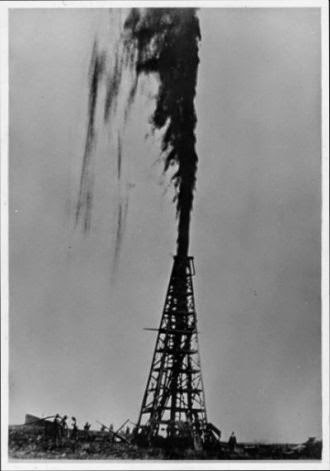
  • The Oil Curse

    The Oil Curse


    I asked the following question on one of my economics exams:

    You are the leader of a country that is trying to economically develop. Your head geologist bursts into your office with the news that he has just found a huge pool of oil. He hasn’t told anyone. What do you do?

    The answer: Shoot him. Why? Because relying on the export of oil or mineral wealth has been more of a curse than a benefit. Recent history shows relying on raw material exports retards, not promotes, economic development, political change towards democracy, and social change toward tolerance and equality.

    The cautionary tale from history is Spain. In 1492 Spain was finally (after over a 400 year crusade) united under a Catholic government. Much of Spain’s educated elite, minority groups of Muslims and Jews, were persecuted by the Inquisition and forced to leave Spain and later Portugal (enriching Holland). But a lucky bet on Columbus led to immense mineral wealth, mostly silver, from Spanish America. This wealth was used for about 150 years to pay for Europe’s largest military and very conspicuous consumption by the royal family and the nobility.

    Much of this wealth actually benefited the rest of Europe as Spain exported silver to buy mercenaries and luxury products, armor from Germany, and ships from Genoa. The Spanish government’s income never covered its expenditures to support its imperial ambitions, so that some of its mineral wealth went to enrich foreign lenders.

    Underneath it, however, Spain remained a feudal, backward, poor country. As the silver mined in Peru decreased, so did Spanish power and wealth. By the late 1600s, Spain was no longer the major power in Europe and would never again even be an important political or military factor in European power politics. It also collapsed economically, to becoming an impoverished country until late in the 20th century.

    Let’s look at the modern equivalents. Many African countries have immense mineral or oil wealth – diamonds, oil, copper, uranium and other minerals. The result? Corruption, civil wars (to fight over which group gets rich from exports), internal terror and violence, and widespread poverty. The Congo is one of the richest countries in mineral wealth in the world but also one of the poorest, most corrupt and most violent. The per capita income in sub-Saharan Africa is probably lower than it was 40 years ago when African countries became independent.

    What about the major oil exporters? Certainly it has greatly helped a number of less developed countries to get rich, especially countries with small populations like Saudi Arabia and the United Arab Emirates. But even here the picture is mixed. Much of the Saudi wealth has gone into military spending, luxury products, supporting extremist groups, buying foreign real estate, and importing foreign labor. The extended royal family and a few politically-connected families like the bin Ladens has become extreme wealthy. Most Saudis work for the government or government-related companies. The political system is still autocratic, there is a religious police, and the social system is still intolerant and discriminatory towards women, religious minority groups (Shiites) and infidels. Sound familiar?

    In most countries, little of the oil wealth has filtered down to the people. Much of it has been expropriated by the political elite in countries like Nigeria and Indonesia. Many oil exporters (Algeria, Iran, Angola) have experienced civil wars. A great deal of the oil wealth has gone into military spending (Iraq, Saudi Arabia), including developing atomic weapons (Iran). Some has gone to support terrorist groups, particularly in Libya. Iraq used its oil wealth and a subsidy from Saudi Arabia to fight a long and costly war with Iran. Kuwait was invaded for its oil and trashed by Iraq before the United States military pushed the Iraqis out. The people in Latin American countries like Venezuela, Mexico and Ecuador have not benefited very much from oil wealth. Venezuela has descended into poverty and chaos. Saudi Arabia has a government and government policies that are similar to Spain’s in the 1500s  And, in a crazy irony, Iran (the third largest exporter of crude oil) is a major importer of refined oil products like gasoline. Some of its oil export earnings are used to subsidize imported gasoline.

    Saudi Arabia, with about one-fourth of the world’s proven oil reserves, has a lower per capita income than Israel, which has no oil and virtually no other natural resources. Japan became the world’s second largest economy after World War II despite having almost no natural resources and importing all its oil. China is a huge importer of natural resources, especially oil. An important point: The global economy is a substitute for controlling natural resources through imperial conquest. It is no longer necessary to own or control natural resources if they can be purchased through the markets of the global economy.

    But there are political consequences. Europe and Ukraine are dependent on Russian natural gas, which gives Russia political leverage. Oil revenue funds the current or former anti-American governments of Libya, Iran, Iraq, Sudan, Russia and Venezuela. Oil money has been used to finance terrorist groups. This is not smart foreign policy.

    It is too bad that the oil exporting countries have not learned the lesson of Spain. The economies of almost all oil and natural gas exporters (and other natural resources) are still, after 40 years, heavily dependent on exporting unrefined products. Most of these countries had not been successful in using their exporting earnings to industrialize away from dependence on raw material exports. As in Spain, they also have not modernized their internal social, political or economic structures. The root cause is that the resources are owned by the government so that the money earned from exports goes to support the political agenda of the government or is diverted to the private wealth of political elites.

    When the resources run out, or prices fall, or the industrialized countries find substitutes (electric vehicles, solar), or step up recycling and conservation, the economies of the oil and natural resource exporters will no longer be based on the export earnings of raw materials. Maybe, like Mexico, they will search for and find better strategies to sustain economic growth and development. For the sake of the people in these countries and the peace of the world, let’s hope so.

  • Why Study History? Lessons for Americans

    Why Study History? Lessons for Americans

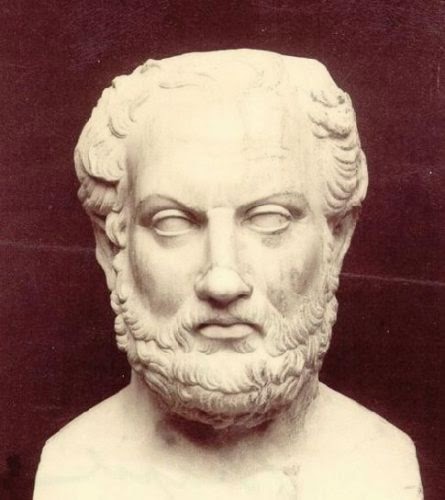
    Thucydides


    A friend of mine recently said that the most “useless” course he took in college was history.

    Let’s start with Thucydides, The History of the Peloponnesian War. This was a war that took place over 2,400 years ago. What possible relevance could it have to Americans?

    In this war, Athens and Sparta, the two “superpowers” of Greece, were locked into a long war for the dominance of Greece. The climax to the story in Thucydides was that Athens decided to send its formidable fleet and much of its army to attack Syracuse, an ally of Sparta, far away across the Mediterranean Sea in Sicily (still there). The campaign was a disaster, leading to political instability at home and weakening Athens’ military position in Greece. Sound familiar? Remind you of our involvement in Vietnam?

    This is not a direct analogy but suggestive of some of the consequences of the Vietnam War. These potential consequences were not factored into the decision to make a major commitment in Vietnam.

    Fortunately, Soviet leaders also didn’t read history and a few years later became bogged down in a similar war in Afghanistan. The consequences were more severe; Russia suffered the same fate as Athens. Arrogant people in power seldom seem to learn from the mistakes of others.

    There was another historical analogy to the war in Vietnam, one we should have known about. The American Revolution.

    The British were a global superpower, having just defeated France for global imperial rule. But France was still a formidable enemy in the main theater of war, Europe. Then the far-away Americans revolted. On paper, the British should have won easily. And they did. After the embarrassment of Boston, England sent a large part of its navy and regular army to deal with the rebels. In the key battle for New York, the British almost annihilated the American Continental Army. Washington barely escaped to Valley Forge with a remnant of his army. Eventually, however, Washington realized a strategic truth. This was not a traditional war. He didn’t have to win battles to win American independence, the goal of the revolt. What he had to do was keep the Continental Army together as a symbol that the revolt was still alive.


    This was essential because for the Americans, as for the Viet Minh, they were not fighting to get a negotiated settlement. This was an “existential” war; either the Americans were going to be free on their own territory or they would suffer under harsh English colonial rule.

    Time was on Washington’s side. There was opposition to the war in England from merchants, manufacturers like Wedgwood, intellectuals (Adam Smith), powerful Whig politicians and even from some top military leaders, including General Lord Cornwallis. Generals and officers who headed the British army in America wrote in their private diaries that the war could not be won.  


    The war was expensive, as most of the navy had to protect long-distance logistic and supply lanes across the Atlantic in addition to blockading the American coast and ferrying the British army around. The longer the American army was in the field, tying down large British military assets, the better the chance that France would deliver the promised aid to the Americans, increasing the chances the American army could survive and become stronger. France supported the American rebels and then entered the war in a big way, contributing to the final victory at Yorktown.

    In the end, the British realized that they would never have enough resources to defeat the Americans or even occupy American territory outside of a few major cities. And there was the strategic danger that major military resources would not available in case of renewed hostilities with France in Europe.

    By 1781, the war had dragged on for six years. An ill-conceived attempt to reestablish British presence in the southern colonies was met with a brilliant campaign of skirmishes and battles where a part of the Continental Army and local militias (and disease) ground down the British force. A classic campaign of guerrilla warfare and attrition. The British goal failed; even if the defeated and diseased remnant of Cornwallis’ army had been successfully sea-lifted out of Yorktown, the war was probably over for the Brits. There was no reason to continue since it was obvious to almost everyone that England didn’t have the will or the resources to put down the revolt. The only move left was to negotiate a peace treaty giving the Americans their independence and refocus on the French.

    If American political leaders in 1964/65 had read Thucydides and understood the historical lessons of the American Revolution better, would they still have made a major commitment in Vietnam? I don’t know. But they might have had a more realistic internal debate on the dynamics and possible outcome of the war.

    Maybe as citizens of the United States we should spend some time tomorrow, the Fourth of July, thinking about or reading some history.


    ___________________________________________________________________________

    Related Posts:

    Some of the topics introduced in this post are discussed in more depth in other posts.


    For more detail on how the American rebels won the American Revolution, see


    Revolution and the New Country:  American History, 1775-1790


    For how the consequences of WWI might have contributed to the American stock market crash of 1929 and the subsequent Great Depression, see

    The Stock Market Crash of 1929 and the Great Depression

    Also see the posts comparing the U.S. and Rome, starting with

    Pax America I:  Washington as an Imperial City


    For an analysis of why the Roman Republic collapsed after becoming a “global” power, see


    The Roman Republic Commits Suicide:  A Cautionary Tale for America

    For a discussion of the short-run and long-run consequences of World War I, see

    The Immediate and Long-Run Historical Consequences of World War I

  • How To Be Elected President


    Presidential elections are now a billion dollar business, with massive marketing campaigns run by specialists. Bestsellers minutely analyze winning and losing strategies and tactics. Yet an important factor in successful campaigns is usually ignored.

    It was formally called “the common touch” but with the increased political influence of the South and Southwest I call it “the good ole boy” factor. It goes like this. The American voter is having a beer in a bar. The two presidential candidates walk in. Which candidate would the voter prefer to have a beer with?

    Let’s look at some of the choices:

    Franklin Roosevelt or Herbert Hoover?

    Harry Truman or Thomas Dewey?

    John Kennedy or Richard Nixon?

    Jimmy Carter or Gerald Ford?

    Ronald Reagan or Jimmy Carter?

    Bill Clinton or George Bush?

    George W. Bush or Al Gore? (Granted, Al Gore won the popular vote but George W. Bush’s political persona made it a lot closer than it should have been.)

    Barack Obama or John McCain?

    The last example brings in another factor, the voter’s feeling about the prior president. Lyndon Johnson, a true “good ole boy,” would have beaten any Republican because of the legacy of the Kennedy assassination. Gerald Ford had the additional burden of the Nixon administration. George Bush was helped by the continuing popularity of the Reagan administration but even winning a war didn’t help his reelection bid against the “good ole boy” campaign of Bill Clinton.

    The Barack Obama/John McCain example is more complicated. At the beginning of the campaign, I would say the “good ole boy” effect was in McCain’s favor. But as the campaign progressed, McCain appeared to be a little more strident and flaky, somewhat dissipating his “good ole boy” advantage. He also had to carry the burden of the unpopularity of the Bush administration. Almost no one would want to be seen talking with George W. So the question became: Would the American voter want to share a beer with Barack Obama or John McCain and George W. Bush?

    I think the “good ole boy” effect helps explain the surprisingly good showing of Mike Huckabee, who will probably be a serious contender for the Republican nomination the next time around. But he will be up against a candidate with an even better “good ole boy” persona, Sarah Palin. Anyone who ignores or ridicules this factor will seriously underestimate her political appeal.

  • Financial Markets 101 and the Current Financial Crisis


    I’ve been asked to define some financial terms and comment on the current financial crisis and coming recession.

    -Financial institution (is it any bank or stock broker?)

    -Investment bank ( I never understood why Goldman Sachs was considered a kind of bank)

    -Systemic risk

    -Counter party risk

    -Mortgage backed securities vs. mortgages (does a mortgage become a security when it’s bunched up with a lot of other mortgages so a person can invest in the whole bunch?)

    -Hedgefund

    -Relationship between hedge funds, short selling and credit default swaps.

    Financial Institution – any company that deals in finance – money, credit, stocks, insurance. It could be a bank, stockbroker, insurance company, hedge fund, credit card company, mutual fund company, etc. Even half of GE is a financial company.

    Investment bank. In 1934, the U.S. government passed a law dividing banks into commercial banks and investment banks. That law has since been repealed so there is a lot of overlap now. Big commercial banks usually have investment bank subsidiaries. Some of the big hedge funds are evolving into investment banks.

    So, what is an investment bank? Unlike a commercial bank or savings bank, an investment could not take in private deposits (think checking accounts). Until the revolution in banking that began in the 1970s, investment banks mostly did underwriting (floated new stock and bonds of big companies), arranged financing for mergers and acquisitions, dealt in government bonds, sometimes investing their own money. But with the explosion of new kinds of financial instruments and markets, especially derivatives, investment banks greatly expanded their business, both as brokers (bringing buyer and seller together for a fee) and dealers (taking a position with their own or borrowed money). They also entered into complicated relationships with hedge funds and private equity funds.

    Goldman Sachs was always an investment bank. Like a lot of old-line investment banks, they also had ties with banks in Europe. So advising foreign banks on U.S. investments and handling their investments was a part of their business.

    Systemic risk. The big change in financial markets in the last 35 years (beginning in 1973) has been the pricing of risk, starting with the Black-Scholes equation that priced options. New financial instruments (products) were invented to let individuals and companies either hedge against risk (similar to buying an insurance policy) or speculate (take on risk hoping to make a big profit). There is nothing new about this – it’s just the huge size and sophistication of the markets that’s new. Now, any one company can hedge against risk or lots of types of risk (changes in the value of foreign currencies, changes in interest rates, changes in the price of raw materials, even changes in the weather). But there is a big question of whether or not this reduces the overall risk in the global economy. No one knows. This overall risk is called systemic risk, or the risk in the entire financial system.

    My personal feeling is that systemic risk is much higher because of the complexity and interconnections of financial markets. Which gets us to counterparties.

    Counterparty. Generally, it just means someone on the other side of a financial contract. So, if you have a mortgage, you and your bank are counterparties. But the term usually has a more limited meaning to describe the two parties to a private contract involving some type of derivative. The main risk is that the counterparty won’t be able to pay up if it owes you money in the future. So you really have to trust the other party, which is why most counterparty contracts were between the biggest and most secure financial institutions. Until recently, when companies like hedge funds became major players in these markets. So, counterparty risk mostly means the risk of the other guy not being able to pay up during or at the end of the contract.

    Mortgage-back securities vs. mortgages. Generally, yes. Banks generate mortgages. They then sell some of them to companies like investment banks or Fannie Mae. Then the income from the mortgages (the monthly mortgage payments) of a bunch of them are sold as a bundle to other investors. How? But creating (selling) a mortgage-backed security. Think of a mortage-backed security as nothing more than a bond backed by the cash flow of the bunch of mortgages. That’s the easy part. Then the mortgage-backed securities can be sliced and diced into lots of pieces, sometimes called collateralized mortgage obligations (CMOs) or “tranches”. There were typically six tranches. The lowest one, the one with the highest risk, was so risky the issuers of the CMOs (often investment banks) kept it. These were the parts of mortgage-backed securities that were called “toxic waste.” Investors could pick which combination of risk and return they want.

    That’s the easy part. The “toxic waste” tranches were then bundled and sliced up again. Incredibly, the “best” of these “toxic waste” securities were often rate AAA. True alchemy – buffalo chips had been turned into gold.

    But wait! There’s more! The buyer of a CMO or some other security might enter into a contract to hedge some of the risk. The counterparty might enter into a second contract on the other side to offset its position in the first contract. Some other institution that bought a mortgage-backed security or a CMO might decide to arbitrage the difference between changes in interest rates on mortgages and interest rates on some other debt instrument, typically U.S. Treasuries. And on and on it goes.

    Since most of this activity is done in private, unregulated markets with no reporting of positions, no one really knows the whole picture. Most of this is done with borrowed money – leverage. Systemic risk again. We are now seeing what happens when everyone tries to “deleverage,” a large part of which is no longer knowing which counterparty to trust, unwinding positions and paying back loans. Result – markets freeze up, no one wants to lend or take a position, assets like mortgage-backed securities can’t be sold and so no one knows what their market price is. Uncertainty and lack of liquidity (inability to sell an asset) are the worst things that can happen to financial markets. This is what’s happening right now and why the only lender or investor left in many countries is governments. Very ironic.

    Hedge fund. Basically, any unregulated investment company that can do whatever it wants. There are about 7,000 or so in the U.S. They pursue many different strategies. They control about $2 trillion (less this month) and are often highly leveraged, meaning they borrow a large multiple of their capital. So most of them pursue high-risk strategies that make them a lot of money (high return) most of the time. But in a downturn, they lose lots of money and many go out of business.

    I’m going to fudge a little on your last question because it covers a lot ground.

    Short selling. This means a bet that something, usually a stock price, is going to go down in price. If it happens, the short seller makes money. One way to do this is to use put options. Anyone can do this, not just hedge funds.

    Credit default swaps. These are like insurance policies. This started out as a rather conservative way to insure against a counterparty or some other financial institution going bankrupt. For example, say you owned bonds issued by Lehman Brothers and started to get worried about Lehman’s solvency. You might buy, for a fee, a credit default swap. If Lehman goes bankrupt, some of their bonds might only be worth 9% of their face value. The seller of the credit default swap then has to pay you some or all of the difference, depending on how the swap was written. This actually happened this week. What’s funny about this example is that Lehman Brothers was a major writer of credit default swaps.

    But, as usual, some smart guys saw these as a way to speculate. Leaving aside the details (rather messy), more and more credit default swaps became a bet on the probability a company would go bankrupt.

    AIG was a big seller of credit default swaps. It looked like a safe way to earn the equivalent of insurance premiums. Until this fall. It’s like what happens to an insurance company when a large hurricane like Katrina hits. The probability is low but when it happens, the losses are huge. In this case, so big it brought down the company.

    Recommended reading. Taleb, Fooled by Randomness. A rather philosophical musing about the role of risk in finance and life. Written by a former derivatives trader.

    FINANCIAL CRISIS

    I always thought, and said so many times in class over the years, the Alan Greenspan and the Fed were mostly smoke and mirrors. For twenty years, everything broke right for the economy. The Fed did more harm than good but basically nothing much until after 9/11. Then, to set negative real interest rates for three years as a massive subsidy to the banks, see the housing bubble coming as early as 2004 (I found an old article), and do nothing about it because of “ideology” is moral cowardice or stupidity (take your choice). Also, the whole question of deregulating parts of the financial market is mostly a non-issue. Huge parts are private and/or unregulated anyway (hedge funds, private-equity firms, investment banks) and even the regulated part has figured out how to get around the rules (SIVs, something right out of Enron). AIG was one of the most highly regulated firms in finance. Also, I don’t think anyone thought through the systemic risk of the proliferation and rapid growth of layers of derivatives financed by debt.


    Most investment advice doesn’t work in a big market downturn. Especially “diversify.” Everything goes down. Past patterns that are the basis of arbitrage break down (hello LTCM). And the risks are far higher than the models indicate, as Taleb argues.


    There is also a long-run problem. The Dow and S&P are back to where they were in 1996. So if you had put money into your 401K every month for the last 13 years, you would have had a negative rate of return. My back of the envelop guess is that the total real return on stock index funds in this period -after inflation and fees – has been about a negative 50-60%. No wonder investors put their money into houses.


    There’s some really scary stuff out there already. If the auto industry and their suppliers go bankrupt, they could dump their entire pension expenses on the U.S. government. Could be higher than $20 billion a year. The huge California pension fund (Calpers) has been very aggressive in the past and earned above average rates of return, So far this year they’re down $40 billion and that’s without taking a markdown on their big investments with hedge funds and private equity funds. (What the hell are pension funds doing investing billions in hedge funds?) I would guess that most public pension funds are now underfunded, certainly true in New Jersey.


    So we go into this recession with a $1 trillion budget deficit, a $600 billion trade deficit, one million foreclosures, five million mortgages underwater, and a financial system that can’t even price debt instruments. At some point, foreign savings will stop financing all of this. Already, around the world, a lot of capital is “coming home,” causing problems in Eastern Europe and other emerging economies’ financial markets. 


    I hope I’m wrong but I think this recession is going to be really nasty.