
Tag: China

  • The World Turned Upside Down:  The Uselessness of Conventional Economic Wisdom

    The World Turned Upside Down: The Uselessness of Conventional Economic Wisdom

    There is a story, possibly true,
    that when the British surrendered to American and French forces at Yorktown,
    effectively ending British rule of America, someone in the British army sang or
    played an old English folk song, “The World Turned Upside Down.”   (See
    https://en.wikipedia.org/wiki/The_World_Turned_Upside_Down)

    I think I know how the British felt.  Many of the assumptions economists have made about
    economic reality and economic policies now seem out-of-date or even reversed.

    UNITED STATES

    The Fed fought inflation; now it
    sets inflation targets when there is no inflation.

    The Fed worries about deflation even
    though the major source is a fall in energy and commodity prices. Another source is the fall in the prices of technology products.

    There is a large increase in the money supply, large government deficits, a large trade deficit, and a large decrease in the unemployment rate. Economic theory and past experience says that there should be an increasing inflation rate. There isn’t.

    America is experiencing a long
    period of real economic growth without inflation.  Unemployment is as low as realistically
    possible.  Rather than rejoicing,
    economic, business and political commentators seem to believe there is
    something fundamentally wrong with this.

    Since the end of World War II, a key
    part of American foreign policy has been the expansion of free trade.  Now presidential candidates of both parties,
    and over half the American people, want to reverse free trade.  Economic nationalism is rising at the same
    time as large American corporations are about to receive over half their sales
    and profits from overseas operations.

    America worried about importing too
    much oil; now America is worried about producing too much oil.

    Interest rates are important because
    they are the price of capital, which determines how capital is allocated.  Now interest rates are a policy tool of the
    Fed.  They are artificially low with no
    thought about how they are affecting capital allocation.

    The stock market was a place where
    companies went to raise new capital. 
    Now, through massive share buybacks, it is a place where companies
    reduce equity capital.

    It has been government policy that
    annual budget deficits are manageable as long as the national debt-to-nominal
    GDP ratio was low.  That is, as long as
    the national debt rose at a lower rate than nominal GDP.  But since 2008, the national debt has risen
    much faster than nominal GDP.  We are
    experiencing historically high and rising peacetime national debt-to-GDP ratios.  So far, there has been little consequence
    because of historically low interest rates. 
    If nominal interest rates rise, there will be larger budget deficits. 

    Seven years into a recovery interest
    rates and inflation rates should be rising. 
    No one could conceive that central banks in the U.S., Europe, Japan and
    other countries would set zero short-term interest rates this far into the
    recovery.


    Negative interest rates, both real
    and nominal, were considered possible but not realistic.  Most industrialized countries have had some
    negative interest rates.

    The Fed stopped looking at the
    increase in the money supply as a policy tool about 30 years ago.  Now a huge increase in the money supply is
    being used to finance a huge increase in the national debt.

    Tax cuts and a larger deficit are traditional tools to fight a recession. They are being advocated as sound fiscal policy at the top of a business cycle.

    An economy can be in recession if
    private spending is too low (inadequate private aggregate demand).  This implies private saving is too high.  The solution is that government spending
    should be increased and/or taxes lowered. 
    The result is a larger government deficit, which is financed by private
    saving.  But with structural deficits at the
    national and state levels, private saving now has to be high to finance
    government deficits. Also, the United States has to continue to take in a high percent of cross-border financial flows.

    CHINA

    By some measures, using purchasing
    price parity (PPP) measurement, the Chinese economy is as big or possibly
    larger than the American economy. 
    (Although many analysts believe the past growth rates and the real
    economy of China are overstated.)

    China has over half of the world’s
    high-speed railroad trackage and intends to increase it by two-thirds over the
    next 10 years.  By 2025, China intends to
    have every city in China with a population of at least a half a million to be
    connected to the high-speed rail network. 
    The point?  China spends substantially
    more on infrastructure than the United States does, and China uses more
    advanced technology. 

    The U.S. high-speed rail
    mileage?  Zero.  Japan has offered to give the U.S. its
    high-speed rail technology.  I think
    that’s called foreign aid.

    China is planning a high-speed
    railroad that will take passengers and freight from Beijing to Moscow in 33
    hours and London in 48 hours.  Some
    sections of the railroad have already been built.  The geopolitical idea is to bypass American
    control of the world’s shipping lanes.

    China has four times as many
    skyscrapers as the United States.

    China has most of the long and high bridges in the world.

    China has more cars than the United
    States. China has more smartphones.

    China produces most of the world’s solar panels. On the other hand, China emits more carbon into the atmosphere than any other country.

    GLOBAL

    Recessions were caused by rising
    global commodity prices.  Now there is a
    fear that a global recession could be caused by falling commodity prices and
    their longer-term consequences.

    In the post-WWII period, there had
    never been a global recession.  Until
    2007-2009.

    At Japan’s current rate of economic growth, their economy will double in size in 100 years. But by then there will be very few, if any, Japanese.

    Almost all countries are experiencing rapidly rising national debt-to-nominal GDP ratios.  Economic history indicates bad things start to happen if the ratio goes over 90%. Many countries, including the U.S., are over 100%.  Japan has the highest ratio at 230%, a ratio no one thought could be possible without catastrophic economic consequences.   But this high and rising ratio is made possible because Japanese families are apparently willing to lend their government unlimited funds at zero interest.

    For decades we have been told that
    we are running out of oil.  Now we are
    told there is too much oil.  Proven reserves
    have been greatly increased and because of improving drilling technology oil
    can be extracted at lower and lower marginal and average cost.

    For four decades, Americans have
    been told that nuclear energy is bad and dangerous.  Now the world is planning on building
    hundreds of nuclear power plants using new technology. This is a major strategy to reduce global
    warming. But not in the United States.

    Electric engines in cars will reduce carbon emissions and slow global warming. Unless the electricity is generated by burning coal or other fossil fuels.

    The world faced a Malthusian future
    of exponential population growth caused by high birth rates, not enough food, and
    the depletion of energy and natural resources. 
    Since then, most of the world has birth rates below replacement and the
    rest of the world has falling birth rates. Industrial countries worry about
    future declining populations and labor forces. 
    Food production has undergone a series of technological revolutions that
    has greatly increased the quantity, if not the quality, of food.  Energy resources are almost unlimited with
    even more technological revolutions on the horizon.

    Since the 1950s, Americans have been
    hearing how other forms of political economy would overcome the U.S.  First 
    Russia, then Germany, then Japan, then
    the Four Dragons of Asia.
        Behind all these predictions was the description
    of the advantages of socialism or state capitalism over our relatively autonomous
    capitalism.
     Commentators suggested we
    adopt some of the government planning policies of these countries.
      We didn’t.  These countries and their economic systems
    turned out not to be a threat to us but they are a warning to China.

    MORE CONVENTIONAL WISDOM

    Red wine, dark chocolate, and beer
    were bad for your health.  Now they are
    health foods.  This is my idea of
    progress!
  • Energy and Geopolitics II:  The World ex-United States

    Energy and Geopolitics II: The World ex-United States

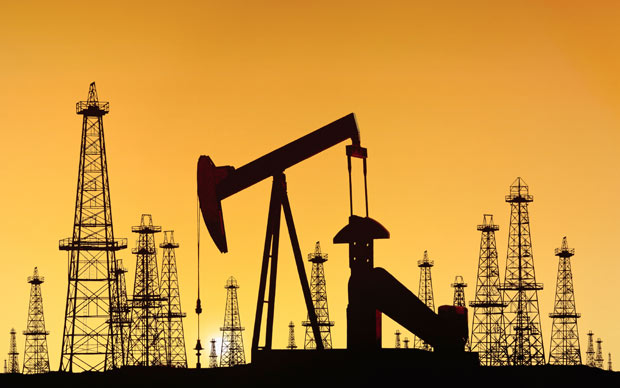
    Middle East Oil Wells

    OVERVIEW

    Outside of the United States and Canada, most of the world’s
    oil and natural gas is owned and produced by governments or
    government-dominated companies with minority shareholders. Two examples of the
    latter, public companies with stockholders, are Petrobras in Brazil and Gazprom
    in Russia.  But government officials,
    especially the president, control management and make the important decisions.

    Production and investment decisions are not made based on
    financial criteria alone.  Often,
    internal political or foreign geopolitical factors are more important. Many countries’ economies and government budgets depend critically on oil and natual gas revenue from exports. Maintaining internal peace and welfare programs are more important than rational economic considerations.

    What this means is that production and distribution
    decisions in these countries are made using different criteria than by private
    companies in the United States and Canada. Producing and exporting oil and natural gas are mostly political
    decisions. Petrostates like Russia, Brazil, Venezuela, Nigeria,
    Algeria and other countries in the Middle East and Africa have not used their
    oil and gas revenue to industrialize or diversify their economies.  Generating revenue for government, not profits for investment, is the main
    concern of these countries.  

    For many countries, exporting oil or natural gas (and other
    commodities) is the major source of hard currency revenue and government
    income.  Domestic spending, importing
    consumer goods, government social welfare and subsidy programs, foreign policy
    and even internal stability and corruption depend on commodity export
    earnings. As does servicing foreign
    borrowing, which has grown rapidly in the last six years. 

    With much greater potential supply of oil and natural gas
    because of new discoveries and innovative production technology, and growing
    substitutes, no one country or small group of countries will be able to control global
    supply or price.

    Among the fossil fuels, the long run outlook (20 years) of
    natural gas appears to be the best.  Even
    without the fall in natural gas prices, the global trend away from coal to gas to generate power will likely
    continue and increase demand for gas. In Asia, however, both coal and natural gas production are increasing because of the huge increase in the demand for electricity.  

    Massive increases in profitable
    reserves and technological changes in production and distribution will
    permanently bring down prices of natural gas in high-cost areas like Asia and
    Europe. LNG, more tankers and interconnect pipelines will make the global
    gas market more integrated, more like the global oil market.

    Three new potential major producers of natural gas are
    Argentina, Bangladesh and Egypt.  Qatar
    and Australia have completed and can expand large new LNG complexes. Some of Qatar’s new gas revenue is supporting Sunni fundamentalist
    groups in Syria and Iraq.

    Substitutes for oil and gas should be cost competitive in
    the near future.  Solar, especially
    decentralized solar on buildings, will continue to grow rapidly as the
    technology improves and the costs keep coming down.  Adoption of solar
    will accelerate if battery storage costs come down and countries don’t have to
    build or expand electricity plants and grids. 
    Solar panel costs are falling rapidly and Elon Musk says his new lithium
    battery plant in Nevada will reduce storage costs by 30%.  Wind turbine currently depends on subsidies
    but there is some new technology that may eliminate the gigantic windmills
    (375 feet high) and lower costs.  

    Many countries are looking at nuclear
    again because of major advancements in technology and safety.  
    There are currently 437 nuclear power reactors operating worldwide. 60 more are under construction, another 165 are planned, and 331 more are proposed.  The number of nuclear power plants in the world could easily double in the next two decades. China alone plans to build 46 new ones by 2020.  Japan, which paid $270 billion to import fossil fuels (mostly natural gas) in 2013, currently plans to start up 15 shut-down nuclear power plants.  On the other hand, Germany is shutting down the last of its 17 nuclear power plants, substituting solar and wind (interruptible) backed by gas.

    Other sources of energy beyond the use of fossil fuels are
    being researched and developed in laboratories.

    The key is how long oil and gas prices stay at current
    levels and what the new equilibrium prices will be.  This is not just
    an economic question.  Domestic policies,
    like China’s and America’s policies to reduce carbon emissions from coal, and
    geopolitics will play key roles.  Also,
    there will be major shifts in where oil and gas are produced, who exports, new
    technology and the expanding importance of substitutes.  

    THE EASTERN MEDITERRANEAN

    Huge new natural gas fields have been discovered in the
    eastern Mediterranean.  The largest so
    far are in the coastal waters of Israel, Gaza, Egypt and Cyprus.  The fields may extend north to Greece, Lebanon
    and Syria.  Israel, now self-sufficient
    in natural gas, could supply Palestine and Jordan. Pipelines could be built
    from Israel, Gaza and Egypt to Cyprus and then another set to Greece, which
    would connect into the proposed integrated pipeline systems of central Europe
    and, through Austria, to the rest of Europe.  Or a pipeline could be built to connect with the large pipeline running through Turkey to Europe.  South-Central European countries could eliminate their almost complete
    dependence on Russian natural gas and threaten “reverse flow” to Ukraine.  Egypt already has an LNG plant and other
    producers could construct them, expanding their geographical market for their
    gas.

    If this occurred, it would be a tremendous economic boon to
    all the countries involved.  So what’s
    the problem?  Geopolitics.  There are countries involved that don’t like
    each other.  To say the least.  Besides Israel and Gaza, Cyprus is divided
    into Turkish and Greek areas.  Would the
    economic benefits be great enough to overcome political rivalries, many based
    on long-standing hatred and conflict?

    RUSSIA AND EUROPE

    Russia is Europe’s largest external source of oil and
    natural gas.  Europe is Russia’s largest
    customer for both.  But the conflict in
    Ukraine has changed the geopolitics.  Russia
    may pay a very high economic price for its intervention in Ukraine.  

    It is also one reason that I don’t think Russia will invade
    and conquer the whole country, as Putin has threaten to do.  Or even increase destabilization pressure.  Europe would expand sanctions, look to new
    sources of energy and accelerate programs to import less Russian oil and
    gas. 

    While these policies will probably have little short-run
    effect on the volume of Russian exports of oil and gas to Europe, a longer-run
    combination of lower prices and less volume would have serious economic
    consequences for the Russian economy. 
    Since Putin’s and his successors’ political popularity in Russia partly
    depends on continuing the high rates of economic growth and standards of living
    made possible by increased revenue from energy and commodity exports, pursuing
    an aggressive or confrontational policy against Ukraine and Europe could have
    serious domestic consequences for the current and future Russian governments.    

    Under U.S. pressure, Europe has imposed some economic
    sanctions on Russia, the most effective being that Russian companies cannot
    access European financial markets.  As
    loans come due, the companies, many of which are government owned or
    controlled, have to borrow hard currency from the Russian government.  Russia’s foreign reserves of hard currency
    are shrinking.  Over half are committed
    to future retirement costs, although the fund can be raided. 

    New internal capital to modernize old fields and develop new
    fields is not available.  Global bond
    markets are closed.  Russia’s response
    has been to relax rules limiting foreign investment in Russian oil and gas.

    In addition, Europe is beginning to institute actions that
    will reduce its dependence on Russian oil and natural gas, which means lower
    export earnings for Russia regardless of the change in energy prices.

    Europe has large natural gas reserves but will not develop
    them quickly because of political opposition, lack of infrastructure and more
    difficult drilling geology than the U.S. 

    RUSSIA AND CHINA

    China imports more oil than does the United States. Before the tariff batlle, China was importing more U.S. crude oil.  China is about to become a major importer of natural gas as it substitutes gas for domestic coal production.  So China has joined the United States as a large market on the demand side.


    Russia is now China’s largest supplier of oil.

    Russia’s president Vladimir Putin has his own “pivot towards
    Asia.”  Russia’s main market for oil and
    natural gas is Europe.  With the
    expectation that sales will be lower in the future and that older fields are
    declining in production, Putin has turned to China for capital investment and
    as a major export market.  China plans on
    substituting natural gas (and other energy sources) for its dependence on coal
    (cough, cough).  Russia has a huge new
    field in eastern Siberia it wants to develop. 
    The cost is somewhere between $55 billion and $100 billion.  Russia doesn’t have the capital and can’t
    raise it in western financial markets because of the economic sanctions.  So, apparently, the deal is that China
    supplies part of the capital and agrees to take the production for the next 30
    years.  Although secret, apparently at a
    low price.  Russia originally announced
    that sales to China would bring in $400 billion over the 30 years but that was
    before the large drop in the price of natural gas, especially in Asia, and the
    reality that there will be a lot more natural gas available from other sources.

    Russia is now encouraging China and other Asian countries to
    invest in Siberian oil and gas.  Knowing
    that Russia has used oil and gas exports as a geopolitical weapon against
    Ukraine, Europe, Georgia, Serbia and Armenia, potential investors in China,
    Japan and South Korea have to be worried about the political consequences of
    becoming too dependent on Russian oil and gas. 
    And having their investments expropriated by future Russian government.

    There is another complication.  China is rapidly extending its influence into
    the old Soviet republics in central Asia. 
    China has offered economic aid, including railroads and natural gas
    pipelines connecting China and central Asian republics.  One of the world’s largest natural gas fields
    is in Turkmenistan; this is where Russia gets some of the natural gas it sells
    to Europe.  There are other possible gas fields.  All of this creates the potential for
    geopolitical rivalry between Russia and China in the area.

    China also borders Kazakhstan, another former Soviet
    republic.  Kazakhstan is a large oil
    producer and has the potential to produce more. 
    Russia sees Kazakhstan as in its sphere of influence.  The president of Kazakhstan was the Communist
    boss of the republic when it broke away in 1991.  The Chinese, however, have made a number of
    proposals that would divert some of Kazakhstan’s oil to China.  Russia is not happy about this prospect.

    In the long run, this policy could create
    serious geopolitical problems for Russia.  Supplying China with cheap
    oil and gas while China expands its influence in Central Asia and renews its
    claims (legitimate) on eastern Siberia is a dangerous policy.  But that
    will someone else’s problems, not Putin.

    OPEC

    OPEC has been ineffectual as an oil cartel, probably since 1985 when Saudi Arabia cut production with disastrous results.  Iraq has invaded both Iran and Kuwait to grab large oil fields.  Saudi Arabia and Iran are deadly enemies and compete to dominate the Persian Gulf region (and Islam).  Many of the oil exporting states have seen civil wars and declining production.  OPEC’s exports and net exports have been declining while global production is rising. 

    OPEC’s control has also been eroded by the growth and development of oil production in non-OPEC countries, even before shale.  What shale does is greatly increase potential global oil production in non-OPEC countries if prices rise.  Maybe even more important, shale oil greatly increases oil reserves outside of OPEC countries.  Before shale, a high percent of the proven reserves in the world were in OPEC countries, mostly in the Middle East.  This implied that OPEC’s market power would last a long time.  No longer.

    NAFTA

    NAFTA (The U.S., Canada and Mexico) is the new OPEC.  Almost all of the net increase in global oil
    production since 2007 has come from NAFTA countries.  Future increases in oil production will come
    mostly from American and Canadian fracking, and deep-water rigs in the Gulf of
    Mexico.

    NAFTA is the new OPEC also in the sense that the American
    and Canada companies, using fracking technology, can react quicker to changes
    in global supply and demand, and subsequent price changes.  New technology, better management and organization, and large cost reductions because of low prices have reduced the break-even cost of shale oil and gas.

    The best oil fields in the United States have marginal costs
    of pumping out and distributing oil about equal to all but the lowest cost fields in the Middle
    East.  Because of fracking technology, fixed
    cost/barrel to modernize and expand existing fields is probably higher in most of the
    Middle East and the rest of the world than expanding or opening new fields in the United States.

    The geopolitical implication of all this is the United
    States could cut off all oil imports from the Middle East and quickly substitute
    NAFTA oil, mostly American. There are
    major geopolitical implications if the United States has oil security, doesn’t
    need Middle East oil and becomes a major exporter of petroleum and natural gas. Maybe the Iranian agreement, over strenuous
    Israeli and Saudi objections, is an indication of the changing, more flexible
    geopolitical policies of the U.S. in the Middle East.

    SUMMARY

    Global demand for energy will continue to increase in the foreseeable future. Global production of all sources of energy, including coal production in Asia, will increase. New technology on both the demand side (electric vehicles and autonomous driving) and supply side (fracking, LNG) will change the economics of energy. This will have geopolitical consequences. Middle East oil will become relatively less important. U.S. exports of oil and natual gas might have geopolitical effects. Development and sales of new technology such as solar and wind, may, in the long run, become more important than fossil fuel extraction.

    ======================================================

    This is a summary of prior posts plus new information and conclusions.  The latest related post was on Russia and the Geopolitics of Energy.

    For an excellent history of the rise of OPEC, see Daniel Yergin, The Prize.


    For an excellent, detailed article on Gazprom, see http://oilprice.com/Energy/Energy-General/How-Russias-Energy-Giant-Imploded.html.  Gazprom has a virtual monopoly on Russian natural gas production and exports.  Its management has very close ties with the Russian government.  Putin has used Gazprom to implement both internal and foreign policy objectives.  Gazprom owns a TV network and a major bank.  Some of its profits were diverted to pay for the incredibly expensive Olympic Winter Games, with billions of dollars ending up in the pockets of oligarchs and government officials.  Overseas, Gazprom has cut off  or threatened to cut off gas supplies to Europe, Ukraine, Georgia, Armenia, the Baltic States, Slovakia and Serbia on orders from the Kremlin. In each case, Gazprom was used as a blunt geopolitical weapon to change another country’s democratic or anti-Russian politics. 

  • The $100 A Barrel Solution


    The high and sustained price of crude oil is having
    unintended consequences. 


    Global consumption of crude oil rose by 14% between 2000 and
    2010, about equal to the increase in population.  Almost all of the increase was in Asian
    countries, especially China
    and India, and,
    surprisingly, the Middle East and other oil-exporting
    countries.  The Middle East
    as a whole increased oil consumption by 56%, led by Saudi
    Arabia with a 78% increase.  Heavily subsidized and inefficiently used,
    domestic consumption of oil accounts for about one-fourth of Saudi
    Arabia’s huge oil output, about 2.5 million
    barrels a day. 


    In contrast, the U.S.
    and Europe decreased oil consumption by a small amount, less
    than 1% in the U.S, over the same period. 
    Some of this is due to the recession, but there are longer-term trends
    that might lead to continued decreases in total oil consumption.


    It is important to remember that crude oil is an input;
    people and companies like airlines consume refined products.

    Good for U.S. 


    The high and sustained price of crude oil has made it profitable
    to develop huge deposits of shale oil and shale natural gas.  I remember reading a few years ago that
    developing shale oil in the U.S.
    and Canada
    would be profitable if the price of crude oil stayed above $80 a barrel.  Since then, improved extraction technology
    has lowered the breakeven price.


    The U.S.
    also has huge reserves of natural gas in shale. 
    A current estimate is that the U.S.
    has the second largest natural gas reserves in the world.  Some of it is extracted as a by-product of
    shale oil drilling.


    The low price of natural gas will continue the trend of
    substituting it for oil and coal.  One
    advantage is fewer carbon emissions into the atmosphere.  This has already started in the U.S.
    as natural gas accounts for all of the growth in power generation.  Low natural gas prices have led to a large
    substitution of gas for coal in generating electricity so far this year. 


    The Obama administration has just announced strict coal
    emission standards.  About 43% of
    electricity is generated by coal.  The
    percent has been declining but substitution of cleaner natural gas for coal
    will probably accelerate if the standards remain.  They could be weakened or reversed by a
    Republican administration.


    There is no net reduction in carbon emissions if electric
    and hybrid cars are powered by electricity generated from coal. 

    The boom in shale natural gas spurred by the high cost of
    oil has slowed down; prices have fallen and the number of operating wells has
    declined.  But even a moderate increase
    in the price of natural gas still gives it a huge price advantage over $100 a
    barrel oil.


    Gasoline consumption has been going down.  Besides the recession and the higher cost of
    gasoline, other factors are the mandate to use ethanol, and the subsidized
    adoption of electric and hybrid cars.  In
    addition, the Obama administration has announced higher long-run mpg
    requirements for cars.  Higher mpg
    requirements could be reversed by a Republican Congress and president.


    Total fossil fuel energy inputs may go down.  This is almost certain to happen under
    Obama’s comprehensive “cap and trade” plan for all energy.  This will further reduce imports of oil and
    increase demand for domestically-produced natural gas.  Even though originally a Republican idea, it
    is opposed by Republicans and some conservative Democrats, especially from
    coal-mining states.


    A higher percent of U.S.
    oil and gas imports will come from Canada.  This will make us less dependent on hostile
    or unstable suppliers.


    But the big change is that the U.S.
    has become a major exporter of
    refined oil products.  Besides crude, the
    U.S. has been a
    large imported of refined oil products, mostly from Europe.
    U.S. exports
    have risen very rapidly in the last few years to almost $100 billion a year in
    refined oil products.  In 2011, the U.S.
    exported more gasoline, heating oil and diesel oil than it imported for the
    first time since 1949.


    Domestic production reached an eight year high in 2011.  The number of new wells drilled per year
    continues to rise.


    This has dramatically changed America’s
    net imports of oil products.    The
    peak in 2005 was over 12 million barrels a day; last year our net imports were
    8.4 million barrels a day, which was 11% lower than in 2010.  Net imports are expected to fall again in
    2012.


    The underlying trends – increased domestic production of oil
    and natural gas, slowly declining consumption, increased exports – should
    continue the trend of reducing net imports.


    If the U.S.
    expands its oil refining capacity and approves the XL pipeline, there will be long-term
    increase in U.S.
    exports of refined oil products, making the U.S a dominant exporter of refined
    oil products.  Higher crude oil prices
    can be passed on as higher prices of exported refined oil products.  As more imports and domestic production of
    crude are exported, this should also help our balance of payments deficit. 

    Bad for China and Japan (at least in the short run)


    In the short run, high crude oil prices are bad news for China
    and Japan.  Chinese imports of crude and refined oil are
    rising rapidly due to a huge increase in car and truck production.  This year China
    may surpass the U.S.
    as the world’s largest net importer of oil products.  You might also take some comfort that the
    price of gasoline in China
    is $5 a gallon.


    China
    has huge untapped natural gas reserves. 
    As these are developed, they will be used as a substitute for the massive
    amount of coal that is burned to generate electricity.  China
    is the world’s largest producer and consumer of coal; its coal-burning plants
    are inefficient and dirty.


    Japan
    has virtually no domestic oil production, importing all of its crude oil needs.


    Japanese imports of natural gas are also way up as all of
    its nuclear power plants have been shut down. 
    Many, maybe most, will never be restarted.  There is a movement in Japan
    to permanently close all nuclear plants.


    One consequence of all this is that the U.S.
    seems to have a widening cost advantage in energy inputs, especially in
    manufacturing.  Combined with other
    trends, the U.S.
    may become more price competitive in many areas of manufacturing.  A few global companies have already brought some
    manufacturing back to the U.S.
    from China.

    Bad for Iran


    This is counterintuitive. 
    How can high crude oil prices be bad for the world’s third largest crude
    oil exporter?


    Iran
    is also a big importer of refined
    oil products like gasoline.  Domestic
    consumption of refined oil products increased 38% between 2000 and 2010.  The domestic price of gasoline, starting at
    $1.30 a gallon and rising to about $2 a gallon, is heavily subsidized by the
    government,.  Iran
    is selling crude oil at about $2 a gallon and is buying gasoline at about a
    little under $3 a gallon.  The regime is using
    crude oil revenue to heavily subsidize gasoline and other basic consumption
    items, and also giving cash allowances to the poor.  The regime is scared that an increase in
    gasoline prices might spark protests, as it has in other countries, and will increase
    subsidies to the poor to pay for the higher prices.


    These policies buy support for the regime but at a cost of
    using much of their oil export revenue.  The
    result is a corrupt and inefficient economy.


    The longer-term problem for Iran
    is that total crude oil production is going down while domestic consumption and
    imports of refined products is going up. 
    Iran could
    increase domestic production of oil and natural gas but the economic embargo
    and the use of oil revenue for subsidies and nuclear power (and probably nuclear
    weapons development) has meant little increase in domestic refining capacity.  Unless there is a change of policies and use
    of oil revenues, Iran
    may cease to be a net oil exporter.


    The U.S.
    generates more revenue from exporting refined oil products than Iran
    does exporting crude oil.


    Iran
    is the latest example of the oil curse.

    Conclusion


    For the foreseeable future, natural gas will be substituted
    for both oil and coal.  U.S.
    imports of crude oil will continue but probably at the same or lower level than
    now.  More of imported crude will be used
    as the input to produce refined manufactured products that are exported. This is the reason for building the XL pipeline. We will still run a trade deficit in energy
    but it will be a declining percent of GDP.


    It is in the U.S.
    national interest for crude oil prices to remain above $80 a barrel for a
    sustained length of time so that investment in shale oil and shale natural gas
    production and distribution continues.


    Public energy policies, or lack of, will be crucial in
    determining the speed at which these changes occur. 

    ______________________________________________________________________________

    Related Post:  The Oil Curse

  • Russia and China – Contrasts


    Why has the political and economic development of Russia since 1991 been so different than that of China? 


    Russia – political collapse of Communism and the Communist Party.


    China – Communist Party keeps political control after brutally suppressing

                  demonstrations in Tiananmen Square.


    Russia – loses Eastern Europe and much of old Russian Empire, creating

                    economic disruption and political enemies on borders.


    China – keeps territorial boundaries.


    Russia – slow to reform agriculture.


    China – starts reforming agriculture in 1970s.  Increases food production and

                  income of farmers.


    Russia – tries to move quickly to democracy.  Ends up with disappointment

                   and authoritarian government.  Does not tolerate internal dissent. 


    China – no free elections.  Does not tolerate internal dissent.


    Russia – attempts quick transition to capitalism.  Ends up with corrupt

                   combination of government bureaucrats and oligarchs.


    China – phased transition to state-directed capitalism.  Creates large new

                   entrepreneurial and professional middle class.  Widespread

                   government corruption.


    Russia – attempts to attract foreign capital. Fails.


    China – attempts to attract foreign capital. Succeeds.


    Russia – invades Georgia and alienates foreign countries and foreign investors.


    China – does not invade other countries.


    Russia – defaults on most of external debt, further alienating foreign investors.


    China – increases foreign debt.


    Russia – uses exports of natural gas as a political weapon against Ukraine

                   and Western Europe.  Alienates potential European investors.


    China – does not rely on exports as political weapon.


    Russia – little help from Russians in other countries.


    China – massive amounts of investment, technology transfer and managerial

                  expertise from overseas Chinese, including Taiwan and Hong Kong.


    Russia – backward banking system and underdeveloped financial markets.


    China – modernizing banking system and financial markets, although much of it

                  still under state control.


    Russia – economy relies heavily on exporting raw materials and processed

                   metals.  “Oil curse.”


    China – large net raw material importer.  Relies on exporting manufactured

                 goods and development of domestic market.


    Russia – allows ruble to float with negative results.


    China – fixes value of yuan.  Slight appreciation because of foreign pressure.


    Russia – very little importing of foreign technology.


    China – large amount of foreign technology imported and diffused throughout

                 economy.


    Russia – little use of joint ventures to import foreign technology.


    China – extensive use of joint ventures to import foreign technology.


    Russia – some investment in infrastructure.


    China – massive investment in infrastructure.


    Russia – emigration to Israel and other industrialized societies.  (One of the two

                   founders of Google from Russia.)


    China – immigration of overseas Chinese with capital and skills.


    PROBLEMS


    Russia – serious pollution and environmental degradation problems.


    China – serious pollution and environmental degradation problems.


    Russia – collapse of social welfare programs.


    China – collapse of social welfare programs.


    Russia – declining, unhealthy population.  Declining life expectancy.


    China – slowly increasing population.  Far below replacement birthrate.

                   Rapidly aging population.


    Russia – moving away from dependence on raw material exports.


    China – possible contradiction between economy and government.