Author: Bennett Greenberg

  • A Historical Example of Bilateral Oligopoly:  Baldwin Locomotive Works

    A Historical Example of Bilateral Oligopoly: Baldwin Locomotive Works

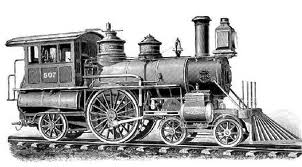
    Baldwin Locomotive

    Baldwin, the largest producer of steam locomotives in the                 nineteenth century, faced problems typical of a dominant company in a bilateral
    oligopolistic industry.  Almost everything that               happened at Baldwin
    was conditioned by a highly cyclical, almost   unpredictable competitive
    environment.  A high level of business       risk followed from sudden, large fluctuations in demand. This         meant that Baldwin
    often had excess capacity with substantial         fixed investment, leading to a
    strategy based on economies of scope and not economies of scale.  Baldwin also depended
    on a skilled       labor force with firm-specific knowledge and experience that was    exposed to sudden and massive layoffs followed by the company’s   attempts to
    rehire the same workers.  It is hard to
    imagine a more    challenging competitive environment.                                                    


    Baldwin was a large and dominant
    firm, accounting for approximately one-third of all steam locomotive
    production.  The buy side of the market
    was dominated by a small and increasingly concentrated number of railroad
    companies, which were some of the largest corporations in America
    in the nineteenth century.  The sources
    of market power of the locomotive builders were their specialization and flexibility
    in production, although some of the larger railroads – Baldwin’s
    largest customers – also built locomotives in their own machine shops.  The sources of market power of the railroads
    were their large purchasing power, technical knowledge of their “master
    mechanics” who ordered equipment, and knowledge of the optimal mix of equipment
    for their particular company.  In such an
    environment, Baldwin had market power because of its
    size and assembly expertise, but never enjoyed the market control of a mass producer
    of standardized products.  Market power
    based on marketing to final consumers was not feasible; railroad customers did
    not demand that railroads use Baldwin engines.


    Every large railroad developed its own specifications and
    demanded customized equipment from Baldwin.  In addition, there was continuous
    technological improvement of the basic steam locomotive, often innovated by
    railroad technical staff.  As a
    consequence, Baldwin could never control the pace of
    design change.  The company could not totally
    incorporate mass production techniques because of constantly-changing
    customized design and finish.  On the
    other hand, by working closely with its customers over a long period of time, Baldwin
    probably had lower transaction costs than if its sales were arms-length market
    transactions.


    This mutual dependence, along with railroads’ credible
    threat of internal production, usually gave the railroads a bargaining
    advantage when negotiating design customization and price with Baldwin.  But working closely with its largest
    customers, particularly the Pennsylvania Railroad, also increased the
    probability of Baldwin’s long-run survival. 


    This symbiotic relationship between steam locomotive
    builders and the railroads worked as long there was no fundamental innovation
    in engine design and both sides benefited from continuous improvement in the
    steam locomotive.   The bilateral
    relationship would be much different in the later market for diesel engines in
    which General Motors controlled the technology and forced railroads to buy
    standardized products.


    Baldwin’s management objectives were
    to minimize risk and maximize operating flexibility by sharing risk with
    suppliers through subcontracting out much of its parts production.  Since production was to order, Baldwin
    managed a “just-in-time” parts inventory system that minimized working capital
    requirements. When times were bad, Baldwin could delay
    payment to its suppliers and thus use them as a major source of working
    capital.  This was one way the company
    dealt with severe cash flow problems in economic downturns.


    The company countered the potential loss of skilled workers
    after massive layoffs with high wages, skill development through apprenticeship
    training for employees and sons of employees, and the hope of higher income for
    long-term employees through a system of internal promotion and inside
    contracting.  Inside contracting, usually
    managed by long-term employees, put pressure on contractors to keep labor costs
    down.  This led to much more cooperative,
    less confrontational labor relations policies than those of other large-scale
    employers like Carnegie Steel.


    Horace L.Arnold – “Modern Machine-Shop Economics.” in Engineering Magazine, 11. 1896


    Because of the complex nature of its production, Baldwin
    needed sophisticated internal systems to keep track of parts, subassemblies,
    and final production schedules.  The
    company substituted detailed cost and internal job flow information for
    management control bureaucracies.  While Baldwin
    did little internal product development, it was very quick in applying advances
    in product design and production technology. 
    But the company never “bet the ranch” on internal development of a
    radically new design of steam locomotives.


    The long-term success of
    Baldwin, under highly uncertain market conditions,
    raises the issue of the limitations of the multidivisional form of
    organization.  Multidivisional
    corporations often do not stay focused on production of key product lines and
    the development of core competencies. 
    Rather, they are prone to the danger of more diversification than they
    can efficiently manage, with the related danger of diseconomies of scale.


    When diesel locomotives
    became less expensive to operate and maintain than steam locomotives,
    Baldwin tried to adjust but its technology and skill
    base was too specialized to adopt the new technology. 
    Baldwin did
    innovate, designing and producing more powerful and efficient steam engines.  But to no avail. 
    Baldwin was
    doomed, another victim of “creative destruction.”


    COMPANIES SIMILAR TO BALDWIN

    A suggestive line of inquiry might be the similarities between
    Baldwin’s strategies and those of Japanese companies to
    minimize risk and maximize innovation in a highly uncertain and changing
    environment. Large Japanese companies
    followed similar strategies in the early phases of their industry growth. A big difference was that zaibatsu risk was reduced by the actions
    of the Japanese government and related financial institutions.


    Probably the current companies most similar to Baldwin
    are capital goods companies that sell large, complicated systems.  Another suggestive analogy might be the
    similar strategies adopted by organizations such as financial software
    companies that build large, complex systems, such as SAP
    or Oracle. 
    Any company that relies on
    employees with firm-specific skills and experience, including knowledge of the
    requirements of large customers, face many of the challenges that Baldwin
    did.


  • The $100 A Barrel Solution


    The high and sustained price of crude oil is having
    unintended consequences. 


    Global consumption of crude oil rose by 14% between 2000 and
    2010, about equal to the increase in population.  Almost all of the increase was in Asian
    countries, especially China
    and India, and,
    surprisingly, the Middle East and other oil-exporting
    countries.  The Middle East
    as a whole increased oil consumption by 56%, led by Saudi
    Arabia with a 78% increase.  Heavily subsidized and inefficiently used,
    domestic consumption of oil accounts for about one-fourth of Saudi
    Arabia’s huge oil output, about 2.5 million
    barrels a day. 


    In contrast, the U.S.
    and Europe decreased oil consumption by a small amount, less
    than 1% in the U.S, over the same period. 
    Some of this is due to the recession, but there are longer-term trends
    that might lead to continued decreases in total oil consumption.


    It is important to remember that crude oil is an input;
    people and companies like airlines consume refined products.

    Good for U.S. 


    The high and sustained price of crude oil has made it profitable
    to develop huge deposits of shale oil and shale natural gas.  I remember reading a few years ago that
    developing shale oil in the U.S.
    and Canada
    would be profitable if the price of crude oil stayed above $80 a barrel.  Since then, improved extraction technology
    has lowered the breakeven price.


    The U.S.
    also has huge reserves of natural gas in shale. 
    A current estimate is that the U.S.
    has the second largest natural gas reserves in the world.  Some of it is extracted as a by-product of
    shale oil drilling.


    The low price of natural gas will continue the trend of
    substituting it for oil and coal.  One
    advantage is fewer carbon emissions into the atmosphere.  This has already started in the U.S.
    as natural gas accounts for all of the growth in power generation.  Low natural gas prices have led to a large
    substitution of gas for coal in generating electricity so far this year. 


    The Obama administration has just announced strict coal
    emission standards.  About 43% of
    electricity is generated by coal.  The
    percent has been declining but substitution of cleaner natural gas for coal
    will probably accelerate if the standards remain.  They could be weakened or reversed by a
    Republican administration.


    There is no net reduction in carbon emissions if electric
    and hybrid cars are powered by electricity generated from coal. 

    The boom in shale natural gas spurred by the high cost of
    oil has slowed down; prices have fallen and the number of operating wells has
    declined.  But even a moderate increase
    in the price of natural gas still gives it a huge price advantage over $100 a
    barrel oil.


    Gasoline consumption has been going down.  Besides the recession and the higher cost of
    gasoline, other factors are the mandate to use ethanol, and the subsidized
    adoption of electric and hybrid cars.  In
    addition, the Obama administration has announced higher long-run mpg
    requirements for cars.  Higher mpg
    requirements could be reversed by a Republican Congress and president.


    Total fossil fuel energy inputs may go down.  This is almost certain to happen under
    Obama’s comprehensive “cap and trade” plan for all energy.  This will further reduce imports of oil and
    increase demand for domestically-produced natural gas.  Even though originally a Republican idea, it
    is opposed by Republicans and some conservative Democrats, especially from
    coal-mining states.


    A higher percent of U.S.
    oil and gas imports will come from Canada.  This will make us less dependent on hostile
    or unstable suppliers.


    But the big change is that the U.S.
    has become a major exporter of
    refined oil products.  Besides crude, the
    U.S. has been a
    large imported of refined oil products, mostly from Europe.
    U.S. exports
    have risen very rapidly in the last few years to almost $100 billion a year in
    refined oil products.  In 2011, the U.S.
    exported more gasoline, heating oil and diesel oil than it imported for the
    first time since 1949.


    Domestic production reached an eight year high in 2011.  The number of new wells drilled per year
    continues to rise.


    This has dramatically changed America’s
    net imports of oil products.    The
    peak in 2005 was over 12 million barrels a day; last year our net imports were
    8.4 million barrels a day, which was 11% lower than in 2010.  Net imports are expected to fall again in
    2012.


    The underlying trends – increased domestic production of oil
    and natural gas, slowly declining consumption, increased exports – should
    continue the trend of reducing net imports.


    If the U.S.
    expands its oil refining capacity and approves the XL pipeline, there will be long-term
    increase in U.S.
    exports of refined oil products, making the U.S a dominant exporter of refined
    oil products.  Higher crude oil prices
    can be passed on as higher prices of exported refined oil products.  As more imports and domestic production of
    crude are exported, this should also help our balance of payments deficit. 

    Bad for China and Japan (at least in the short run)


    In the short run, high crude oil prices are bad news for China
    and Japan.  Chinese imports of crude and refined oil are
    rising rapidly due to a huge increase in car and truck production.  This year China
    may surpass the U.S.
    as the world’s largest net importer of oil products.  You might also take some comfort that the
    price of gasoline in China
    is $5 a gallon.


    China
    has huge untapped natural gas reserves. 
    As these are developed, they will be used as a substitute for the massive
    amount of coal that is burned to generate electricity.  China
    is the world’s largest producer and consumer of coal; its coal-burning plants
    are inefficient and dirty.


    Japan
    has virtually no domestic oil production, importing all of its crude oil needs.


    Japanese imports of natural gas are also way up as all of
    its nuclear power plants have been shut down. 
    Many, maybe most, will never be restarted.  There is a movement in Japan
    to permanently close all nuclear plants.


    One consequence of all this is that the U.S.
    seems to have a widening cost advantage in energy inputs, especially in
    manufacturing.  Combined with other
    trends, the U.S.
    may become more price competitive in many areas of manufacturing.  A few global companies have already brought some
    manufacturing back to the U.S.
    from China.

    Bad for Iran


    This is counterintuitive. 
    How can high crude oil prices be bad for the world’s third largest crude
    oil exporter?


    Iran
    is also a big importer of refined
    oil products like gasoline.  Domestic
    consumption of refined oil products increased 38% between 2000 and 2010.  The domestic price of gasoline, starting at
    $1.30 a gallon and rising to about $2 a gallon, is heavily subsidized by the
    government,.  Iran
    is selling crude oil at about $2 a gallon and is buying gasoline at about a
    little under $3 a gallon.  The regime is using
    crude oil revenue to heavily subsidize gasoline and other basic consumption
    items, and also giving cash allowances to the poor.  The regime is scared that an increase in
    gasoline prices might spark protests, as it has in other countries, and will increase
    subsidies to the poor to pay for the higher prices.


    These policies buy support for the regime but at a cost of
    using much of their oil export revenue.  The
    result is a corrupt and inefficient economy.


    The longer-term problem for Iran
    is that total crude oil production is going down while domestic consumption and
    imports of refined products is going up. 
    Iran could
    increase domestic production of oil and natural gas but the economic embargo
    and the use of oil revenue for subsidies and nuclear power (and probably nuclear
    weapons development) has meant little increase in domestic refining capacity.  Unless there is a change of policies and use
    of oil revenues, Iran
    may cease to be a net oil exporter.


    The U.S.
    generates more revenue from exporting refined oil products than Iran
    does exporting crude oil.


    Iran
    is the latest example of the oil curse.

    Conclusion


    For the foreseeable future, natural gas will be substituted
    for both oil and coal.  U.S.
    imports of crude oil will continue but probably at the same or lower level than
    now.  More of imported crude will be used
    as the input to produce refined manufactured products that are exported. This is the reason for building the XL pipeline. We will still run a trade deficit in energy
    but it will be a declining percent of GDP.


    It is in the U.S.
    national interest for crude oil prices to remain above $80 a barrel for a
    sustained length of time so that investment in shale oil and shale natural gas
    production and distribution continues.


    Public energy policies, or lack of, will be crucial in
    determining the speed at which these changes occur. 

    ______________________________________________________________________________

    Related Post:  The Oil Curse

  • Arab Spring, Arab Autumn

    The post-war rule of autocratic, secular strongmen backed by
    their military and secret police is coming to an end.  Last year saw the fall of regimes in Egypt,
    Tunisia, Libya
    and Yemen.  There is open revolt in Syria.  Demonstrations continue in Bahrain,
    even after earlier demonstrations were suppressed by Saudi Arabian troops.  The kings of Morocco
    and Jordan have
    made concessions towards democracy.  A
    democratic election that went against the ayatollah-supported regime in Iran
    was disqualified and leaders were arrested; despite this, anti-government
    demonstrations continue.  Then there is
    the special case of the overthrow of Hussein in Iraq.


    The immediate issue is the lack of economic growth and
    development, the inability to provide jobs for its young population.  The demographic clock is ticking.  Within a generation or two, the Middle
    East will have a smaller, older population, with the possibility
    of far fewer resources to support it.


    THE ROLE OF DEMOGRAPHICS


    The most surprising fact about the Middle East
    is the low birthrate in the populous countries of Egypt,
    Iran and Turkey
    (also Tunisia
    and Algeria).  The Arab world, Turkey
    and Iran are
    facing a demographic decline.  The region
    is far along one of the fastest declines in birthrates in history.  From 1950 to 2010, it went from some of the
    highest birthrates in the world to some of the lowest.  Birthrates in Iran,
    Turkey, Algeria
    and Tunisia are
    below replacement.  Egypt’s
    birthrate is rapidly approaching replacement.


    One-third of the current population in Arab countries is
    between 15 and 29 years old.  We are looking
    at the last Arab and Iranian “baby boomer” generation.  The population profile of these countries will
    go from a young to a rapidly aging population distribution over the next 30-50
    years.  The tragedy is that this could
    happen without rapid economic development. 


    The presidents of Turkey
    and Iran have
    talked about their countries’ low birthrates. 
    They are fully aware of the social stresses and political consequences.  In Turkey,
    the higher birth rate among the minority Kurds than among Turks is shifting the
    demographic balance.  Kurdish demands for
    more autonomy, or even a separate state, will become harder to resist,
    especially now that there is forming a de
    facto
    Kurdish state in neighboring Iraq. 


    EGYPT


    Egypt’s
    population 35 years ago was around 40 million; today it is 82 million.  Economic development has not kept up and the
    recent political turmoil has had a negative impact of the Egyptian economy.  Egypt
    is experiencing serious environmental degradation, according to a World Bank
    study.  Part of the problem is that poor
    agricultural practices are creating soil erosion and the spread of deserts.  Even current levels of food production may
    not be sustainable without drastic changes in agricultural practices, which
    would have destabilizing political consequences.


    The pictures of Egyptian protesters are somewhat
    misleading.  The protesters appeared to
    be overwhelming young, reflecting the population in the Middle East
    and North Africa. 
    But Egypt
    also has a large rural population and high rates of illiteracy, especially
    among females.  The quality of education
    is poor and, as in most less-developed countries, there are very high rates of
    unemployment among the young. 


    The tech-savvy, often bilingual young people who appeared on
    U.S. news
    channels are a very small percent of Egyptian society.  Egypt
    has about 500,000 Internet connections in a country of 82 million people.  The democratic coalition did very poorly in
    the first round of elections.  The
    Islamic parties drew their strength from the rural and urban poor. 


    Egypt’s
    economic situation is becoming critical. 
    Despite a large rural population, Egypt
    cannot feed its population.  Egypt
    is the world’s largest importer of wheat. 
    It runs a large trade deficit, which has been covered by tourism (Egypt’s
    largest source of foreign capital), remittances from Egyptians working outside
    the country, the Suez Canal and foreign aid.  Tourism has
    temporarily ceased and Egyptians working in neighboring Libya
    have come home.  Foreign reserves are
    decreasing rapidly, partly because of capital flight.  


    In addition, political turmoil in Egypt has apparently revived Israeli plans to build a high-speed railroad to carry containers from its port on the Red Sea to a Mediterranean port.  Some cargo ships then be able to bypass the Suez Canal and transport time between Asia and Europe will be reduced.


    IRAN


    Iran’s
    ability to deal with its economic problems is more difficult today than in 1979
    when the Islamic Revolution began.  In
    1979, Iran’s
    population was 37 million; it is now 75 million.  Iran,
    like other Muslim countries, is going through a “demographic transition” from
    high birthrates and high population growth to low birthrates and an aging
    population at a time when the country is experiencing severe economic stress
    and probably declining economic output.


    Iran’s
    birthrate is very low.  Even if it
    doesn’t continue to decline, sometime after 2050 there will be more Iranians
    aged 55-75 than 20-40.  Iran’s
    age distribution will look like Europe but probably
    without the economic resources to support an aging population.


    The Iranian economy may be on borrowed time.  Oil production is declining although oil
    revenues would be up, because of high world prices, if it were not for the economic
    sanctions.  Reflecting the lack of
    internal economic development, Iran
    is a large importer of refined oil products. 
    The price of gasoline is heavily subsidized with the revenue from
    selling crude oil.  Iran
    may not be a net oil exporter in about 15 years without massive new investment
    in its oil infrastructure.  But decreasing
    the massive subsidies for gasoline and other basic products runs the political
    risk of decreasing support for the Islamic rulers.


    Iranian efforts to build nuclear weapons have taken a heavy
    economic toll.  American and European
    boycotts and sanctions have damaged the Iranian economy.  Oil revenue has been cut in half, from $100
    billion a year to $50 billion a year. 
    There are shortages of virtually all products.  Inflation rates are very high.  Despite the “charm offensive” of Iran’s
    new president, it is unlikely that Iran
    will abandon its program of producing nuclear weapons.  The leaders of the powerful Revolutionary
    Guard, which manages the weapons program, have publicly told the new president
    that they will not support any suspension or abandonment of building nuclear
    weapons.


    In addition, Iran
    is threatened by climate change and environmental challenges.  The immediate problem is water.  According to the former Iranian agricultural
    minister (an adviser to the new president), groundwater is decreasing and all
    bodies of natural water are drying up. 
    Deserts in Iran
    are spreading.  He fears that large parts
    of Iran will be
    uninhabitable in 30 years. 


    GENERAL COMMENTS


    With the exception of Turkey,
    Muslim countries in the Middle East have failed to
    compete in the global economy.  They have
    not attracted foreign capital investment, except in the areas of oil and
    tourism.


    Arab countries and Iran
    do not produce goods and services they can sell in global markets.  Even with proximity to Europe,
    literacy and low wages, they cannot compete with East Asia.  All of the countries have an undereducated
    young population with very high unemployment rates (an estimated 30% in Egypt).  Many educated Arabs look for opportunities
    elsewhere.  Except for oil, the Arab
    countries and Iran
    have total exports that are less than those of Israel.  A rough equivalent would be if New
    Jersey, with less than 3% of the U.S.
    population, exported more goods and services to the rest of the world than the
    other 49 states combined.


    Even the oil-rich countries have not fared well over the
    last 40 years.  The “oil curse” was discussed
    in an earlier post.  Much of the oil
    revenue has been spent fighting wars, on high military and “internal security”
    spending, supporting a small political and economic elite and, in Dubai,
    insanely expensive building (see Mission Impossible III) that has bankrupted the country.


    Given the future demographics, it may be too late.  Egypt,
    like other countries, had 60 years of military and autocratic rule.  Its rulers failed to provide universal,
    quality education, and economic growth and development.  It has enriched a small,
    politically-connected elite and a privileged military.  We are looking at the political consequences
    of this failure.  But providing economic
    growth and development, or world-class secular education, may not be too high
    on the agenda of new governments. 


    It is wide open what will come next.  It may not be democracy in some countries.  Recent actions by the military in Egypt
    indicate that they are not ready to tolerate an open, democratic society.  The military has used violence against
    demonstrations of Coptic Christians and raided the offices of foreign NGOs
    promoting democracy.  The democratic
    coalition fared poorly in the recent election, with Islamic parties receiving
    about two-thirds of the vote. 


    IN THE LONG RUN


    However, I am “cautiously optimistic” about the long
    run.  For decades, I’ve heard how there
    would never be democracy in “Confucian” cultures in East Asia or in “caudillo”
    cultures in Latin America.  Who would
    have thought that democratic governments would be the norm in central Europe?  Multi-party democracy has returned to Indonesia
    (another Muslim country with a low birthrate) with the end of the Sukarno
    regime.  Besides South
    Africa, at least five other African
    countries have held multi-party elections in the last few years.  Even the oppressive military regime of Burma
    (Myanmar)
    appears ready to tolerate at least some democracy.


    Arab countries are riven by ethnic, clan and sectarian
    conflicts.  Traditional society is still
    strong.  Whether power can be shared and
    conflicts compromised through elections remains to be seen.  For Islamic parties, there is the negative
    example of Iran.  Not only has the regime turned most of its
    young people against it, but also against religious participation.  There is some polling evidence that Iran
    (or at least Tehran) has the lowest
    religious attendance in the Middle East.


    There will still be brutal regimes in the world.  But opposition to such regimes will be fed
    by, among other factors, their inability to provide economic growth, good mass
    education, jobs (outside of those for people with political influence) and
    economic opportunity to their young populations.  Once again, a “baby boomer” generation is
    driving political change.

  • Russia and China – Contrasts


    Why has the political and economic development of Russia since 1991 been so different than that of China? 


    Russia – political collapse of Communism and the Communist Party.


    China – Communist Party keeps political control after brutally suppressing

                  demonstrations in Tiananmen Square.


    Russia – loses Eastern Europe and much of old Russian Empire, creating

                    economic disruption and political enemies on borders.


    China – keeps territorial boundaries.


    Russia – slow to reform agriculture.


    China – starts reforming agriculture in 1970s.  Increases food production and

                  income of farmers.


    Russia – tries to move quickly to democracy.  Ends up with disappointment

                   and authoritarian government.  Does not tolerate internal dissent. 


    China – no free elections.  Does not tolerate internal dissent.


    Russia – attempts quick transition to capitalism.  Ends up with corrupt

                   combination of government bureaucrats and oligarchs.


    China – phased transition to state-directed capitalism.  Creates large new

                   entrepreneurial and professional middle class.  Widespread

                   government corruption.


    Russia – attempts to attract foreign capital. Fails.


    China – attempts to attract foreign capital. Succeeds.


    Russia – invades Georgia and alienates foreign countries and foreign investors.


    China – does not invade other countries.


    Russia – defaults on most of external debt, further alienating foreign investors.


    China – increases foreign debt.


    Russia – uses exports of natural gas as a political weapon against Ukraine

                   and Western Europe.  Alienates potential European investors.


    China – does not rely on exports as political weapon.


    Russia – little help from Russians in other countries.


    China – massive amounts of investment, technology transfer and managerial

                  expertise from overseas Chinese, including Taiwan and Hong Kong.


    Russia – backward banking system and underdeveloped financial markets.


    China – modernizing banking system and financial markets, although much of it

                  still under state control.


    Russia – economy relies heavily on exporting raw materials and processed

                   metals.  “Oil curse.”


    China – large net raw material importer.  Relies on exporting manufactured

                 goods and development of domestic market.


    Russia – allows ruble to float with negative results.


    China – fixes value of yuan.  Slight appreciation because of foreign pressure.


    Russia – very little importing of foreign technology.


    China – large amount of foreign technology imported and diffused throughout

                 economy.


    Russia – little use of joint ventures to import foreign technology.


    China – extensive use of joint ventures to import foreign technology.


    Russia – some investment in infrastructure.


    China – massive investment in infrastructure.


    Russia – emigration to Israel and other industrialized societies.  (One of the two

                   founders of Google from Russia.)


    China – immigration of overseas Chinese with capital and skills.


    PROBLEMS


    Russia – serious pollution and environmental degradation problems.


    China – serious pollution and environmental degradation problems.


    Russia – collapse of social welfare programs.


    China – collapse of social welfare programs.


    Russia – declining, unhealthy population.  Declining life expectancy.


    China – slowly increasing population.  Far below replacement birthrate.

                   Rapidly aging population.


    Russia – moving away from dependence on raw material exports.


    China – possible contradiction between economy and government.


  • Inconspicuous Consumption in the Age of Affluence


    In an earlier post, Them That Has, Gets: The Rich Get a Lot Richer, I mentioned that the 5% of the households with the highest income accounted for about 35% of total consumption in the United States.  This percent will probably rise in the future if the long-term trend towards more income inequality continues to grow.


    Two related comments. The relatively affluent probably account for an even higher percent of discretionary spending.  Other studies indicate that rising income inequality is a global trend, occurring in most wealthy countries.  Also, there is a rapidly growing elite of super rich in the rest of the world, as the Forbes list of the wealthiest families in the world indicates.


    This raises a number of questions.  Given the level of imports of mass produced products, is mass production still the basis of an industrialized economy?  And what about marketing?  Is it more profitable to go after the mass market or, invoking Pareto’s Law, the small percent with high income and spending?  Will the new basis for economic growth and job creation be more dependent on providing products and services to the affluent, from the high end of the upper middle class to the super rich?


    Branded luxury products and personalized services that were marks of status for the rich have filtered down to the two-income upper middle class family.  Luxury cars, expensive watches, nannies, personal trainers, financial advisers, private schools, and designer clothes and shoes are now common in upper middle class neighborhoods.


    So how can the really affluent differentiate themselves from the merely upper middle class?  I suggest the following:

    ·        Customizing luxury products.  Anyone can afford to lease a Mercedes.  But what if it were customized with a unique color or specially designed wheels?

    ·        Personalized information and services.

    o       Health and genetic screening services, including customized anti-aging programs.

    o       More exclusive boutique doctors and private clinics.

    o       Personalized nutritional advice and sensor screening.

    ·        Personalized high tech products and services.

    o       Unique app on a Smartphone.

    o       Expert information and analysis.


    I’m sure you can think of many more products and services aimed at the affluent.  Some of these are really nothing more than trying to think of more exclusive variants of existing products and services.


    But what is the ultimate product or service?  The one that confers the most status or satisfaction?  One of a kind – unique products, services and experiences.


    Why is there so much status in collecting art?  One reason is that each piece of art is unique.  Someone rich owns something that no one else owns.


    There was a satirical movie, The Freshman, where very rich people met secretly to spend a huge amount of money for a meal featuring an animal on the endangered species list.  It understood the psychology of owning art, even stolen art, could be extended to other products, services and experiences.


    Do you think that someone who is very rich would pay for a unique, one time experience that no one else could have?  What if in the movie Total Recall you could ask for and have programmed a unique virtual experience?


    The latest novels of William Gibson also explore this idea.  If you were wealthy, how much would you pay to own a one of a kind piece of clothing, no label, hand-made from a unique combination of design, fabric and quality finishing?  Can you think of any related examples?


    This suggests that the demand for people with certain kinds of specialized knowledge or skills, including artists, designers and artisans who cater to the rich, may be increasing, and a source of economic growth and new jobs in wealthy societies.


    Maybe even the newly rich will come to realize that the private enjoyment of something unique, or limited sharing among an elite group of connoisseurs, is more satisfying that the conspicuous display of consumption for social status.

  • Putting a Price on Professors


    Over this weekend (October 23-24), The Wall Street Journal had an article entitled “Putting a Price on Professors,” which you can read at

    http://online.wsj.com/article/SB10001424052748703735804575536322093520994.html

    As a reader of murder mysteries and a fan of the Sopranos, the title scared the hell out of me. After I calmed down, I realize they were talking about something more like economics (a non-violent major) – attempts at cost/benefit analysis.

    The main idea is that some states, especially Texas, are trying to determine which college professors, majors and programs make money and which lose money. The accounting methodology is a very primitive version of profit and loss statements, focusing primarily on salary costs. Excluded are revenue from grants and the cost of capital equipment, which makes analysis of the sciences particularly worthless. But at least it’s a crude attempt at accountability, in a financial sense, which is understandable since taxpayers pay for most of undergraduate education. States spend about $80 billion a year on their colleges.

    Texas wasted its taxpayers’ money hiring a conservative think tank to do this analysis. It has already been done and the results are freely available. All they had to do was look at the majors and programs of the for-profit colleges. In general, the most profitable programs are professional degree programs aimed at adult students who pay full tuition. As far as I know, there are no science and engineering for-profit colleges.

    In the examples given, low tech majors like History and English made money. Science and Engineering programs lost money, except for the example of chemistry. Chemistry may have shown a profit because of lots of big intro courses (everyone wants to be a doctor when they go to college) and lab equipment costs were excluded. The article also seems to imply by example that big lecture hall courses with lots of students (low cost per student) make money while specialized upper-division courses with small classes (high cost per student) lose money. Gee, what a surprise.

    One of the reasons for the study is the soaring costs of tuition (scary graph for parents included in the article). What’s not said is that this is the “retail” price; out-of-pocket expenses by students and their kind, wonderful parents have gone up much less. But since Texas and federal taxpayers are footing the bill for much of the increase, it is understandable they are concerned about the lack of “productivity.” Any Econ 101 student could have told them that one of the main reasons for the big increases in tuition is the State of Texas. As long as taxpayers and their elective representatives are willing to foot the bill, why shouldn’t colleges (administrators and full-time faculty) try to maximize their income? There’s a reason why more college presidents have an academic background in economics than any other major.

    What’s missing from this is the topic of a prior post on the causes of increasing college costs. Administration costs have gone up much faster than teaching costs.

    But, to be fair, colleges have made an attempt to contain costs. Full-time professors are expensive and colleges have tried to “economize” on this cost. To quote from the article:

    More instruction is handled by part-time lecturers, who now make up at least 50% of the nation’s higher-education faculty – up from 30% in 1975.

    In large universities, much of the “instruction” is actually performed by graduate students.

    Which brings us to the related issue of the quality of a college education. Statistics in this article and from other studies indicate a decline in general skills such as literacy, writing and critical thinking. What surprised me was the low graduation rates. According to the article, “just over half of all freshmen entering four-year public colleges will earn a degree from that institution within six years.” I hope they excluded students who transferred. But how can this be? With grade inflation, it is virtually impossible to flunk out. One reason, among many including financial, is that many large universities like Rutgers have cut back on the courses and sections they offer (“economizing” again), which has increased the average time it takes to graduate. And, in Rutgers case, two of the six years are spent trying to find a place to park.

    Some states are putting student evaluations of professors online. That should increase the quality of education. Every prof knows the way to get good student evaluations, which are often considered when the prof is up for tenure, is to teach an easy course and give lots of high grades. Students, being rational, do the minimal amount of work to achieve their target grade. And they know that administrators are more concerned with revenue and keeping their jobs than the quality of education. I lost two adjunct teaching jobs because I had the audacity to give some students “D”s.

    The article is long and contains a lot more material and controversy than I covered. I hope you read the article and I would be interested in your comments.

    _____________________________________________________________________________

    Related Posts:

    The Costs of Athletic Scholarships

    How to Pay for College

    How to Succeed in College

    The High Cost of Higher Education