Category: Uncategorized

  • Wealth and Power in Pre-World War I Europe

    Wealth and Power in Pre-World War I Europe

    Krupp Steel Works, Gun Shop #1, 1917
    Library of Congress

    New Nations in Europe and Global Political Change (1860s – 1914) 


    New nation-states were formed in Europe at the beginning of this period – Italy in 1867, Germany in 1870, Austria-Hungary in 1867, and new nation-states carved out of Ottoman empire in the Balkans in the 1870s. 


    Other countries pursued new policies. France and England expanded their colony empires and fought a number of wars against native resistance (this was the first time machine guns were used). Russia attempted to expand its influence and control into Central Asia and the Far East (Siberia and Manchuria). Under pressure from the outside, Japan ended its isolation and started rapid industrialization in the 1860s and 1870s. By the 1890s, Japan began imperialist expansion by defeating China in a war and establishing control of Korea, Taiwan and part of Manchuria. The Chinese dynastic system came to an end in 1911, starting a period of internal chaos and violence. The United States also began to pursue an imperialist policy, defeating Spain in a short war to expand into the Caribbean and the Philippines. Combined with building the Panama Canal and control of Hawaii, America was becoming a Pacific power.


    These geopolitical changes would have serious consequences in the period leading up to World War I and later. They led to increased national rivalry in Europe and national confrontations in Africa, Central Asia and East Asia. Russia, China and the United States would all come up against Japanese imperial expansion in the 20th century.


    Nation-states in Europe were bigger, with access to more resources, including new, deadlier weapons (for one example, see the post The Maxim Machine Gun and Smokeless Powder).


    1870 – 1914:  New Political and Economic Dynamics in Europe


    Most of history has been the story of the struggle for power. Conflicts, wars, conquests, and civil wars among the political and warrior elites. Peasants who worked the fields for the landowning elites and paid taxes to the political elite, did not count for very much in this story.


    This narrative began to change with the coming of the American Revolution, the French Revolution, and the Industrial Revolution. Economic competition was added to political competition. New sources of wealth and power were created. The spread of literacy, the expansion of the franchise (right to vote), and the formation of political parties, representing the new middle class and industrial workers in the late 1800s and early 1900s, began to challenge the political dominance of king, the governments they appointed, and the landowning aristocracy that supported the status quo. This happened in Russia, Germany, and Austria-Hungary. In England, royalty and the nobility lost most of its political power. The House of Lords, a bastion of the old order, was stripped of its veto power, and new tax laws were undermining the economic base of the landowning aristocracy. Both political parties were headed by politicians with middle-class backgrounds. In France, unresolved ideological tensions were heightened during this period, culminating in the Dreyfus Affair of 1894-1906 that bitterly divided society between conservative and liberal groups. As a result, the Catholic Church, an important part of conservative power, was stripped of much of its political power and influence by new laws passed by a liberal government in the early 1900s.


    It was a period of tremendous economic development, economic growth, and social change. Some economic historians call this period the Second Industrial Revolution.  Much of the technology of the modern world was created during this period – electricity, steel, skyscrapers, autos, oil refining, chemicals, telephones, radio, movies, record players, and airplanes. There was a large expansion of railroads and steamships. A global telegraph network was built (called the “Victorian Internet” by Tom Savage’s delightful book of the same name). Everywhere there was the rapid expansion of mass production of industrial products, food and clothing, new consumer products, in factories, industrial centers and modern corporations. To finance this was a parallel expansion of banking and financial institutions. An increase in the international trade in food products threatened established national economic groups with political power, especially European landowners and peasants (except in Austria-Hungary). New industrial centers arose and the population of cities exploded.


    As the Industrial and Transportation Revolutions accelerated after 1870, new socioeconomic groups were formed and expanded, collectively creating new economic structures and great wealth. A small group of industrialists and financiers who owned or financed the new corporations became immensely wealthy. The spread of large and complex economic organizations created a demand for a new type of manager; a new industrial and organizational management class was formed. The new industrial and information technology also created a new social group based on scientific, engineering, intellectual and professional knowledge. Professional societies were formed, helping to raise the status of the new technological elite. 


    The new economic class of industrialists and capitalists were legitimatized by the political philosophies of free-market capitalism and liberal democracy. They lived in an intellectual post-Enlightenment and post-French Revolution atmosphere. These groups often came from poor backgrounds or religious and ethnic minorities.  


    The new economic order did not go unchallenged. It threatened the wealth, power and status of the traditional elite groups, especially the landed aristocracy and gentry. This elite from pre-industrial society often led the opposition to liberal democracy and bitterly opposed the disruptive changes of the Industrial Revolution. They upheld and defended the traditional values of the pre-Industrial Revolution world. They destroyed or tried to limit attempts by liberal or social democratic political parties to share power.


    This was a period of great technological and organizational change. These changes created rapid urban growth and disrupted the traditional agrarian social order. It caused great social stress and anxiety, especially among groups who felt they were socially or racially superior. (see Philipp Blom, The Vertigo Years:  Europe, 1900-1914, for an insightful analysis)


    Trade among the nations of Europe greatly increased. One consequence of the spread of international trade was it directly threatened the landed aristocracy who lived off rents. Their incomes declined as the price of agricultural output fell due to regional and international trade in agriculture products (watch the later episodes of Downton Abbey).  Lower tariffs, less protection, lower prices. The aristocracy relied more on service in government, especially in the foreign affairs offices and as ambassadors, and in the military, to retain power, income and status. Examples include Junkers (landed Prussian aristocracy and gentry) in Germany and the landed aristocrats in Russia and Austria-Hungary.


    The landed aristocracy controlled the top positions in government and military. Over 80% of top German military officers at the beginning of World War I were of Junker (Prussian titled nobility) background. They allied with other conservative, reactionary, and anti-modern groups – kings, churches, dispossessed artisans, peasants, and political and intellectual conservatives and reactionaries – who formed conservative political parties and influenced public opinion. Ideology and mythology romanticizing pre-industrial societies were used to denounce the effects of liberalism and capitalism. Related arguments demonized groups that benefited from these trends, especially Jews. Political anti-Semitism was effective in Austria-Hungary, especially in Vienna (see the post Austria-Hungary Before WWI). It was a potent weapon during the Dreyfus Affair in France. The tsarist regime in Russia promoted deadly pogroms (race riots against Jews) to divert national anger heightened by the disastrous Russo-Japanese War (1904-1905) and the violent suppression of the 1905 Revolution.


    Conservatives everywhere tried to divert opposition by appealing to nationalism, racism and imperialism. Bismarck and successor Prussian leaders successfully co-opted large industrial and banking companies, tying them to reactionary Prussian-dominated Germany, partly with government military contracts.  


    World War I


    World War I shattered the political power of pre-capitalist, reactionary groups in Russia, Austria-Hungary and partly in Germany. It seemed possible that liberal democracy, national self-determination and free market capitalism would triumph in Europe. The war broke up the empires of Russia and Austria-Hungary, creating new states in Central Europe. The Treaty of Versailles reduced the size of Germany and greatly limited the size of its military. But WWI led to chaos and violence in Central Europe, Communism in Russia, fascism in Italy and bitter, and violent opposition to the Weimar Republic in Germany. The Versailles Treaty in Germany was the target of German nationalist rallying cries. 


    HISTORICAL ANALOGIES (AND LESSONS?)


    We may be returning to the political world of the early 1900s. After World War I, appeals to nationalism and prejudice by anti-democratic demagogues were used against the “failure” of liberal democracy and capitalism. Now, “populist” national parties and their political leaders rally opposition to the new “liberal” economic and social order, angry at the growing wealth and power of new elites. International organizations and global trade are denounced. National “populists” expand power by demonizing ethnic and religious “enemies.” 

    —————————————————————————————————-

    BIBLIOGRAPHY

    GENERAL HISTORY OF THE 19TH CENTURY


    Richard J. Evans, The Pursuit of Power:  Europe 1815 – 1914. 2016.


    Good, general history of Europe.


    Jurgen Osterhammel, The Transformation of the World:  A Global History of the Nineteenth Century. First published in German, 2009. English translation, 2014.


    Large, dense book that discusses the 19th century by topics and themes rather than chronology. Covers an incredible range of topics. Pick and choose.


    BEFORE THE STORM


    Charles Emmerson, 1913:  In Search of the World Before the Great War. 2014.


    Attempts to describe what the world was like just before the war. A world tour of 21 cities. Some interesting material and commentary. Reenforces the idea that almost no one in Europe or elsewhere thought about the conflicts in the Balkans or the prospect of war.


    Philipp Blom, The Vertigo Years:  Europe, 1900-1914. 2008.
     

    Despite the book’s structure of picking one theme in each year, surprisingly insightful look at the years before WWI. Attempts at parallels to current (or continuing) society. Emphasizes psychological stress and social disruption caused by economic change, and their political and cultural consequences.  


    AUSTRIA-HUNGARY AND VIENNA.


    For a more detailed look at Austria-Hungary before WWI, see the related post

    Austria-Hungary Before WWI)


    Carl Schorske, Fin-De-Siecle Vienna:  Politics and Culture. 1980.


    Brilliant, seminal book on how the liberal, capitalist, upper middle classes lost political and cultural dominance in Vienna. Their newly-found influence and power were symbolized by the Ringstrasse and the buildings on it.  Rise of mass movements to challenge existing political order, including the use of anti-Semitism as a reactionary political weapon. (Observed by a young Adolf Hitler.)  Cultural (and psychoanalytic) attack on rationalist and ordered culture of Vienna. In the background, the gradual disintegration of Austro-Hungarian Empire.  Tie-in with Morton’s book.


    Geoffrey Wawro, A Mad Catastrophe:  The Outbreak of World War I and the Collapse of the Habsburg Empire.


    Excellent history of the combination of unreality, arrogance and stupidity of the military and political leaders of the Austro-Hungarian Empire that led to World War I.  Mostly a military history of the performance of the Austro-Hungarian army during the first year of the war.  Incredible incompetence leading to defeats against Serbia and Russia, resulting in horrific casualties.


    Stefan Zweig, The World of Yesterday.


    A literary and moral autobiography.  The tragedy of Europe as seen in the life of a literary intellectual who believed in a European community of intellectuals.  Dreamed of a peaceful, united Europe. Committed suicide in exile.
    ================================================

    For related posts, which could be read in order, see


    Bismarck and the Origins of World War I

    The Beginning of the Twentieth Century:  The Start of World War I


    The Austro-Hungarian Empire Before World War I


    Europe on the Brink of World War I


    The Immediate and Long-Run Historical Consequences of World War I


    The Maxim machine gun, which fired 600 rounds per minute, was one of the new weapons that made the WWI battlefield so deadly.


    The Maxim Machine Gun and Smokeless Powder


    For a list of all posts, with links, see List of Posts by Topic.


  • Austria – Hungary Before World War I

    Austria – Hungary Before World War I


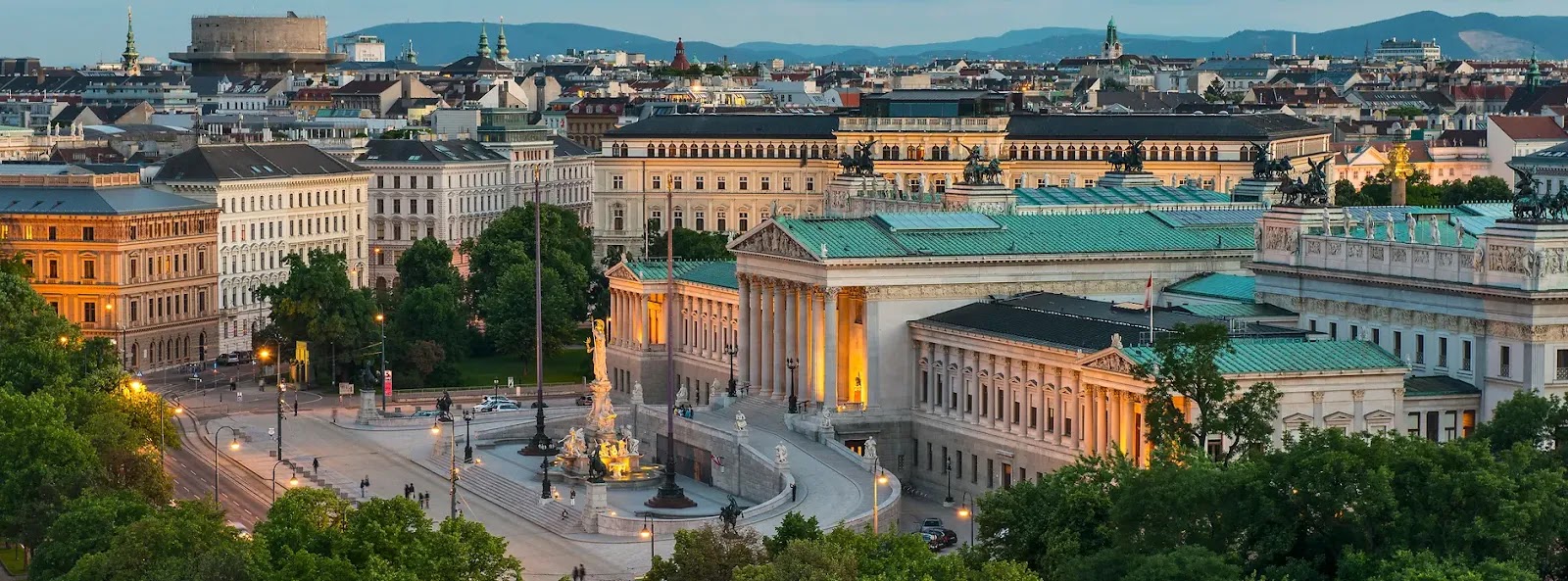
    Vienna Ringstrasse -Parliament Building

    OVERVIEW


    Austria-Hungary was a multinational, multiethnic empire. It had 11 recognized languages. It promoted, or at least tolerated, internal free trade, economic development and internal mobility in the period 1870-1914. Hungary was a major exporter of agricultural products to the rest of Europe. The railroad network was expanding, helping to tie the Empire together. New industries in metal-working and electrical appliances were established, especially in Bohemia (Czechoslovakia). Major cities had industrial districts. Banks and financial companies raised large amounts of capital to finance development and expansion.


    Its economy was modernizing but the government bureaucracy, especially in foreign affairs and in the military, were controlled by conservative elements – nobility, royalty and the court, and landed aristocracy. The political structure of dual sovereignty, both between Hungary and Austria, and between central government in Vienna and provinces, was cumbersome and ultimately proved unworkable. The national parliament in Vienna was reduced to a propaganda forum for rival nationalist groups. Every nationality group spoke in its own language. There were no translators. Power still resided mostly in the aging Emperor, the heads of foreign affairs, finance and the military, all dominated by the upper levels of landed aristocracy or their supporters.


    Outside of Vienna, the combination of economic growth, some reform, and a large bureaucracy gave the Empire some stability. Nationalist leaders of the northern provinces thought political alternatives were worse – independent countries would be absorbed by Russia or Germany. Landowners and farmers were given some protection and prosperity because Austria-Hungary was also a customs union – free trade inside, protective tariffs outside.


    FOREIGN POLICY


    Austria had ambitions to head a southern German confederation. The states in southern Germany had more in common with Austria than Prussia in the north. But Bismarck in Prussia wanted to unite all the states in the German Confederation under Prussian hegemony (dominance). But without Austria. So Prussia went to war with Austria in 1866 and defeated them, eliminating Austrian ambitions in Germany. Austria needed a counterweight to Prussian influence. The only country available was Hungary.


    The merger of Austria and its provinces with Hungary in 1867 was considered an emergency, and possible temporary, situation. The agreement was revisited every 10 years and could be renegotiated. As the decades went by, the Austrian government in Vienna became increasingly unhappy with Hungary’s treatment of Slavic minorities and Rumanians within its borders and its obstructionist attitude towards Austria. This was a source of increasing tension and conflict within the Empire.


    Austria-Hungary focused its attention on the Balkans. It saw Serbia as a disruptive influence. Russia also focused on the Balkans. Tension between Russia and Austria-Hungary in the Balkans went back to the 1870s. Russia supported the newly independent countries in the Balkans, especially Serbia. Serbia was an aggressive and disruptive force with its own agenda to dominate the Balkans. Tension increased as Serbia expanded in the years just before the outbreak of WWI.


    Austria felt isolated. It needed allies. Despite its military defeat by Germany, the only possibility was the new Germany. Germany and Austria-Hungary concluded a mutual defense treaty in 1879. Later, they would be opposed by the alliance of Russia and France. 


    LOST CHANCE AT REFORM BEFORE WWI


    Archduke Franz Ferdinand was the heir to Emperor Franz Joseph. He was both an insider by birth and an outsider by personality and ideas. He knew the Austro-Hungarian Empire could not survive in its present form. There was too much tension between Austria and Hungary. In addition, the various ethnic groups would increase their demands for more power and autonomy. The threats from the Balkans were getting worse. While waiting to become Emperor, he established a “shadow cabinet” that worked for him. They discussed possible reforms – break up the Empire by forcing Hungary out; change the internal structure to resemble a federation like the United States; give ethnic groups more say in managing local functions like education (an acceleration of a slow trend); a real national parliament; a southern Slavic federation without Hungary.


    Franz Ferdinand also believed that Austria had to come to some sort of accommodation with the countries in the Balkans, especially Serbia. Most of the other Austrian leaders, especially the head of the Austrian army, believed that the best course of action was war with Serbia.


    It is intriguing to speculate what would have happened if Emperor Franz Joseph had died in 1912 or earlier and Franz Ferdinand became Emperor. In 1912, Franz Joseph was 82 years old, semi-retirement and had reigned for 64 years (since 1848). He died in 1916.


    The horrible irony is that Archduke Franz Ferdinand was the Austrian assassinated by Serbian nationalists at Sarajevo in 1914. It was the excuse that Austrian leaders needed to declare war on Serbia, which led to WWI.


    VIENNA


    Economic growth and development generated economic, demographic, cultural and political stresses in Austria, especially Vienna. Vienna experienced rapid population growth as Slavs, Jews and other non-German-speaking groups from the provinces and neighboring countries moved to Vienna. Vienna’s population increased from 551,000 in 1850 to 2,083,000 in 1910. Budapest also experienced rapid population growth; Hungarian nationalism became increasingly shrill and oppressive as the percent of non-Hungarians increased in Hungary.


    The liberal, democratic ideals and institutions, layered on top of Vienna’s traditional society, were the basis of the complex of buildings of the Ringstrasse. By the late 1800s, these ideals were being attacked from the political right and left. Culturally, the new psychology of Sigmund Freud and a new generation of artists and thinkers attacked the underlying assumptions of rationality. (See the bibliography, especially the books by Schorske and Kandel).


    Austria-Hungary’s political and social elite saw the changes in the Empire as mostly negative, including a threat to their dominant position in society and government. They kept the new economic elite out of government and out of the higher reaches of Viennese society. The newly wealthy channeled their energy into supporting culture, especially music (an obsession of Vienna). Their sons became doctors, lawyers, scientists, professors and intellectuals. Probably the most famous were Gustave Mahler and Sigmund Freud.


    There is an irony surrounding the expansion of male suffrage in Austria-Hungary in 1882. It led to the rise of the Christian Social Party, a right-wing populist party that was a political counterweight to the socialist Social Democrats. The party leader, Karl Lueger, appealed to a voting base of mostly German-speaking lower middle-class artisans and shopkeepers who were losing their economic security and status to a rising liberal capitalist class. He allied his party to conservative, reactionary and religious elements. The party appealed to clerical Catholicism, German nationalism, and traditional values, Mr. Lueger became very popular and was elected mayor of Vienna (1897-1910). As mayor, he initiated and managed new public works projects in Vienna that benefitted his constituency. Eventually, he was reluctantly accepted by the court and the aristocracy. 


    Mr. Lueger and the Christian Social Party used anti-Semitism as an effective political weapon. Karl Lueger did not create the populist anti-Semitism of Vienna but shrewdly exploited it for political gain. (for an excellent depiction of Vienna in this period, see the Netflix detective series Vienna Blood).


    The party advocated racist policies against non-German speaking minorities. It supported a bill to restrict immigration of Russian and Romanian Jews into Austria-Hungary. After World War I, the Christian Social Party would morph into a Fascist party that dominated Austrian politics until the Anschluss (union) with fascist Germany in 1938.


    The old order and the newer liberal capitalist order were also attacked by the rise of an industrial working class politically organized by a strong socialist party, the Social Democratic Party. 


    One person living in Vienna who watched and learned from the success of the political rhetoric of the Christian Social Party and the mass organizing techniques of Social Democrats was Adolph Hitler.


    There is a brilliant study of Vienna in the decades before the war, 

    Fin-De-Siecle Vienna by Carl Schorske. It describes the increasing strains in Vienna; it also reminds us that trends in politics, economics, culture and art can be interrelated and feed back on each other in times of heightened social stress.


    IMPACT OF WORLD WAR ONE


    Austria-Hungary was destroyed by the internal stresses made worse by World War I. After the war, Austria and Hungary split apart into separate nation-states. Most of the nationalities in the Austrian-Hungarian Empire also became separate nation-states. They were unstable amidst the chaos and violence that followed World War I, new democracies that often quickly became authoritarian. Governments and ultra-nationalist organizations resorted to violent adjustments including killing and forcing out minorities. Instability and chaos made Central European countries vulnerable to Communist appeal, authoritarian governments and then an expansionist Nazi Germany. (see Robert Gerwarth, The Vanquished:  Why the First World War Failed to End)


    POSSIBLE MODERN ANALOGY?


    Austria-Hungary may serve as an imperfect but suggestive historical analogy to the European Union. 


    In the end, Austria-Hungary could not resolve the conflict between the antiquated, dysfunctional multinational political structure it inherited from the Habsburg monarchy and the rising nationalisms of the many ethnic groups in the empire. The movement of population, especially religious and ethnic minorities, from the rural areas to cities generated social strains somewhat analogous to the impact today of labor mobility and immigration in Europe.

    The Austro-Hungarian empire was a monarchy containing many ethnic nationalities. The European Union is based on nation-states that freely join and can peacefully leave. World War I, World War II and their immediate aftermaths were a historical watershed that separated the two political worlds. But the expansion of markets, both industrial and financial, from national to regional to global creates new tensions between and within the sovereign nation-states. 


    These tensions are mitigated by regional organizations such as the European Union. But the European Union is blamed by nationalist leaders for the dislocations and stresses caused by technological and organizational change. If the EU collapses, it will be due to political, economic, social and cultural factors that were similar to those that ripped Austria-Hungary apart.

    =========================================================

    Bibliography:  Vienna and the Austro-Hungarian Empire


    John Stoye, The Siege of Vienna:  The Last Great Trial Between Cross and Crescent


    Detailed account of Ottoman Turk siege of Vienna in 1683.  Ottoman defeat led to the eventual loss of much of the Balkans and reorientation of Habsburg foreign policy from west to east.  Roots of later conflicts in the Balkans.  Shows how extremely complicated European politics were.


    Philipp Blom, The Vertigo Years:  Europe, 1900-1914. 2008.


    Despite the book’s structure of picking one theme in each year, surprisingly insightful look at the years before WWI.  Attempts at parallels to current (or continuing) society.  Emphasizes psychological stress and social disruption caused by economic change, and their political and cultural consequences.  Like Schorske’s book, does not delve too deeply into causes.


    Carl Schorske, Fin-De-Siecle Vienna:  Politics and Culture. 1980.


    Brilliant book on how the liberal, capitalist, upper middle classes lost political and especially cultural dominance in Vienna. The cultural, political and intellectual façade of Vienna was made visible by the Ringstrasse buildings. There was an artistic and psychoanalytic attack on the rationalist and ordered culture of Vienna. In the background was the gradual disintegration of the Austro-Hungarian Empire. Nice tie-in with Morton’s book.


    Eric Kandel, The Age of Insight:  The Quest to Understand the Unconscious in Art, Mind, and Brain, from Vienna 1900 to the Present


    Brilliant book by a Nobel Prize winner in biology.  Worthy successor to Schorske. Attempts to link innovations in thinking in medicine, psychology and art, with the theme of looking below the surface. Origins of one psychology of the mind and influence on later art criticism. Interesting that Freud didn’t seem to be interested in modern art in Vienna or had more contact with contemporary artists. Author also argues painters seemed to be more interested in the psychology of women than Freud, whose explanations were superficial and stereotyped.


    Frederic Morton, Thunder at Twilight:  Vienna 1913/1914


    A number of extraordinary stories filled with irony. How Vienna miscalculated. Vignettes of famous people in Vienna during this period.

    Geoffrey Wawro, A Mad Catastrophe:  The Outbreak of World War I and the Collapse of the Habsburg Empire.  2014.


    Excellent history of the combination of unreality, arrogance and stupidity of the military and political leaders of the Austro-Hungarian Empire that led to World War I.  Mostly a military history of the performance of the Austro-Hungarian army during the first year of the war. Incredible incompetence and confusion leading to defeats and horrific casualties.


    Simon Winder, Danubia:  A Personal History of Habsburg Europe.


    Quirky, funny history/travel/personal thoughts on Habsburg Empire.  Last part emphasizes the history of the Balkans in 18th and 19th Century – the retreat of the Ottoman Empire and the breakup of Austria-Hungary, which led to the release of virulent nationalisms and “ethnic cleansing.”  Continued during WWII and after the war, into 1990s. 


    There are some wonderful Austrian novels that illustrate the brittle façade and slow disintegration of Austria-Hungary in the decades preceding WWI. Probably the starting point is Joseph Roth’s The Radetzky March. The Radetzky March commemorated an earlier Austrian military victory. The Vienna Philharmonic Orchestra still plays this song as the climax to its New Year’s Eve concert.


    For the psychological disintegration of the upper classes, see the novel by Robert Musil, A Man Without Qualities.


     ==============================================================


    For related posts, which could be read in order or separately, see


    Bismarck and the Origins of World War I

    The Beginning of the Twentieth Century:  The Start of World War I

    Wealth and Power in Pre-World War I Europe 


    Origins of World War I

    The Long Historical Consequences of World War I


    The Maxim Machine Gun and Smokeless Powder


    For a list of all posts, with links, on this blog, see List of Posts by Topic


  • The Immediate and  Long-Run Historical Consequences of World War I

    The Immediate and Long-Run Historical Consequences of World War I

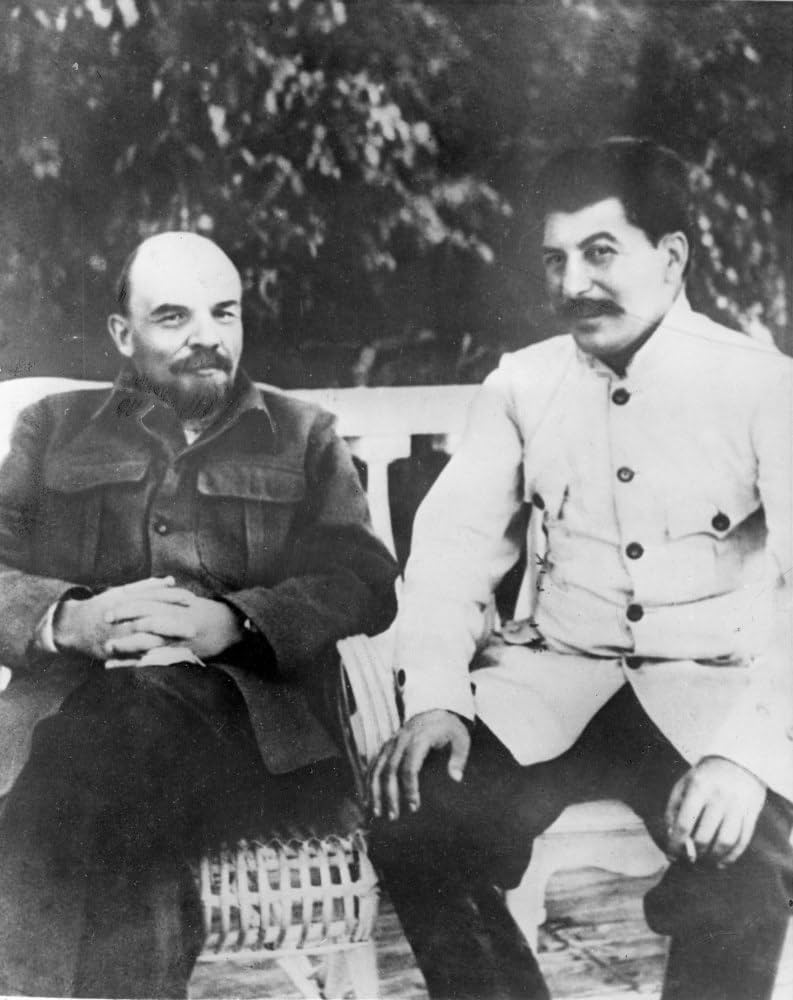
    Lenin and Stalin, 1923

    The conflict was “the first calamity of the 20th century, the calamity from which all other calamities sprang.”

           Fritz Stern, German-American historian. Cited in The Economist, “Still In the Grip of the Great War,” March 27, 2014

    IMMEDIATE CONSEQUENCES


    The immediate consequence was a war that mobilized over 60 million troops, caused 20 million military and civilian deaths and 21 million wounded. The European order of Bismarck and other conservatives was shattered, replaced by chaos and violence.


    If the importance of an historical event is judged by its consequences, then World War I may be the most important historical event of the twentieth century.  Its immediate aftermath included:

    • the elimination of four monarchies, including the Ottoman Empire.
    • revolution in Russia, ending in a Communist government, civil war and invasion of Poland.
    • the breakup of the Austro-Hungarian and Ottoman Empires.
    • small, new, weak countries in Central Europe fighting each other.
    • a Fascist government in Italy.
    • political and economic instability in Germany, leading to Hitler, World War II and the Holocaust.
    • English and French colonies and protectorates with arbitrary borders in the Middle East.
    • independence for part of Ireland, leaving the question of Northern Ireland unsettled.
    • a prolonged recession in England.
    • the rise of two new potentially dominant world powers outside of Europe, America and Japan.

    DISCONTINUITIES:  THE IMMEDIATE AFTERMATH OF WORLD WAR I

    The 19th century ended in August, 1914. The 20th century began in November, 1918.


    World War I was the “seminal tragedy” of the 20th century. If we judge the importance of a historical event by its long-term consequences, then WWI is the most important event of the 20th century. Much of the violence, wars, conflicts, and economic disruptions stem from the consequences of WWI. Every time I think the consequences of WWI are over, sometime else happens – the breakup and genocide in the former Yugoslavia (created as a result of post-WWI treaties), political and military conflict over the Central Europe “borderlands,” violence in the Middle East partly due to the artificial national boundaries drawn by the English and French imperialists during WWI. The continuing conflict between Jews and Arabs  is partly due to the political mess the English left behind when they exited from Palestine.


    WWI was the last attempt of the ancien regime conservative, reactionary and nationalist ruling classes of Europe to remain in power. Tens of millions of people died during and just after WWI. If we include the long-run effects, hundreds of millions of people died.


    Many of the old regimes collapsed – tsarism in Russia, Kaiser Wilhelm and Prussian dominance in Germany, the Austro-Hungarian Empire, and the Ottoman Empire. The traditional ruling classes of monarchs, royal courts and landed aristocracy – the ruling class in Russia, Germany and Austria-Hungary – were swept away. New leaders – the heads of mass movements like Communism, Fascism, Social Democracy, and Labor – rose in their place.


    At the Treaty of Versailles, new, unstable states were created in Europe partly because of the misplaced idealism of Woodrow Wilson. Wilson, despite talking about “self-determination,” was not able to convince England or France to give up their colonies. 

    England and France kept their colonial empires, but political elites in European colonies heard the rhetoric of “self-determination” and began to organize anti-colonial movements in their countries. Probably foremost was Gandhi and the Congress Party in India. 


    Germany lost 13% of its territory and 10% of its population. Austria-Hungary was dismantled, creating new states in Central Europe and the small country of Austria. Hungary lost two-thirds of its territory after conflict with its neighbors. France suffered much physical damage and loss of life; its political divisions became worse after the war. The Balkan countries contested the possession of the Dalmatian Coast with Italy. Yugoslavia, under Serbian dominance, was created, leading to future problems and violence in the Balkans. The Ottoman Empire was dismantled and the resulting country of Turkey lost all of the Middle East lands of the former Ottoman Empire. They were arbitrarily divided up as spheres of influence between England and France with no regard to ethnic or religious differences. This was one of the sources of later Middle East conflicts.


    Europe in the post-World War I period did not get a resumption of economic growth, more trade among nations or new democratic governments. Instead, Europe got Mussolini, Hitler, Lenin and Stalin, and autocratic or Fascists regimes in Spain and most of central Europe. Communist Russia got gulags and Germany and Europe got the Hitler and the Holocaust.


    The ”concert of nations” of pre-war Europe no longer existed. European dominance became a struggle between Fascist Germany and Communist Russia. After WWII, Europe became a political battleground contested by a Communist Russia and the United States. With the loss of colonies, European influence in the world decreased even more. 


    Some economic historians believe that the economic and financial disruptions caused by WWI contributed to the American stock market crash of 1929 and to the length and depth of the global Great Depression. The stock market crash and the Great Depression started only 11 years after the end of the war and contributed to global political instability.


    Pre-war industrialization and rising standards of living for the middle-class did not resume after WWI. Recovery from the massive damage, loss of life and dislocations of the war was slow and difficult over all of Europe. Then came World War II. Western Europe did not start to economically recover until the late 1940s and 1950s, a generation after the end of WWI.

    Two countries benefitted from World War I. Both were outside of Europe – America and Japan. 


    GERMANY

    Erich Ludendorff (center) with Adolf Hitler and other Nazi leaders, 1924
    From Bundesarchiv

    Erich Ludendorff, the commander of the German army, saw the future of Germany in 1916. It was German dominance of eastern Europe. He proposed German colonization of the area along with the elimination of its Slavic population.


    During the war, he set up puppet states in the Baltic regions under German control. Germany controlled a huge amount of land in eastern Europe and western Russia after the Treaty of Brest-Litovsk with the Bolshevik (Communist) government. But Germany couldn’t hold them. Fearing another one million American troops coming to France in 1918, Ludendorff decided on one last huge offensive campaign. He needed most of eastern-front troops in France.


    Germany’s new government of the Weimar Republic was attacked by right-wing and Fascists organizations containing violent paramilitary wings. Many Germans did not believe Germany had been militarily defeated in the war. In 1923, Ludendorff joined Hitler in the Munich putsch to overthrow the Bavarian government. It failed. Hitler was sentenced to a short and easy prison term, during which he wrote Mein Kampf. Ludendorff continued active in far-right-wing politics but was overshadowed by Hitler.


    Hitler slowly marginalized Ludendorff, partly because of Ludendorff’s conspiracy theories. Ludendorff died two years before Hitler’s armies conquer Poland and started to dominate central and eastern Europe in a war with Russia.


    German inflation in the early 1920s wiped out the savings of the middle class. Germany went into recession in 1928. As the recession worsened, German voters moved to supported left-wing and right-wing parties. In the election of 1932, the left-wing parties gained two million more votes than in the prior election. German conservatives, fearful of a left-wing government, prevailed on a very old President Hindenburg to appoint Adolf Hitler as chancellor in January, 1933.


    Although stripped of its navy and its army much reduced in numbers and armaments, a small group of German army officers began planning the next war in the 1920s. More than the victors, German tactical and strategic plans were based on integrating the new military technology of tanks, airplanes, machine guns and artillery to achieve offensive victories. Germany was able to quickly rearm under Hitler, leading to Panzer divisions led by Rommel and Guderian (graduates of 1920s planning groups) and World War II. 


    ENGLAND

    England experienced a stagnant economy in 1920s, made worse by returning to the gold standard at the pre-war exchange ratio. The country was wracked by large labor strikes during the 1920s. The English landowning class continued to decline because of land taxes, death duties and cheaper food imports. The Labor Party replaced the Liberal Party as England’s second party.


    The English pound, the de facto international currency before the war, was overvalued relative to other currencies after the war. This made exports expensive and imports cheap. England ran trade surpluses before the war but trade deficits after the war. 


    England had to repatriate much of its large foreign investment and borrowed heavily from the United States during the war. After the war, London lost its role as the global financial center to New York.


    CHINA AND JAPAN

    About 100,000 Chinese and Vietnamese were brought to France as workers during the war. Many were radicalized. Zhou EnLai (Chou En-lai) and Ho Chi Minh went to France after the war. Both were influenced by the Russian Revolution. Ho was a founding member of the French Communist Party and Zhou joined a Chinese Communist cell in France. When they went home, Chou En-lai eventually became the number two man in the Chinese Communist government and Ho Chi Minh led the fight against the French in Indochina and established a Communist government in Vietnam. He may also have the distinction of being the only person to be a founding member of two Communist parties.

    The Versailles Treaty gave Japan the Pacific islands formerly controlled by Germany. (America would learn the names of these islands after December 7, 1941.) The Treaty also gave Japan control of a part of China formerly occupied by Germany (Shandong province). Demonstrations by outraged Chinese students and intellectuals in 1919 is considered the beginning of modern Chinese nationalism.

    The Japanese military and nationalists, seeing a weakening of European colonial power in Asia, took over Manchuria and began planning a Japanese empire in China and Southeast Asia. Japan, now the strongest imperialist power in Asia, invaded China in 1937 and conquered eastern and southeast Asia in 1941-42.


    The war with Japan gave the Chinese Communists, almost annihilated by the Chinese Nationalists in the 1930s, a new lease on political life that led to victory in the Chinese civil war and the founding of Communist China in 1949.


    THE UNITED STATES

    The United States had already passed England in industrial production and total output before the war. But the United States did not leverage its military contribution to Allied victory in World War I and its financial and industrial power into global political power. Instead, America reverted to its traditional isolationism.


    U.S learned the cost of choosing isolation after WWI. There was no return to isolationism after WWII. The global situation had changed – American leaders saw the Soviet Union as a direct threat to U.S. The combination of Russian atomic bombs, ICBMs and long-range bombers meant that Ameria could no longer hide behind two oceans. New military and civilian institutions were created to support new strategies.


    New weapons such as tanks and airplanes, new logistics and communications, and new strategies (mobile all arms offensives) that were developed near the end of World War I would be crucial in World War II. The United States far outproduced Germany and Japan in the new weapons of war.

    EUROPE’S CULTURAL AND INTELLECTUAL DOMINANCE


    It also seems that the great creative surge in Europe from the 1880s to 1914 did not continue with the same intensity after the war.  Much of European art and literature in the quarter century before WWI seems to express an uneasiness with the middle-class culture of the times. There seems to have been an artistic intuition of the disintegration, chaos and violence to come. Russian artists and writers explored revolutionary themes after the failure of the 1905-06 Revolution. Thomas Mann’s The Magic Mountain and Robert Musil’s A Man Without Qualities explored new forms of neurotic behavior in the ruling class. In Austria, Mahler’s symphonies introduce chaos and deconstruction into Romantic music and Schiele’s nudes illustrated stark terror in human relations. Stravinsky outraged France with The Rites of Spring.

    Italian futurists celebrated machine-based violence and would support the Fascists after the war. Possibly, Cubism represented the new sensibility.


    Many European artists, intellectuals and scientists migrated to United States, including Sigmund Freud and Albert Einstein. Many Europeans who created the new media of movies – producers, directors, writers, actors and composers – ended up in Hollywood after the war. Except for Humphrey Bogart, almost everyone connected with Casablanca (my favorite movie) was a European emigrant or refugee.

    European physicists and chemists were crucial in designing the American atomic bomb. One of them – Edward Teller – led the team that designed the more powerful and destructive hydrogen bomb. Calculations for the bomb were done on an innovative computer designed and built under the supervision of his Hungarian friend John von Neumann. Many departments of American universities were dominated by European refugees, including the Economics Department of Harvard, which produced many of America’s first generation of Nobel Prize winners in economics. In biology, James Watson, the co-discover of the structure of DNA, was educated by a European refugee biologist. Many of the Nobel Prizes won by “Americans” after the war were earned by European refugees.


    CONCLUSION

    There was too much dislocation, too much damage, too many new disputes, too much violence after World War I for the old order to be reestablished. But there was no stabilizing new order to bring Europe back to 1913 because of chaos, fear, anger and resentment everywhere in Europe. It was only after the Great Depression and the horrors of World War II did western Europe, with American financial support and military protection, begin the transition to a reduced but peaceful and prosperous future.


    ============================================================

    The Immediate Aftermath of World War I

    Robert Gerwarth, The Vanquished:  Why the First World War Failed to End

    The clear detailing of the chaos, violence, ethnic hatreds and political instability in the six years after the end of World War I, especially in Central and Eastern Europe. While some political stability (and less violence) occurred after 1923, the author argues that the weak governments could not deal with the economic and political chaos created by the Great Depression. The weak democratic government of Germany was discredited and voters dramatically increased their support of far left and far right parties.

    For about 50 excellent video lectures on the world right after World War I, see Jesse Alexander, The Great War, on YouTube. This series also has hundreds of video lectures on all aspects of the war, including the war outside of Europe. Highly recommended.

    The first five posts are best read in order.

    For posts on various influences leading up to World War I, see

    Bismarck and the Origins of World War I

    The Beginning of the Twentieth Century:  The Start of World War I

    Wealth and Power in Pre-World War I Europe 

    The Austro-Hungarian Empire Before World War I

    Europe on the Brink of World War I

    The next two posts illustrate that the Entente powers (England, France and Russia) had access to resources beyond their national boundaries, which was one reason they won the war.

    New Jersey Artillery Explosives Production in World War I

    The Maxim Machine Gun and Smokeless Powder

    For a list of all posts, with links, on this blog, see List of Posts by Topic

    LONGER-RUN CONSEQUENCES


    Equally important, economic historians who study the origins of the Great Depression generally believe the deepest underlying causes were the economic disruptions and instabilities created by World War I. The winners of the war could not, or would not, deal realistically with the economic dislocations. Criticisms of the disastrous economic policies of Winston Churchill in the 1920s by John Maynard Keynes had no effect. American exports of agricultural products to Europe fell drastically; a recession began in rural America in the 1920s. Thousands of rural banks failed. As the agricultural recession deepened in the 1930s, the rural banking system virtually collapsed, not all at once but in waves, prolonging the depression. 


    In Germany, the combination of bitterness over losing the war and the economic effects of the Great Depression would contribute to the rise and eventual success of Hitler and the Nazis. In the 1920s, the German army and navy were already planning on how to win the next war.  Hitler would inherit a military with a strategy on how to reverse the results of World War I.  He would use it.  
    History is the story of sudden, unexpected events with long tails and long consequences.


    =======================================================================


    WHY THE AFTERMATH OF WORLD WAR II WAS DIFFERENT THAN THE AFTERMATH OF WORLD WAR I


    World War I was the first time America sent a large army to fight in Europe and took part in the post-war peace negotiations. President Wilson attempted at the Versailles peace negotiations to construct a post-war world based on “national self-determination,” democracy, and collective security. This raised expectations of a “just peace” without retribution, and even decolonization. Not to be. The creation of a Communist Russia supporting revolution in Germany and Central Europe (and unsuccessfully invading Finland and Poland), political chaos and violence in Germany and Central Europe, ethnic hatreds in the new countries of Europe, and weak democratic institutions made it exceeding difficult to implement Wilson’s ideals. In addition, France was more concerned about punishing Germany, and England and France wanted to preserve and extend their empires. Americans at home became quickly disillusioned and returned to isolationism. Authoritarian leaders and parties in Europe promised order in place of the chaos of parliamentary democracy. Exploiting the bitterness of the Italian experience in the war and ensuing political chaos, Mussolini and the Fascists came to power promising order. The Great Depression strengthened the appeal of other extremist, anti-democractic parties, most tragically in the rise to power of Hitler and the Nazis in Germany. The result was World War II.


    Why was the outcome of World War II different? The same chaos and violence in Europe was present. But Soviet Russian rule of most of Central Europe suppressed potential conflicts in this unstable region. Ethnic hatred in the Balkans were controlled by a Communist Yugoslavia. On the other side, America did not retreat from Europe. Reacting to the threat of Soviet Russia, The United States supported and subsidized a program of economic reconstruction and democratic institutions in Western Europe. The European Union was created, to foster economic integration rather than national rivalry. NATO was created to provide military protection, ensuring a permanent American presence. Decolonization began. International institutions such as the IMF and the World Bank were established, partly to contain a repeat of the contagion of economic slumps.


    It was the political and ideological rivalry of the Soviet Union and the United States, rather than the political rivalry of traditional European “Great Powers,” that determined the shape of the post-World War II world.


    In a later post, I will argue that this post-WWII structure is coming to an end and we are returning to a world that somewhat resembles the world before World War I. Universal ideological themes like Communism and democracy are becoming less important. Narrower nationalist objectives are reasserting themselves at the expense of supranational structures created after World War Two. Rising internal tensions in many nation-states are having important influences on foreign policies.

  • The Maxim Machine Gun and Smokeless Powder

    The Maxim Machine Gun and Smokeless Powder

    Written by Andrea Dragon, Ph.D. Dr. Dragon investigates and writes about New Jersey’s industrial history. Professor Dragon will be teaching a continuing education course on “New Jersey’s Explosive History” at Rutgers – New Brunswick, starting on October 8, 2025. For details, see the course description at the end of this essay. 


    Hiram Maxim and his machine gun

    Hiram and Hudson Maxim:  Inventors of the Machine Gun and Developers of Smokeless Powder


    New Jersey’s eccentrically brilliant brothers, Hudson Maxim (1853-1927) and his cantankerous, womanizing older brother Hiram Stevens Maxim (1840-1916) were both born into a poor, rural Maine family. Hudson claimed receiving his first shoes when he was sixteen. He rarely attended school and was self-taught. Astonishingly, Hudson Maxim’s earliest claim to fame was as the author of a popular “teach yourself” book on penmanship. He also possessed a breathtakingly large ego, once bragging that he could write an article on almost any subject in the world without doing any research.


    Both brothers were prolific inventors; Hiram received 200 patents in his lifetime, the most significant was for the machine gun. Hudson was also a serial inventor and tinkerer who received 60 patents, including one for smokeless powder. 


    In 1881, when he was twenty-eight, Hudson sailed to London to help his brother Hiram establish an English branch of Hiram’s company, U.S. Electric Lighting Company headquartered in New York. Hiram was not only the company’s founder, but he was also the chief engineer who supervised the installation of the first electric lights in a New York office building. Hiram also claimed to be the original inventor of the light bulb, saying Thomas Edison knew more about patent law than electricity. When the brothers sailed for London, Hiram Maxim had a home in Fanwood, New Jersey, where he lived with his wife and three children. He may have had business reasons for travelling to England, but in addition he wanted to escape the public uproar over his bigamous marriage to his mistress who was traveling with him. He had another reason to beat it out of New Jersey – he may have fathered a child by a 15-year-old girl who claimed he had bigamously married her.


    The Maxim Machine Gun


    Hiram may have begun developing the machine gun while living in New Jersey, but after moving to England and with financial backing from Albert Vickers, Hiram was able to build a workshop where he refined his machine gun, receiving a patent in 1883 then establishing the Maxim Gun Company in 1884. It wasn’t until 1889 that Maxim was able to sell a manufacturing license to the British Army. 


    In 1888, Maxim hit the road selling his gun. One of his early targets was the German army but negotiating a license with arms manufacturers there was a cumbersome process involving several entities that already had interests in his British operation as well. He finally sold a seven-year license to his machine gun to the German company Ludwig Lowe in1892.  The Lowe Company joined with Mauser in 1896 to form Deutsche Waffen-und Munitionsfabriken AG and the Maxim license was re-negotiated.


    Long before the war, the Vickers company had become a major shareholder in the Maxim Machine Gun Company and in 1897 Hiram Maxim sold all his remaining shares to Vickers.


    Hudson Maxim

    Smokeless Powder


    The Maxim brothers knew Hiram’s machine gun could revolutionize the way artillery was used in warfare, but until a way could be found to reduce the smoke it produced, promoting the gun was challenging. While the Maxim gun could fire up to 600 rounds per minute, the smoke generated by that many gunpowder-fired rounds produced a black cloud so large and so dense the gun’s eye-watering, coughing three-man crew couldn’t see the target, but the enemy could easily locate the position of the gun.


    Of all the late 19th century American and European explosives pioneers eagerly promoting smokeless powder as a replacement for black gunpowder, Hiram and Hudson Maxim are among the most intriguing. Although their contributions to the development and commercialization of smokeless powder are largely forgotten, the Maxim brothers were important early participants and merit greater recognition. 


    Some kind of smokeless powder was needed to make the machine gun more commercially viable. Fortunately, the Maxims had invented one, or rather each brother had invented one. Hudson claimed he had developed a type of smokeless powder before 1881 when he left for England, while his older brother Hiram claimed he invented smokeless powder long before his brother did. But neither brother invented smokeless powder. The real inventor of nitrocellulose, what Americans call smokeless powder, was a Swiss chemistry professor named Christian Schonbein who was working at his home in 1845 in Basel, Switzerland, when he accidently spilled nitric acid onto his kitchen table. Fearful of being scolded by his wife who didn’t approve of his kitchen-based experiments, Schonbein grabbed the nearest cloth, his wife’s cotton apron, used it to wipe up the spill then hung the apron over the oven door to dry. After it was dry, a “flash,” or a “spark” (depending on who’s telling the story) occurred igniting the apron that instantly burned up without producing any smoke.


    Whether or not that story is true, Schonbein recognized that soaking cotton (cellulose) in nitric acid created a new molecule, nitrocellulose, that burns without smoke and could replace smoky black power in ammunition. He attempted to commercialize his discovery by selling a manufacturing license to a British company, but shortly afterward an explosion leveled the English factory killing eighteen workers. Schonbein returned to teaching chemistry.


    As word of Schonbein’s discovery spread, other European chemically-inclined entrepreneurs filed nitrocellulose patents. Among them were Paul Vielle of France in 1884, Dimitri Mendeleev (of periodical table fame) of Russia in 1892, and Alfred Nobel (the dynamite king) of Sweden in 1887. Each man established companies with production facilities, claimed their ideas had been stolen by at least one of the others, and devoted much time and energy suing each other for patent infringement.


    European armies were becoming increasingly interested in smokeless powder and in 1889, coinciding with the British army’s purchase of the Maxim gun, the British Explosives Committee began the process of selecting a nitrocellulose-based powder to replace the black gunpowder used to propel shells and bullets from guns large and small. The powder selected would become the official military powder of Great Britain to the exclusion of all others. Because all inventors were invited to submit samples to be tested, the American Hiram Maxim submitted a sample of his smokeless powder, and so did the Swede Alfred Nobel.


    Neither the American nor the Swedish sample was selected. The winner was a type of nitrocellulose called “cordite” submitted by British citizens Frederick Abel and James Dewar. As members of the British Explosives Committee, they had examined all the submissions and read all the accompanying documentation before submitting their sample. The inventors who weren’t selected claimed the selection process was rigged to favor the British citizens. Both Hiram Maxim and Alfred Nobel sued but lost in British courts and cordite became the official propellant for all artillery in the British Army. 


    Twenty-five years later during WWI, vast quantities of it were used to fire bullets from the Vickers-Maxim machine gun, which may have been responsible for as many casualties as cordite-fired shells from field artillery pieces. Because the British army was unable to produce the tremendous quantities of cordite needed to fire all that ammunition, it contracted with New Jersey explosives manufacturers to make millions of tons of cordite and load it into shells which were shipped to Europe via South Amboy and Jersey City.


    The Later Years of the Maxim Brothers 


    Wealthy from the proceeds of the sale of his machine gun company, Hiram Maxim became a British citizen and settled into a comfortable life in England but became estranged from his brother Hudson, who had returned to New Jersey. Hiram was knighted in 1902 and the French awarded him the Legion of Honor. In his final years he wrote about philosophy and Christianity. In 1946, Hollywood released a modestly successful feature film about him, “So Goes My Love” based on the memoir A Genius in the Family written by his son, Hiram Percy Maxim, inventor of the gangster-friendly handgun silencer. The film, starring Don Ameche and Myrna Loy, is said to be a comedy. 


    In 1890, Hudson Maxim established a smokeless powder factory in central New Jersey in a newly created town called “Maxim.” He hoped to make a powder that would become the official powder of the U.S. army in the same way that cordite had become the official powder of the British Army. Although he sold Maxim powder to the army, it never became an official powder. Hudson Maxim retired to his mansion on Lake Hopatcong where he wrote The Science of Poetry and the Philosophy of Language, publishing it in 1910.


    COMMENT.  About one million machine guns were produced in World War One.  England was able to greatly increase its cordite production after a chemist developed a new and more efficient way to produce it. The chemist later became the first president of Israel.

    After the United States entered the war, large quantities of another type of explosive was produced for French guns in exchange for France “loaning” artillery to the American army.


    Dr. Dragon is teaching a course at Rutgers University, New Brunswick, New Jersey:


    NNew Jersey’s Explosive History 


    WednesdaysOct. – Nov. (weeks10:30 a.m. – 11:30 a.m.

    Locationinperson in New Brunswick Member$40 NonMember$60 

    The explosives industry in New Jersey began in the late 19th century when handful of entrepreneurs built an industry and powder town” near the Raritan River with the help of few eccentrics including crook or twoand former New Jersey resident sharpshooter Annie OakleyDecades later during WWIthe New Jersey explosive industry had expanded to other sites in the state and had grown so large it was able to supply half of the explosives used by all the AlliesAlthough their story is largely forgottenthousands of brave New Jersey menwomen and teenage girls made millions of tons of explosives and loaded them into shells destined for the battlefields of Europe and over hundred of them lost their lives in terrible explosions(course code NBV38

    InstructorAndrea Dragon

    Osher Lifelong Learning Institute at Rutgers University


    =====================================================================

    Related posts by Dr. Dragon:

    KELP IS ON THE WAY:  How American Kelp Helped Save the English Explosives Industry in World War I


    New Jersey Artillery Explosives Production in World War I

    For a related article on Hiram Maxim, see


    https://digitalcommons.library.umaine.edu/cgi/viewcontent.cgi?article=1243&context=mainehistoryjournal


    For the beginnings of World War I, its consequences, and a bibliography, see 

    The Beginning of the Twentieth Century:  The Start of World War I.

    Bismarck and the Origins of World War I


    Europe on the Brink of World War I


    Also see other related posts:


    Wealth and Power in Pre-World War I Europe 

    The Austro-Hungarian Empire Before World War I

    It is argued in the following post that the First World War was a major cause of much of the violence and disruptions of the 20th century.

    The Immediate and Long-Run Historical Consequences of World War I

    For a list of all posts, with links, on this blog, see List of Posts by Topic

  • Bilateral Oligopoly

    Bilateral Oligopoly

    The best movie about the Gunfight at the O.K. Corral is titled My Darling Clementine.
    A great western – great cast, great photography. 

    DEFINITION OF A BILATERAL OLIGOPOLY


    Models of market structure assume that the demand side is
    represented by a large number of buyers. 
    The structure of the market, and the assumed market outcomes, depends on
    the number of suppliers and how they compete. 
    Suppliers either post one price or exploit their knowledge of buyer
    categories by using price discrimination. 
    Despite the comments about the key role of consumers in determining
    economic performance, consumers are fairly passive when the discussion focuses
    on imperfectly-competitive industries. 
    But many markets are not structured this way; the buyers are not passive
    consumers but large corporations that do not passively accept suppliers’
    prices.  Net prices are actively
    negotiated.  These markets are often
    bilateral oligopolies.


    In a bilateral oligopoly the buyers are not an
    undifferentiated mass of consumers but rather a small number of purchasing
    agents or professional buyers representing large purchasers.


    There are now a small number of large
    corporations on both sides of the market. 
    The same company could be on different sides of two bilateral
    oligopolistic markets.  For example,
    Boeing Aircraft is a major purchaser of jet engines from the three big engine
    producers and one of two major suppliers (with Airbus) of large commercial
    aircraft to a limited number of large airlines.
     

    THE MARKET FOR CAPITAL EQUIPMENT


    Economics textbooks talk about putting inputs together in
    the most cost-effective way possible to produce some level of output.  But if capital goods markets are not
    perfectly competitive, there is no mechanism on how this is done.


    Markets for capital goods and many other inputs are
    structured differently than the consumer products markets that are the usual
    examples in economics.  Capital goods,
    processed metals like steel and aluminum, chemicals and petrochemicals,
    packaging material, transportation equipment, IT hardware and software, and
    other inputs are often produced by large corporations in oligopolistic
    industries.  There are usually large
    economies of scale and scope compared to the size of the market.  Economies of scale producing differentiated
    products define the size of the market and the net price of the product for
    each customer.  Yet, contrary to the
    impression in economics textbooks that concentration leads to collusion,
    companies in these types of industries are very competitive, including fierce
    price competition.  Even duopolies, such
    as Coke and Pepsi or Boeing and Airbus, can be very price competitive markets.  Long-run economic profits (profits above the
    cost of capital) are surprisingly rare. 
    Outcomes in many of these industries approach the ideal outcomes as if
    these industries were perfectly competitive.


    One of the reasons for price competition and lack of market
    power by large sellers is the lack of asymmetric information.  Large corporations on the buy side of the
    market spend a great deal of resources to be well-informed about
    suppliers.  Size plus market information
    gives them countervailing market power.  The
    result is a bilateral oligopoly market structure.      

    DESCRIPTION OF A BILATERAL OLIGOPOLY

    Many producers sell intermediate goods and
    capital goods to final producers and assemblers.  Final producers often sell to large
    wholesalers, distributors and retailers. 
    Even small retailers often purchase through franchisors, buying offices
    or big coop distributors like True Value. 
    In all these situations, it is professional buyers who make the buying
    decision.  Purchasing agents and new
    product committees are well-informed about their suppliers.  They demand a great deal of information about
    products and services from potential suppliers but do not share actual price
    and product information with competing suppliers.


    Because they represent large customers, they have
    substantial market power, playing off one supplier against another.  They buy in large volume, often for their own
    private label, and are compensated for negotiating low prices.  In the extreme, retailers like Wal-Mart force
    suppliers to offer prices close to the suppliers’ marginal cost, the same
    prices that would prevail in a perfectly-competitive market. 


    In many bilateral oligopolistic markets, price is
    a primary consideration in the purchasing decision.  Professional buyers along the supply chain
    are not swayed by marketing or advertising. 
    Brand names are often unimportant or irrelevant in markets for raw
    materials, commodities, industrial products, intermediate goods, commodity
    chemicals, information technology, products made to buyer’s specifications,
    generic products, and private label products. 
    Price at or near marginal cost occurs when competing products are close
    or perfect substitutes in the eyes of the professional buyers.  When buyers view alternative sources of
    inputs as close substitutes, sellers can not charge a premium price based on
    perceived superior value.


    Corporate buyers have leverage if their company
    is a relatively big part of the market or if producers have large economies of
    scale.  One implication of large
    economies of scale is that producers are forced to run plants at a high percent
    of capacity to make a profit.  Industries
    with large economies of scale also often have industry overcapacity so that not
    all companies can run their plants at full capacity.  As long as price is above marginal cost, some
    companies would be willing to expand output to increase profit or reduce
    loss.  For example, auto company
    purchasing agents negotiate with large suppliers from the steel, aluminum,
    plastics, and tire industries, all of which currently have excess
    capacity. 


    There
    are a small number of producers in many markets for raw material,
    semi-processed goods or industrial products because of large economies of
    scale.  Scale economies create the
    “through-put problem” for suppliers. 
    Economies of scale are made possible by large up-front investment in
    fixed assets representing new technology. 
    Units of output have low variable cost. 
    But there is low average (unit) cost only if plants are run at high
    rates of capacity.  If producers have
    high fixed cost relative to variable costs and must operate plants at a high
    percent of capacity to make an adequate rate of return, or plant closing costs
    are high, then large buyers might be able to force the contract or negotiated
    price down close to marginal cost.


    Many
    large manufacturers face large assemblers or retailers as major customers.  If products are viewed as homogeneous by
    buyers, suppliers are chosen primarily on price.  Buyers use a number of bidding and contract
    negotiation procedures to maximize the amount of price competition among
    potential suppliers.  Anyone who has ever
    been a sales rep or purchasing agent knows how complicated this process can be.


    Much
    of the discussion of the Internet is a variation of this description.  Internet companies may have high development
    costs but the marginal cost of one more buyer on the site may be close to
    zero.  A common strategy is then to try
    to grab as much market share as quickly as possible. 


    For some products, like computer hardware and
    systems, the part of the market where computer companies sell computer systems
    to large institutions contains aspects of bilateral oligopoly.  About 40% of total demand for information
    technology comes from large companies, about 45% from midsize to small
    businesses, and only about 15% from individual consumers.  Large banks and other financial companies
    spend over $1 billion a year on information systems.  They have tremendous market power –
    negotiating power – when they decide which suppliers to choose.


    Buyers for assemblers and retailers typically
    face final consumers and competitors in their product markets.  So demand in intermediate markets is derived
    from the buyers’ forecasts of final consumer demand.  Professional buyers are actually negotiating
    part of the cost of the final product for the ultimate consumer.  They have a big incentive to try for the
    lowest cost of inputs, which will give their company a competitive advantage in
    the output market and determine profit margins. 
    Price competition in the final goods or retail market keeps profit
    margins down.


    Unlike other imperfectly-competitive markets,
    here we assume symmetric information.  We
    do not assume that sellers know more than buyers.  There are informed purchasing agents on the
    buy side who spend considerable resources to gather data on suppliers.  They develop technical expertise, force
    suppliers to share proprietary information, visit plants, and demand data from
    competing manufacturers. Sellers often lack valuable information that buyers
    have – the offering net prices and sales conditions of other sellers.


    Large corporations can be fiercely competitive
    for market share and increased profit. 
    Competitors also want to protect proprietary information, negotiating
    positions and marketing strategies from each other.


    Although products and services may be
    differentiated in the eyes of producers, in some intermediate markets the
    competing products may be almost undifferentiated (almost perfect substitutes)
    in the eyes of purchasing agents.  Tires
    and computers are examples.  Demand from
    professional buyers for each product is more elastic than assumed by the
    producers.  Producers misjudge the price
    elasticity of demand.  They offer to sell
    at a higher price than buyers are willing to pay.  Buyers then institute price competition by
    playing off one supplier against another, negating the market power of the
    large suppliers.  By such means as
    competitive or sealed bids, buyers decide mostly on the basis of price.  Final market price is indeterminate, partly
    dependent on negotiating skills. 


    Professional buyers and purchasing agents,
    following the self-interest of their company, are negotiating prices on behalf
    of the final consumer.  This is a major
    source of price competition in retail markets. 
    If buyers have elastic demand and can negate the supplier’s
    market power, the market price will probably be closer to the price reached in
    a perfectly-competitive market.


    MARKET SHARE AND MARKET POWER

    It is usually assumed that a large market share
    translates into market power, the ability of a company to charge prices
    substantially above marginal cost (and unit cost) and thus make above-average
    rates of return.  In a bilateral
    oligopoly market, however, large market shares of suppliers can be negated by
    large market shares of buyers.  In fact,
    if the main reason for a small number of big producers is economies of scale
    relative to the total size of the market, then market power typically swings
    over to the buyers’ side.  This is
    especially true if there is excess capacity in the industry, a common situation
    in manufacturing industries with large economies of scale.


    Large
    producers may also not have much market power if every sale is important.  This is the usually situation in
    transportation equipment – Boeing vs. Airbus selling jet aircraft in
    multi-billion dollar deals, large containerships and oil tankers, and diesel
    locomotives sold to the handful of railroads left in the
    United States or national railroads in other countries.  Other examples in large capital goods markets
    are electric power-generating equipment, oil rigs or large earth-moving equipment
    (Caterpillar vs. Komatsu). 
    Another possibility is large construction companies and their suppliers
    bidding on large construction projects.


    This implies that the heart of the strategy of a company in
    a bilateral oligopoly is to use its purchasing power and knowledge of the
    market to hold down the costs of inputs purchased from outside suppliers.  This strategy is crucial if the company is to
    be price-competitive in its output market. 
    In an output market of few suppliers, the company must be price
    competitive if it pursues a market share strategy.  Many companies believe that increasing market
    share in the short run is a tactic to increase profitability in the long run.


    When there are a small number of well-informed
    buyers, they can constantly and effectively monitor the market.  They will be especially sensitive to any
    attempts by suppliers to attempt collusion since the buyers’ companies are the
    immediate victims of supplier collusion. 
    Buyers may find it hard to pass on high input costs to their
    oligopolistic customers.  Buyers and
    purchasing agents can initiate “cheating”, that is, price competition
    among suppliers.  This is one reason for
    the small amount of overt or even tacit collusion in
    U.S. industry. 


    Even in a duopolistic retail market like that of
    cola, Coke and Pepsi compete for market share. 
    Supermarkets can often negotiate lower prices with one company in
    exchange for more shelf space and greater volume purchases.  This puts pressure on the other company to
    match the lower price.

    DUAL MARKETS:  SELLING INTO RETAIL AND BILATERAL OLIGOPOLISTIC INSTITUTIONAL MARKETS


    Corporate buyers are in a strong position if the
    same product, such as tires or personal computers, is sold in both retail and
    industrial markets.  Institutional buyers
    initiate a form of price discrimination, demanding lower prices than the
    wholesale prices to the retail market. 
    Price discrimination here works in favor of buyers if sellers are forced
    by competition or excess capacity to offer lower prices to large, well-informed
    corporate customers in the original equipment market.


    Only
    part of the total market, the industrial part, has to be price-sensitive –
    sheets sold to industrial users, tires to car manufacturers, cola bought by
    fast food chains, personal computers bought by corporate buyers. 


    BILATERAL OLIGOPOLY AND VERTICAL
    INTEGRATION


    Being a buyer in a bilateral oligopoly is a good
    reason why an assembler or retailer should not integrate backwards
    (backwards vertical integration).  In the
    short run, the market is characterized by fierce price competition.  In the long run, a company does not want to
    get locked into one development path based on one type of technology.  The examples of what happened to
    IBM (fell behind Intel in microprocessors), U.S.
    Steel (did not adopt minimill technology) and General Motors (lack of
    innovation, inefficient internal coordination), all depending almost entirely
    on in-house research and development, caution against vertical integration.  Of course, large corporate buyers in
    intermediate markets can threaten to produce some of the inputs
    themselves.  Given the dynamics of
    bilateral oligopolies, this may not be a credible threat.


    INDUSTRY STRUCTURE AND INTERNAL CORPORATE ORGANIZATION


    This brings up the issue of the relationship between
    industry structure and internal organization. 
    Companies that recognize they are in a bilateral oligopoly may be less
    likely to have a fully-developed divisional structure.  The reasons could be a small marketing
    function (supply side), since advertising and promotion have limited effect on
    professional buyers, or a small product development function (buy side).  The result could be a simpler management
    structure.  Supplier firms will tend to
    be production-oriented, not market-oriented. 
    Many of the functions of a self-contained division are not necessary or
    are performed elsewhere (by customers, by suppliers, or by specialized capital
    goods companies) or jointly with customers. 


    An important determinant of the internal structure of a firm
    will be the transaction costs to the firm as a buyer of inputs.  If transaction costs are low, possibly
    because of accumulated knowledge of the market, the firm will have low
    purchasing costs.  Internal coordination
    costs between purchasing and production, and related inventory costs, may be
    low if the purchaser can impose “just-in-time” delivery schedules on
    suppliers.  Also, net transaction
    costs may be low if the cost of accumulating knowledge about suppliers
    translates into lower prices for a large volume of inputs.


    CONCLUSION

    It is hard to find a market or industry, no
    matter how narrowly or broadly defined, that is not an oligopoly or tending to
    oligopoly.  These industries are usually
    part of a supply chain, most of which are structured as bilateral oligopolies.  This limits the market power of large
    corporations and constrains profit margins.

    As discussed in the post on Baldwin Locomotives, producers of complicated products like transportation systems, supplying large transportation companies,  tend to be in bilateral oligopoly markets.  Many health care markets are becoming bilateral oligopolies, mostly through mergers and acquisitions. As one side of the market becomes more concentrated, companies on the other side combine as a defensive strategy.  

    ___________________________________________________________________________________

    For Baldwin Locomotive and other examples of bilateral oligopoly, see Examples of Bilateral Oligopoly 

    For more examples of bilateral oligopoly, see The New York Times Discovers Bilateral Oligopoly.


    For a modern example, see Markets and Large Companies:  A Case Study of Parker Hannifin

    For a list of all posts, see Guide to Posts.

  • Examples of Bilateral Oligopolies

    Examples of Bilateral Oligopolies

    Baldwin Locomotive Works:  Erecting Floor

    BALDWIN LOCOMOTIVE WORKS:  A HISTORICAL EXAMPLE OF BILATERAL OLIGOPOLY

    Baldwin, the largest producer of steam locomotives in the nineteenth and early twentieth centuries, faced problems typical of a dominant company in a bilateral oligopolistic industry. A highly cyclical, almost unpredictable competitive environment conditioned almost everything that happened at Baldwin. A high level of business risk followed from sudden, large fluctuations in demand from railroad companies. This meant that Baldwin often had excess capacity with substantial fixed investment. There were few opportunities for economies of scale. 

    Baldwin also depended on a skilled labor force with firm-specific knowledge and experience that was exposed to sudden and massive layoffs followed by the company’s attempts to rehire the same workers.  It is hard to imagine a more challenging competitive environment.  

    Baldwin was a large and dominant firm, accounting for approximately one-third of all steam locomotive production.  The buy side of the market was dominated by a small and increasingly concentrated number of railroad companies, five by the early 20th century, which were some of the largest corporations in America in the nineteenth century.  The sources of market power of the locomotive builders were their specialization and flexibility in production, although some of the larger railroads – Baldwin’s largest customers – also built locomotives in their own machine shops.  The sources of market power of the railroads were their large purchasing power, technical knowledge of their “master mechanics” who ordered equipment, and knowledge of the optimal mix of equipment for their particular company.  In such an environment, Baldwin had market power because of its size and assembly expertise, but never enjoyed the market control of a mass producer of standardized products.  Market power based on marketing to final consumers was not feasible; railroad customers did not demand that railroads use Baldwin engines.

    Every large railroad developed its own specifications and demanded customized equipment from Baldwin.  In addition, there was continuous technological improvement of the basic steam locomotive, often innovated by railroad technical staffs.  As a consequence, Baldwin could never control the pace of design change.  The company could not totally incorporate mass production techniques because of constantly changing customized design and finish.  On the other hand, by working closely with its customers over a long period of time, Baldwin probably had lower transaction costs than if its sales were arms-length market transactions.

    This mutual dependence, along with railroads’ credible threat of internal production and the importance to Baldwin of every sale, usually gave the railroads a bargaining advantage when negotiating design customization and price with Baldwin.  But working closely with its largest customers, particularly the Pennsylvania Railroad, also increased the probability of Baldwin’s long-run survival. 

    This symbiotic relationship between steam locomotive builders and the railroads worked as long there was no fundamental innovation in engine design and both sides benefited from continuous improvement in the steam locomotive. But the market radically changed with the introduction of the diesel-electric locomotive. Baldwin and other steam locomotive companies could not compete with the new technology and went bankrupt.  

    The bilateral relationship would be much different in the later market for diesel engines in which General Motors controlled the technology and forced railroads to buy standardized products.

    Baldwin’s management objectives were to minimize risk and maximize operating flexibility by sharing risk with suppliers through subcontracting out much of its parts production.  Since production was to order, Baldwin managed a “just-in-time” parts inventory system that minimized working capital requirements. When times were bad, Baldwin could delay payment to its suppliers and thus use them as a major source of working capital.  This was one way the company dealt with severe cash flow problems in economic downturns.

    The company countered the potential loss of skilled workers after massive layoffs with high wages, skill development through apprenticeship training for employees and sons of employees, and the hope of higher income for long-term employees through a system of internal promotion and inside contracting.  Inside contracting, usually managed by long-term employees, put pressure on contractors to keep labor costs down.  This led to cooperative, less confrontational labor relations policies than those of other large-scale employers like Carnegie Steel.

    Because of the complex nature of its production, Baldwin needed sophisticated internal systems to keep track of parts, subassemblies, and final production schedules.  The company substituted detailed cost and internal job flow information for management control bureaucracies. While Baldwin did little internal product development, it was very quick in applying advances in product design and production technology. 

    When diesel locomotives became less expensive to operate and maintain than steam locomotives, Baldwin tried to adjust but its technology and skill base was too specialized to adopt the new technology.  Baldwin did innovate, designing and producing more powerful and efficient steam engines.  But to no avail.  Baldwin was doomed, another victim of “creative destruction.”

    COMPANIES SIMILAR TO BALDWIN

    Many transportation companies – companies that produce airplanes, ships, or railroad equipment – are similar to Baldwin. The American companies most similar to Baldwin are capital goods and information technology companies that sell large, complicated systems to other large corporations. Corporations that offer oil field equipment and services to large oil drilling companies fit this category.

    Boeing and Airbus are in a similar position as Baldwin. As are the three remaining corporations that produce jet engines.

    Strategies adopted by organizations such as financial software companies that build large, complex systems for large corporate customers, such as SAP or Oracle, are similar to Baldwin’s. These companies start with offering complicated systems and then work with their corporate customers to customize them to meet a company’s particular requirements.

    A special case is the market for the most advanced chips. ASML dominates the market for the machinery that produces the chips. Taiwan Semiconductor (TSMC) dominates the market for the actual production of the chips. Nvidia dominates the market for advanced GPU chips. Competition is often a matter of new technology leading from one dominant company to another – from IBM to Intel to Nvidia. On the other side of the market are the data center companies – Microsoft, Amazon and Google.

    A suggestive line of inquiry might be the similarities between Baldwin’s strategies and those of Japanese companies in keiretsu supply chains to minimize risk, coordinate strategy with subcontractors, and maximize innovation in highly uncertain and changing environments.  Large Japanese companies followed similar strategies in the early phases of their industry growth. A big difference was that zaibatsu risk before WWII was underwritten and reduced by the actions of the Japanese government and related financial institutions.


    The New York Times Discovers Bilateral Oligopoly


    On Sunday, November 1, 2015, The New York Times ran an editorial titled “How Mergers Damage the Economy.”


    The article begins by citing an article in the Wall Street Journal summarizing a study done by two finance profs that estimate “nearly a third of American industries were highly concentrated in 2013, up from a quarter of all industries in 1996.” Much of the editorial mentions a few of the recent proposed large mergers and goes on to list the possible evils from large companies merging.


    But why do large companies merge?  One reason the article gives, without naming the concept, is bilateral oligopoly. To quote:


         Mergers tend to lead to more mergers. In the health care industry, big insurers like Anthem and Aetna say they need to get bigger to have more leverage in negotiations with hospitals and doctor’s practices that have become bigger through acquisitions in recent years.


    Anthem attempted to acquire Cigna ($48 billion) and Aetna attempted to acquire Humana ($38 billion).  There would have been only three large health insurance companies (UnitedHealth is the third). Both mergers were blocked by the Justice Department and the courts. Instead, insurance companies are buying or signing exclusive contracts with pharmacy benefits managers, hospital chains, clinics, and other health care providers. 
    Even without mergers, the five largest health insurers cover over 130 million people, about half of Americans with health insurance. Since then, Aetna was acquired by CVS Pharmacies.
    Pharmacies make the same argument.  Walgreen’s, the country’s largest pharmacy, wanted to buy Rite Aid, the country’s third largest pharmacy.  This is an industry that has seen massive consolidation over the last few decades.  Walgreen’s argument to the government is the same as the health insurers.  They have to get bigger to be in a stronger position when negotiating drug prices with the huge drug companies and pharmacy benefits managers. CVS, the second largest pharmacy chain, took it a step further. They acquired Aetna. CVS combines a dominant pharmacy chain, a health insurer, clinics, and a pharmacy benefits manager.


    Every sector of the health care industry makes the same argument. Hospitals are merging into regional health systems which dominate local and regional markets. Physicians are also joining local and regional groups.  As any one part of the health care supply chain consolidates, partly through mergers and acquisitions, their suppliers and corporate customers feel pressures to also consolidate. In game theory, this is called an “arms race.”
    Health care providers are consolidating because over half of all health care costs are paid by various government programs. Prices are set by negotiations with the government, not by supply and demand. With third-party payment, ultimate consumers can demand high levels of health care with no or low out-of-pocket costs.    


    Corporate managers may not believe in the economists’ quaint ideas about competition but they understand the advantages of market power, the power to influence prices.  They believe they have to gain market share not necessarily to be more competitive in their own industry but when dealing with their suppliers and customers in increasingly concentrated industries.  If not, they believe they will be forced during negotiations to accept lower prices and profits.


    By the 2020s, all markets have become more concentrated. About 2,500 hospitals have closed or merged into regional chains. Walgreen’s and CVS dominate retail pharmacies. Pharmacy benefits management, a key link in the drug supply chain, is dominated by three companies, as is the wholesale drug industry. Independent doctors are joining doctor’s groups, some of which are being bought by Optum, a subsidiary of United Health. Health insurance is dominated by three companies, including United Health. While rural clinics (and hospitals) are closing, private clinics, often owned by hospitals or large healthcare companies, are opening in urban areas.


    This mergers and acquisition activity is a new form of vertical integration, where companies are buying companies on the other side of bilateral oligopoly markets.


    The drug industry is more complicated. Very large companies have been formed through mergers and acquisitions. But most of the new drugs have been developed by hundreds of new drug companies. Some of these companies have been acquired by the large corporations. Others have drug development or marketing arrangements with large companies. (In effect, the large companies have become venture capitalists in their own industry.)


    Mergers and acquisitions continue to be a major corporate strategy.


    Mergers and acquisitions in the United States have averaged over $1 trillion a year in the last five years. Globally, mergers and acquisitions are over $3 trillion a year, creating larger and larger multinational corporations.


    The government bailed out the entire financial sector (and General Motors) during the last recession.  Rather than breaking up the big financial firms, the government allowed (or forced) them to buy other large firms. The number of banking companies is rapidly declining; mergers and acquisitions are creating large regional banking corporations. The banking industry is now more concentrated than before the financial crisis.  


    The article really doesn’t make a strong case for “how mergers damage the economy.”  Maybe the “damage” isn’t so great because of the “countervailing power” (a phrase from John Kenneth Galbraith, used in a different context) of a small number of large companies on both sides of a bilateral oligopolistic market. But health care mergers across industry lines, creating dominant companies in local or regional markets, reduces the “countervailing power” effect.

    ===========================================================

    For the concept of bilateral oligopoly and why this is often the dominant form of market structure, see Bilateral Oligopoly.