Category: Uncategorized

  • Introduction and Summary of Economic Theory Posts

    Introduction and Summary of Economic Theory Posts


    Adam Smith – Our Founding Father  

    It’s not the strongest of the species that survive, nor the most intelligent, but the one most responsive to change.

    Charles Darwin

    Introduction and Summary

    This blog describes and analyzes economic development and economic growth since the start of the Industrial Revolution in the late 1700s. 

    Some writers describe the current economic trends as the Fourth Industrial Revolution. Other observers and commentators believe that information and communication technology and applications have become so central to the economy that we are in the Information Revolution. And others believe that we are at the beginning of the Biotechnology Revolution. This book will concentrate on the ongoing, underlying dynamics of economic change and, for simplicity, will use Industrial Revolution as the historic label. But it will stress the vital role that innovation and information play in economic development and economic growth. 

    The information revolution was an integral part of the industrial revolution. Information, through electronic communication starting with the telegraph in the 1840s, and new internal management and control information systems in the second half of the 19th century, made large and complex economic organizations possible. The expansion of electricity in the early 1900s made the information revolution possible.

    Any economic discussion should describe or explain the dynamics and the resulting organizational structure of the Industrial Revolution. Market structures are commonly oligopolies (concentrated industries dominated by a few large corporations). Within these structures, large, established corporations and innovative newcomers compete in a process of “creative disruption.”

    Different types of information are a part of this process and affect different types of economic decisions. One process is central; new information and knowledge are applied to create new technologies (“useful knowledge”), new products and services, and new types of economic organizations. 

    In a capitalist economic system, corporations attempt to turn the profitable commercialization of knowledge, information and invention into innovation and, collectively over time, economic development. What economics should describe is the continuous application of information and knowledge, summarized as technology.


    Technological innovation and organizational innovation developed together; it was the combination of the two that made economic development and growth possible.

    This innovation process is the driver of economic development. Economic development is the dynamic driver of economic growth. Economic growth is the basis for higher standards of living, increases in real income per capita, lower prices, and a greater variety of goods and services.

    In summary, these posts: 

    o  Emphasize the dynamic forces in an industrial capitalist economy and how they lead to economic growth and higher standards of living.


    o   Describe and analyze the resulting industry and corporate structures and how they affect competition, market behavior, and prices. They emphasize the central role played by innovation. Feasible strategies of different types of corporations are discussed.


    o   Highlight the role of various types of information in the economy and how different types of information influence competition and market outcomes.


    Descriptions of market mechanisms are presented. After that, posts discuss a competitive, industrial/informational economy. They attempt to describe and explain the dynamics and structure of an economy dominated by large corporations and subject to ceaseless technological and organizational change.


    In colleges, economic theory and economic history are taught separately. Economic theory is “ahistorical,” supposedly valid over the 250 years of the Industrial Revolution. This is hard to believe given the incredible technological and organizational change that has occurred, and continues to occur. Theories that lead to equilibrium seem inadequate to explain the “permanent revolution” of ceaseless change and disruption. 


    Any discussion of economic dynamics – change over time – involves history. Here, economic dynamics and resulting structure are illustrated by case studies from economic and business history.


    Most of this discussion assumes a relatively unregulated, private enterprise, mature capitalist economy.


    The Industrial/Informational economy is facing several crises. The core crisis is the exponentially rising social costs of industrial production and consumption such as pollution and climate change. These costs are threatening the long-run survival of the underlying economic system.


    Economic growth and development are influenced by underlying long-run trends. Many long-term trends are in the process of slowing or reversing, particularly demographic trends. A stable or declining number of people in the labor force is one cause of the increased investment in capital-intensive and information-intensive production. On the other hand, greater research and investment in biotechnology is partly the result of an aging population.


    Macroeconomics focuses on theories and analysis as support for government economic programs such as monetary and fiscal policies. Here, however, I would like to focus on the tensions and stresses between an expanding global economy and a political world of 200 nation-states: in particular, the conflicts between multinational corporations and national governments.  

    My experience as a corporate economist and strategic planning manager, small business manager and director, business consultant, and nonprofit board member has been in the American economy. As a college professor I have taught a wide variety of courses in economics, finance, management, international economics and politics, and economic history.

    ============================================================


    Go to Production Function, Cost Curve and Supply, and Equilibrium

  • The Economics of Financial Markets

    The Economics of Financial Markets

    THE ECONOMICS OF FINANCIAL MARKETS

    MARKET-MAKERS, BIASED INFORMATION, AND FORECASTS

    This tutorial will look at financial markets and how they actually function. 

    There are two general theories about how financial markets work. The first is the Efficient Market Theory, which assumes all decision-makers are rational – they have access to information, can analyze it, and make investment decisions. Strangely, a major conclusion is that investors cannot predict stock price movements, which are random. The second is Behavioral Finance, which assumes that investors are irrational – they have a number of biases and are influenced by the markets’ past behavior.

    Both theories based on this supposed distinction that “explain” financial price behavior are irrelevant.

    What is left out of theoretical models of financial markets is how financial markets actually operate. Between buyers (investors) and sellers (including issuers of new securities), there are market makers like brokerage firms, managed funds, hedge funds and investment banks. It is in their interest to get investors to invest in financial assets rather than other types of assets, to trade often, to buy riskier securities and derivatives. All these strategies generate more revenue for them. 

    It is also in their interest to convince investors to pay large fees for supposedly superior information or analytical skill, that is, to ignore the Efficient Market Hypothesis. And investors, including large pension funds, often do.

    The primary selling tools are financial information, analysis of the information, and forecasts. It is the self-interest of all market-makers to present biased information and optimistic forecasts. For market-makers, financial information and forecasts are marketing data.

    What is financial information? First, the current earnings of companies. The problem is politely phrased “quality of earnings.” Earnings, and earnings per share (EPS), are routinely managed by corporate accountants to show steady or exponential earnings growth. This increases the share price as EPS goes up and, if earnings rise by a high or increasing percent every quarter, by increasing the price/earnings (P/E) ratio of the stock. 

    Since top management now receives much of its compensation from stock options and bonuses based on earnings growth, they have a personal reason to see that earnings are managed.

    Even a casual reading of the financial press or case studies on corporate finance reveal the numerous ways reported earnings per share can be increased when there is no increase in operating earnings or even a decrease. The simplest way is to increase financial leverage. The current version is to borrow money to finance share buybacks. This increases earnings per share since there are fewer shares outstanding.  

    For a sample of corporate accounting frauds, see http://www.accounting-degree.org/scandals/. Also see the entertaining film The Smartest Guys in the Room for the massive accounting fraud that bankrupted Enron.

    Then analysts who work for market-makers spin the earnings. They invent plausible reasons for the steady or accelerating increase in EPS and P/E ratios. Assuming these reasons will continue if not accelerate, they make optimistic forecasts of future earnings. Since the stock market is “forward-looking,” these biased forecasts are important pieces of “information” that investors use to make decisions. Analysts (and CNBC) become cheerleaders for the industries and companies they study, especially if they work for a financial institution that competes for investment banking business. Often analysts will hype a company that they privately know is a dog.

    Analysts overwhelming issue buy or hold recommendations and very seldom issue sell recommendations.

    The worse scenario for an investor is an industry with new technology. Analysts are free to make whatever predictions they want, no matter how improbable. A good story sells. In the decades I’ve followed the stock market, I’ve never heard an analyst tell the simple truth:  Almost all the companies trying to develop a new technology will go bankrupt and it is impossible to tell which few will be big winners (if any). Think about the biotech, dotcom and “clean energy” booms. I think it is fair to include the clever innovations that made the subprime mortgage and derivative boom possible.

    Investors are buying the future. Even stock index funds, which are weighted averages of the market value of the underlying stocks, go up mostly because of the more rapid than average increase in the hot stocks and hot industries. 

    This game comes to a temporary reversal when there is an “external shock” such as a recession. The phrase indicates important events than cannot be forecasted. Then there are the inevitable losses, “restatement of earnings,” “extraordinary losses” and “write-down of assets.” Hyped new technology companies go bankrupt. Hot stocks and industries driving the market get clobbered and indexes go down. Often a lot. 

    Besides reducing past earnings, companies will also take a “big bath” write-off of assets and anticipated future expenses. It is common practice to overestimate future expenses and losses. Then when actual expenses are incurred, they are smaller than announced and earnings are higher. This is one reason for the apparent paradox that a company’s stock price often goes up when the company announces a large loss and a large write-off of assets. 

    But memories are short, hope springs eternal and there is always a new story to tell – a new hot industry, new hot companies, especially if in a new technology. And the game moves to a different location.

    The main point here is that even if investors “rationally” analyze the biased information and forecasts, their subsequent behavior will not be any different than “irrational” investors who follow trends created by the biases and asymmetries of the financial information.

    UNDERPRICING RISK AND FAULTY MARKETS

    An important part of the information used to make investment decisions is forecasts. Yet the analytical tools used to forecast, and also price financial instruments, are defective. They are mostly based on a normal distribution of price movements and related linear regression models. Normal distribution models underestimate the probability of a large downward movement in stock prices. The market has much more risk (volatility) than the models indicate. Some of the studies and statistics are summarized in Benoit Mandelbrot, The (Mis)Behavior of Markets. This conclusion has been popularized in the best-seller, Nassim Taleb’s Fooled by Randomness.

    A recent example was the credit default swap market. The pricing of credit default swaps in the 2000s was based on a correlation model that assumed away the possibility of defaults! Since AIG thought there was no risk of actually paying off for defaults, it underpriced the credit swaps and could not afford to hedge its positions. The resulting defaults of derivatives and investment companies led to the bankruptcy of the largest insurance company in the world.

    There are some markets that cannot be forecasted. The bond market is bigger than the stock market. Yet economists cannot forecast interest rates and thus the movement of bond prices. The mortgage market cannot be forecasted. The future cash flows of variable rate mortgages are highly uncertain and fixed rate mortgages can be refinanced. Thus the future cash flows of mortgage-backed securities cannot be forecasted. Uncertainty is compounded by leverage in buying mortgage-backed securities  (MBSs), the creation of derivatives based on MBSs, and default risk.

    INDEX FUNDS VERSUS MANAGED FUNDS AND PICKING STOCKS:  INFORMATION AND IGNORANCE

    Financial markets are information rich. According to economic theory, prices should reflect this information. The pricing mechanism should be very efficient, summarizing the analysis of the large amount of data. But most individual investors and many institutional investors such as pension fund trustees are totally ignorant of financial markets and incapable of interpreting and analyzing financial data. What to do?

    1) Pay someone else to analyze data and pick stocks. (Managed funds)

    2) Buy index funds and index ETFs.

    An index fund like the S&P 500 ignores the problem of picking good stocks and buys the entire stock market. Stocks in the index are weighted by their total market value (in the jargon, called “market cap,” short for market capitalization). So the index buys 10 times as much of a stock with a market cap of $100 billion than another stock with a market cap of $10 billion. The index has to adjust the weights as the relative market caps change.

    Indexes tend to be dominated by very large companies and rapidly growing technology companies with high and rising P/E ratios. Before the 2008-2009 crash, indexes were dominated by financial companies. Six of the top ten market cap companies in the S&P 500 are tech companies. Currently (2018), the eight companies in the world with the highest market cap are all information technology companies.

    “Buying the market” (index funds) rather than individual stocks is a strategy for totally ignorant investors. Much of the increase in money going into the stock market after the 2008-2009 crash has gone into index funds and index ETFs. All that investors have to assume (believe) is that the real economy will grow, total profits and earnings per share (EPS) will thus increase, and that most if not all stock prices will rise as a consequence. Investors can ignore the competitive strategies and financial performance of individual companies, industry analysis, monetary and fiscal policies, and global and macroeconomic trends.

    And total ignorance works. A great deal of statistical evidence indicates that index funds outperform over 90% of managed funds over long periods of time. They also have lower costs – no expensive analysis costs. Managed fund managers also tend to take greater risks and create leverage (invest with borrowed funds in additional to investors’ money) to offset higher costs and achieve higher rates of return than index funds. Because of greater leverage, greater risk, and high costs, managed funds tend to do poorly in stock market downturns. Many “blow up” (go out of business).

    Index funds work because in the long run the economy does grow, total profits of public companies rise, and most stock prices go up. As more money goes into index funds, the funds must buy more of all of the stocks in the fund. The whole market goes up and the index funds prosper. 

    All of this also benefits managed funds. Experienced fund managers with access to all past and current financial and economic data, data and trend analysis programs, and proprietary models should be able to outperform the market in such an environment. But they do not. Why?

    They are making decisions based on biased and misleading information.

    There is a problem of too much information that is hard to analyze. For example, many companies no longer release an annual report. Instead, they send their stockholders (and analysts) their 10-k, which is the annual report they have to file with the government’s Securities and Exchange Commission (the SEC). These are incredibly detailed reports with small type that go on typically for 100-150 pages. Most of the content is unimportant or irrelevant. (This is the mushroom effect. How do you raise mushrooms?  Keep them in the dark and pile manure on them.) 

    They tend to buy companies with rapidly rising sales and profits. These companies also have high and rising P/E ratios during the innovative, rapid growth phase, increasing the rise in the stock price. As these innovative companies mature, their growth slows down. Profit growth also slows down or stops. P/E ratios fall. The result is a drop in their stock price, often large, followed by mediocre stock performance. Many of these companies are attacked by smaller companies developing or using newer technology.

    Companies like IBM, Microsoft, Intel, and Oracle were innovative growth companies, are now large and profitable, but have been lousy stock investments for a long time. The large percentage increase in their stock prices in 2017 and early 2018 looks similar to the large runup in their prices in 1999, just before the dotcom market crash of 2000-2002.

    Professional investors cannot predict “phase transitions” in industry technology or organization, or in the underlying economy. Just as it is difficult to predict the winners developing a new technology, it is difficult to predict the losers they will replace. It is the winners, not the losers, that make it into the indexes.

    Managed funds do a lot of trading – buying and selling stocks in their portfolio. They try to time their trades with major moves in the stock market. This is difficult to do. Very few investment professionals ever predict market downturns.

    Some managed funds buy a subset of large, mature companies. A diversified portfolio of about 30 stocks reduces risk almost as much as a total market index. Their economic performance as a group will be about the same as the large, mature companies in the index funds. With about the same sales and profit growth over time, the subsets in the managed funds should have long-term stock price increases about the same as the market. But at a higher cost.

    On average, about 60-70% of an individual stock’s price movement will be correlated to the price movement of the whole market. So, much of the movement of stocks in a managed funds will move with the market, especially a managed fund dominated by large companies with large market capitalization.

    Some large cap companies are so diversified that they are a diversified portfolio in themselves. Johnson & Johnson could represent much of the pharmaceutical and health care industry. Parker Hannifin could be a proxy for investing in cyclical industrial companies. Companies like Google and Celgene buy or invest in new and small technology companies in their industries, almost like a venture capital company. Many large companies not only have a diversified business but are also multinational corporations, a proxy for investing outside the United States.

    Some managed funds concentrate on innovative companies. The problem is that many new tech and startup companies fail; their stock prices will go to zero. Many did in the 2000-2002 dotcom market downturn. They took a lot of managed funds down with them.

    As discussed throughout these tutorials, an important factor for the success of a startup is the drive, determination, focus, and strategy of the founders/entrepreneurs. It is hard for an outsider like an investment manager to evaluate the intelligence, dedication, and personality of the founders.

    Outside analysts and investors do not have the key information they need to evaluate a company – the internal detailed proprietary knowledge responsible for the competitive advantage causing sales and profit growth.

    Most stocks, including those of the large, mature companies that tend to dominate index funds tend to go up and down (are correlated) with the overall market. There may be individual exceptions because of company-specific events but as a group they heavily influence (account for) overall stock market changes. There is no need to try to pick individual stocks among this group. 

    Often, one sector drives the market – IT and Internet stocks in the 1990s, finance in the 2000s, and technology in the 2010s. It is hard to pick winners early and the timing of the downturn is also unpredictable. Index funds ride through the downturn and are there for the next upturn fueled by innovative companies in new sectors and industries.

    There are internal dynamics of the stock market. Companies increase dividends, buy back their stock, and do mergers and acquisitions. All these moves can increase the price of an individual stock; collectively, they increase the value of the entire stock market. Index funds automatically benefit. Managed funds often do not.

    Picking stocks to outperform the market critically depends on predicting growth rates in expected EPS for years into the future. Any forecast will be highly uncertain and subject to large errors.

    In conclusion, the stock market is not a random walk (impossible to forecast) or the result of irrational, emotional behavior by investors and money managers. Professional money managers seldom “beat the market” because of uncertain forecasts, the domination of mature companies, the difficulty of outsiders to pick innovative winners, and incomplete and misleading data. 

    I recommend reading Burton Malkiel, A Random Walk Down Wall Street. Revised and Updated Edition, 2007. Professor Malkiel was associated with Vanguard for a long time. Earlier editions of this book were an argument for the index fund approach to investing made popular by Vanguard. This edition gives a more balanced approach than earlier editions.


    INSIDER INFORMATION:  PROFITING FROM ASYMMETRIC INFORMATION

    Financial markets are rife with insider information. Inside information is a classic example of asymmetrical information, where insiders can profit at the benefit of investors not yet knowing the information. Sometimes insiders use their information and position to manipulate prices, such as the massive LIBOR price-fixing scandal. 

    Many foreign markets are insider markets, where locals can conspire to manipulate and fix prices, especially at the expense of foreign investors. This is similar to what U.S. markets were like before the reforms of the 1930s.

    FINANCIAL MARKETS AND MORAL HAZARD

    Conservatives argue that deregulation of financial markets leads to innovation and more efficient markets. The first part is true; many new financial instruments and new types of financial companies have been created. The implication of the second part is that because of more competition prices in financial markets quickly adjust to something approaching “fundamental value” or, in economic jargon, equilibrium. The basic problem is that the first effect works against the second effect.

    The problem is moral hazard, an idea that says that individuals like managers and owners of financial institutions will take more risk if someone else (the U.S. government and taxpayers) pays the price of failure. 

    This happened in the savings and loan crisis of the late 1980s. The industry was deregulated so that S&L managers could make riskier loans at higher interest rates but deposits were still federally insured. So the more aggressive banks offered higher interest rates on deposits, took in a lot of money, and made a lot of high-risk bets, including illegal loans to insiders. They lost. Half of the S&Ls went bankrupt and it cost U.S. taxpayers over $130 billion in losses on bad loans.

    Deposit insurance is one source of moral hazard. Another is that the two largest players in the mortgage market, Fannie Mae and Freddie Mac, had the implicit guarantee of the government. A third source is the “too big to fail” doctrine, already invoked in a big bank rescue in the 1980s. Combined with that is the idea of “systemic risk,” which implies that if a financial institution failed, even if it wasn’t a bank or “too big to fail,” it might set off a chain reaction that would threaten the collapse of the entire financial system. This is what happened with the failure of Long-Term Capital Management in 1998. 

    EXTREME RISK AND TOO BIG TO FAIL:  LONG-TERM CAPITAL MANAGEMENT (LTCM)

    In the 1990s, the company with the most sophisticated models and trading strategies was Long-Term Capital Management. Its partners included the former head of bond trading at Solomon and two Nobel Prize winners for their work in financial models (Myron Scholes and Robert Merton). Its strategy was based on reversion to the mean of the difference in the prices of a large number of supposedly unrelated financial instruments, another correlation model. But in the global financial crisis environment of 1998, the difference in prices moved in the opposite direction of historical behavior partly because of a “run to safety” in buying U.S. Treasuries. Spreads between Treasuries and other instruments increased instead of the expected decrease. This, plus enormous leverage based on underestimating risk, led to a massive bankruptcy. Only a huge infusion of capital from other firms, made under pressure from the Fed, averted a financial crisis.

    LTCM was a hedge fund so the government had no legal obligation to intervene. It also wasn’t that large in terms of capital invested. But it was very highly leveraged, meaning it had borrowed a huge amount of money (about 30 times its invested capital) and had over $100 billion of assets and liabilities on its balance sheet. If it failed, its lenders and counterparties to financial contracts would take a huge hit; it was believed that some credit markets might even freeze up (become illiquid). The Fed decided that this was too big a risk to take and forced nine major banks to chip in over $3 billion to carry the assets. LTCM was liquidated and its positions were eventually sold. But it established a precedent that a threat to financial markets, not necessarily the size of the company or the legal obligation of the government, might be a reason for the government to bailout a company. And the threat to financial markets was rapidly increasing as all large financial institutions increased their leverage in the 1990s and 2000s, many to the 30-1 ratio of LTCM. They were using borrowed funds to buy and trade inherently risky mortgage-based bonds and derivatives.

    BIASED INFORMATION, FRAUD, EXTREME RISK, AND TOO BIG TO FAIL:  THE SUBPRIME MORTGAGE MARKET CRASH OF 2007-2009

    After the Dotcom market bust of 2000-2002, the market continued upward, fueled by tremendous gains in the financial markets. Financial firms had found a great new business – securitizing mortgages and other debt instruments and selling bonds and other derivatives based on the cash flow of the underlying assets. At the foundation of this was a huge increase in subprime mortgages and mortgage refinancing. Many of the subprime mortgages were blatantly fraudulent or certain to go into default. But banks and other financial institutions were able to sell pyramids of derivatives many times greater, and more profitable, than the original issuance of mortgages. These markets were totally unregulated. (To understand how all this happened, see the movie The Big Short and read Explaining Derivatives – An Analogy after this essay.)

    The subprime mortgage business was a con game from the start. Mortgage brokers and loan officers at sketchy banks used deceptive and often fraudulent methods to originate subprime loans. Mortgage and mortgage-baked securities (MBSs) risk analysts at some banks and investment banks, the credit rating agencies, and Fannie Mae knew that there would be a high rate of default after the low “teaser” rates ran out. In loftier language, Alan Greenspan warned in 1994 that there was a good possibility of a housing bubble and massive defaults of mortgages.

    The problem was how to sell these “junk” mortgages. In a rational market, investors in subprime mortgages and their MBSs should have received high rates of return to balance the high risks of default. Not to be. If banks kept the mortgages, they could be financed by low-cost short-term borrowing. Why low cost? Because throughout most of the 2000s, the Fed kept short-term interest rates low. The prime rate was below 2% for three years.

    But banks sold most of subprime mortgages to other financial institutions that would securitize the mortgages into bonds backed by the monthly payments of the mortgage holders. The bonds should have paid a high rate of return. But they didn’t. The reason was that these mortgages and their derivatives were laundered. The financial industry, with the connivance of credit rating agencies that were paid by the banks, turned bundles of high-risk mortgages into bundles of investment-grade (low-risk) bonds. Then the riskier parts of these bundles were turned into new derivatives that were also rated as investment grade. By labeling these securities as investment grade, this greatly increased the pool of potential institutional buyers such as pension funds. Mortgage origination fees, underwriting fees, selling fees and trading commissions were enormous.

    But who bought these instruments? At the height of the subprime boom, large purchasers were Fannie Mae and Freddie Mac. In the past, both companies would have automatically rejected subprime mortgages. They didn’t even have models to evaluate these types of mortgages. As companies with de facto government guarantees, they were obligated to only buy and securitize high quality, low-risk mortgages. But under political and industry pressure, and loss of market share, they became major buyers of subprimes and sold mortgage-backed bonds at rates slightly higher than U.S. government bonds. Massive defaults led to the bankruptcy of both companies, which were taken over by the federal government. For political reasons, most of the losses were not borne by the bondholders such as the Chinese government but by U.S. taxpayers.

    So the consequence of deregulation was not diversifying risk and self-equilibrating financial markets but accelerating systemic risk underwritten by moral hazard. How could it be otherwise? Selling greater volumes of increasingly riskier assets meant huge increases in salaries and bonuses. What did mortgage originators and managers of banks, investment banks and hedge funds care if they were creating higher levels of risk that could bring down their companies or the entire financial system? Increased leverage meant increased profits and increased bonuses. Fraud was rampant. Regulators were either clueless (SEC) or ignored their feelings that a crash was coming (Greenspan). Most deals were private so that even the hope of “free market discipline” was missing. Best of all, there were huge pools of funds run by unsophisticated trustees (asymmetric information) to finance the whole thing. Wall Street’s attitude was nicely summarized in a line from the movie The Magnificent Seven, “If God didn’t want them sheared, He wouldn’t have made them sheep.”

    Will it happen again? Of course. The financial reform bill is a joke, nothing more than a political CYA crafted by the same politicians that helped create the mess. But the Congressional hearings were good theater as every member of Congress repeated a variation of the cynical line from the movie Casablanca, “I am shocked, shocked, to find out that gambling is going on in here!”

    As part of its attempt to save the financial industry from imploding, the government brokered a number of “shotgun” mergers between large financial institutions. A small number of banks are now much larger than before the bailouts. They really are “too big to fail.” They are more dominant, gaining market share. They are also closely tied to the large hedge funds and private equity firms, which gives these private, unregulated companies some government protection. And, in a delicious irony, Goldman Sachs, a major private derivatives and trading investment bank, has applied to become a commercial bank so that FDIC can protect some of their creditors. The idea that American taxpayers are providing insurance to Goldman Sachs’ creditors, which include hedge funds, is moral hazard with a vengeance.

    Government bailouts went way beyond the usual targets, to include insurance companies, General Motors’ and Chrysler’s financial arms, and GE Capital. There is delicious irony in the bailout of GE Capital. GE Capital is part of General Electric (GE), one of the largest corporations in the world. For many years, GE has paid no U.S. corporate income tax.

    A last, major example of moral hazard. Public and private pension funds have made risky investments and lost. So what? The public pension funds must have a certain level of assets in the future. So future taxpayers will pay more in taxes and receive fewer services. And $60 billion of unfunded liabilities in private pension funds are guaranteed by the government.

    Large financial firms can expect public bailouts and subsidies when they “blow-up” but investors cannot. So financial firms can take excessive risks with investors’ money to earn large fees. It is only when they start to believe their own propaganda that the financial instruments they sell are really not as risky as they are, and begin holding the securities in their own portfolios, that financial institutions risk bankruptcy.

    What this means is that in the future just about any company remotely related to finance can expect a bailout. There are no market restraints on risk left. The U.S. government is now underwriting the entire financial industry, no matter how reckless. And every risk-taking gunslinger in the future knows it.

    CONCLUSIONS

    Analytical tools and analysts are biased producing biased information and forecasts.

    Statistical models underestimate risk. Risk is underpriced and uncertainty cannot be modeled. Combined with the upward bias in public information, this creates higher percent growth of financial prices in “normal” times followed by periodic “blow-ups” in financial markets.

    Moral hazard allows investment managers to take great risks since they know that the government or taxpayers will underwrite large losses.
    The information and knowledge that most professionals possess does not give them an advantage over the total ignorance of investing in passive index funds. They cannot “beat the market.”

    ===============================================

    EXPLAINING DERIVATIVES – AN ANALOGY

    You go around to farmers with cows. You buy all the cows and pay the farmers a small fee to milk the cows and sell the milk. You pay for the cows with ass(et)-backed securities called MBSs (Milked Bovine Securities) that you tell investors are udderly safe. But some of the cows don’t give enough milk (cow flow problem) or give no milk at all. You take some of the asset-backed securities, say they’re backed by the subprime cows, and use them as collateral to sell another set of securities called CMOs (Cow Milk Obligations). Then you buy CDSs (Cow Dried-up Swaps) from AIG (Angus Insurance Company) to insure the CMOs when the cows stopped giving milk. If you work it right, you collect more on the CDSs than you pay out to retire the CMOs. The money you get from selling the dead cows go to pay the CLOs (cow leather obligations).

    You could also sell CDOs (cow dung obligations) that depend on how much cow dung is produced. This is a typical Wall Street product – turning shit into gold. 

  • Economic Development and Economic Growth

    Economic Development and Economic Growth


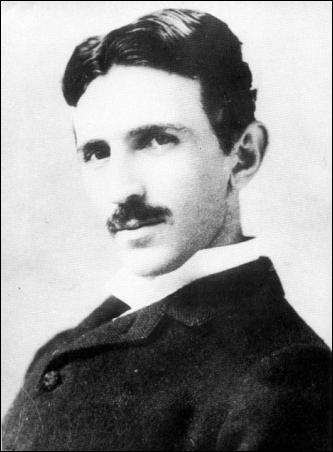
                Nicola Tesla

    INTRODUCTION


    The main topic of economics should be economic growth and development, “the nature and causes of the wealth of nations.” (Adam Smith)


    The main questions are:


    How do capitalist economies grow?

    What is the relationship between economic growth and economic development?

    What is innovation and its relationship to economic development?


    ECONOMIC GROWTH


    Economic growth is the growth rate of total output, usually measured by real Gross Domestic Product (GDP). Total output is not measured directly. Sales (nominal GDP) are added up and the growth rate calculated. The inflation rate is calculated separately and subtracted from the growth rate of nominal GDP. What remains is the growth rate of real GDP.


    Between 1950 and 2000, the U.S. economy (real GDP) grew at about 3.5% per year. Since 2000, with two recessions, the growth rate has been around 2.0% per year. Even the recovery from the 2008-2009 recession has been only somewhat above 2.0%. 


    Small changes in compound growth over time leads to large changes in total output and real income per person. Between 1950 and 2000, real GDP increased over four times. Real GDP per person increased about three times. Real GDP per person rose from $16,000 in 1952 to over $50,000 in 2000. If the growth rate since the 1950s had been 2%, real GDP would not have increased four times until 2020, a generation later. 


    At 3.5%, it takes about 20 years for real GDP to double; at 2%, it takes about 35 years. If the US economy had grown at 2% rather than 3.5% since 1950, income per person by 2000 would have been $23,000, not $50,000. Real standards of living would have been substantially lower during this whole period.


    But that is only part of the story. What if there had been no technological innovation since the 1950? The average American today would have had the income to buy three 12-inch black and white TV sets with six channels, three encyclopedias, and three rotary dial telephones. No air-conditioning. Virtually none of today’s health care and pollution control technology. Ten year shorter life-spans. No home computers or the Internet or cell phones. And the real cost of most goods available in the 1950s, in terms of hours worked needed to buy them, would have been  higher than today. 


    ECONOMIC DEVELOPMENT


    It is innovation, summarized as economic development, which is the driving force behind economy growth and higher standards of living.


    Every day millions of people go to work with one thought on their minds. How to disrupt the status quo. Why? To increase sales and profits. And their income.  How?


    • Do it new. Start a new company. Develop a new product in an existing company.
    • Do it better. Manage or organize the company better. Reduce unit costs.
    • Do it different. Develop or buy new technology. 


    Much of competition is creative disruption. It is this collective behavior that is responsible for most of economic development today, and its consequence, economic growth tomorrow.


    MATURE COMPANIES 


    Most companies, products and services grow near the average growth rate of the economy. This is especially true of consumer product companies. They are mature companies with established or dominant products and services. Mature companies include most large corporations. Market or industry structure tends to be oligopolies, markets dominated by a small number of companies.

    Growth in demand for the products and services of mature companies depends mostly on growth in total real income, which is equal to the growth in real GDP. Real income and real GDP can grow when the prices of existing products and services fall. Consumers have more income to buy products and services. 


    Typical corporate strategies of mature companies are advertising and marketing of brand names, increasing productivity and reducing costs, extending product lines and developing market niches, and acquisitions. Much of their behavior can be described by conventional economic theory and business management ideas.


    This part of the economy can be describe by diminishing returns to investment and production, shifting demand curves, flexible prices, and movement towards market equilibrium. But diminishing returns is a short-run concept. In the longer run, a mature large company with dimishing returns is often overwhelmed by innovation from other, often newer companies. Successful new companies experience increasing returns (fall in unit costs as production increases) in the production and sale of new products. New large companies are created, often becoming the dominant companies of a transformed industry. Older companies may continue to exist but often smaller in size, less market share, or merged with or acquired by another company.  


    Mature companies rely mostly on growth in aggregate demand and cost savings partly from productivity gains, which depends on innovation in inputs from the capital goods and services sector.


    INNOVATIVE COMPANIES


    Successful innovative companies drive economic development. They are started to create new products and services, new production systems, develop new markets. Some innovative companies improve on existing technology (“useful knowledge” applied to develop material goods and services), put existing technologies together in new ways, or develop new applications. They develop potential demand. Many experience hypergrowth (high exponential growth), many times greater than the average growth of mature companies. 


    Corporate strategies include continuous innovation with high levels of research and development. Industry structure is fluid. They create new supply networks, which in turn leads to more innovation.


    Innovative companies create demand, which is part of the innovative process. Innovative companies must convince potential customers or consumers of the value to them of the new product or service. They show potential customers and consumers how to use the new product or service. At first, they often offer primitive products or services at high relative prices. But continuous improvement and follow-on innovation, economies of scale, new skills and knowledge of employees, and learning curves among both customers and producers change products and services offered and drive economic growth. 


    The success of an innovative company partly depends on its ability to exploit existing “enabling” networks, capital equipment, and supply networks. These, in turn, exist because of past innovation, past economic development. 


    There are whole sectors of a modern economy in which companies compete primarily on the basis of continuous innovation. The capital goods sector including most of information technology provides much of the new production and control technology to the rest of the economy. The pharmaceutical sector including biotechnology contains over thousands of companies developing new drugs and medical equipment. The entertainment industry must constantly produce new content. The telecommunications industry, a vital “enabling” network, continues to rapidly upgrade and replace systems with new technology from semiconductor and related industries.      


    Prior success in economic development prepares an economy for current development. The opposite is true. England, which began the Industrial Revolution, did not keep up with the latest innovations in new industrial products and mass production in the late 1800s and early 1900s. In 1930s and early 1940s, English scientists and engineers developed jet engines, computers, radar (microwave), and penicillin. After WWII, the structure of DNA was discovered in England. But England did not have the industrial capacity and know-how to develop and mass-produce new products from these technologies. England’s attempts to develop a civilian computer industry and a civilian jetliner industry failed.

    England was forced to share the new technology with the United States in WWII so they could be mass-produced here. Developing the new technologies created Boeing and the aviation industry, IBM and the computer industry, Pfizer and the pharmaceutical industry, the modern telecommunications industry, and the American biotech industry. It was Americans who first benefited from all this invention, who experienced rising standards of living because of innovation and economic development.


    INNOVATIVE COMPANIES AND ENTREPRENEURS


    This is a stylized narrative of the path of economic innovation, the dynamics of the economic system. The resulting economic structure is oligopoly. The supply network is characterized by bilateral oligopoly (oligopolies on both sides of a market).


    Innovation begins with public knowledge, often scientific or mathematical discoveries that do not seem to have any practical application.  Imaginary numbers, general equations of electromagnetism, the Second Law of Thermodynamics, E=mc**2, the structure of DNA, the conductivity of solids, and many other recent advances in knowledge.  Eventually, scientists, engineers, inventors, and entrepreneurs begin to see possible commercial, profitable applications of this scientific knowledge.  Then entrepreneurs begin to see possible commercial (profitable) development of the resulting technology.  Because of the uncertainty of how the technology would meet potential wants and whether it will be profitable, usually many companies try to develop different versions and applications of the technology.  


    Much of the work is in engineering, production planning, design, distribution and educating potential customers. Often much of the innovation includes exploiting existing “network” technologies, such as transportation networks, electrical grids, mass media, telecommunications, or the Internet. 


    Most of the early companies go bankrupt.  A few companies successfully develop different niches of the potential market, successful variations of the basic technology.  In the past, higher transportation and information costs might limit the geographical reach of any one company, allowing local and regional companies to succeed.  As distribution and information costs come down and new production technology leads to economies of scale, a few of the innovative companies take over a large percent of a wider, growing market. Many large companies are now global and are called multinational corporations (MNCs).


    Typically, no one version of the technology gives the best benefit/cost ratio to all customers or consumers.  Companies do not compete directly. There is no industry demand curve. Differentiated products or services aimed at developing different segments of the market lead to an oligopolistic structure of the market or industry. Unit costs fall; quality improves. Total demand increases.  Each company attempts to develop and protect proprietary information, be it better engineering, more efficient production, brand names, patents, as the basis for growth in market share and economic profit. 


    But with time, patents expire, engineers and managers leave existing companies to start their own companies (an important source of continuing innovation), products are “reverse engineered” or imitated, and “industrial espionage” diffuses knowledge. Proprietary information leaks out to other companies such as when large companies transfer operation and technology to other countries. With standardized products and slowing innovation, economic (above average) profit begins to disappear.  Products become commodities, meaning customers or consumers choose mostly on the basis of price. Market structure and market shares tend to stabilize.  New companies might enter to better serve a specialized niche of the market.  Some are acquired by large companies with declining internal investment opportunities; some replace existing companies as one of the dominant companies.  The overall structure remained oligopolistic, often with the distribution of company size represented by a relatively stable power law.


    Another source of diffusion of knowledge and structural stability is that companies providing inputs, often large capital goods or IT companies, offer standardized machinery, production systems or information technology to all existing corporate customers.  Innovative solutions to a problem of one customer are now available to all. Capital goods companies are crucial to continuing innovation since this is how they compete. But now inputs embodying innovation are available to all.


    This is part of a more general process where technology and information become widely known.  Much of the change in an industry is in cost reduction, relatively minor product changes, and marketing.  Rates of return on new investments approach the company’s cost of capital. Diminishing returns on new investment has set in.


    Often, a new round of basic innovation begins. New companies, often outside the industry that innovated in the past, typically drive replacement technology.  Existing large companies have large investments in existing technology and much of the firm-specific knowledge is based on this technology, existing distribution channels, a large customer base, and existing marketing strategies.  One should also not underestimate internal resistance to major change in any large organization, especially if the company has a long history of profitability and market dominance.


    So the innovative process continues.  No company, no matter how big and how profitable, is immune from attack.  Think of General Motors (Toyota), Toyota (Hyundai, Kia), all auto companies (Tesla), the old AT&T (MCI, Nokia), IBM (Intel and Microsoft, Dell), Sears (Walmart), Walmart (Amazon), U. S. Steel (Nucor), RCA (Sony), Sony (Samsung), Eastman Kodak (Fuji, digital cameras), Xerox (Canon), Polaroid (digital cameras), Nokia (Apple), and many others. New, large companies based on new or improved technology appear. Old industries are transformed and new industries created. But the dominant industry structure remains oligopolistic.


    SUMMARY


    Economic growth and higher standards of living are functions of economic development. Economic growth is driven by:


                Current technological and organizational innovation.

                Past technological and organizational innovation.


    Organizational innovation is partly driven by innovation in information-handling technology and systems.


    Development can be seen as a consequence of generating new technology that entrepreneurs use to start new companies. 


    Innovation creates disruption. A major macroeconomic and political problem is how to reduce the personal and social costs of this disruption. Artificial intelligence and robotics may create more economic and social disruption in a shorter period of time than any innovative technology in the past.


    Most companies, most divisions of companies, most product lines grow about at the same rate as the national economy. They can be described using traditional economic theory and business practices. But it is the innovative companies that provide future growth, new products and services, and new processes. They cannot be described using traditional economic theory.


    Most companies grow because of a growth in demand. Demand, in turn, is mostly a function of a growth in real income. Growth in total real income is equal to the growth rate of the national economy.


    Organizational innovation depends partly on technological innovation in electronic communications and information technology. Historically, the processing of data and information was a major bottleneck to the expansion of large corporations.


    Reduction in unit cost, increasing returns to scale, depends on increases in productivity (greater output per unit of input). Economic growth, and economic growth per capita, continues as long as innovation (economic development) overcomes diminishing returns to investment and production in existing technologies. A key role in the process is continuous innovation in the capital goods sector. Capital goods companies, including information technology companies, compete on the basis of reducing costs, increasing productivity, increasing capacity, and customizing applications for their corporate customers. 


    ======================================================

    CASE STUDY:


    A CAUTIONARY TALE:  ENGLAND AND THE INDUSTRIAL REVOLUTION


    England, more than any country, started the Industrial Revolution in the late 1700s.  And for over 150 years, England continued to discover new products and technologies.  Yet England eventually fell behind the United States and Germany in technology and economic growth.  What happened?


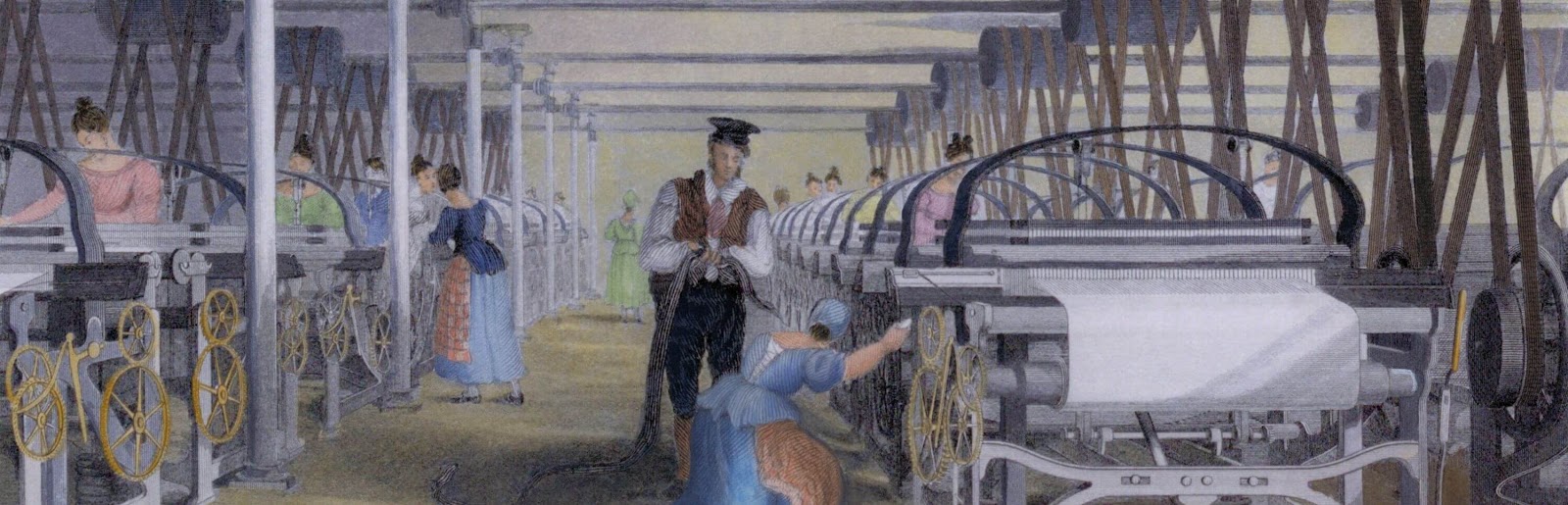
    The seeds of England’s relative economic decline were there right at the beginning.  Millwrights, mechanics with specialized knowledge of how to build wool and cotton mills and their machinery, felt frustrated because they seldom became part owners and couldn’t find financing to start their own mills.  Some illegally emigrated to the United States and France. Much of the early American textile mill technology was due to English immigrants. The first cotton spinning mills were designed by an English millwright (Samuel Slater) financed by a Providence, Rhode Island merchant (Amos Brown).  By the middle of the 19th century, American cotton mills were more efficient than English mills; much of the venture capital for the industry was provided by Boston merchants.


    England (actually, a Scot) developed the modern steam engine.  Later, the improved high pressure steam engine was developed at almost the same time in England and the United States (by Oliver Evans). This engine was critical to the development of railroad, steamboats, and later steamships. The first general purpose railroad was completed in England in 1830.  The first railroad locomotives in America were imported from England.  But within two years, American engineers and mechanics were modifying the English locomotive, making it more flexible and powerful. American railroad companies developed cheaper and faster ways to lay track.  By 1860 over half the world’s track was in the United States and America was exporting railroad expertise and equipment.


    Already in the 1850s, English engineers were alarmed by superior American production techniques. England began to fall behind the United States and Germany in the 1870s, at the start of the “Second Industrial Revolution.” Part of the problem was the inability of England to stay ahead in its dominant industries.


    The rapid mechanization of the textile industry displaced British exports as British firms failed to switch from the jenny or mule to the new, faster and cheaper technique of ring-spinning. By the end of the 19thcentury, the average American cotton spinning mill’s labor productivity was 30% higher than the average English mill. England would eventually lose one of its largest export industries.


    British machinery firms such as Platts exported the new automatic looms to Japan and other countries but failed to find buyers in the home market. By the 1930s, Toyoda (later Toyota) of Japan had improved Platt’s technology to the point where Toyoda was exporting power looms back to England.


    Coal mining was a major industry in England but productivity began to fall until output per head in British coalmining was only half of that found in the American coal industry by 1914.


    Richard J. Evans, The Pursuit of Power:  Europe 1815-1914, 300.


    England invented the two ways to produce large amounts of cheap steel. The inventors licensed the processes to both English and foreign companies.  One purchaser was Andrew Carnegie, a Scottish immigrant in America.  Within thirty years, America was the world’s low-cost producer and produced over half the world’s steel.


    This had profound economic consequences.  Large amounts of cheap steel were crucial to the development of better machine tools, better railroads, skyscrapers, and automobiles.


    An English chemist discovered the first synthetic dye for cloth, the basis for the modern chemical industry.  But the development of the synthetic dye industry occurred in Germany.  It was the basis for the world dominant German chemical industry. German companies went on to discover and develop new chemical products, including high explosives that gave Germany a decided edge in artillery in World War I.

    Germany and the United States developed the new technologies of electrical equipment.  America dominated the global production of automobiles. Ford was the largest auto assembler in England. By 1900, the United States had replaced England as the largest economy in the world.

    The radio was invented and first exploited by an Italian immigrant in England.  But the radio industry was developed in the United States by a Russian immigrant (David Sarnoff) using the financial resources and patents of four of America’s largest corporations.  It was a short technological step to develop television and computers, which originally used radio vacuum tubes manufactured by RCA. 


    The structure of DNA was decoded in England.  Yet there were no English equivalents of Amgen, Genentech and the hundreds of other American biotechnology companies.


    In World War I, England first developed and deployed the tank.  But its further development, and a strategy for modern warfare built around the tank, was done in Germany. In 1927, the English army spent more money on hay for horses than fuel for tanks. In 1940, England paid the price as German tanks destroyed the English army.


    Before and during World War II, England discovered or developed a host of important new technologies – penicillin, radar, computers, jet engines. But England did not have the resources or technology to improve and mass produce these products.  Knowledge of all four was shared with American companies during World War II and became the basis for large new American industries.


    Losing technological and economic leadership can have serious consequences for a country’s political and military power.


    I think the point is clear. Inventing a new product or process does not lead to economic leadership or economic growth if the country does not have the intellectual, productive, organizational, and financial resources to develop them. England did not start engineering, scientific and technical schools as did the U.S. and Germany; there was no English equivalent of MIT or the German scientific research universities. English companies could not match the R&D labs of AT&T (Bell Labs), GE, du Pont, IBM, and RCA. In England, engineers (lumped together with mechanics) and entrepreneurs (often from dissenting religious groups or minority groups) were considered social inferiors. “Venture capital” (except for the railroad investment craze in the 1840s) went into trade financing and overseas investment rather than risky new industrial enterprises.


    =========================================================


    EXTRA CREDIT


    ECONOMIC GROWTH, DEVELOPMENT AND ECONOMISTS


    Almost all the great economists – Smith, Ricardo, Malthus, Mill, Schumpeter, Keynes – believed that a capitalist economy was unstable, cyclical, or would reach a point where per capita income would stop growing. For Schumpeter and Marx, economic resources would become increasingly concentrated into fewer corporations. Either the economic system would collapse (Marx) or probably become socialist (Schumpeter). 


    What kept this from happening, why capitalist economies continue to grow and increase people’s standard of living over long periods of time, is innovation. Marx and Keynes had glimpses of the long run growth and development possibilities of industrial capitalist economies. Marx commented that the English economy he studied for over 30 years had changed (developed) and that at least part of the working class was becoming better off. Keynes saw a potential future where compounded economic growth would lead to higher standards of living and more leisure. But these insights had little influence on economic theory, political economy, or economic policy.

  • The Roman Republic and America

    The Roman Republic and America


    The Pantheon


    Remember, Roman, that it is yours to lead other people. It is your special gift.

        Virgil, The Aeneid


    We are the indispensable nation.  We stand tall.  We see further into the future.

        Former Secretary of State Madeleine Albright

    A Roman General Comes to Washington              


    Imagine an educated patrician Roman officer from around 20 BC. He has spent most of his military career in the last decades of the Roman Republic and now is a legion commander in the first years of the Roman Empire of Caesar Augustus. Rome is at the height of its power and influence, acquired through conquest during the Roman Republic. Now imagine he is transported through time to today’s Washington. After marveling at the new technology (horseless chariots?), like any curious tourist he would start to look for similarities to his hometown, Rome.


    The similarities would not be hard to find.  Both cities have a Capitol Hill. Both have a Senate building for senators to meet and debate. But, as he would predict, foreign policy was in the hands of the executive, who was similar to the elected consuls during the Republic and Caesar Augustus in the first days of the Empire.


    The Washington Mall would remind him of the Roman forum; even the architecture of the surrounding buildings would look familiar.  He could read the Latin above their entrances. As he toured Washington, he would notice that the monument to a founding father, the Jefferson Memorial, was styled after the Pantheon.  He would see a statue of George Washington dressed (improperly) in a toga, handing in his resignation as general of the army. Our legate would immediately recognize the model from Roman history – Cincinnatus. He would not be surprised to learn an organization of Washington’s officers was called the Order of Cincinnatus.


    He would be curious about Christian churches. But he would understand the service if it were in Latin or Greek (educated upper-class Romans were taught Greek). The layout of large churches would be familiar since they were based on the Roman basilica. But he might wonder what happened to the many religions tolerated by Rome. 


    The Roman concept of citizen was still alive. Even compared to the Republic, American citizens had more say about who ran the Republic. Yet he knew that the institutions of the republic and the rights and obligations of Roman citizens under the Empire had been “hollowed out” by the Caesar Augustus.


    The role of law was just as important to Americans as to Romans. Americans were just as quick as Roman citizens to sue each other, hire lawyers and go to court. Cicero, who made his reputation as a lawyer and orator, would have loved it. Even the legal code contained elements from the Roman law compiled by Justinian. 


    He probably understood the American Constitution. It was somewhat similar to Rome’s 12 Tablets. After overthrowing a foreign king, the Romans wrote down their basic laws and outlined their form of republican government. The republic’s government was later described approvingly by a Greek historian named Polybius. He emphasized separation of powers, checks and balances to limit despotic power, and the role of the people. His writings greatly influenced the founding fathers. Many of them, including Jefferson, Hamilton, Adams and Madison, read Polybius. At the Constitution Convention, many of the delegates cited or read passages from Polybius. None more so than James Madison, who wrote the first draft of the Constitution. 


    But the federal government’s sharing of power with the states might have puzzled our Roman. Rome shared some power and privileges with Italian cities they had conquered. But provinces were ruled by Roman governors appointed by the emperor. In the republic, all power was centralized in the government in Rome. In the Roman Empire, all power and decision-making were centralized in the Roman emperor. 


    He would probably be amazed by the size of the Pentagon and the CIA headquarters. But he would understand what they meant – that America was a world power and needed a large bureaucracy to manage its far-flung armed forces. Maintaining, improving and using military might was obviously an important function of the American government, as it was in Rome. 


    As he read recent American military and foreign power history, he would see another parallel to Roman leadership. For hundreds of years, Roman historians described “barbarians” in the same stock phrases. Roman leaders had such faith in the superiority of Roman legions that they felt they did not need to know anything about potential enemies. Of course military commanders like our general would have local knowledge along a small part of a frontier but it never translated into a general strategy. One consequence was that the Roman army, at the height of its power, suffered two of its most disastrous defeats when it crossed a frontier and fought a little-known enemy in hostile geography (dense German forest and arid Middle East desert). In both cases, local commanders pleaded with the commanding consul not to advance. To no avail, Roman armies were annihilated.


    The same has been true of American political and military leaders. Their combination of reliance on superior firepower with ignorance and arrogance led to disasters in Vietnam, Iraq and Afghanistan. They did not read Roman military history and ignored the main lesson of the American Revolution. (For a discussion of how the American rebels won the American Revolution, see my post Revolution and the New Country:  America History, 1755-1790.)


    He would also understand much of the national symbolism.  No one would have to explain to him what the eagle on Air Force One signified; it meant the same thing as the eagle standards Roman legions carried into foreign lands. He could even understand the important Latin quote on American money, since it came from a famous Roman writer describing a source of Roman greatness. The American pledge of allegiance was similar to the military salute in the Roman army.


    As he studied maps and learned more about the United States, he would realize two other similarities. The United States, like Rome, was a world power (Rome’s world was the lands surrounding the Mediterranean and western Europe) with military might orders of magnitude greater than any other state. Washington, like Rome, was the capital of this imperium. But there was something odd about both cities. They were upriver on a minor river, not even a major port. They were not economic centers, cultural centers or even militarily important. They were political centers that depended on drawing in immense resources from the territory they controlled. And both had a psychological border that separated them from the surrounding territory – the sacred pomerium for Rome and “the Beltway” for Washington. The world was different, the thinking different, inside this border compared to outside.


    He would probably be amazed at America’s political institutions and how democratic they are. Although all free adult males in the Empire would eventually be given citizenship, no one was under any illusion that all power and decision-making didn’t rest with the Emperor. But he read Roman historians and was likely descended from one of the ancient political families that helped to rule the Roman Republic for centuries. It is possible he was pleased that the peaceful transfer of power still existed in the American republic. 


    Like Romans, Americans believed they were spreading a superior form of “civilization” throughout the known world. Both Romans and Americans believed they were “exceptional,” and had an obligation to spread their particular ideas and institutions abroad.


    Like America’s founders, he could draw imperfect parallels to the history of the Roman Republic. Those who ran the country tended to be the educated elite. The Senate was made up of individuals far wealthier and better educated than the average citizen. There were professional politicians, of course, and even political clans. But like imperial Rome, smart, ambitious (and in Rome’s case, often ruthless and brutal) men from the provinces could aspire to become Emperor.


    Finally, he would ask the question that many Romans asked themselves in the first century BC.  Could Rome be both a republic – could it keep its republican institutions and civic virtues – and also be an imperial power?  Could America?  In Rome’s case, the answer was no. Its republican institutions were too weak, weakened by incessant civil war, violent internal conflict and taking power away from citizens, plebeians, and their tribunes. So far, in America’s case, the answer is yes, but with significant changes to its government and stresses to its society. But then, the Roman Republic lasted for about 500 years and was an expanding military power over much of this period. The resulting western Roman Empire lasted for another 450 years and the eastern part (Constantinople) another 1,000 years after that.  The American imperium only began in 1945, a mere 80 years ago. It’s too early to answer the question.


    But we can ask how well America has managed its role as a world power and what are the risks to that power.  The history of Rome may provide some clues. Maybe we can learn to avoid some of Rome’s mistakes. Maybe we can learn from some of Rome’s more successful policies. Even if comparisons are highly tentative and imperfect, maybe this exercise will give us some different perspectives on American power.


    From the last decades of the Roman Republic leading to the Empire:


    The patrician Senators had grown very rich. They became corrupt, decadent, and greedy. They fought among themselves to obtain offices and appointments as provincial governors that would yield great wealth. They abused the law to dispossess citizen farmers in Italy, seize the land, and put together large plantations worked by slaves and landless farm laborers. 


    The poor and unemployed of Rome grew rapidly. Their grievances were taken up by demagogues who challenged the power of the Senate. The Senate was temporarily forced to share power with the plebeians’ tribunes. Demagogues were assassinated. Senators or their supporters attempted to co-op or corrupt the tribunes.


    Mob violence by both sides and assassination were common political methods. Politicians hired gangs to intimidate opponents.


    As Rome fought to become an empire, the Roman army transformed from a part-time citizen militia to a large full-time army with well-trained, long-serving volunteer soldiers. Many of the legions were raised and paid for by politicians or generals. Legionaries became more loyal to their generals than to Rome. Generals like Marius, Sulla, Pompey, and Julius Caesar fought to defeat Rome’s enemies and conquer new territory. They also wanted political power and control of Rome. Two of them, Sulla and Caesar, led their legions into Rome itself and assumed political control. Marius and Sulla fought to control Rome, as did Pompey and Caesar. All except Pompey declared their political enemies as outlaws and instituted a “reign of terror,” killing thousands of Romans including many senators. In the end, Caesar declared himself Dictator for life and controlled Rome until he was assassinated. His grand nephew and heir completed the transformation of the Republic into the Empire.


    Corrupt and venal Senators, corrupted or demagogic tribunes, mob violence, political assassinations, generals using their legions to fight each other and conquer Rome. Decades of violence and chaos in Rome. This is what the last decades of the Republic were like.


    America and Rome


    Later Roman historians and commentators lamented the passing of the Republic and its grounding in ideals of civic virtue (sacrificing individual ambitions for the good of the country), citizenship based on independent farmers, law, checks and balances of political power, and popular elections. Both Rome and America thought they could erect political and legal institutions to contain selfish behavior dangerous to the republic. James Madison, a keen student of the history of the Roman Republic, was acutely aware of this problem when he wrote and submitted the first draft of the Constitution. Madison, like the other “founding fathers,” believed that survival of the new republic depended on the “civic virtue” of its citizens, exemplified by Washington. But Madison also knew, from reading Roman history and his experience in American politics, that he could not count on future American leaders to be as virtuous and selfless. So he constructed the Constitution, with its separation of powers, to protect the republic from tyrants, oligarchs, and demagogues with unbridled ambition. He also supported (at first reluctantly) and helped pass the Bill of Rights to protect individuals from the arbitrary power of the state. Or a man who wanted to be a tyrant. 


    In Rome’s case, military and political expansion, the increased wealth of the powerful political elite from the conquered provinces, and the personal ambition of powerful military/political leaders overwhelmed the republican institutions of Rome.


    I doubt if anyone considers the U.S. military a threat to democracy. But there are other effects. One is that American foreign policy makers, like those of Rome, rely heavily on the use of military power to solve problems. They ignore the lessons about the limits to military superiority found in the American Revolution and Vietnam. Military victory can unleash local resistance and “endless wars,” the kind Rome fought along its many frontiers. And there are domestic consequences. As the advantages to America seem to be lessening, there are again calls for isolationism.


    And the cost. Because the U.S. attempts to project global power, the U.S. military is expensive, the largest single item in the federal budget. (Maintaining Rome’s legions was the largest item in Rome’s budget.) This year’s military budget is around $950 billion; total national security costs over $1 trillion a year. American politicians and taxpayers refuse to pay the price of global power. Instead, this year, and in many prior years, the cost of the military was paid for with borrowed funds. The size of the national debt grows. The United States is financing its military and foreign power with a credit card. Many of the lenders are foreign institutions, including foreign governments.


    The global political structure America put into place after World War II seems to be under increasing domestic attack. Nationalist economic policies like increased tariffs and other restrictions on global trade are increasing.


    America may not be able to managed its accumulated debt in the future. The national debt is growing larger and faster than the economy, because of the government’s continuing inability to tax Americans to pay for both domestic welfare and global military dominance. This may be Paul Kennedy’s “imperial overstretch.”


    The second concern is the new definition of national security. National security now includes “homeland security.” Domestic security policies challenge individual privacy and liberties, the rule of law, and civil liberties. Again, these are fundamental to the functioning of American democracy.


    ======================================================================

    Cicero was the last great defender of the Roman Republic. Here he is denouncing the generals, patricians and demagogues who were subverting the Republic. In his view, they were committing treason against the republic. Cicero was proscribed (declared an outlaw with a bounty on his head), hunted down and murdered by a Caesar Augustus assassination squad.


    “A nation can survive its fools, and even the ambitious. But it cannot survive treason from within. An enemy at the gates is less formidable, for he is known and carries his banner openly. But the traitor moves amongst those within the gate freely, his sly whispers rustling through all the alleys, heard in the very halls of government itself. For the traitor appears not a traitor; he speaks in accents familiar to his victims, and he wears their face and their arguments, he appeals to the baseness that lies deep in the hearts of all men. He rots the soul of a nation, he works secretly and unknown in the night to undermine the pillars of the city, he infects the body politic so that it can no longer resist. A murderer is less to fear. The traitor is the plague.”


    Marcus Tullius Cicero


    ============================================================


    For background, see The Roman Republic Commits Suicide


  • Religion and American Politics:  A Historic Perspective

    Religion and American Politics: A Historic Perspective

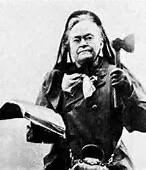
    Carrie Nation – Prohibitionist


    RELIGION IN AMERICA

    There is an interesting dynamic in
    the history of Protestantism in
    America.  As different
    Protestant churches became the “established” or mainstream churches, many Americans turn away to form and join more evangelical or Pentecostal churches and
    sects. This began in colonial America. Following the spectacular success of itinerant evangelical preacher George Whitefield in 1740 (the first Great Awakening), the evangelical New Light movement and independent itinerant preachers swept America. They challenged the established (tax supported) churches with emotional appeals for salvation. Although the fervor died down in the 1750s, it never disappeared.

    The large and sudden popularity
    of Baptists and Methodists in the first half of the 19th century was a revival of the reaction to the less fervent Puritan (Congregational) and Episcopal
    churches.  As Methodist and some Baptists
    groups became less evangelical and more “mainstream,” there were numerous
    breakaways to found evangelical, enthusiastic and Pentecostal churches.  

    America has a long history of itinerant preachers and camp meetings. Enthusiastic preaching, as opposed to fixed
    liturgies and long, rational sermons, can now reach national and international audiences
    through mass media.

    Competition in the religious
    marketplace, the lack of one dominant religious group or “established” church after the Revolution, is one reason for the enduring important role that religion
    plays in American life. 
    America is the exception to the general tendency that as Christian
    countries experience rising income, religious participation and influence declines. It is only recently, as many 
    evangelical groups ally themselves with far-right political positions and politicians, that religious participation may be declining.

    RELIGION AND
    POLITICS

    Religion, and religious-based
    morality, has played an important role in American politics.  Bernard Bailyn, in his classic Ideological
    Origins of the American Revolution
    , documents the increasingly radical
    anti-British sermons of Puritan ministers. 
    Revivals, “Great Awakenings,” and evangelical Protestantism have been
    part of the American landscape as far back as the wildly popular colonial
    preaching of the itinerant George Whitefield. 
    The “Great Awakening” revivalist crusades of Charles Grandison Finney in
    the 1820s and 1830s along the
    Erie
    Canal
    , whose book on how to
    organize a religious crusade influenced Billy Graham, led to the belief that
    the second part of being “reborn” was to fight to reform society. He supported many of the reform movements of the 19th century. Many believed a reformed Christian society would hasten the Second
    Coming. 

    Finney’s followers and Protestant
    ministers became key figures in many of the reform movements of the 19th
    Century, including suffrage (women’s right to vote), abolitionism (abolishing
    slavery), temperance (volunteer not drinking of alcohol), and a whole host of
    religious-based groups to fight immorality and reform society.  More recently, one thinks of the Civil Rights
    Movement led by black ministers. 

    But religion can also be used to
    justify racism, prejudice, and reactionary political movements. Colonial established churches believed that women should be silent on religious matters.

    Defenders of slavery, including Southern
    ministers, often quoted the Bible to justify slavery. Prohibitionists in the 19th Century were
    not above blaming much of the “immorality” of the times on Catholic immigrants,
    especially the Irish.  The same
    religious-influenced populist movement has been used against the teaching of
    evolution in public schools.

    By historic standards, the United States has been a radical society.  All areas of life are always changing,
    including movement, social mobility and immigration.  In an earlier post, I summarized this
    dynamism as “permanent revolution.” It is not surprising then that at any given time, many people feel threatened or
    morally repulsed by 
    some aspects of social and cultural change. The long-held belief that power and status in America belonged to white, native-born Protestants continues into a more diversified society.

    Times of heightened social or cultural change, such as the forces
    unleashed in the 1920s or 1960s, and recently, seem to lead to a political backlash to slow
    down or criminalize new types of behavior. There is often a moral or religious basis to this backlash.

    Sometimes it is difficult to tell if religion’s influence is progressive
    or reactionary.

    Social change has political
    consequences.  Civil rights for blacks
    led to the political issue of affirmative action.  The changing role of women in American
    society led to political issues like birth control and abortion.  Legal tolerance of homosexuality led to the issue of gay marriage. 

    Religious-based moral reform
    groups are single issue groups that are outside the political structure but attempt
    to influence public policy and law.  They
    are willing to use the coercive powers of the state to impose their moral and
    religious beliefs. They become political
    pressure groups. 

    Like today, reform movements first
    had success at the local and state levels before their reforms were adopted at
    the national level.

    In the 19th Century,
    there was a widespread belief that Christian-based social reform would hasten
    the Second Coming.  Some conservatives today
    believe that American society has become so evil that it will lead to the
    Second Coming.   Michele Bachmann all but
    called President Obama the Anti-Christ and predicted his policies were leading
    to the “end of days.”  This
    type of rhetoric is not new.  Puritan
    ministers like Cotton Mather were constantly berating New Englanders for the
    “declension” (decline) of Puritan orthodoxy and looking for signs of the Second
    Coming.  He supported the Salem Witch
    Trials as a tool to stop the spread of the devil’s influence, and only changed
    his mind after dozens of witches (and one Puritan minister) were burned at the
    stake. (In a typical
    New England coincidence, the interrogator at the Salem Witch Trials was the
    grandfather of Nathaniel Hawthorne.) 
    Many people in
    America see moral decline as the most important issue in American
    politics.

    With the increased influence of
    fundamentalism in American religion and culture, maybe the idea of Armageddon
    has become a mental reality for more Americans.  There seems to be a
    lot of Armageddon movies in the last few years.  Just as Martin Luther
    called
    Rome “the whore of Babylon,” many Americans seem to think the same way about Washington.  They see presidents and other elected politicians who support laws and programs they believe are evil.  Not wrong, but evil.  There can be no
    compromise with evil.  Arguments about reasonableness, tolerance, fairness, rule of
    law, democratic process, fall on closed ears and minds.  Opponents are demonized.

    Americans have had a strong tendency to see social problems as moral
    issues.  Social issues usually have a
    strong component of religion-based morality.  Drugs is a current
    example.  Punishment for illegal
    behavior, not reduction of usage or social costs, is the preferred policy.  Until recently, only libertarians and most
    economists, two notoriously materialistic and overlapping groups, disagreed. While some marijuana use is now legal, America has been racked by waves of illegal drugs use over the last six decades. Not even the wave of opioid and 
    fentanyl drug deaths among young, male, white Americans has changed national opinion.

    Over the last 60 years, we have
    become a much more tolerant society. This has angered a lot of people,
    especially older white, native-born Americans, the predominant constituency of
    the social conservative and the tea party movements. It has also contributed to 
    politicizing organized religion.


    Great preachers in the past – Whitefield, Finney, Moody, Sunday, Billy Graham – were institution outsiders. They were not members of a particular Protestant denomination. If they founded a physical church, it was independent. They understood how to use the mass media of the day. Aimee Semple McPherson, who founded the widely popular “Foursquare” megachurch in 1923 after a long career as an itinerant preacher in America and Asia, had her own radio license and had applied for a TV license just before she died.


    They did not identify or support any organized political group or party. They did not endorse political candidates.  But for the last 40 years, the Republican Party has made conservative Christians and their organizations an important part of their political base. Republican elected officials and candidates appear at religious conferences. Religious leaders and denominations take political positions aligned with the right wing of the Republican party.


    What will happen after Trump? The cooperation between some organized religious groups and religious leaders and the Republican party will probably continue. The legal barrier between the separation of church and state will continue to be challenged. Far-right politicians will continue to be speakers at national religious conventions.

    INTERNATIONAL IMPLICATIONS

    There are international implications to the political role of evangelical Protestantism. There are more Protestants in sub-Sahara Africa than in the United States. A large and rising minority of people in countries like BrazilGuatemala and South Korea have become Protestants.  Pentecostal groups have been particularly successful in Brazil and Guatemala, and among Latino immigrants to America. Protestants, predominately Pentacostals, make up over 25% of the population of Brazil. Jair Bolsonaro, the right-wing former president of Brazil, made Protestant evangelical groups an important part of his political base.  

    The number of Protestants is also rising among the ethnic Chinese throughout East Asia, including China. Evangelical religion is also an important influence in Korean politics. In the future, there may be a religious overlay to the interaction of internal politics and American foreign policy in Asia and in Africa

    CONCLUSION

    Political observers who assume
    that American politics is about rationality, economic interests, and compromise have
    underestimated the role of religious-based moral beliefs in politics. 
    Economic analysts, with their libertarian bias and cost/benefit rationality, are tone deaf to the moral aspects of political conflicts. Voters will ignore their economic interests
    if they strongly believe that government is supporting or protecting immoral
    behavior.

    In American history,
    religious-based moral movements have strong staying power.  They are sustained by deeply-held religious
    beliefs that determine political reactions to continuous economic and social
    change.  The current ones are not going
    away.


  • The Beginning of the Industrial Revolution in America

    The Beginning of the Industrial Revolution in America


    In the Beginning

    PRECONDITIONS OF THE INDUSTRIAL REVOLUTION IN AMERICA

    Before industrialization began in the 1820s, there was a set of political institutions and cultural values, mostly inherited from England, that encouraged profit-seeking individuals to start new companies.  They included fairly secure property rights, increasing legal limits on monopolies, an independent judiciary that enforced contracts, emphasis on individual rights rather than social obligations, patents, tolerance of markets, and less government regulation of markets than in the past.  Much of this was stated or implied in the Constitution; an activist Supreme Court under John Marshall extended these trends. The Constitution also helped to create a national market and reduce transaction costs by mandating a national currency and limiting states’ ability to make economic policy that favored their own residents.


    What America did not inherit from England was important. Unlike England, the new United States did not have a king and a landowning nobility to siphon off capital. Settled by members of dissenting sects and persecuted religious minorities, there would be no state-supported national religion. As a consequence, capital would not be diverted to royal palaces, aristocratic castles, or cathedrals.


    Economists interested in economic development often advocate land reform in a traditional agricultural society as a necessary first step to modernization. This breaks the power of the conservative landlord class. America did not have to go through this step. Laws were passed even before the Constitution that made free and cheap land available to everyone. America began as a nation of landowning farmers. Thomas Jefferson saw independent farmers as the foundation of a democratic society.


    By winning the American Revolution, the new United States retained from England the political policies and ideas that would encourage individual economic “striving” and reject most of the English institutions opposed to progress and change. America was fortunate that it created a political structure, a democratic society, and an ideology that would support the coming Industrial Revolution. 


    In the early period of industrialization (1820-1870), a rapidly growing population (from 3 million in 1790 to almost 10 million in 1820 to 30 million in 1860) created an increased potential demand for new consumer products. Western expansion generated an agricultural surplus of commercial crops that were exchanged for cash to buy manufactured goods. Exports of cotton helped pay for imports of machinery, locomotives and manufactured goods.


    These conditions together could encourage economic growth but not necessarily industrialization, the large-scale production of capital goods (machinery) and consumer goods using inanimate power (steam engines and waterwheels) to drive faster, more powerful machinery. For that to happen, mechanics, tinkerers, investors, and entrepreneurs had to invent, innovate and organize new finance, production, distribution and marketing methods. Economic development drove economic growth.

    THE BEGINNING OF THE INDUSTRIAL REVOLUTION IN AMERICA

    A key factor explaining why America industrialized so early and so quickly was the country’s continuing ties with England after the American Revolution. Americans quickly understood the profitable opportunities of the new production methods being created in England. Americans also had access to much of the scientific and technical knowledge being created and applied in England. Ambitious Englishmen with technical knowledge, like Samuel Slater the founder of the American textile industry, came to America because they had more opportunity here to get rich. Americans read English scientific and technical journals; often, American like Robert Fulton went to England to see the new methods and machinery. The future Baltimore and Ohio Railroad sent an engineer over to England to find out about English railroad technology even before England had completed its first general purpose railroad. American mechanics and engineers quickly adapted English railroad technology to the American environment.

    One reason industrialization spread was the association of entrepreneurs with investment capital looking for new profit opportunities with mechanics interested in designing and developing new power-driven machinery, especially metal-working machinery.  In the beginning, many of the machine tools and power-driven machinery could be built using traditional craft skills, using traditional materials like wood and hand (or foot) operated tools. The power sources to drive the machinery were not a problem. Waterwheels had been used for hundreds of years in Europe; steam engines could be imported from England. They would soon be designed, improved and produced in America.

    America’s wealthy merchant class was more willing than England’s merchant class to invest in new industrial ventures.  The exception was railroads. There were speculative railroad investment booms in England in the 1840s and 1860s. 

    There were inspired geniuses like James Watt in England and Oliver Evans in America who greatly improved the steam engine, which had been in use in England since the early 1700s. Then modifications and adaptations of existing power-driven machinery and machine tools like lathes often led to large increases in productivity of particular products. In one early example, an American axe manufacturer hired a mechanic to design and development a die forging machine to produce axe heads. His machine increased the productivity of a single skilled striker and an assistant from 12 to 300 axe heads per day. It was these kinds of innovations that drove the Industrial Revolution.

    Americans often surpassed the English in their ability to mass-produce products at a lower cost. American products were generally not as good as English products but their lower cost, plus constant improvement, led to a great deal of innovation and high growth rates. Americans developed a reputation of making it fast, making it cheap today and improving it tomorrow. 

                                                                                                                 
    LABOR

    There was no labor shortage for the factories and mines because of high birthrates, high rates of population growth, open immigration, and the use of women in the industrial workforce. This was also a high quality labor force with high literacy rates among native-born workers. Also, there were no entrenched guilds of craft workers to discourage introduction of new production techniques or influence the organization of work in the factories.

    ADVANCES IN RAW MATERIAL PRODUCTION

    The Industrial Revolution would have been a limited affair if not for the huge increase in the production of metals, especially iron. The new steam engines, machine tools, and machinery were made out of iron and other metals. Fortunately, much of the new production technology – smelting iron ore with anthracite (hard) coal or coke and puddling pig iron to reduce the carbon content for forging – had been worked out in England and Wales in the 1700s. Americans had access to or knowledge of this technology when the demand for iron skyrocketed after 1820. Entrepreneurs built larger furnaces, brought over the new Welsh technology of smelting iron ore with anthracite coal, installed steam engines to heat and blow air into the furnace, and recycled waste heat to raise temperatures. The result was a big increase in iron production at a lower cost per ton. The increasing production of iron for casting and forging eliminated a potential bottleneck to rapid industrialization.

    Large amounts of iron would be vital to the development of the railroad industry.

    TRANSPORTATION COSTS

    The single largest transaction cost at the beginning of the Industrial Revolution was transportation costs. High overland transportation costs because of long distances and rugged terrain limited the size of markets and made products expensive.

    These high costs were first attacked on a large scale with the building of canals, inspired by the spectacular success of the Erie Canal (fully opened in 1825). Overland transportation costs fell by about 80%. At the same time, steamboats on Western rivers reduced costs and permitted upstream navigation. America had the largest navigable river network in the world. Then, starting in the 1830s, came railroads, another new technology developed in England. Within two years, American mechanics and engineers were modifying English designs to match America’s harsher conditions. American companies began producing locomotives and other rolling stock. American railroad companies figured out how to lay down track quicker and at a lower cost than the better built railroads of England. This was an early example of the American business ethos – build it fast, build it cheap, get it up and running, generate revenue, then fix and improve it.

    Compared to canals and steamboats, railroads offered huge increases in total carrying capacity, year-round operation, lower cost, greater flexibility and reliability, and big savings in time moving goods, people, and information. The explosion of needed information to run a large railroad created serious management problems, to say nothing of trains crashing into each other. The problem was partly solved by the creation of the telegraph. Railroads financed many of the early telegraph lines, often strung alongside railroad tracks. 
    Railroads also pioneered the decentralization of operations management into divisions that suggested the organizational structure for later industrial corporations.

    Throughout the Industrial Revolution, America had by far the largest railroad transportation system in the world. It overcame large distances and supported western expansion. Railroads moved agricultural goods to urban markets and ports, and manufactured goods to rural areas. They were vital to the creation of a national market.

    THE SPREAD OF THE INDUSTRIAL REVOLUTION

    The thinking of Francis Cabot Lowell, a Boston merchant, was indicative of a new kind of mentality that was crucial to the success of the Industrial Revolution in America. He was a newly rich merchant looking for new investments. Lowell saw cotton textile production as an integrated system in one factory. He thought about how the different production steps could be coordinated in one, large mill to reduce handling costs and increase overall productivity. Lowell raised the investment funds from fellow Boston merchants to pay for the high upfront capital costs of constructing large buildings and textile machinery. He was the founder of America’s first large-scale manufacturing industry – cotton textiles. He is also famous because he went to England to steal the designs of power-driven looms.

    What mill managers and mechanics subsequently learned from experience was that whenever they increased the productivity in any part of the production system it created bottlenecks elsewhere in the system. Better, faster machines would then have to be designed for other stages of production. This would create new bottlenecks; the process was one of continuous improvement in the production flow.

    Back to the axe example. When die-forging machines made many more axe heads per hour, this created a serious bottleneck problem in the milling (or grinding) of the head into the right shape.  New power equipment was invented to plane (or sand) the heads faster than the old technology. This, in turn, put pressure on the methods to temper (or harden) the heads; innovative new specialized ovens were designed to increase the product flow and improve quality. This same process worked in all successful companies in all industries that adopted power-driven machinery.

    Americans like Thomas Jefferson, Eli Whitney, and the technically trained officers of the army realized early the potential of the mass production of interchangeable parts that could be fitted together quickly by unskilled labor to produce and repair guns. Interchangeable parts, when fitted together with other interchangeable parts, eliminated the slow and expensive need for hand filing and fitting to make metal parts fit together. It took over 30 years to make the system operational. It made possible the mass production of new metal products such as sewing machines, typewriters, and automobiles. This new manufacturing process was so radical that English engineers called it the American System of Manufacturing.

    The cumulative effect of this industrializing process was increasing productivity, higher volume of output, better quality and lower unit cost. This trend spread to other industries with the application of general-purpose machine tools to new uses. Itinerant mechanics adapted their knowledge and experience to modernize the production of new products. Techniques developed in one industry were often transferable to new industries. Success in one industry inspired entrepreneurs to apply the same methods in other industries.  This is how the Waltham Watch Company got started; the founder was inspired by a visit to the Springfield Armory, famous for the mass production of rifles. Sometimes this occurred in the same company; Remington went from producing guns to producing sewing machines to producing typewriters.

    At first, industrial products were familiar products just produced at a lower unit cost by power-driven machinery in factories. Examples included cloth, shoes, paper, nails, clocks, and guns. Lower prices had the same effect as higher income; consumers had money left over to buy more of other products. But as production technology advanced – new and more specialized machine tools, the mass production of steel and the ability to work new materials – it became possible to design and produce new, complicated metal consumer and producer durables. New production techniques developed, such as the stamping rather than the grinding of parts. This led to the mass production of the automobile.===============================================================

    For a general discussion of American history between 1789 and 1860, see


    A New Nation, American History from 1789 to 1860


    Compare the American experience with that of England:

    The Beginning of the Industrial Revolution in England


    For the limits of Adam Smith’s thinking in explaining the origins of the Industrial Revolution, see

    Adam Smith’s Pin Factory


    For an excellent example of an entrepreneur at the beginning of the Industrial Revolution in England, see


    Josiah Wedgwood, the Wedgwood Pottery Company, and the Beginning of the Industrial Revolution.

    For the story of how England lost its economic leadership, see 

    A Cautionary Tale:  England and the Industrial Revolution.

    For a list of all posts, see List of Posts by Topic.