There are two kinds of empires: the kind that rules through ruthless exploitation, and the kind that seeks to induce allies into defending themselves through economic incentives. (George Friedman)
INTRODUCTION
America’s power and influence in the world rests on three broad, interrelated bases:
1) Overwhelming military power that can be projected anywhere in the world, supplemented by security arrangements with allies and supporters.
2) A large, innovative, dynamic domestic economy as the basis for global economic and technological leadership. The economy provides the resources and technology to support the military and a global foreign policy.
3) Claims to moral and ideological leadership and influence, particularly the promotion of liberal democratic societies and supporting political institutions.
This post will discuss the economic aspects and related security objectives of American foreign policy. It will focus on the structure of the global economy that America created after World War II, America’s trade treaties and policies, and the interaction of America’s foreign economic and political policies. It will analyze the current state of America’s projection of global power and influence through military power, security arrangements, and ideological and moral leadership and influence.
The United States has been the primary force creating post-WWII economic institutions, global trade rules, and strategic alliances.
Trade and strategic interests are intertwined.
The coming decline of American leadership and influence in the world is due to the “critical state” of domestic and foreign trends. They have been building for a long time, at least since the collapse of the Soviet Union in 1991. They are converging to reduce American global power, credibility and influence. The post-World War II international structures that the United States created need reform. If unsuccessful, internal pressures plus opposition from new groups of geopolitical and ideological rivals may bring the structures to an end.
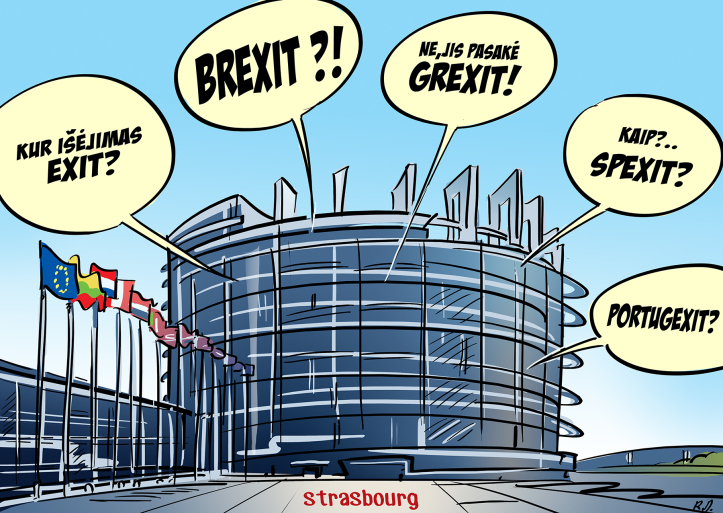
American voters decided in the presidential election of 2016 to elect a president who is disdainful of the global and regional institutions and treaties created by the United States after World War II. Mr. Trump signaled his beliefs by supporting the Brexit (or Leave) campaign in the United Kingdom and nationalist parties in Europe that want their countries to leave the European Union. These parties and leaders enjoy the support and encouragement of both President Trump and President Putin.
President Trump has threatened and insulted the governments and policies of almost every American ally. He has unilaterally threatened or invoked tariffs on allies’ exports to the U.S. President Trump questions whether America should be committed to NATO. He has questioned or denounced virtually every existing or pending trade treaty. He has mused about possibly leaving the World Trade Organization (WTO), the organization that oversees the rules of global trade. He has undermined America’s moral leadership by supporting authoritarian and anti-democratic political leaders, refusing to invoke American ideals as part of America’s foreign policy, and denouncing climate change and international attempts to combat it.
American foreign policy is retreating to protectionism and isolationism, a reduction in foreign commitments. This reflects a change in the psychology of a majority of the American people, who no longer believe that America benefits from being, or has an obligation to be, the world’s global power.
Many of President Trump’s threats are not credible or sustainable; they may not be carried out or reversed later. They are based on a simplistic world view that has long disappeared. But President Trump has the power – the economic and military might of the U.S. – to do damage. As a consequence, other countries are reviewing their national interests and adjusting to an international order where American power and credibility are diminished or uncertain.
AMERICAN FOREIGN POLICY AFTER WORLD WAR II
Since the end of the Second World War, the United States has led the global promotion of democracy, capitalism, and international economic cooperation. The projection of American force and influence was based on a desire not to repeat the perceived isolationist mistakes made after the First World War.
New military and economic alliances were formed within these frameworks to oppose Russian and Chinese Communism. Stated American ideals were often compromised in combating the spread of Communist influence. With the collapse of the Soviet Union and the economic opening of China to foriegn investment, many foreign policy-makers in the American government believed that America could return to the original post-WWII ideals.
Right after WWII, the United States built a set of supranational institutions, starting with the United Nations. The economic institutions included the World Bank, the International Monetary Fund (IMF), global (GATT, later the World Trade Organization) and bilateral free trade agreements. Later, the United States would support the creation of the European Union and the North America version, NAFTA. The result of these policies were spectacular – extremely low tariff rates, fewer non-barriers to trade, global trade expanding twice as fast as global GDP, global mobility of capital, technology and labor. American allies adopted export-driven growth strategies, made possible by global markets and access to the large U.S. market.
American military commitments were formalized in NATO, regional and bilateral military alliances (many on China’s periphery), military aid and foreign bases. Vast sums were spent on long-range projection of nuclear and conventional forces. Vital sea lanes were patrolled and controlled by the United States Navy. No foreign power could challenge the growth of international trade or the flow of raw materials to the industrialized and modernizing economies. Most foreign wars were fought on the periphery of the Eurasian continent in regions accessible by sea-based logistics and air power.
The economic integration of the non-Communist world increased, the complement of the global military and foreign policy commitments of the United States and allies. Economic aid, trade treaties, access to the American market, and mutual security treaties were often intertwined.
1989-1991 AND THE LACK OF REEVALUATION
The overriding political objective was the containment and eventual collapse of Soviet Communism. To almost everyone’s surprise, it happened. After the breakup of the Soviet Union in 1991, global trade and economic treaties, the World Trade Organization (WTO), and regional trade groups like the European Union extended their economic objectives into new areas as many countries, including China, India, and former Communist countries in Central Europe, opened up their countries to foreign investment, joined the global economy, and promised to play by the free trade rules of the WTO and the European Union.
The global economy was created. It was increasingly dominated by huge global multinational corporations. made possible by the free trade economic framework created by the United States and Europe, and the encouragement of foreign corporate investment in China and other emerging countries. A massive amount of mergers and acquisition occurred, about $3 trillion a year, with little legal (anti-trust and anti-competitive rules) or political interference.
These changes suggested that the regional and global economic institutions had a new economic roles to play in addition to reducing tariffs and non-tariff barriers to trade – establishing global standards for workers’ rights, pollution reduction, and protecting intellectual property; setting new and expanded rules for global competition among multinational corporations (MNCs); and mediating disputes between nation-states and multinational corporations. MNCs created new or sharper cross-border problems that needed new rules and regulations. Regional and global economic institutions were slow in recognizing the problems or attempting to deal with them, as was the United States.
Huge global multinational corporations were created, made possible by the free trade economic framework created by the United States and Europe, and the encouragement of foreign corporate investment in China and other emerging countries. As a result, multinational corporations (MNCs) now control most of the world’s economic resources, including advanced technology, and account for almost all of economic and technological innovation.
POST-COLD WAR EUROPE AND NEW PROBLEMS
In Europe after 1991, American and European strategists saw the extension of post-war institutions to former Soviet satellites in Central Europe as the primary objective. Central European countries had to become democratic and capitalist to join the European Union and receive large infusions of aid and foreign investment. Besides economic growth, most of the new EU countries also joined NATO for protection against potential Russian expansionist policies and actions. As Putin consolidated power, he began to assert traditional Russian national interests in Central Europe. NATO, the European Union, and the United States found themselves once again opposing Russia but in a more complicated and fluid situation than during the Cold War/Iron Curtain period.
The long-range political strategy was the further economic and political integration of Western Europe, with the possible ultimate objective of a “United States of Europe.” A single currency and a European central bank were created. Some EU countries agreed to make labor mobility easier. But EU planners lost sight of the fundamental objective of promoting economic growth, now an end in itself and not a strategy of Cold War conflict or political integration.
Economic growth in Europe was easier when Europe was recovering from the devastation of war and reconstruction was underwritten by American aid. Now, 60 years later since the beginning of European economic integration, recovery was complete in Western Europe and the economic challenges were more complicated. Europe, like Japan, now had to go beyond reconstruction and technological “catch-up.” To compete, Europe and its corporations had to compete on the technological frontiers to generate economic growth and employment.
The large European “Common Market,” rather than fostering more cross-border competition, led to massive mergers and acquisitions to create European and global corporations. What was lacking were European startups and big company competitive innovation in the new industries that were driving economic growth. What was needed were radical reforms of traditional national and regional rules and behavior to promote economic growth and innovation. It did not happen.
Since 1991, Europe has experienced low economic growth, high structural unemployment, rising social welfare costs of an aging population, public debt rising faster than nominal GDP, and a relative lack of innovation. European output has substantially declined as a percent of global output. The dual nature of sovereign states and regional institutions is combining the worse of both – dysfunctional national governments along with a large EU bureaucracy that does not seem interested in promoting economic change. EU rules, the use of the euro and the power of the European Central Bank (ECB) led to rigid national monetary and fiscal policies that made internal adjustments more difficult. The promise of high rates of economic growth as a result of the free movement of products, services, capital, and labor was not fulfilled.
CONTINUING IDEOLOGICAL CONFLICT
The collapse of Communism as an alternative did not mean the disappearance of opposition to liberal democracy, individual rights and private capitalism. Critical authoritarian regimes replaced Communist regimes in Russia and China. Traditional appeals to national interests and objectives replaced the universal ideology of Commmunism. Similar attacks of liberal democracy are occurring in Europe and in the United States. Democratic governments are widely perceived as incapable of dealing with the problems and challenges of a rapidly changing and uncertain world. Out of anger and frustration, voters are rejecting established parties and candidates. They are increasingly turning to candidates and parties that are critical of existing policies and the underlying political liberal democratic institutions and ideals that support them.
Defending private capitalism in the greatly expanded global economy dominated by huge multinational corporations means defending the global economic order. But it also calls for continuing to reform the global economic rules as technology changes, as new transportation and communications technologies emerge, and as new “negative externalities” threatened the system. Regional and global trade treaties have to address not only barriers to trade such as tariffs and quotas, but also topics such as pollution, access to information, human rights, intellectual property, technology transfer, climate change, immigration and working conditions. If not, nationalist politicians will blame their domestic economic problems on the institutions and rules of the global economy. Continued economic integration and even global economic growth could be at risk.
Support for democracy and human rights has been part of America’s influence around the world. But the American use of torture, widespread surveillance and wiretapping of American citizens, combined with President Trump’s threats to jail political opponents, support of torture, intimidation of the judiciary and the press, and demonizing ethnic groups, opponents and critics have all undermined American moral leadership. Even more damaging, President Trump has expressed admiration for authoritarian leaders who have challenged democracy at home and American ideals abroad.
Political support for private capitalism has always been difficult. Private capitalism claim to legitimacy rests on its continuing success in raising people’s standard of living, not on a set of moral arguments. The private capitalist form of industrialization has been incredibly successful over the last 200 years but, at any given time, is open to criticism and attack. Those who do not benefit often seek political solutions, or scapegoats.
THE UNITED STATES, EUROPE AND RUSSIA
This is a review of the rapidly changing politics of Europe, and American responses.
Europe in 2017 is very different than the Europe of 60 years ago, at the beginning of what became the European Union. The Europe of 1957 was still recovering from the devastation of World War II. The Europe of 2017 has a total GDP equal to that of the United States. The Europe of 1957 had living standards far below that of the United States. The Europe of 2017 contains many countries with living standards equal or above those of the United States.
An increasing number of Europeans see the European Union (EU) and related institutions as the source of their problems. Besides low economic growth and high structural unemployment, Europeans blame the EU for allowing unwanted immigration (and terror); being a huge, unresponsive, undemocratic bureaucracy; the cause of a loss of national sovereignty and national identity; and contributing to, not solving, the social costs of economic change. They see the economic benefits of the European Union accruing mostly to large multinational corporations, their owners, managers, and well-educated employees. The Brexit vote – England leaving the EU – was partly a revolt against England’s political and economic elite.
Right-wing governments friendly to Russia have been elected in Hungary and other Central European countries. Democracy is under attack in Poland and Turkey. Political parties that are openly hostile to the EU have formed the new government in Italy.
Far-right parties, some with neo-Nazi roots, have been increasing their share of votes in almost every European country. Even if far-right parties do not win this round of elections, they will have increased support, a larger voice in national legislatures, and will put continuing pressure on center-right parties and national coalitions. New events such as terrorist attacks or a deep recession could increase anti-EU rhetoric, and the appeal of their messages.
It is difficult to understand how EU leaders thought that bringing recently independent, former Communist countries with dependence on Russia for natural gas and oil would strengthen the European Union.
Great Britain (1)
While opposition to the EU has been building in Europe, it has been given a boost by the vote in Great Britain to leave the EU.
Great Britain’s vote in 2016 to leave the EU encourages and accelerates the breakup of the European Union and possibly related organizations. Mr. Trump supported the “Leave” position; President Obama supported the “Remain” position.
The consequences could be serious, including the breakup of the United Kingdom. Scotland voted 62% to 38% to stay in the EU. The Prime Minister of Scotland has called for a referendum on Scottish independence from the United Kingdom. If Scotland leaves the UK, it takes the North Sea oil with it. Northern Ireland also voted to stay in the EU; this might give Catholics a non-ideological argument to reunite with Ireland.
England’s remaining power and influence will be diminished. The English economy will suffer, with the greatest threat to the global financial sector in London. There will be no countervailing “special relationship” with a protectionist and isolationist U.S. president.
With England outside the EU and without an economic agreement with the EU, England’s preeminent position as the financial capital of Europe is at risk.
Germany
During the presidential campaign, Mr. Trump called Hillary Clinton “America’s Angela Merkel” and Germany’s humane refugee policy “insane.” He singled out German automobile companies as a future target for increased tariffs. At the first meeting of President Trump and Chancellor Merkel, President Trump pointedly refused to shake her hand. President Trump has unnecessarily antagonized America’s most important ally on the European continent.
Germany could be returning to Bismarck’s nightmare – being a large, isolated power in the center of Europe surrounded by enemies and with weak allies. The EU and NATO were established partly to guarantee that this would not happen.
Germany is the largest and strongest economy in Europe. It exports about half of its GDP, primarily to EU countries and the United States. Germany has economic incentives to keep the EU together.
Given current political trends in Central European countries and subject to the results of the German election, it is unlikely that Germany will form a separate security alliance with Poland and the Baltic states in the near future. Germany and Poland have strong economic ties but fundamental and increasing bitter political differences that are weakening the European Union. Without the support and encouragement from the United States and Germany, Central European governments might be forced to be more accommodating to Russian demands.
Russia and Mr. Trump’s Vocal Support for Vladimir Putin
Combined with questioning America’s commitment to NATO and the EU, Mr. Trump’s praise of Mr. Putin encourages Mr. Putin to increase pressure on Central European and other countries on Russia’s periphery. Ukraine is a potential flashpoint. As Mr. Trump’s naïve admiration of Mr. Putin seems to encourage and support President Putin, Mr. Putin appeals to Russian nationalism and the illusion that Russia is a great power. As part of this these, Mr. Putin emphasizes foreign conspiracies, nationalism and xenophobia as political themes to bolster domestic political support. The historic Russian-German rivalry over the “borderlands” of Central Europe is again a possibility, with the United States currently playing an uncertain and often confusing role.
As President Trump talks about American isolationism and “Fortress America,” Russian President Putin uses the old rhetoric of “spheres of influence.”
NATO
There has been no strategic reappraisal in the mission of NATO since the collapse of the Soviet Union in 1991. Believing Russia did not pose a military or political threat, European countries reduced military spending. Military preparedness, especially in Germany, deteriorated.
NATO never became an integrated regional or global military force. There was little European support for American wars in Afghanistan and Iraq. European forces (and their governments) were unwilling or incapable of even intervening in the conflicts that erupted from the breakup of Yugoslavia.
A basic problem with NATO, as with all European institutions, is that sovereign nation-states have veto power over collective decisions. But unlike the other pan-European institutions, the United States dominated NATO, providing some cohesion to NATO’s strategy.
The rise of nationalism, greater social welfare costs, and the weak fiscal condition of some European governments could make financing collective security less likely.
European countries are much wealthier in 2017 than right after World War II but continue to rely on American nuclear and logistical support rather than building a European core in NATO. European defense spending as a percent of total GDP has been falling since 1991. This may be changing. Poland, the Baltic States and Germany have increased defense spending in response to increased Russian pressure.
Candidate Trump criticized the cost and questioned the usefulness of NATO. President Trump may become more supportive of NATO if he is briefed on the new military reality. Russia is modernizing its conventional and nuclear forces. A particular threat to Europe is a new generation of intermediate-range cruise missiles with nuclear warheads. It remains to be seen how Europe and the United States respond to renewed Russian political pressure and military threats. Specifically, what role NATO will play in the future.
Anticipating American force reduction or withdrawal from NATO, Germany and France have set up a small joint-planning operation outside of NATO, with plans to expand it in the future. Central European militaries have held joint discussions and military games outside of NATO. The new president of France has called for a European military force, apparently without American leadership or participation.
Total European military spending is quite substantial, over $200 billion a year. Europe could be moving towards an alternative – no American oversight of NATO, a nationalist government in Germany controlling the strongest military force west of Russia, facing an expansionist Russia. This is not a scenario any sane American or European would like to see occur. Again.
Strategic questions remain:
· Will the U.S. continue to provide a nuclear umbrella over Europe if NATO collapses?
· What will happen to Ukraine and Central European countries?
· What types of new defense alliances will be created in Europe, without the United States?
· What type of bilateral military arrangements will the United States have with the 28 countries in NATO? What bilateral commitments is the United States willing to make to Central European governments, especially Ukraine?
· How will the United States respond to a rapidly modernizing Russian conventional and nuclear military force? “Fortress America” or greater involvement in NATO? Or both?
EUROPEAN POLITICS
The anti-EU and anti-immigrant movements represent the latest phase in the decline and collapse of the traditional post-war parties in Europe. Recent elections and polls in France show a rightward drift of the traditional center-right and conservative parties. More dramatic is the reduced support, almost collapse, of the center-left and socialist parties.
Recent votes may represent a continuing, fundamental change in the structure of the underlying economies and their workforce. Political parties and movements seem to reflect less and less the traditional class interests of industrialized societies. The industrial working class, the basis of socialist parties, is a declining percent of the workforce. As the middle class loses income and security because of automation, artificial intelligence software and machines, and “deskilling”, new political parties and leaders may use new political rhetoric to blame multinational corporations and the technological elite. Hints of the new rhetoric can be seen in President Trump’s denouncing of both foreign and domestic multinationals for America’s economic problems.
Single-issue parties such as “green parties”; regional parties in Scotland, Wales, Catalonia and northern Italy; anti-EU parties; and anti-immigration parties are on the rise and threatening the established parties. It is hard to put these parties on a political spectrum. But collectively they seem to reflect increasing frustration and anger with the staus quo, partly caused by the inability to adjust to globalization. The immediate target is the European Union, its policies, and related pan-European institutions.
The tension between national politics and economic growth can be seen in Poland. The Polish government is attempting to weaken internal checks and balances to its power, has challenged many of the policies of the EU, and has deteriorating and increasingly bitter relations with Germany. But German corporations are the largest foreign investors in Poland.
EUROPE
The extension of the euro beyond the economic core of EU has weakened the EU. The adoption of the euro and the European Central Bank eliminated many of the macroeconomic adjustment tools of national governments – exchange rate, fiscal policy, monetary policy, relative interest rates. Whether European economies could have grown any faster without these new institutions is unlikely. But pan-European institutions are conveniently blamed for low economic growth and periodic crises.
Even if the post-war institutions survive, there is a question of how valuable European countries will be as American allies. Many of the countries are facing a stagnant workforce, stable or declining populations, rising social costs of aging populations, and probably unsustainable fiscal policies. Budget deficits creating rapidly rising public debt have papered over the necessity of making hard economic and political choices. No government would voluntarily go through what Greece has been forced to do over the last eight years.
With low economic growth, competition for funds for social welfare costs and national defense approaches a zero-sum game. It is difficult to imagine electorates voting to support tax increases to pay for large increases in defense spending. Domestic problems plus increasing anti-EU sentiment implies less support for European institutions and cross-border defense commitments.
ASIA: The United States, China and Japan
The United States and Japan
Japan is a politically stagnant, rigid, rentier society with a declining population and the oldest population of any country. Since the collapse of asset values in the early 1990s, Japan has had very low economic growth, a stagnant and now declining workforce, no reform to a rigid political and social structure, and massive government deficits to support the status quo in place of economic and political reform. Japan has the highest public debt/GDP ratio of any industrialized country. The Japanese people vote for a conservative program of preserving their high standard of living and stable social structure for as long as possible.
Japanese multinationals have exported large amounts of capital and technology, especially to China. China has replaced the United States as Japan’s largest trading partner. Japanese multinationals have a huge investment in China.
Japan has the resources, but apparently not the collective will, to project economic and military power in East Asia. This may change if Japan feels threatened by China or North Korea and does not believe it can rely on American military protection. Early indications of possible changes has been the government quietly ignoring the constitutional limit of 1% of GDP for military spending (imposed by the American occupation after WWII) and joint military and naval exercises with other Asian countries.
The United States and China
We are seeing the end of forty years of détente, partly aimed at Russia. Mr. Trump’s call to the president of Taiwan, and subsequent comments, early undermined the basis for American-Chinese détente. For forty years, American presidents have supported a “One China” policy. Chinese and American leaders have tacitly agreed not to discuss Taiwan. Mr. Trump’s phone call to the president of Taiwan, the leader of the Taiwanese independence party, reversed this agreement.
This is the third rail issue in China. The phone call angered China. It came after the pro-Russian sentiments of President Trump and Trump’s threat of a trade war with China. Candidate and then President Trump has gone out of his way to antagonize China.
Both countries believed in the past that Russia was the primary geopolitical threat, the basis for detente. The current American government believes China is the more serious threat. Combined with Mr. Trump blaming American job loss on Chinese exports and economic retaliation like high tariffs, and his praise of Russia’s president, China will accelerate its efforts to eliminate American influence in Asia and elsewhere. China may also conclude it is in their long-run interests to form stronger ties with Russia, although history and conflicting national strategic interests may work against it happening.
Under Presidents Bush and Obama, the Trans-Pacific Partnership (TPP) was America’s main effort to counter rising Chinese influence in Asia. President Trump has walked away from the completed treaty. The other signatories to the treaty are proceeding without the United States. Countries in Asia and on the Eurasian continent, including American allies such as Japan and Australia, are signing up with the alternative, a multinational, Chinese-dominated investment bank. The Chinese government is also financing its massive “Belt and Road” initiatives, which have potentially serious geopolitical and military consequences for the United States.
Unlike the provisions in TPP, trading with China and borrowing from China does not entail commitments to allow free trade unions, employee protection, environmental protection, observing intellectual property rights, or free access to information and the Internet. The United States will not be setting the future trade rules in Asia.
If the Trump administration imposes greater trade restrictions and higher tariffs on Chinese exports, how could China retaliate?
· Increased tariffs and trade restrictions on American exports to China
· Devalue currency to offset higher cost of exports (already being done)
· Pressure companies like Boeing to manufacture in China
· Restrictions on American multinational corporations in China
· Stop buying or start selling U.S. government debt, which will increase U.S. government interest expense and budget deficits
· Step up political campaigns to oust American influence in East Asia and throughout the world
China no longer needs increased exports to the United States to drive economic growth. Total Chinese exports (and imports) are a declining percent of the Chinese economy as the economy continues to grow through domestic consumption foreign investment, and government investment.
Most of the growth in Chinese exports over the last decade has come from exports to Asian countries. For most Asian countries, including Japan, China is now their largest trading partner and overseas market. Asian countries are more inclined to accommodate Chinese political interests.
“Silk Road” projects and investments in Central Asia and other parts of Eurasia could lead to Chinese economic dominance over much of Eurasia. If China follows through with its ambitious plans to build high-speed railroads, roads, pipelines, and port networks across Eurasia, either through or around Russia, this will weaken the American potential threat to cut off imports to China through international shipping lanes and chokepoints like the Persian Gulf and the Strait of Malacca.
The United States seems to be ignoring a strategic response to rising Chinese influence in Asia – closer ties with India. This would be part of a global strategy that recognizes the geopolitical reality of the increased importance of potential regional hegemons. The United States should reexamine its relationship with such countries as India, Turkey, Poland, and Iran. This would be part of adapting to the “post-American world.” (The title of a book by Fareed Zakaria)
GEOPOLITICS AND THE GLOBAL ECONOMY
The return of geopolitics – the primacy of national interests – is not surprising after colonial independence plus the breakup of the Soviet empire and Yugoslavia created over 100 new or newly independent nation-states. Historical greivances and ethnic antagonisms resurfaced. What is different is the huge growth in the global economy, increasingly dominated by multinational corporations.
Surprisingly, most of the economic growth in the last 30 years has occurred outside of the established industrialized countries. Europe and Japan have exhibited low rates of economic growth. As workforce growth rates slow down (Europe) or stop (Japan), economic growth fueled by high levels of capital investment and a better-educated workforce should lead to high rates of labor productivity growth, about equal increases in real wages, and lower unemployment. But real wage growth is kept down by substituting labor-saving capital for labor (automation) and moving labor-intensive jobs to lower-wage countries. Instead, low rates of productivity growth combined with low rates of growth in the labor force have led to low rates of national economic growth. Two partial solutions to this problem – labor mobility in Europe and increased H1-B visa immigration in the United States – are under severe political attack. As a sign of the divergence of corporate and national political objective, large multinational corporations support both programs.
The United States experiences better productivity growh and higher rates of economic growth. Some proposed reasons are a growing workforce, more efficient use of capital, more technological innovation, and more support and less opposition (until recently) to disruptive technological development. But real wages have been stagnant for much of the labor force. A major reason is that large American corporations have become multinationals, transferring much of their increased capital and technology to other countries as part of a corporate strategy to reduce costs and to obtain most of their growth in sales and profits overseas.
So low rates of domestic (home country) economic growth do not limit the growth of multinational corporations, as they continue to expand geographically and grow faster than the economies and markets in developed and developing countries. Investors and managers of these corporations, along with supporting technological, financial and organizational experts, are experiencing rising real incomes. The remaining home market workforce is experiencing stagnant real incomes. The widening income inequality and insecurity fuel domestic political anger and reduces support and tax resources for domestic and multilateral economic adjustment programs. This also makes it more difficult to pay the social costs of an aging population and technological change without large budget deficits. Domestic support in the United States for traditional foreign policies and institutions is declining.
Returning economic oversight power to nation-states and weakening supranational institutions will make it more difficult to deal with global problems such as global warming, pollution, drug trafficking, cyberwarfare, and terrorism. There were be less cross-border control over the behavior of multinational corporations. The bargaining power of multinational corporations will be strengthened when negotiating with individual nation-states. The conflicts between concentrated economic power in multinational corporations and democratic governments could become worse.
CONCLUSION
With nationalist feelings running high in Europe and America rejecting or criticizing the global economic institutions and security structures it created, America is on the verge of a loss of power and influence in the world.
America’s allies in Europe and Japan have stagnant or declining populations, low rates of economic growth and development (innovation), high structural unemployment and deteriorating fiscal conditions. These economic problems, fueling political conflicts and social stress, are lessening the value of these countries as allies. It is unlikely they will substantially increase defense expenditures for collective security unless they feel threatened and can no longer count on American protection and support.
With the American president criticizing allies and questioning support for supranational institutions created by the United States after World War II, allies are looking to their national interests without relying on the United States. There will be political realignments in Asia and Europe. South Korea is pursuing a policy towards North Korea at odds with America’s policies. Asian countries are increasing military and economic contacts among themselves. China will become more aggressive in pursuing national interests in Asia and Eurasia. Russia may step up pressure on Central European countries.
According to polls, a majority of Americans no longer supports free trade and the cost of America’s global commitments. It is uncertain, or even desirable, that countries like Germany or Japan want to or are able to fill the widening void.
Threatening to increase tariffs on imports from China, Japan, Mexico, Canada, and Germany reverses 70 years of American foreign economic policy. Opposing trade treaties with Pacific Rim countries (TPP) means that China will now set regional trade policy in East Asia. Opposing a trade agreement with the European Union (TTIP) – not creating the world’s largest free trade zone – will weaken the strongest argument for the continued existence of the European Union.
Even if the European Union ceases to have influence as a political institution, maybe the original “customs union” aspects of the EU would survive (no tariffs, quotas or other barriers to trade). This seems to be the basis of the Brexit negotiations. Other countries may consider a similar relationship with the European Union.
Countries in Central Europe might not be able to look to the United States and NATO for security. For some time in the future, these countries will be dependent on Russia for natural gas. Unless Germany fills the political void (unlikely), security for these countries will be negotiated with Moscow.
Some countries saw the “New World Order” as a vision of American global dominance, the triumph of one nationalism and its ideals. Movement towards a “United States of Europe” was stymied by national political and institutional rigidity and the nationalism of newly freed states. As time went by, the social costs of globalization and rapid economic change became political issues. Multinational corporations and supranational organizations like the EU and NAFTA were blamed for domestic problems. Rising nationalist political parties and their leaders call for increased national power and control.
The democratic revolution and battle for individual rights begun over 200 years ago will continue but with less America’s moral, verbal and financial support. America’s “soft power,” which includes support for liberal democracy and human rights, will diminish every time President Trump praises Vladimir Putin or some other authoritarian politician.
Less support for supranational organizations and rules and a return to nationalism will make it harder to deal with regional, continental and global problems until a new set of institutions are created.
Multinational corporations have reached the inflection point where they will be truly global. They will be able to create dynamic comparative advantage anywhere because of the fluid international division of labor, based on the free movement of capital, information, and technology. Corporate policies to increase sales and profits will come into increasing conflict with nation-states, their national economic policies, and their political agendas. How these conflicts play out will determine the next “New World Order.”
America’s allies – Western European democracies and Japan – are increasing opposition to immigration. They resist political and social change that threatens a desire to preserve their existing societies and high standards of living.
So far, the supranational institutions and treaties that were the foundations of the post-war world, the Pax Americana, could not deal with a new set of challenges or the resulting the anti-global nationalism of nation-states. The collapse of Soviet Communism in 1991 took away the main argument for support. American management of the global order has not been flexible enough or imaginative enough to create a compelling substitute. The consequence, a return to nationalism and nation-state rivalry, is occurring. Nations and political leaders will talk more about the country’s national interests and appeal to the ethnic and historical basis of the country’s special version of nationalism. This will probably continue until a series of crises, such as global warming or the loss of any control over their national economy, forces national political leaders to create new supranational organizations or new forms of cooperation.
The United States has confronted a number of foreign threats to American security since the end of the Cold War – al-Qaeda, ISIS, Iran, Putin’s Russia, Xi’s China, and supposedly Hussein’s Iraq. Yet the most serious threat to America’s national security are current American policies, supported by a substantial percent of the American people. Alienating allies and supporters and attacking rather than reforming global economic institutions undermine the global order America created after World War II. Most Americans do not recognize that a global economy based on free trade and the free movement of economic resources is the new basis of America’s economic prosperity. Attacking the institutional structure of liberal democracy at home and refusing to promote American ideals abroad weakens America’s claims to moral and ideological leadership. In the end, only the foreign policies of the American government and the changing political beliefs of the American people can bring the Pax Americana to an end.
==========================================================
(1) For my immediate reaction to Great Britain leaving the EU, see“Breaking Away: Britain and the European Union,”June 27, 2016.
=====================================================================
See the related post: “The Beginning of the End of “Pax Americana”: America“
If you like history and speculative historical analogies, you might like the following two essays:
The Roman Republic and America
The Roman Republic Commits Suicide: A Cautionary Tale for America
For a list of all posts and economic tutorials in Pages, see Guide to Posts and Pages. The economic tutorials are equivalent to a course in economics.