Author: Bennett Greenberg

  • Energy and Geopolitics II:  The World ex-United States

    Energy and Geopolitics II: The World ex-United States

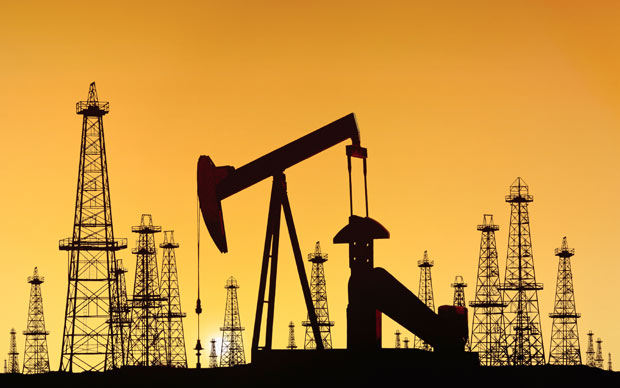
    Middle East Oil Wells

    OVERVIEW

    Outside of the United States and Canada, most of the world’s
    oil and natural gas is owned and produced by governments or
    government-dominated companies with minority shareholders. Two examples of the
    latter, public companies with stockholders, are Petrobras in Brazil and Gazprom
    in Russia.  But government officials,
    especially the president, control management and make the important decisions.

    Production and investment decisions are not made based on
    financial criteria alone.  Often,
    internal political or foreign geopolitical factors are more important. Many countries’ economies and government budgets depend critically on oil and natual gas revenue from exports. Maintaining internal peace and welfare programs are more important than rational economic considerations.

    What this means is that production and distribution
    decisions in these countries are made using different criteria than by private
    companies in the United States and Canada. Producing and exporting oil and natural gas are mostly political
    decisions. Petrostates like Russia, Brazil, Venezuela, Nigeria,
    Algeria and other countries in the Middle East and Africa have not used their
    oil and gas revenue to industrialize or diversify their economies.  Generating revenue for government, not profits for investment, is the main
    concern of these countries.  

    For many countries, exporting oil or natural gas (and other
    commodities) is the major source of hard currency revenue and government
    income.  Domestic spending, importing
    consumer goods, government social welfare and subsidy programs, foreign policy
    and even internal stability and corruption depend on commodity export
    earnings. As does servicing foreign
    borrowing, which has grown rapidly in the last six years. 

    With much greater potential supply of oil and natural gas
    because of new discoveries and innovative production technology, and growing
    substitutes, no one country or small group of countries will be able to control global
    supply or price.

    Among the fossil fuels, the long run outlook (20 years) of
    natural gas appears to be the best.  Even
    without the fall in natural gas prices, the global trend away from coal to gas to generate power will likely
    continue and increase demand for gas. In Asia, however, both coal and natural gas production are increasing because of the huge increase in the demand for electricity.  

    Massive increases in profitable
    reserves and technological changes in production and distribution will
    permanently bring down prices of natural gas in high-cost areas like Asia and
    Europe. LNG, more tankers and interconnect pipelines will make the global
    gas market more integrated, more like the global oil market.

    Three new potential major producers of natural gas are
    Argentina, Bangladesh and Egypt.  Qatar
    and Australia have completed and can expand large new LNG complexes. Some of Qatar’s new gas revenue is supporting Sunni fundamentalist
    groups in Syria and Iraq.

    Substitutes for oil and gas should be cost competitive in
    the near future.  Solar, especially
    decentralized solar on buildings, will continue to grow rapidly as the
    technology improves and the costs keep coming down.  Adoption of solar
    will accelerate if battery storage costs come down and countries don’t have to
    build or expand electricity plants and grids. 
    Solar panel costs are falling rapidly and Elon Musk says his new lithium
    battery plant in Nevada will reduce storage costs by 30%.  Wind turbine currently depends on subsidies
    but there is some new technology that may eliminate the gigantic windmills
    (375 feet high) and lower costs.  

    Many countries are looking at nuclear
    again because of major advancements in technology and safety.  
    There are currently 437 nuclear power reactors operating worldwide. 60 more are under construction, another 165 are planned, and 331 more are proposed.  The number of nuclear power plants in the world could easily double in the next two decades. China alone plans to build 46 new ones by 2020.  Japan, which paid $270 billion to import fossil fuels (mostly natural gas) in 2013, currently plans to start up 15 shut-down nuclear power plants.  On the other hand, Germany is shutting down the last of its 17 nuclear power plants, substituting solar and wind (interruptible) backed by gas.

    Other sources of energy beyond the use of fossil fuels are
    being researched and developed in laboratories.

    The key is how long oil and gas prices stay at current
    levels and what the new equilibrium prices will be.  This is not just
    an economic question.  Domestic policies,
    like China’s and America’s policies to reduce carbon emissions from coal, and
    geopolitics will play key roles.  Also,
    there will be major shifts in where oil and gas are produced, who exports, new
    technology and the expanding importance of substitutes.  

    THE EASTERN MEDITERRANEAN

    Huge new natural gas fields have been discovered in the
    eastern Mediterranean.  The largest so
    far are in the coastal waters of Israel, Gaza, Egypt and Cyprus.  The fields may extend north to Greece, Lebanon
    and Syria.  Israel, now self-sufficient
    in natural gas, could supply Palestine and Jordan. Pipelines could be built
    from Israel, Gaza and Egypt to Cyprus and then another set to Greece, which
    would connect into the proposed integrated pipeline systems of central Europe
    and, through Austria, to the rest of Europe.  Or a pipeline could be built to connect with the large pipeline running through Turkey to Europe.  South-Central European countries could eliminate their almost complete
    dependence on Russian natural gas and threaten “reverse flow” to Ukraine.  Egypt already has an LNG plant and other
    producers could construct them, expanding their geographical market for their
    gas.

    If this occurred, it would be a tremendous economic boon to
    all the countries involved.  So what’s
    the problem?  Geopolitics.  There are countries involved that don’t like
    each other.  To say the least.  Besides Israel and Gaza, Cyprus is divided
    into Turkish and Greek areas.  Would the
    economic benefits be great enough to overcome political rivalries, many based
    on long-standing hatred and conflict?

    RUSSIA AND EUROPE

    Russia is Europe’s largest external source of oil and
    natural gas.  Europe is Russia’s largest
    customer for both.  But the conflict in
    Ukraine has changed the geopolitics.  Russia
    may pay a very high economic price for its intervention in Ukraine.  

    It is also one reason that I don’t think Russia will invade
    and conquer the whole country, as Putin has threaten to do.  Or even increase destabilization pressure.  Europe would expand sanctions, look to new
    sources of energy and accelerate programs to import less Russian oil and
    gas. 

    While these policies will probably have little short-run
    effect on the volume of Russian exports of oil and gas to Europe, a longer-run
    combination of lower prices and less volume would have serious economic
    consequences for the Russian economy. 
    Since Putin’s and his successors’ political popularity in Russia partly
    depends on continuing the high rates of economic growth and standards of living
    made possible by increased revenue from energy and commodity exports, pursuing
    an aggressive or confrontational policy against Ukraine and Europe could have
    serious domestic consequences for the current and future Russian governments.    

    Under U.S. pressure, Europe has imposed some economic
    sanctions on Russia, the most effective being that Russian companies cannot
    access European financial markets.  As
    loans come due, the companies, many of which are government owned or
    controlled, have to borrow hard currency from the Russian government.  Russia’s foreign reserves of hard currency
    are shrinking.  Over half are committed
    to future retirement costs, although the fund can be raided. 

    New internal capital to modernize old fields and develop new
    fields is not available.  Global bond
    markets are closed.  Russia’s response
    has been to relax rules limiting foreign investment in Russian oil and gas.

    In addition, Europe is beginning to institute actions that
    will reduce its dependence on Russian oil and natural gas, which means lower
    export earnings for Russia regardless of the change in energy prices.

    Europe has large natural gas reserves but will not develop
    them quickly because of political opposition, lack of infrastructure and more
    difficult drilling geology than the U.S. 

    RUSSIA AND CHINA

    China imports more oil than does the United States. Before the tariff batlle, China was importing more U.S. crude oil.  China is about to become a major importer of natural gas as it substitutes gas for domestic coal production.  So China has joined the United States as a large market on the demand side.


    Russia is now China’s largest supplier of oil.

    Russia’s president Vladimir Putin has his own “pivot towards
    Asia.”  Russia’s main market for oil and
    natural gas is Europe.  With the
    expectation that sales will be lower in the future and that older fields are
    declining in production, Putin has turned to China for capital investment and
    as a major export market.  China plans on
    substituting natural gas (and other energy sources) for its dependence on coal
    (cough, cough).  Russia has a huge new
    field in eastern Siberia it wants to develop. 
    The cost is somewhere between $55 billion and $100 billion.  Russia doesn’t have the capital and can’t
    raise it in western financial markets because of the economic sanctions.  So, apparently, the deal is that China
    supplies part of the capital and agrees to take the production for the next 30
    years.  Although secret, apparently at a
    low price.  Russia originally announced
    that sales to China would bring in $400 billion over the 30 years but that was
    before the large drop in the price of natural gas, especially in Asia, and the
    reality that there will be a lot more natural gas available from other sources.

    Russia is now encouraging China and other Asian countries to
    invest in Siberian oil and gas.  Knowing
    that Russia has used oil and gas exports as a geopolitical weapon against
    Ukraine, Europe, Georgia, Serbia and Armenia, potential investors in China,
    Japan and South Korea have to be worried about the political consequences of
    becoming too dependent on Russian oil and gas. 
    And having their investments expropriated by future Russian government.

    There is another complication.  China is rapidly extending its influence into
    the old Soviet republics in central Asia. 
    China has offered economic aid, including railroads and natural gas
    pipelines connecting China and central Asian republics.  One of the world’s largest natural gas fields
    is in Turkmenistan; this is where Russia gets some of the natural gas it sells
    to Europe.  There are other possible gas fields.  All of this creates the potential for
    geopolitical rivalry between Russia and China in the area.

    China also borders Kazakhstan, another former Soviet
    republic.  Kazakhstan is a large oil
    producer and has the potential to produce more. 
    Russia sees Kazakhstan as in its sphere of influence.  The president of Kazakhstan was the Communist
    boss of the republic when it broke away in 1991.  The Chinese, however, have made a number of
    proposals that would divert some of Kazakhstan’s oil to China.  Russia is not happy about this prospect.

    In the long run, this policy could create
    serious geopolitical problems for Russia.  Supplying China with cheap
    oil and gas while China expands its influence in Central Asia and renews its
    claims (legitimate) on eastern Siberia is a dangerous policy.  But that
    will someone else’s problems, not Putin.

    OPEC

    OPEC has been ineffectual as an oil cartel, probably since 1985 when Saudi Arabia cut production with disastrous results.  Iraq has invaded both Iran and Kuwait to grab large oil fields.  Saudi Arabia and Iran are deadly enemies and compete to dominate the Persian Gulf region (and Islam).  Many of the oil exporting states have seen civil wars and declining production.  OPEC’s exports and net exports have been declining while global production is rising. 

    OPEC’s control has also been eroded by the growth and development of oil production in non-OPEC countries, even before shale.  What shale does is greatly increase potential global oil production in non-OPEC countries if prices rise.  Maybe even more important, shale oil greatly increases oil reserves outside of OPEC countries.  Before shale, a high percent of the proven reserves in the world were in OPEC countries, mostly in the Middle East.  This implied that OPEC’s market power would last a long time.  No longer.

    NAFTA

    NAFTA (The U.S., Canada and Mexico) is the new OPEC.  Almost all of the net increase in global oil
    production since 2007 has come from NAFTA countries.  Future increases in oil production will come
    mostly from American and Canadian fracking, and deep-water rigs in the Gulf of
    Mexico.

    NAFTA is the new OPEC also in the sense that the American
    and Canada companies, using fracking technology, can react quicker to changes
    in global supply and demand, and subsequent price changes.  New technology, better management and organization, and large cost reductions because of low prices have reduced the break-even cost of shale oil and gas.

    The best oil fields in the United States have marginal costs
    of pumping out and distributing oil about equal to all but the lowest cost fields in the Middle
    East.  Because of fracking technology, fixed
    cost/barrel to modernize and expand existing fields is probably higher in most of the
    Middle East and the rest of the world than expanding or opening new fields in the United States.

    The geopolitical implication of all this is the United
    States could cut off all oil imports from the Middle East and quickly substitute
    NAFTA oil, mostly American. There are
    major geopolitical implications if the United States has oil security, doesn’t
    need Middle East oil and becomes a major exporter of petroleum and natural gas. Maybe the Iranian agreement, over strenuous
    Israeli and Saudi objections, is an indication of the changing, more flexible
    geopolitical policies of the U.S. in the Middle East.

    SUMMARY

    Global demand for energy will continue to increase in the foreseeable future. Global production of all sources of energy, including coal production in Asia, will increase. New technology on both the demand side (electric vehicles and autonomous driving) and supply side (fracking, LNG) will change the economics of energy. This will have geopolitical consequences. Middle East oil will become relatively less important. U.S. exports of oil and natual gas might have geopolitical effects. Development and sales of new technology such as solar and wind, may, in the long run, become more important than fossil fuel extraction.

    ======================================================

    This is a summary of prior posts plus new information and conclusions.  The latest related post was on Russia and the Geopolitics of Energy.

    For an excellent history of the rise of OPEC, see Daniel Yergin, The Prize.


    For an excellent, detailed article on Gazprom, see http://oilprice.com/Energy/Energy-General/How-Russias-Energy-Giant-Imploded.html.  Gazprom has a virtual monopoly on Russian natural gas production and exports.  Its management has very close ties with the Russian government.  Putin has used Gazprom to implement both internal and foreign policy objectives.  Gazprom owns a TV network and a major bank.  Some of its profits were diverted to pay for the incredibly expensive Olympic Winter Games, with billions of dollars ending up in the pockets of oligarchs and government officials.  Overseas, Gazprom has cut off  or threatened to cut off gas supplies to Europe, Ukraine, Georgia, Armenia, the Baltic States, Slovakia and Serbia on orders from the Kremlin. In each case, Gazprom was used as a blunt geopolitical weapon to change another country’s democratic or anti-Russian politics. 
  • Ukraine and Russia

    Ukraine and Russia

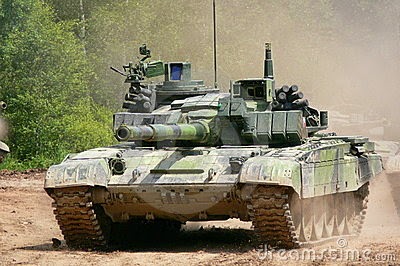
    Russian T-72 Tank Seen in Ukraine


    HISTORICAL BACKGROUND

    Most of what is now Ukraine
    came under Russian control in the 1700s, due to the expansionist policies of
    Catherine the Great.  Part of western
    Ukraine (Galicia) was a province of the Austro-Hungarian Empire. 

    With the collapse of the
    Romanov regime in 1917 and Austria-Hungary in 1918, Ukrainians attempted to
    establish an independent republic. 
    During the Russian Civil War, Ukrainian nationalist groups fought on the
    side of the Communist Red Army because they knew that if the monarchy were
    reestablished, Ukraine would be forced back into the Russian Empire.  Their hopes for independence were crushed as
    the triumphant Communist regime absorbed Ukraine into the Soviet Union.

    Ukrainians suffered under the
    Stalinist regime.  Because the Ukraine
    was the “bread basket” of the Soviet Union, grain and other crops were
    systematically confiscated by the Communist government to feed industrial
    workers at subsidized cost and exported to earn foreign currency.  Bad weather plus confiscations in 1932-33 led
    to millions of Ukrainians starving to death.

    During World War II, some
    Ukrainians fought with the Nazis, hoping to be free of Russian rule.  After the war, Ukraine was treated harshly as
    punishment.  All Tatars in the Crimea were
    deported to the interior of Russia; over half died.

    RECENT CONFLICT BETWEEN UKRAINE AND RUSSIA

    From 1991 until 2004, Ukraine
    was ruled by former Communist bosses and their protégés.  Little changed politically or economically.  Some state assets were privatized, creating a
    small group of oligarchs with ties to government officials.  Corruption was rampant.  Old industries were not modernized.  Production and exports were still mostly
    oriented to supplying Russia with food, industrial materials like pipe and
    weapons. There was little economic growth or development.

    Fed up with the lack of
    progress, corruption, and economic stagnation, Ukrainians took to the streets in
    2004 to protest the regime of President Viktor Yanukovych.  The “Orange Revolution” was one of a number
    of popular protest movements against authoritarian regimes on the Russian
    periphery.  President Yanukovych was
    replaced by a democratic government. 
    Unfortunately, the President and the Prime Minister became bitter
    enemies.  The pro-Russian party of former
    President Yanukovych had a strong position in parliament.  The government appeared paralyzed and didn’t
    institute the reforms demanded by the “Orange Revolution” protesters.  Aided by Putin’s campaign managers and Russian money, Viktor Yanukovych was elected President again
    in 2010. 

    Unlike the peaceful “Orange
    Revolution” of 2004, the 2013-2014 demonstrations protesting the pro-Russian
    policies of President Yanukovych led to the use of violence against the
    demonstrators.  This time the removal of
    Yanukovych led to an armed rebellion against the new government by Russian separatists in the eastern
    provinces (Yanuokovych’s political base), a Russian takeover of the Crimea and
    a shooting war with Russia over control of Ukraine’s eastern provinces. 

    NATURAL GAS AS A GEOPOLITICAL WEAPON:  UKRAINIAN DEMAND FOR RUSSIAN NATURAL GAS

    Before the conflicts began,
    Ukraine depended on Russia for about two-thirds of its natural gas, about 30
    billion cubic meters a year.  The cost
    was around $10 billion minus transit fees, a major cost for a small economy of around $200-$250 billion.  Demand has
    decreased because of the loss of territory and a severe recession, down to probably
    around 20-25 billion cubic meters.  But
    Russia has increased the price and threatened to continue the current shut-off
    of gas through the winter.  Ukraine  agreed to pay arrears for past purchases and pay COD for future purchases.  Russia agreed to supply gas for six
    months. 

    The money for these purchases
    and other debts will come from a $17 billion loan from the IMF.  In addition to paying for Russian gas and
    oil, a $3 billion Russian loan will come due in 2015.

    Ukraine is trying a number of
    strategies to reduce its dependence on Russian natural gas.  One is conservation.  Ukraine, despite being poor, has one of the
    highest natural gas per capita usage rate in the world.  A major reason is that the cost to consumers
    and industry is heavily subsidized; the retail cost is about 25% of the
    wholesale cost Ukraine pays to Russia. 
    Raising the internal price under current conditions will be politically
    unpopular and maybe impossible.

    Ukraine has tried to receive
    natural gas from neighboring countries by “reverse flow” of Russian gas
    delivered through Ukrainian pipelines. 
    Russia has successfully pressured at least two of the four countries
    (Slovakia and Hungary) not to do this.

    In the future, Ukraine may be
    able to develop large shale gas fields which may be an extension of shale gas fields in adjoining eastern Poland. 
    Ukraine also intends to build a short pipeline to Poland.  Gas will come from an LNG plant Poland is
    building and other non-Russian sources through interconnect pipelines.

    RUSSIAN GAS PIPELINES THROUGH UKRAINE

    Worried that Ukraine could
    shut off deliveries to Europe, Russia’s strategy has been to bypass the Ukraine
    pipeline network.  The Nord Stream
    pipeline in the North Sea reduced the percent of Russian natural gas exported
    to Europe through Ukraine from 80 percent to 50 percent.  It brings gas directly to Germany, its
    largest EU customer. 

    The proposed South Stream
    pipeline through the Black Sea to Bulgaria would have enough capacity to
    eliminate Ukraine as a transit point for Russian gas.  As a political reaction to Russia’s military
    actions, the European Union pressured Bulgaria to suspend participation in
    building the pipeline and terminal.  The
    South Stream pipeline currently is on hold. 
    The interim Bulgarian government before the recent elections signed an
    agreement to be part of a competing pipeline consortium that brings Azerbaijan
    natural gas overland through Turkey and Greece to Bulgaria.  A European Union committee is discussing building interconnect pipelines through Central Europe (heavily dependent on Russian gas coming through Ukraine) to Austria.

    UKRAINE’S ECONOMY

    Even before the conflict with
    Russia, the Ukrainian economy had not progressed.  In 1991, the economies of Poland and Ukraine
    were about the same size.  Since then,
    Poland’s economy has tripled in size while Ukraine’s economy before the current
    conflict was about the same size as in 1991. 
    The differences may be somewhat smaller since much of the Ukraine
    economy, maybe as much as 40%, is underground.

    The continuing war in the
    east and the loss of the Crimea has devastated Ukraine’s already weak
    economy.  The eastern provinces contain
    the bulk of the Ukraine’s manufacturing capacity and coal mines.  Russian has imposed sanctions on some
    Ukrainian exports.  Ukraine’s economy is
    expected to shrink by 8% this year and again next year.  If fighting continues, this is probably too low an estimated.

    Ukraine’s foreign-exchange
    reserves are falling rapidly.  International
    loans from the IMF and aid from the European Union have only bought time for
    Ukraine.  It seems impossible that
    Ukraine can meet its debt obligations without new loans and aid.  Two months ago, the IMF said that Ukraine
    will need an additional $19 billion if the fighting continues.  Even with new loans, it is likely that
    Ukraine will have to default or renegotiate its external debt.  Part of its external debt is owned by Russia.

    POLITICAL CONSEQUENCES TO UKRAINE AND RUSSIA

    Ukraine
    is the most important application of the Russian foreign policy doctrine of
    recovering lost territories and forming the old Soviet Union (actually, the old
    Russian Empire since Communism is no longer the official ideology).  Putin’s power and domestic support crucially depends
    on this strategy succeeding.  After a massive and emotional propaganda campaign, there is no
    way the current Russian government of Vladimir Putin can allow Ukraine to
    retake its lost eastern territory or the Crimea.  When it appeared that the Ukrainian army
    might defeat the separatist rebels, Russia sent in Russian special forces and
    heavy weapons.

    What has
    Russia gained and lost by seizing Crimea, supporting the eastern rebels and
    sending Russian military forces and weapons into Ukraine?  Russia has
    gained direct Influence or control over 15-20% of Ukraine’s population, which
    was Russian or pro-Russian before the invasions.  There is little economic advantage; the
    eastern provinces the separatists control are a depressed area with old
    industries and uncompetitive coal mines.  Many of the companies have shut down because of the fighting or management fleeing the area.

    Both Ukrainian and Russian
    refugees will continue to leave the area controlled by the separatists.  As of the end of October, the United Nations estimates that about one million people have left, out of a pre-war population of 4.5 million.  Other estimates are higher.  About half have gone to Russia and half to other parts of Ukraine.  Refugees tend to be the young and better educated.  Russia will need to heavily
    subsidize the region just to restore devastation and basic services.  Already eight large convoys from Russia have carried food (and probably military goods) to the separatist-controlled areas of Ukraine.  

    This will
    leave a Ukraine of about 35 million people that just voted 92% to be
    anti-Russian and pro-Europe.  Russia has given Ukraine nationalists a
    permanent issue.  It also eliminates part of the economic and political
    power base of the pro-Russian oligarchs. 
    Most of the oligarchs, including the President, are now firmly
    pro-Europe. 

    In the
    long run, Russian intervention may eliminate a 300 mile buffer zone from NATO
    forces and puts a large anti-Russian country right on its borders.  But without internal reforms and with Russian
    troops on its eastern and southern (Black Sea) territory, Ukraine will continue
    to be weak economically and militarily.


    In retaliation to economic sanctions, Russia has banned about $9 billion of imports, mostly food.  Foreign food products are disappearing from Russian stores.  Russian substitutes either don’t exist or are of poorer quality.  This is the first sign that the Russian people, at least the urban middle class, are beginning to pay a price for Russia’s intervention in Ukraine.  Greater economic pain will follow.  

    ====================================================================

    For background, see an earlier blog:

    https://politicaleconomicsprof.com/2014/06/ukraine-background-to-current-crisis.html

    For earlier analysis, see:

    https://politicaleconomicsprof.com/2014/03/the-crimea-russia-and-us-options.html

  • Corporate Strategies:  Organizational Change in the Future

    Corporate Strategies: Organizational Change in the Future


    William Gibson: Neuromancer


    (I wrote this in 2008 as a memo in response to an adult
    student’s question about what I thought of the book Fifth Discipline.  While
    still somewhat unrealistic – organizations are still run by managers who lack
    the self-confidence to ask others for advice and ideas – I think the current
    trends of quicker reaction to change, recognition of “high value-added
    employees,” and more sophisticated IT software are moving organizations in
    this direction. At least the good ones.)


    I’m glad you read Fifth
    Discipline
    , even though it’s rather dense. 
    Many of the ideas in the book are now the starting points for a lot of
    writing on management. 


    I believe that the best way for organizations to achieve
    superior performance and survive in the long run is to be adaptive, to be a
    “learning organization.”  This
    means that everyone in the organization is encouraged (and rewarded) to come up
    with new ideas and methods.  These new
    ideas are then implemented and propagated throughout the company, the key goal
    of organizational design.  Discussion
    often leads to other new ideas, leading to “tipping points” of
    fundamental change.  One method to change
    mentalities and transmission channels in a large organization is your
    experience – a specific project that brings together people from different departments
    or functional specialties.  Another is
    new software to share new ideas and knowledge throughout the company.


    You recognized that your experiences were very different
    than your day-to-day experience and opened up new possibilities.  What you implied was that you and the other
    members of the group were using their intelligence and skills collectively to
    solve complicated and important tasks, far beyond what was required in your
    daily jobs.  To me, good companies have
    institutionalized this idea – that everyone in the company can contribute to
    improving the competitive position of the company today and help the company
    adapt to rapid change (or create the change).


    I suspect that in successful companies in the future
    everyone in the company will be a “manager.”  You already have more education and general
    knowledge than the average manager of two generations ago.  Organizational hierarchies won’t mean very
    much; they won’t reflect where new ideas come from or how they are
    implemented.  Possibly, this is why so
    many management positions are being eliminated; the old control, command and
    coordinate systems just don’t work any more. 
    Many of the repetitive supervisory functions of management will be done
    by software.


    Ideally, top management’s role is the strategic interface
    between the external environment and the company.  They ask, “What is it we are doing”
    and “What should we be doing?” 
    This is sometime called “vision.”  They convey a general sense of direction and,
    when necessary, change of direction.  But
    they should leave it to the other employees to figure out how to get there.  Surprisingly, the U.S. Marines are
    incorporating this kind of thinking in their training of junior officers and
    tactical combat units.


    Paradoxically, I think that fairly continuous structure and
    general direction are important as a framework within which to execute change.  Successful organizations will find the right
    mix of continuity and change.  This might
    mean there should not be rapid turnover in top managers who rely on their experience
    in other organizations or industries.  Clear
    objectives; general, flexible strategies; and very flexible tactics relying on
    well-informed, empowered, cooperative and innovative employees.


    One speculative comment. 
    I was thinking about hospitals. 
    My guess is that the revolution in the delivery of new medical services
    will radically change what hospitals do. 
    In fact, I don’t believe that hospitals in their current form or
    function will exist in 30 years.  Already
    most testing such as MRIs and endoscopies are now done outside of
    hospitals.  There will be far less
    surgery, which will be viewed as a barbaric relic. Non-invasive genetic surgery
    will be done in specialized clinics on an out-patient basis, like eye
    laser-surgery is done now.  Drug-based
    cures will be delivered in a very decentralized industry, possibly even more in
    the home with remote monitoring.  All of
    this will be far less expensive than the incredibly inefficient and expensive
    current health care “system.” 
    Forget about the “health care crisis” of the future. 


    OK, another speculative comment. Even more revolutionary
    will be the delivery of “education.” 
    Schools are based on assumptions about how we learn and ancient
    “technology” that will be obsolete in a few decades.  It’s amazing what scientists, even using such
    “primitive” tools as MRIs, are learning about how the brain
    functions.  Most “learning”
    might be some form of direct absorption of visual images.  How this will be done might seem a little
    scary now but will probably occur because of the economics of it – cheaper,
    quicker, more efficient.  Students will
    proceed at different speeds.  Software
    will include more effective feedback mechanisms.  Testing will be continuous and used to
    accelerate learning, not determine grades. 
    Teachers will tutor, suggest additional work and supervise progress.   And I
    will probably be unemployed, which has always been my goal.

  • The Government Bond Market

    The Government Bond Market


    Janet in Wonderland


    Anyone who believes that financial markets are rational is
    not looking at the current government bond markets.   The U.S. 10-year government bond is paying
    around 2.5%.   Believe it or not, the
    10-year Spanish government bond is
    paying less.  The German 10-year
    government bond is paying a little over 1%, less than a 2-year U.S. bond.


    If you were not a finance major, skip this paragraph.  The yield curve is incredibly flat.  It is only this way because the Fed hasn’t
    realized yet the Great Recession has been over for five years.  More sinister explanations rely on conspiracy
    theories.  When given the choice, I
    always go with stupidity.


    According to CNBC (yes, I’m still addicted to my financial
    soap opera), the interest rates on German and Spanish 10-year bonds are at a
    200-year low.  I don’t know how they know
    that.  Germany didn’t exist 200 years ago
    but Prussian war bonds probably did. 
    More surprising, CNBC says that Dutch 10-year government bonds are
    selling at the lowest interest rate in 500 years.  That’s possible since Amsterdam had the most
    developed financial markets 450 years ago. 
    The only problem is that the Netherlands as a country didn’t exist 500
    years ago.  But, if you can’t believe
    CNBC, who can you believe?


    The interest rate on the German 10-year government bond is
    lower than the interest rate on the 2-year U.S. government bond.  It implies that Germans believe there’s a
    better chance the German government will not allow any inflation over
    the next 10 years than Americans believe their government will immediately lower
    the inflation rate to zero and keep it there for two years.  Hard to choose.  Is there a door number three? 


    If you buy a 10-year U.S. government bond, you are buying an
    asset with a real (after inflation) interest rate barely above zero.  You are betting that the inflation rate won’t
    go up at any time during the next 10 years. 
    If inflation does go up sometime in the next 10 years, you will be
    receiving a negative real interest
    rate during that period.  You are
    subsidizing the Federal government and the national debt.  Thank you on behalf of American taxpayers.  And I hope for your psychological well-being you’re
    not a Republican.


    But why are government interest rates so low?  Two major reasons given – lots of global
    liquidity that wants low-risk assets and central bank action in the U.S.,
    Europe and Japan to artificially keep interest rates low.  The first explanation is hard to swallow
    because of massive increases in demand for higher-risk assets (read
    stocks).  And zero or negative real rates
    of return seem to be a high price to pay for financial diversification or
    resource allocation.  Maybe I’m paranoid
    (maybe?) but the second reason benefits the biggest borrowers of all –
    governments.


    But wait.  It’s worse
    than that.  If the market interest rate
    on a U.S. bond with 10 years to run were to rise 1%, the market value of your
    bond would go down by about 7.5%, that is, three years of interest income.  Hopefully, you wouldn’t have to sell it.  You’re betting that none of the following
    happens – you don’t become unemployed, divorced, a parent, sick, disabled, have
    kids go to college, have kids move back home after college, have a flood in
    your basement or own stocks that go down. You know, life. 


    The market value of the bond would rise towards par unless
    interest rates went up again.  You would
    take another temporary hit.  Eventually,
    at maturity, the bond would return to par and you would have no capital loss.  But for part or all of the 10-year period,
    you would be earning a negative rate of return.


    The odds are pretty good that you own a piece of the
    national debt and are subsidizing all us free-loading senior citizens and home
    buyers with mediocre credit ratings. Virtually all pension plans and 401(k)s
    own U.S. government debt. 


    With so much liquidity sloshing around the world, (see the
    last blog on the Fed and Monetary Policy), money managers and corporate
    treasurers have to put the money somewhere. They appear to be willing to pay governments to take their money.  Well, at least take their clients’ or
    stockholders’ money. Who are foolish
    enough to pay management fees to the money managers and large salaries and
    bonuses to corporate treasurers. You can
    bet they aren’t dumb enough to buy government bonds for their personal
    portfolios.


    So the danger is inflation. What causes inflation? What if
    the U.S. and Spain and the other countries do a bunch of politically-nasty
    things (see Simpson-Bowles report) to balance their budgets and fight
    inflation?  There’s still a problem.  Inflation is also caused by “external
    shocks,” a fancy way of saying an unanticipated event beyond the control of a
    particular national government. 
    Commodity prices go up.  Remember
    the inflations caused by OPEC I and OPEC II? 
    What if Russia decides to teach Europe a lesson in realpolitik and reduces or shuts down oil and natural gas
    flows to European countries in the middle of winter?  Or arbitrarily raises natural gas prices, as
    they just did to Ukraine?  Or some group
    blows a hole in one of the large natural gas pipelines that runs through
    western Ukraine to Europe?  (If I were a
    sneaky planner for the Russian FSB, the new version of the KGB, that’s what I
    would do and then blame it on a Ukrainian far-right nationalist group.)  Or some other plausible scenario – wars in
    the Middle East, droughts, asteroids hitting the earth (not as unlikely as you
    think).  A president who starts a war for
    no ostensible reason.  Black swans
    everywhere.


    You are also betting that your government’s bonds won’t get
    downgraded enough by the credit-rating agencies to the point where it
    indirectly lowers the market value of existing bonds.


    So, if you buy a U.S government bond or a municipal bond
    issued by the great state of New Jersey, you are betting that the people
    running those governments can forecast accurately and without bias, and will
    add the numbers honestly and ignore special-interest politics.  They will pursue policies that will promote
    economic growth and not raise prices, and not some ideological or personal
    agenda, like trying to get re-elected with large amounts of special interest-group
    money. 


    If you are buying government bonds, then you agree with the
    immortal words of Tug McGraw, “Ya gotta believe!”

    =======================================================================

    For some background, see an earlier post on Government Finance.


  • Ukraine – Background Outline, Scenarios, and Comments

    Ukraine – Background Outline, Scenarios, and Comments


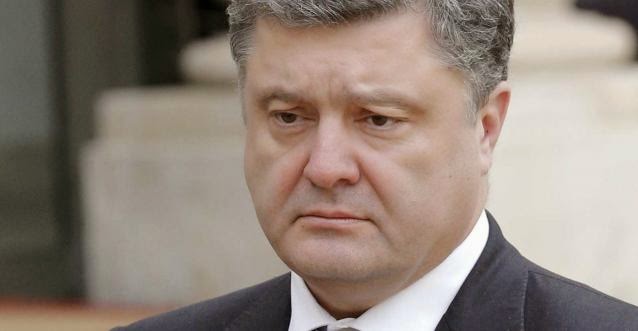
    Petro Poroshenko


    “You don’t
    understand, George, that Ukraine is not even a state.”


    Vladimir Putin to
    George W. Bush, April 2008


    FACT SHEET


    Size of country – largest totally in Europe (size of Texas)

                Borders
    seven countries (see map), mostly Russia and Belarus

                Russia or
    pro-Russian countries and regions (Moldova) on three sides


    Ethnic –  77%
    Ukrainian

                17% Russian
    speaking (about 9-10 million people)

                            Mostly
    in eastern provinces, Odessa and Crimea.

                6% Other,
    including Crimean Tatars

                            Also
    religious divisions reflecting regional and political divisions.


    Population – about 44-46 million. (minus 2.5 million in
    Crimea)

                Very low
    birth rate and very high death rate.

                Declining
    population and labor force.

                            Very
    low life expectancy among men.

                            Rapidly
    aging population.

                                        Heavy
    per capita alcohol consumption.

                Demographics
    similar to Russia and Eastern Europe countries.

    HISTORY


    Ukraine was the original “Russia”

                Scandinavian
    name meaning Red. 


    Kievan “Rus” first Russian kingdom
    to convert to Christianity (Orthodox).


    Turbulent, bloody history because of location and wide
    plains.  Tribes going west from Central
    Asia, Vikings going south to trade with Constantinople, buffer zone between
    Ottomans and Russians, source of slaves and mercenaries.  In modern times, often part of another
    country’s empire.

                Now between
    Russia and European Union.

                Western
    influences in the western half, especially among young.


    Crimea annexed by Russia in 1783; most of the rest of current Ukraine conquered by Catherine the Great in 1795.

                Seized by
    Russia after fall of Yanukovych in Febrauary 2014.


    Only second time in the area’s history that Ukraine is a
    separate country.

    POLITICAL


    Poorly governed since independence in 1991.

                Corruption,
    organized crime, oligarchs, lack of political reform.

                            Corrupt
    police and judicial system.


    Orange Revolution in 2004 (non-violent), repeated in 2013-14
    (violent).      


    Both times, demonstrated against
    corruption, for closer ties with Europe.


    Forced resignation of President
    Viktor Yanukovych, pro-Russian president.


    Generational split, with older generation more inclined to
    be sympathetic to Russia and younger generation more pro-West.


    New president Petro Poroshenko (often spelled Porochenko in Western press), signs EU associative status
    treaty, first move to closer ties with Europe.


    Major players:          

                Viktor
    Yanukovych (corrupt former president, generally


    pro-Russian).

                Yulia Tymoshenko
    (leader of Orange Revolution, generally pro-West).

                Petro
    Poroshenko (current president, one of eight major oligarchs).

                Vladimir
    Putin (ruler of Russian since 2000. 
    Former KGB officer).

                Oligarchs,
    who seem to be supporting pro-West government and

                            opposing
    Russian militias.

    RULE BY OLIGARCHS

    The new president, Petro Poroshenko, is one
    of the oligarchs.  He appointed three
    oligarchs as provincial governors.  Two refused,
    one accepted.  One who refused, Rinat
    Akhmetov, is reported to be the richest man in Ukraine, with substantial
    holdings in the disputed areas.  A former
    supporter of Yanukovych, he suggested a fourth oligarch be appointed governor
    of Donetsk province.  He was forced to
    flee by separatist gunmen.

    Akhmetov controls a personal militia.  He was able to thwart pro-Russian separatists
    in a key city south of Donetsk province.  
    North of Donetsk province, a key industrial city and province is ruled
    by another oligarch, Ihor Kolomoisky.  He
    is strongly anti-Russian.  Moving
    quickly, he has used his personal wealth and power to equip Ukrainian military
    forces and fund a professionally-trained provincial militia.  Not surprising, a branch of his bank in
    Moscow has been seized by the Russian government.

    Wall Street Journal, “Ukraine’s
    Secret Weapon Against Putin:  A Feisty
    Billionaire,” June 28-29, 2014.


    ECONOMIC


    Economic stagnation since independence in 1991.

    At official exchange rates, Ukraine economy about $150 billion/year, about 1/3 the size of the economy of New Jersey.


    Economic structure a legacy of Soviet Union.


    About 1/4 of total Soviet
    industrial production.


    Much of industrial output still oriented towards Russia but
    total exports to West now greater than to Russia.


    Part of industrial area in eastern Ukraine adjacent to
    Russia.  Coal mines, iron ore, steel
    mills, fabricated metal products like large diameter pipes, armaments for
    Russia, oil refining, chemicals.  Area of
    pro-Russian protests.

                Economically
    depressed, especially Donetsk region.


    Serious pollution problems.


    Most of industrial companies owned by eight oligarchs.

    Breadbasket of Soviet Union.

                Provided
    about 1/4 of food in Soviet Union.


    Dependent on Russia for about 2/3 of natural gas supplies
    and most of oil.


    Russia’s export of gas and oil used
    as political weapon.  Gas supplies to
    Ukraine cut off three times since 2006.


    2010 treaty with Russia –
    subsidized gas prices in exchange for extending lease for Russian fleet based
    in Crimea.  Treaty broken by Russia when Crimea
    taken over this year.  Gas prices raised
    to European levels.


    Gas use for heating, cooking and
    industrial fuel heavily subsidized.

                Extremely
    wasteful use of fossil fuels.


    Four of six oil refineries owned by
    Russian companies.


    Ukraine has potentially large shale
    gas deposits.

    UKRAINIAN NATURAL GAS  IMPORTS


    In 2012, Ukraine consumed 53.8 billion cubic
    meters (bcm) of natural gas.  Domestic
    production was 19.7 bcm.  Total imports
    from Russia were 32.4 bcm, or about 63% of total usage.  For a relatively poor country, Ukraine’s gas
    usage is unusually high.  Total usage is
    three times that of Poland and larger than France.  (Source: 
    International Energy Agency)

    Cost of imported Russian natural gas about $10 billion per year.  Ukraine having trouble paying.  Needs Western financial assistance.

    In 2013, the European Union (EU) countries
    imported $166 billion of oil and natural gas from Russia.  The EU ran an $86 billion trade deficit with
    Russia.


    LARGER ISSUES


    Integration of former Soviet satellite countries in central
    Europe into economic, military and political unions of  Western Europe.

                Best
    opportunity for peaceful integration in over 1,000 years.


    Resurgence of Russian nationalism – sees integrating Europe
    as a geopolitical and military threat.

                Supported
    by Belarus and some factions in Ukraine.

                            Geographical
    buffer zone next to NATO countries.

                Lack of
    political and economic reforms in all three countries.

                Major
    campaign to modernize Russian military weapons.


    Russian use of oil and natural gas as geopolitical weapons.

                May be less
    effective in future.

                            Large
    deposits of shale gas in Europe and Ukraine.

                            Alternative
    European import sources.


    Internal threats to European section of Russia.

                Declining
    European population.

                Rising
    Muslim and Asian population in southern and eastern areas of Russia.

                            Muslims
    make up 10-15% of Russia’s population.


    Potential threat of China to Eastern Siberia and Vladivostok
    (Chinese territory until 1860).


    Europe moving to reduce imports of Russian natural gas.

                Opportunity
    for U.S. Canada and other countries to export LNG to Europe.

                            Canada
    building large LNG facility in eastern Canada to export

                            natural
    gas to Europe.


    Russian Black Sea pipeline to bypass Ukraine on hold.

    SCENARIOS


    Ukrainian forces defeat pro-Russian rebels
    but guerrilla war continues.

                Continued
    centralized control.

                            President
    appoints provincial governors.

                Russia
    reduces support but continues covert operations.

                Ukraine
    rebuilds military forces with outside assistance.

    Continued fighting leading to new constitution that gives
    substantially more autonomy to eastern provinces.

                Possible if
    Russian rebellion contained and truce holds.


    Reduces highly centralized
    political control of country.


    Continued fighting and continued Russian pressure to
    destabilize eastern provinces with ultimate aim of absorbing two to five
    provinces without invasion of Russian troops.

                Victory for
    Russian nationalism without economic sanctions.


    Russian interference has probably
    strengthened desire of western 2/3 of Ukraine to move closer to EU and
    eventually NATO. 


    Russian invasion of eastern Ukraine.


    Russian annexation of two eastern
    provinces, adding 5-6 million people to European Russia.


    Harsher economic sanctions.  Serious impact on Russian economy.


    Ukraine signs economic treaty with EU and eventually becomes
    a member of EU.

                Receives
    substantial financial aid.

                Outside
    pressure for political reform.


    Scenarios are not mutually exclusive.  Some or all may happen at different times in
    the future.  For example, if eastern
    provinces become part of Russia, the rest of Ukraine will probably ask to
    become a member of NATO and EU.

    COMMENTS ON SCENARIOS

    Ukraine’s president has signed an associative member agreement with the EU, as he promised he would.  Russian nationals’ rebellion in two eastern provinces and Russian threats eliminated prior policy alternative of trying to balance Ukrainian foreign and economic policies between Russia and the West.  One consequence is that Ukraine will probably now receive about $32 billion in economic aid and loans from IMF, EU and US.  IMF loans come with strings attached – Ukraine will have to reduce domestic subsidies for natural gas users and begins to reform government.  I would also guess that Ukraine will have access to Western military gear and training.  In longer run, good chance Ukraine will join EU and NATO.


    I think there’s a good chance that current
    and threatened economic sanctions will lead Russia to lessen support for pro-Russian
    rebels in Ukraine, especially if Donetsk falls to the Ukrainians.  Russia
    still controls Crimea.  There will probably be less overt but continued
    covert Russian support.  Putin will reduce rhetoric.  Russia may continue
    to threaten Ukraine with invasion.

    Putin cannot appear to totally abandon the pro-Russian rebels.  His seizure of
    Crimea, military buildup on the border, hawkish rhetoric and military support
    for the Russians in eastern Ukraine increased his popularity in Russia.  He has to
    appear to be continuing his support for the rebels without triggering economic
    sanctions that will seriously damage the Russian economy.
     

    Russian oil output is declining.
     Russian has huge shale and deepwater oil and gas deposits but needs
    Western technology to get at them.  This is more important to Putin’s strategic objectives than supporting
    Ukrainian rebels.  In addition to keeping large European market, increased
    production opens up large new markets in Asia, especially China, which intends
    to triple LNG imports in the next 8-10 years.  Economic and military
    resurgence of Russia and Russian nationalism depends on exports of oil and
    gas.

    Russia will continue
    to attempt to destabilize and subvert Ukrainian government but won’t invade, despite
    huge military advantage.  Combination of economic sanctions (including
    access to Western technology needed to develop huge untapped oil and gas
    fields), fall in foreign investment and tourism,
    and increased capital flight would seriously hurt Russian economy.
     Exports, mostly oil and gas, are about 1/4 of Russian economy and pay for
    military modernization among other Putin objectives.  Europe will
    accelerate trend to using less Russian natural gas and oil, but will remain a
    major market for Russia.  

    Huge potential increase in
    global supply because of new technology to get at shale natural gas (and oil)
    will make up for potential loss of Russian natural gas to Europe.
     Eventually.   Other countries must
    make massive investment in drilling, pipelines, LNG plans and LNG tankers.  Needed new LNG ships will cost about $50
    billion (New York Times, August 5). 
    Total elimination may take five to seven years but alternative sources of
    supply already available.  

    Europe and Ukraine have their
    own potentially huge deposits.  Political opposition to fracking will slow
    up development in France and Germany but probably not in Poland, Romania and
    Ukraine, the countries with the largest potential deposits.  Ukraine will
    invite in Western oil countries to help develop natural gas reserves and
    modernize economy.  Hopefully, EU ties and foreign investments will lead
    to economic growth.


    If U.S. built a
    pipeline network from North Dakota and Canadian shale natural gas fields to
    Texas and/or east coast, and the U.S. government licenses liquified natural gas
    (LNG) plants, the U.S. could export very large amounts of natural gas to Europe
    at a lower price than Russia is currently charging.  One new U.S. LNG
    plant has been approved and seven more are pending.  Canada has already started design work on an
    LNG plant in eastern Canada.  This could eliminate future Russian threat of
    shutoff and strengthen ties of European economy to U.S. and Canada.  Major
    geopolitical change.


    Speculative, more unlikely scenarios.  1) Ukraine voluntarily lets go of two eastern provinces.  Gets rid of most of remaining Russian population and economic ties to Russia.  Russian population in Ukraine less than 10%.  Future firmly with West. 2) Government and judicial system becomes less corrupt and fights organized crime.


    For an earlier discussion after Russia seized the Crimea, see The Crimea, Russian and U.S. Options.

    ADDITIONAL INFORMATION

    For a quick look at the huge disparity of the Russian and Ukrainian military forces, see

    http://www.bbc.com/news/world-europe-26437359

    Not in the video —  Ukraine’s main battle tank, the Russian T-64, has been taken out of service in Russia because it is obsolete.  Russia’s tank force includes about 550 T-90s that are comparable to the West’s best tanks.  Next year, Russia says they are starting production on the T-95 which, on paper, may become the best tank in the world.  It is also a step towards a fully robotic tank, which makes sense in a country with declining population.  Russia’s military superiority may be irrelevant if Russia believes stronger economic sanctions will be imposed if they invade Ukraine.

    By the way, U.S. design and production to replace the Abrams tank has been slowed by budget cuts and sequesters.  The conservative Republicans are a danger to the national security of the country.

    I would emphasize that many of the top leaders in the Ukrainian military, SBU and police started their careers, and were trained, by the Soviet Union.  Also, since about 17-20% of Ukraine’s population is Russian, I would assume that a lot of police and military are unreliable.  It is probably one reason some Ukrainian police and military units surrendered to Russian militia without a fight and gave the militias equipment.  Poroshenko is replacing top military leaders.  Then there is corruption.

    Economic comparisons are harder because much of both economies are underground.  Probably higher in Ukraine – one estimate by two Ukrainian economists in 2012 is that 44% of the economy is underground.  Even adjusting for that, the Russian economy is about 10 times larger than Ukraine’s.  Roughly, $200 billion vs. $2 trillion.

    One of
    the problems is that modernizing the Ukrainian economy does not necessarily
    mean increasing employment.  The world’s largest steel company took over
    Ukraine’s largest steel complex.  It spent billions modernizing the plants
    and increasing capacity but reduced employment from 57,000 to 33,000.  One
    of the oligarch just built a fully automated steel pipe plant that created few
    new jobs.

    But Russia is vulnerable to economic sanctions and, in the near future, possibly declining exports of oil and natural gas.  The two are related; economic sanctions would deny Russia the Western technology they need to get at huge untapped oil and natural gas deposits.

    INFORMATION SOURCES


    BBC News, “Ukraine Crisis Timeline”

    http://www.bbc.com/news/world-middle-east-26248275


    New York Times, “Ukraine Crisis in Maps”


    http://www.nytimes.com/interactive/2014/02/27/world/europe/ukraine-divisions-crimea.html?_r=0


    CIA World Factbook


    Financial Times


    Novenite (From Bulgaria, in English)


    VICE – Russian Roulette (on YouTube)


                Video interviews in areas controlled by pro-Russian militias.

    kvivpost.com (from Ukraine, in English)

  • The Crimea, Russia, and U.S. Options

    The Crimea, Russia, and U.S. Options

    Ukraine President

    Russia’s
    illegal invasion and annexation of the Crimea will set off a chain of events
    that could strengthen U.S. power and influence, especially in Eastern Europe.  Putin is gambling that President Obama and
    conservative Republican leaders lack the will to energetically react to Russian
    expansion.  First U.S. reactions have
    been weak.  Unless there is a change,
    Putin might be encouraged to annex other Russian-dominated areas outside
    current Russian borders.

    Ukraine
    has tried to balance Western and Russian pressure.  The popular revolt against the pro-Russian
    Ukrainian Prime Minister upset the balance and precipitated the crisis.

    Putin may have decided to upset the unstable status quo in Eastern Europe, starting with Ukraine and Moldova.  Russia’s next step could be to annex the eastern third of Ukraine.  This area includes the Donetz Basin, which
    contains a Russian majority and industrial resources.  If successful, Russia could then move along the
    north shore of the Black Sea to Odessa and maybe to the Rumanian border.  Russia
    already controls the eastern third of Moldova, presenting Ukraine, especially
    the Kiev region, with the possibility of being threatened or attacked from both
    the east and the southwest.

    The
    Russians are very concerned about their long-term demographic trends.  Russia’s population is declining.
     Russia’s population is now about 1/2 that of the U.S. and the gap is
    widening.  And, in the foreseeable future, European Russians will be
    outnumbered by Asians (east of the Urals) and Muslims within Russia.  Adding millions of European Russians may have
    played a part in the decision to annex the Crimea.

    All of
    this has domestic advantages for Putin.  His moves are popular in Russia.
     Future leaders will probably also have to be nationalistic and probably
    expansionist, putting pressure on Russia’s periphery.  It was naive of the U.S. to 
    think that Russian nationalism suddenly disappeared with the Soviet Union.

    An
    expansionist Russian foreign policy entails huge risks.

    About 40%
    of the population in the Crimea is Ukrainian and Tartar.  Both groups in the region have centuries-old
    historical grudges against the Russians.  By making a de facto control de jure, the Russians are making sure that 40% of the Crimean population will now feel
    like a conquered minority and will look to Ukraine for support.  

    The takeover might also finally unite the pro-West political leaders in the Ukraine. Ukraine
    has already signed the economic cooperation treaty with the EU that started the
    crisis.
      Ukraine needs immediate
    financial support.
      With loss of
    territory and increased Russian pressure, Ukraine will probably ask to join
    NATO if it can be guaranteed U.S. military support in weapons systems and
    training.
      If this happens, Russia will
    be faced with another enemy, along its crucial southern European border.
      Putin is gambling this won’t happen.

    It is also likely that Putin’s land grabs will reinvigorate NATO and focus  U.S. attention on European security issues.  

    All this will affect Poland. Poland
    does not have a border with Russia, except for a short strip to
    the north with the Russian enclave of Kaliningrad.
      Poland has long borders with Ukraine and
    Belarus.  Belarus – the old Russian province of Byelorussia or White
    Russia – is between Poland and Russia.  But Belarus is for all intents and
    purposes still a province of Russia.  Poland, and NATO, still has to plan
    that Russia could put troops on the Polish border and attack across the
    northern Polish plain.  Poland will probably 
    have to step up military spending and ask for more NATO support.

    The U.S.
    is putting an advanced air defense system in Eastern Europe, mostly in Poland.
     One consequence will probably be to extend the system to southern Balkan
    countries and step up other types of military aid to Eastern European countries
    that are members of NATO or the EU.

    The
    Crimean takeover should drive Eastern European countries even closer to NATO
    and the EU.  But the U.S. has to provide substantial military support in
    training and weapons.  Given the sequester’s effects on the military
    budget, there is some doubt this will happen.

    Beside
    military support to NATO, especially Eastern Europe, the U.S. has a number
    of good responses, including a rapid increase in oil and especially natural gas
    exports to Europe.  I’m not sure Obama has the political will to overcome
    opposition within the Democratic Party to the pipelines and LNG
    plants to quickly approve them, although Putin has handed him a
    potent new argument.   Combined with developing huge untapped reserves of
    natural gas in shale around the world, the Europeans would be assured that they
    would not be dependent on Russian gas in a few years.  

    Russian
    sales of oil and natural gas account for about 70% of their export
    income.  Combined with economic
    sanctions, a fall in foreign investment, capital flight and a loss of tourism,
    the Russian economy could be severely damaged.

    Maybe
    Western European countries will wake up and realize that Russia is still a
    political and military threat.  If the
    U.S. does not act energetically and decisively, European countries, especially
    Eastern European countries, may decide they have to accommodate Russian
    aggression.  The danger is greatest for
    the next few years when Europe will still be dependent on Russian natural gas.

    Turkey, a
    long-time member of NATO, should finally be admitted into the European Union.

    Another
    possible consequence of Russian expansion could be America’s relationship with
    China.  If China sees Russia as more aggressive, this could improve
    relations between China and the U.S.  An extreme but interesting gambit
    would be for the U.S. to support Chinese claims to resource-rich eastern
    Siberia.

    ===================================================================

    See related post, President Obama Learns Some Game Theory.